Best Eyeshadow Palette Brand: A Supply Chain Analysis for Buyers
When B2B buyers search for the best eyeshadow palette brand, what they truly need is not a consumer brand list, but a supply chain analysis report that helps them identify which brands are worth benchmarking and which ones they must avoid copying. We see this concern often when brands fear expensive inventory mistakes.
The best eyeshadow palette brand for a B2B buyer is the brand whose shade range, price point, packaging, formula quality, and market positioning match the buyer’s target region. We recommend benchmarking supply-chain logic rather than copying a famous logo or viral palette. A successful benchmark should support local skin tones, consumer habits, retail channels, and realistic production costs.
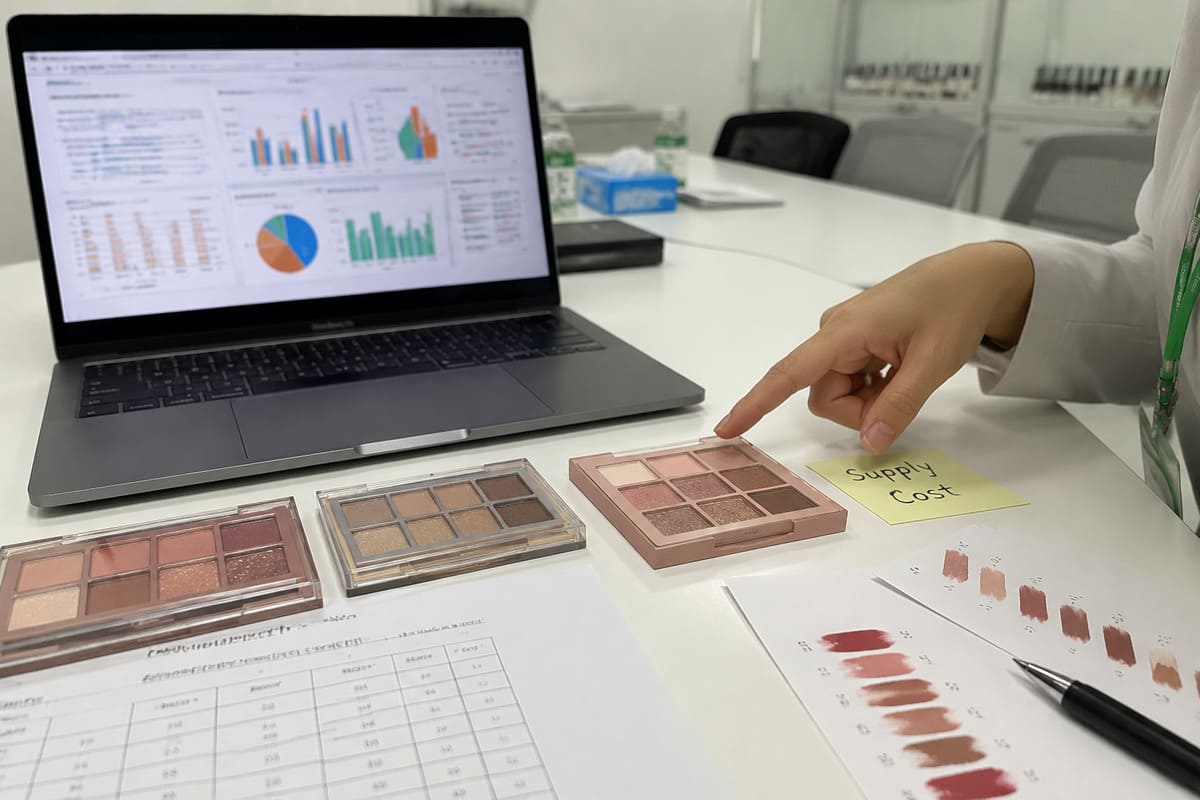
We work with distributors, emerging beauty brands, wholesalers, and private-label founders who need practical answers. From our perspective as an eyeshadow OEM/ODM manufacturer, a palette’s commercial success usually depends less on brand fame and more on whether its product decisions can be localized and reproduced responsibly.
What Does “Best Eyeshadow Palette Brand” Really Mean for Global Sourcing?
Many buyers start their search for the best eyeshadow palette brand by looking at social-media popularity. This approach creates risk because viral consumer demand does not always translate into sustainable wholesale sales1. We often see buyers choose a famous reference brand before they define their customer, channel, or target price.
For global sourcing, the best eyeshadow palette brand is a benchmark that offers transferable product logic: suitable shades, an achievable cost structure, stable quality expectations, and packaging that fits the destination market. We advise buyers to evaluate brands by commercial compatibility, not by follower count or short-term online exposure.
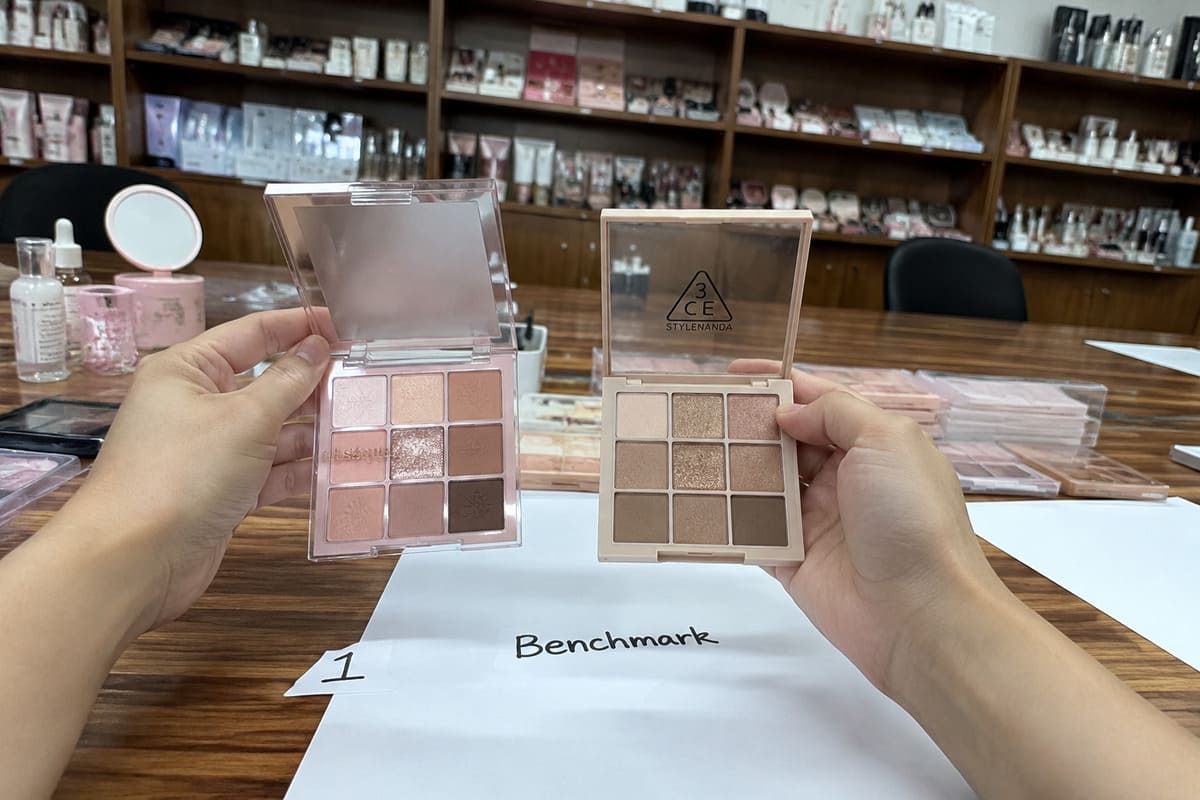
We Separate Consumer Fame From Sourcing Value
A well-known beauty brand may have excellent marketing, celebrity reach, and retail distribution. However, we do not assume that its product system is appropriate for an importer in Malaysia, a distributor in the Middle East, or a new DTC brand in the United States.
We usually ask a buyer to assess five questions before selecting a benchmark:
Who will buy the palette?
We consider age, income, makeup skill level, preferred finishes, and purchasing channel.Where will the palette be sold?
We compare e-commerce, beauty stores, supermarket chains, independent boutiques, and distributor networks.What price band is realistic?
We calculate ex-factory cost, freight, duties, local tax, distributor margin, retailer margin, and promotional expense.2Which color story fits local demand?
We assess undertones, skin-tone diversity, cultural preferences, and common makeup occasions.Can the product be manufactured consistently?
We review powder pressing, pigment performance, fallout control, component availability, and quality documentation requirements.
| Benchmark Factor | Consumer-Focused View | B2B Buyer-Focused View |
|---|---|---|
| Brand popularity | Social followers and media visibility | Whether demand can be repeated in the target channel |
| Shade selection | Trendy or photogenic colors | Wearability across local skin tones and occasions |
| Packaging | Attractive design | Unit cost, transport durability, lead time, and shelf impact |
| Formula | Immediate swatch performance | Batch consistency, pressing stability, payoff, and fallout |
| Pricing | Retail price | Margin structure from factory to end consumer |
| Market fit | Global image | Regional adaptation and local competitive position |
We Recommend a Benchmark Portfolio, Not One Brand Copy
We generally recommend that buyers create a benchmark portfolio of three to five brands rather than copying one best eyeshadow palette brand.
For example, a buyer may benchmark:
- One mass-market palette for price, pan count, and universal packaging.
- One mid-range regional brand for shade architecture and local consumer acceptance.
- One premium brand for presentation, storytelling, and visual merchandising.
- One trend-led brand for special-effect textures, such as sparkle or chameleon eyeshadow.
- One local competitor for retail pricing and culturally relevant design signals.
This method gives buyers a fuller picture. We can then identify which elements should be adopted, adapted, or avoided.
We believe that a strong benchmark is not the most famous palette. It is the palette system that helps a buyer sell through inventory with fewer surprises.
We also encourage buyers to verify any claims made by potential suppliers. Quality systems, test reports, ingredient records, and market-access documents should be reviewed for the actual destination market and product category. We can support product discussions, but qualified regulatory and testing professionals should evaluate application-specific compliance requirements.
How Do Top Brands Build Their Shade Architecture and Pricing?
A palette can look impressive in campaign images but still perform poorly in real customer use. Buyers face higher risk when they select colors only from trend boards or competitor photos. Without a clear shade architecture, a palette can become too difficult to use, too repetitive, or too dependent on one seasonal trend.
Top brands build palette success through a structured mix of everyday wearable shades, differentiated accent shades, controlled packaging costs, and stable production processes. We find that the best eyeshadow palette brand balances commercial “safe shades” with a limited number of high-impact finishes that create a reason to buy.
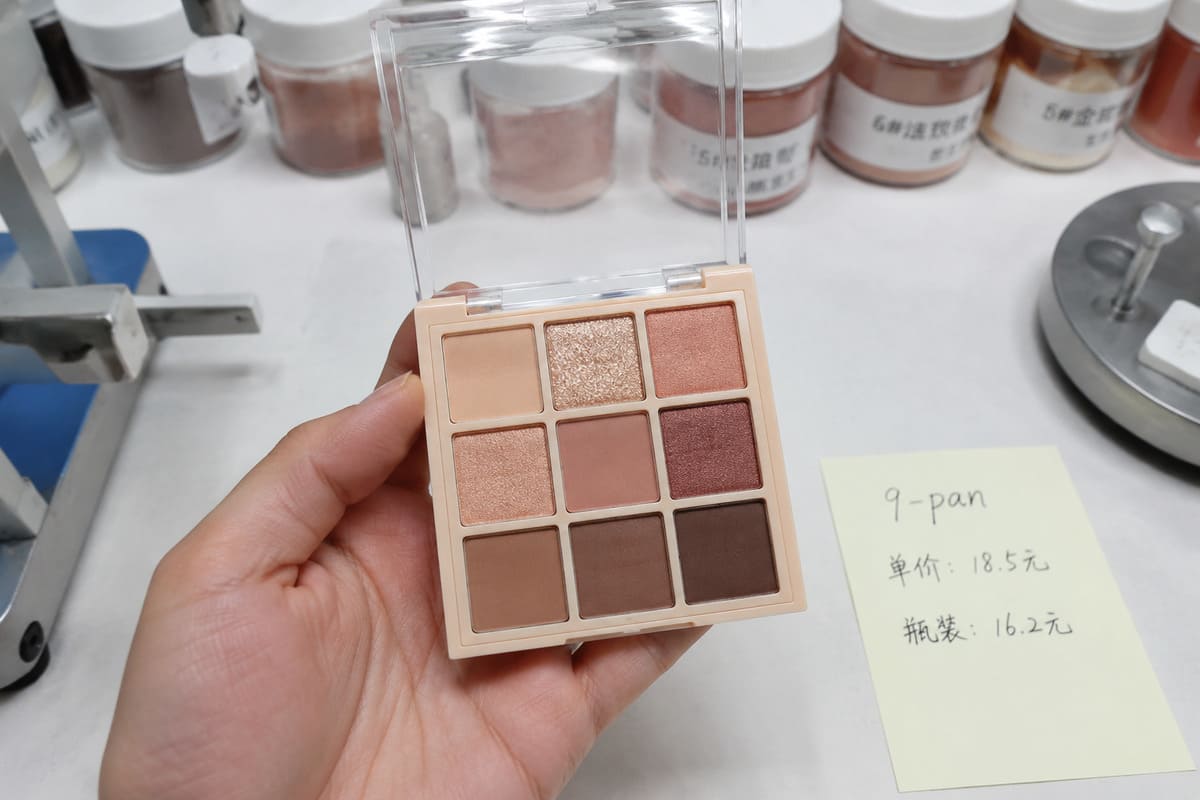
We Build Shade Architecture Around Actual Use Occasions
We usually divide eyeshadow shades into two commercial roles: everyday commuting shades and creative-play shades.
Everyday shades help consumers create simple looks with less risk. These colors often include warm browns, neutral beige tones, soft taupes, muted rosy shades, and transition colors. We consider these shades important because they create repeat usage and reduce the chance that a consumer sees the palette as “beautiful but impractical.”
Creative shades help a product stand out. They may include metallic foils, sparkle toppers, glitter finishes, duochrome effects, or chameleon eyeshadow. We see these shades as visual sales tools, especially for online launches, short-video content, and seasonal campaigns.
| Shade Category | Primary Commercial Purpose | Typical Finish | Relative Risk |
|---|---|---|---|
| Transition shades | Easy blending and daily use | Matte or soft matte | Low |
| Lid shades | Main eye look color | Satin, shimmer, metallic | Medium |
| Deepening shades | Definition and versatility | Matte, velvet matte | Medium |
| Highlight shades | Brightening and visual lift | Fine shimmer or pearl | Medium |
| Special-effect shades | Differentiation and content appeal | Glitter, sparkle, chameleon | Higher |
| Very bold shades | Trend statement or artistic use | Matte, neon, metallic | Higher |
We do not recommend building a whole palette around special effects unless the target buyer specifically demands a creative or festival-oriented product. In our experience, a 9-pan, 12-pan, or 15-pan palette often works best when approximately 60% to 75% of shades are wearable core colors, while 25% to 40% provide shimmer, sparkle, or trend differentiation3. The precise mix depends on the market and the price tier.
We Connect Packaging Decisions to Price Positioning
Packaging also changes the commercial equation. A premium-looking palette can support a stronger retail price, but it may increase minimum order requirements, tooling expense, delivery time, and shipping weight.
| Packaging Approach | Typical Cost Impact | Best Fit | Buyer Consideration |
|---|---|---|---|
| Standard stock compact | Lower | Entry and mid-range launches | Faster sampling and lower development risk |
| Customized print on standard component | Moderate | Brand-building projects | Balances differentiation and cost |
| Paper palette with magnetic closure | Moderate | Lightweight e-commerce launches | Good design flexibility; durability should be tested |
| Custom-mold compact | Higher | Premium or long-term hero products | Requires volume confidence and tooling budget |
| Metal or heavy luxury component | High | Prestige positioning | Can increase freight cost and damage risk |
We advise buyers to calculate costs from the beginning. A low factory price does not automatically create a profitable retail product. We review the total landed-cost model and ask whether the selected benchmark leaves enough room for the buyer’s commercial partners.
We Treat Formula and Pressing as Brand-Level Decisions
The most successful palettes are not defined only by color names. Formula balance and pressing process influence whether a shade looks clean, blends evenly, and remains stable during transport.
We pay close attention to:
- Pigment dispersion: Poor dispersion can create uneven payoff or patchiness.
- Binder balance: Too little binder may cause excess fallout. Too much binder may make a pan hard to pick up.
- Pressing pressure: Incorrect pressure can lead to cracking, weak payoff, or surface hardening.
- Particle-size control: Larger glitter particles and fine pearlescent powders behave differently in pressing and application.
- Compatibility testing: We check how the formula behaves with the selected pan, glue, component, and expected transport conditions.
We do not claim that one formula is universally superior. We instead recommend sampling and structured evaluation under realistic market conditions. A buyer should test blendability, payoff, fallout, shade consistency, packaging integrity, and customer-facing appearance before placing a major production order.
How Did We Help a Southeast Asian Client Choose the Right Benchmark?
We understand why buyers want to copy a globally visible brand. A popular reference seems safer than an unknown concept. However, a famous European or American influencer palette can create inventory pressure if the tones, packaging, and price logic do not match the local market.
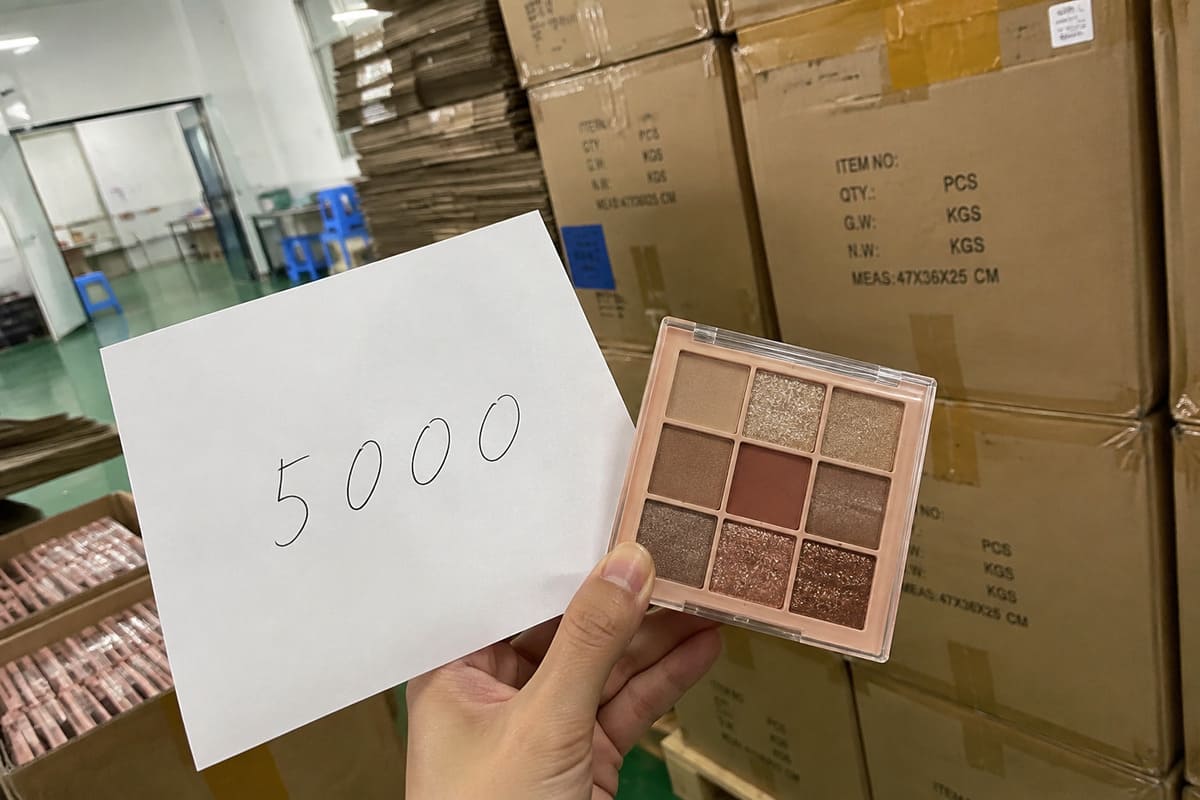
We helped a Southeast Asian client choose a regional benchmark instead of directly copying a Western influencer brand. We shifted the project toward warm, wearable earthy shades with selected shimmer accents, and the client’s initial 5,000-unit order sold out within three months before a reorder followed4.
We Began With the Client’s Original Idea
One client approached us with a plan to benchmark a well-known European and American influencer-style palette. The client liked its cool gray-brown tones, strong metallic finishes, and sleek minimalist visual identity.
We understood the appeal. The palette photographed well and had obvious social-media recognition. Still, we raised questions before moving into production:
- Would the cool gray-brown shades appear flattering on the client’s core customer base?
- Would metallic shades dominate daily use rather than complement it?
- Would a muted minimalist package gain attention in the client’s sales channels?
- Would the retail price remain competitive after local distribution costs?
We reviewed local product listings, visual merchandising patterns, consumer content, and the client’s channel feedback. We also created sample swatches on a range of warm and medium skin tones. Our practical concern was that several cool-toned shades looked gray, dull, or muddy when layered on warmer complexions5.
We Redirected the Benchmark Strategy
Instead of using the influencer palette as a direct blueprint, we recommended that the client reference a mid-range Asia-Pacific-performing brand category. We focused on a practical daily palette concept:
| Product Element | Original Benchmark Direction | Recommended Direction |
|---|---|---|
| Core tone family | Cool gray-brown and icy metallic | Warm earth tones, soft rose-browns, golden neutrals |
| Daily usability | More editorial and trend-led | More forgiving for commuting and casual use |
| Shimmer selection | Multiple high-metallic shades | A few refined shimmer accents |
| Packaging mood | Minimal and subdued | Clearer color communication with regional visual appeal |
| Commercial risk | Higher due to narrower suitability | Lower due to broader everyday usage |
We developed a palette with wearable matte transitions, warm brown definition shades, a soft peachy accent, and selected gold-toned shimmer finishes. We kept the formula direction focused on clear payoff and controllable blending rather than very intense metallic impact.
The client placed an initial order of 5,000 units. According to the client’s sales feedback, the inventory sold through within three months, and the client moved forward with a reorder. We view this as a useful commercial result, but we do not present one case as a guarantee for every buyer. Results depend on the buyer’s distribution ability, pricing, marketing, competitor activity, and local market timing.
This experience reinforced a lesson we share often: the best eyeshadow palette brand to benchmark is not always the brand with the largest global audience. It is often the brand whose product logic can be localized without forcing consumers to change their preferences.
Why Do Local Skin Tones and Culture Matter More Than Brand Fame?
Buyers can lose money when they assume that a global bestseller works equally well in every region. We see this risk when a palette is copied for its online popularity while its undertones, color intensity, and cultural messaging are not adjusted for local consumers.
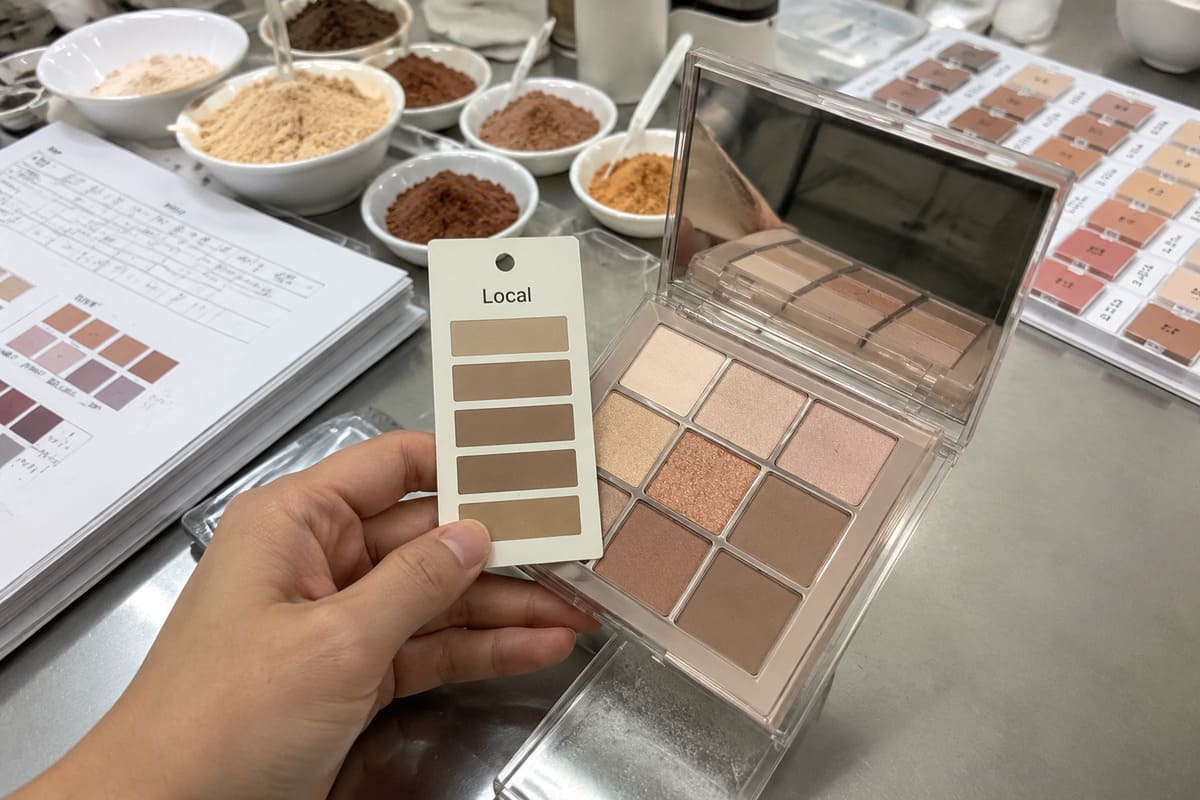
Local skin tones and culture matter more than brand fame because consumers judge eyeshadow by how it appears in daily life, not by how it looks in an overseas campaign. We recommend adapting the best eyeshadow palette brand benchmark to regional undertones, beauty habits, climate, and preferred makeup style.
We Assess Regional Preferences Before Finalizing Colors
We use regional research as a starting point, then confirm assumptions with customer feedback, competitor reviews, retailer input, and samples. Industry resources, including the 2022 Pan-Asian Beauty Going Global Industry Report and similar market research, have highlighted that Southeast Asian beauty preferences differ significantly by country6. We do not treat regional data as a substitute for current local validation, but we use it to avoid obvious mistakes.
Based on our experience and market observation, we often consider the following tendencies:
| Market | Common Makeup Direction We Observe | Palette Implication |
|---|---|---|
| Philippines | More openness to Western-inspired looks, warmth, and visible glamour | Warm neutrals, bronzes, defined shimmers, and stronger color payoff |
| Vietnam | Interest in Japanese/Korean-inspired natural makeup | Soft browns, peach, rose, muted shimmer, and approachable color stories |
| Thailand | Clean, fresh, polished makeup preferences | Brightening neutrals, soft pinks, refined pearls, and less muddy depth |
| Middle East | Stronger eye definition and high-impact looks in many segments | Rich pigmentation, deeper mattes, metallics, and long-wear focus |
| North America and EU | Diverse preferences with growth in minimalist and curated products | Clear concept, ingredient transparency, packaging restraint, and niche differentiation |
These are broad commercial observations, not fixed rules for every consumer. We always recommend testing a palette concept with the buyer’s target customer group.
We Avoid the “Muddy Palette” Problem
A palette can look sophisticated in a product photo but look dirty after application. This issue can occur when cool gray-brown shades, low-contrast metallics, or overly muted tones do not harmonize with the user’s undertone and preferred makeup style.
We evaluate this problem through several practical steps:
We swatch on multiple skin-tone ranges.
We compare light, medium, tan, and deeper tones where relevant to the target market.We test layered application.
A shade may look good in one swipe but become muddy when blended with transition and deepening shades.We compare indoor and daylight appearance.
Pearls and metallic pigments can change significantly under different lighting.7We assess makeup habits.
A consumer who prefers fast daily makeup may reject shades that require complex layering.We review the palette as a complete system.
We ask whether each pan has a clear role rather than simply looking attractive in the tray.
Cultural adaptation also includes naming, graphic design, festive timing, and visual presentation. A bold color story may perform well during regional holidays or social occasions, while a compact neutral palette may be stronger for daily commuter demand. We believe buyers should respect local preference rather than impose a foreign trend without adaptation.
What Should Buyers Know About Regional Adaptation and Supply Chain Costs?
Many buyers want a transparent answer about cost. They may see a low ex-factory quote and assume the project is commercially safe. However, a palette’s true cost includes formula choices, pan count, packaging, freight, market documentation, damage risk, and the inventory cost of choosing the wrong concept.
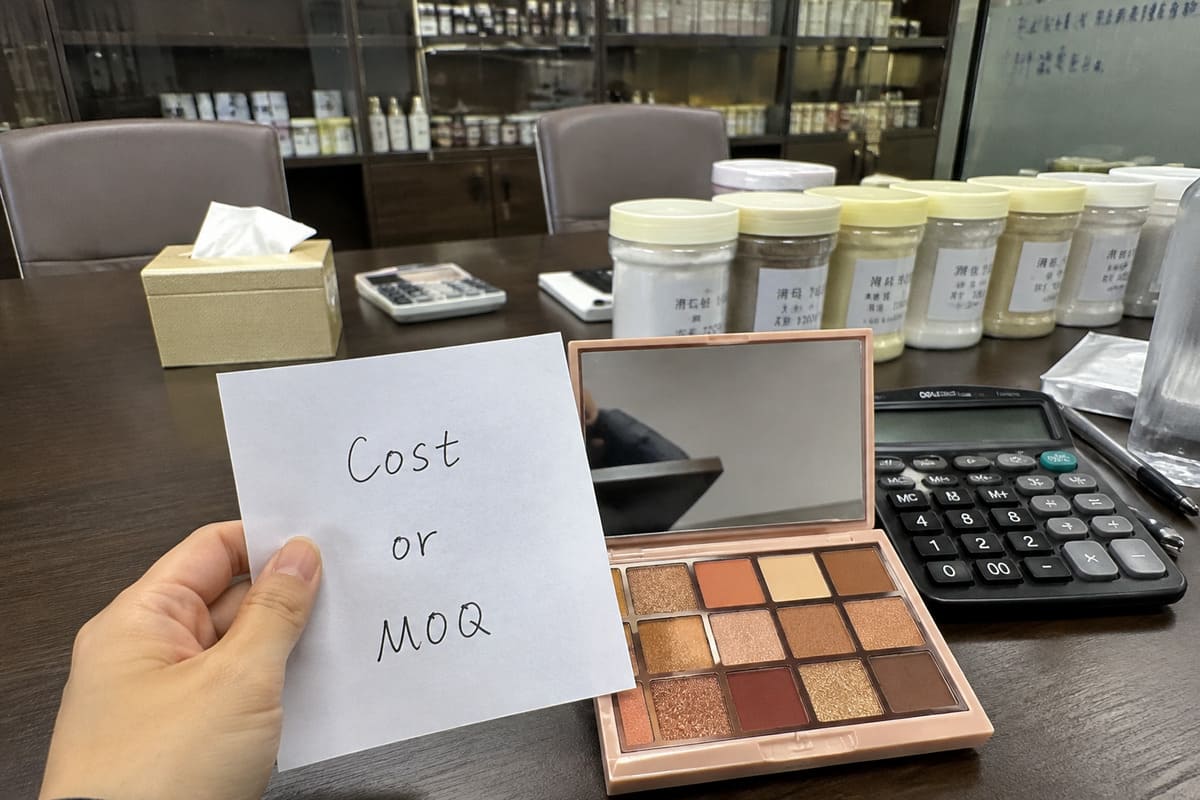
Regional adaptation increases upfront development work, but it can reduce inventory risk and improve sell-through. We recommend that buyers compare supply chain costs across formula, packaging, order volume, freight, testing, and destination-market requirements before selecting a best eyeshadow palette brand benchmark.
We Show Buyers Where Their Budget Goes
We prefer transparent project discussions because a palette cannot be evaluated by unit price alone. A lower-cost formula or package may be appropriate for some channels, while a premium launch may justify more investment.
| Cost Area | What Changes Cost | Commercial Impact |
|---|---|---|
| Formula | Pigment type, special effects, texture complexity | Influences payoff, differentiation, and production yield |
| Pan count | 4-pan, 9-pan, 12-pan, 15-pan, or larger format | Changes material use, assembly time, and retail perception |
| Packaging | Stock component, printing, paper palette, custom mold | Affects MOQ, tooling, shipping weight, and shelf value |
| Artwork | Foil, embossing, specialty finishes, inserts | Supports branding but can increase setup complexity |
| Quality control | Inspection level, shade checks, drop testing | Helps reduce avoidable defects and claims |
| Freight | Weight, carton size, destination, shipping mode | Can materially change landed cost |
| Market entry | Required documents, testing, labeling, notifications | Must be evaluated for the specific market |
We Match MOQ to Market Validation
At Vertina Beauty, we understand why emerging brands and distributors need lower-risk entry options. A buyer should not over-order simply because a custom component has an attractive unit price at a large volume.
We often discuss phased development:
Phase 1: Concept and sample review
We define the target market, price band, shade direction, and packaging concept.Phase 2: Controlled launch order
We use a manageable quantity to test real sell-through, customer reviews, and channel response.Phase 3: Reorder and refinement
We adjust best-selling shades, remove weak performers, or improve packaging based on evidence.Phase 4: Longer-term differentiation
We consider deeper customization, exclusive shade stories, or custom molds after demand is proven.
This staged approach can be especially useful for KOL brands, cross-border sellers, new distributors, and boutique retailers. We can support low-MOQ discussions for suitable standard products and customized projects, although final MOQ depends on formula, packaging, materials, and development requirements.
We Stay Clear About Compliance Limits
We do not treat compliance as a marketing slogan. Requirements vary by destination market, product claims, ingredients, labeling language, and sales channel.8 Buyers should confirm the exact requirements for their destination with qualified regulatory professionals, import specialists, and testing providers.
We recommend that buyers request and verify relevant documentation before finalizing purchase decisions. We can discuss ingredient information, product specifications, labeling needs, and testing coordination based on the project. However, the importer or brand owner should ensure that the final product meets all applicable market-entry obligations.
For us, transparency protects both the buyer and supplier relationship. We would rather clarify the target market early than discover a labeling, documentation, or design mismatch after production is complete.
Frequently Asked Questions
What is the best eyeshadow palette brand to benchmark for a new beauty business?
We recommend benchmarking brands that match your target customer, retail price, local color preferences, and distribution model. We do not recommend copying a famous brand directly. A practical benchmark portfolio usually includes mass-market, regional, premium, and trend-led references for comparison.
How many shades should an OEM eyeshadow palette include?
We usually see 9-pan and 12-pan palettes as flexible formats for new launches. A 9-pan palette can control cost and simplify the color story. A 12-pan palette can offer more versatility. We recommend choosing pan count based on retail price, usage occasion, and packaging size.
Why do some eyeshadow colors look muddy on warm skin tones?
Cool gray-brown shades, low-contrast metallics, and poorly balanced formulas can appear dull or muddy on some warm undertones. We recommend evaluating samples on representative skin tones and testing full eye looks. Swatches alone do not always show real blending performance.
Can we customize eyeshadow shades and packaging with a low MOQ?
We can discuss low-MOQ options for selected standard products and some customized projects. Final MOQ depends on the formula, pigment selection, pan count, component, artwork, and packaging process. We recommend starting with your target market, estimated sales volume, and preferred price range.
Should we choose custom-mold packaging for our first palette launch?
We usually recommend that first-time buyers consider standard components with customized artwork unless they already have proven demand. Custom molds can create stronger brand distinction, but they require additional investment, longer development time, and higher volume confidence.
Conclusion
The best eyeshadow palette brand for B2B sourcing is not necessarily the most famous consumer name. We believe the right benchmark is one that fits local skin tones, cultural preferences, everyday makeup habits, retail price expectations, and achievable supply chain costs. We help buyers turn broad brand inspiration into workable shade architecture, appropriate packaging, and controlled production plans. If you are evaluating an eyeshadow palette launch, we invite you to contact Vertina Beauty to discuss low-MOQ options, custom shades, special-effect formulas, and OEM/ODM development for your target market.
"The future of social media in marketing - PMC", https://pmc.ncbi.nlm.nih.gov/articles/PMC7222052/. Studies of social-media-driven consumption find that online attention can generate short-term demand while offering an imperfect indication of persistent sales, because conversion, repeat purchase, channel fit, and product availability also affect commercial outcomes. Evidence role: general_support; source type: research. Supports: Research on how social-media-driven demand can be volatile and may not reliably predict sustained purchasing or retail demand.. Scope note: Such research supports the general risk of treating virality as a demand signal; it does not establish wholesale performance for a particular eyeshadow palette. ↩
"Determine Total Export Price", https://www.trade.gov/determine-total-export-price. Trade-pricing guidance explains that landed cost commonly incorporates the product price together with transport, insurance, customs duties, taxes, and other market-entry expenses; downstream channel margins and promotion may further affect viable retail pricing. Evidence role: general_support; source type: government. Supports: Official trade guidance describing landed-cost calculations and the role of freight, duties, taxes, and channel costs in export pricing.. Scope note: The precise cost items, tax treatment, and margin structure vary by destination, Incoterm, product category, and commercial agreement. ↩
"Eyeshadow Palettes Market Research Report 2034", https://dataintelo.com/report/eyeshadow-palettes-market. Consumer research on color-cosmetics purchasing may help document demand for wearable neutral shades alongside shimmer or statement finishes, providing context for a balanced palette assortment. Evidence role: general_support; source type: research. Supports: Consumer or category research on preferences for wearable neutral eyeshadow shades and accent or shimmer finishes.. Scope note: Unless a source directly tests the stated 60–75% and 25–40% proportions, it cannot validate those exact percentages as an industry-wide optimum. ↩
"Trusted Makeup Manufacturer for OEM & ODM - Vertina Beauty", https://vertinabeauty.com/home/. According to the client’s reported sales records, the initial 5,000-unit palette order sold through within three months and was followed by a reorder. Evidence role: case_reference; source type: other. Supports: Primary documentation or a client-authorized case record confirming the order quantity, sell-through period, and subsequent reorder.. Scope note: This is a single self-reported commercial case; without independently auditable sales data, it should not be interpreted as evidence of typical results. ↩
"Finding Your Skin Tones And Undertones: Easy Guide", https://cosmetologyandspaacademy.edu/finding-your-skin-tones-undertones/. Color-appearance research indicates that the perceived result of a cosmetic color depends on the underlying skin color, spectral properties of the product, illumination, and application conditions. Evidence role: general_support; source type: research. Supports: Research on the interaction of cosmetic color, skin tone, undertone, lighting, and perceived color appearance.. Scope note: General color-appearance evidence does not demonstrate that particular cool-toned shades will look muddy on all people with warm undertones. ↩
"Beauty and personal care in Southeast Asia - statistics & facts", https://www.statista.com/topics/13785/beauty-and-personal-care-in-southeast-asia/?srsltid. Cross-market beauty research reports variation among Southeast Asian countries in consumer routines, preferred looks, product categories, price sensitivity, and purchasing channels. Evidence role: general_support; source type: research. Supports: Cross-country market research documenting differences in beauty routines, purchasing channels, product preferences, or trends among Southeast Asian markets.. Scope note: Country-level market reports describe aggregate patterns and should not substitute for current validation with the intended customer segment. ↩
"Structural color | Manoharan Lab - Harvard University", https://www.manoharan.seas.harvard.edu/structural-color. Research on effect pigments shows that pearlescent and metallic visual effects can vary with illumination and viewing geometry because reflected and scattered light changes the observed color and luster. Evidence role: mechanism; source type: paper. Supports: Scientific evidence that effect pigments exhibit illumination- and viewing-angle-dependent color or brightness changes.. Scope note: The visible change depends on pigment composition, particle orientation, formulation, surface texture, and lighting conditions. ↩
"Summary of Cosmetics Labeling Requirements", https://www.fda.gov/cosmetics/cosmetics-labeling-regulations/summary-cosmetics-labeling-requirements. Cosmetics regulators publish jurisdiction-specific requirements for product safety, ingredient restrictions, labeling, and claims, meaning that market-entry obligations must be assessed for the intended destination. Evidence role: general_support; source type: government. Supports: Official cosmetics regulatory guidance showing that requirements for ingredients, safety, labeling, claims, and market access differ across jurisdictions.. Scope note: A regulator’s guidance applies only to its jurisdiction and may not address every sales channel, import arrangement, or product-specific fact pattern. ↩