Best Eyeshadow Palettes of All Time: A Longevity Analysis for Buyers
When B2B buyers search for the best eyeshadow palettes of all time, what they truly need is not a nostalgic ranking list, but a market cycle analysis report that helps them identify the longevity genes of a true bestseller and avoid the trap of chasing a flash-in-the-pan trend. I see buyers face this risk when development, packaging, and inventory decisions take months.
The best eyeshadow palettes of all time are not necessarily the most creative or visually dramatic. For sourcing decisions, I define a long-selling palette as a product with broadly usable shades, balanced matte and shimmer textures, reliable packaging, stable production, and repeat-order potential1. Buyers should evaluate the target market, expected sales cycle, MOQ, landed cost, and compliance requirements before copying any established “classic.”
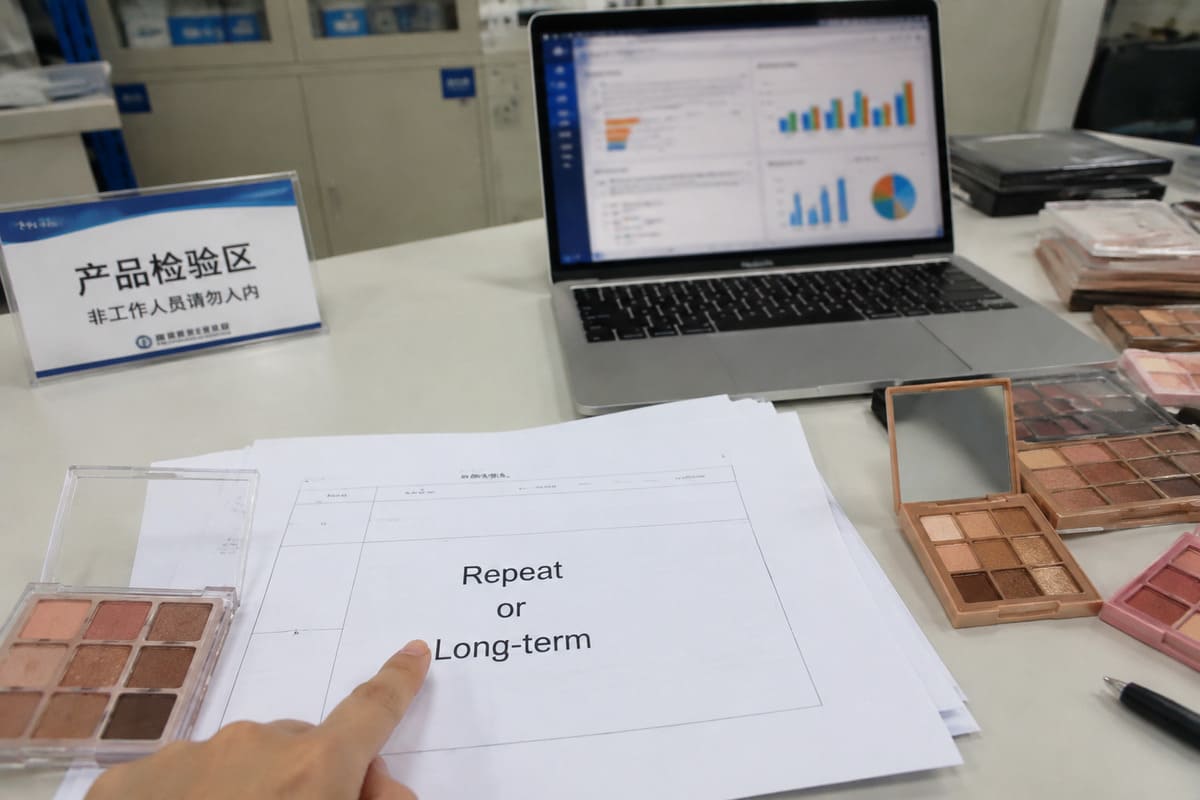
I approach this topic from a B2B manufacturing perspective. At Vertina Beauty, I work with distributors, wholesalers, emerging brands, and private-label businesses that need products capable of selling beyond one social media trend. A palette that looks exciting in a launch presentation may still fail if customers use only two shades or if the packaging becomes difficult to replenish.
The sections below explain how I evaluate product longevity, regional suitability, format changes, and supplier risk before recommending an OEM or ODM eyeshadow project.
What Does “Of All Time” Really Mean for Sourcing Decisions?
The phrase “of all time” creates a useful starting point, but it can mislead buyers. A famous palette may have strong consumer recognition in one market while having little commercial relevance in another. I first convert the phrase into measurable sourcing criteria.
For B2B sourcing, “of all time” should mean commercially durable rather than universally famous. I measure durability through repeat orders, stable sell-through, broad shade usability, manageable production costs, packaging continuity, and regional demand. A buyer should define the target market and sales channel before selecting a reference product or requesting a custom eyeshadow palette.
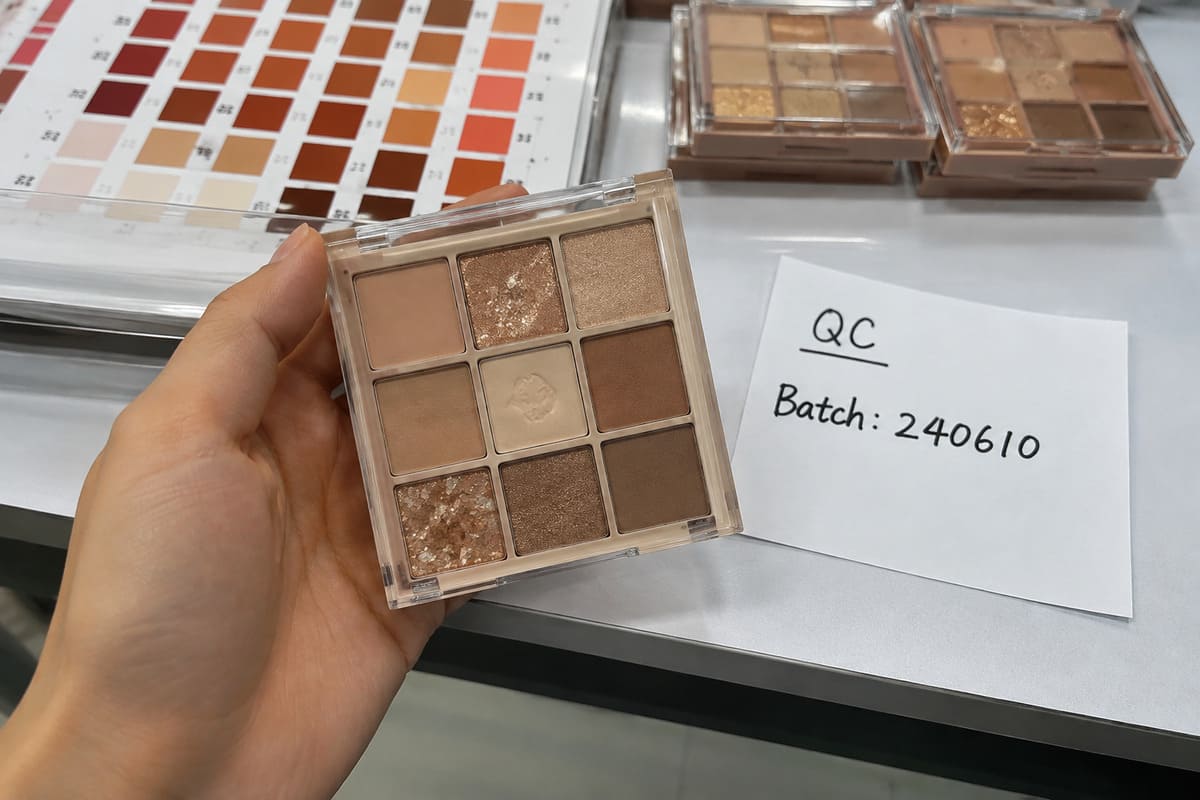
Why do famous palettes sometimes fail in new markets?
A product can become a classic because it matches a particular consumer culture, price range, distribution model, and color preference. When I help buyers evaluate a reference palette, I do not ask only whether it was popular. I ask why it was popular and whether those reasons still exist in the buyer’s market.
I usually review the following factors:
| Evaluation factor | Buyer question | Why it matters |
|---|---|---|
| Sales longevity | Has the product sold consistently for years or only during launch? | It separates repeat demand from temporary attention. |
| Shade usage | Do customers use most shades, or only one or two? | High unused-shade rates reduce repurchase potential. |
| Market fit | Does the color story match local preferences and skin tones? | Regional mismatch can weaken sell-through2. |
| Price architecture | Can the product support distributor and retailer margins? | A good formula can still fail at the wrong price. |
| Supply continuity | Can the factory reproduce shades and packaging consistently? | Long-term sales require dependable replenishment. |
| Format suitability | Does the size fit the consumer’s routine and channel? | Smaller formats may work better for travel, e-commerce, or trial. |
I also separate consumer popularity from procurement suitability. A luxury palette may be widely discussed but unsuitable for a distributor that needs competitive pricing and mixed cartons. A simple four-pan palette may receive less online attention but generate stronger repeat orders because it has lower landed cost and clearer everyday use.
How should buyers define a “classic” product?
I recommend creating a short product brief before contacting a supplier. The brief should identify:
- Target country or region
- Primary sales channel
- Target retail price
- Expected first order quantity
- Desired reorder cycle
- Preferred shade family
- Packaging and customization level
- Required testing and market documentation
For example, a palette for a Southeast Asian wholesale channel may require strong color payoff, warm tones, competitive pricing, and fast replenishment. A palette for a European boutique brand may place greater emphasis on ingredient review, packaging design, documentation, and a clean beauty positioning.
I do not recommend copying a global bestseller without adaptation. I treat the bestseller as a research reference, not as a finished product specification. My team can analyze its shade structure, texture balance, pan count, packaging logic, and likely cost drivers. We can then develop a product with a similar commercial foundation without simply reproducing another brand’s identity or protected design.
What Are the 3 Genes of a Long-Selling Eyeshadow Palette?
A long-selling eyeshadow palette normally depends on three connected strengths: inclusive shade selection, balanced texture performance, and packaging that can remain in production. I call these the three longevity genes because weakness in any one area can reduce repeat sales.
The three longevity genes of a long-selling eyeshadow palette are3: 1) shades that support many users and occasions, 2) a dependable matte-and-shimmer texture system, and 3) packaging designed for long-term supply rather than a short-lived gimmick. These genes help buyers reduce trend risk while preserving opportunities for color and brand differentiation.
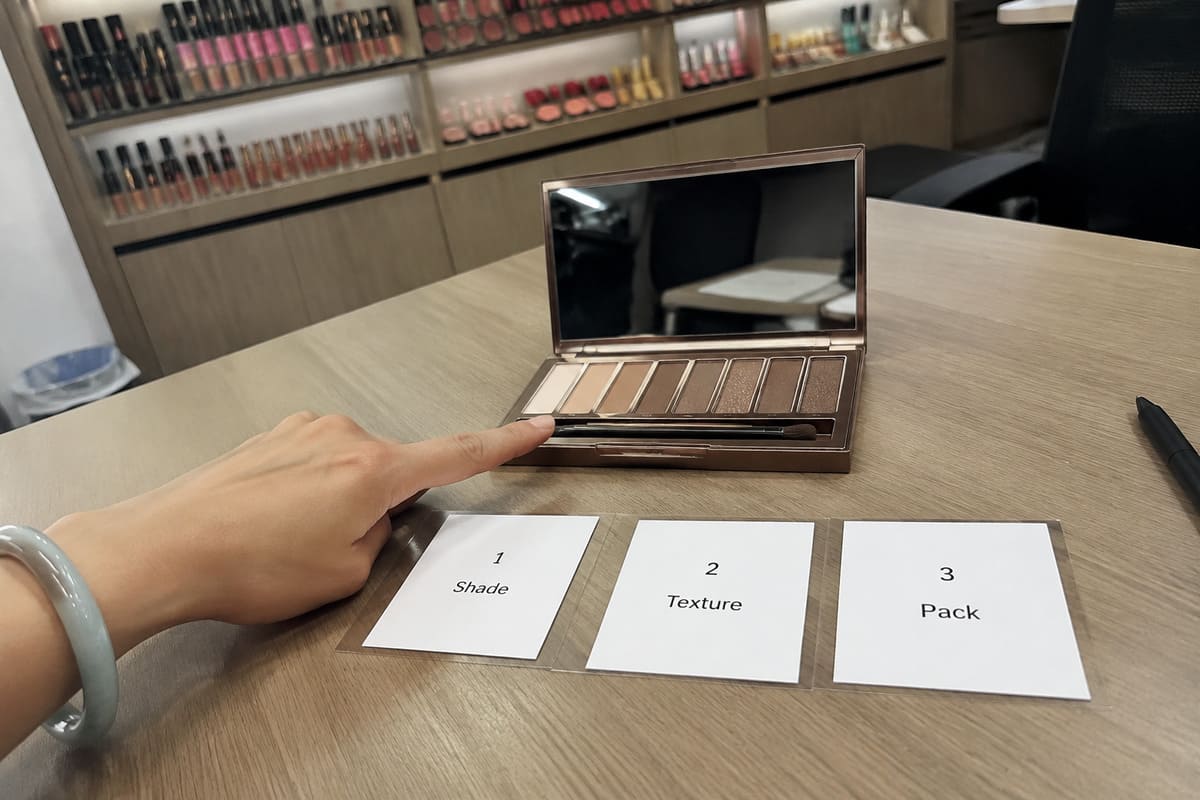
1. Shades that do not exclude everyone
I generally begin with earthy, neutral, warm, and daily-wear colors. Browns, taupes, bronzes, soft golds, muted peaches, and selected deeper shades can support more occasions than a palette based on one seasonal color.
This does not mean every long-selling palette must look plain. At Vertina Beauty, I also develop chameleon, sparkle, and glitter eyeshadows. However, I usually recommend placing special-effect shades within a functional system rather than making every pan highly experimental.
A practical shade structure may include:
| Shade role | Typical function | Commercial value |
|---|---|---|
| Light base | Brightens or prepares the lid | Increases daily usability |
| Transition matte | Builds depth gradually | Supports different skill levels |
| Medium matte | Defines the eye area | Works across many looks |
| Deep matte | Adds structure and liner effect | Improves palette completeness |
| Everyday shimmer | Adds dimension | Supports occasion-based use |
| Special-effect shade | Creates visual differentiation | Helps marketing and social content |
I also consider undertone. A palette with only cool grey tones may perform well in one market and underperform in a market where consumers prefer warm bronze or reddish-brown colors. I ask buyers for local sales references, competitor screenshots, or customer feedback when available.
2. Balanced texture
A dependable palette should serve both basic and more expressive use4. A solid matte foundation provides structure, while shimmer or sparkle shades create visual interest. If a palette contains only dramatic glitter, it may attract attention but have limited weekday use. If it contains only flat mattes, it may appear less distinctive online.
I evaluate texture through:
- Pigment payoff
- Blendability
- Buildability
- Fallout control
- Pressing stability
- Adhesion
- Wear performance
- Compatibility between matte and shimmer pans
I do not treat a high-pigment result as automatically better. Some wholesale buyers want strong payoff, while some everyday consumers prefer buildable color. The correct balance depends on the target market and brand position.
3. Packaging that withstands time
Packaging has a direct effect on replenishment. A complicated custom mold may make a launch look unique, but it can increase tooling costs, lead times, minimum quantities, and replacement risk. For a product intended to become a long-term seller, I often recommend a universal compact with customized artwork, label, insert, or surface treatment.
| Packaging approach | Initial impact | Long-term sourcing risk | Best use |
|---|---|---|---|
| Standard compact with custom printing | Medium | Low | Long-term core products |
| Semi-custom compact | High | Medium | Growing brands |
| Fully custom mold | Very high | High | Strategic hero products |
| Magnetic interchangeable case | Medium | Medium | Refill or modular concepts |
| Stick format | High convenience | Medium | Fast-moving, portable products |
I also review hinge strength, mirror protection, pan security, closure quality, decoration durability, and carton protection. These details matter during international transport5. A palette that arrives with broken pans or scratched covers can create more cost than a small packaging saving.
How Did We Help a Client Build a “Cash Cow” with a Timeless Palette?
I helped one client move away from a seasonal concept and toward a more durable earthy-toned palette. The project showed me that a “cash cow” usually comes from disciplined product architecture, not from adding more shades or more decoration.
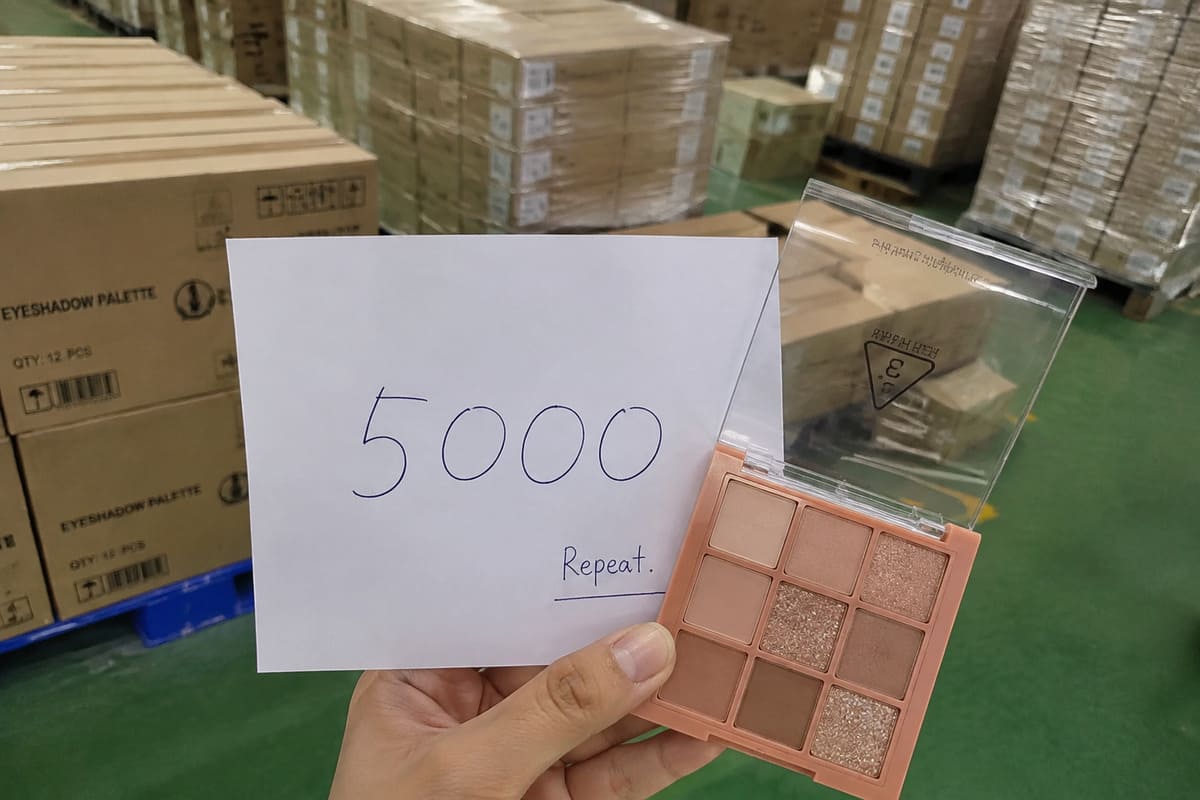
We helped a client develop a long-selling earthy-toned eyeshadow palette by analyzing a proven shade system, reducing unnecessary complexity, selecting broadly usable colors, and using cost-effective packaging. The client launched 5,000 units and, according to the supplied business case, received stable repeat orders for more than two years.
What problem did the client face?
The client initially considered a highly creative seasonal palette. The concept had strong visual appeal, but the client was concerned that the trend might weaken before production and shipment were complete. The client also wanted a reasonable first order because the brand was still testing market response.
I discussed three risks with him:
- The trend could lose attention during development.
- Consumers might use only the strongest statement shades.
- A complicated case could increase the cost and delay reorders.
Instead of rejecting creativity, I suggested a more stable core product with a distinctive but controlled finish. We used an earthy color direction as the foundation and added selected shimmer effects so the palette could still create launch content.
How did we analyze the longevity genes?
We reviewed the palette through a commercial matrix rather than a purely aesthetic review.
| Product decision | Original concern | Development response |
|---|---|---|
| Shade family | Seasonal colors could age quickly | Used earthy and daily-wear tones as the base |
| Pan count | Too many shades could increase cost | Created a minimal, functional shade system |
| Texture | All-glitter design could limit use | Combined matte, shimmer, and one standout effect |
| Packaging | Custom mold could slow replenishment | Selected a cost-effective, stable structure |
| First order | Inventory risk was significant | Planned an initial order of 5,000 units |
| Reorder plan | Supplier continuity was important | Confirmed shade and packaging repeatability |
I paid close attention to the relationship between color, texture, and packaging. A palette becomes easier to reorder when the formula uses stable raw materials, the shade references are documented, and the packaging components remain available.
What happened after launch?
The client’s first order was 5,000 units. Based on the supplied case details, the product generated stable repeat orders for more than two years6 and became the “cash cow” of his product line.
I would not claim that this result can be guaranteed for every buyer. Market conditions, retail execution, pricing, content, and local competition all influence performance. However, the case demonstrates an important principle: a product with moderate novelty and high usability can outperform a highly fashionable product7 when the buyer’s objective is repeat sales.
What should buyers learn from this case?
I believe buyers should focus on reorder economics before launch. They should ask:
- Can I reorder the same packaging six or twelve months later?
- Can the factory reproduce the shade colors consistently?
- Will most customers use at least half of the palette?
- Does the retail price leave room for every channel partner?
- Can I create new marketing content without changing the whole product?
- Can I start with a low MOQ and scale after validation?
At Vertina Beauty, our low MOQ capability can help smaller brands, distributors, and KOL-owned brands test a product before committing to a larger production plan. The exact MOQ depends on the formula, packaging, decoration, and customization level. I always recommend confirming these details in a formal quotation rather than relying on a general supplier statement.
Why Are Compact and Stick Formats Replacing Big Palettes in 2026?
Large palettes still have a place in the market, but I see the definition of a classic product changing. Buyers increasingly need portable, easy-to-understand formats that fit faster routines, smaller handbags, travel use, and social commerce.
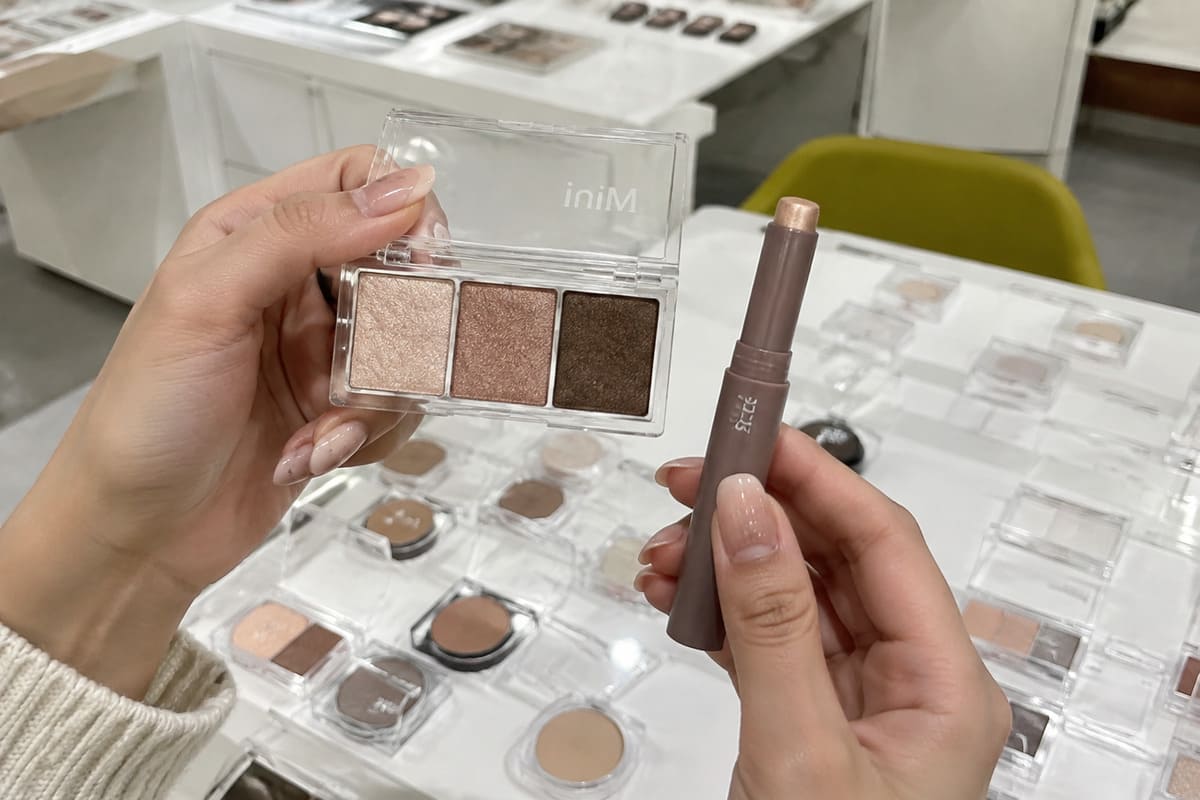
Compact and stick formats are gaining attention because they reduce choice overload, simplify application, support portability, and often lower trial risk. Supplied market research indicates that eyeshadow sticks grew by 24% and liquid eyeshadow by 39% in the referenced 2025 market period. Buyers should treat these figures as directional and verify the source, market coverage, and methodology before making a forecast.
What does the format shift mean for procurement?
The eyeshadow category reportedly returned to growth in 2025, with growth concentrated in lightweight formats such as duo and trio palettes, eyeshadow sticks, and liquid eyeshadow. I interpret this as a sign that consumers may value flexibility more than a high pan count.
A large palette can communicate abundance, but abundance can also increase:
- Unit cost
- Shipping volume
- Packaging complexity
- Shade development time
- Inventory exposure
- Consumer decision fatigue
A duo, trio, quad, or stick can offer a clearer product promise. For example, a three-shade product may communicate “daily bronze look” more effectively than a 24-pan palette with no clear use case.
How do formats compare for B2B buyers?
| Format | Strengths | Risks | Suitable channels |
|---|---|---|---|
| Large palette | Strong visual impact and broad shade range | Higher cost, more unused shades | Specialty retail, gifting, established brands |
| Duo or trio | Simple, portable, lower trial risk | Limited creative range | Drugstores, travel, e-commerce |
| Quad | Balanced usability and presentation | Requires careful shade harmony | Wholesale, boutiques, private label |
| Eyeshadow stick | Fast application and portability | Formula stability and cap security require attention | DTC, social commerce, travel |
| Liquid eyeshadow | Strong visual effect and content appeal | Dry-down, leakage, and applicator issues | Trend-led brands, online launch |
| Magnetic modular system | Refill potential and customization | More complex packaging and operations | Premium or sustainability-focused brands |
I evaluate the formula and package together. A stick formula needs appropriate hardness, glide, payoff, and wear. The cap must protect the product during transport. A liquid format needs reliable filling, sealing, applicator performance, and stability testing. A compact palette requires pan adhesion, pressing quality, and impact resistance.
Should buyers abandon large palettes?
I do not recommend abandoning large palettes. I recommend matching the format to the commercial purpose.
A large palette can work when:
- The brand already has strong distribution.
- The buyer can support higher inventory.
- The shade story is clearly differentiated.
- The product is intended for gifting or professional use.
- The retail channel rewards visual presentation.
A compact format may be more suitable when:
- The buyer is testing a new brand.
- The sales channel is mobile-first.
- Consumers prioritize convenience.
- The product must travel easily.
- The buyer wants a lower-cost first order.
I can also help buyers create a product family. A brand might launch a core neutral quad, then add a chameleon topper, sparkle single, or coordinated eyeshadow stick. This structure allows the buyer to test demand without placing every product into one oversized palette.
What Are the Regional Differences in “Classic” Palettes?
A global classic does not exist in a uniform commercial sense. I have seen product concepts that appear safe from a Western reference point but require significant color, finish, or positioning changes for Southeast Asia, the Middle East, Africa, or South America.
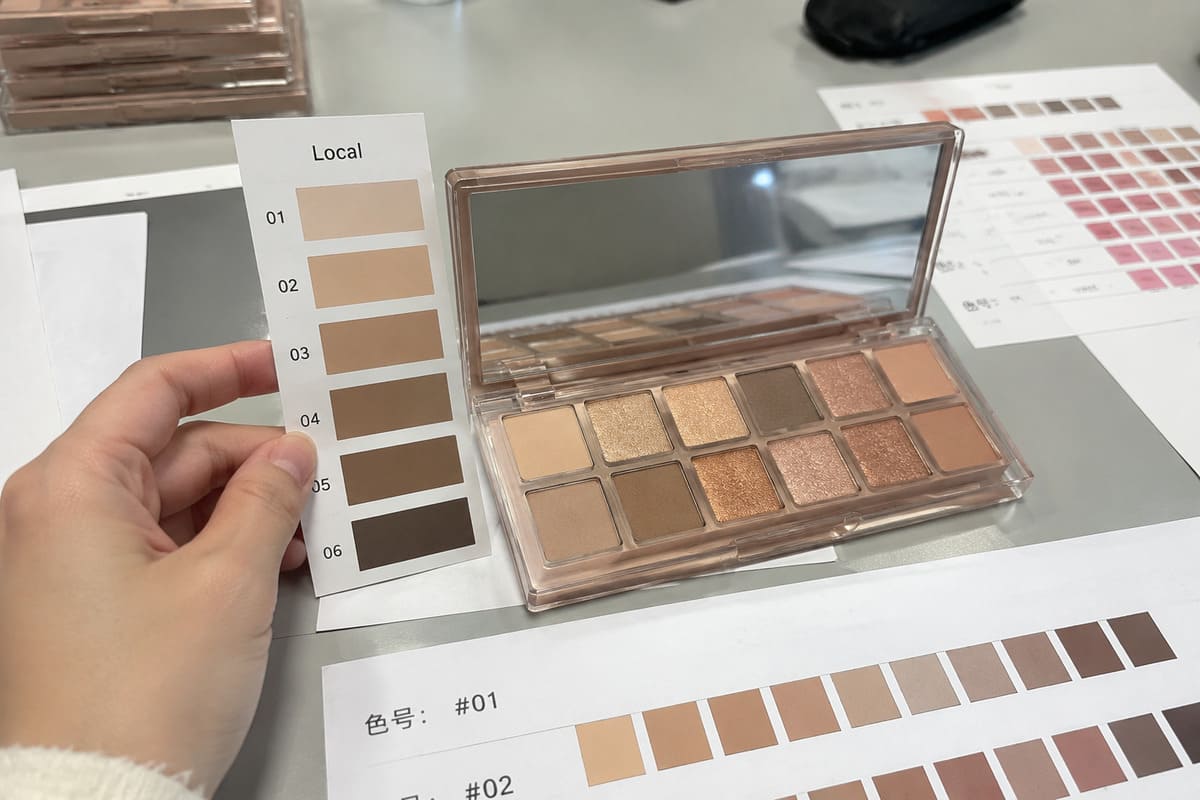
Regional demand should determine the definition of a classic palette. European and North American buyers may prefer minimalist, neutral, or clean beauty positioning, while Southeast Asian and Middle Eastern markets may show stronger interest in warm tones, visible color payoff, shimmer, or long-wear performance. Buyers should validate these assumptions with local data rather than treating them as fixed rules.
How do regional expectations influence product design?
I use regional preferences as hypotheses, not stereotypes. Every market includes different age groups, income levels, retail channels, and consumer communities. Still, regional patterns can help me form the first product brief.
| Market or region | Potentially relevant product direction | Buyer validation needed |
|---|---|---|
| Southeast Asia | Warm neutrals, high payoff, lightweight or compact formats | Local competitor sales and customer feedback |
| Middle East | Richer color, shimmer, stronger evening-use positioning | Channel requirements and consumer testing |
| Africa | Broad shade contrast, visible payoff, inclusive undertone planning | Local complexion research and retailer input |
| South America | Warm color stories, expressive finishes, social-commerce appeal | Country-specific trend and price data |
| Europe | Neutral palettes, ingredient transparency, refined packaging | Regulatory review and retailer standards |
| North America | Versatile formats, clean beauty narratives, convenience | Claims review, testing, and channel positioning |
I avoid promising that one formula or shade system will suit every export market. The target sales country affects labeling, ingredient review, claims, testing, packaging language, and import documentation8. Buyers should confirm current legal requirements with qualified regulatory professionals and local importers.
Why can a European or American classic fail elsewhere?
A minimalist everyday palette may have sold for years in Europe or North America because it fits local routines and beauty positioning. The same palette may underperform in the Middle East if the tones appear too muted for the intended occasion. It may also fail in parts of Southeast Asia if customers expect warmer shades, stronger payoff, or more visible shimmer.
The reverse can also happen. A highly reflective sparkle palette may perform strongly in one region but appear too occasion-specific for a conservative everyday retail channel.
I recommend a regional adaptation process:
- Map competitor colors. I review leading local products and online product pages.
- Check channel expectations. A supermarket buyer may need different packaging and pricing from a boutique buyer.
- Build a small shade test. I compare several color directions before full development.
- Review texture preferences. I ask whether consumers prefer buildable, high-impact, matte, shimmer, or glitter results.
- Confirm claims and documentation. I do not assume that an existing export package meets every market requirement.
- Plan replenishment. I identify which components and shades can remain stable over time.
How should buyers handle compliance claims?
I recommend that buyers treat certifications, test reports, and regulatory documents as materials to verify. Requirements vary by destination, product category, claims, and importer responsibilities. For markets such as the European Union, United States, Saudi Arabia, and other regulated destinations, buyers should obtain current advice from qualified compliance professionals and confirm the required documentation before production.
At Vertina Beauty, I can discuss formulation direction, ingredient information, product documentation, packaging coordination, and market requirements based on the project scope. I do not present a general certification statement as a substitute for destination-specific verification.
Frequently Asked Questions
What makes the best eyeshadow palettes of all time commercially durable?
I look for a broad-use shade system, reliable matte and shimmer textures, stable packaging, repeatable production, and a price structure that supports the whole distribution chain. A palette does not need to be the most dramatic product on the market. It needs to remain useful, available, and financially viable.
Should I copy a famous eyeshadow palette for my private-label brand?
I do not recommend copying another brand’s protected packaging, artwork, naming, or distinctive trade dress. I recommend analyzing the commercial principles behind a successful product, such as shade balance, pan count, texture mix, and price position, then creating an original OEM or ODM concept for your target market.
What MOQ is suitable for testing a custom eyeshadow palette?
The correct MOQ depends on the formula, number of shades, packaging type, printing, tooling, and decoration. I can often support low-MOQ options for standard or partially customized products, but fully custom molds may require higher quantities. I recommend requesting a detailed quotation based on the exact specification.
Are eyeshadow sticks better than large palettes in 2026?
I do not consider one format universally better. Eyeshadow sticks can offer convenience, portability, and simple merchandising, while large palettes provide more variety and stronger visual presentation. I select the format according to the target consumer, sales channel, price point, formula requirements, and inventory plan.
What should I request from an eyeshadow manufacturer?
I recommend requesting samples, a shade list, ingredient information, packaging specifications, MOQ, lead time, testing options, production controls, quotation terms, and documentation relevant to the destination market. I also recommend confirming how the supplier manages shade consistency and component availability for future reorders.
Conclusion
The best eyeshadow palettes of all time should be evaluated as long-term commercial systems, not just as attractive consumer products. I focus on three longevity genes: inclusive shades, balanced textures, and packaging that supports stable replenishment. I also adapt the definition of a classic to each region, channel, and price position. At Vertina Beauty, I help distributors, private-label brands, wholesalers, and KOL businesses explore low-MOQ eyeshadow palettes, eyeshadow sticks, chameleon eyeshadows, sparkle formulas, and custom OEM/ODM development. Contact me with your target market and product concept so I can help evaluate the most practical starting plan.
"Factors affecting consumers' repurchase intention toward skin ...", https://pmc.ncbi.nlm.nih.gov/articles/PMC11180304/. Research on cosmetic purchasing can support the relevance of usability, perceived product performance, packaging, and repurchase intention to product durability; such findings provide contextual support for this sourcing framework rather than direct proof that these factors determine the longevity of every eyeshadow palette. Evidence role: general_support; source type: research. Supports: Research identifying product usability, perceived performance, packaging, and repeat-purchase intention as relevant factors in cosmetic purchasing.. Scope note: General cosmetics research may not isolate eyeshadow palettes or B2B replenishment behavior. ↩
"How to Make Eyeshadow to Sell? - Source Cosmetic Manufacturer ...", https://vertinabeauty.com/2026/07/26/how-to-make-eyeshadow-to-sell/. Cross-cultural consumer research can support the proposition that color preferences and perceived complexion relevance vary across markets and may affect cosmetic evaluation; this is contextual evidence for localization, not direct evidence that any particular palette will experience lower sell-through. Evidence role: general_support; source type: paper. Supports: Cross-cultural or consumer research showing that color preferences, complexion representation, and local market fit influence cosmetic evaluation or purchasing.. Scope note: Regional averages can obscure substantial variation within countries and consumer segments. ↩
"Best Innovative Makeup Kit Manufacturers (Latest Trends ...", https://vertinabeauty.com/2025/03/07/best-innovative-makeup-kit-manufacturers-latest-trends-insights/. Independent cosmetic-consumer research may support the relevance of shade suitability, product performance, and packaging to purchase decisions, but the three-factor formulation used here remains an editorial framework rather than a validated causal model of long-selling palettes. Evidence role: general_support; source type: research. Supports: Independent research on cosmetic color suitability, product performance, packaging, and consumer satisfaction as contributors to purchase or repurchase decisions.. Scope note: Commercial longevity also depends on pricing, distribution, brand equity, promotion, and supply continuity. ↩
"Who's Behind the Makeup? The Effects of Varying Levels of ...", https://pmc.ncbi.nlm.nih.gov/articles/PMC8245686/. Research on cosmetic finish preferences and usage occasions may support the contextual value of combining practical and expressive effects in one product; it does not directly demonstrate that a mixed-finish palette will outperform alternatives in every market. Evidence role: general_support; source type: paper. Supports: Consumer research comparing cosmetic finish preferences and usage occasions, particularly evidence that consumers value both everyday practicality and expressive effects.. Scope note: Texture terminology and preferences may vary across studies and consumer groups. ↩
"How to Find the Best OEM Makeup Kit Manufacturers with Low ...", https://vertinabeauty.com/2025/03/07/how-to-find-the-best-oem-makeup-kit-manufacturers-with-low-moq/. Transport-packaging standards and related research support evaluating shock, vibration, compression, closure integrity, and protective materials when reducing damage in distribution; these standards establish testing methods rather than proving that a particular compact will survive every route. Evidence role: mechanism; source type: institution. Supports: Packaging-test guidance and transport research addressing shock, vibration, compression, closure integrity, and protective packaging as contributors to product damage.. Scope note: Laboratory test outcomes may not reproduce all handling, climate, and route conditions. ↩
"OEM Customization Case Study: How We Differentiated a Best ...", https://vertinabeauty.com/helping-a-southeast-asian-brand-differentiate-its-eyeshadow-palette/. A customer-authorized case record or documentary business evidence may substantiate the reported 5,000-unit launch and repeat orders extending beyond two years; this would document one client outcome and should not be interpreted as evidence that similar performance is typical or causally attributable to the described product architecture. Evidence role: case_reference; source type: other. Supports: A verifiable first-party case record, customer-authorized testimonial, order history, or independently documented case study confirming the initial quantity and subsequent reorder period.. Scope note: The supplied case details are not independently verifiable from the article. ↩
"The role of product development practices on new ... - PMC", https://pmc.ncbi.nlm.nih.gov/articles/PMC7893682/. Product-adoption and life-cycle research may support the distinction between novelty-driven attention and sustained utility-driven demand; it does not directly establish that moderately novel eyeshadow palettes systematically outperform trend-led palettes. Evidence role: general_support; source type: paper. Supports: Research on product novelty, usability, adoption, and product life cycles that can explain why practical products may sustain demand beyond trend peaks.. Scope note: Evidence from other consumer categories may not transfer directly to color cosmetics. ↩
"Summary of Cosmetics Labeling Requirements", https://www.fda.gov/cosmetics/cosmetics-labeling-regulations/summary-cosmetics-labeling-requirements. Official cosmetic-regulatory guidance establishes that requirements for ingredients, safety documentation, labeling, claims, language, and import responsibilities are jurisdiction-specific; the applicable obligations depend on the destination, product presentation, claims, and responsible economic operator. Evidence role: definition; source type: government. Supports: Official regulatory sources describing destination-specific requirements for cosmetic ingredients, safety documentation, labeling, claims, language, and import responsibilities.. Scope note: General guidance cannot replace a current legal assessment for a particular formulation, claim set, or import arrangement. ↩