Eyeshadow Manufacturer: How Can Buyers Find a Reliable Factory?
When B2B buyers search for an eyeshadow manufacturer, what they truly need is not a list of companies, but a supplier evaluation framework that helps them see through marketing fluff and identify a factory's true capabilities. I understand this concern because I regularly speak with distributors, wholesalers, and emerging beauty brands that have already lost time through unclear sampling promises, inconsistent products, or unsuitable minimum order quantities.
A reliable eyeshadow manufacturer demonstrates its capability through transparent sampling timelines, flexible but clearly defined MOQs, documented quality control, and consistent bulk production. I recommend that buyers compare the approved sample with production standards, confirm packaging and formula limitations, and verify market-specific compliance documents before placing an order1. These checks reduce financial risk and help buyers choose a factory for long-term cooperation.
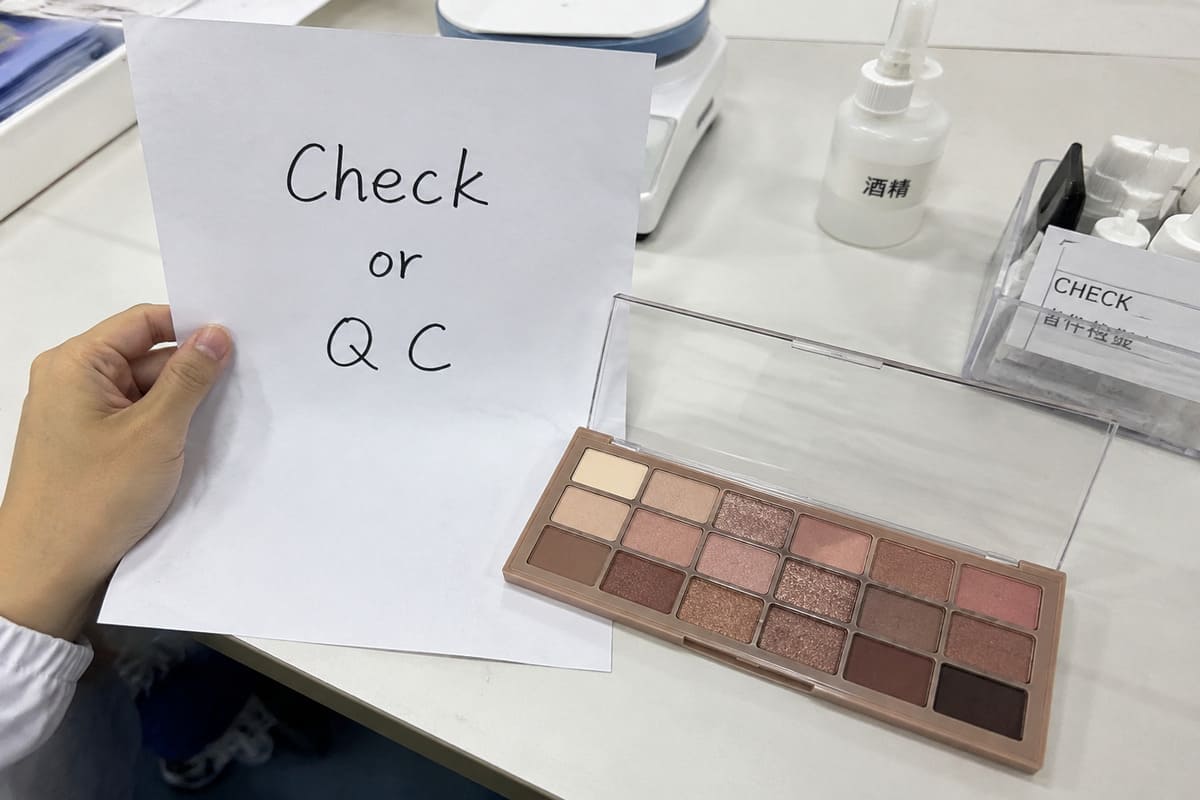
Many suppliers can display attractive product images and claim OEM or ODM expertise. However, those claims do not always show whether a factory can deliver the same shade, texture, packaging, and quantity after the order is confirmed. I will explain the practical evidence I use when evaluating factory capability, including a real sampling-delay case and the questions I believe every buyer should ask.
What Does a Reliable Eyeshadow Manufacturer Actually Look Like?
The wrong eyeshadow manufacturer may offer a low price and an impressive catalog, but still lack control over formulation, sourcing, or production scheduling. This creates problems when a buyer needs repeat orders, special-effect pigments, or a product that matches an approved sample. I evaluate the operating process behind the sales presentation.
A reliable eyeshadow manufacturer can explain its formulation options, sampling schedule, packaging sources, production controls, and order limitations in specific terms. The factory should distinguish between standard shades and fully custom formulas, explain how special pigments affect lead time, and show how bulk production is compared with the approved sample. Clear answers matter more than broad claims.
What Evidence Should I Request From an Eyeshadow Factory?
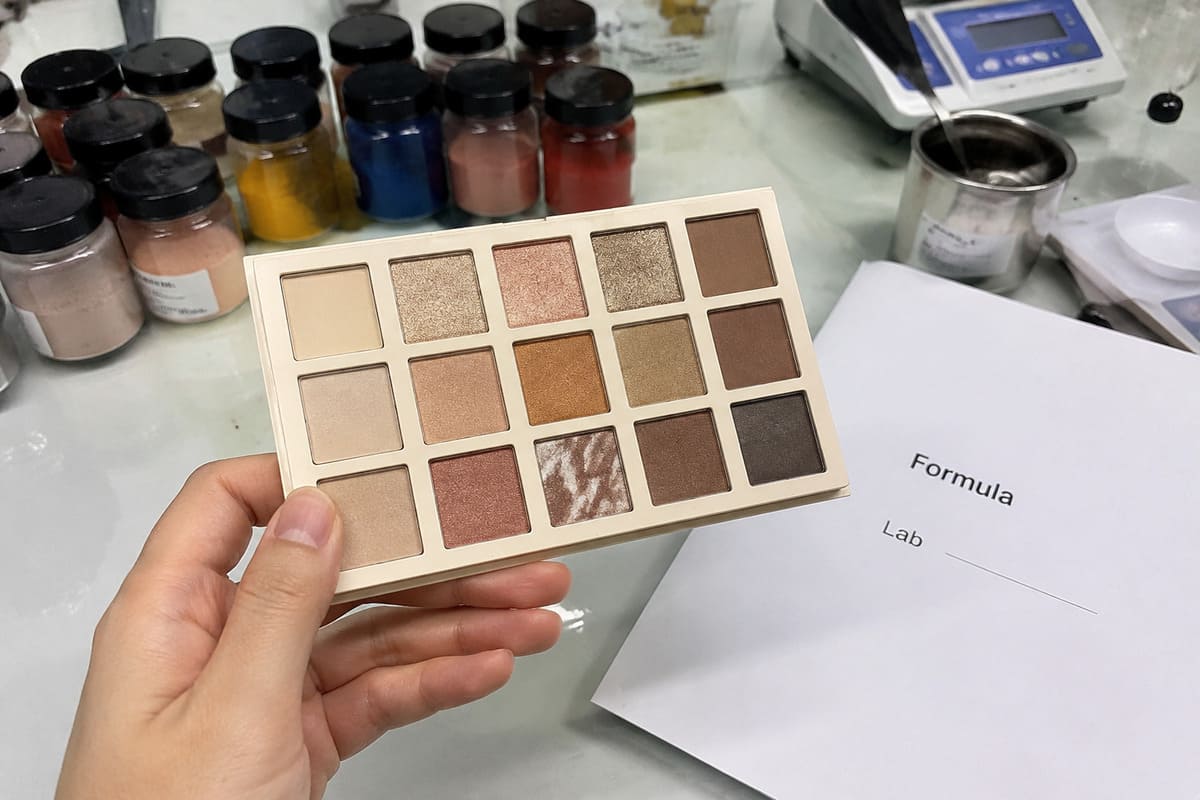
I do not believe that a factory tour or a long product catalog proves reliability on its own. I look for evidence that connects the supplier's claims to the exact product that I may purchase.
I recommend asking for:
- A clear product specification sheet.
- A written sampling timeline.
- The formula or ingredient documentation available for the intended market.
- Packaging dimensions, material details, and decoration limitations.
- The MOQ for the selected formula and packaging.
- A description of in-process and finished-product quality checks.
- A defined approval process for samples and color standards.
- Examples of how the factory manages changes between sampling and bulk production.
- Export and labeling documentation relevant to the destination market.
At Vertina Beauty, I work with clients on eyeshadow products such as matte palettes, shimmer eyeshadows, sparkle eyeshadows, glitter effects, and chameleon eyeshadows. Each category can create different production requirements. A simple existing shade is easier to schedule than a new formula that requires special pigments, texture adjustments, or new packaging components.
| Evaluation area | Evidence I look for | Warning sign |
|---|---|---|
| Product capability | Specific explanation of textures, pigments, and shade development | The supplier claims to make everything without technical detail |
| Sampling | A written timeline with assumptions | “Tomorrow” is promised for every product |
| Packaging | Confirmed MOQ, mold, decoration, and material information | Packaging is discussed only through photos |
| Quality control | Batch comparison and inspection steps | Quality is described only as “high quality” |
| Communication | Direct answers and organized documents | The supplier avoids limitations |
| Commercial fit | MOQ and delivery plan match the buyer's budget | The lowest price is offered without specifications |
Why Does Factory Size Matter?
I operate in a Chinese manufacturing business with approximately 100 employees. In my experience, this scale can support medium-sized B2B orders while preserving faster communication than some very large organizations. However, employee count is only context. I still expect a supplier to prove production capacity, staffing, scheduling, and quality controls for the specific order.
A small trading office may have access to factories, but it may not control the formula, packaging schedule, or production queue. I therefore ask who will make decisions when a shade fails approval, a component is delayed, or a customer requests a change.
I also recommend that buyers clarify these points before paying:
- Who owns the sample development process?
- Who purchases special pigments and packaging components?
- Who approves the final bulk shade?
- Who communicates a production delay?
- Who handles an agreed adjustment if batch results differ from the approved sample?
These questions reveal whether the supplier is a manufacturer, a trading company, or a combination of both. A trading company can still be useful, but the buyer needs to understand its role and avoid assuming that it controls factory-level decisions.
What Are the 3 Hard Metrics to Evaluate an Eyeshadow Factory?
Many supplier evaluations rely on soft impressions such as fast replies, attractive photos, or a confident sales presentation. Those signals can help, but I place more weight on measurable operating commitments. The three hard metrics I use are sampling lead-time transparency, MOQ flexibility, and bulk-to-sample consistency.
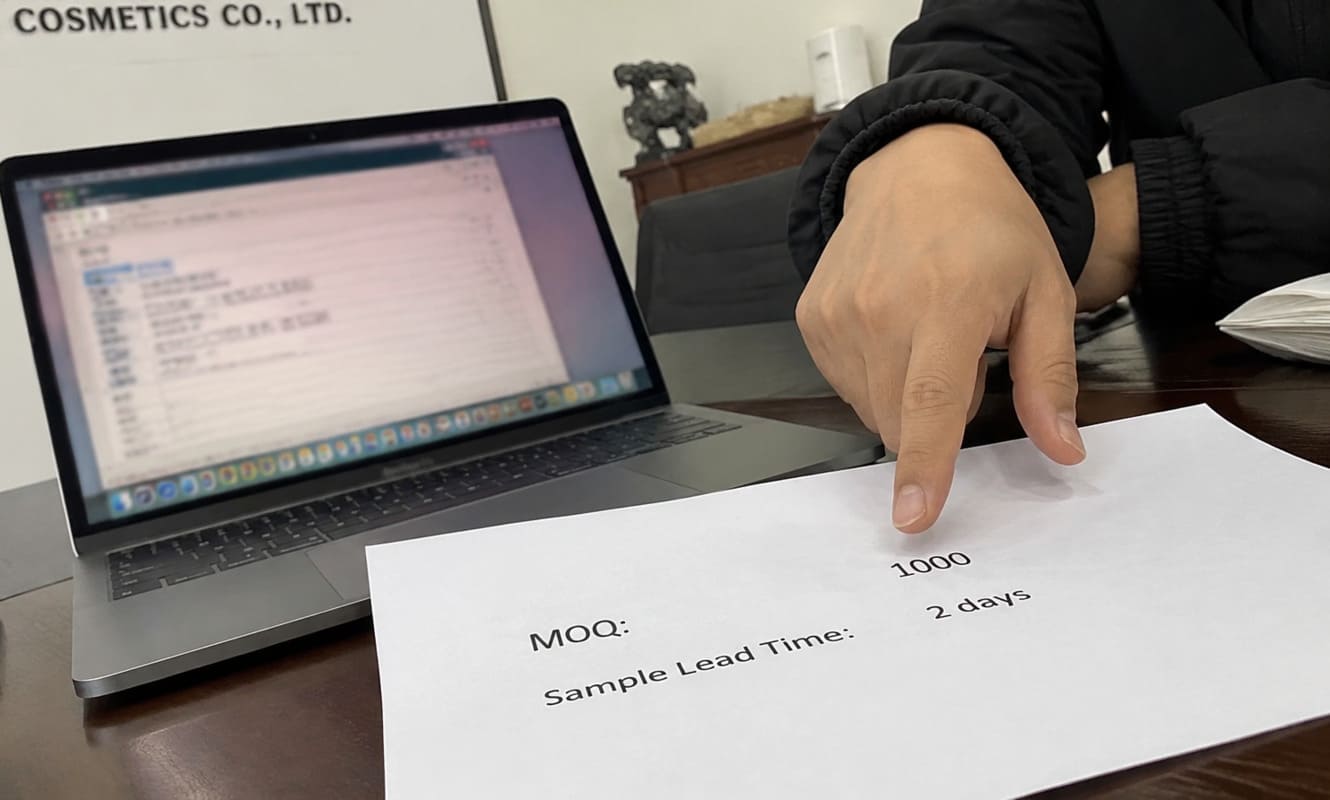
The three hard metrics are transparent sampling lead times, packaging-specific MOQ flexibility, and documented consistency between the approved sample and bulk production. A practical benchmark is two days for a simple existing formula and up to one week for a complex formula involving special pigments or new raw materials. Standard packaging may begin at 1,000 units, while custom components may require 5,000 to 10,000 units.
1. How Transparent Is the Sampling Lead Time?
I consider sampling transparency a direct indicator of production honesty. A simple existing formula may take approximately two days to prepare. A complex chameleon, sparkle, or glitter formula may take up to one week because the factory may need to source special pigments or components from packaging suppliers. Shipping time can affect the schedule.
The timeline should also state whether it includes:
- Formula selection.
- Raw material sourcing.
- Pressing or filling.
- Packaging assembly.
- Internal quality checks.
- Sample delivery by courier.
| Sample type | Typical development expectation | Main variables |
|---|---|---|
| Existing standard shade | About 2 days | Availability of formula, pigment, and packaging |
| Existing formula with shade adjustment | Several days | Color matching and texture correction |
| Special sparkle or glitter effect | Up to 1 week | Pigment availability, fineness, adhesion, and pressing |
| Chameleon eyeshadow effect | Up to 1 week or longer | Special pigment sourcing and visual evaluation |
| Fully new formula | About 1 week or longer | Development, stability review, and repeated adjustment |
| New custom packaging | Additional time | Mold, decoration, component production, and shipping |
I become cautious when a supplier promises “order today, sample tomorrow” without asking about the shade, texture, packaging, or target market. A fast answer may be possible for an existing stock item, but it should not be presented as a universal production standard.
2. How Flexible Is the MOQ?
MOQ is not a single factory-wide number. MOQ depends on the formula, filling method, pan size, palette structure, packaging material, printing method, and component supplier.
At Vertina Beauty, standard packaging can sometimes start at approximately 1,000 units. Some custom packaging designs require 5,000 or even 10,000 units. I explain this distinction early because a low formula MOQ does not automatically mean a low packaging MOQ.
| Project type | Possible MOQ direction | Commercial use |
|---|---|---|
| Existing shade with standard packaging | Around 1,000 units | Market testing and smaller wholesale orders |
| Existing shade with multiple standard colors | Depends on color and packaging mix | Palette launches and mixed product tests |
| Custom printed standard component | Often higher than plain stock packaging | Brand identity with controlled tooling risk |
| Fully custom component | Often 5,000 to 10,000 units | Established brands with larger forecasts |
| Custom mold with 3D-printed prototype | Final MOQ depends on production component | Design validation before tooling commitment |
For a buyer with enough design budget, I can discuss 3D-printed molds. The buyer can first confirm the design and pay the mold fee after approving the concept. This approach can help create a distinctive package and may support a design-patent strategy, subject to qualified legal advice in the relevant jurisdiction. I never treat a 3D prototype as proof that the final production component will have identical material or performance.
3. Does Bulk Production Match the Approved Sample?
Sample consistency is the most important commercial test because the buyer sells the bulk product, not the development sample. I expect bulk production to follow the approved sample. I also expect the production team to use that sample as a comparison standard.
Relevant comparison points include:
- Pigment fineness.
- Pressing density.
- Surface appearance.
- Color difference.
- Payoff and blendability.
- Glitter or sparkle distribution.
- Pan fill weight.
- Packaging fit and finish.
A factory should explain how it records approval. I prefer a retained reference sample, written shade identification, batch records, and defined inspection points. If a batch shows a deviation, I believe the supplier should communicate the issue and work with the buyer on an adjustment. Long-term cooperation depends on solving deviations, not hiding them.
How Did We Help a Client Avoid a Two-Month Sampling Delay?
A buyer can lose an entire selling season when a supplier gives an unrealistic sample promise. I saw this happen when a client approached us after a trading company had delayed his project for two full months. The original supplier had promised samples in two days, but it had not explained the formula, pigment, or packaging requirements.
We helped the client avoid another delay by defining the project before quoting a schedule. We asked about the desired shades, texture, target market, packaging, and the buyer's meaning of an “ideal sample.” We then separated the simple components from the complex ones and explained which materials could affect delivery.
What Happened During the Consultation?
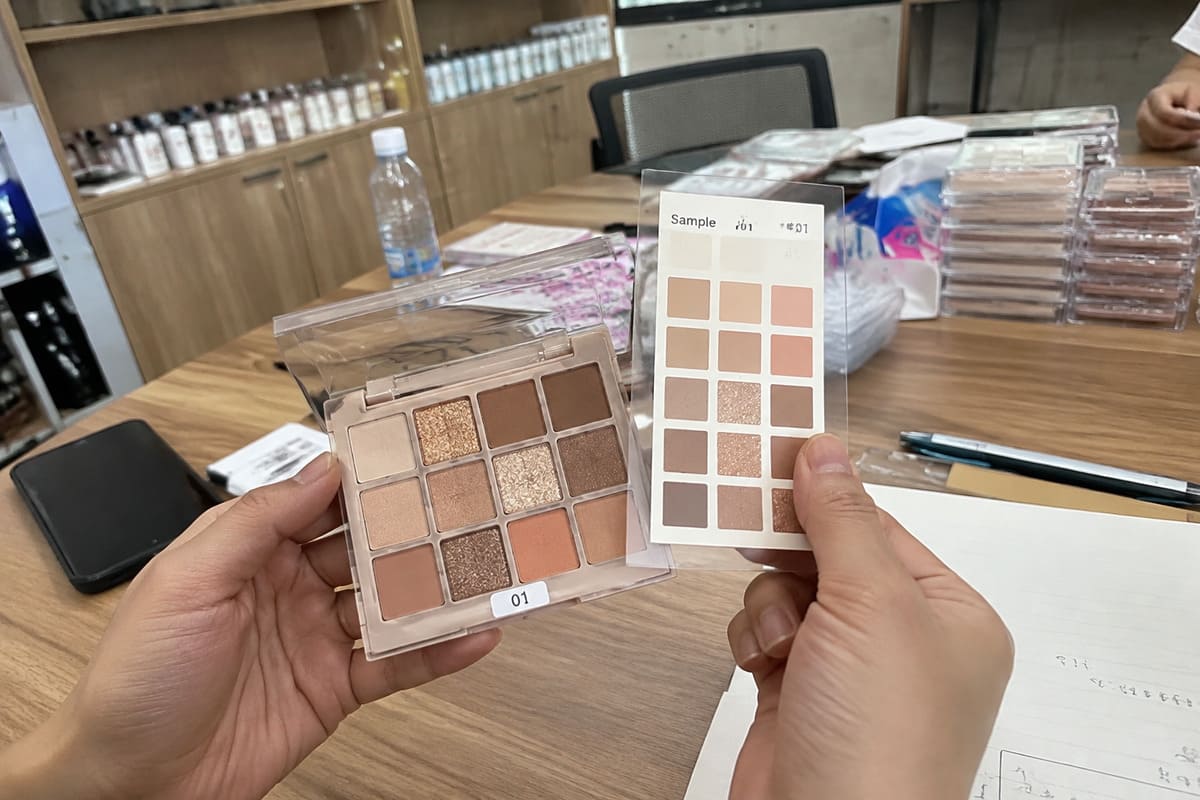
The client wanted a visually distinctive eyeshadow product with a combination of matte, shimmer, and special-effect shades. He was cautious because the previous supplier had given him vague explanations. He initially wanted a very short timeline, but he also wanted a result that required special pigment sourcing.
I did not treat those requirements as contradictory. I explained the process in practical terms:
- We confirmed the texture and finish for each shade.
- We checked whether the requested pigments were available.
- We reviewed the target packaging and its component MOQ.
- We clarified the destination market and documentation expectations.
- We separated standard formulas from custom development.
- We set a sampling timeline based on actual material availability.
- We planned feedback rounds before discussing bulk production.
For a simple existing formula, I explained that sampling may take about two days. For complex formulas, I explained that the process may take up to one week because special raw materials sometimes need to be sourced from packaging or component suppliers and shipped to the factory.
The client later told me, “If someone had explained the process to me this clearly earlier, I would not have wasted two months.” That comment stayed with me because it identified a common B2B problem. Buyers do not always need an unrealistic promise. They need a schedule that they can use for inventory planning, launch planning, and customer commitments.
How Can Buyers Prevent a Similar Delay?
I recommend putting the following information into the first project email or purchase brief:
| Required project detail | Why it affects timing |
|---|---|
| Number of shades | More shades require more development and checking |
| Finish for each shade | Matte, shimmer, sparkle, and glitter behave differently |
| Existing or new formula | New formula development adds technical work |
| Pigment requirement | Special pigments may need sourcing and shipping |
| Packaging design | Custom components can require tooling or production time |
| Target order quantity | Quantity affects production planning and MOQ |
| Destination market | Labeling and documentation may affect approval |
| Sample approval deadline | The factory needs a fixed decision point |
I also recommend asking, “What could make this timeline longer?” The answer is often more useful than asking only, “How fast can you deliver?” A reliable supplier should identify dependencies instead of treating every project as a standard stock order.
Why Should You Ask About QC Processes Before Placing an Order?
A supplier may possess quality-related documents and still lack a clear production control process for the buyer's product. I believe quality control should be evaluated as a sequence of actions, not as a label. Buyers need to know how the factory controls formula production, samples, filling, pressing, packaging, and final inspection.
A reliable eyeshadow manufacturer should explain how it controls raw materials, formula processing, sample approval, bulk batch comparison, pressing density, pigment fineness, color difference, fill weight, packaging, and finished-product release.2 Buyers should verify all certificates, reports, and market documents independently and should request professional regulatory advice for application-specific decisions.
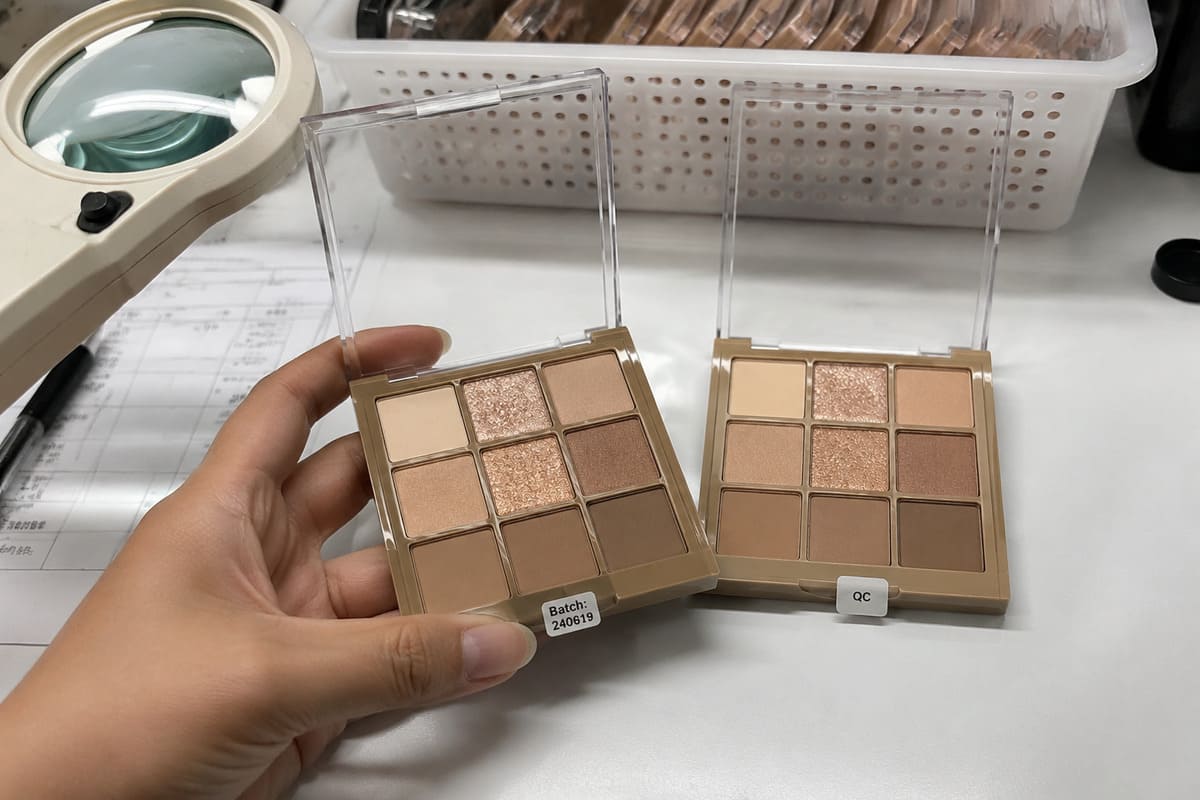
What Does an Eyeshadow QC Process Need to Cover?
I describe quality control in four stages.
1. Raw Material and Formula Control
The factory should identify the formula, raw materials, pigment requirements, and relevant specifications before production. Special-effect eyeshadows require particular attention because the visual result can depend on pigment particle characteristics, mixing, pressing pressure, and application of the product.3
I expect the factory to control:
- Raw material identity and incoming condition.
- Formula version and approved changes.
- Pigment color and effect.
- Mixing or processing instructions.
- Batch records.
- Storage conditions.
2. Sample Control
The sample should become a reference, not a temporary sales item. I recommend that the buyer and factory record the approved shade, finish, packaging, net weight, and visual standard. A photo alone is not enough for precise color control because lighting, camera settings, and screens can change appearance.4
3. Bulk Production Control
Bulk production should follow the approved sample. In our process, I focus on batch comparison tests that consider:
- Pigment fineness.
- Pressing density.
- Color difference.
- Surface finish.
- Payoff and texture.
- Pan weight and fill level.
- Packaging fit.
The factory should identify acceptable tolerances based on the product specification and applicable requirements.5 I avoid presenting one universal tolerance because the correct limit depends on the formula, color, test method, and buyer's specification.
4. Finished-Product Inspection
Finished-product inspection should confirm that the packed goods match the order. I recommend checking:
| Inspection point | Typical buyer concern |
|---|---|
| Appearance | Cracks, uneven pressing, contamination, or damaged pans |
| Shade | Difference from approved reference |
| Texture | Excessive fallout, hardness, or uneven payoff |
| Weight | Net content and declared quantity |
| Packaging | Closure, printing, decoration, and component damage |
| Carton quantity | Packing accuracy and shipping configuration |
| Documentation | Batch, label, and destination-market requirements |
What Compliance Documents Should Export Buyers Verify?
I do not recommend treating a certificate as a substitute for product evaluation. The required documents depend on the destination market, product classification, ingredients, claims, importer, and current regulations.
For example, a buyer selling in Saudi Arabia should confirm the current requirements with the Saudi Food and Drug Authority, the local importer, and a qualified regulatory professional. The buyer may need product notification or registration, compliant Arabic and English labeling where required, ingredient information, responsible-party details, and supporting safety or quality documents. The exact submission route can change, so the buyer should verify it before production.
For the European Union, the buyer should assess the applicable cosmetics framework, responsible person, product information file, safety assessment, ingredient labeling, and notification requirements.6 For the United States, the buyer should check current FDA cosmetics requirements, facility and product obligations where applicable, labeling, safety substantiation, and any relevant claims restrictions.
| Market | Buyer verification focus |
|---|---|
| Saudi Arabia | Current SFDA requirements, product notification or registration, importer role, and Arabic labeling |
| European Union | Responsible person, safety assessment, product information file, notification, and compliant label |
| United States | Current FDA cosmetics obligations, labeling, safety substantiation, and claims |
| Southeast Asia | Destination-country rules, importer responsibilities, labeling, and product notification |
| Middle East and Africa | Country-specific registration, language, ingredients, and importer documentation |
I am willing to share the QC process and available documents for review, but I do not tell buyers to assume that a document automatically proves every product or market requirement. Qualified professionals should evaluate application-specific compliance.
A Transparent Look at MOQ, Sampling Time, and Customization
Many buyers want a low MOQ, fast delivery, and fully custom packaging at the same time. Those goals can conflict because component suppliers, mold makers, pigment manufacturers, and production lines have their own minimums and schedules. I prefer to explain the tradeoffs before a buyer commits capital.
The most responsible purchasing plan matches customization depth with market evidence. I generally recommend using existing shades and standard packaging for a first test batch when a buyer is entering a new market. After the buyer confirms sales, the brand can consider deeper formula, color, and packaging customization.
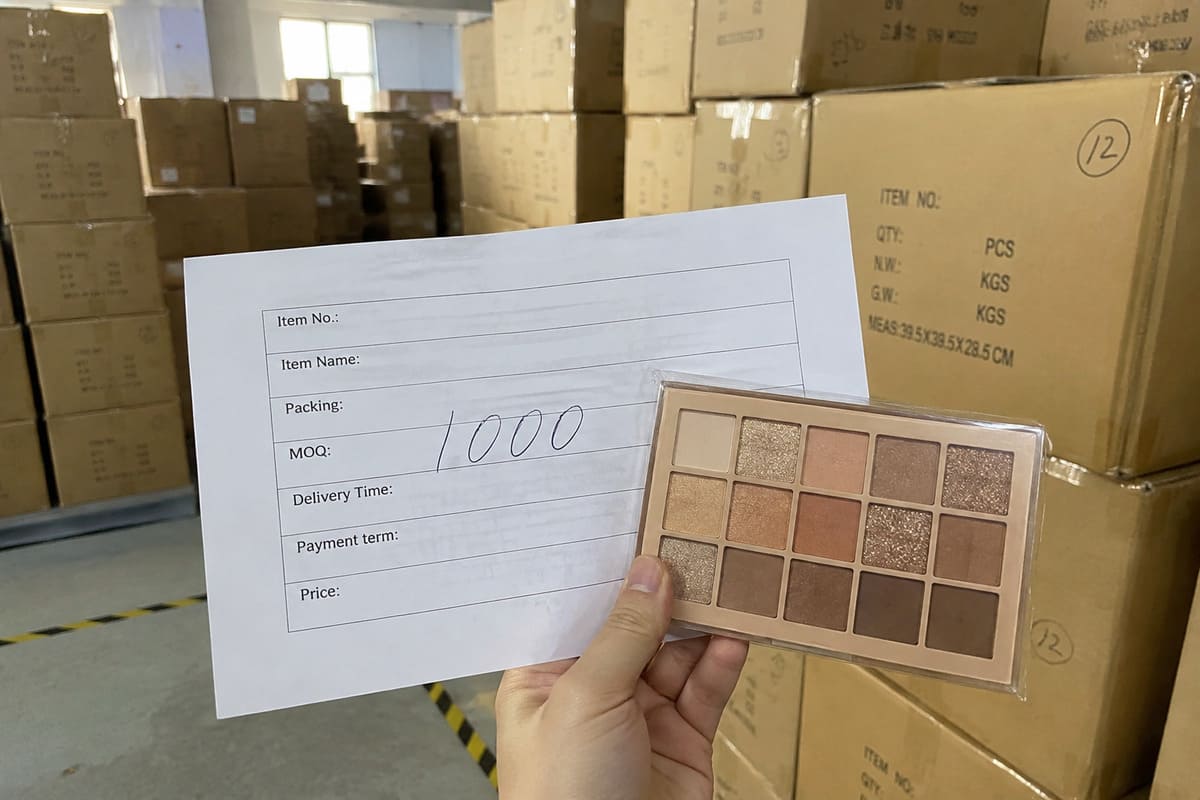
How Do MOQ and Customization Affect Each Other?
A buyer may customize the color, formula, finish, palette arrangement, packaging shape, printing, logo, and secondary packaging. Each choice can create a different MOQ or lead time.
| Customization level | Typical characteristics | Risk and planning impact |
|---|---|---|
| Standard product | Existing formula and stock component | Lowest testing cost and faster launch |
| Light customization | Existing formula with selected shades or logo decoration | Moderate component and artwork planning |
| Color customization | New shade or shade adjustment | Requires color development and approval |
| Formula customization | New texture, pigment balance, or performance target | Longer sampling and higher technical risk |
| Packaging customization | New shape, mold, or special decoration | Higher MOQ, tooling, and component lead time |
| Full OEM/ODM project | New product concept, formula, color, and packaging | Highest investment and longest development path |
I can support low MOQ for selected standard products, but I do not describe low MOQ as unlimited flexibility. A buyer may receive a low MOQ on the formula while still facing a higher MOQ on custom packaging. This distinction should appear in the quotation.
What Is a Sensible First-Order Strategy?
When a brand enters a new market, I believe the first order should protect working capital. I often recommend the following sequence:
- Select existing shades with proven production availability.
- Choose standard packaging with a lower component MOQ.
- Order samples that represent the exact bulk specification.
- Test customer response through the intended sales channel.7
- Review sell-through, returns, feedback, and repeat-purchase signals.
- Develop custom shades or packaging after the product earns evidence.
This approach does not prevent a brand from building a unique identity. It simply places expensive customization after initial market validation. A distributor may need bold color and fast replenishment, while a new brand may prioritize custom packaging and storytelling. I adjust the recommendation to the buyer's business model.
How Should Buyers Compare Supplier Quotes?
A low unit price can hide costs for molds, artwork, packaging, freight, testing, or small-quantity handling. I recommend comparing total landed cost and project risk.
| Cost category | Question I ask |
|---|---|
| Product price | Does the price include the exact formula and net weight? |
| Packaging | Is the component stock, printed, or fully custom? |
| Tooling | Is a mold fee required, and who owns the mold? |
| Sampling | Are development rounds and courier costs included? |
| Testing | Which safety or market documents are included? |
| Freight | Is the quote factory-gate, FOB, or delivered? |
| Reorder price | Will the price change after the first order? |
| Defect handling | What happens if the bulk product does not match approval? |
I also advise buyers to confirm whether the quoted price applies to one shade, one packaging format, or a mixed order. Mixed low-MOQ orders may be commercially possible, but they require a clear production and packing plan.
Frequently Asked Questions
How Do I Choose an Eyeshadow Manufacturer for a New Brand?
I recommend comparing at least three suppliers using the same brief. I check formula capability, sample timing, MOQ, packaging options, QC process, documentation, communication, and bulk consistency. For a new brand, I usually prioritize a manageable test order and reliable communication before investing in a fully custom formula or mold.
What Is a Normal Eyeshadow Sampling Time?
I consider approximately two days reasonable for a simple existing formula when the relevant materials are available. A complex formula using special sparkle, glitter, or chameleon pigments may take up to one week. A fully new formula or custom package can require additional time for development, sourcing, tooling, and approval.
Can an Eyeshadow Manufacturer Support Low MOQ?
I can support low MOQ for selected standard formulas and packaging options. Standard packaging may begin at approximately 1,000 units, while custom components can require 5,000 to 10,000 units. I recommend confirming the MOQ separately for the formula, shade, packaging, decoration, and mixed-order configuration.
How Can I Confirm That Bulk Eyeshadow Will Match the Sample?
I recommend using a retained approved sample and a written product specification. The factory should compare bulk batches for pigment fineness, pressing density, color difference, texture, fill weight, and packaging. The buyer should also clarify the inspection method, acceptance criteria, and adjustment process before placing the order.
What Compliance Documents Do I Need Before Exporting Eyeshadow?
I cannot give one universal document list because requirements depend on the destination market, ingredients, claims, importer, and product classification. I recommend confirming current requirements with the destination-market authority, importer, and qualified regulatory professional. Buyers should verify labels, ingredient information, safety documentation, product notification, and responsible-party obligations where applicable.
Conclusion
Choosing an eyeshadow manufacturer requires more than comparing product photos or unit prices. I recommend evaluating three hard metrics first: transparent sampling lead time, packaging-specific MOQ flexibility, and consistency between the approved sample and bulk production. I also recommend reviewing the factory's QC process, confirming documentation for the target market, and limiting initial investment when market demand is unproven. At Vertina Beauty, I support B2B buyers with low-MOQ standard options and customized OEM/ODM services for shades, formulas, special effects, and packaging. Contact me with your product brief so I can help match your budget, timeline, and market plan to a practical manufacturing solution.
"Let's bring your vision to life. - Source Cosmetic Manufacturer", https://vertinabeauty.com/contact/. Official cosmetics regulatory guidance indicates that documentation, notification, labeling, and responsible-party obligations vary by jurisdiction and should be checked for the intended market before products are placed on sale. Evidence role: general_support; source type: government. Supports: Official cosmetics authorities describe market-specific obligations for product documentation, responsible persons or importers, notification, labeling, and safety evidence.. ↩
"GMP Guidelines/Inspection Checklist for Cosmetics - FDA", https://www.fda.gov/cosmetics/cosmetics-guidance-documents/good-manufacturing-practice-gmp-guidelinesinspection-checklist-cosmetics. Recognized cosmetics GMP frameworks describe quality controls spanning receipt of materials, production and packaging operations, documentation, inspection, and release of finished products. Evidence role: general_support; source type: institution. Supports: Recognized cosmetics GMP frameworks cover quality controls over materials, production, packaging, records, and release of finished products.. Scope note: Such frameworks provide general process support and do not prescribe identical test parameters or acceptance limits for every eyeshadow formula. ↩
"Determination of Metallic Impurities by ICP-MS Technique in ...", https://pmc.ncbi.nlm.nih.gov/articles/PMC8587163/. Studies of pressed cosmetic powders indicate that particle characteristics and formulation and compaction conditions can affect the structure, appearance, pickup, and application behavior of the finished powder. Evidence role: mechanism; source type: paper. Supports: Research on pressed cosmetic powders should link ingredient particle properties, mixing, binder distribution, and compaction conditions to powder appearance and performance.. Scope note: The magnitude and direction of these effects depend on the specific pigments, binders, equipment, and test methods used. ↩
"Editorial: Advances in color science: From color perception to ...", https://pmc.ncbi.nlm.nih.gov/articles/PMC9927385/. Color-science research shows that captured and displayed color depends on illumination, imaging, display, and viewing conditions; consequently, a photograph is not by itself a controlled reference for precise color matching. Evidence role: mechanism; source type: research. Supports: Color-science literature explains that illumination, camera capture, color processing, display characteristics, and viewing conditions can alter rendered and perceived color.. ↩
"GMP Guidelines/Inspection Checklist for Cosmetics", https://www.fda.gov/cosmetics/cosmetics-guidance-documents/good-manufacturing-practice-gmp-guidelinesinspection-checklist-cosmetics. Good manufacturing practice principles use approved product specifications and predefined acceptance criteria to support consistent quality-control and product-release decisions. Evidence role: expert_consensus; source type: institution. Supports: GMP quality systems use approved specifications and defined acceptance criteria to guide testing, disposition, and release decisions.. Scope note: Applicable legal requirements and suitable tolerances vary with the product, analytical method, and destination market. ↩
"Responsible Person for Cosmetic Products in the EU", https://cosmeticspif.com/responsible-person-cosmetics. Regulation (EC) No 1223/2009 establishes that cosmetics placed on the EU market are subject to requirements including a responsible person, product information file, cosmetic product safety report, prescribed labeling, and notification through the EU system. Evidence role: general_support; source type: government. Supports: Regulation (EC) No 1223/2009 and European Commission guidance establish the responsible-person, safety-report, product-information-file, labeling, and notification framework for EU cosmetics.. ↩
"Stress Test Your Business Idea", https://ctsbdc.uconn.edu/test-your-business-idea/. Market-validation guidance describes testing proposed products with target customers and collecting feedback as a means of reducing uncertainty before larger commitments to product development or launch. Evidence role: general_support; source type: education. Supports: Entrepreneurship and market-research guidance supports gathering customer feedback and demand evidence before committing substantial resources to a product launch.. Scope note: Customer-response testing can inform demand assumptions but cannot guarantee future sales, repeat purchases, or successful market entry. ↩