Finding a makeup manufacturer Australia brands can trust feels simple until you request a quote. You expect local logistics and easy compliance. Instead you hit a wall: the cheap options won't differentiate you, and the custom options lock up your cash for months. That gap costs founders real money and real time.
A makeup manufacturer in Australia typically offers two realities: ultra-low MOQ white-label stock (10–100 units, zero differentiation) or true custom runs starting at 1,500–3,000 units with 8–14 week lead times. New Laboratories, a Melbourne contract manufacturer, states typical MOQs of 3,000 units. The real decision is not "local vs. overseas" — it is how to validate demand before committing cash to customization.
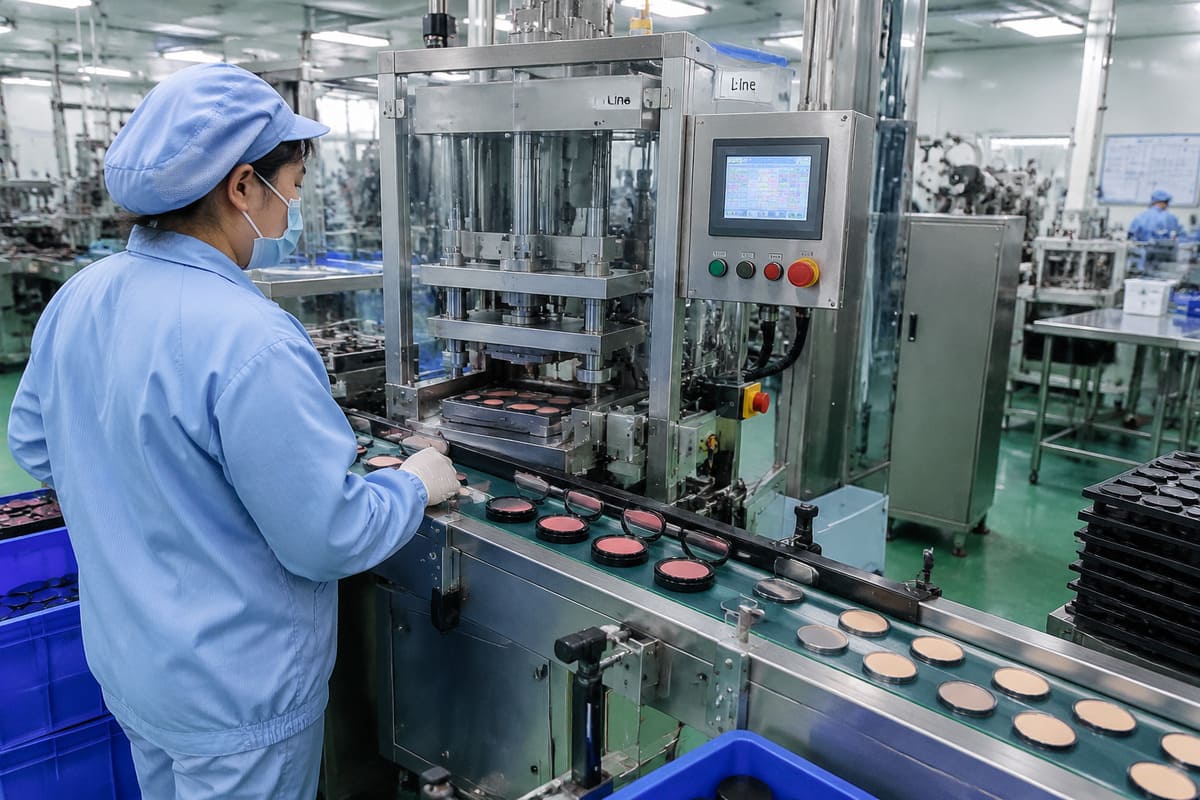
That reframe changes everything. The question is not where the factory sits. The question is how a founder reaches a product that is genuinely different, without gambling cash on an unproven concept. Let me break down what I have actually seen in this market.
What Does "Makeup Manufacturer Australia" Really Mean for a Brand Founder?
Most founders type "makeup manufacturer Australia" hoping for one clean answer. They want a local partner, simple shipping, and painless compliance. What they get is a fork in the road, and neither branch feels comfortable.
For a brand founder, "makeup manufacturer Australia" usually means choosing between two options: a local white-label supplier with tiny minimums but identical stock formulas, or a local custom manufacturer with real differentiation but 3,000-unit minimums and 8–14 week timelines. The search is really about differentiation and cash flow, not geography.
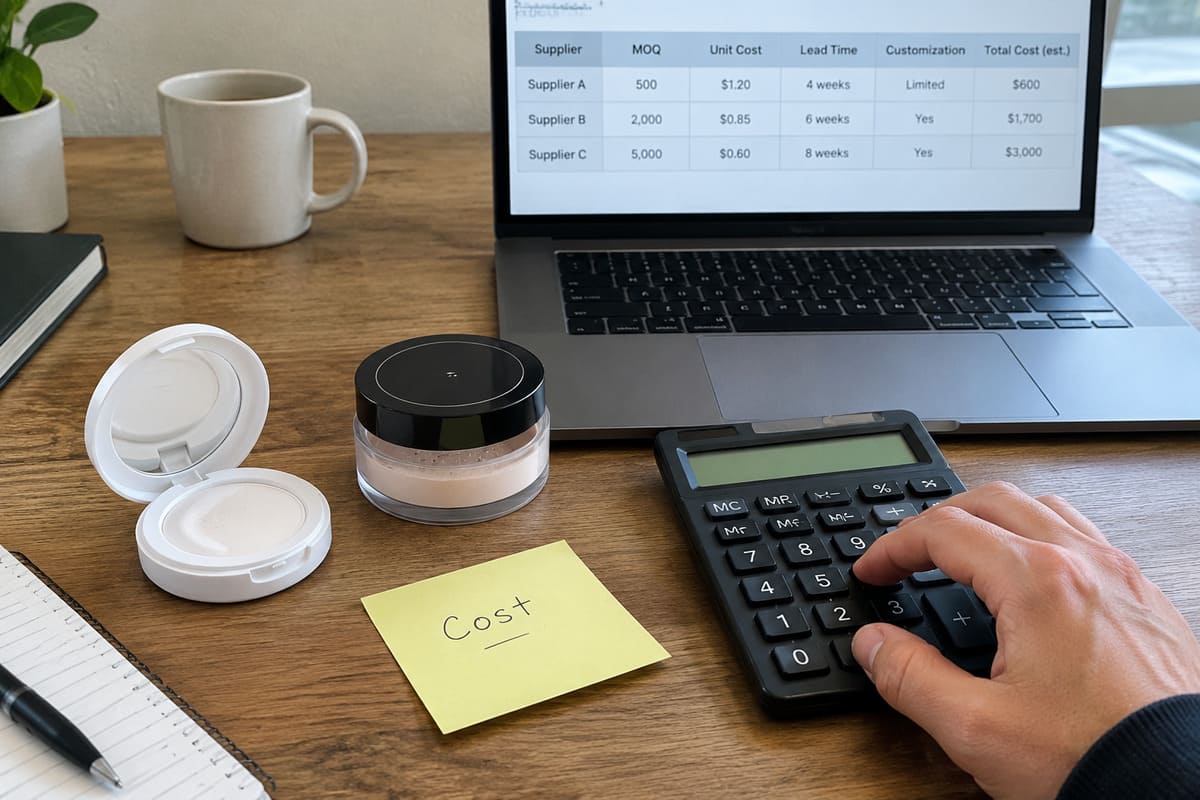
So the surface question hides the real one. Let me explain what the founder is actually asking, because that is where the money is won or lost.
The Question Behind the Search
When I talk to Australian founders, the words "local manufacturer" come up first. But after ten minutes, the true concern surfaces every time. He is not asking "Where is a factory in Australia?" He is asking something sharper:
"How do I get a product that is actually different from everyone else's, without locking up my cash in a 3,000-unit order and an 8–14 week development cycle, before I even know if Australians will buy it?"
That is the trap. He is caught between a local white-label that will not sell because it looks like everyone else's, and a local custom run he cannot afford to wait for. Both branches carry risk. One risks his brand identity. The other risks his bank balance.
Why Geography Is the Wrong Starting Point
A local cosmetics supplier simplifies shipping and shortens some conversations. That is real. But geography does not solve the two things that actually sink early brands: sameness and cash lock-up. A white-label palette made in Melbourne looks identical to a white-label palette made anywhere else. And a custom run made locally still demands the same upfront commitment before a single Australian consumer has voted with their wallet. The right starting question is risk, not postcode.
The Australian Manufacturing Reality: Why "Low MOQ" and "True Customization" Rarely Coexist Locally
Founders assume low minimums and deep customization live in the same place. I used to assume that too. Then I watched client after client discover the hard truth: in the Australian market, these two features almost never sit in one package1.
When evaluating a makeup manufacturer Australia offers, low MOQ and true customization rarely coexist. Ultra-low MOQ options (10–100 units) are white-label stock products with fixed formulas and packaging2. Genuine custom formulation and packaging typically start at 1,500–3,000 units. You generally pick one trade-off or the other locally.
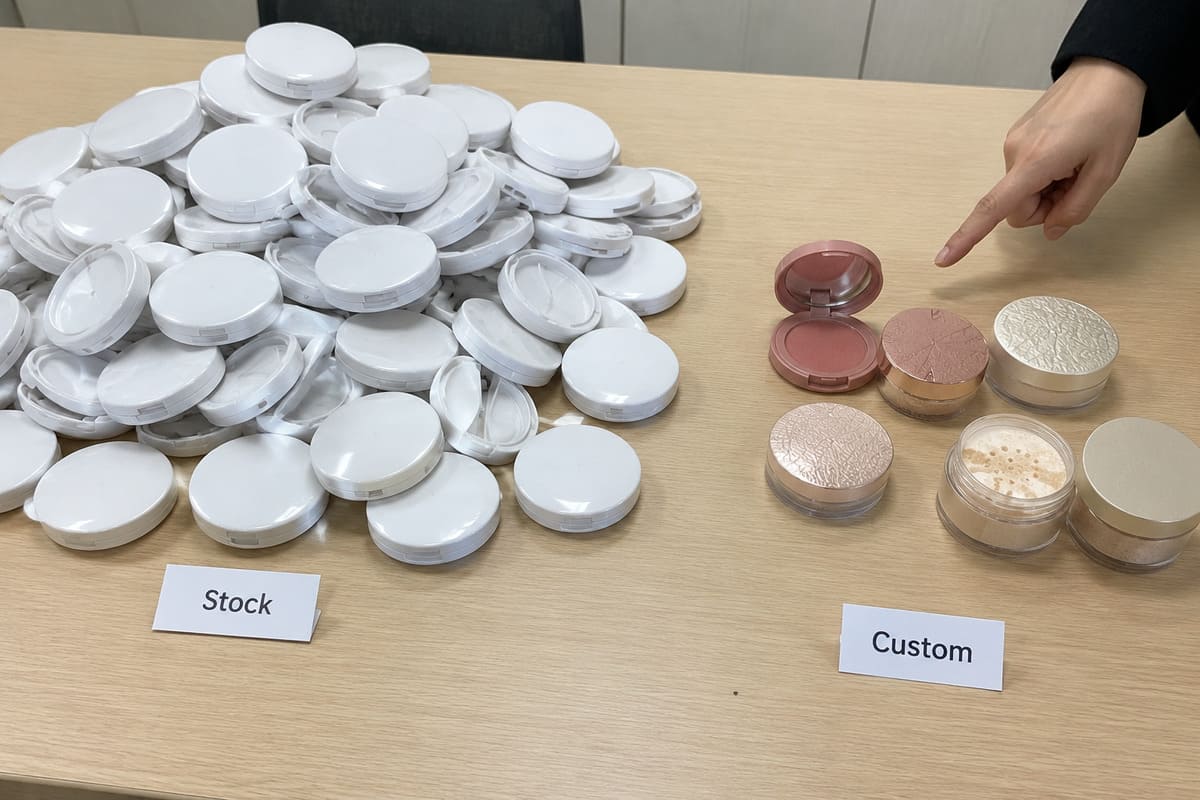
This split is not an accident. It reflects how production economics work. Let me show you the three real options side by side, because seeing them together makes the trade-off obvious.
The Three-Option Reality Check
Here is how I break down the Australian market for every founder who asks. There are three honest paths, and each one carries a clear cost.
| Option | MOQ | Differentiation | Lead Time | Upfront Cash Risk | Unit Cost |
|---|---|---|---|---|---|
| Local ultra-low MOQ | 10–100 units | None (stock formula + packaging) | Short | Low | High |
| Local true custom | 1,500–3,000+ units | Full (formula + packaging) | 8–14 weeks | High | Moderate |
| Staged path | 2,000 to validate, 5,000+ to differentiate | Format first, then full custom | Phased | Managed | Improves with volume |
- Local "ultra-low MOQ" (10–100 units): White-label stock formulas and packaging. Zero differentiation. High unit cost. This is a race to the bottom on price, and the founder rarely wins it.
- Local "true custom" (1,500–3,000+ units): Real formulation and custom packaging. But an 8–14 week development cycle and a significant upfront cash commitment, all spent before a single market validation.
- The staged path (2,000 validation / 5,000+ differentiation): Validate Australian demand first with a 2,000-unit standard palette carrying your own logo and curated shades. Once proven, invest in 5,000–10,000 units for exclusive formulation and packaging.
The staged path is the only one that manages both risks at once. The other two each leave one flank exposed.
What New Laboratories (and Others) Actually Require: MOQ, Lead Time, and the Cash Flow Trade-Off
Numbers matter more than slogans here. "Low MOQ" sounds friendly until you read the fine print. So let me give you the verifiable figures that define this market, because guessing is expensive.
New Laboratories, a Melbourne-based contract manufacturer, explicitly states typical MOQs of 3,000 units and formulation timelines of 8–14 weeks3. Australian indie founders commonly encounter entry thresholds of 1,500+ units even for relatively standard runs4. These are verifiable manufacturing constraints, not negotiable marketing claims.
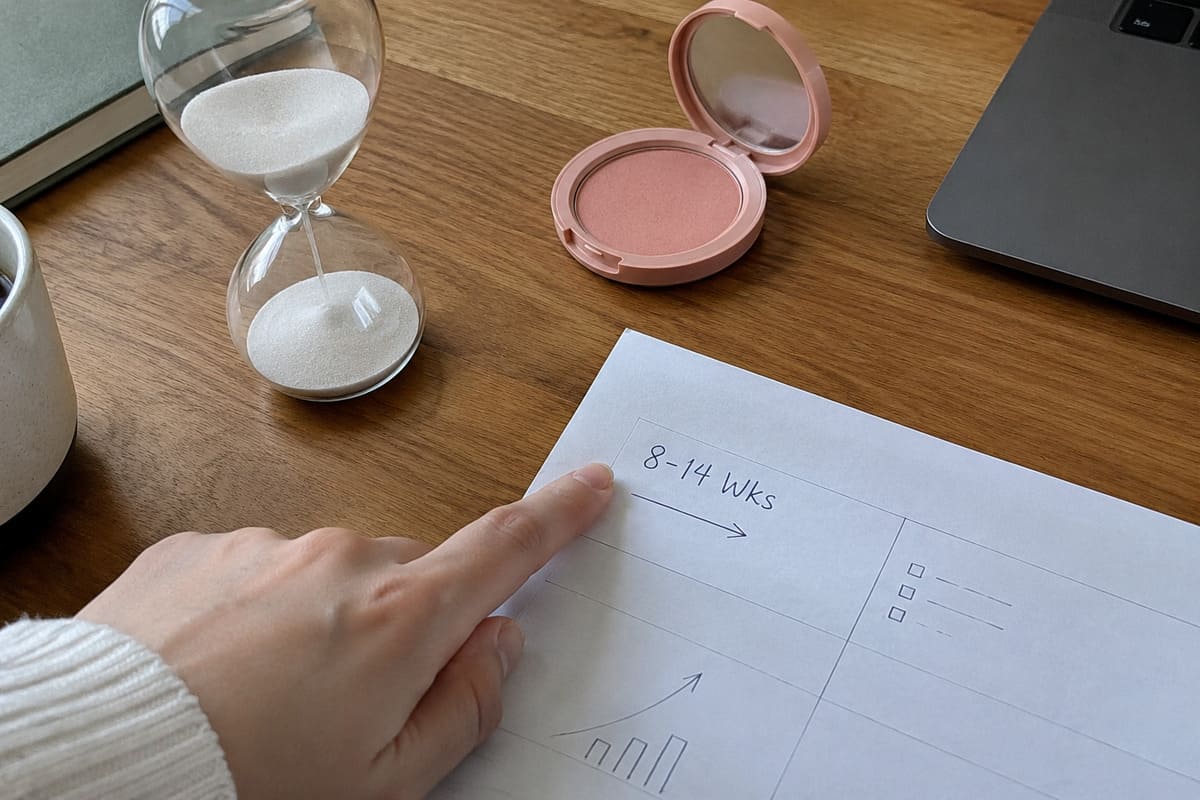
Those figures reshape the whole conversation. A 3,000-unit order at an 8–14 week timeline is not just a purchase. It is a bet placed before any evidence arrives. Let me walk through what that bet actually costs.
The Cash Flow Math Founders Miss
When a founder commits to a 3,000-unit local custom run, he pays for formulation, packaging tooling, and full inventory before the market speaks. Here is the sequence most people underestimate:
| Stage | What Happens | Typical Duration |
|---|---|---|
| Formulation + sampling | Lab develops and refines the custom formula | 4–8 weeks |
| Packaging + tooling | Custom components sourced and prepared | 2–4 weeks |
| Production run | Full 3,000+ unit batch manufactured | 2–4 weeks |
| Total before first sale | Cash locked, zero market feedback | 8–14 weeks |
Think about what that means. For roughly three months, the founder's capital sits frozen in a concept nobody has purchased yet. If the shade range flops, or the Australian market shrugs, he owns 3,000 units of a lesson. That is the trade-off hiding behind "true customization." The formulation is genuine. The risk is also genuine.
Why 1,500 Units Is Still a Gamble
Even the lower indie threshold of 1,500 units is not a safe entry point when it is custom. The cash commitment and lead time still land before validation. The problem was never the exact number. The problem is spending development money and waiting weeks on an unproven idea. Volume alone does not fix a sequencing mistake.
The Guangdong Alternative: 2,000 Units to Validate, 5,000+ to Differentiate
There is a path that does not force the founder to choose between sameness and a cash gamble. I have watched it work. It uses sequencing, not geography, as the lever.
The staged approach uses a 2,000-unit standard eyeshadow palette — with your own logo and curated shades — to validate Australian demand first. Once demand is proven, the founder moves to 5,000–10,000 units for exclusive formulation and custom packaging. This separates market validation from heavy customization investment, managing cash risk and brand risk together.
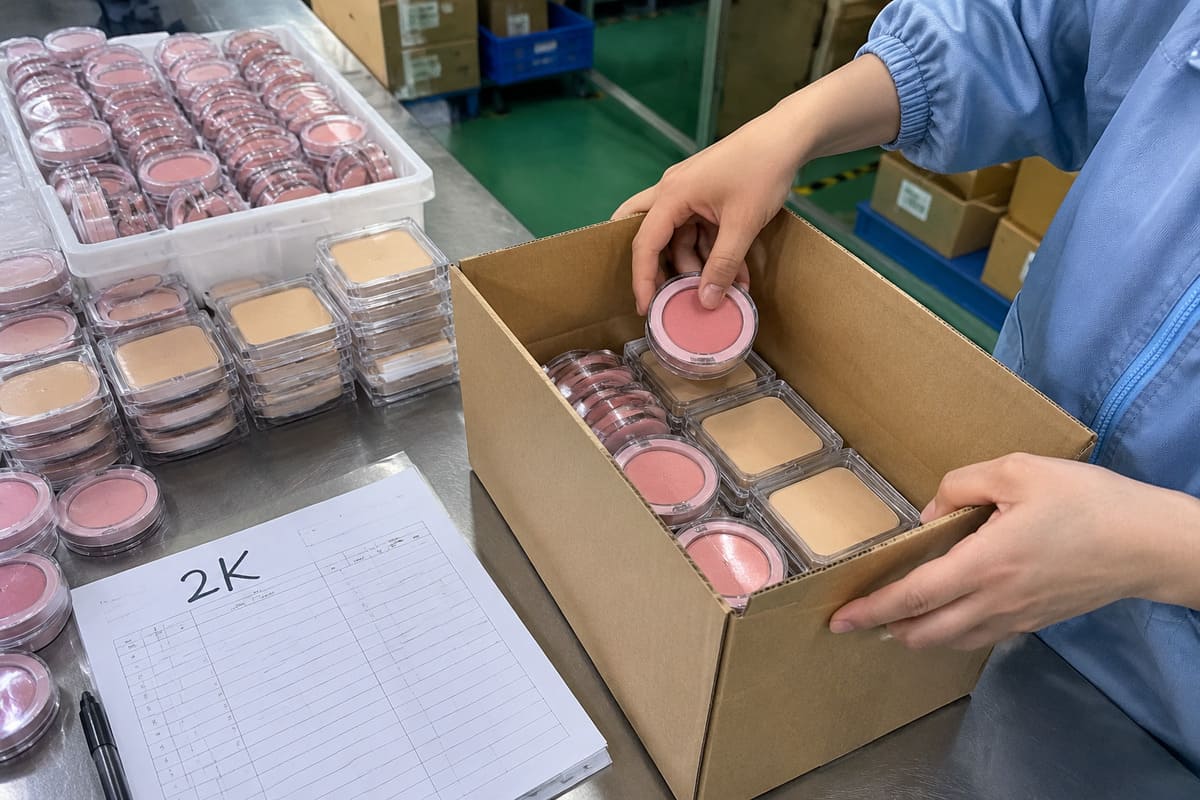
The logic is simple once you see it. Prove it sells, then make it special. Let me show you why this beats both local extremes.
Validation First, Customization Second
A 2,000-unit standard palette is not a white-label clone. It is a standard, proven format carrying the founder's own logo and a curated shade selection. It looks like a real product because it is one. But it does not require an 8–14 week custom formulation cycle, so the cash is not frozen in development.
Here is how the two phases compare:
| Phase | Volume | Purpose | Customization Level | Risk Managed |
|---|---|---|---|---|
| Validation | 2,000 units | Test real Australian demand | Logo + curated shades on standard format | Cash flow |
| Differentiation | 5,000–10,000 units | Build a defensible brand | Exclusive formula + custom packaging | Brand identity |
- Phase one answers the question "Will Australians buy this?" at a controlled cost.
- Phase two answers "How do I stand out?" at a volume that justifies the investment.
Our strength as a manufacturer sits in exactly this kind of "play with color" product — eyeshadow palettes, chameleon and sparkle finishes, high-pigment shades that photograph well on TikTok and Instagram5. That makes the validation palette genuinely marketable, not a placeholder. One founder I worked with ran the 2,000-unit trial, saw real traction, and only then committed to 5,000 units of a custom formula. His cash was never locked in a development cycle before he had proof. That is the whole point.
AICIS and ChAFTA: What Australian Brands Actually Need to Manage (And What They Don't)
Compliance scares founders more than it should, and the wrong fears steer bad decisions. Import duty is often the imagined villain. The real work sits elsewhere. Let me separate fact from worry.
Under AICIS (Australian Industrial Chemicals Introduction Scheme), the importer — not the overseas factory — is the responsible party for registration and compliance6. The 2026–27 base registration fee is A$857. Under ChAFTA, cosmetic tariffs have been reduced to zero for most products8. So the real cost barrier is compliance management and MOQ, not import duty.
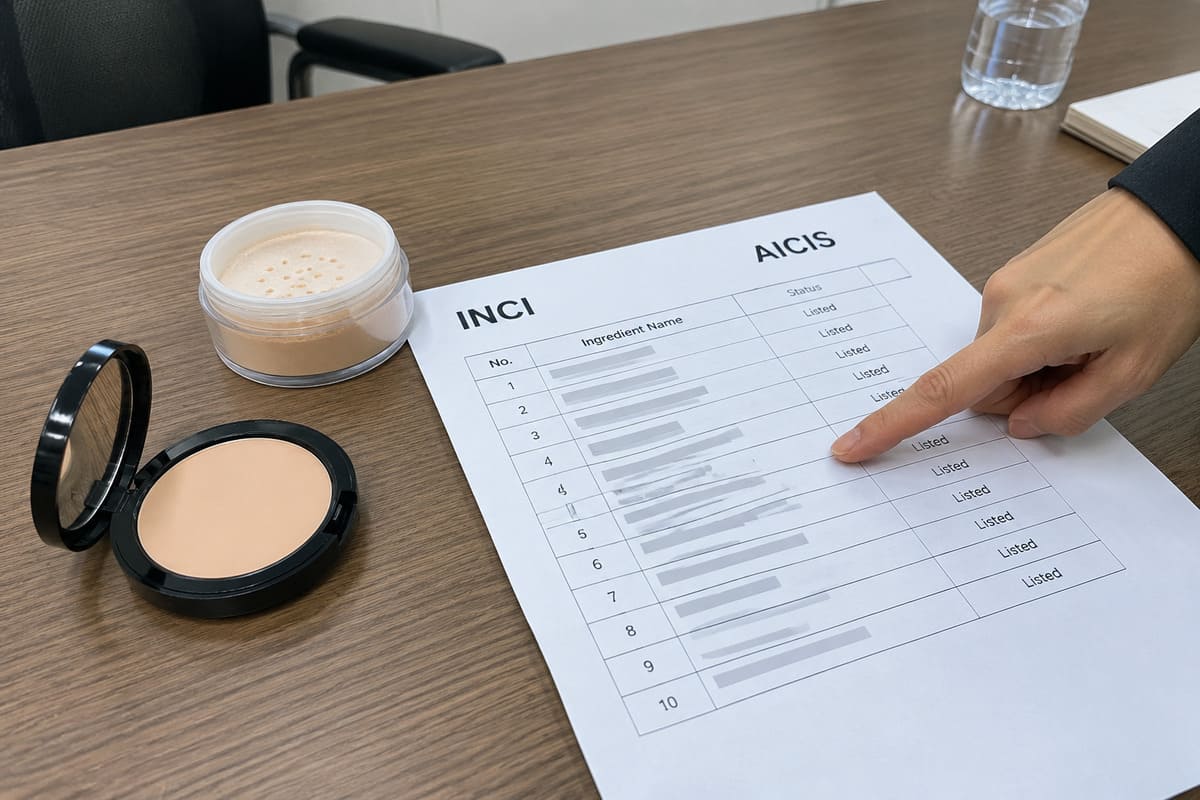
Those two facts remove a lot of noise. The tariff fear is mostly outdated. The compliance responsibility is real but manageable. Let me spell out each one.
What AICIS Actually Requires
AICIS governs the introduction of industrial chemicals, which includes cosmetic ingredients, into Australia9. The key point many founders miss: the legal responsibility sits with the importer, not the factory overseas.
| Compliance Item | Responsible Party | Typical Cost / Note |
|---|---|---|
| AICIS registration | The importer (you) | A$85 base fee (2026–27) |
| INCI / ingredient documentation | Supplied by manufacturer, used by importer | Provided with the order |
| Ongoing compliance records | The importer (you) | Annual registration renewal |
| Import tariff (ChAFTA) | N/A for most cosmetics | Reduced to zero |
I provide the INCI lists and documentation a founder needs to complete his own AICIS registration. I do not complete it for him, because the legal responsibility is his as the importer. That honesty matters. Any supplier who claims to "handle AICIS for you" is blurring a legal line you do not want blurred.
Why ChAFTA Changes the Cost Picture
The China–Australia Free Trade Agreement has reduced cosmetic tariffs to zero for most products10. That means the old "but import duty will eat my margin" worry is largely gone. The genuine barriers are two things: managing compliance correctly, and clearing the MOQ. Neither is about customs. Understanding this lets a founder plan around the real constraints instead of imaginary ones.
A Real Path: How One Australian Founder Validated First, Then Customized Without Burning Cash
Theory is tidy. Real founders are messy and anxious, and rightly so. Let me tell you about one who walked this exact road, because his sequence is the clearest proof of the argument.
One Australian founder first approached local manufacturers and hit the standard wall: ultra-low MOQ meant white-label repacks with zero differentiation, while true custom started at 3,000 units with 8–14 week timelines. He reframed the problem — validated demand with a 2,000-unit branded standard palette, completed his own A$85 AICIS registration using our INCI documentation, then scaled to 5,000 units of genuine custom formulation once demand was proven.
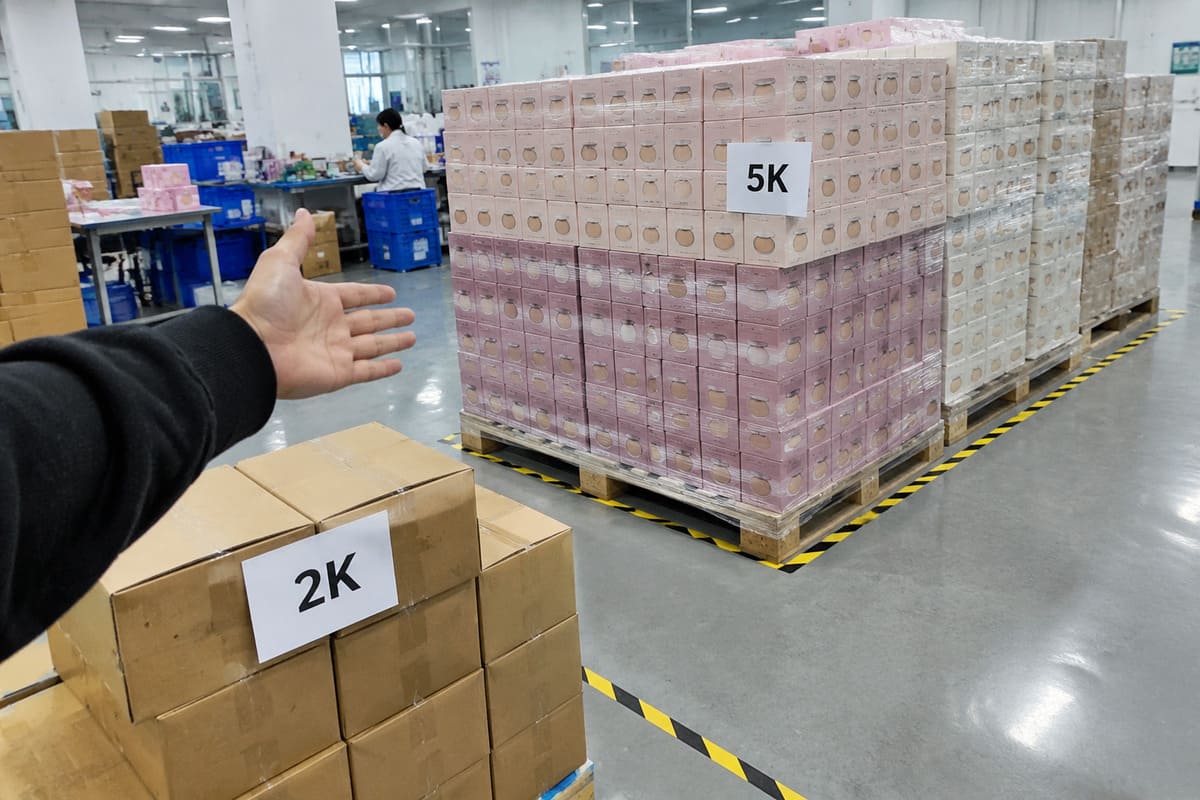
His story maps the trade-offs perfectly. He refused both gambles and sequenced them instead. Here is exactly how it unfolded.
The Sequence That Worked
When he first came to me, he was stuck. The local "low MOQ" quotes were stock repacks that would drown in a crowded market. The local custom quotes started at 3,000 units with a three-month wait, and he could not justify freezing that much cash on a concept Australians had never seen. So we reframed it.
- Validate (2,000 units): We ran a standard eyeshadow palette with his logo and a curated shade range. Real product, real branding, no long custom formulation cycle.
- Register (A$85 AICIS): While the trial ran, I supplied the INCI lists and documentation he needed. He completed his own AICIS registration as the importer. The base fee was A$85.
- Differentiate (5,000 units): Once the 2,000 units validated demand, he moved to a genuinely custom formula and packaging at a volume that justified the investment.
His cash was never trapped in an 8–14 week development cycle before he had proof. That is the difference between a plan and a gamble.
What I Will and Will Not Promise
I believe in being clear about the trade-offs, so here is the honest boundary.
- What I do: Offer a 2,000-unit eyeshadow palette trial as a validation step, provide INCI lists and documentation support for your AICIS registration, and give you a clear path to 5,000–10,000 unit true customization when you are ready.
- What I do not do: Pretend a 10-unit white-label product is a differentiated brand. Claim to handle AICIS on your behalf — that legal responsibility is yours as the importer. Hide shipping time or time-zone communication costs.
The honest sequence is validate, then customize. Skipping validation to go straight to a 3,000-unit custom run is a cash-flow gamble. Staying on white-label forever is a brand-identity gamble. The staged path is the only one that manages both.
Frequently Asked Questions
What is the typical MOQ for a makeup manufacturer in Australia?
Local custom runs typically start at 1,500–3,000 units. New Laboratories, a Melbourne contract manufacturer, states a typical MOQ of 3,000 units. Ultra-low MOQ options of 10–100 units exist, but they are white-label stock products with no real differentiation in formula or packaging.
Does the overseas factory handle my AICIS registration?
No. Under AICIS, the importer is the responsible party, not the overseas factory. The factory should supply INCI lists and ingredient documentation, but you complete the registration yourself11. The 2026–27 base registration fee is A$85. Treat any supplier claiming to register on your behalf with caution.
Do I pay import tariffs on cosmetics from China to Australia?
For most cosmetic products, no. Under ChAFTA (the China–Australia Free Trade Agreement), tariffs have been reduced to zero for most cosmetics. The real cost barriers are compliance management and meeting minimum order quantities, not import duty. Always verify your specific product's classification before ordering.
Why not just start with a fully custom local product?
You can, but a 3,000-unit custom run locks your cash for 8–14 weeks before any market feedback. If the concept underperforms, you own expensive inventory. Validating with a 2,000-unit branded standard palette first lets you confirm demand before committing to heavy customization investment.
How long does custom cosmetic formulation take?
Typical custom formulation timelines run 8–14 weeks, covering lab development, sampling, packaging tooling, and the production run12. This is why validating demand before starting a custom cycle matters. You avoid freezing capital in a product the market has not yet confirmed it wants.
Conclusion
Choosing a makeup manufacturer Australia brands can grow with is not about postcode. It is about managing two risks at once: brand sameness and cash lock-up. Local white-label options kill differentiation. Local custom runs demand 3,000 units and 8–14 weeks before any proof. The staged path solves both — validate demand with a 2,000-unit branded palette, complete your own A$85 AICIS registration, then scale to 5,000+ units for true customization. If you want a differentiated product without the cash-flow gamble, let's map your validation batch and plan the custom run that follows.
"Raw Material Minimum Order Quantity Optimization", https://dspace.mit.edu/bitstream/handle/1721.1/121302/1240293813-MIT.pdf?sequence=1. Literature on manufacturing setup costs and economic order quantity is cited to explain the mechanism by which customization raises minimum viable order volumes. Evidence role: mechanism; source type: research. Supports: That fixed setup, tooling, and formulation costs create higher minimum order quantities for customized production, explaining the trade-off between low MOQ and customization.. Scope note: General manufacturing cost principles are applied here and are not specific to the Australian cosmetics sector. ↩
"OEM Customization – Your Logo, Your Brand - Vertina Beauty", https://vertinabeauty.com/oem-customization-your-logo-your-brand/. A reference definition of white-label and private-label manufacturing is cited to support the description of low-MOQ stock products as non-differentiated. Evidence role: definition; source type: encyclopedia. Supports: That white-label (private-label) cosmetic products use pre-existing stock formulas and standardized packaging offered to multiple buyers.. Scope note: The definition describes the general model and does not quantify the specific unit thresholds cited in the article. ↩
"Cosmetic Contract Manufacturer: Enterprise Checklist", https://bayportlab.com/cosmetic-contract-manufacturer-enterprise-checklist/. The manufacturer's own published product and ordering information is cited to confirm the stated minimum order quantity and development timeline attributed to it. Evidence role: case_reference; source type: other. Supports: That New Laboratories publicly states a typical MOQ of 3,000 units and formulation timelines of 8–14 weeks.. Scope note: The source reflects one company's commercial terms at a point in time and may not represent the broader Australian contract-manufacturing market. ↩
"Low MOQ Cosmetic Manufacturing: A Guide for Indie ...", https://www.madebygenie.com/blog/low-moq-cosmetic-manufacturing-guide. An industry or trade-body report on cosmetic contract manufacturing is cited to contextualize typical minimum order thresholds faced by independent brands. Evidence role: statistic; source type: institution. Supports: That typical minimum order quantities for Australian indie cosmetic brands commonly begin around 1,500 units.. Scope note: Reported MOQs vary widely by product format and manufacturer; a single figure represents a typical range rather than a fixed standard. ↩
"High color complexity in social media images proves more ...", https://news.nd.edu/news/high-color-complexity-in-social-media-images-proves-more-eye-catching-increases-user-engagement/. Research on color saturation and social media engagement is cited to contextualize the claim that high-pigment shades photograph favorably for social platforms. Evidence role: general_support; source type: paper. Supports: That highly saturated, vivid product imagery tends to attract higher engagement on visual social media platforms.. Scope note: Such research addresses imagery and saturation generally and does not directly measure cosmetic eyeshadow performance on specific platforms. ↩
"What is registration and who must register?", https://www.industrialchemicals.gov.au/business/getting-started-registration-importing-and-manufacturing/what-registration-and-who-must-register. The official AICIS guidance defining the 'introducer' is cited to support the statement that registration and compliance responsibility rests with the importing party. Evidence role: definition; source type: government. Supports: That under AICIS the party introducing (importing) industrial chemicals into Australia holds the registration and compliance obligations.. ↩
"Fees and charges for 2026–27", https://www.industrialchemicals.gov.au/news-and-notices/fees-and-charges-2026-27. The official AICIS fees and charges schedule is cited to verify the base registration fee figure for the stated period. Evidence role: statistic; source type: government. Supports: That the AICIS base registration fee for the 2026–27 period is A$85.. Scope note: Fees are set annually and tiered by introduction category; the base figure may not apply to all registrant categories. ↩
"ChAFTA frequently asked questions", https://www.dfat.gov.au/trade/agreements/in-force/chafta/doing-business-with-china/chafta-frequently-asked-questions. The official ChAFTA text or Department of Foreign Affairs and Trade summary is cited to support the claim of tariff elimination for most cosmetic goods. Evidence role: general_support; source type: government. Supports: That under the China–Australia Free Trade Agreement tariffs on most cosmetic product categories have been eliminated.. Scope note: Tariff treatment depends on correct tariff classification and rules-of-origin compliance for each specific product. ↩
"Cosmetics", https://www.industrialchemicals.gov.au/glossary/cosmetics. Official AICIS scope documentation is cited to support the definition of regulated industrial chemicals as including cosmetic ingredients. Evidence role: definition; source type: government. Supports: That AICIS governs the introduction of industrial chemicals and that cosmetic ingredients are treated as industrial chemicals under the scheme.. ↩
"China–United States trade war", https://en.wikipedia.org/wiki/China%E2%80%93United_States_trade_war. An encyclopedic overview of ChAFTA is cited to provide historical context on the agreement's tariff-reduction commitments. Evidence role: historical_context; source type: encyclopedia. Supports: That the China–Australia Free Trade Agreement entered into force and progressively eliminated tariffs across most traded goods including consumer products.. Scope note: Encyclopedic summaries provide general context and should be confirmed against the official tariff schedule for specific product lines. ↩
"International Nomenclature of Cosmetic Ingredients", https://en.wikipedia.org/wiki/International_Nomenclature_of_Cosmetic_Ingredients. A reference source defining INCI is cited to support the role of standardized ingredient nomenclature in cosmetic documentation. Evidence role: definition; source type: encyclopedia. Supports: That INCI (International Nomenclature of Cosmetic Ingredients) is a standardized system used to identify cosmetic ingredients for labeling and documentation.. Scope note: The definition establishes the naming standard but not jurisdiction-specific registration requirements. ↩
"Cosmetic Product Development Timeline: Concept to Shelf", https://www.globalformulation.com/cosmetic-product-development-timeline-concept-to-shelf/. An industry guide on cosmetic product development stages is cited to support the typical end-to-end timeline for custom formulation. Evidence role: general_support; source type: institution. Supports: That custom cosmetic formulation and production lead times commonly fall within an 8–14 week range.. Scope note: Timelines depend on formula complexity, regulatory testing, and component sourcing, so the range is indicative rather than fixed. ↩