You found a mineral makeup manufacturer that says "talc-free," and you want to believe it. But a promise on a quote sheet is not proof on a shelf. If a KOL swabs your "clean" eyeshadow and finds something it shouldn't, your brand doesn't get a bad review. It gets a death sentence. That fear is the real reason you're reading this.
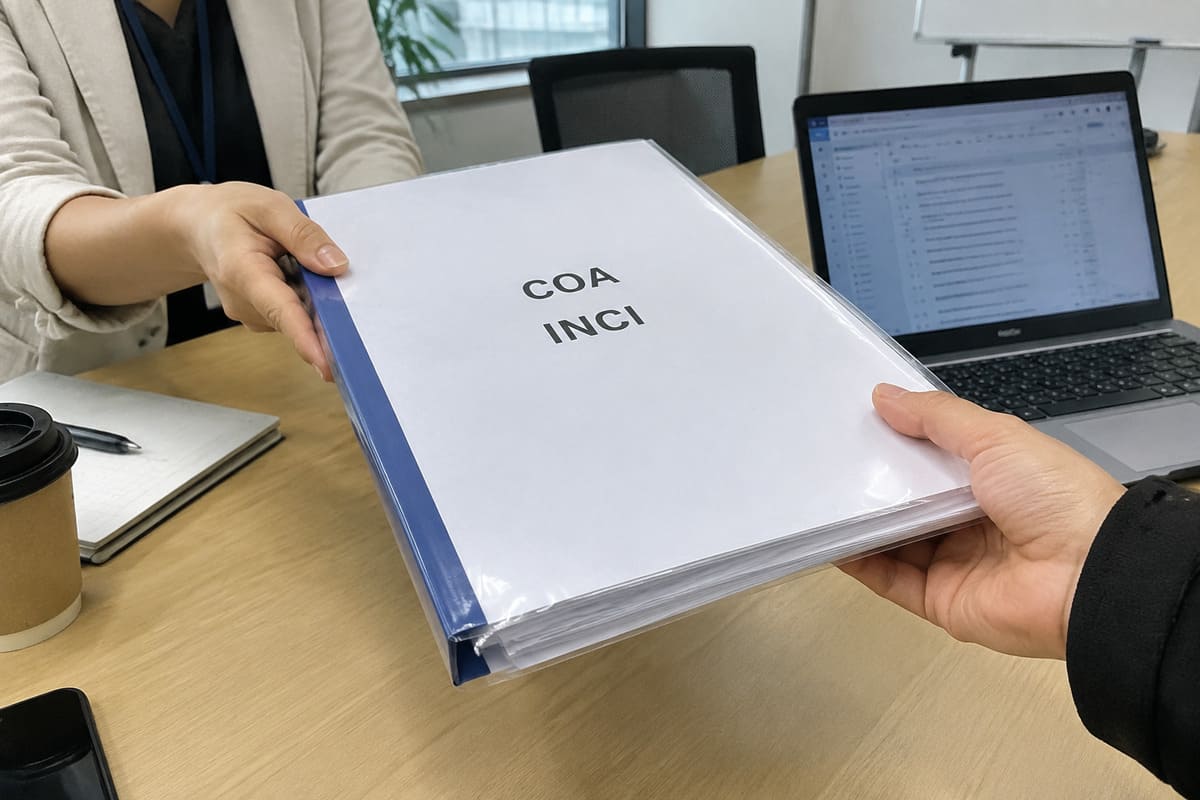
A mineral makeup manufacturer's real capability is not a talc-free claim—it is a verifiable evidence chain. That means an ingredient declaration, raw-material traceability, particle-size testing, binder and wear testing, plus batch stability and a Certificate of Analysis (COA). The right question is not "Can you make it?" but "What can you hand me that I can forward to my buyer, my channel, or my regulator?"
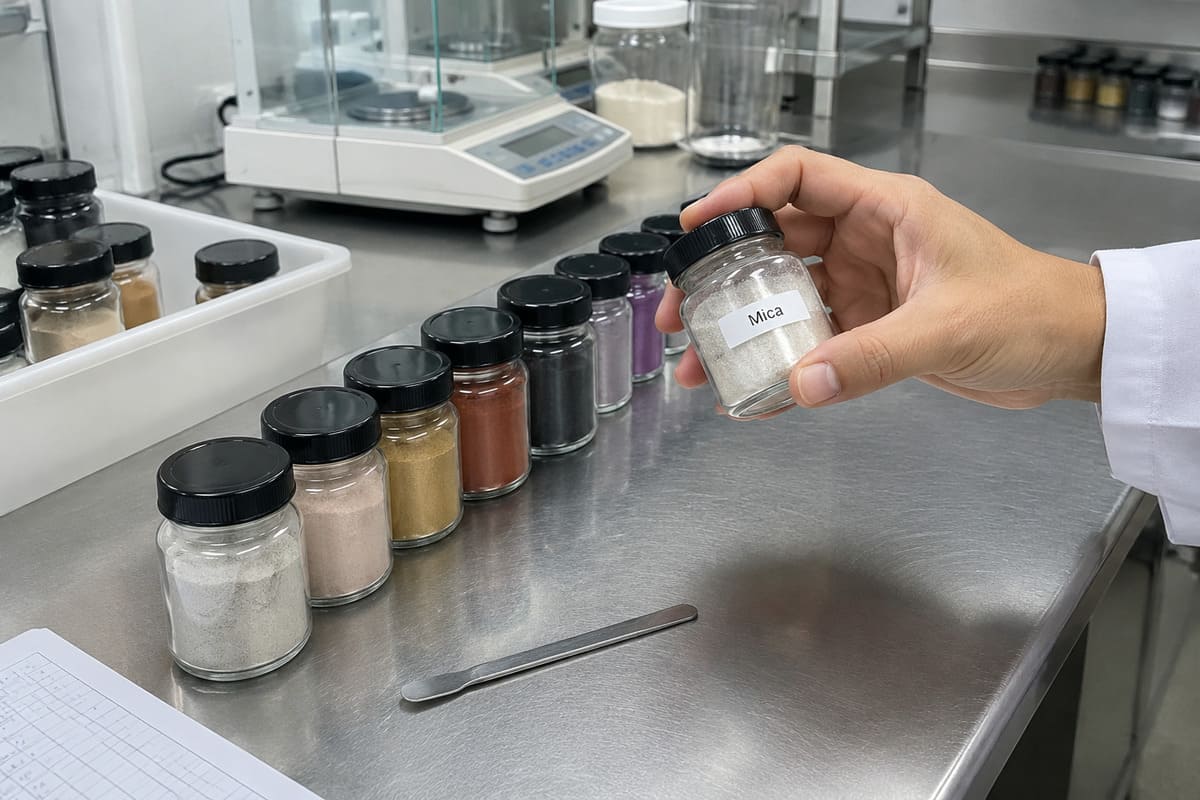
I run a powder-focused cosmetics factory, and I've watched this category reward proof and punish promises. Below, I'll break down what "mineral" actually demands, what a real COA contains, how a talc-free project gets tested, and where my honest limits are. Keep scrolling—the trade-offs are where most suppliers go quiet.
What Does "Mineral" Actually Require From a Manufacturer?
Brand founders tell me "I want mineral makeup" and assume it's one thing. It isn't. The word "mineral" has no single legal definition in most markets1, so two factories can both say "mineral" and mean very different formulas. That gap is where brands get burned.
A mineral makeup manufacturer should be able to define "mineral" in writing for your specific SKU: which mineral-derived pigments and fillers are used (mica, iron oxides, titanium dioxide, zinc oxide), what is excluded (talc, parabens, certain synthetic dyes), and why. "Mineral" is a formulation commitment you must verify, not a marketing word you can trust on faith.
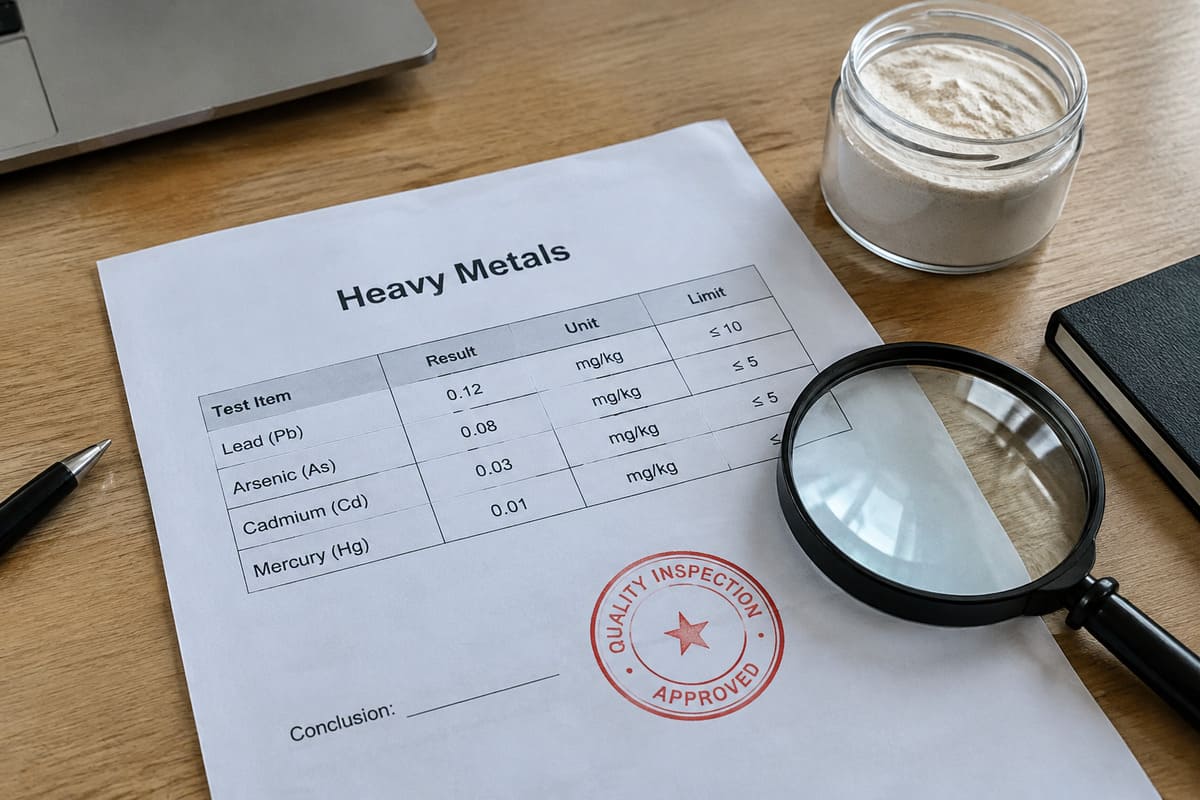
What "mineral" usually means in a powder formula
In pressed and loose powders, the mineral story is built on a handful of workhorse ingredients. Here's how I usually explain the roster to a new brand partner:
| Component | Common mineral choice | Role in the formula | Watch-out |
|---|---|---|---|
| Base filler | Mica, sericite | Slip, adhesion, soft focus | Mica sourcing and traceability |
| Opacity/coverage | Titanium dioxide2 | Coverage, tone correction | Nano vs. non-nano labeling (EU)3 |
| Color | Iron oxides, ultramarines4 | Pigment payload | Purity, heavy-metal limits |
| Soothing/active | Zinc oxide | Mild coverage, skin feel | UV claims are regulated separately5 |
Why "talc-free" is the line buyers actually care about
For clean-beauty brands, "mineral" often really means "talc-free." Talc isn't banned everywhere, but it carries contamination concerns in the public conversation6, and that perception is enough to sink a brand that marketed itself as clean. So when I quote a mineral project, I treat the talc-free statement as a formal deliverable, not a verbal reassurance.
The honest truth is that talc does real work in powders—slip, payoff, pressability7. Removing it means I have to rebuild performance with other minerals and binders. That's doable. But it's a formulation effort with trade-offs, and any manufacturer who says "talc-free, same price, same performance, no changes" is skipping the part that matters. The requirement behind "mineral" is not a swap. It is a documented, tested rebuild.
What Should Be in a Mineral Pigment COA—and What Usually Isn't?
You ask your supplier for a COA, they send you a one-page PDF, and you file it feeling safe. Then a regulator or a buyer asks a harder question and the document has no answer. A COA that only confirms "this is the pigment we said" is not the same as a COA that confirms "this pigment is safe and consistent."
A useful mineral pigment COA should go beyond identity. It should report heavy-metal limits (lead, arsenic, mercury, cadmium)8, microbiological results where relevant9, particle-size data, and batch-specific values—not a generic template. Identity-only COAs tell you what the material is; evidence-grade COAs tell you whether each batch meets the spec you're selling on.
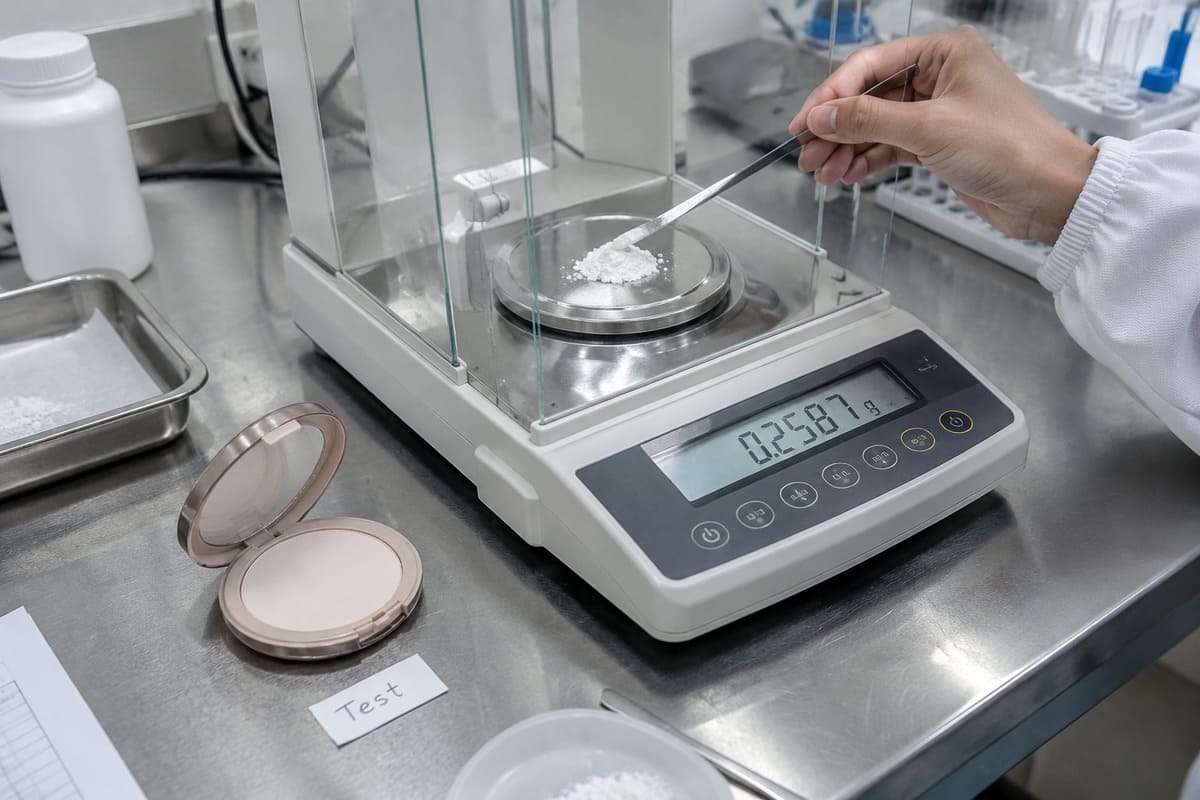
Identity COA vs. evidence-grade COA
Here's the distinction I walk every brand through, because it decides whether a document protects you or just decorates your file:
| COA element | Identity-only COA | Evidence-grade COA |
|---|---|---|
| Material name / INCI | ✅ | ✅ |
| Batch / lot number | Sometimes | ✅ Always |
| Heavy-metal results | ❌ | ✅ With limits |
| Particle-size data | ❌ | ✅ |
| Microbiological results | ❌ | ✅ Where relevant |
| Test method referenced | ❌ | ✅ |
| Date + signature/authority | Sometimes | ✅ |
The traceability layer most buyers forget
A COA documents the material. Traceability documents the source. For mineral pigments—especially mica—where the material comes from can matter to your buyers for both safety and social-responsibility reasons10. I keep raw-material records tied to supplier and lot so that if a channel or regulator asks "where did this mica come from," I have a paper trail instead of a shrug.
One caution I give every client: a COA is a document a buyer should independently verify, not a claim to take at face value. I can supply it. I encourage you, or your regulatory consultant, to review the test methods and limits against your target market's rules. For application-specific or market-specific decisions, qualified professional evaluation beats any factory's reassurance—including mine.
How Does a Talc-Free Project Get Tested, Not Just Promised?
"Talc-free" is easy to type into an email. It's harder to defend when the powder flies off the pan, the color drops after two months, or a lab asks for data. A promise lives in words. Proof lives in testing. The brands that survive this category insist on the second.
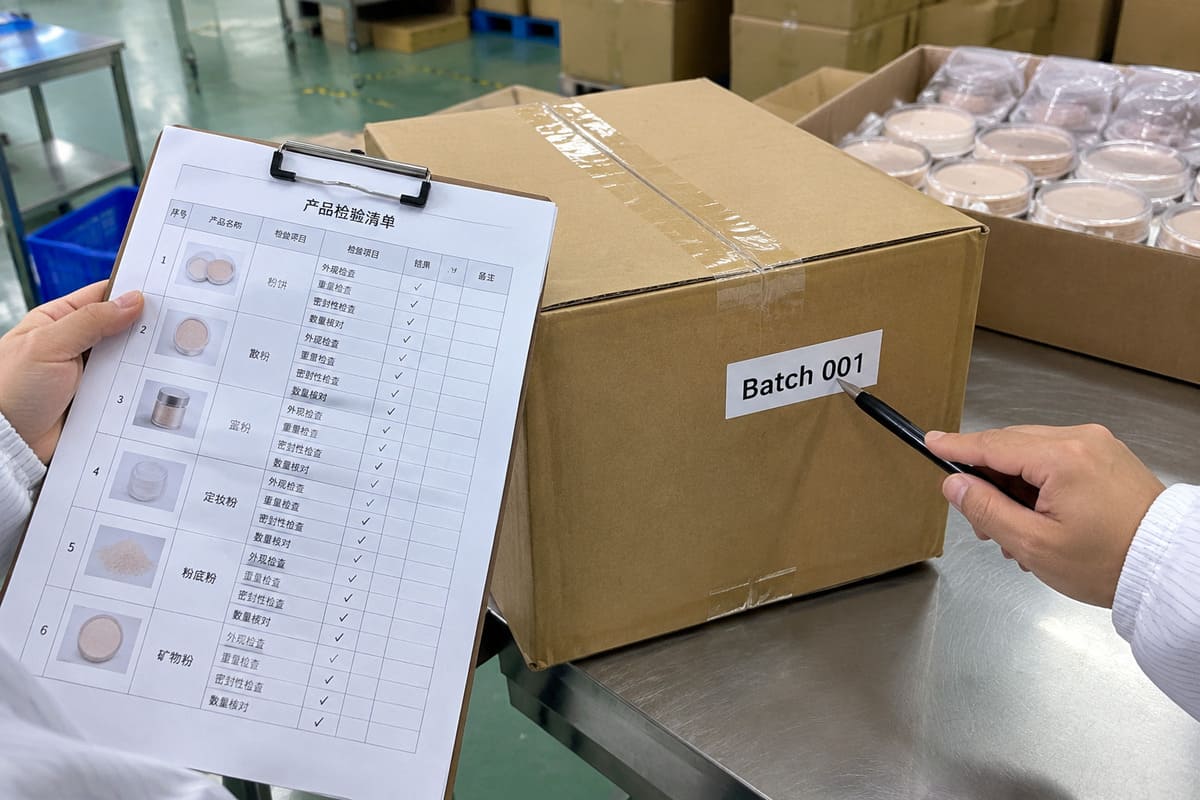
A talc-free project gets proven through a test sequence: an ingredient declaration and talc-free statement, raw-material traceability records, particle-size and flyaway testing, binder and wear/feel testing, and batch stability leading to a release COA. Each step produces a document you can forward. Without the testing, "talc-free" is a sentence, not evidence.
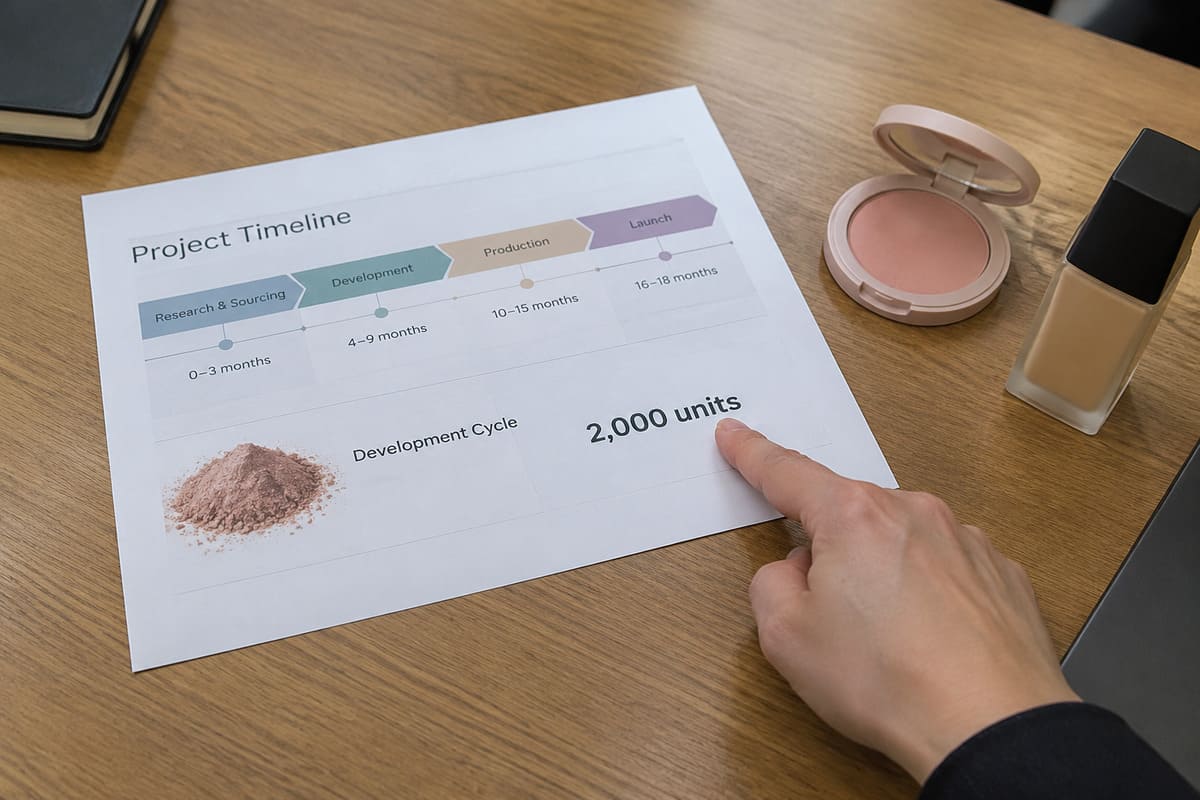
The five evidence-chain deliverables
When I take on a mineral or clean project, I build it around five deliverables. This is the spine of the whole thing:
- Ingredient declaration + talc-free statement — a written, signed formulation commitment listing what's in and what's excluded.
- Raw-material traceability — supplier and lot records for each mineral, so sourcing questions have answers.
- Particle-size and flyaway testing — because talc removal changes how powder presses and wears; this is where quality problems hide.
- Binder and wear/feel testing — confirming payoff, adhesion, and skin feel after the formula was rebuilt without talc.
- Batch stability + release COA — stability over time plus a batch-specific COA before anything ships.
Why particle size and flyaway testing matter most
Here's a factory-floor observation, labeled as exactly that—my own experience, not a lab statistic. When I pull talc out of a pressed powder, the first thing that usually suffers is pressability and flyaway. The powder can cake, or it can "fly" off the pan and make a mess on application. Buyers feel this instantly even if they can't name it. So particle-size control and flyaway testing11 aren't optional polish. They're the difference between a talc-free powder that performs and one that generates returns. I'd rather spend an extra development round here than ship something that embarrasses your brand.
What Does a Typical Evidence-Chain Project Look Like?
Founders often imagine a clean-beauty launch as: pick colors, approve a sample, ship. Then reality arrives—retests, stability waits, documentation. The gap between the imagined timeline and the real one is where panic orders and corner-cutting happen. So let me set the expectation honestly.
A typical evidence-chain mineral project runs as a structured development cycle, usually starting around 2,000 units for a validated eyeshadow format. That starting volume isn't a sales tactic—it's the minimum that lets the full test sequence run properly, so the evidence chain is built before launch rather than assembled after a complaint.
Here's a typified project flow. I've kept it as a representative scenario—no invented client, no fake percentages:
| Phase | What happens | Evidence produced |
|---|---|---|
| 1. Brief & declaration | Define "mineral," set talc-free exclusions | Ingredient declaration, talc-free statement |
| 2. Sourcing | Select pigments, record lots | Traceability records, supplier COAs |
| 3. Lab development | Build and adjust formula without talc | Particle-size, binder/wear data |
| 4. Sample rounds | You test payoff, feel, color | Approved reference sample |
| 5. Stability | Hold and monitor the formula over time | Stability report |
| 6. Production & release | Make the batch, test before ship | Batch-specific release COA |
Why 2,000 units is a real starting point
I actively filter out the "50-unit, label-only, ship-today" requests, and I want to explain why rather than just refusing. A real evidence chain needs enough material to run particle-size work, wear testing, and stability. Tiny stock-label orders can't carry that cost, so they skip the testing—which is exactly the risk you're trying to avoid. The 2,000-unit figure is where the development math works and the evidence actually gets built. If someone offers you a clean formula with no MOQ and no development cycle, ask where the test data came from.
Why Does the Evidence Chain Matter More Than the Talc-Free Claim?
Every clean-beauty brand is anxious about one thing: formula betrayal. The nightmare is that your supplier said "talc-free," you repeated it to your customers, and then someone with a lab or a large following proves otherwise. The claim was the exposure. The evidence chain is the insurance.
The evidence chain matters more than the talc-free claim because a claim can be challenged and a chain can be defended. A poorly performing mineral eyeshadow earns a bad review; a "clean" brand caught with a hidden controversial ingredient can lose credibility overnight. The chain is what lets you answer a public challenge with documents instead of apologies.
Claim risk vs. chain protection
| Scenario | Claim-only brand | Evidence-chain brand |
|---|---|---|
| KOL questions "is this really clean?" | Scramble, no data | Forward COA + declaration |
| Retail buyer asks for safety file | Delay, maybe lose the deal | Hand over the chain |
| Regulator inquiry (e.g., MoCRA) | Exposure | Substantiation on hand |
| Batch inconsistency complaint | Blame game | Batch COA shows the spec |
On regulation: the U.S. FDA framework, including the Modernized Cosmetics Regulation Act (MoCRA)12, pushes the industry toward safety substantiation and facility accountability. I read that direction simply: markets increasingly expect you to prove, not just state. I'm not your legal advisor, and you should confirm your specific obligations with a qualified regulatory professional for your target market. But the strategic logic is clear—the evidence chain is becoming the baseline, and the brands building it now are the ones that won't scramble later.
What We Can Promise, and What We Can't
I'd rather lose a deal to honesty than win one with a promise I can't keep. So here's where I draw my lines, plainly.
I can promise a documented talc-free formulation, raw-material traceability, particle-size and wear testing, stability work, and a batch-specific release COA on a real development cycle. I can't promise that every extreme color effect survives a strict clean formulation unchanged, and I can't promise market-specific regulatory approval—that needs your qualified professional review.
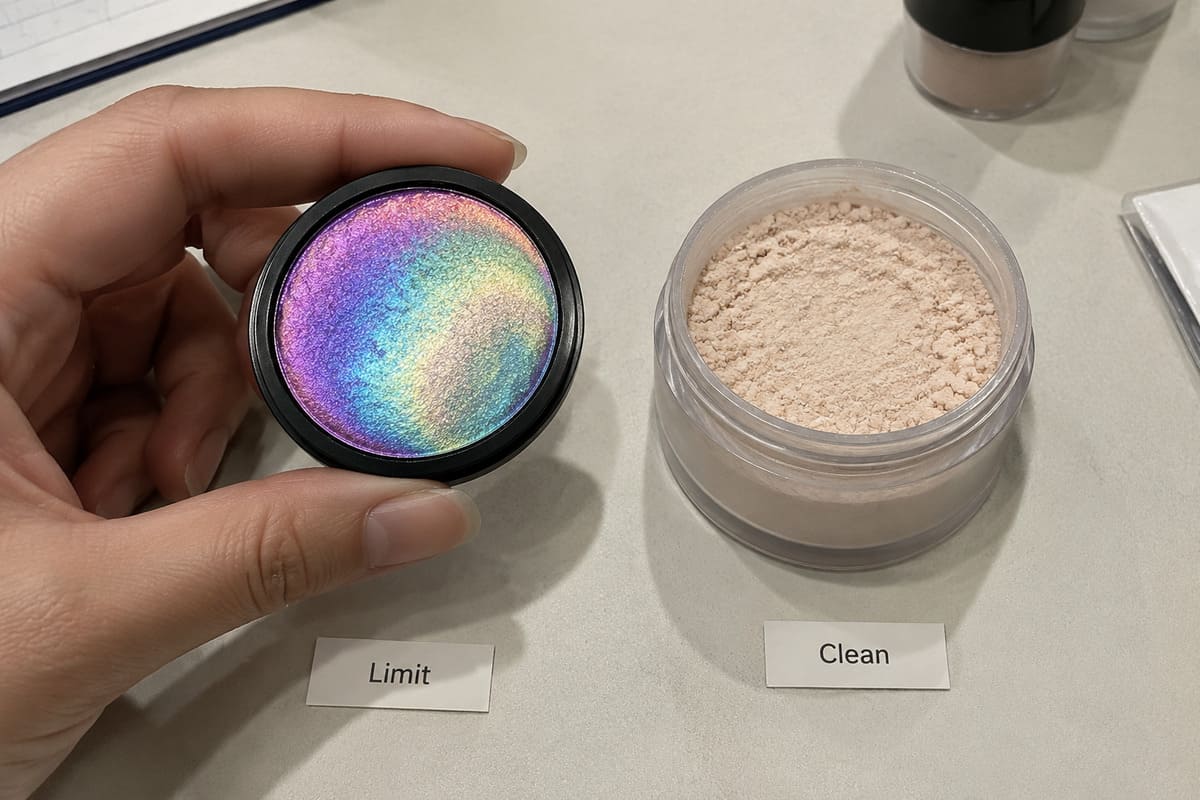
The honest trade-off at extreme color effects
My factory's strength is "play-color" powder—chameleon and sparkle eyeshadows with intense shift and shine. Here's the real tension: some of those extreme effects lean on specific pigment and binder systems that a strict clean or talc-free spec may limit. I won't pretend otherwise. In practice, we find a workable point between the effect you want and the clean standard you're committed to. Sometimes the shift is slightly softer. Sometimes we accept a different finish. That negotiation is normal, and naming it upfront is part of the evidence-chain mindset.
| We can | We can't |
|---|---|
| Document talc-free formulation | Guarantee identical effect under every clean constraint |
| Provide traceability + COA | Act as your regulatory authority |
| Run particle-size, wear, stability tests | Approve your product for a specific market |
| Build the chain before launch | Replace your qualified professional review |
Frequently Asked Questions
Is "mineral makeup" a regulated or certified term?
In most markets, "mineral" has no single legal definition, so it isn't a certification you can simply claim. What matters is your specific formulation and the documents behind it. A credible mineral makeup manufacturer defines the term in writing for your SKU and backs it with testing you can forward to buyers.
What's the difference between talc-free and clean beauty?
Talc-free is one specific exclusion: no talc in the formula. Clean beauty is a broader, market-dependent positioning that may exclude parabens, certain dyes, and other ingredients. Talc-free is often the trigger inside a clean claim, but the two aren't identical. Define both explicitly in your brief.
Why can't I just order a small test batch of clean mineral makeup?
Tiny, label-only orders usually skip the testing that makes a clean claim defensible—particle-size, wear, and stability work. A realistic development cycle (around 2,000 units for eyeshadow) is what lets the evidence chain actually get built, rather than being assembled after a complaint lands.
Does a COA prove my product is safe to sell in my market?
A COA documents batch identity and test results; it is a strong input, not a market approval. You should verify the test methods and limits against your target market's rules, ideally with a qualified regulatory professional. Treat the COA as evidence to review, not a guarantee to assume.
Conclusion
Choosing a mineral makeup manufacturer isn't about finding someone who can press powder. It's about finding a partner who can prove the clean promise batch by batch. The core takeaway is simple: a talc-free claim is a sentence, but an evidence chain—declaration, traceability, particle-size and wear testing, stability, and a batch COA—is a defense. Being able to make it and being able to prove it are different capabilities, and only the second protects your brand. If you're building a clean or mineral line, send me your target market and your must-have color effects, and I'll show you exactly which documents I can hand you—and which limits I'll name upfront.
"Is It a Cosmetic, a Drug, or Both? (Or Is It Soap?)", https://www.fda.gov/cosmetics/cosmetics-laws-regulations/it-cosmetic-drug-or-both-or-it-soap. Cosmetic regulatory guidance indicates that terms such as "mineral" are not formally defined and are not subject to a standardized certification. Evidence role: definition; source type: government. Supports: Cosmetic regulators do not provide a binding legal definition for the marketing term "mineral.". Scope note: Absence of a definition varies by jurisdiction; some markets may address related claims through general labeling rules. ↩
"Safety of titanium dioxide nanoparticles in cosmetics", https://pubmed.ncbi.nlm.nih.gov/31588611/. Materials and cosmetic-science sources describe titanium dioxide as a high-refractive-index opacifier used to provide coverage and whiteness in formulated products. Evidence role: mechanism; source type: research. Supports: Titanium dioxide functions as an opacifying pigment in cosmetics due to its high refractive index, providing coverage and tone adjustment.. Scope note: Optical performance depends on particle size and surface treatment, which the general description does not specify. ↩
"Safety of titanium dioxide nanoparticles in cosmetics", https://pubmed.ncbi.nlm.nih.gov/31588611/. The EU Cosmetics Regulation requires that ingredients present in nanomaterial form be declared with a "(nano)" designation in the product ingredient listing. Evidence role: mechanism; source type: government. Supports: Under EU cosmetics law, ingredients present as nanomaterials must be identified with the suffix "(nano)" in the ingredient list.. Scope note: The requirement applies to the EU market and may differ from obligations in other jurisdictions. ↩
"Summary of Color Additives for Use in the United States", https://www.fda.gov/industry/color-additives/summary-color-additives-use-united-states-foods-drugs-cosmetics-and-medical-devices. Regulatory color-additive listings include iron oxides and ultramarines among pigments approved for cosmetic use, subject to purity specifications. Evidence role: definition; source type: government. Supports: Iron oxides and ultramarines appear on regulatory lists of color additives permitted for use in cosmetics.. Scope note: Approved uses and conditions, such as area of application, differ across regulatory jurisdictions. ↩
"Modernizing U.S. Sunscreen Regulations: How Newer Filters ...", https://pmc.ncbi.nlm.nih.gov/articles/PMC12332967/. Regulatory frameworks classify zinc oxide used for sun protection as a sunscreen active ingredient, placing UV-protection claims under requirements separate from general cosmetic use. Evidence role: general_support; source type: government. Supports: Zinc oxide used for UV protection is regulated as a sunscreen active, subject to requirements distinct from ordinary cosmetic ingredients.. Scope note: Classification and claim rules vary by market, with some jurisdictions treating sunscreens as drugs and others as cosmetics. ↩
"Talc", https://www.fda.gov/cosmetics/cosmetic-ingredients/talc. Regulatory testing programs have documented the potential for asbestos contamination in talc-containing cosmetics, which underlies ongoing safety scrutiny of the ingredient. Evidence role: historical_context; source type: government. Supports: Talc used in cosmetics can be contaminated with asbestos, which is the documented basis for regulatory and consumer concern.. Scope note: Documented contamination risk concerns specific talc sources and does not establish that all talc in cosmetics is contaminated. ↩
"Talc", https://www.fda.gov/cosmetics/cosmetic-ingredients/talc. Cosmetic formulation literature describes talc as a filler that provides slip, skin adhesion, and improved compressibility in powder products. Evidence role: mechanism; source type: research. Supports: Talc contributes functional properties such as slip, adhesion, and compressibility in cosmetic powder formulations.. Scope note: Performance contributions are formulation-dependent and may be partially replicated by alternative mineral fillers. ↩
"Arsenic, Cadmium, Chromium, Cobalt, Lead, Mercury, and ...", https://www.fda.gov/cosmetics/potential-contaminants-cosmetics/fdas-testing-cosmetics-arsenic-cadmium-chromium-cobalt-lead-mercury-and-nickel-content. Color additive specifications set numerical limits on heavy-metal impurities, including lead, arsenic, and mercury, in cosmetic pigments. Evidence role: statistic; source type: government. Supports: Regulatory specifications establish maximum permissible levels of heavy metals such as lead, arsenic, and mercury in cosmetic color additives.. Scope note: Specific limit values differ across jurisdictions and individual color additive listings. ↩
"Microbiological Quality Assessment of Skin and Body care ...", https://pmc.ncbi.nlm.nih.gov/articles/PMC10910155/. International standards define microbiological limits and testing methods for cosmetics, supporting the inclusion of microbiological results in quality documentation where applicable. Evidence role: general_support; source type: institution. Supports: Recognized standards establish microbiological quality limits and test methods applicable to cosmetic products.. Scope note: Applicability depends on product type, with anhydrous powders often posing lower microbiological risk than water-containing formulations. ↩
"Study on Child Labor in the Scrap Mica Supply Chain in ...", https://www.dol.gov/sites/dolgov/files/ILAB/Supply-Chain-India-Mica-508.pdf. Investigations and multi-stakeholder initiatives have documented labor and child-labor risks in natural mica supply chains, informing responsible-sourcing and traceability practices. Evidence role: case_reference; source type: institution. Supports: Mica supply chains have been associated with documented labor and child-labor concerns, motivating traceability and responsible-sourcing efforts.. Scope note: Documented concerns concentrate in specific producing regions and do not characterize all mica sources. ↩
"Critical influences of particle size and adhesion on the ...", https://dspace.mit.edu/entities/publication/c27e1311-1242-4535-a4e2-6fb498d21a89. Research on powder cosmetics indicates that particle-size distribution affects powder flow, compaction, and skin adhesion, supporting its role in application performance. Evidence role: mechanism; source type: paper. Supports: Particle size and distribution influence the flow, compressibility, and adhesion properties of cosmetic powders.. Scope note: Reported effects are formulation- and process-specific and support the mechanism contextually rather than a specific talc-free outcome. ↩
"Modernization of Cosmetics Regulation Act of 2022 (MoCRA)", https://www.fda.gov/cosmetics/cosmetics-laws-regulations/modernization-cosmetics-regulation-act-2022-mocra. The Modernization of Cosmetics Regulation Act expands federal oversight of cosmetics, establishing obligations such as facility registration and demonstrable safety substantiation. Evidence role: historical_context; source type: government. Supports: MoCRA introduces requirements including facility registration, product listing, and safety substantiation for cosmetic products in the United States.. Scope note: Specific obligations depend on company role and product type; the source describes the framework rather than a given brand's compliance status. ↩