What Eyeshadows Do Professional Makeup Artists Use? A Pro-Level Supply Guide
When B2B buyers search for what professional makeup artists use, what they truly need is a supply chain evaluation report that proves a factory can meet professional-grade standards—high pigmentation, low fallout, and long wear1—not a consumer beauty list. Professional eyeshadows can look impressive in a pan but still fail during blending, under studio lighting, or on oily skin. We help buyers evaluate the formula, shade system, testing process, and supplier capability behind a real professional line.
Professional makeup artists typically use eyeshadows that deliver reliable one-swipe pigmentation, controlled fallout, blendable texture, and stable wear under demanding conditions2. For B2B buyers, the best professional eyeshadows are not defined by a famous brand name. They are defined by measurable formula performance, logical shade selection, consistent batch quality, and a manufacturer that can support testing, customization, and repeat production.
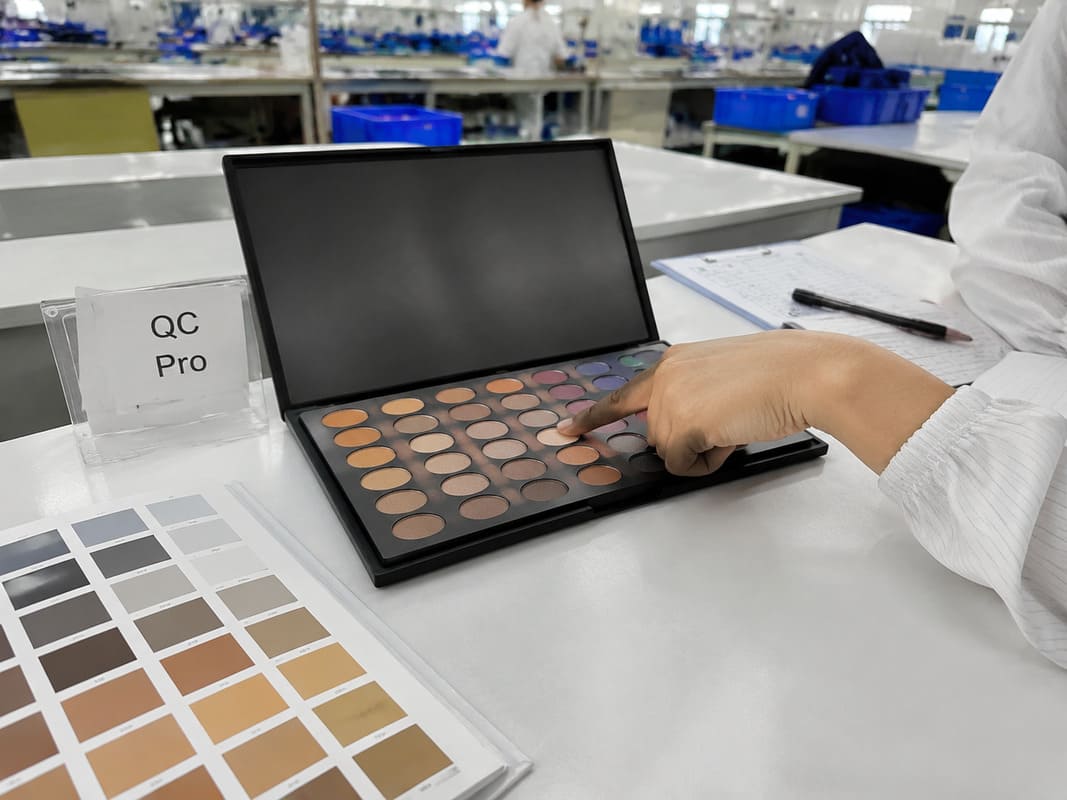
For us, the question is not simply which eyeshadow looks beautiful in product photography. The real question is whether the product can support a makeup artist’s daily work, protect a brand’s reputation, and remain consistent when the buyer returns for a second, third, or tenth production run.
What Does “Professional” Actually Mean for Professional Eyeshadows Procurement?
Many buyers use the word “professional” because they want a stronger product, yet the word can become vague during supplier discussions. A factory may describe almost any highly pigmented palette as professional. That creates risk for buyers who need dependable performance rather than attractive sales language.
For procurement, professional eyeshadows mean eyeshadow products designed around repeatable application performance: high color payoff, low fallout, smooth blending, shade accuracy, and reliable wear. We recommend that buyers define “professional” through approved samples, measurable quality-control standards, and an agreed shade-and-texture brief rather than relying on packaging claims.
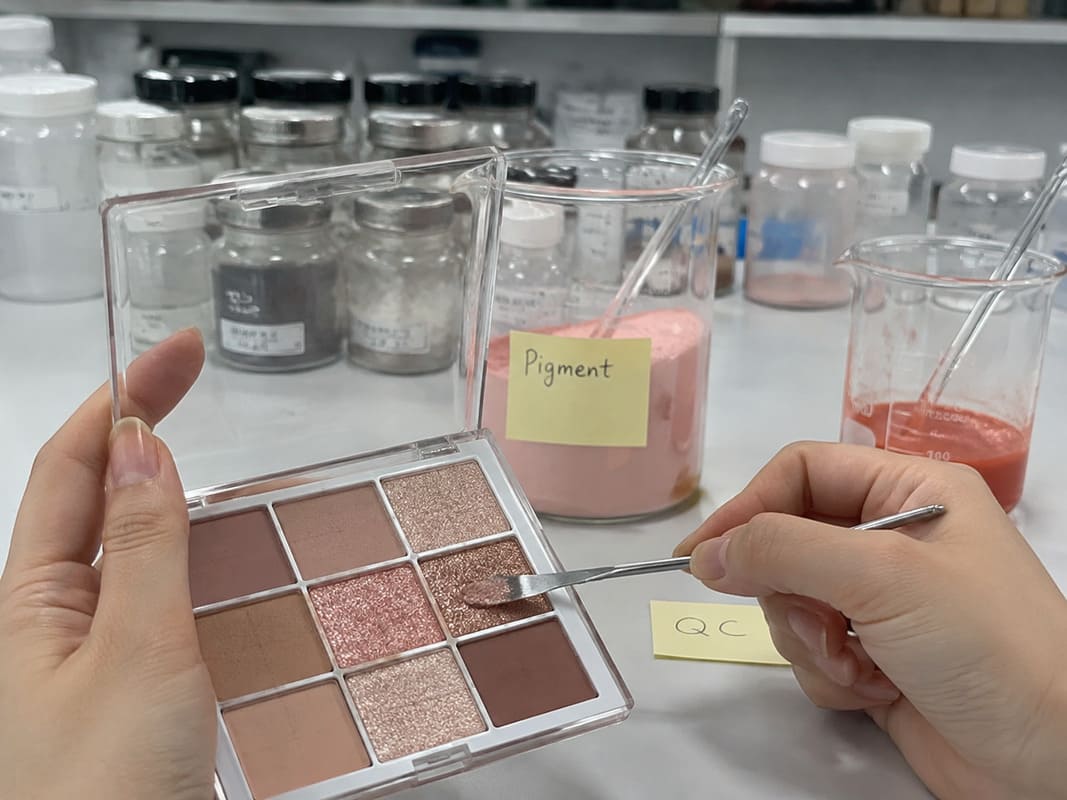
Professional Does Not Mean “More Pigment” Alone
We see many early-stage brands focus only on pigmentation. Pigment matters, but an overly dry or poorly bound formula may create heavy fallout. A very soft formula may look intense in a finger swatch but break apart in transit. A highly glittered shade may perform beautifully for content creation but may not suit every bridal, studio, or retail customer.
When we assess professional eyeshadows with a buyer, we look at the whole use case:
- How does the powder pick up with a brush?
- How evenly does the shade apply across different skin tones?
- How does the product react to blending with adjacent shades?
- How much loose powder appears under the eye area?
- Does the finish remain visually accurate under warm, cool, and strong lighting?
- Can the customer repurchase the same shade system in future orders?
Based on our experience serving professional-line clients, palettes that remain in studio kits are rarely the palettes with the flashiest outer box. We find that working makeup artists return to products that maintain color accuracy under strong lighting and create minimal fallout during repeated blending.
A Procurement Definition We Recommend
We recommend that buyers write a professional product brief before asking for a quotation. This reduces misunderstandings and helps us propose the right formula direction.
| Procurement Requirement | What We Recommend Defining | Why It Matters |
|---|---|---|
| Target user | Bridal artist, studio artist, KOL, retail consumer, stage artist | Each user prioritizes different textures and shades |
| Pigmentation standard | One-swipe payoff, buildable payoff, or sheer layering | Determines pigment load and formula balance |
| Fallout tolerance | Visual standard after brush blending | Helps align pressing and binder requirements |
| Shade range | Number of mattes, shimmers, metallics, sparkle shades | Prevents a palette from becoming visually unbalanced |
| Packaging | Cardboard palette, plastic compact, magnetic refill system | Affects minimum order quantity, cost, and durability |
| Market | Southeast Asia, Middle East, North America, EU, or another region | Influences documentation and market-entry planning |
| Reorder plan | Standard shades, exclusive shades, or seasonal drops | Supports raw-material and batch-consistency planning |
We always encourage buyers to test samples with their own professional users before confirming production. We can provide sample directions, but only a buyer’s intended artist, studio, or market can confirm whether a formula meets their application-specific expectations.
We treat “professional” as an operational standard, not a marketing label. The standard must be visible in the sample, the production specification, and the buyer’s quality acceptance criteria.
What Are the 3 Hard Metrics of a Pro-Level Professional Eyeshadow Formula?
A palette can contain beautiful colors but still disappoint a professional user when the formula lacks control. We often see buyers compare only pan size, packaging, and price. Those details matter, but formula performance usually determines whether a palette earns repeat orders.
We evaluate professional eyeshadows through three core metrics: one-swipe pigmentation, ultra-low fallout, and long-lasting wear. We also consider blendability and shade architecture, because a professional formula must work as a system rather than as a collection of individually attractive shades.
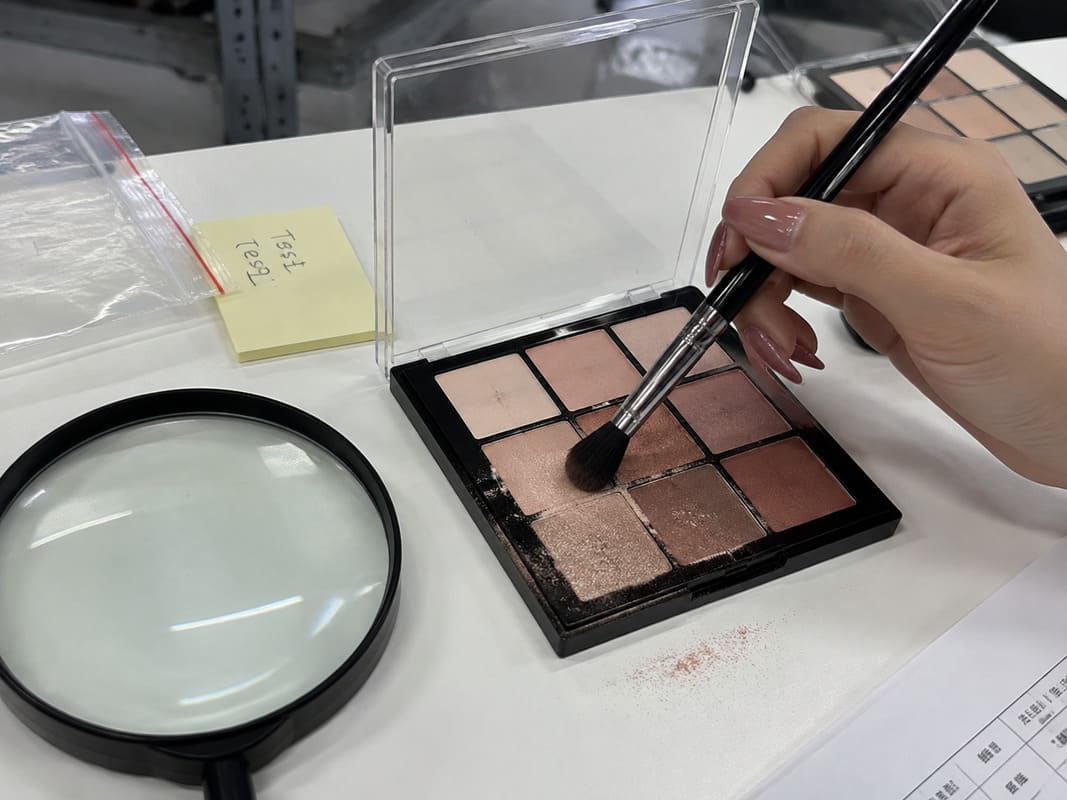
1. One-Swipe Pigmentation
One-swipe pigmentation means that a shade delivers visible, reasonably even color with a single controlled application. We do not view this as a promise that every shade will look identical on every skin tone or with every brush. Instead, we use it as a practical benchmark for color payoff.
A professional artist needs to work efficiently. Constant layering can slow down service time, make a look appear heavy, and increase the chance of patchiness. Matte shades need enough color to create depth. Shimmers need clear reflectivity. Special-effect shades need a distinct visual payoff without becoming difficult to control.
We assess pigment performance through:
- Controlled finger swatches for initial color visibility
- Brush pickup observations
- Application over bare skin and suitable eye bases
- Blend-out behavior
- Comparison between lab samples and approved standards
- Batch-level visual inspection during production
2. Ultra-Low Fallout
Fallout is one of the most common reasons that a visually attractive sample fails professional evaluation. Excess powder under the eye can interrupt an artist’s workflow and create extra cleanup. For bridal makeup, studio work, and event makeup, that can affect timing and client confidence.
We usually address fallout through a combination of formula and process controls:
- Binder ratio adjustment: We balance adhesion with a smooth powder feel.
- Pigment and filler selection: We review particle behavior and dispersion.
- Milling control: We aim for a more even texture and better color distribution.
- Pressing density optimization: We evaluate whether the pan is too loose, too hard, or unevenly pressed.
- Texture-specific standards: We do not apply one pressing approach to matte, shimmer, sparkle, and chameleon eyeshadows.
3. Long-Lasting Wear
Long wear does not mean that eyeshadow will perform identically on every eyelid for every hour. Skin oil level, primer use, climate, application method, and skin-care products all affect real-world performance.3 However, we can develop formula directions that aim to maintain visual integrity through normal professional use.
For buyers, we suggest evaluating whether the product:
- Maintains color visibility after several hours.
- Avoids excessive creasing when used with an appropriate eye base.
- Keeps shimmer particles visually present rather than dulling quickly.
- Resists muddying when multiple shades are layered.
- Retains a clean appearance under photography or stage lighting.
| Metric | Practical Professional Standard | Common Failure Sign | Supplier Discussion Point |
|---|---|---|---|
| Pigmentation | Visible payoff with controlled application | Patchiness or repeated layering | Pigment load and dispersion |
| Fallout | Minimal loose powder during normal blending | Powder drops beneath the eye | Binder and pressing density |
| Blendability | Smooth transition between shades | Harsh edges or uneven patches | Powder texture and formula balance |
| Wear | Color remains visually stable through intended use | Fast fading, creasing, dullness | Film-forming direction and user testing |
| Pan strength | Product survives normal logistics handling | Cracking or breakage | Pressing process and packaging protection |
A strong professional palette needs all five areas. We believe that the lowest unit price is not always the lowest commercial risk if the product creates complaints, returns, or artist dissatisfaction.
How Did We Help a Studio Client Solve Fallout and Build a 40-Shade Professional Eyeshadow Palette?
A growing studio can lose confidence in a product quickly when the initial samples perform poorly. We have seen this concern many times: a client wants bold colors and rich texture effects, but the first samples create fallout, lack shade variety, or feel inconsistent from pan to pan.
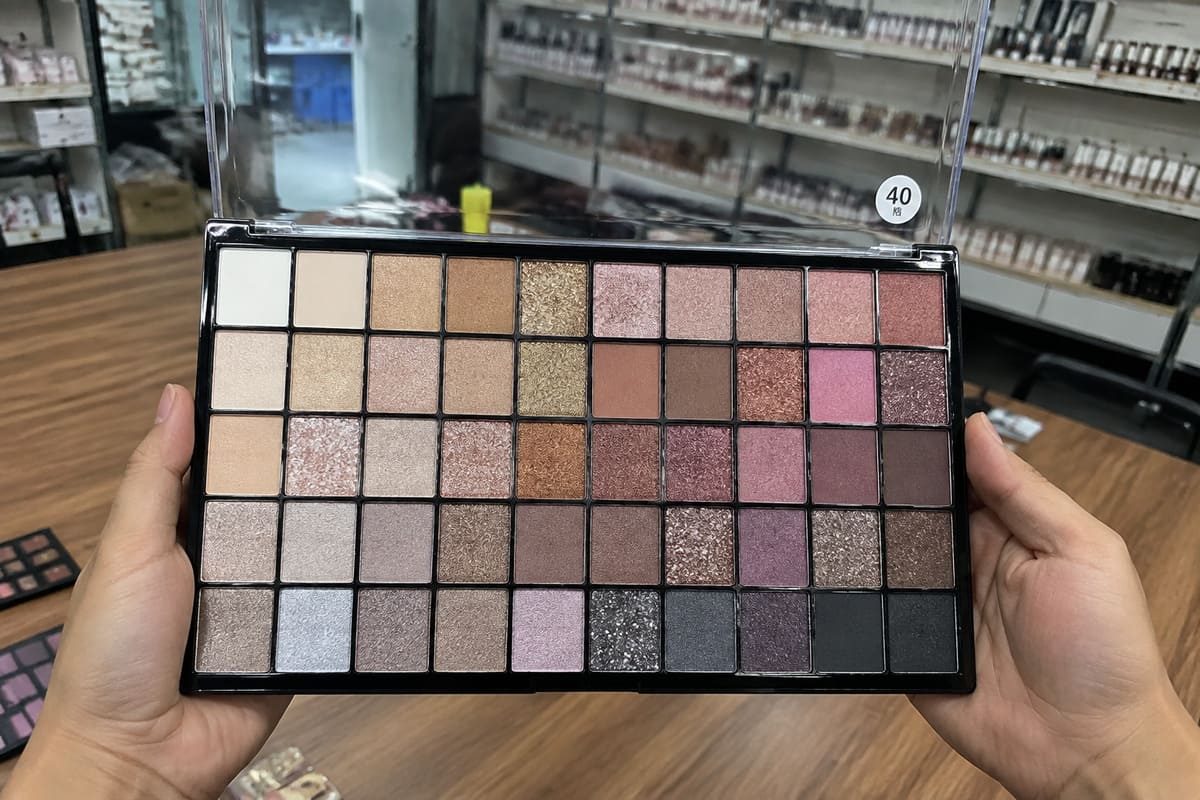
We helped one studio client improve an early eyeshadow concept by addressing fallout before expanding the color range. We adjusted formula and pressing directions, then developed a 40-shade professional eyeshadow palette with a practical balance of matte, shimmer, and sparkle textures for wedding, evening, and stage makeup.
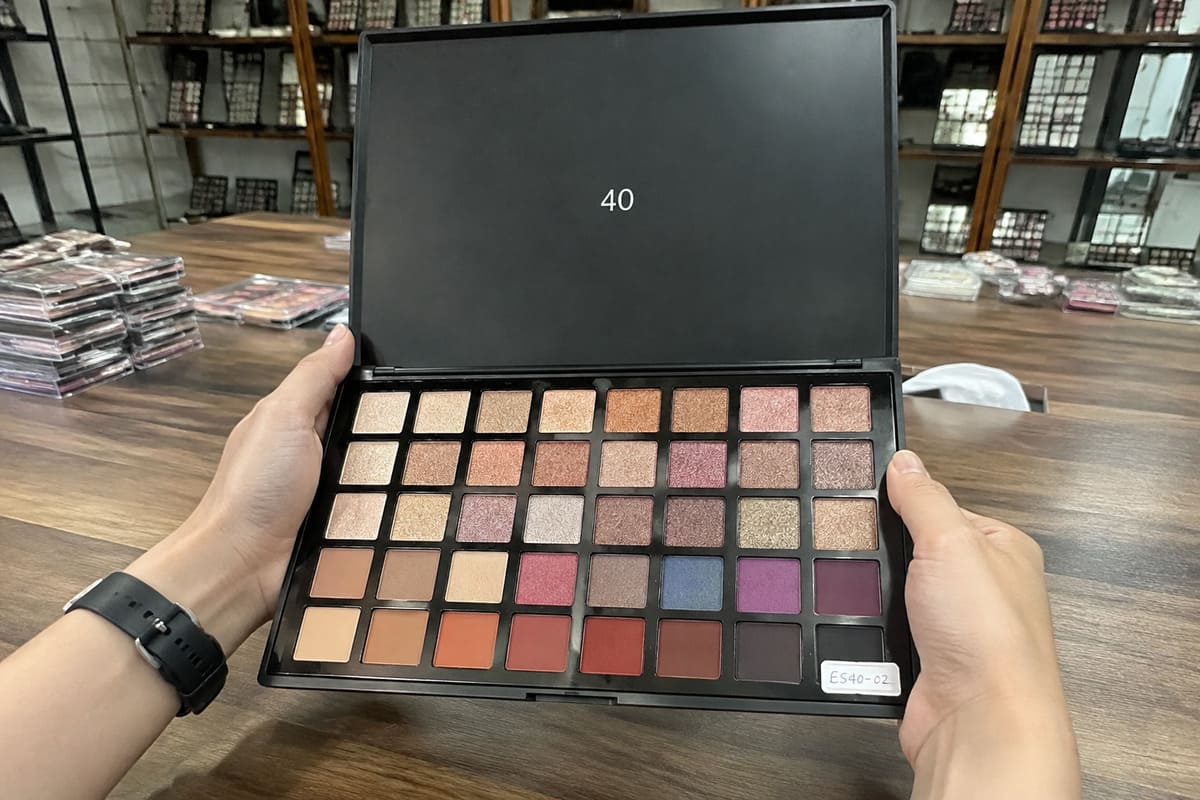
The Initial Problem: Attractive Swatches, Weak Working Performance
I remember reviewing the client’s initial direction with our development team. The client wanted a palette that could support daily studio work and eventually enter local retail channels. The early samples produced strong visual swatches, but the client reported noticeable powder drop during vigorous blending. The shade selection also leaned too heavily toward eye-catching finishes, with too few practical matte transition tones.
This created two procurement problems:
- The formula did not yet meet the studio’s application expectations.
- The palette structure did not fully support a professional artist’s workflow.
We did not begin by simply quoting a lower price. We first treated the issue as a product-development project.
Our Formula and Pressing Approach
We reviewed the texture categories separately. We did not assume that every shade needed the same treatment because a deep matte, pearl shimmer, pressed sparkle, and chameleon effect shade behave differently.
For the client’s samples, we worked on:
- Adjusting the binder ratio to improve powder adhesion
- Optimizing pressing density to reduce loose surface powder
- Reviewing the texture feel after pressing
- Rechecking brush pickup after process changes
- Maintaining visible color payoff while improving control
We should be transparent: no powder product can guarantee zero fallout under every application method. Heavy brush pressure, very dense brushes, and aggressive blending can still create some loose powder. Our objective was to reduce the visible fallout to a level the studio judged appropriate for daily professional work.
Building a Logical 40-Shade System
After we improved the initial formula direction, we built a more functional shade plan. We recommended a palette that could create complete looks instead of only delivering trendy single shades.
| Texture Group | Approximate Shade Count | Professional Function |
|---|---|---|
| Matte transition shades | 14 | Soft blending, crease work, skin-tone transitions |
| Deep matte shades | 8 | Definition, liner effects, smoky looks |
| Satin and shimmer shades | 10 | Lid brightness and dimensional looks |
| Sparkle and glitter accents | 5 | Evening, event, and content-focused looks |
| Chameleon or special-effect shades | 3 | Signature looks and brand differentiation |
The final direction gave the studio more flexibility across bridal, evening, stage, and social-content applications. The client later launched the palette and expanded into local retail stores. We view that outcome as a result of product iteration and clearer user requirements, not packaging alone.
Why Do Professional Eyeshadow Brands Win on Craft, Not Marketing?
Many new brands assume that marketing creates professional credibility. Marketing can create awareness, but professional users usually decide whether to repurchase based on what happens after the palette is opened. If the formula creates fallout, fades quickly, or lacks usable transition shades, strong social content cannot solve the underlying product issue.
Professional eyeshadow brands win through repeatable craft: accurate color development, controlled texture performance, logical shade editing, stable production standards, and honest supplier communication. We believe marketing amplifies a good formula, but it cannot sustainably replace product reliability in a makeup artist’s kit.
Shade Breadth Needs a Purpose
A 30-, 40-, or 60-shade palette is not automatically professional. We have seen large palettes that contain too many similar shimmer tones while missing useful mid-tone mattes. That can make the product look abundant but feel limiting during real application.
We recommend a “base, build, highlight, accent” approach:
- Base: Light mattes and soft neutral shades for preparation.
- Build: Mid-tone mattes for dimension and blending.
- Define: Deep mattes for liner, contour, and smoky effects.
- Highlight: Satin, shimmer, and metallic shades for lid placement.
- Accent: Sparkle, glitter, duochrome, or chameleon eyeshadows for creative looks.
Our team often works with buyers to identify whether their core customer needs warm neutrals, vibrant color, deeper complexion-friendly tones, high-reflective finishes, or trend-driven effects. A Middle East-focused palette, for example, may require stronger color intensity and more luminous finishes than a basic everyday neutral concept. A North American or EU-oriented brand may place more emphasis on ingredient communication, packaging design, and documentation planning.
Consistency Is a Brand Asset
Professional makeup artists often use the same favorite shade repeatedly.4 That means a reorder needs to match the approved reference as closely as practical. We support this through retained approval samples, shade references, production specifications, and batch inspection procedures.
| Area of Craft | What We Control During Development | Buyer Benefit |
|---|---|---|
| Color matching | Reference review and lab sample comparison | Better shade continuity |
| Texture design | Matte, shimmer, sparkle, and effect-specific development | More functional palette performance |
| Pressing | Density and pan appearance checks | Lower breakage and more controlled pickup |
| Packaging fit | Pan sizing, insert structure, and protection review | Better transport suitability |
| Production records | Approved sample and specification retention | Easier repeat-order communication |
We also advise buyers to avoid making unsupported claims such as “all-day wear” or “zero fallout” without suitable testing and market-specific substantiation. We can support product development and provide relevant available product information, but buyers should obtain qualified regulatory, safety, and claims guidance for their intended market5.
What Is a Transparent Look at Professional Eyeshadow Line Development Costs?
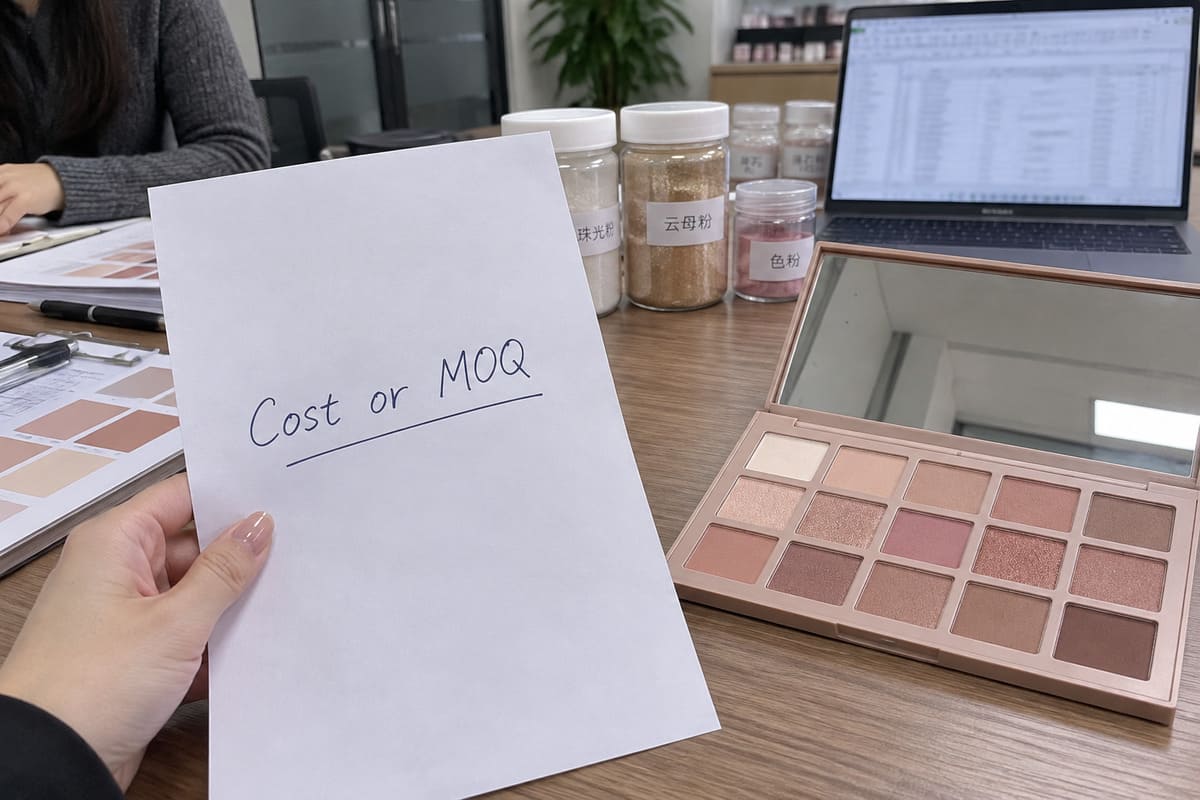
Cost uncertainty can discourage a buyer from developing a professional line. Buyers may receive very low quotations that exclude sampling rounds, packaging complexity, special pigments, testing needs, or future shade consistency work. The surprise often appears later, when the buyer asks for changes.
Professional eyeshadow development usually costs more than a basic commercial palette because it may require additional sampling, pigment evaluation, milling, texture adjustments, and controlled pressing.6 We recommend that buyers start with existing classic professional shades in smaller batches, verify quality, and then invest in exclusive custom shades once the product direction is confirmed.
What Drives the Cost of a Professional Line?
We prefer transparent discussions over vague promises. Exact pricing depends on the formula, shade count, packaging, order quantity, market needs, and customization level. However, buyers can evaluate the main cost drivers before requesting a formal quote.
| Cost Driver | Lower-Complexity Direction | Higher-Complexity Direction |
|---|---|---|
| Formula | Existing standard formula | Fully customized texture or wear direction |
| Shades | Existing stock shades | Exclusive color matching and multiple lab rounds |
| Pigments | Standard matte or shimmer pigments | Chameleon, duochrome, high-sparkle, or specialty effects |
| Palette size | Small standard palette | Large 30–60 shade professional system |
| Packaging | Existing packaging option | Custom mold, custom print, mirror, magnetic system |
| Order quantity | Standard production run | Very low MOQ with many customized components |
| Documentation | Basic available information | Market-specific testing, review, or additional documents |
A Lower-Risk Development Path
For emerging brands, KOL founders, studios, and regional distributors, we often recommend a phased approach.
Start with a curated existing shade selection.
We can help buyers select classic mattes, wearable shimmers, and a few signature special-effect shades.Use low MOQ where practical.
A smaller opening order can reduce inventory pressure and help buyers test market response.Collect feedback from real users.
We recommend structured feedback from makeup artists, studio staff, and target customers.Improve the second run.
Buyers can add exclusive shades, upgraded packaging, or market-specific color stories after initial validation.Plan compliance early for new markets.
Buyers should verify applicable product, labeling, ingredient, safety, and documentation requirements with qualified professionals before market entry.
This approach helps buyers avoid investing heavily in a complete custom line before they know which textures and colors their customers will reorder.
We do not believe every buyer needs a fully custom 40-shade palette on day one. A well-edited, tested palette with reliable performance can be a more responsible first step.
Frequently Asked Questions
What eyeshadows do professional makeup artists use most often?
Professional makeup artists often choose eyeshadows with strong pigment payoff, low fallout, smooth blendability, and reliable wear. We see demand for practical matte transition shades, deep defining tones, versatile shimmers, and selected sparkle or chameleon effects that create distinctive looks without reducing usability.
How can I test whether an eyeshadow supplier offers professional quality?
We recommend requesting samples and testing them with brushes, blending techniques, eye bases, lighting conditions, and users that match your target market. We also recommend reviewing shade consistency, pan strength, packaging durability, sampling communication, and the supplier’s ability to document approved specifications for repeat orders.
Do professional eyeshadows need a large palette format?
Professional eyeshadows do not always need a large palette. We believe a palette needs logical shade coverage more than a high shade count. A 12- or 18-shade palette can perform professionally if it includes useful mattes, depth shades, highlight textures, and a clear color story.7
Why do sparkle and chameleon eyeshadows cost more?
Sparkle and chameleon eyeshadows may cost more because specialty pigments, texture control, pressing requirements, and sampling work can be more complex.8 We recommend using these shades as carefully selected accents while maintaining a commercially practical foundation of reliable matte and shimmer shades.
Can we develop a professional eyeshadow line with a low MOQ?
We can support low-MOQ projects for selected standard products and suitable customization routes. The available MOQ depends on the formula, packaging, shade count, and custom requirements. We usually recommend beginning with existing professional shade options before moving into exclusive custom colors and packaging.
Conclusion
Professional eyeshadows are not defined by celebrity endorsements or luxury packaging. We believe a true professional line must demonstrate strong pigmentation, controlled fallout, reliable wear, useful shade architecture, and consistent quality from sample to reorder. For buyers building a studio range, private-label collection, or OEM/ODM brand, we recommend testing real samples before making large commitments. Contact us at Vertina Beauty to discuss low-MOQ professional eyeshadows, custom shade development, sparkle effects, chameleon finishes, and practical palette solutions for your target market.
"How to Make Eyeshadow to Sell? - Source Cosmetic Manufacturer ...", https://vertinabeauty.com/2026/07/26/how-to-make-eyeshadow-to-sell/. Cosmetic formulation literature identifies color payoff, powder adhesion, and wear resistance as interrelated performance characteristics relevant to pressed powder eye cosmetics. Evidence role: general_support; source type: research. Supports: Research or technical cosmetic literature describing color payoff, powder adhesion or fallout, and wear as relevant properties of color-cosmetic formulations.. Scope note: The source may describe general cosmetic-formulation principles rather than establish a universal definition of professional eyeshadow. ↩
"What do you consider to be the highest quality eyeshadow ...", https://www.reddit.com/r/Makeup/comments/xzsrn3/what_do_you_consider_to_be_the_highest_quality/. Professional makeup-training materials commonly evaluate eye products by color payoff, blendability, fallout control, and durability in application settings. Evidence role: general_support; source type: education. Supports: Professional makeup education or industry research documenting that artists assess eye products for pigmentation, blendability, fallout, and wear during application.. Scope note: Training guidance reflects common professional practice but does not prove that every makeup artist uses the same product-selection criteria. ↩
"Influence of exposure to summer environments on skin ...", https://pubmed.ncbi.nlm.nih.gov/31199529/. Studies of cosmetic films and skin conditions show that sebum, environmental humidity, and interactions with underlying products can influence the appearance and durability of applied makeup. Evidence role: mechanism; source type: paper. Supports: Research showing that skin surface lipids, humidity, and interactions between cosmetic films and skin conditions can affect the persistence or appearance of applied cosmetics.. Scope note: Direct evidence may concern foundation or general facial cosmetics rather than eyeshadow specifically. ↩
"Best Innovative Makeup Kit Manufacturers (Latest Trends ...", https://vertinabeauty.com/2025/03/07/best-innovative-makeup-kit-manufacturers-latest-trends-insights/. Professional makeup-kit guidance commonly emphasizes maintaining versatile core shades for repeated use across client looks and service contexts. Evidence role: general_support; source type: education. Supports: Professional makeup resources documenting the repeated use of versatile, core shades in working artist kits.. Scope note: Kit guidance is descriptive of common practice and does not establish the purchasing behavior of all professional artists. ↩
"Cosmetics Labeling Guide - FDA", https://www.fda.gov/cosmetics/cosmetics-labeling-regulations/cosmetics-labeling-guide. Official cosmetics guidance requires or describes market-specific responsibilities for product safety, labeling, documentation, and the substantiation of cosmetic claims. Evidence role: general_support; source type: government. Supports: Official cosmetics regulations or guidance outlining requirements for safety assessment, product information, labeling, and substantiation of claims in applicable markets.. Scope note: Requirements differ by jurisdiction, product category, and the role of the economic operator. ↩
"How to Find the Best OEM Makeup Kit Manufacturers with Low ...", https://vertinabeauty.com/2025/03/07/how-to-find-the-best-oem-makeup-kit-manufacturers-with-low-moq/. Cosmetic product-development literature describes formulation work, iterative prototypes, testing, and process controls as resource-intensive stages that can increase development complexity. Evidence role: general_support; source type: research. Supports: Evidence that formulation development, iterative sampling, testing, and manufacturing controls require additional technical and operational resources.. Scope note: General development-process evidence does not establish a fixed cost premium for professional eyeshadow palettes. ↩
"How to Make Eyeshadow to Sell? - Source Cosmetic Manufacturer ...", https://vertinabeauty.com/2026/07/26/how-to-make-eyeshadow-to-sell/. Professional makeup education commonly organizes eye-color products by functional roles such as transition, depth, highlight, and accent, rather than by palette size alone. Evidence role: expert_consensus; source type: education. Supports: Professional makeup-training guidance identifying transition, depth, highlight, and accent functions as useful components of an eyeshadow kit or palette.. Scope note: This supports functional shade selection but does not establish a universal minimum or optimal number of shades. ↩
"Special effect pigments - NASA/ADS", https://ui.adsabs.harvard.edu/abs/2021PhSRv...7..196P/abstract. Technical literature on cosmetic effect pigments describes specialized optical particles, including interference pigments, whose dispersion, orientation, and formulation can require additional development attention. Evidence role: mechanism; source type: paper. Supports: Technical literature explaining that interference, multilayer, or other effect pigments have specialized optical structures and formulation considerations in cosmetic products.. Scope note: Technical complexity does not by itself demonstrate a specific price difference for every sparkle or chameleon eyeshadow. ↩