What Is the Highest Rated Eyeshadow Palette? Market Data for B2B Buyers
Many procurement managers searching for this question really need a supply chain data report to convince their purchasing committee, not a consumer beauty list. A five-star product can still create slow-moving inventory, unexpected return costs, and margin pressure.1 We help buyers turn “highest rated” claims into practical sourcing evidence before they commit to an order.
The highest rated eyeshadow palette is not necessarily the best palette to source. For B2B procurement, the strongest choice combines stable monthly sales, positive repeat-purchase signals, manageable negative reviews, suitable regional color stories, and a supplier that can support reliable quality and reorder timing. We recommend evaluating ratings as one market signal, not as the final buying decision.
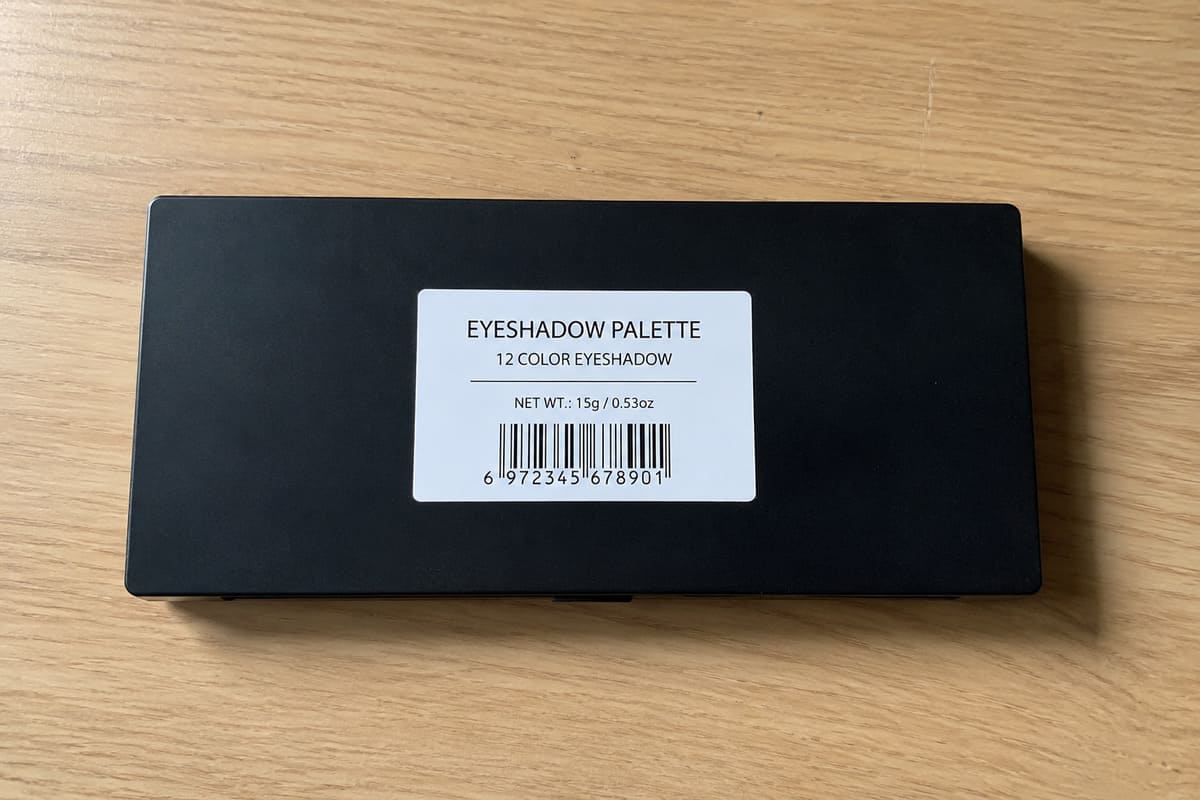
A consumer may see a rating and think, “This palette looks beautiful.” A procurement team needs to ask harder questions: Can it sell for six months? Does its texture suit our target market? Can we reorder without changing quality? Can the margin survive freight, promotions, and retailer fees? Those questions shape a profitable launch.
What Does “Highest Rated Eyeshadow Palette” Actually Mean for Procurement Teams?
A high review score can look like a safe decision, especially when a buyer needs internal approval. However, procurement teams often discover that ratings hide the reasons behind customer satisfaction or dissatisfaction. We see this problem when a popular palette has strong social-media attention but weak repeat sales after the first promotional cycle.
For procurement teams, a highest rated eyeshadow palette should mean more than a high average score. It should show consistent sales over time, feedback that supports formula quality, a clear customer fit, and a supply plan that protects margin. We treat ratings as a starting point for due diligence, not proof that a palette will perform in every market.
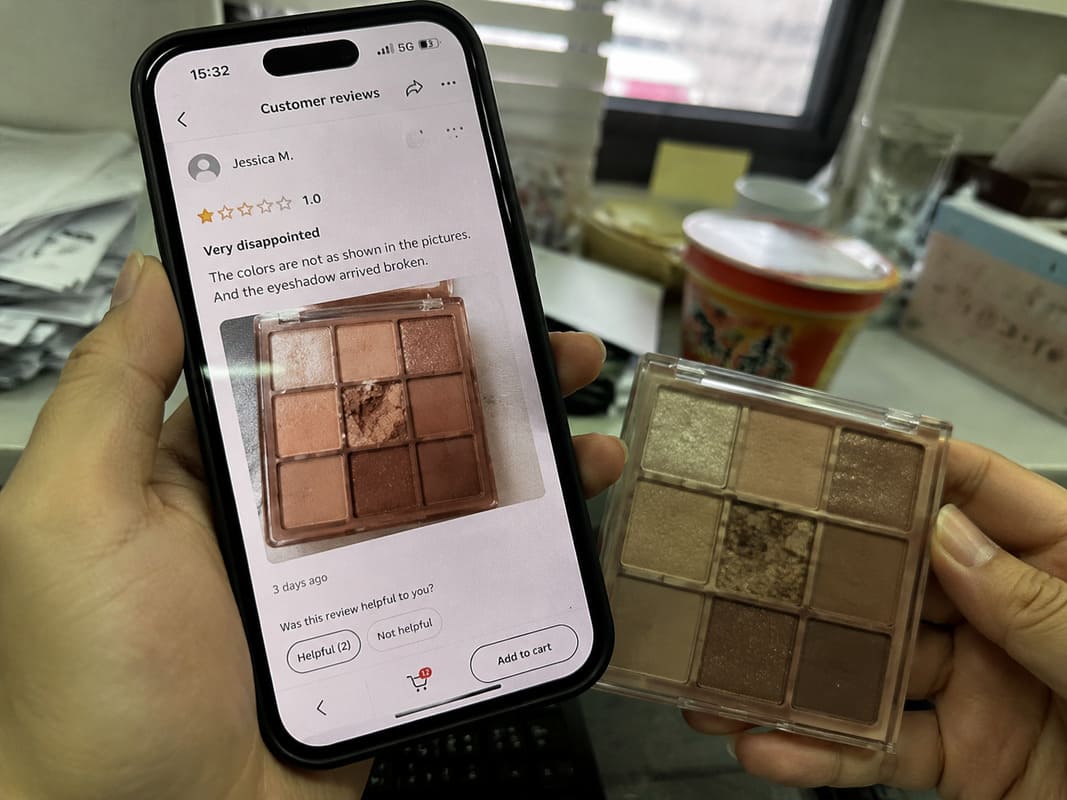
A rating is an average, not a product specification
A 4.8-star score may come from 200 reviews, while another palette may hold 4.6 stars across 20,000 reviews.2 These products do not carry the same level of market evidence. We encourage our B2B buyers to look behind the score before requesting an OEM or ODM quotation.
A useful procurement review includes:
- Review volume: A larger sample can offer more reliable signals, although it still requires context.
- Review timing: Recent reviews may reveal whether quality is stable after a formula, packaging, or supplier change.
- Verified-purchase indicators: These can be more useful than comments generated by sampling campaigns.
- Photo and video reviews: These often show pigmentation, fallout, pan appearance, and shade variation more clearly.
- One- and two-star comments: These reveal risk areas that an average score can hide.
- Regional buyer feedback: A palette praised in one climate or market may need adjustment elsewhere.
For example, a richly pigmented warm matte palette may perform well with consumers who prefer bold looks. Yet buyers in another region may report that the same shades look too intense for daily use. This does not mean the formula is poor. It means the assortment does not match the local consumer’s buying habits.
We separate beauty popularity from commercial viability
At Vertina Beauty, we work with importers, distributors, wholesalers, and emerging brands that need to justify product decisions with evidence. We therefore encourage teams to build a short internal sourcing report rather than simply attaching a retailer screenshot.
A high rating can support a purchasing proposal. It cannot replace a sales forecast, quality review, or supplier evaluation.
Our recommended report has four basic sections:
| Evaluation Area | Questions We Recommend Asking | Why It Matters |
|---|---|---|
| Demand | Are sales stable after launch month? | Reduces the risk of chasing a short trend |
| Formula feedback | Do buyers complain about fallout, weak payoff, or irritation? | Identifies development and QC priorities |
| Product-market fit | Do shades suit local skin tones and usage occasions? | Supports sell-through |
| Supply feasibility | Can the factory produce, inspect, pack, and replenish consistently? | Protects delivery and repeat-order capability |
We also recommend that buyers verify any testing records, ingredient documentation, or certification-related documents required for their own destination market. Application-specific compliance decisions should be reviewed with qualified regulatory and quality professionals.
Which 4 Supply Chain Metrics Determine a Highest Rated Eyeshadow Palette’s True Value?
A product can receive glowing reviews and still become a difficult SKU if its demand is short-lived or its defect pattern is expensive to solve. The risk becomes larger when a buyer orders too deeply based on launch excitement. We use several commercial metrics to help customers move from impressions to measurable procurement logic.
The four most useful metrics are the monthly sales curve, negative-review focus, repurchase rate, and color-and-texture strategy. Together, these indicators show whether a highest rated eyeshadow palette has repeatable demand, formula risks, regional relevance, and a realistic path to profitable replenishment.
1. Monthly sales curve
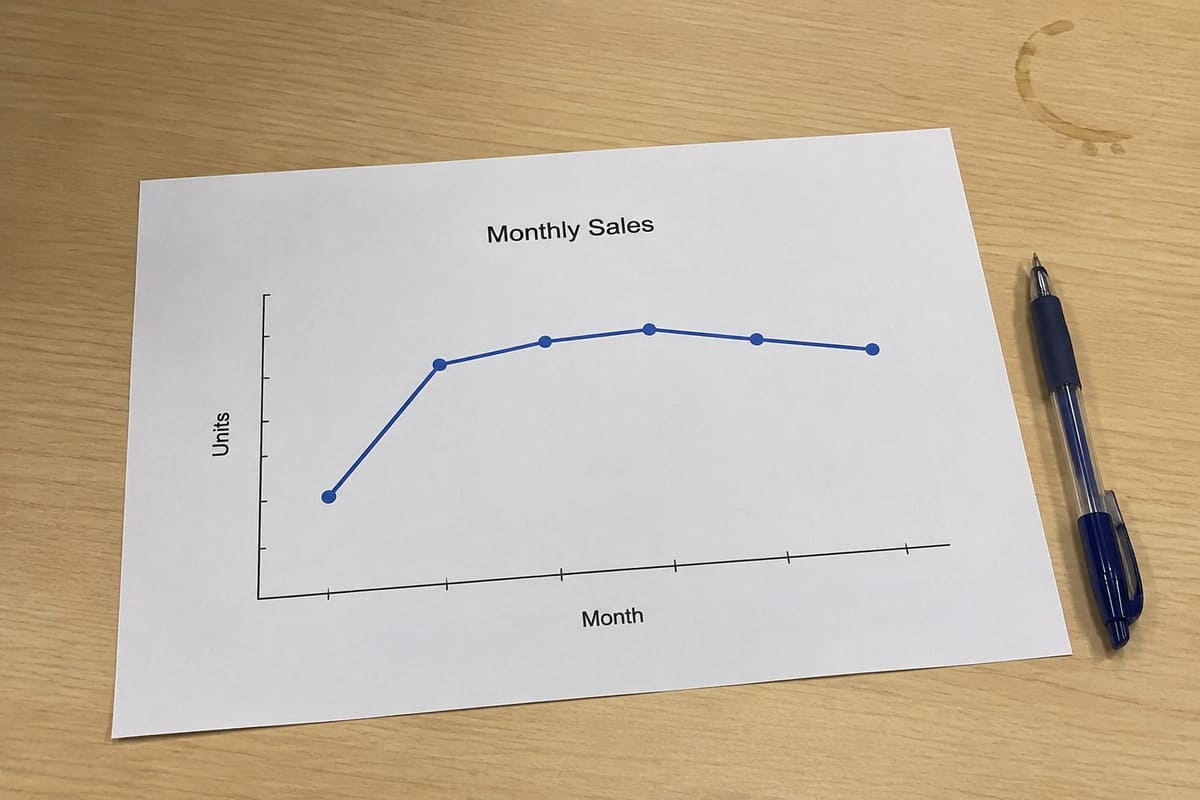
We first ask whether sales remain steady after the launch period. A sharp spike in month one can be caused by influencer marketing, paid advertising, limited-time hype, or discounting. That spike may look impressive in a pitch deck, but it does not always support a large reorder.
A healthier sales curve often shows:3
- A launch increase.
- A moderate adjustment after initial promotions.
- A stable monthly sales baseline.
- Periodic lifts around holidays, gifting seasons, or local events.
- Repeat demand that supports replenishment planning.
We recommend comparing at least three to six months of sales where data is available. For seasonal or trend-driven items, we would also compare the same period year over year if the category has enough history.
2. Negative-review focus
Negative reviews are often more useful than positive reviews because they tell us what can go wrong operationally.4 When we analyze a benchmark palette, we group complaints by theme.
| Negative Review Theme | What It May Indicate | Possible Procurement Action |
|---|---|---|
| “Too much fallout” | Powder pressing, particle size, or packaging pickup issues | Request formula and drop-test evaluation |
| “Not pigmented” | Low color payoff or poor shade choice | Review pigment load and swatch samples |
| “Shimmer disappears” | Weak adhesion or unsuitable effect pigment balance | Compare shimmer, sparkle, and pearlescent options |
| “Broke during shipping” | Pan strength, tray design, or transit packaging weakness | Conduct packaging and transport testing |
| “Colors look different” | Photography mismatch or batch variation | Approve reference standards and batch controls |
We do not assume every complaint is a formula failure. Consumer application technique, expectations, and lighting conditions can also affect feedback. Still, repeated complaints around the same issue deserve attention before a buyer commits to volume.
3. Repurchase rate
A high repurchase rate is one of the clearest signs that a palette has long-term potential.5 Palettes naturally have a slower repurchase cycle than items such as lip gloss or foundation because consumers use them over time. Therefore, we also look at related signals, including repeat orders from retailers, distributor replenishment frequency, and demand for similar color stories.
A buyer can ask:
- Are retailers placing follow-up orders without large discounts?
- Are the same shades appearing in repeat best-seller lists?
- Do consumers buy other palettes from the same collection?
- Are customers recommending the product to friends or creators?
- Does the brand have a repeatable launch model?
4. Color and texture strategy
We believe color and texture are commercial decisions, not only creative decisions. A well-rated 12-pan palette can contain beautiful shades that do not suit a buyer’s main customer base.
For example:
- Middle East markets may respond well to high-impact metallics, rich warm tones, jewel shades, and evening-focused sparkle combinations.
- Southeast Asian markets may favor wearable warm neutrals, lightweight shimmers, peach or rose tones, and colors that work in humid conditions.
- North American and EU-focused concepts may require closer attention to ingredient positioning, claim support, packaging expectations, and market-specific documentation.
We often suggest a balanced texture mix: dependable mattes for daily use, smooth shimmers for versatile looks, and one or two sparkle or chameleon shades for visual differentiation. This approach gives a palette a clear selling story without making every pan difficult to manufacture or explain.
How Did We Help a Client Test the Market with a 1,000-Unit Highest Rated Eyeshadow Palette Trial?
Many buyers feel pressure to copy a successful product quickly. That approach can create unnecessary cost if the reference palette uses expensive pigments, complex pressing methods, or a color story that does not fit the buyer’s customers. We prefer to reduce uncertainty before the first large production order.
We helped a Middle Eastern client use a 1,000-unit trial to test a high-rated palette concept with lower inventory exposure.6 Instead of reproducing the reference product immediately, we reviewed its effects, selected similar existing shades, and created a market-ready trial assortment. The client used real sell-through feedback before investing in a fully customized range.

The client’s original request
A client approached us with an image of a highly rated eyeshadow palette that had attracted attention online. The palette featured bright reflective shades and a strong pearl finish. The client wanted a quotation for a close reproduction and hoped to move fast.
We understood the commercial motivation. The client wanted a recognizable trend direction and evidence for internal stakeholders. However, we also saw risks in treating the image as a complete specification.
The reference appeared to use special pearlescent pigments and possibly a more demanding sparkle system. A full reproduction could increase raw-material cost, sampling time, and color-development work. It could also require several rounds of approval before production.
Our practical recommendation
Rather than only sending a price, we broke the request into manageable decisions:
- We reviewed the visual reference to identify the likely texture categories: matte, pearl shimmer, and high-sparkle effect.
- We compared existing shade options that could create a similar market impression without starting every shade from zero.
- We proposed a smaller trial quantity of 1,000 units to help the client validate demand.
- We discussed packaging options that matched the client’s target price point.
- We asked the client to track sell-through and feedback by shade, texture, and customer segment.
This method did not promise that the trial would become an immediate bestseller. Instead, it gave the client a structured way to collect evidence with less capital tied up in inventory.
What the trial helped the client learn
The market response was encouraging, and the client later chose to move forward with a fuller custom shade range. More importantly, the client gained useful information before scaling:
- The high-reflective shades generated the strongest social-media interest.7
- Wearable transition mattes supported everyday use and made the palette easier to sell repeatedly.
- The client’s customers responded well to a compact assortment rather than an oversized palette.
- The client could use actual sales feedback to support the next purchasing discussion.
We have found that this process is often stronger than chasing the highest rated eyeshadow palette at face value. It creates a decision trail that a purchasing committee can understand: reference product, risk assessment, controlled trial, sales feedback, then scale-up.
Why Does the 4–6 Shade Rule Protect Cash Flow Better Than a Large Eyeshadow Palette?
Large palettes can look impressive online, but they can also create more inventory risk. Each additional pan adds formula complexity, component cost, filling time, color approval work, and potential slow-moving shades.8 For a new brand or distributor, a smaller palette can create a clearer story and a faster path to market feedback.
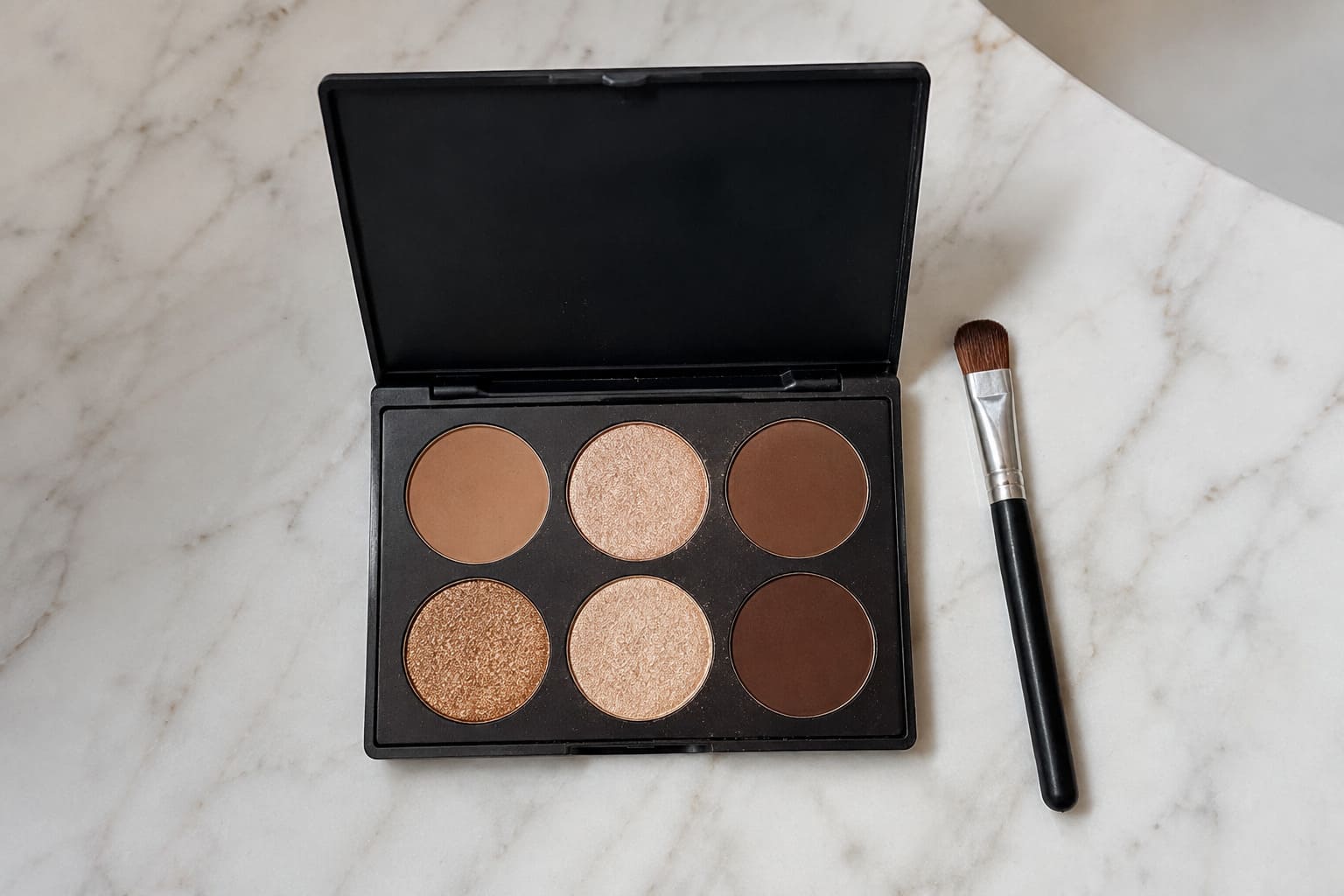
A 4–6 shade eyeshadow palette can protect cash flow because it requires fewer unique shades, less inventory investment, and simpler quality control. Based on our global B2B sourcing experience, about 90% of new brands launch with 4–6 shade palettes rather than 12-shade palettes9 because the smaller format reduces inventory risk and speeds up cash flow.
Why fewer shades can improve sell-through
A compact palette forces a brand to make clearer decisions. Instead of offering every possible trend color, the product can focus on a specific use case: daily warm neutrals, soft glam, festive sparkle, or a regional color story.
A practical six-shade configuration may include:
- Two matte transition shades
- One deeper matte for definition
- Two shimmer or pearl shades
- One standout sparkle, glitter, or chameleon effect shade
This mix supports both usability and visual impact. The mattes make the palette functional. The special-effect pan gives the product a marketing hook for product photos and short-form video.
Comparing 4–6 shades with 12 shades
| Factor | 4–6 Shade Palette | 12 Shade Palette |
|---|---|---|
| Initial inventory exposure | Usually lower | Usually higher |
| Shade-development workload | More manageable | More complex |
| Packaging size | Compact and easier to ship | Larger and potentially more fragile |
| Product story | Often more focused | Can be broad but harder to position |
| Quality-control checkpoints | Fewer shade variables | More variables to inspect |
| Consumer choice | Simple and approachable | More creative options, but can overwhelm some buyers |
We do not suggest that every buyer should avoid 12-pan palettes. An established brand with strong retail data, a broad customer base, and a clear seasonal strategy may benefit from a larger format. However, we often recommend that first launches begin with a smaller range, especially when a buyer is testing a new market, new packaging style, or new special-effect formula.
Cash flow is part of product quality
Procurement teams sometimes separate finance from product development. In our experience, they are closely linked. A palette that cannot be reordered at the right time, or that ties up capital in low-demand shades, becomes a commercial problem even if its formula is visually attractive.
We encourage buyers to forecast:
- Expected monthly sell-through
- Minimum acceptable gross margin
- Reorder lead time
- Warehouse capacity
- Promotional budget
- Risk of discounting slow shades
- Seasonal demand windows
This discipline helps buyers identify whether a highest rated eyeshadow palette is truly a suitable model or simply an attractive reference.
What Should Buyers Know About Customization Costs and MOQ for a Highest Rated Eyeshadow Palette?
Customization can create differentiation, but it also adds cost and decision points. Buyers may assume that a reference product can be copied exactly at the same price as a standard palette. In reality, special pigments, custom shades, branded packaging, and smaller runs can change the cost structure substantially.
Customization costs and MOQ depend on formula complexity, pigment selection, packaging, shade count, and testing requirements. A highest rated eyeshadow palette that uses high-end sparkle or unique color-shift effects may cost more to develop and produce. We believe buyers should receive a clear cost breakdown and should consider testing existing shades before funding full customization.

What usually affects the quotation
We explain cost drivers before we quote because buyers need realistic numbers for internal approval. The exact cost depends on the final specification, but these factors commonly matter:
| Cost Driver | Lower-Complexity Option | Higher-Complexity Option |
|---|---|---|
| Formula | Existing standard texture | New custom formula development |
| Color | Existing approved shades | Exclusive shade matching |
| Effect pigments | Standard pearl or shimmer | Chameleon, high-sparkle, or specialty pigments |
| Palette format | Standard compact | Custom mold, unusual pan layout, or premium component |
| Decoration | Basic label or print | Foil, embossing, multi-process artwork |
| Order volume | Larger volume may improve unit economics | Smaller volume may have higher unit cost |
| Testing and documents | Standard buyer requirements | Market-specific or additional requested evaluations |
Of course, if a buyer requires a full reproduction of a specific high-end brand’s special sparkle formula, costs will rise accordingly. We will honestly inform the buyer before quoting, calculate the financial impact, and usually advise testing suitable existing shades first.
Our approach to low MOQ and controlled customization
At Vertina Beauty, we support flexible low-MOQ options for selected standard and trend-focused products. Availability depends on the formula, component, packaging, and customization level. We do not present low MOQ as a universal answer because every project has different production realities.
Instead, we help buyers choose among three practical paths:
Ready or semi-custom option
Buyers select available shades and standard packaging with branding adjustments. This is often the fastest and lowest-risk path.Modified existing palette
Buyers use an established base formula but adjust several shades, packaging artwork, or texture balance. This can provide differentiation while controlling development time.Full OEM/ODM development
Buyers create a custom formula, exclusive shade story, and tailored packaging. This offers the strongest brand distinction but requires more planning, sampling, and budget.
We also recommend written approval standards for color, texture, pan appearance, packaging artwork, and acceptable batch variation. A supplier’s sample should not be the only control point. Buyers should define inspection expectations, agree on production references, and verify the documents that apply to their destination market.
Frequently Asked Questions
Is the highest rated eyeshadow palette always the most profitable palette to sell?
No. A highest rated eyeshadow palette may have strong consumer appeal but weak long-term demand, expensive ingredients, or a poor fit for your target market. We recommend reviewing sales trends, negative feedback, reorder patterns, freight costs, and expected margin before making a volume commitment.
Which eyeshadow palette complaints should procurement teams take seriously?
We recommend paying close attention to repeated complaints about fallout, poor pigmentation, broken pans, weak shimmer payoff, inconsistent color, and packaging defects. These themes can point to formula, pressing, component, or quality-control issues. Buyers should request relevant samples and conduct their own qualified evaluation.
What is a suitable MOQ for a new private-label eyeshadow palette?
A suitable MOQ depends on the formula, packaging, and degree of customization. We often suggest that new brands test selected existing shades or semi-custom options first. A controlled trial order can provide sales evidence before the buyer invests in a larger fully customized range.
Should a new brand launch a 6-shade or 12-shade eyeshadow palette?
We often recommend a 4–6 shade palette for a new launch because it reduces shade inventory, simplifies quality control, and creates a focused product story. A 12-shade format can work when the buyer has stronger demand data, a larger budget, and a clear retail strategy.
How can I evaluate an OEM eyeshadow palette manufacturer?
Buyers should evaluate product samples, shade consistency, communication speed, packaging capability, MOQ flexibility, production lead times, quality-control process, and the supplier’s willingness to discuss limitations honestly. Buyers should also verify any compliance, testing, or certification documents required for their intended market.
Conclusion
The highest rated eyeshadow palette is not simply the product with the most stars online. For B2B buyers, the best sourcing decision comes from stable sales data, negative-review analysis, repeat-demand signals, local shade strategy, and a supply plan that protects cash flow. We believe a smaller trial, often with four to six carefully selected shades, can provide stronger evidence than an immediate large order. If you are evaluating a palette concept, we can help you compare low-MOQ options, existing shades, custom effects, and OEM/ODM development paths for your target market.
"The impact of online reviews in the presence of customer returns", https://pmc.ncbi.nlm.nih.gov/articles/PMC7501828/. A relevant empirical study supports the view that consumer review metrics are imperfect predictors of subsequent demand and commercial performance, although the findings are not specific to eyeshadow palettes or B2B sourcing. Evidence role: general_support; source type: paper. Supports: Research showing that consumer ratings or review signals do not fully predict demand, returns, or profitability would support treating ratings as incomplete procurement evidence.. Scope note: Evidence should be presented as contextual support rather than direct proof that a particular five-star palette will create these risks. ↩
"Bayesian average", https://en.wikipedia.org/wiki/Bayesian_average. Statistical research on rating aggregation indicates that averages based on larger samples generally provide more stable estimates than averages based on small samples, subject to sampling and review-selection biases. Evidence role: mechanism; source type: paper. Supports: Statistical research on sample size and rating aggregation can support the claim that average scores should be interpreted alongside the number of observations.. Scope note: Sample size alone does not establish review authenticity, representativeness, or future product demand. ↩
"The Life Cycle of Products: Evidence and Implications", https://www.journals.uchicago.edu/doi/10.1086/726704. Demand-forecasting and product-adoption research supports analyzing launch effects, baseline demand, repeat purchasing, and seasonality as distinct components of a product’s sales pattern. Evidence role: mechanism; source type: research. Supports: Product-adoption and demand-forecasting research can explain why launch effects, repeat purchasing, and seasonality should be separated when evaluating sales performance.. Scope note: The cited models do not establish that this exact curve is healthier for every cosmetics product or market. ↩
"Why negative reviews could have more of an impact on ...", https://biz.source.colostate.edu/negative-online-reviews-impact-study/. Research on negative word-of-mouth indicates that adverse feedback can contain diagnostic information about product failures and customer dissatisfaction, although its usefulness depends on complaint specificity and reviewer representativeness. Evidence role: mechanism; source type: paper. Supports: Research on negative word-of-mouth and complaint content can support the idea that adverse reviews may reveal specific failure modes requiring corrective action.. Scope note: Negative reviews are not necessarily more accurate or more predictive than positive reviews. ↩
"In Pursuit of Enhanced Customer Retention Management", https://www.hbs.edu/ris/download.aspx?name. Customer-retention research associates repeat purchasing with loyalty and customer lifetime value, making repurchase a relevant indicator of future demand when interpreted with purchase frequency and profitability. Evidence role: mechanism; source type: paper. Supports: Customer-retention research can support using repeat purchasing as a signal of loyalty and future demand.. Scope note: Eyeshadow palettes have relatively long and heterogeneous replacement cycles, so repurchase rates may be difficult to observe over short periods. ↩
"Navigating new product development: Uncovering factors and ...", https://pmc.ncbi.nlm.nih.gov/articles/PMC10788447/. A documented pilot-launch case may illustrate how a smaller initial order can generate market feedback before scale-up, but it cannot independently verify this company’s client outcome without underlying records. Evidence role: case_reference; source type: other. Supports: A documented case study could verify the trial size, market context, sales process, and whether the controlled order reduced inventory exposure.. Scope note: The specific client, unit quantity, and result require primary documentation or permission to publish case evidence. ↩
"Social Media Strategy: a case study for online success", https://www.ied.edu/news/social-media-strategy-a-case-study-for-online-success. Campaign analytics could document whether reflective shades produced greater observed social-media engagement than other shades in this trial, but the result would remain a case-specific association rather than proof of general consumer preference. Evidence role: case_reference; source type: other. Supports: Campaign records or an independently documented case could support comparative engagement for reflective shades during the stated trial.. Scope note: Engagement metrics may reflect creative execution, influencer reach, paid promotion, or novelty rather than durable demand. ↩
"How to Make Eyeshadow to Sell? - Source Cosmetic Manufacturer ...", https://vertinabeauty.com/2026/07/26/how-to-make-eyeshadow-to-sell/. Operations research generally finds that greater product variety can increase setup, coordination, inventory, and forecasting complexity, providing contextual support for the procurement concerns associated with additional palette pans. Evidence role: mechanism; source type: paper. Supports: Operations research on product variety and SKU proliferation can support links between assortment breadth, setup or handling requirements, inventory complexity, and obsolescence risk.. Scope note: The cited mechanism is not specific to eyeshadow manufacturing, and actual effects depend on shared formulas, automation, batch sizes, and supplier processes. ↩
"How to Make Eyeshadow to Sell? - Source Cosmetic Manufacturer ...", https://vertinabeauty.com/2026/07/26/how-to-make-eyeshadow-to-sell/. A properly sampled industry dataset could quantify the shade counts used in new-brand launches; absent such a dataset, the stated 90 percent figure should be treated as an internal observation rather than an established market statistic. Evidence role: statistic; source type: research. Supports: An industry survey or dataset with a defined sample could test the prevalence of four-to-six-shade launches among new cosmetics brands.. Scope note: No neutral source identified by the claim is specified, and the result may vary substantially by region, channel, brand type, and launch year. ↩