When a procurement buyer searches for “What’s the best eyeshadow palette to buy?”, what they really need is a low-risk buying guide to help them test the market safely, not a flashy consumer ranking list. I have seen new brands lose cash through oversized first orders, complex shade assortments, and packaging that their customers never requested. I believe a controlled launch is safer.
The best eyeshadow palette to buy for a first B2B order is usually a compact six- to nine-shade palette with practical earthy tones, daily shimmer shades, standard packaging, reliable quality, and a manageable MOQ. I recommend testing existing stock or a small custom batch before investing in special-effect pigments, complex packaging, or a large SKU range. The right choice should protect cash flow and create clear reorder data.
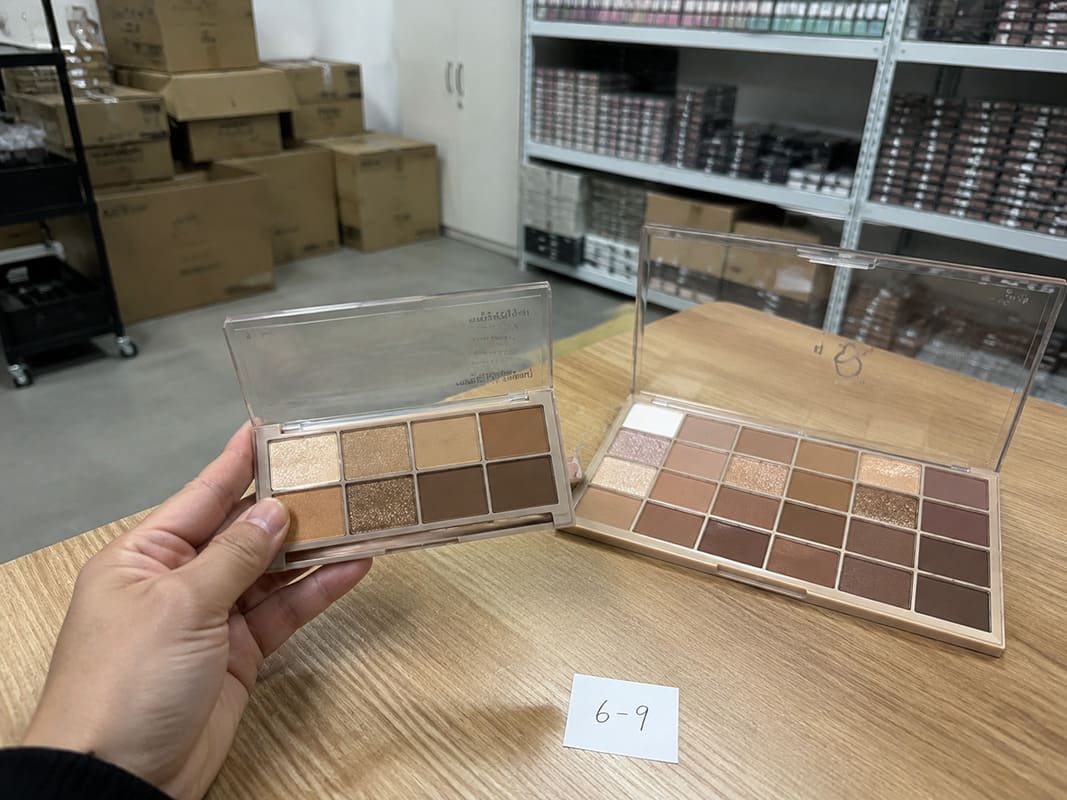
I use this approach when I speak with importers, distributors, wholesalers, emerging beauty brands, and retail buyers. A palette can look exciting in a product presentation and still move slowly in local stores. Below, I explain how I evaluate the first order, inventory risk, shade selection, packaging, and the proper timing for chameleon or glitter effects.
What Does “Best to Buy” Mean for a First-Time Buyer?
A first-time buyer can make an expensive mistake by treating “best” as the most luxurious, colorful, or technically advanced palette. I understand the pressure to create a strong first impression, but a launch product must also sell repeatedly. I define “best” as the product that provides the clearest market test with the lowest reasonable inventory risk.
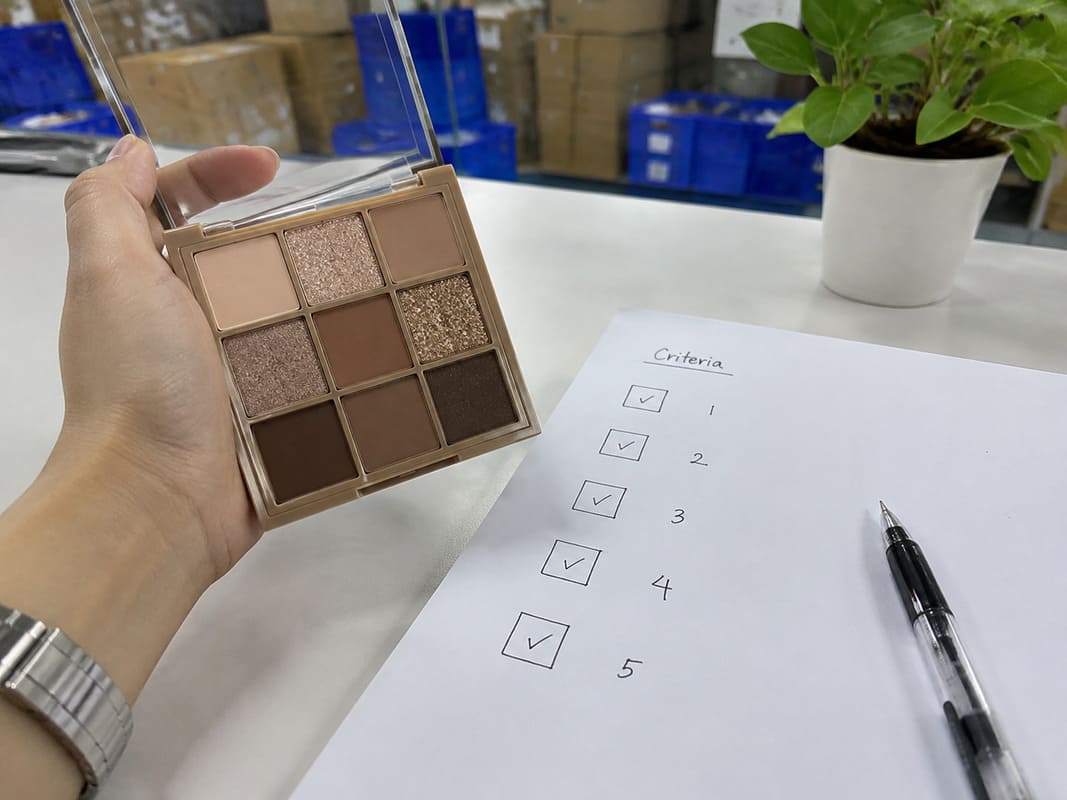
For a first purchase, I recommend evaluating a palette against five practical criteria:
- Expected sell-through: Can customers understand and use the shades easily?
- Initial investment: Can the buyer place an order without tying up excessive capital?
- Reorder potential: Can the supplier reproduce the colors and packaging consistently?
- Channel fit: Does the palette suit supermarkets, local stores, e-commerce, or professional retail?
- Compliance readiness: Can the buyer obtain the documents required for the destination market?
For a first-time B2B buyer, the best eyeshadow palette to buy is not necessarily the most innovative palette. It is the palette with broad shade appeal, controlled SKU complexity, stable quality, reasonable MOQ, and a clear path to reorder. I normally recommend a six- to nine-shade format for initial testing.1
Why does a compact format reduce risk?
In my experience with global B2B sourcing, compact palettes are easier to test than large palettes with many unusual colors. A smaller shade count reduces formulation complexity, packaging cost, inventory exposure, and customer confusion.2 It also gives a brand a clear hero product instead of forcing buyers to manage too many variations.
I often compare the first order to a controlled experiment. The buyer needs to learn:
- Which shades receive the most attention?
- Which retail channel converts the fastest?
- What price point customers accept?
- Whether consumers prefer matte, satin, shimmer, or mixed finishes?
- How quickly the retailer can replenish stock?
- Whether the product generates repeat purchases or only initial curiosity?
A large palette may contain more visual drama, but it can make the test harder to interpret. If the product sells slowly, the buyer may not know whether the problem came from the shade selection, price, packaging, or excessive inventory.
| Evaluation area | Lower-risk first order | Higher-risk first order |
|---|---|---|
| Shade count | 6–9 controlled shades | 18–36 highly varied shades |
| Color direction | Earthy, neutral, wearable | Highly niche or extreme colors |
| Packaging | Existing or standard compact | Fully customized tooling |
| Pigment selection | Practical matte and shimmer | Extensive specialty effects |
| MOQ | Low or moderate | Large production commitment |
| Market test | One or two focused channels | Several markets at once |
| Reorder decision | Based on sell-through data | Based mainly on initial enthusiasm |
I also ask where the product will be sold. A palette for a Southeast Asian supermarket may need a different commercial balance from a premium DTC product for North America. Offline buyers often need clear shelf communication, durable packaging, an accessible price, and colors that suit everyday use.
I do not treat these recommendations as universal cosmetic rules. The buyer’s professional product team should assess the intended use, formula, packaging, labeling, stability, and market regulations. I can support the manufacturing discussion, but application-specific decisions require qualified evaluation.
How Can I Choose a Palette That Will Not Sit in My Warehouse?
Inventory becomes dangerous when a buyer orders based on imagination instead of evidence. I have worked with customers who wanted distinctive colors immediately because they feared looking similar to competing brands. I understand that concern, but a product that is unique and difficult to sell can create more risk than a practical product with a clear audience.
I recommend choosing an eyeshadow palette for wholesale by matching the shade range, price, packaging, and order size to the actual sales channel. Buyers should begin with practical colors, a controlled quantity, and existing or standard components whenever possible. They should then use sell-through data to guide the next custom order.
What should I verify before placing the purchase order?
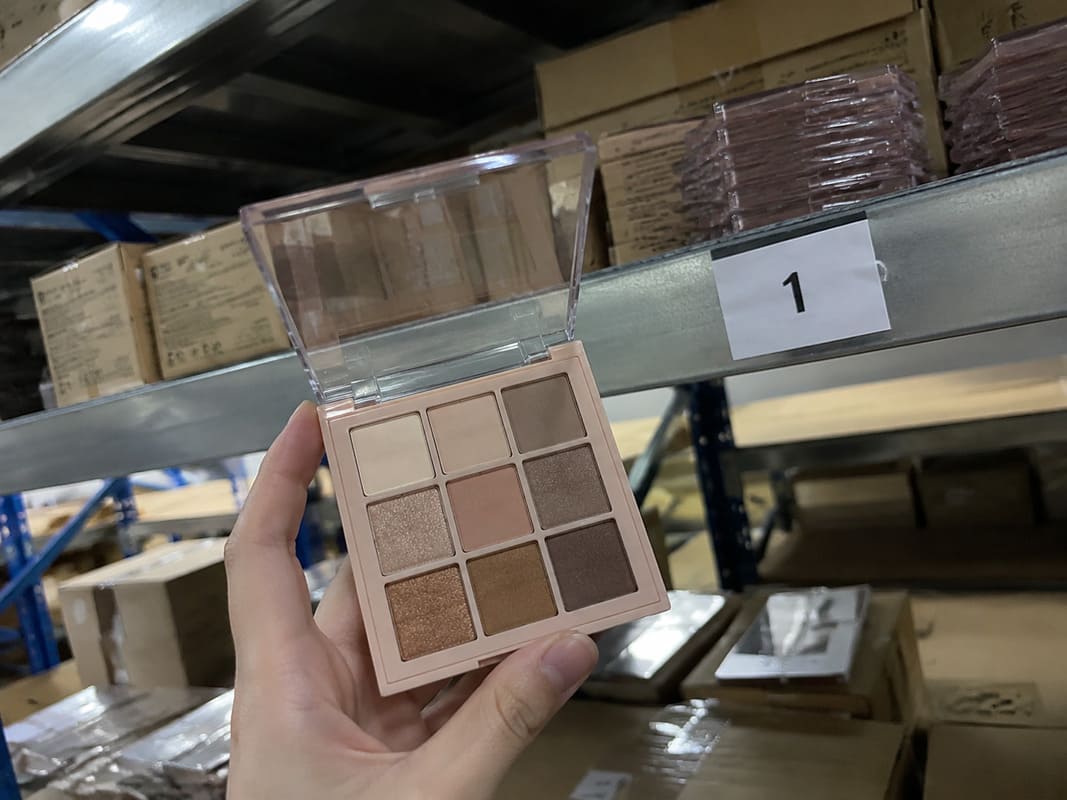
I use a simple pre-order checklist. It helps me separate genuine demand from attractive product photography.
1. Confirm the channel
A distributor, supermarket buyer, online brand, and beauty retailer may all need different products. I ask:
- Will the product sell through offline retail or e-commerce?
- Will the buyer sell one hero palette or several related SKUs?
- Is the customer price-sensitive?
- Does the retailer require barcode, shelf-ready packaging, or specific carton dimensions?
- How often can the buyer replenish inventory?
A palette that works in a trend-driven online shop may not work in a conservative local supermarket.
2. Estimate the first selling cycle
I encourage buyers to estimate a realistic selling period, such as 60, 90, or 120 days. I do not recommend using an optimistic launch forecast to justify a large order.
| Planning question | Conservative approach |
|---|---|
| Initial order quantity | Based on a controlled market test |
| Selling period | 60–120 days, depending on channel |
| Reorder trigger | Confirmed sell-through and retailer demand |
| Safety stock | Limited, based on lead time |
| New color development | After core product evidence |
| Promotional budget | Separate from manufacturing budget |
3. Compare landed cost, not factory price alone
The factory quotation is only one part of the financial decision. I encourage buyers to calculate:
Landed cost = product price + packaging + inspection + freight + duties or taxes + local distribution costs
A very low unit price may not be attractive if the buyer needs custom tooling, high freight volume, or expensive outer packaging. Conversely, a slightly higher product cost may be justified when it improves sell-through or reduces damage and returns.
4. Request a representative sample
I recommend reviewing samples for:
- Color accuracy under different lighting
- Payoff and blendability
- Fallout and powder texture
- Pan adhesion
- Closure strength
- Label space and print quality
- Outer carton protection
- Batch identification and traceability
I also recommend that the buyer retain an approved reference sample. The production team should compare bulk output against that reference before shipment.
How do I use a low MOQ responsibly?
Low MOQ is useful because it reduces the cost of market testing. However, low MOQ does not remove every risk. I still discuss formula selection, component availability, production scheduling, and future replenishment with the customer. A custom formula may require a different MOQ from an existing shade range.
At Vertina Beauty, I can often help customers begin with existing stock or standard packaging before they commit to a fully customized OEM/ODM program. This approach gives the buyer early sales information and gives us a clearer basis for the next development step.
I do not promise that every low-MOQ product will sell quickly. I explain the conditions that make a small order more useful: a clear target customer, a defined channel, realistic pricing, and an agreed method for measuring sales. A small order without a sales plan can still become slow inventory.
How Did We Help a Southeast Asian Client Start with a 5,000-Unit Trial?
New brand owners often fear two outcomes: placing too little stock and missing demand, or placing too much stock and losing working capital. I saw this concern clearly with a Southeast Asian startup brand owner. He wanted his own logo and product identity, but he did not want to begin with an untested large order.
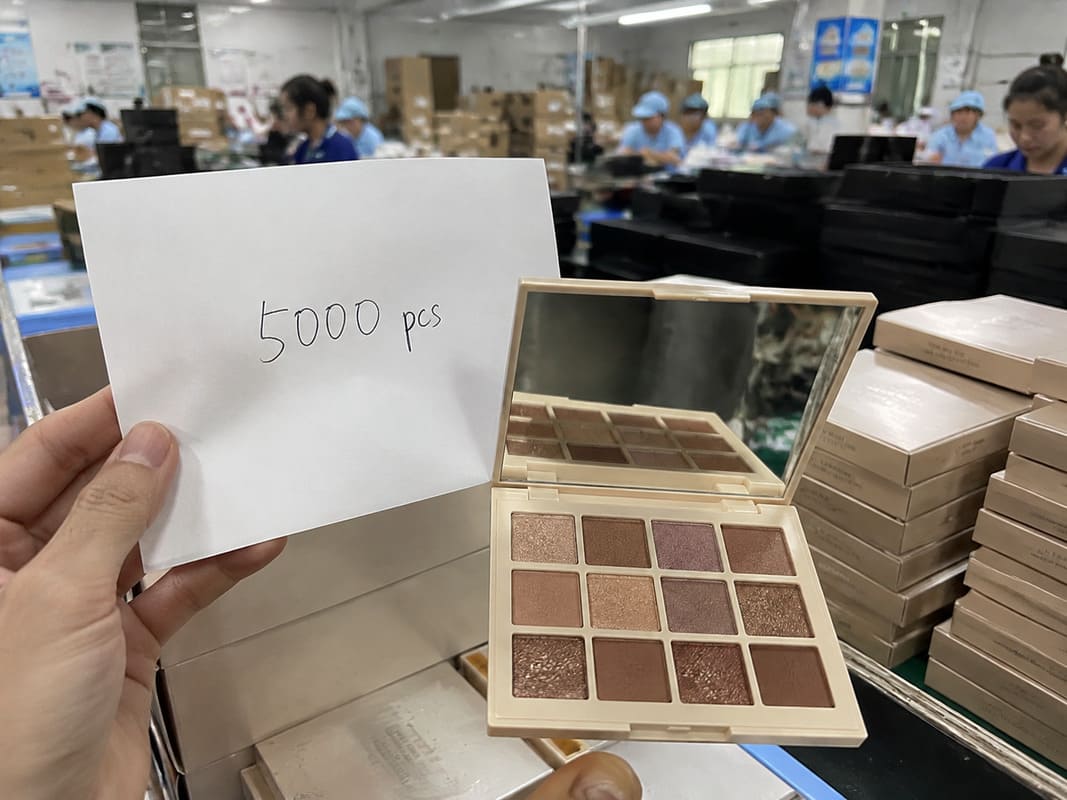
We first helped the Southeast Asian client test existing small-batch stock through local offline channels. After the initial sales gave him confidence, we supported a 5,000-unit custom order featuring everyday earthy tones, daily shimmer shades, and his own logo. The batch sold through local supermarkets and retail stores, and he then placed a 10,000-unit reorder.3
What did the staged buying process look like?
I treated the project as a progression from evidence to customization rather than as one large production decision.
Stage one: Test available products
The client began with existing small-batch stock. This step reduced development time and allowed him to place products in local offline channels. He could observe customer response before paying for a complete custom launch.
At this point, I focused on practical questions:
- Did retailers accept the product format?
- Did customers understand the shade range?
- Did the price support the required margin?
- Did the packaging survive normal store handling?
- Which shades attracted repeat interest?
Stage two: Select the commercial direction
The early response indicated that the local audience preferred wearable colors. The client did not need an extreme editorial palette for his first retail launch. We discussed earthy shades and daily shimmer because these colors fit commuting, work, social events, and general daily use.
| Project stage | Main objective | Manufacturing decision |
|---|---|---|
| Existing stock test | Measure basic demand | Use available small-batch products |
| Retail feedback | Identify practical preferences | Prioritize wearable colors |
| Custom development | Build brand ownership | Add client logo and selected palette |
| 5,000-unit order | Establish a repeatable SKU | Use controlled shade and packaging scope |
| Reorder stage | Respond to proven demand | Increase order to 10,000 units |
Stage three: Produce the first custom order
The first custom order contained 5,000 units. The client used his own logo, but he did not overcomplicate the packaging or add expensive special effects. This kept the budget focused on the product and the market test.
The products sold quickly in local supermarkets and retail stores, according to the client’s feedback. He then placed a 10,000-unit reorder. I present this as one client experience, not as a guaranteed result for every buyer. Market performance depends on pricing, distribution, promotion, retailer support, and local consumer preferences.
What can another buyer learn from this case?
I believe the main lesson is the value of sequencing decisions. A new buyer does not need to decide every long-term product question on the first day. The buyer can first validate the channel, then customize the product, and later introduce premium effects.
I also learned that a supplier’s responsiveness matters during this process. A startup brand may need help comparing available shades, packaging options, and production quantities. I try to give practical answers rather than encourage unnecessary upgrades.
For similar projects, I recommend that buyers document the following data:
- Units delivered to each retail location
- Units sold during each week
- Best-performing shades
- Returns or damaged units
- Customer comments
- Retailer reorder requests
- Promotional cost per unit
- Gross margin after landed cost
This information helps determine whether the next order should remain the same, expand the quantity, or introduce a new format.
Why Does a Compact Palette Protect My Cash Flow in Local Retail?
Local retail can create strong product visibility, but it can also expose a buyer to slow shelf movement. A large assortment may require more working capital across several SKUs. I prefer to help buyers place a smaller number of focused products that retailers can understand and replenish.
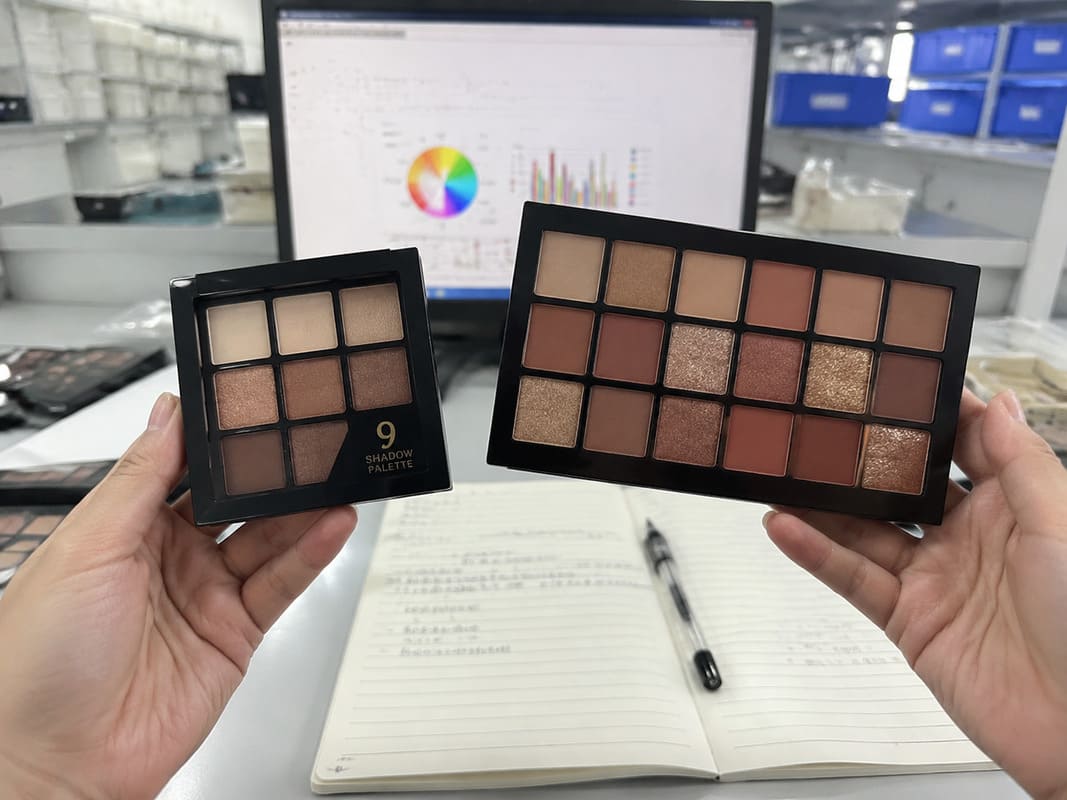
A compact eyeshadow palette protects cash flow because it concentrates investment into fewer SKUs, simplifies forecasting, reduces packaging and inventory complexity, and allows the buyer to reorder the proven product sooner. For many local retail launches, a six- to nine-shade palette provides a practical balance between customer choice and stock control.
How does SKU control improve purchasing efficiency?
Every additional SKU creates more operational work. The buyer must forecast demand, print packaging, manage stock, allocate shelf space, and monitor quality for that item. If the buyer introduces eight palettes at once, the sales data may become fragmented.
I often recommend a hero SKU strategy. The buyer selects one primary palette and uses it to establish demand. A second product can follow after the first has a stable reorder pattern.
| Factor | One compact hero palette | Eight initial palettes |
|---|---|---|
| Forecasting complexity | Lower | Higher |
| Packaging coordination | Simpler | More demanding |
| Retail shelf planning | Easier | More difficult |
| Risk of slow individual SKUs | Lower | Higher |
| Speed of identifying winners | Faster | Less clear |
| Capital distribution | Concentrated | Fragmented |
These are planning comparisons, not universal financial forecasts. I ask buyers to adapt them to their own sales data and working capital.
Why do earthy tones and daily shimmer work well for testing?
I recommend earthy tones because they are generally easier for a broad retail audience to understand. Brown, taupe, bronze, warm beige, and related shades can support everyday use. Daily shimmer shades add visual interest without making the entire product dependent on a highly specialized effect.
I do not mean that every market wants the same colors. Local preferences, skin tones, cultural styling, climate, price points, and retail positioning all matter. I encourage buyers to use local customer feedback and professional color development support when finalizing shades.
A practical first palette might include:
- Two or three matte transition shades
- Two deeper definition shades
- Two neutral or warm shimmer shades
- One highlight shade
- One optional accent shade
The final formulation should be assessed by qualified technical personnel for performance, stability, compatibility, and applicable safety requirements.
What packaging choices help manage cash flow?
I usually suggest standard components for an initial test. Standard packaging can reduce tooling costs and shorten the development process.4 A buyer can still create brand identity through logo printing, color selection, artwork, and outer carton design.
I also discuss packaging durability. A low-cost compact that cracks during transport may create more expense through returns and damaged inventory. Buyers should evaluate:
- Hinge strength
- Pan security
- Mirror and applicator requirements
- Closure performance
- Print resistance
- Carton protection
- Master carton dimensions
- Shipping efficiency
For export orders, the buyer should also verify labeling, ingredient declaration, batch information, claims, and market-specific documentation. Certifications and compliance documents should never be assumed from a supplier’s general statement. I recommend that the buyer request current documents and verify whether they apply to the specific product, factory, market, and shipment.
When Should I Use Special-Effects Pigments in a First Order?
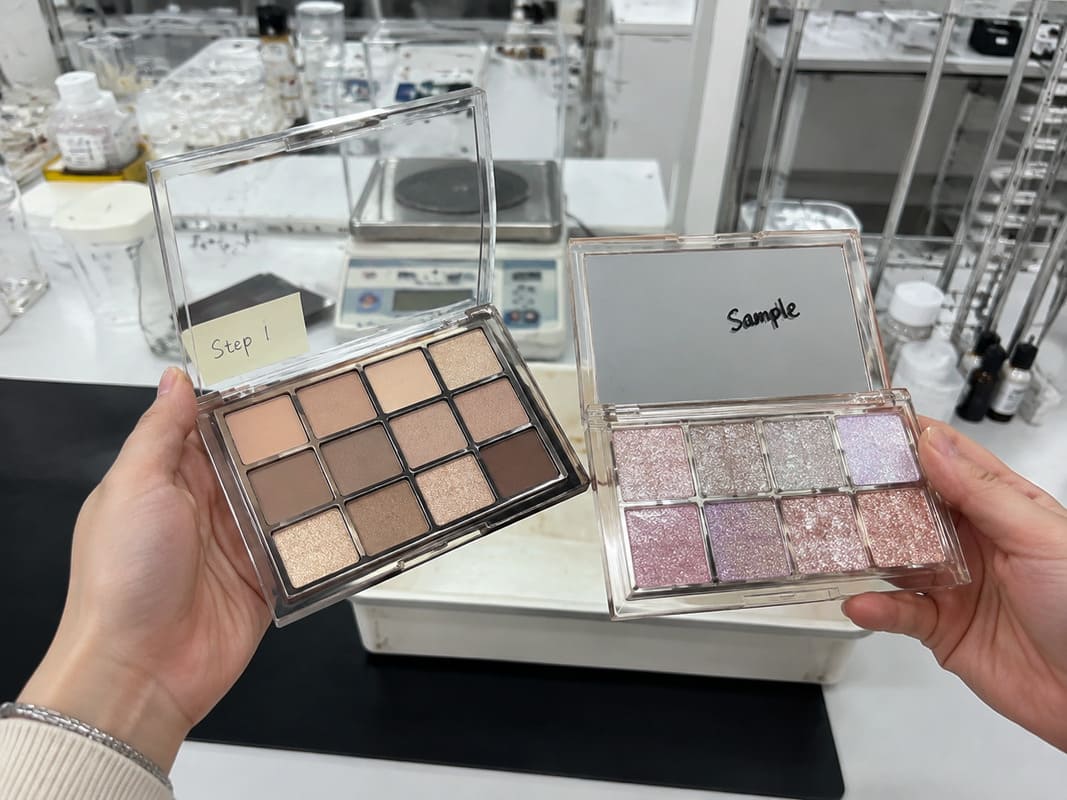
Special effects can make a product visually memorable. At Vertina Beauty, I have experience with chameleon eyeshadow, sparkle eyeshadow, and glitter effects. However, technical capability does not mean that every customer should use these effects immediately. I prefer to match innovation with a proven commercial purpose.
I recommend delaying expensive chameleon, high-sparkle, or glitter pigments until the buyer has validated the channel, price, and core demand. These effects are more appropriate for a second-stage premium line, limited edition, online launch, or clearly defined trend audience than for a first mass-retail test.
Why can special effects increase first-order risk?
Special-effect pigments may involve higher raw material costs, more complex visual evaluation, and different packaging or application considerations.5 Their performance can also appear different under store lighting, photography, and natural light.6 A buyer needs to know whether customers value the effect enough to support the price.
I do not want to discourage innovation. I want buyers to introduce it at the correct time.
| Product direction | Best initial use | Main risk |
|---|---|---|
| Standard matte shades | Broad retail testing | May appear less distinctive |
| Daily shimmer | Wearable differentiation | Must control fallout and texture |
| Sparkle eyeshadow | Trend-led or premium launch | Higher effect and cost expectations |
| Glitter eyeshadow | Specialty or artistic audience | Application and claim considerations |
| Chameleon eyeshadow | Premium, visual-impact collection | Narrower audience and higher cost |
How can I introduce effects without damaging the budget?
I usually recommend a staged product architecture:
Launch a practical core palette.
I use earthy tones and daily shimmer to establish a broad retail base.Measure sales and customer response.
I review which colors and finishes receive attention and repeat orders.Add one effect shade or a small effect SKU.
I test chameleon or sparkle effects in a controlled way instead of redesigning the whole range.Develop a premium collection.
I use custom color development and upgraded packaging after the buyer understands the audience.
This approach allows a brand to maintain a reliable everyday product while creating a higher-margin product later.
What technical checks should buyers request?
I advise buyers to ask for documentation and testing appropriate to the intended market and formula. They should consider:
- Full ingredient information
- Color additive or pigment information
- Microbiological or relevant safety testing
- Stability and compatibility information
- Packaging specifications
- Batch and production records
- Product claims support
- Required import and labeling documents
The exact requirements differ by country and product category.7 Buyers selling in the European Union, United States, Middle East, Southeast Asia, or other markets should consult qualified regulatory professionals and verify current official requirements. I can discuss manufacturing feasibility and available documentation, but I do not replace a local compliance specialist.
I also recommend approving a physical standard sample and a color reference. Special effects can vary visually, so the buyer should define acceptance criteria before bulk production.
When does a premium effect become commercially sensible?
I consider a special effect commercially sensible when the buyer has at least some evidence of:
- A customer segment that actively wants the finish
- A selling price that covers the additional cost
- A channel that can demonstrate the effect clearly
- Sufficient content or merchandising support
- A realistic reorder plan
- Adequate technical and compliance review
My honest recommendation for a new buyer is to use standard packaging and practical shades first. Once sales data becomes reliable, I can help develop a premium chameleon, sparkle, or glitter line. This path protects the first investment while preserving room for brand differentiation.
How Should I Compare Eyeshadow Suppliers Before Ordering?
A suitable palette can still fail if the supplier cannot reproduce it consistently. I evaluate suppliers by looking beyond the catalog. I want to understand communication, sampling, quality control, production capacity, MOQ flexibility, customization, and documentation.
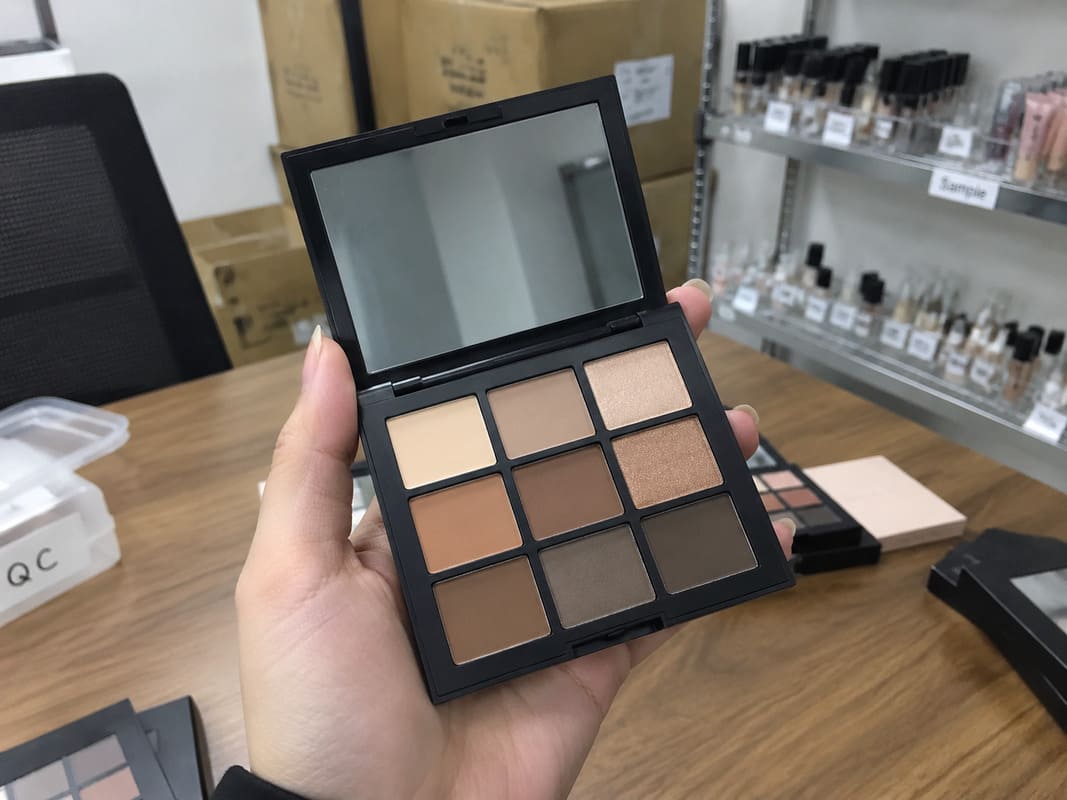
I recommend comparing eyeshadow suppliers using a weighted procurement review rather than unit price alone. The buyer should assess product quality, shade consistency, lead time, MOQ, customization capability, packaging reliability, communication, and market-specific documentation before selecting a manufacturer.
What supplier questions should I ask?
I suggest that buyers request clear answers to these questions:
- Can the supplier provide samples from the proposed production route?
- Can the supplier reproduce an approved shade?
- What is the MOQ for stock, standard, and custom products?
- What is the expected sample and production lead time?
- Which packaging components are standard?
- What inspection process does the factory use?
- Can the supplier support logo, shade, and carton customization?
- Which documents are available for the specific product?
- How does the supplier manage changes in raw materials or packaging?
- What happens if bulk production differs from the approved sample?
| Supplier criterion | What I would verify |
|---|---|
| Manufacturing capability | Product range, equipment, and relevant experience |
| Quality control | Incoming, in-process, and finished-product checks |
| Shade development | Formula references and color approval process |
| MOQ flexibility | Separate terms for stock and custom production |
| Delivery | Realistic lead time and shipment planning |
| OEM/ODM support | Formula, color, logo, and packaging options |
| Communication | Response speed and documentation clarity |
| Compliance support | Current product-specific documents for verification |
I do not recommend choosing a factory only because it offers the lowest quotation. A low price may exclude testing, stronger packaging, inspection, or support that the buyer later needs.
What should I know about factory scale?
Vertina Beauty operates as a Chinese manufacturing factory with approximately 100 employees. I believe this scale can support medium-sized orders while allowing relatively direct communication and flexible response. I do not present company size as proof of automatic quality. The buyer should still review samples, process information, records, and applicable documents.
I also believe supplier flexibility is valuable for startup brands and regional distributors. A very large factory may have strong capacity but less interest in a small first order. A smaller manufacturer may provide attention but lack the systems required for consistent growth. The buyer should assess the actual fit between its order plan and the factory’s operating model.
How should I verify certifications and export documents?
I advise every buyer to treat certifications, test reports, declarations, and other compliance documents as documents to verify—not as marketing language. The buyer should confirm:
- The document holder and issuing organization
- Validity dates
- Product and factory scope
- Market relevance
- Testing method
- Batch or formula relationship
- Whether the document is accepted by the destination authority or importer
Requirements can change by market. Importers should obtain professional regulatory advice for their destination country and confirm responsibilities in the sales contract. I can help identify the manufacturing information available for a product, but the buyer remains responsible for confirming legal market access with qualified professionals.
Frequently Asked Questions
What is the best eyeshadow palette to buy for a new beauty brand?
I usually recommend a compact six- to nine-shade palette with practical earthy tones and daily shimmer shades. I suggest using existing colors or standard packaging first, then adding custom shades or special effects after the brand has collected sales data.
Is a six- or nine-shade palette better for wholesale?
I often prefer six to nine shades for a first wholesale test because the format balances customer choice with inventory control. The best number still depends on the channel, price point, target market, and retailer requirements. I recommend reviewing local buyer feedback before final approval.
Should I order chameleon or glitter eyeshadow for my first launch?
I generally do not recommend making expensive chameleon or glitter effects the center of a first mass-retail order. I suggest validating a practical core palette first. A special-effects product can then become a premium, limited-edition, or trend-focused extension.
Can I start with a low MOQ for private-label eyeshadow?
In many cases, I can support a lower MOQ through existing stock, standard shades, or standard packaging. Fully customized formulas, components, and cartons may require different minimum quantities. I recommend confirming the MOQ, lead time, and future reorder terms before approving samples.
What documents should I request from an eyeshadow manufacturer?
I recommend requesting product-specific ingredient information, relevant safety or quality reports, packaging specifications, batch information, and destination-market documentation. Buyers should verify all certifications and reports with the issuing organization or a qualified regulatory professional before importing or selling.
Conclusion
The best eyeshadow palette to buy for a first B2B order is the one that creates useful market evidence without placing unnecessary pressure on cash flow. I recommend a compact palette, wearable earthy tones, daily shimmer, standard packaging, controlled MOQ, and a clear reorder plan. My Southeast Asian client’s path from existing stock to a 5,000-unit custom order shows how staged purchasing can reduce fear and support growth. If you are evaluating a low-MOQ eyeshadow palette or need OEM/ODM support, contact Vertina Beauty to discuss samples, shade options, packaging, and your target market.
"Eye Makeup Market Size, Share & Growth Analysis, 2033", https://www.persistencemarketresearch.com/market-research/eye-makeup-market.asp. Research on retail assortment breadth indicates that narrower, more focused assortments can simplify consumer choice and operational planning; this provides contextual support for beginning with a compact palette, but does not establish six to nine shades as a universally optimal format. Evidence role: general_support; source type: paper. Supports: Research on assortment breadth, consumer choice, and inventory complexity should support the general rationale for testing a focused assortment rather than establish six to nine shades as a universal optimum.. Scope note: The source is unlikely to validate the specific six- to nine-shade range or the cosmetics category directly. ↩
"Why is Assortment Planning so Difficult for Retailers? A Framework ...", https://www.academia.edu/12676322/Why_is_Assortment_Planning_so_Difficult_for_Retailers_A_Framework_and_Research_Agenda. Operations and consumer-choice research associates broader product variety with increased forecasting and inventory-management requirements and, in some contexts, greater decision complexity; these findings support the proposed mechanism but do not quantify the effect for eyeshadow palettes. Evidence role: mechanism; source type: research. Supports: Operations and marketing research should support the mechanisms linking product variety with forecasting burden, inventory exposure, and choice complexity.. Scope note: The evidence is contextual and may concern general retail products rather than cosmetic shade assortments. ↩
"(PDF) Advancing Green Marketing in Southeast Asia's Cosmetics Industry", https://www.researchgate.net/publication/398109409_Advancing_Green_Marketing_in_Southeast_Asia's_Cosmetics_Industry_A_Systematic_Literature_Review_of_Trends_Challenges_and_Opportunities. A documented customer case may corroborate that one Southeast Asian client progressed from a 5,000-unit custom order to a 10,000-unit reorder after local retail sales; this is an anecdotal case reference and does not demonstrate a reproducible result for other buyers. Evidence role: case_reference; source type: other. Supports: A dated customer case record, sales report, or independently verifiable case study should document the trial quantity, channels, sell-through, and subsequent reorder.. Scope note: Public neutral sources may be unable to verify a confidential client transaction, and the account should not be generalized without comparable cases or sales data. ↩
"Best Innovative Makeup Kit Manufacturers (Latest Trends ...", https://vertinabeauty.com/2025/03/07/best-innovative-makeup-kit-manufacturers-latest-trends-insights/. Packaging-development literature indicates that reuse of existing components can avoid or reduce new tooling and associated development steps; this supports the general mechanism, although the actual savings depend on the component, supplier, and customization scope. Evidence role: mechanism; source type: research. Supports: Packaging engineering or manufacturing research should explain how reuse of existing components and avoidance of new molds affect tooling expenditure and development lead time.. Scope note: The source may address packaging generally and may not quantify savings for cosmetic compacts. ↩
"Decoding Cosmetic Complexities: A Comprehensive Guide to Matrix ...", https://pmc.ncbi.nlm.nih.gov/articles/PMC10818968/. Cosmetic formulation research describes additional optical, particle-size, dispersion, stability, and application considerations for pearlescent, glitter, and other effect pigments; these findings support the possibility of greater technical complexity but do not establish a fixed cost premium. Evidence role: mechanism; source type: paper. Supports: Cosmetic-science literature should describe formulation, particle, optical, stability, and application factors associated with effect pigments.. Scope note: Costs and packaging requirements vary substantially by pigment composition, supplier, formula, and intended market. ↩
"Color appearance shifts depending on surface roughness, illuminants ...", https://pmc.ncbi.nlm.nih.gov/articles/PMC8789860/. Colorimetry research shows that perceived color and appearance can change with illumination, viewing conditions, and surface reflectance; this provides a technical basis for testing effect cosmetics under multiple lighting conditions. Evidence role: mechanism; source type: paper. Supports: Color-science research should support the effects of illumination, viewing geometry, and material reflectance on perceived color and sparkle.. Scope note: General color-science findings do not by themselves measure the appearance of a specific eyeshadow formula or packaging presentation. ↩
"Cosmetics & U.S. Law", https://www.fda.gov/cosmetics/cosmetics-laws-regulations/cosmetics-us-law. Official cosmetic regulations demonstrate that labeling, safety, notification or registration, claims, and import obligations are jurisdiction-specific and may also depend on product category; therefore, compliance documents must be assessed for the destination market and product. Evidence role: historical_context; source type: government. Supports: Official regulatory authorities should document differences in cosmetic definitions, labeling, safety substantiation, registration or notification, and import obligations across jurisdictions.. Scope note: Regulatory requirements change and the cited jurisdictions may not cover every market named in the article. ↩