Which Brand Has the Best Eyeshadow Palette? A Competitor Analysis for Buyers
Many procurement managers searching for this question really need a competitor analysis report to convince their team, not a consumer beauty list. They must justify product positioning, investment, and supplier selection. If the wrong palette creates slow inventory, the problem affects cash flow and brand credibility.1 I use a procurement framework to identify the best eyeshadow palette for a specific market.
There is no single best eyeshadow palette brand for every buyer. The strongest brand is the one whose positioning, shade architecture, regional relevance, supply chain agility, and inventory model match the buyer’s target market. Procurement teams should evaluate sell-through potential, SKU control, customization, quality documentation, MOQ, and repeat-order capability instead of relying only on consumer ratings or brand fame.
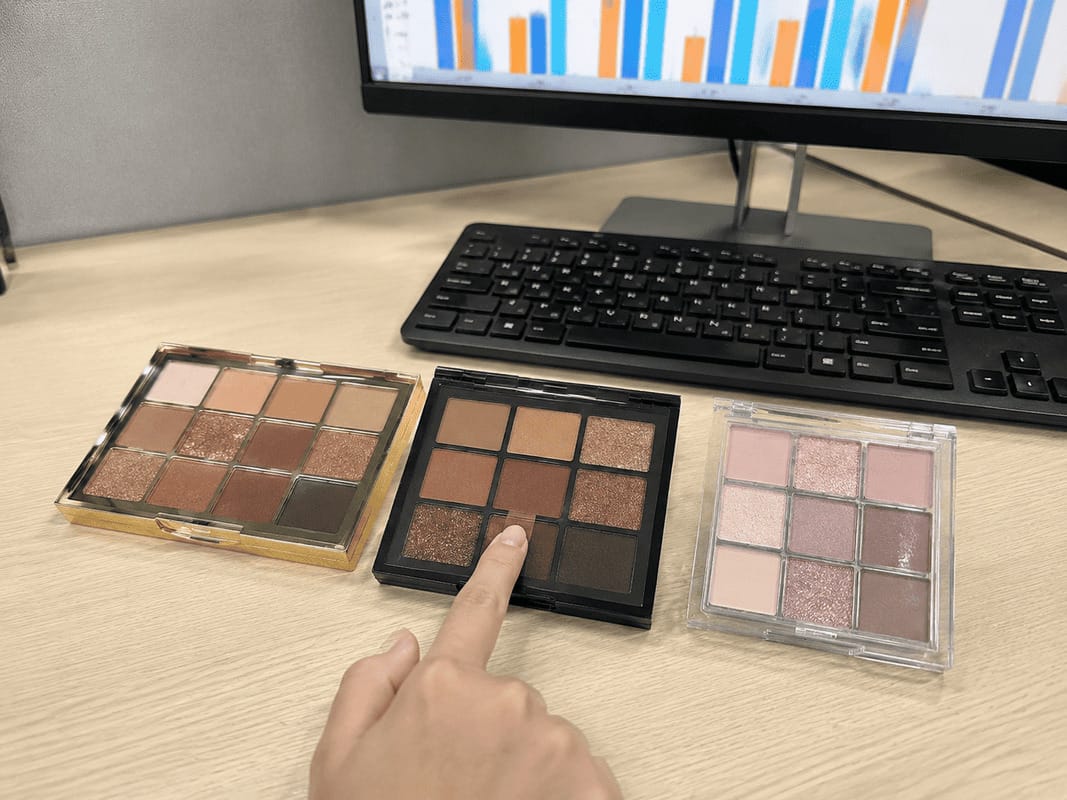
I have worked with distributors, wholesalers, and brand owners who initially asked for “the best” product but actually needed a defensible business case. They wanted to know which product structure to copy, which features to avoid, and how much inventory to risk. The following analysis explains how I approach that decision from a Chinese OEM/ODM manufacturing perspective.
What Does “Best Brand” Actually Mean for the Best Eyeshadow Palette?
A buyer can lose money by choosing a famous eyeshadow brand without understanding why it works. Popularity may come from advertising, influencer reach, retail placement, or regional loyalty rather than product structure alone.2 I therefore translate “best brand” into measurable procurement criteria before recommending a palette concept or supplier.
For procurement teams, the best eyeshadow palette brand is not simply the one with the highest rating. It is the brand that combines clear positioning, practical shade selection, regional demand, reliable quality, manageable SKUs, and a supply chain that supports repeat orders.
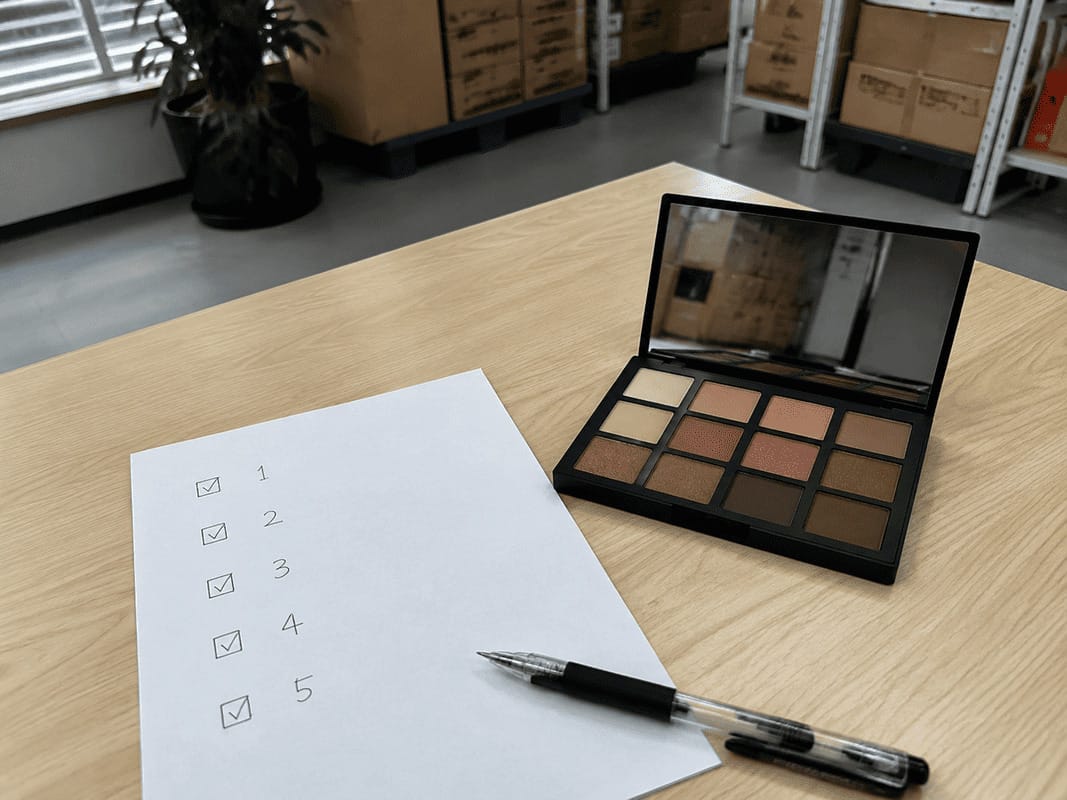
The five dimensions I use
I normally begin with five questions:
What does the brand promise?
A minimalist everyday palette serves a different buyer from a bold, artistic, special-effect brand.How does the product line work?
Some brands focus on single shades and refillable formats. Others build large multi-shade palettes that create a strong visual impact.Who is the regional customer?
A palette designed for daily commuting may not suit customers who purchase makeup for evening events, weddings, or celebrations.How quickly can the supplier respond?
A trend-led product may lose its opportunity if the factory needs several months to develop, produce, and replenish it.Can the buyer control inventory?
A visually impressive product can still be commercially weak if it contains too many slow-moving shades.
I often use the following scorecard in early discussions:
| Procurement dimension | What I examine | Why it matters |
|---|---|---|
| Brand positioning | Everyday, premium, artistic, value-led, clean beauty | Defines the customer and price ceiling |
| Shade architecture | Neutral, warm, colorful, metallic, glitter, duochrome | Influences usage frequency and differentiation |
| Regional fit | Skin-tone relevance, cultural occasions, climate | Affects local acceptance |
| Product quality | Payoff, blendability, wear, fallout, packaging | Protects customer satisfaction |
| Supply chain | MOQ, lead time, capacity, replenishment | Determines commercial flexibility |
| SKU discipline | Number of shades and packaging variations | Controls working capital |
| Customization | Formula, shade, finish, packaging, branding | Creates a defensible market position |
| Documentation | Ingredient, testing, labeling, and market files | Supports lawful market entry |
Why brand fame can mislead a buyer
A major international brand may have a powerful marketing budget and years of accumulated consumer trust. A new brand cannot assume that copying its palette will produce the same result. In my experience, the buyer must separate brand-driven demand from product-driven demand.
For example, a well-known 18-shade palette may sell because customers recognize the brand, trust its quality, and want its visual identity. An unknown brand with the same shade count needs a different reason to win. That reason might be:
- A more relevant regional shade story
- A lower retail price
- Faster delivery
- A distinctive chameleon or sparkle finish
- Better packaging customization
- A focused product concept for a specific customer group
Based on my global B2B sourcing experience, the brands that stay strong are not always those with the most colors. They usually maintain strict SKU management and consistent hero products. Fewer, better-controlled products can keep cash flow healthier and make repeat production easier.
I also recommend that buyers ask for production samples rather than judging only from a catalog image. A factory should explain how it controls shade consistency, pan filling, pressing, surface appearance, and packaging assembly. For application-specific decisions, I recommend qualified cosmetic and regulatory professionals review the formula, claims, and target-market requirements.
How Do You Analyze a Winning Eyeshadow Brand’s Supply Chain Strategy?
A successful eyeshadow brand is usually supported by more than attractive colors. Its supply chain connects product development, purchasing, production, forecasting, packaging, and replenishment. I analyze these links because a palette that cannot be replenished consistently creates lost sales and customer dissatisfaction.3
I analyze a winning eyeshadow brand’s supply chain by mapping its hero SKUs, development speed, supplier flexibility, production lead time, quality controls, packaging dependencies, and replenishment data. The goal is to understand how the brand balances novelty with operational control.

I start with the product architecture
I ask the buyer to divide the competitor’s range into three groups:
| Product group | Typical role | Procurement decision |
|---|---|---|
| Hero products | Best-known or highest-volume items | Protect availability and quality |
| Commercial basics | Reliable daily-use colors | Use for repeat revenue |
| Trend products | Seasonal or visually dramatic items | Control quantity and test demand |
| Experimental products | New textures or unusual concepts | Launch cautiously |
This structure helps the buyer avoid building a collection entirely around trend products. Special effects such as sparkle, glitter, and chameleon finishes can create strong visual differentiation, but they may require more careful testing for fallout, application behavior, and packaging protection.4
I measure supply chain agility
I do not define agility as simply “fast delivery.” I examine the entire cycle:
- How long does shade development take?
- How quickly can the buyer approve samples?
- Are raw materials available for repeat orders?
- Does the factory hold inventory for selected standard items?
- Can the supplier support mixed orders?
- How quickly can packaging artwork be updated?
- Can the supplier produce a replacement shade if one ingredient becomes difficult to source?
I use indicative benchmarks during early planning, although the actual figures depend on formula complexity, packaging, testing, and order quantity.
| Planning stage | Indicative working range | Main variables |
|---|---|---|
| Initial concept and brief | 3–7 business days | Clarity of product request |
| First shade sample | 7–15 business days | Formula and pigment availability |
| Revision cycle | 5–12 business days | Number of changes |
| Standard bulk production | 20–45 business days | Quantity and packaging |
| Custom complex palette | 35–75 business days | New molds, effects, and testing |
| Replenishment | Often shorter than first order | Component and material stock |
These are planning ranges, not contractual guarantees. I always advise buyers to confirm a written timeline after the product specification is complete.
I separate speed from quality
A supplier that promises the shortest lead time may not be the safest supplier. I check whether the factory has a documented process for:
- Incoming raw material inspection
- Batch records
- Shade and texture approval
- Microbiological and stability testing where applicable
- Packaging compatibility
- Finished-product inspection
- Retention samples
- Complaint handling and corrective action
Buyers should request relevant quality and compliance documents for the target market. Certifications, test reports, and factory claims should be treated as documents to verify, not as automatic proof of suitability. For example, exporting cosmetics to Saudi Arabia requires current review of Saudi and GCC requirements, product registration or notification processes, Arabic and English labeling expectations where applicable, ingredient restrictions, safety documentation, and importer responsibilities.5 The exact obligations can change by product and market, so I recommend confirmation with a qualified local regulatory professional before shipment.
I look for a replenishment logic
A strong brand knows which products deserve immediate replenishment. I encourage buyers to calculate:
- Sell-through rate: units sold divided by units received
- Weeks of cover: current inventory divided by average weekly sales
- Reorder point: expected demand during lead time plus safety stock
- Inventory aging: the percentage of stock held beyond the planned sales period
- Gross margin after logistics: selling price minus product, freight, duties, and channel costs
A buyer does not need perfect data at launch. Even a simple monthly dashboard is better than ordering based on excitement alone.
How Did We Help a Middle Eastern Client Find Their Differentiator?
Many new brands believe differentiation requires more shades. That assumption can push a buyer toward a 30- or 40-color palette before the brand has proven demand. I once worked with a Middle Eastern client who faced exactly this decision. The client wanted a product that looked premium and distinctive but also needed to protect working capital.
We helped the client choose an 18-shade palette by comparing daily usability, evening-event relevance, visual differentiation, production cost, and inventory risk. We used successful regional positioning as a reference, including the logic behind major 18-shade palettes, but we did not treat another brand’s design as a blueprint to copy.
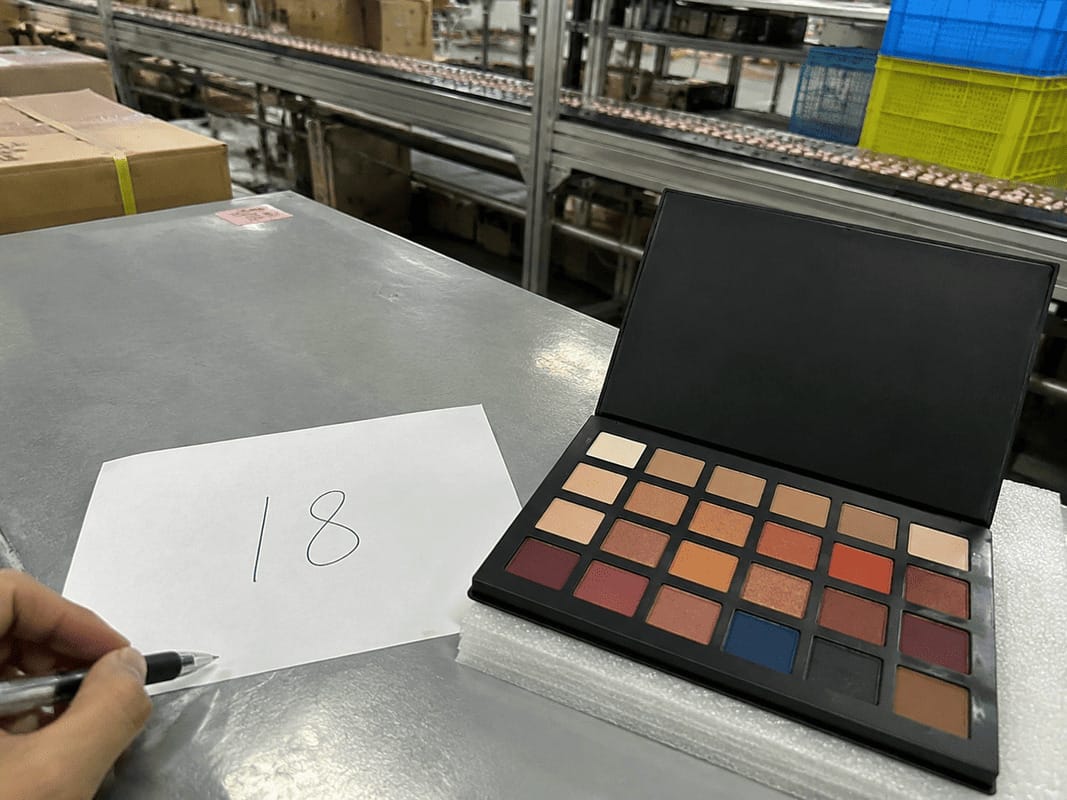
The client’s initial options
The client was comparing three concepts:
| Option | Perceived advantage | Main risk |
|---|---|---|
| 12 shades | Lower cost and easier inventory | Less visual impact and fewer combinations |
| 18 shades | Balanced variety and usable combinations | Higher development and packaging cost |
| 40 shades | Strong shelf presence and maximum choice | High inventory exposure and slower shade turnover |
The client initially considered 40 shades because a large palette appeared more competitive. I asked a different question: How many shades would the customer use repeatedly, and how many would only create a first impression?
How I used a major brand as a reference
We discussed the market success of large, recognizable palettes such as Huda Beauty’s 18-shade Desert Dusk palette.6 I did not claim that the client could reproduce the same demand. A major brand benefits from established marketing, distribution, and consumer trust.
However, the 18-shade structure provided a useful analytical reference. It showed how a palette could offer:
- Core transition and base colors
- Deeper shades for definition
- Metallic or shimmer shades for evening use
- A coherent regional color story
- Enough variety to look distinctive without becoming unmanageable
We then developed the client’s own shade direction rather than copying names, artwork, or exact color placement. We considered warm neutrals, richer evening tones, and special finishes that suited the intended brand identity.
The decision framework
I gave the client a simple weighted model:
| Criterion | Weight | 12 shades | 18 shades | 40 shades |
|---|---|---|---|---|
| Daily usability | 25% | High | High | Medium |
| Visual differentiation | 20% | Medium | High | High |
| Inventory control | 25% | High | Medium-high | Low |
| Retail presentation | 15% | Medium | High | High |
| Development complexity | 15% | High | Medium | Low |
The model did not produce a universal answer. It helped the client explain the decision internally. The 18-shade option offered a practical balance between customer choice and commercial control.
What happened after launch
The client launched the 18-shade palette and later achieved stable repeat orders. I view this as evidence of a sound decision process, not proof that every Middle Eastern buyer should choose 18 shades. The result depended on the client’s positioning, pricing, distribution, packaging, and marketing execution.
The important lesson was that we did not begin with a price quote. We began with risk analysis. We evaluated whether each shade had a role, whether the palette could be produced consistently, and whether the client could reorder without creating excess stock.
Why Does SKU Management Beat Color Count in the Long Run?
A large shade count can attract attention during a product launch, but it can also hide weak inventory performance. I have seen buyers become excited by a broad color range and then discover that only a small number of shades generate repeat orders. SKU management helps buyers invest in products that support sustainable revenue.
SKU management often beats color count because it concentrates purchasing power on proven shades, simplifies forecasting, reduces obsolete inventory, and improves replenishment.7 A palette should contain enough shades to support its promise, but every shade should have a clear commercial or functional role.
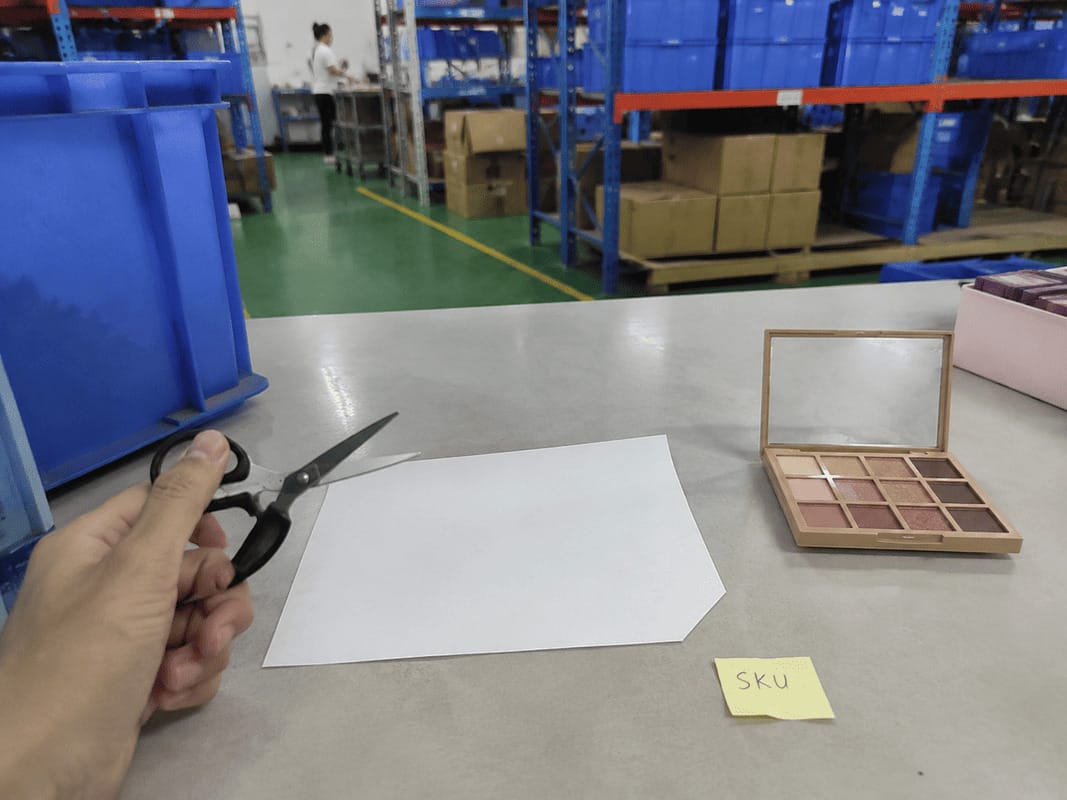
Why more shades create more risk
Each additional shade can affect:
- Raw material purchasing
- Formula testing
- Color matching
- Batch scheduling
- Quality inspection
- Packaging labeling
- Stock forecasting
- Sales analysis
- Replenishment decisions
The risk becomes higher when a buyer combines multiple shades with multiple packaging formats. Ten shades in one palette are not operationally equivalent to ten individual products, because the palette may require coordinated filling and assembly. A 40-shade collection can also produce many slow-moving items if sold as separate singles.
I recommend a portfolio approach
I often suggest a three-layer product portfolio:
| Layer | Suggested purpose | Example |
|---|---|---|
| Core | Stable everyday demand | Neutral mattes and wearable satin shades |
| Signature | Brand differentiation | Chameleon, sparkle, or distinctive metallic shades |
| Test | Seasonal or trend validation | Limited color stories or experimental finishes |
This approach allows a buyer to develop a recognizable identity without placing the full budget into untested colors.
A simple inventory model
A buyer can estimate initial inventory using:
Initial units = expected monthly sales × coverage months + safety stock8
For example, if a buyer expects to sell 500 palettes per month and wants two months of coverage with 20% safety stock:
500 × 2 × 1.2 = 1,200 units
This calculation remains an estimate. The buyer should also consider promotions, retail launch timing, shipping delays, and the factory’s MOQ.
I also encourage buyers to set shade-level targets. If a palette contains 18 shades, the brand should know whether each shade exists for:
- Base application
- Transition
- Definition
- Highlighting
- Evening impact
- Cultural or regional preference
- Brand signature
A shade without a purpose may increase cost without increasing customer value.
How we support controlled customization
At Vertina Beauty, we can discuss custom formulas, shades, finishes, and packaging through OEM/ODM development. Our experience includes standard eyeshadows as well as chameleon, sparkle, and glitter effects. I still recommend that buyers begin with a clear commercial brief, because customization without a defined target can increase revisions and delay approval.
Low MOQ is useful for market testing, especially for smaller brands, wholesalers, and KOL-led launches. It does not remove the need for forecasting. A smaller first order should be part of a test-and-reorder plan rather than an excuse to avoid inventory planning.
A Transparent Look at Copying Big Brands and Controlling Your Budget
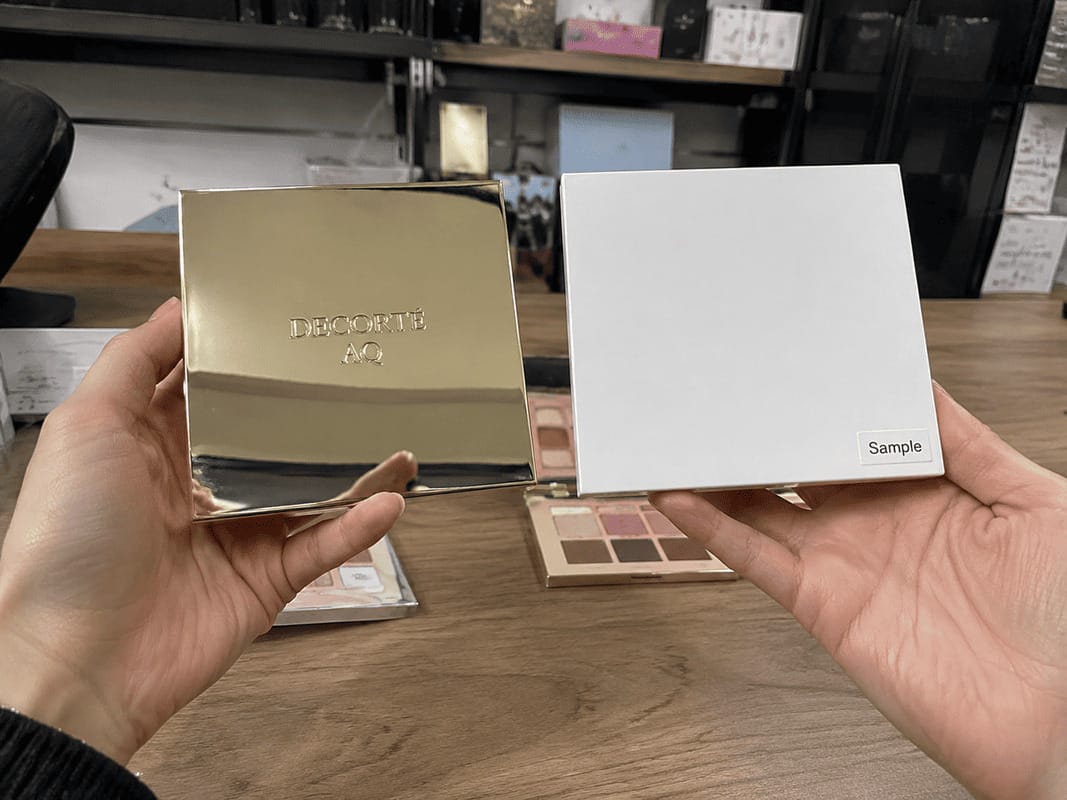
Big brands provide valuable market signals, but copying them directly is rarely a complete business strategy. A buyer may imitate the shade count, finishes, or visual layout and still fail because the original brand’s success came from marketing, retail access, community trust, and long-term positioning.
I recommend benchmarking large brands for strategic lessons, not copying their protected creative assets. Buyers should study product logic, price tiers, shade roles, and regional appeal, then develop an original product with a controlled budget and legally reviewed branding.
What buyers can study safely
I consider the following areas useful for competitor research:
| Benchmark area | Appropriate question |
|---|---|
| Shade count | Does the number support the product promise? |
| Finish mix | Are mattes, shimmers, glitters, or duochromes balanced? |
| Price position | What value does the customer believe they receive? |
| Packaging format | Is it compact, giftable, refillable, or travel-friendly? |
| Launch frequency | Does the brand rely on frequent novelty or evergreen products? |
| Regional storytelling | Does the color story reflect local usage occasions? |
| Distribution | Is the product sold through retail, DTC, social commerce, or wholesale? |
| Replenishment | Which products appear to remain available consistently? |
I do not recommend copying logos, names, artwork, distinctive packaging, exact shade names, or confusingly similar trade dress.9 Buyers should ask their own legal advisers to review proposed branding and packaging before commercial production.
How I control the budget
I divide the budget into development, production, compliance, packaging, logistics, and market testing. A low product price does not necessarily mean a low total cost.
| Cost area | Common budget question |
|---|---|
| Formula development | How many revision rounds are included? |
| Pigments | Do special effects require higher-cost materials? |
| Packaging | Is a stock component available, or is a new mold needed? |
| Testing | What testing is required for the target market and claims? |
| Artwork | Will the buyer provide print-ready files? |
| Production | What is the MOQ for each variation? |
| Freight | Will the palette require protective packaging? |
| Market testing | How many units can test demand without overstock? |
My practical launch recommendation
When a buyer has limited data, I usually recommend a staged launch:
- Select one clear concept and one main customer group.
- Start with a practical palette size, often 12 or 18 shades depending on the concept.
- Use a stock or semi-custom package if speed and budget are priorities.
- Add one or two signature finishes rather than filling the entire palette with expensive effects.
- Measure sell-through and customer feedback.
- Reorder proven products before expanding the range.
- Develop a premium or more complex line after the first product generates reliable data.
This method does not guarantee success. It reduces the cost of learning.
I also explain limitations honestly. International brands often spend heavily on content, celebrity partnerships, retail placement, and sampling. A factory can help with formulation, shade development, packaging, and production, but it cannot replace a complete brand and distribution strategy. If the budget is limited, I prefer a practical everyday line with one memorable point of difference. Once sales data supports the decision, I can help the buyer develop a premium special-effect range.
Frequently Asked Questions
Which brand has the best eyeshadow palette for wholesale buyers?
No single brand is best for every wholesale buyer. I recommend evaluating sell-through, price positioning, shade relevance, packaging durability, MOQ, delivery time, and replenishment reliability. A well-known brand may have strong demand, but an OEM/ODM product can offer better margins and customization if the buyer has a clear market strategy.
Is an 18-shade palette better than a 12-shade palette?
An 18-shade palette is not automatically better. It can provide more room for daily, defining, and statement colors, but it costs more to develop and produce. I select 18 shades when the product concept needs meaningful variety. I select 12 shades when simplicity, lower inventory, or faster testing is more important.
What should I ask an eyeshadow palette manufacturer?
I recommend asking about MOQ, sample lead time, bulk lead time, shade customization, formula options, pigment sourcing, batch consistency, packaging choices, testing documents, inspection procedures, defect handling, and replenishment capacity. Buyers should also confirm which responsibilities belong to the manufacturer, importer, brand owner, and local regulatory representative.
Can a Chinese OEM/ODM factory create a unique eyeshadow palette?
Yes. I can support customization of formula direction, shade combinations, special effects, packaging, and branding within the agreed technical and commercial scope. The buyer should provide a clear target market, price range, product concept, and launch schedule. Qualified professionals should review claims and regulatory requirements for the destination market.
How can I reduce the risk of launching a new eyeshadow palette?
I recommend starting with controlled SKU numbers, a low-MOQ test order where available, a clear hero product, and a documented reorder plan. Buyers should collect sales data before expanding the range. They should also approve samples carefully and verify quality and market-entry documents before placing a large order.
Conclusion
The best eyeshadow palette is a procurement decision, not only a beauty preference. I evaluate brand positioning, shade architecture, regional fit, supply chain agility, SKU discipline, quality control, and total cost before recommending a product direction. Big brands can provide useful benchmarks, but buyers should develop an original concept that matches their own customers and budget. At Vertina Beauty, we support low-MOQ testing and customized OEM/ODM development for standard, sparkle, glitter, and chameleon eyeshadow products. Contact us to discuss your target market, palette concept, MOQ, and launch plan.
"Manage your business - Small Business Administration", https://www.sba.gov/counseling/manage-your-business/. Inventory-management research explains that slow-moving or obsolete stock ties up working capital and may increase holding, markdown, and disposal costs, thereby weakening cash-flow performance. Evidence role: mechanism; source type: research. Supports: How excess and slow-moving inventory ties up working capital and can create financial and operational risks for businesses.. Scope note: The effect on brand credibility depends on the specific causes of slow inventory and the firm's customer-facing response. ↩
"The impact of K-beauty social media influencers, sponsorship ...", https://pmc.ncbi.nlm.nih.gov/articles/PMC8019591/. Consumer-behavior studies of cosmetics markets report that influencer communication, brand-related perceptions, and retail availability can affect purchase intention alongside product attributes. Evidence role: mechanism; source type: paper. Supports: That cosmetics purchase intention and brand preference can be influenced by social-media influencers, brand equity, and product availability.. Scope note: Such studies establish general demand drivers and do not determine why any individual palette or brand became popular. ↩
"The Impact of Stockouts on Customer Loyalty to Lean Retailers", https://scholarworks.waldenu.edu/dissertations/1011/. Retail stockout research documents that unavailable products can lead customers to postpone purchases, switch products or retailers, or abandon the purchase, producing lost sales and potential dissatisfaction. Evidence role: mechanism; source type: paper. Supports: That retail stockouts can cause lost sales, substitution, delayed purchases, and negative customer responses.. Scope note: The size of the effect varies by brand loyalty, product substitutability, sales channel, and duration of the stockout. ↩
"Eyeshadow fallout from micro glitters drives me crazy! Anyone else?", https://www.reddit.com/r/muacjdiscussion/comments/1b5xeg9/eyeshadow_fallout_from_micro_glitters_drives_me/. Cosmetic safety guidance describes stability and packaging-compatibility testing as part of product assessment, particularly where formulation characteristics or packaging may affect product quality during storage and use. Evidence role: general_support; source type: government. Supports: That cosmetic products should undergo stability and packaging-compatibility assessment appropriate to their formulation and intended use.. Scope note: General guidance does not specifically establish that every sparkle, glitter, or multichrome eyeshadow requires more testing than a conventional powder shadow. ↩
"General Authority for Food and Drug", https://www.sfda.gov.sa/en. Saudi regulatory guidance sets out requirements for cosmetic products placed on the market, including applicable notification or registration processes, labeling, safety information, and responsibilities of the relevant economic operator. Evidence role: definition; source type: government. Supports: The Saudi Food and Drug Authority's current requirements for placing cosmetic products on the Saudi market, including responsible-party and product-information obligations.. Scope note: Requirements may differ by product classification and are subject to regulatory updates; this source should not substitute for case-specific legal or regulatory advice. ↩
"Huda Beauty", https://en.wikipedia.org/wiki/Huda_Beauty. Contemporaneous product coverage identifies Huda Beauty's Desert Dusk as an 18-shade eyeshadow palette launched under the Huda Beauty brand. Evidence role: case_reference; source type: other. Supports: That Huda Beauty released Desert Dusk as an 18-shade eyeshadow palette and that it received contemporaneous industry or editorial coverage.. Scope note: Product coverage verifies the palette's format and public visibility but does not independently establish sales performance or market success. ↩
"SKU Management: How to Optimise Inventory and ...", https://imperiascm.com/blog/optimize-sku-management-strategy. Supply-chain research indicates that expanding SKU variety increases planning complexity and can raise inventory risk; rationalizing assortments may improve forecastability and replenishment control. Evidence role: mechanism; source type: paper. Supports: That greater product-variety complexity can impair forecasting and inventory control, while assortment rationalization can reduce operational burden.. Scope note: The optimal number of shades depends on consumer demand, channel strategy, and whether shades are sold only within a palette or as separate SKUs. ↩
"Right Sizing Safety Stock and Effectively Managing ...", https://dspace.mit.edu/bitstream/handle/1721.1/126502/scm2020-pan-right-sizing-safety-stock-and-effectively-managing-inventory-using-forecastability-capstone.pdf?sequence. Inventory-control teaching materials describe planned stock as expected demand over the relevant supply period plus safety stock maintained to protect against demand or lead-time variability. Evidence role: definition; source type: education. Supports: That inventory planning commonly combines expected demand over a coverage or lead-time period with safety stock to buffer demand and supply uncertainty.. Scope note: The displayed formula is a simplified planning estimate and does not replace a reorder-point model that accounts for variable demand, lead times, service levels, and order constraints. ↩
"ESTTA1370066 07/10/2024 IN THE UNITED STATES ...", https://ttabvue.uspto.gov/ttabvue/ttabvue-91290782-OPP-6.pdf. Intellectual-property guidance explains that trademarks, copyright, and trade-dress rules may protect brand identifiers and qualifying creative or product-presentation elements, with confusion and distinctiveness among the relevant legal considerations. Evidence role: definition; source type: institution. Supports: That trademarks can protect source-identifying names and symbols, copyright can protect qualifying creative expression, and trade dress may protect distinctive product presentation where legal conditions are met.. Scope note: Protection and infringement analyses are jurisdiction-specific and depend on the particular marks, designs, marketplace context, and applicable law. ↩