You searched for the best makeup manufacturers in China, and now you are drowning in "Top 10" lists naming Cosmax, Nox Bellcow, and Intercos. The problem? These giants build for L'Oréal, not for you. You email them, wait three weeks, and hear nothing. Here is the truth nobody tells first-time founders.
The best makeup manufacturer in China is not the biggest one. It is the factory that fits your current stage. The giants on "Top 10" lists require 50,000–100,000 unit MOQs and serve multinational brands.1 Startups belong in the "hidden middle": agile factories with real R&D, transparent compliance, and tiered MOQs starting around 2,000 units.
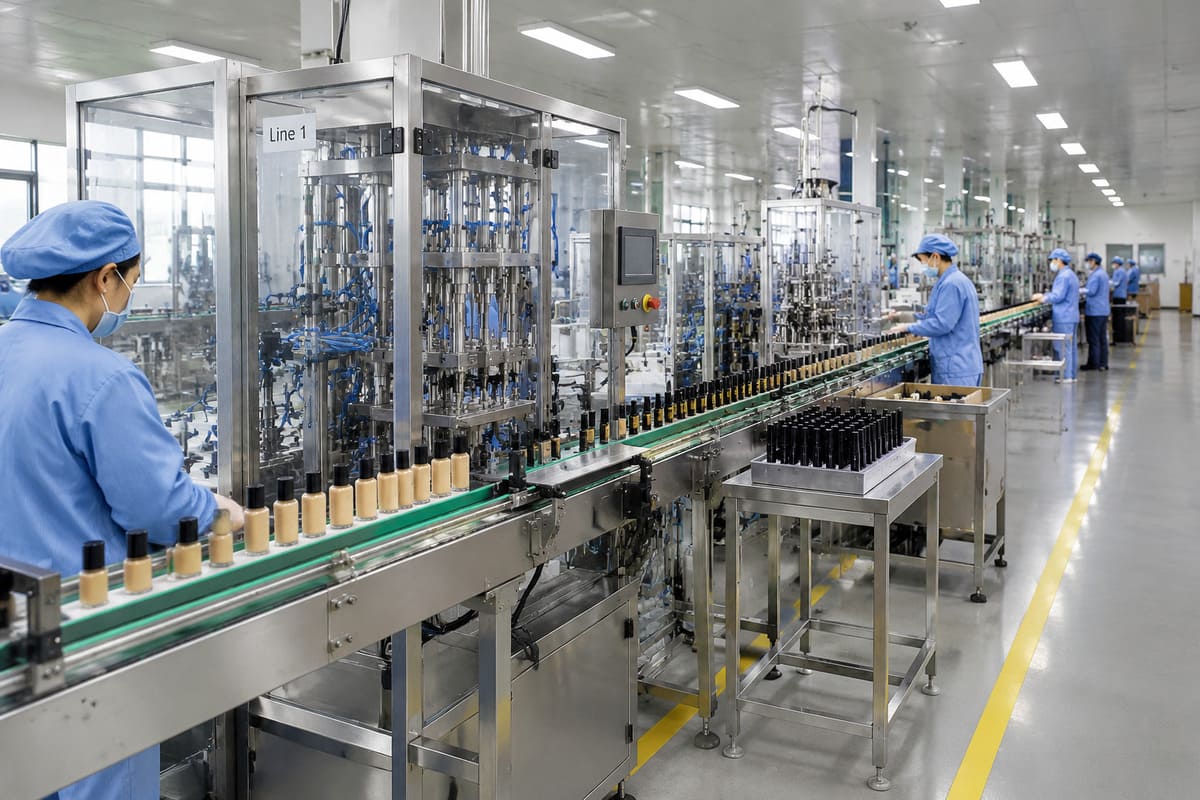
So if the rankings are misleading, how do you actually find the right partner? Let me walk you through the pyramid of Chinese manufacturing, explain why the lists reject you, and show you a real path from a 2,000-unit test to a full custom brand.
What Does "Best Makeup Manufacturer in China" Really Mean for a Startup?
You think "best" means "biggest." I understand the logic. But that assumption is exactly what gets new founders ignored, ghosted, and burned. The word "best" hides a trap.
For a startup, the best makeup manufacturer in China is the one that will actually accept your order at your current volume, give you transparent compliance documents, and offer a path to scale. Size is not quality. A 5,000-employee factory with a 50,000-unit MOQ is the worst possible fit for a first-time founder.
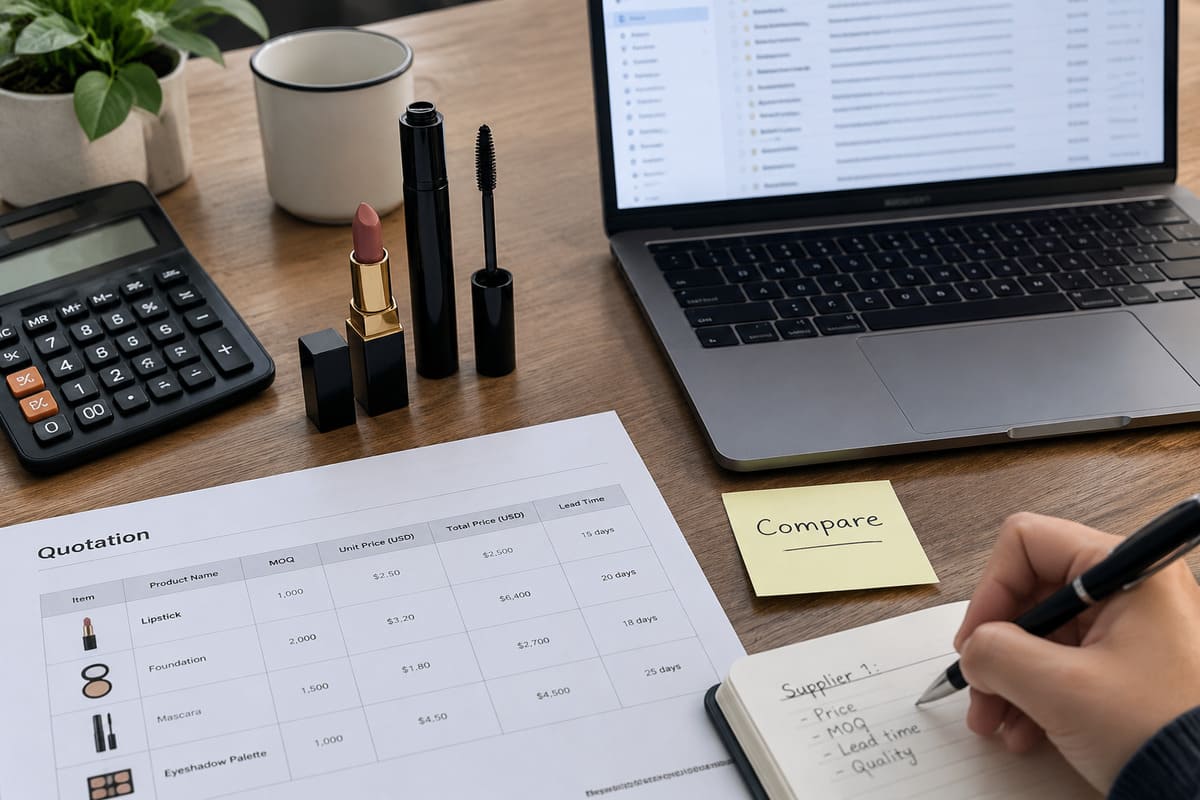
When you ask "who is the best," you are really asking two questions at once. First: which factory will say yes to my order? Second: if the giants say no, where do I find a real manufacturer instead of a middleman selling junk?
Why "Biggest" and "Best Fit" Are Not the Same
The data platforms behind those lists rank by revenue and headcount. They do not measure startup friendliness. Here is how the two framings differ:
| Buyer's Real Question | What "Top 10" Lists Answer |
|---|---|
| Will they accept my 3,000-unit order? | No (they rank by revenue) |
| Do they offer transparent MOQ tiers? | Not measured |
| Can I get compliance files quickly? | Not measured |
| Will they reply to my email? | Unlikely at your scale |
I have watched too many founders send a hopeful message to a #1-ranked giant, only to get silence. They were asking "best," but they needed "best fit." The two are not the same. A factory can top every chart and still be useless to you.
The real question is simple. How do I identify the manufacturer that matches my stage, and how do I start without burning my cash flow? That reframing changes everything about your search.
The Pyramid of Chinese Manufacturing: Why the Giants Won't Answer Your Email?
You sent three polite emails to a top-ranked factory. You got one reply, then silence. You feel insulted and confused. Did you say something wrong? No. You simply knocked on the wrong door, because Chinese manufacturing is a strict pyramid.
The giants won't answer your email because your order is too small to matter to their production economics. Factories like Cosmax and Intercos run minimum orders of 50,000–100,000 units and reserve capacity for L'Oréal, Perfect Diary, and other multinationals.2 A 3,000-unit inquiry is simply not their target.
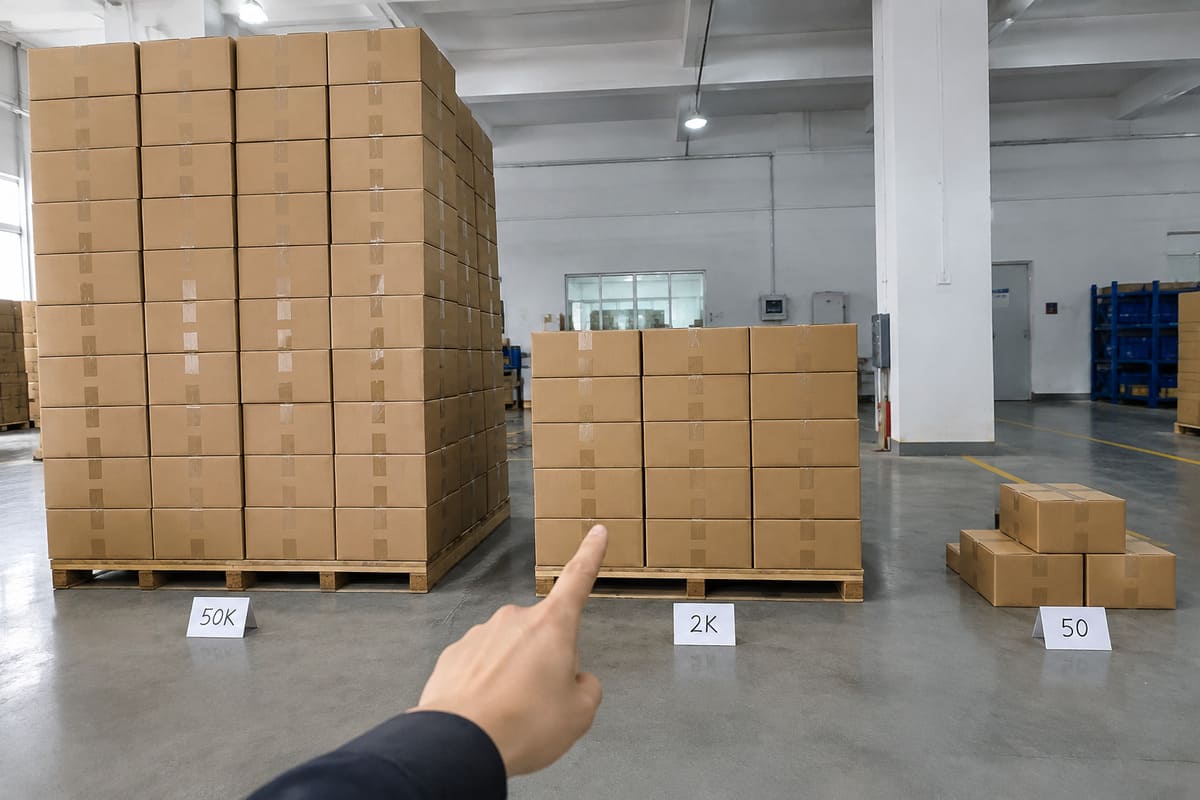
I tell every new client the honest version. The giants serve the giants. You are not their target client yet, and that is normal. Let me break the pyramid into its three real layers.
The Three Tiers of the Pyramid
| Tier | Example Players | Typical MOQ | Who They Serve |
|---|---|---|---|
| The Top (Giants/CDMOs) | Cosmax, Nox Bellcow, Intercos | 50,000–100,000 units | L'Oréal, Perfect Diary, multinationals |
| The Middle (Agile Factories) | Regional R&D factories in Guangdong | 2,000–10,000 units | Startups, DTC brands, KOLs |
| The Bottom (White-Label Middlemen) | Trading companies, repackers | 50 units | Dropshippers, hobby sellers |
The top tier builds enormous volume with long development cycles, often four to six months for custom formulation3. The bottom tier sells 50-unit "customization" that is really a stock formula in generic packaging, with zero differentiation4.
A U.S. client of mine lived this lesson. He contacted a top-ranked giant for a custom eyeshadow palette. He was quoted a 50,000-unit MOQ and a four-to-six-month lead time. His entire budget was $15,000. The sales rep stopped replying after one email. He wasted three weeks waiting for a quote that would never come. The pyramid was working exactly as designed. He was just standing on the wrong level.
The middle tier is where startups actually belong. These factories run real R&D labs, hold export compliance knowledge, and use tiered MOQ models built for brands that are still proving demand.
The "Top 10" Illusion: Ranked by Employee Size, Not Startup Friendliness?
You trust the lists because they look authoritative. Clean tables, revenue figures, employee counts. But those numbers answer a question you never asked. The ranking is an illusion dressed as advice.
"Top 10" makeup manufacturer lists are generated by data platforms like RevenueBase that rank companies by employee size and annual revenue.5 They do not measure MOQ flexibility, startup friendliness, or communication quality. A factory can rank #1 by headcount and still be the single worst choice for a first-time founder.
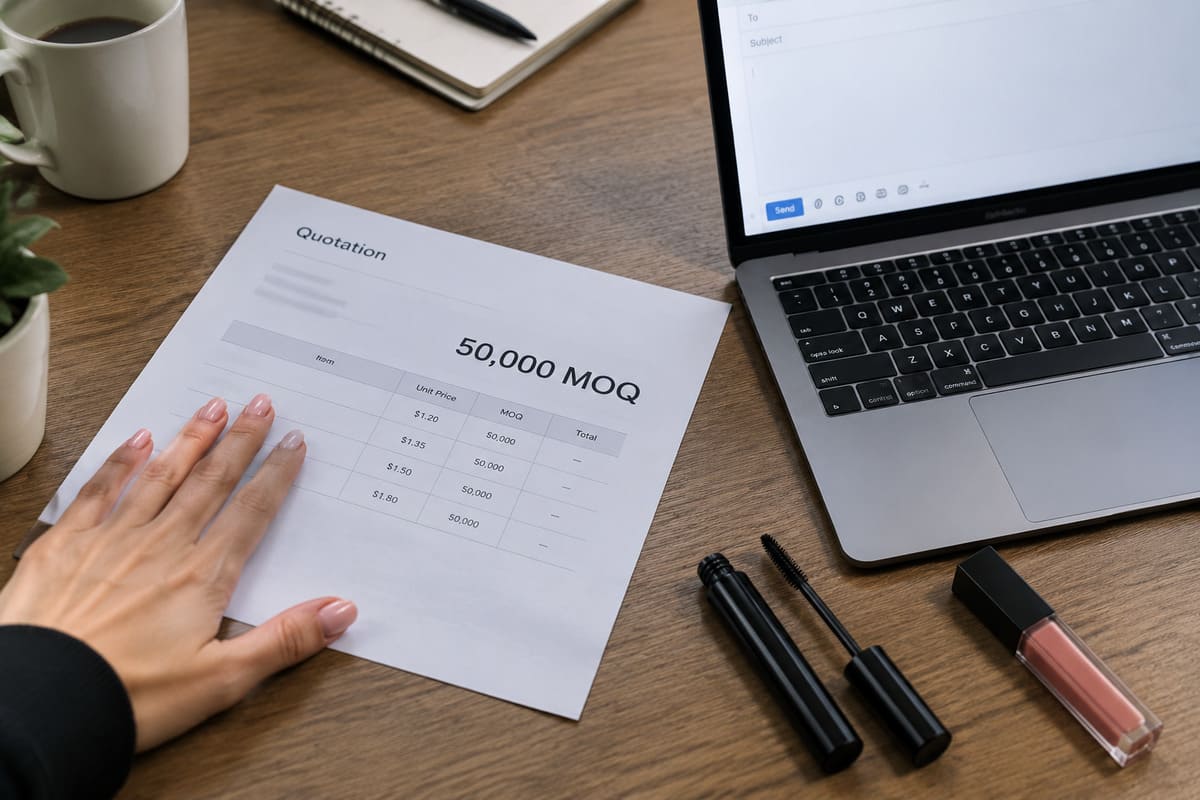
Based on our experience serving global B2B buyers, these rankings reward exactly the traits that hurt you. More employees, higher revenue, bigger contracts. None of that tells you whether the factory will take a 2,000-unit validation run or send you clean INCI documents.
What the Lists Measure vs. What You Need
| Ranking Metric (Lists) | What Startups Actually Need |
|---|---|
| Annual revenue | Transparent, tiered MOQ |
| Employee headcount | Fast, honest communication |
| Multinational client logos | Willingness to run small validation orders |
| Factory square footage | Full compliance files (INCI, stability, FEI) |
As a manufacturer in one of the core supply chain clusters in Guangdong, China, I do not compete with Cosmax for 50,000-unit orders. That is not my game, and I will not pretend otherwise. I compete to be the most reliable launch partner for brands that need 2,000-unit validation, transparent compliance, and a clear path to 5,000-plus unit customization.
The ranking culture pushes founders toward the exact factories that will reject them. That is the illusion. Rankings sell authority, but they do not sell fit. And fit is the only thing that saves your cash flow in year one.
How to Find the "Hidden Middle": Agile Factories with Real R&D and Transparent MOQs?
You now know the giants will reject you and the bottom-tier middlemen will waste your money. So where is the safe ground? It sits in the middle, and it is the hardest layer to find because it rarely tops a search result.
You find the "hidden middle" by screening for three things: a real in-house R&D lab, documented export compliance knowledge (MoCRA for the U.S., AICIS for Australia)6, and a published, tiered MOQ model. Agile factories offer roughly 2,000 units on standard color cosmetics to validate, then 5,000–10,000 units for true custom formulation.
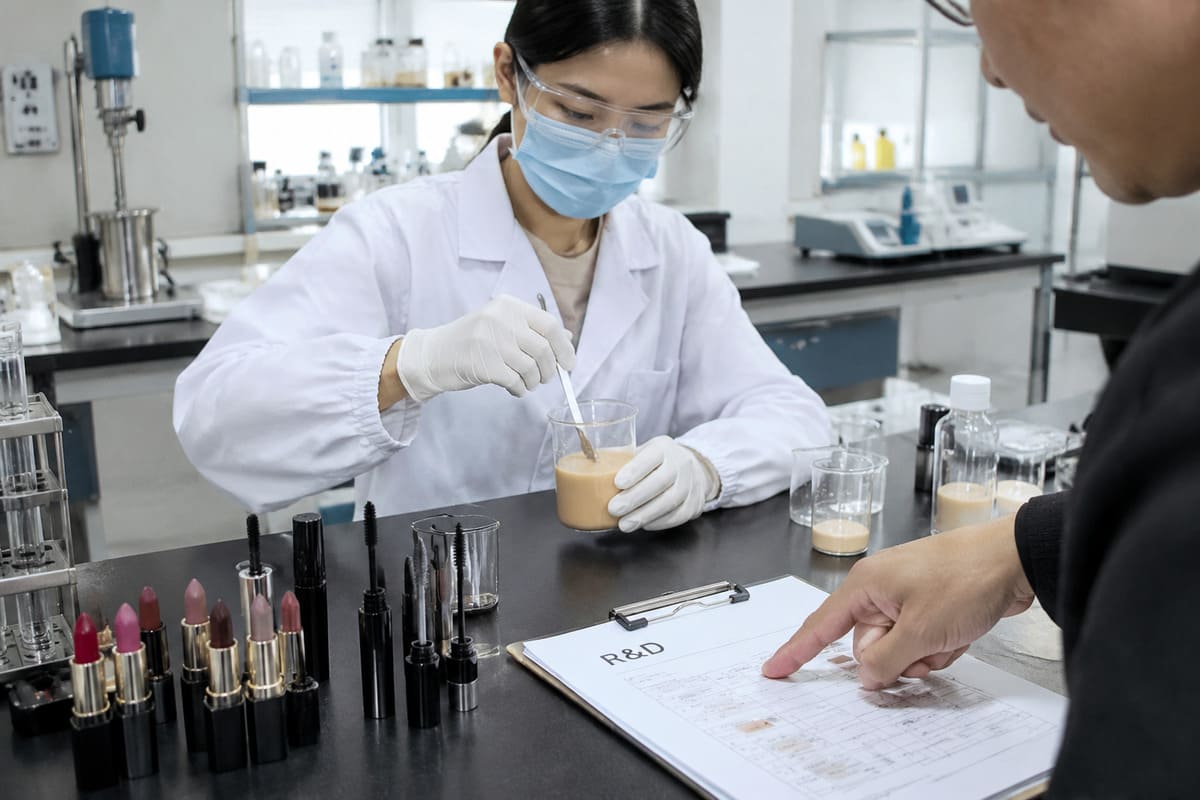
The hidden middle does not rank #1 anywhere, because headcount is modest and revenue is not multinational-scale. But this is precisely where your brand can grow without being ignored or cheated.
Screening Questions That Expose the Real Middle
- Do you have an in-house formulation lab, or do you outsource R&D?
- What is your MOQ for a standard eyeshadow palette versus a fully custom formula?
- Can you provide full INCI lists and stability reports before I order?
- Do you supply FEI numbers for U.S. MoCRA filings?
- Will you host a live video factory tour this week?
A genuine middle-tier factory answers all five without hesitation. A middleman dodges the R&D question and cannot produce compliance files. A giant simply never replies.
Tiered MOQ: The Signature of an Agile Factory
| Order Type | Typical MOQ | Purpose |
|---|---|---|
| Standard palette (validation) | 2,000 units | Test color story and market demand |
| Custom formulation | 5,000 units | Unique shades, textures, finishes |
| Custom packaging / private mold | 10,000 units | Exclusive brand identity |
| Multi-category kit | 5,000–10,000 units | Unified brand across makeup, skincare |
This tiered structure is the fingerprint of an agile partner. It lets you start small, prove sell-through, and scale deliberately. My own expanded engineering team lets me extend this into companion skincare and fragrance, so your brand's visual language stays consistent as you grow across categories.
A Real Path: Validate with 2,000 Units, Then Expand to Multi-Category Kitting?
You are scared of two failures at once. Over-ordering inventory you cannot sell, and under-ordering junk that cannot build a brand. Both fears are valid. The solution is a staged path, not a single giant leap.
The smartest launch path starts with a 2,000-unit validation run on standard eyeshadow palettes to test your color story and market demand. Once it sells through, you reinvest into a 5,000-unit custom order, then scale toward 10,000-unit custom packaging and multi-category kitting. You climb the pyramid instead of jumping to the top.
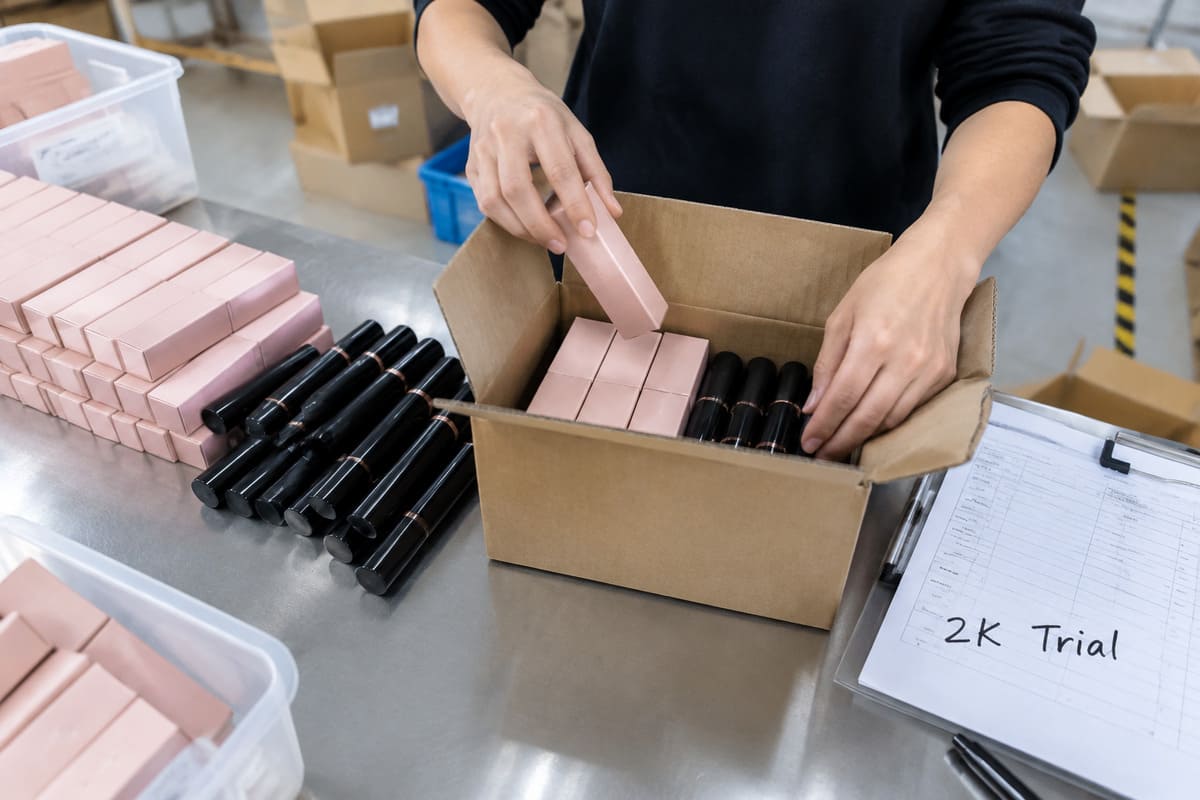
Let me return to my U.S. client. After he escaped the giant's silence, we offered him a 2,000-unit trial of our standard eyeshadow palettes to validate his color story. The risk was small and the timeline was fast. When that batch sold through, he placed a 5,000-unit order for custom formulation and packaging. He did not waste months chasing a factory that would never accept him. He found a partner that helped him survive and then grow.
The Climb, Stage by Stage
- Validate (2,000 units): Run a standard palette with your branding. Confirm demand with real sales data.
- Customize (5,000 units): Develop exclusive shades and formulas once the concept is proven.
- Differentiate (10,000 units): Commission custom packaging and private molds for a distinct shelf presence.
- Expand (multi-category): Add companion skincare or fragrance to build a full brand world.
| Stage | Capital Risk | Primary Goal |
|---|---|---|
| Validation | Low | Prove the market wants it |
| Customization | Medium | Build product uniqueness |
| Differentiation | Higher | Own your visual identity |
| Expansion | Planned | Grow category by category |
This path protects your cash. Each stage funds the next with revenue, not hope. You never bet the whole budget on an unproven idea, and you never settle for generic junk that cannot scale.
What to Verify Before You Wire Your First Deposit?
You found a promising factory and you feel excited. Stop. This is the moment founders lose money, because excitement replaces diligence. A wire transfer is hard to reverse, so verify first.
Before you wire any deposit, verify five things: full INCI ingredient lists, third-party stability and safety reports, compliance documents for your target market (FEI number for U.S. MoCRA, relevant filings for the EU or Saudi Arabia), a signed quote with all mold and testing fees itemized, and a completed live video factory tour.
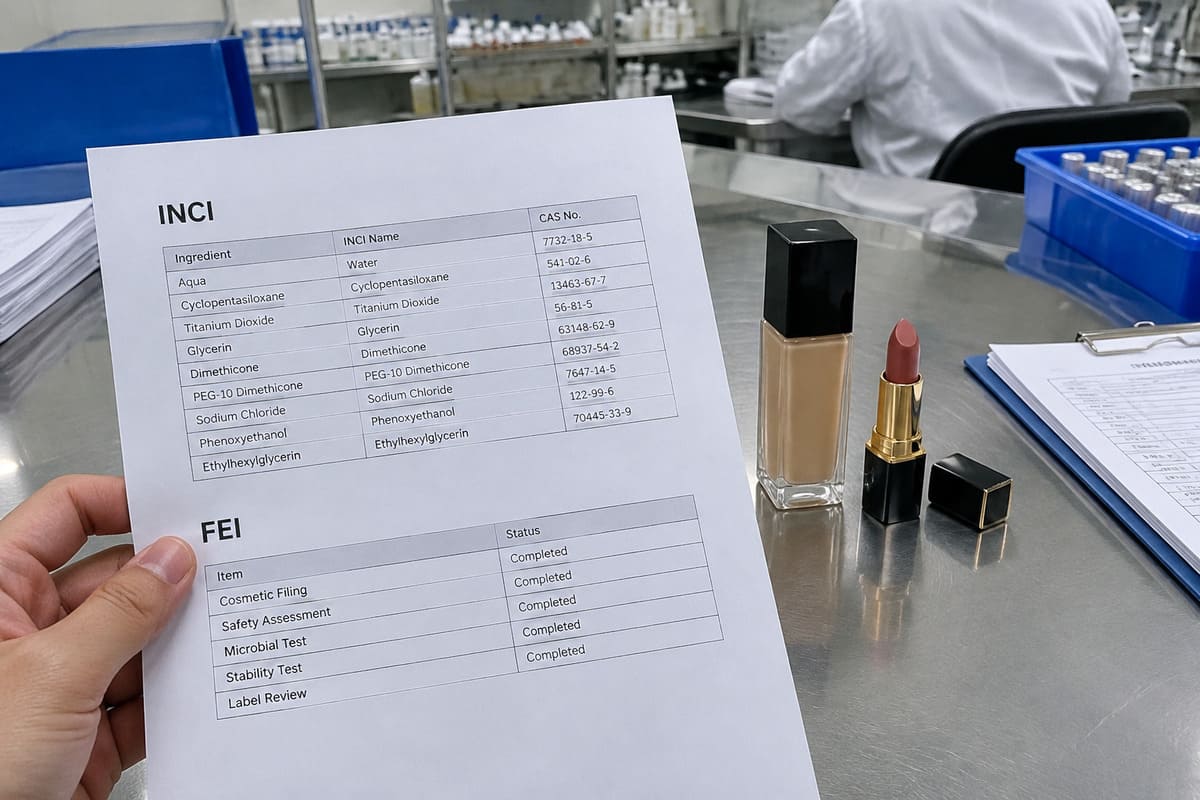
I want to be brutally honest about this industry. Plenty of sellers hide mold fees, bury testing costs, or promise compliance they cannot document. You should treat every certification as a document you verify, not a claim you trust. For application-specific regulatory decisions, consult a qualified compliance professional for your exact target market.
Your Pre-Deposit Verification Checklist
| Item to Verify | Why It Matters | Red Flag |
|---|---|---|
| Full INCI list | Legal labeling in every market | "We'll send it later" |
| Stability & safety reports | Product won't degrade or harm users7 | No third-party testing |
| Market compliance docs | Customs clearance and legal sale | Vague answers on MoCRA/REACH8 |
| Itemized quote | No surprise mold or testing fees | Hidden costs appear later |
| Live factory tour | Confirms the factory is real | Refuses video walkthrough |
Here is what I do, and what I refuse to do. I offer a 2,000-unit validation trial on standard palettes. I support 5,000–10,000 unit custom orders. I provide full INCI, stability reports, and FEI numbers for your filings. I welcome video factory tours.
I will not claim to be the biggest factory in China. I will not tell you a 50-unit order builds a real brand. I will not hide mold fees or testing costs. If you want a fully custom, multi-category kit with exclusive packaging, be ready for the 10,000-unit packaging reality. I tell you the truth upfront, because that is the only foundation for a long partnership.
Frequently Asked Questions
Who are the biggest makeup manufacturers in China?
The largest makeup manufacturers in China include Cosmax, Nox Bellcow, and Intercos.9 They are CDMOs serving multinational brands like L'Oréal and Perfect Diary, with MOQs of 50,000–100,000 units. They are "best" by scale, but rarely accept startup-sized orders or reply to small inquiries.
What is a realistic MOQ for a cosmetics startup in China?
A realistic starting MOQ for a cosmetics startup is around 2,000 units on standard color cosmetics like eyeshadow palettes. This lets you validate demand with low risk. Fully custom formulation typically starts near 5,000 units, and custom packaging or private molds often require 10,000 units.
Are the "Top 10 makeup manufacturer" lists reliable?
The lists are reliable for one thing only: ranking by revenue and employee count. Platforms like RevenueBase do not measure MOQ flexibility, communication quality, or startup friendliness. A #1-ranked giant can be the worst fit for a first-time founder, so use these lists cautiously.
What certifications do I need to export makeup to the U.S.?
For the U.S. market under MoCRA, you need facility registration with an FEI number, product listing, full INCI labeling, and safety substantiation.10 Always treat supplier certifications as documents to verify, and consult a qualified regulatory professional for your specific product and market.
How do I avoid white-label middlemen in China?
Screen for a real in-house R&D lab, a published tiered MOQ, and complete compliance files. Ask for INCI lists, stability reports, and a live factory tour before ordering. Middlemen offering 50-unit "customization" with stock formulas and generic packaging cannot pass this screening.
Conclusion
The best makeup manufacturers in China are not defined by headcount or revenue. They are defined by fit. The giants serve giants, the bottom-tier middlemen sell generic junk, and the "hidden middle" of agile factories is where a startup actually belongs. Do not chase the top of the pyramid and burn your cash in silence. Start with a 2,000-unit validation, verify every compliance file, and climb stage by stage. The smartest brands climb the pyramid; they do not leap to the top. Ready to validate your color story? Request a 2,000-unit trial and a live factory tour today.
"How to Find the Best OEM Makeup Kit Manufacturers with Low ...", https://vertinabeauty.com/2025/03/07/how-to-find-the-best-oem-makeup-kit-manufacturers-with-low-moq/. Industry analyses of contract cosmetics manufacturing indicate that minimum order quantities rise with production scale due to setup and batching economics, supporting the article's claim that large manufacturers require high MOQs. Evidence role: statistic; source type: research. Supports: Large contract cosmetics manufacturers typically set high minimum order quantities driven by production-line economics.. Scope note: General industry sources support the directional relationship between scale and MOQ but may not confirm the exact 50,000–100,000 unit figures for specific named firms. ↩
"Cosmetic industry", https://en.wikipedia.org/wiki/Cosmetic_industry. Company and industry profiles describe Cosmax and Intercos as large-scale cosmetic ODM/CDMO firms supplying established multinational beauty brands, which is consistent with the article's characterization of their client base. Evidence role: general_support; source type: encyclopedia. Supports: Cosmax and Intercos are large contract/ODM cosmetics manufacturers that primarily serve established global beauty brands.. Scope note: Public profiles confirm the contract-manufacturing model and major-brand relationships but do not independently verify the specific 50,000–100,000 unit minimum-order figures cited. ↩
"An integrative approach to product development—A skin-care ...", https://pmc.ncbi.nlm.nih.gov/articles/PMC7112257/. Cosmetic product-development literature describes multi-month timelines for custom formulation, stability testing, and validation, supporting the article's four-to-six-month estimate. Evidence role: general_support; source type: research. Supports: Custom cosmetic formulation and stability testing typically span several months from concept to production readiness.. Scope note: Timelines vary widely by product complexity, so published ranges may differ from the specific figures cited for eyeshadow palettes. ↩
"Makeup Manufacturer Australia: The Real Cost of “Local” vs ...", https://vertinabeauty.com/makeup-manufacturer/. Descriptions of white-label and private-label cosmetics manufacturing indicate these models commonly repackage existing stock formulations, supporting the article's characterization of low-volume "customization" as non-differentiated. Evidence role: definition; source type: other. Supports: White-label and low-MOQ private-label cosmetics typically rely on pre-formulated stock products rebranded with the buyer's labeling rather than bespoke formulation.. Scope note: Practices vary across suppliers, so the generalization may not apply to every private-label arrangement. ↩
"Revenue Operations Guide for B2B SaaS", https://orm-tech.com/blog/revenue-operations-guide/. Documentation of B2B data and firmographic platforms indicates that company rankings are frequently based on revenue and headcount metrics, consistent with the article's description of how "Top 10" lists are produced. Evidence role: general_support; source type: other. Supports: Commercial B2B data platforms commonly rank companies using firmographic metrics such as annual revenue and employee headcount.. Scope note: General platform documentation supports the use of revenue/headcount metrics but may not verify the methodology of any one specific named provider. ↩
"Modernization of Cosmetics Regulation Act of 2022 (MoCRA)", https://www.fda.gov/cosmetics/cosmetics-laws-regulations/modernization-cosmetics-regulation-act-2022-mocra. Official U.S. FDA and Australian government publications define the Modernization of Cosmetics Regulation Act (MoCRA) and the Australian Industrial Chemicals Introduction Scheme (AICIS), confirming the regulatory frameworks named in the article. Evidence role: definition; source type: government. Supports: MoCRA is the U.S. cosmetics regulatory framework and AICIS governs industrial chemical (including cosmetic ingredient) introduction in Australia.. ↩
"Modernization of Cosmetics Regulation Act of 2022 (MoCRA)", https://www.fda.gov/cosmetics/cosmetics-laws-regulations/modernization-cosmetics-regulation-act-2022-mocra. Guidance from cosmetic science and regulatory bodies describes stability and safety testing as methods to verify product integrity and consumer safety over time, supporting the article's rationale for requiring such reports. Evidence role: mechanism; source type: institution. Supports: Stability and safety testing are standard practices to confirm a cosmetic product remains chemically stable and safe for consumer use over its shelf life.. Scope note: Testing confirms stability and safety only under defined conditions and does not guarantee absence of all adverse reactions. ↩
"Registration, Evaluation, Authorisation and Restriction of ...", https://en.wikipedia.org/wiki/Registration,_Evaluation,_Authorisation_and_Restriction_of_Chemicals. European Chemicals Agency and EU publications define REACH as the framework for chemical registration and restriction, supporting the article's inclusion of REACH as a compliance consideration for cosmetic market access. Evidence role: definition; source type: government. Supports: REACH is the European Union regulation governing the registration, evaluation, authorization, and restriction of chemicals, which can apply to cosmetic ingredients.. Scope note: The applicability of REACH to specific cosmetic ingredients depends on substance and use, which general definitions do not fully determine. ↩
"Nox Bellcow Cosmetics Co. Ltd. - 541734 - 05/09/2018", https://www.fda.gov/inspections-compliance-enforcement-and-criminal-investigations/warning-letters/nox-bellcow-cosmetics-co-ltd-541734-05092018. Corporate and industry profiles identify Cosmax, Nox Bellcow, and Intercos as major cosmetic ODM/contract manufacturers, supporting the article's reference to them as leading large-scale producers. Evidence role: general_support; source type: encyclopedia. Supports: Cosmax, Nox Bellcow, and Intercos are among the larger cosmetic contract manufacturers with significant operations serving the Chinese market.. Scope note: Profiles confirm these firms are large contract manufacturers but may not establish a definitive ranking of "the largest" in China. ↩
"Registration & Listing of Cosmetic Product Facilities and ...", https://www.fda.gov/cosmetics/registration-listing-cosmetic-product-facilities-and-products. FDA guidance on MoCRA specifies facility registration (including FEI identifiers), product listing, labeling, and safety-substantiation obligations, supporting the article's summary of U.S. compliance requirements. Evidence role: definition; source type: government. Supports: MoCRA mandates facility registration, product listing, ingredient labeling, and safety substantiation for cosmetic products marketed in the United States.. Scope note: Regulatory details and effective dates may change; readers should confirm current requirements against the latest FDA guidance for their specific products. ↩