When I hear the question “Are liquid eyeshadows good for mature skin?”, I usually hear a deeper B2B concern: will this product concept sell, perform, and justify private label investment? Mature consumers fear creasing, settling, and flaking. Brands fear formula failure and dead inventory. The right film-forming system can reduce both risks.
Yes, liquid eyeshadows can be good for mature skin when the formula uses a flexible film-forming system, controlled pigment load, and suitable drying time. A flexible film can move with the eyelid and help reduce creasing, flaking, and pigment settling into fine lines.1 However, performance depends on formulation, packaging, testing, application instructions, and market-specific compliance.
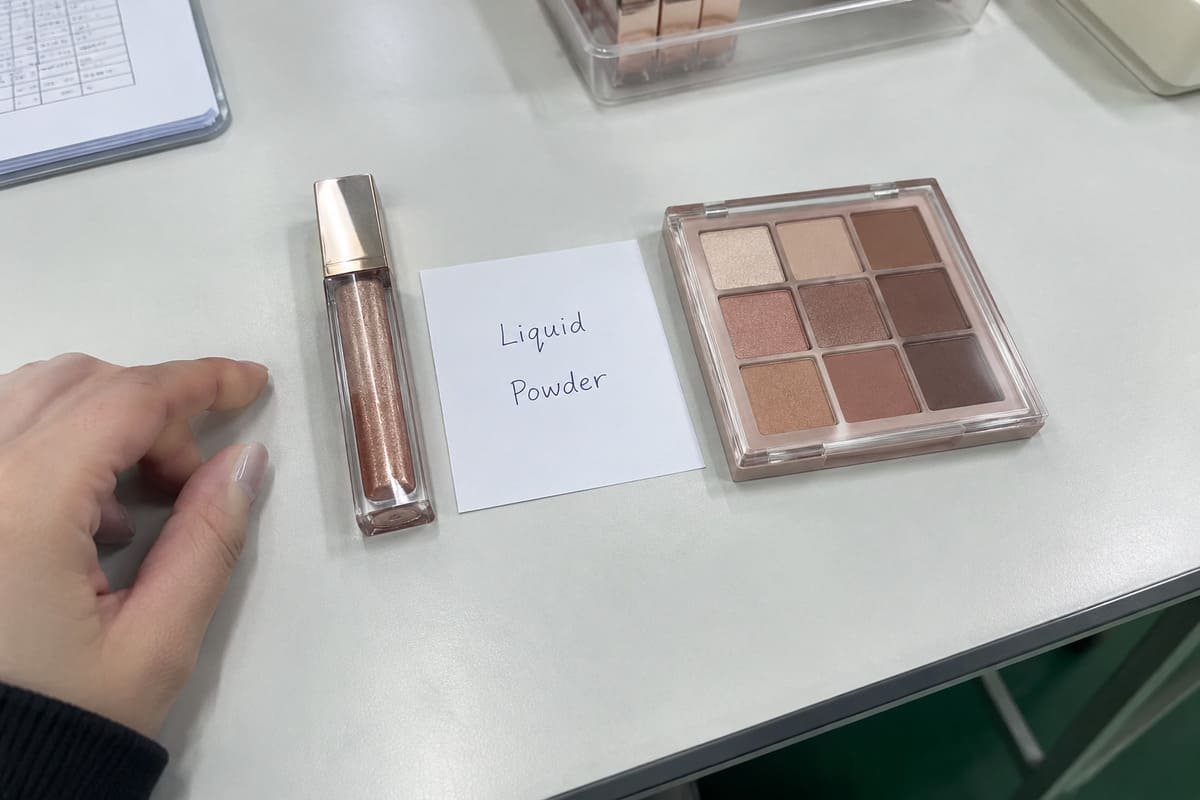
The commercial question is therefore not simply whether liquid is better than powder. I evaluate the entire product concept: the target consumer, the film former, the applicator, the packaging MOQ, the stability program, the export market, and the expected launch budget. In my experience, mature-skin positioning is a formulation-driven opportunity rather than a color trend alone.
Are Liquid Eyeshadows Actually Better Than Powder for Mature Skin?
Many brands compare liquid and powder eyeshadow as if one format must win universally. That approach creates unnecessary risk because mature skin responds to texture, application time, film flexibility, and wear conditions. I compare formats by use case, not by marketing language.
Standard answer
Liquid eyeshadow is not automatically better than powder for mature skin.2 A well-formulated liquid can provide stronger adhesion and a smoother-looking finish, while powder can offer easier blending, lower launch costs, and simpler shade development.3 The better format depends on the brand’s performance target, consumer habits, and budget.
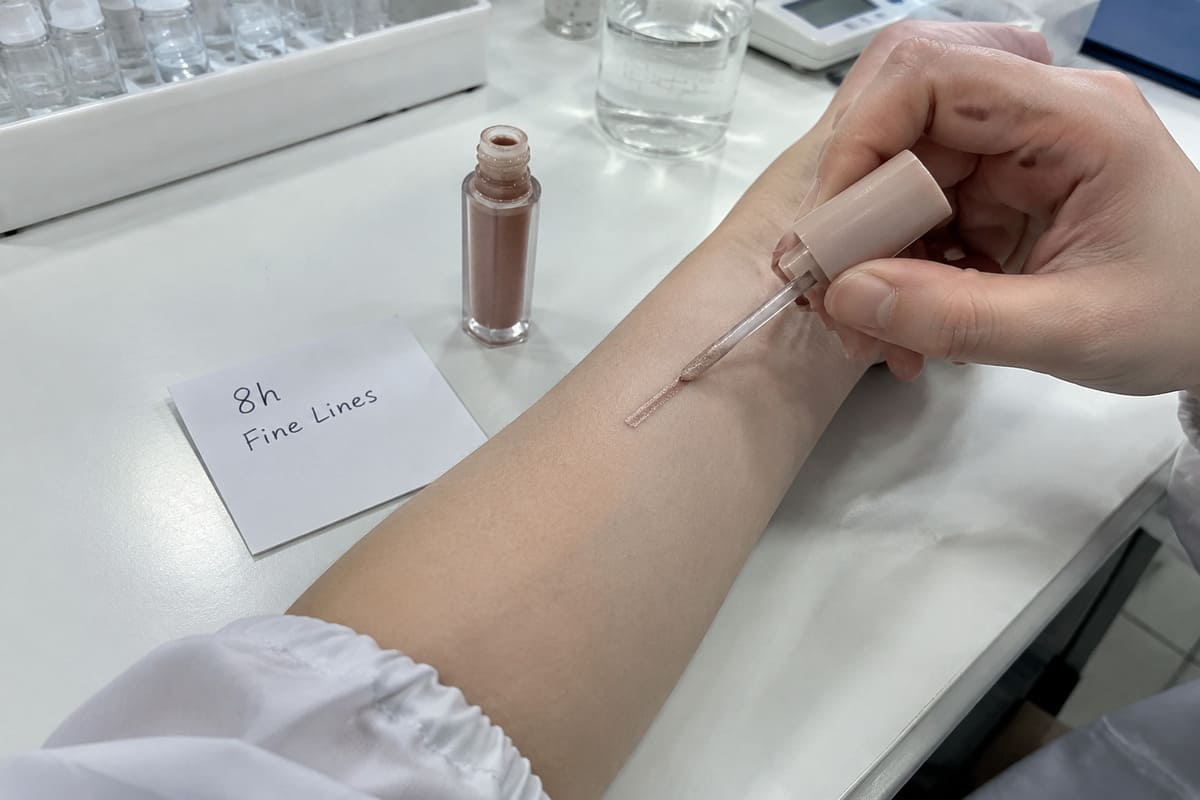
How I compare the two formats
Liquid eyeshadows can work well for mature skin because the formula forms a layer over the eyelid after application. If that layer remains flexible, it can move with natural eyelid movement. It can also reduce the loose-powder effect that sometimes emphasizes texture.
Powder eyeshadow still has important advantages. A powder palette allows the user to control coverage, blend shades gradually, and adjust intensity. It also gives a new brand a less expensive way to test a color story before investing in liquid filling equipment and custom components.
| Evaluation factor | Liquid eyeshadow | Powder eyeshadow |
|---|---|---|
| Adhesion | Usually strong after setting | Depends on primer and powder texture |
| Creasing risk | Low to high, depending on film former | Low to high, depending on oils and binders |
| Fine-line settling | Can be reduced by flexible films | Can occur if powder is dry or poorly milled |
| Blendability | Short working window is common | Usually longer working time |
| Packaging MOQ | Often starts around 10,000 units | Can be lower for selected standard formats |
| Shade testing cost | Higher | Lower |
| Launch speed | Slower because of filling and stability work | Often faster |
| Custom packaging | More component-dependent | Easier with standard palettes |
| Consumer education | May require application guidance | Usually familiar to consumers |
I often recommend that a brand define the intended finish before selecting a format. “Mature skin” does not always mean matte. Some customers want satin color, soft shimmer, or a light reflective effect. The key is to prevent the shimmer particles from collecting in fine lines or creating a dry, uneven surface.4
What buyers should test
When I review samples for a buyer, I do not rely on a single swatch. I ask for testing across several conditions:
- Bare eyelid application
- Application over an eye primer
- One thin layer and two thin layers
- Short wear testing and full-day wear testing
- Warm and humid conditions
- Removal after the product has fully set
- Application on eyelids with visible fine lines
- Testing with the final applicator rather than a laboratory spatula
I also look at the drying window. A liquid eyeshadow that sets immediately may resist transfer, but it can become difficult to blend. A formula that remains wet too long may move into creases before setting. For mature-skin products, the best balance is often a controlled working time followed by a flexible, comfortable film.
In my view, a powder palette is a practical validation product when the brand has limited capital. A liquid eyeshadow is more suitable when the brand already understands its customer, has a clear market, and can fund packaging and stability requirements.
What Does “Mature Skin” Really Mean for a Liquid Eyeshadow Formula?
The phrase “mature skin” can sound like a marketing category, but it must become a technical product brief. If a buyer only asks for “an eyeshadow for mature skin,” the factory still lacks enough information to select the right texture, film, pigment level, or finish.
Standard answer
For liquid eyeshadow development, mature skin generally means eyelids with more visible fine lines, reduced elasticity, increased dryness or uneven oil distribution, and greater sensitivity to tight, brittle, or heavily textured films. The formula should prioritize flexible wear, controlled drying, low flaking, and a finish that does not exaggerate eyelid texture.
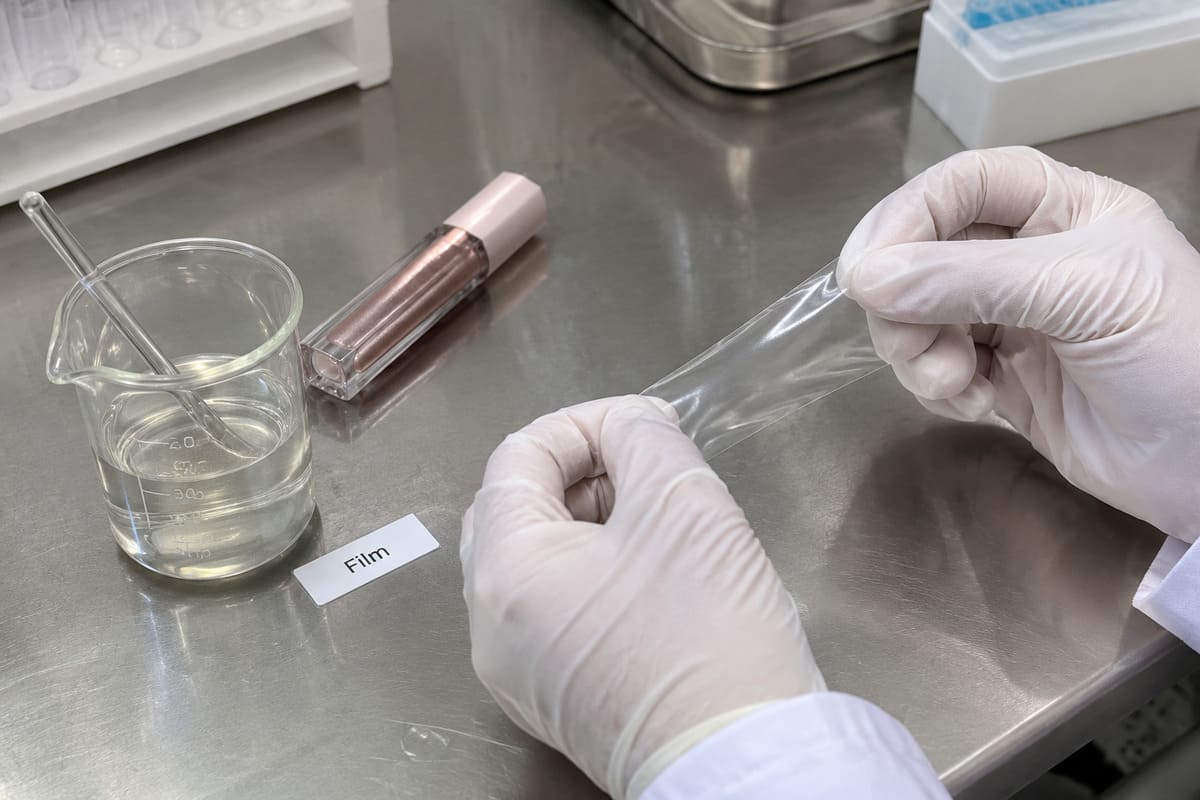
Turning a consumer description into specifications
I prefer to separate the consumer need from the technical requirement. For example, “does not age the eye” is not a laboratory specification. It can be translated into several measurable or observable targets.
| Consumer concern | Formula or package requirement | Suggested evaluation |
|---|---|---|
| Creasing | Flexible film and controlled solids level | Wear test after 8 hours |
| Settling into fine lines | Good adhesion and even film formation | Close visual inspection |
| Flaking | Film flexibility and compatible pigment dispersion | Repeated eyelid movement test |
| Dry appearance | Balanced emollients and suitable finish | Comparative panel review |
| Difficult application | Controlled dry-down time | Timed blending test |
| Transfer | Adequate setting and adhesion | Blotting and rubbing test |
| Heavy texture | Fine pigment and shimmer particle control | Swatch and eyelid test |
| Irritation concerns | Appropriate raw material review and safety testing | Qualified safety assessment |
Mature eyelids can present different conditions. Some consumers have dry, thinner-looking skin. Others have oily eyelids with more pronounced folds. Some use eye creams or primers that change the behavior of the eyeshadow. A single formula cannot guarantee identical performance for every user.
I have seen buyers focus heavily on color payoff while overlooking application thickness. A high-pigment formula can look attractive in a swatch but become too thick when applied to a textured eyelid.5 In many cases, a buildable formula performs better commercially because users can apply one thin layer and add intensity only where needed.
Finish selection matters
I normally discuss three broad finish directions with buyers:
- Soft satin: A lower-risk option for mature-skin positioning because it provides color without excessive reflection.
- Fine shimmer: Suitable for a more premium appearance when the particles are evenly dispersed and not too large.
- High sparkle: More visually dramatic but more likely to emphasize texture or create fallout if the system is not well controlled.
The brand’s customer profile matters here. A Middle East-focused color cosmetics brand may want stronger color impact and longer wear in warm conditions. A European boutique brand may prioritize restrained shimmer, ingredient communication, and a clean visual identity. The same base may require different shade, finish, and packaging decisions for each market.
I also advise brands to avoid promising “anti-aging” or medical-style results. The product can be positioned around comfortable wear, flexible color, smooth-looking application, and reduced visible creasing when supported by testing. Final cosmetic claims should be reviewed for the destination market.
Which Film-Forming Systems Keep Liquid Eyeshadow from Settling into Fine Lines?
The word “liquid” does not explain the performance of a liquid eyeshadow. The film-forming system does. A formula can be fluid during application and still form either a comfortable flexible film or a hard, brittle layer after drying.
Standard answer
Flexible film formers can help liquid eyeshadow move with the eyelid and reduce cracking, flaking, and pigment accumulation in fine lines.6 MQ resin-based technologies, including systems such as BRB Color Lock, are examples of film-forming approaches that should be evaluated for flexibility, adhesion, dry-down, transfer resistance, and compatibility with the complete formula.
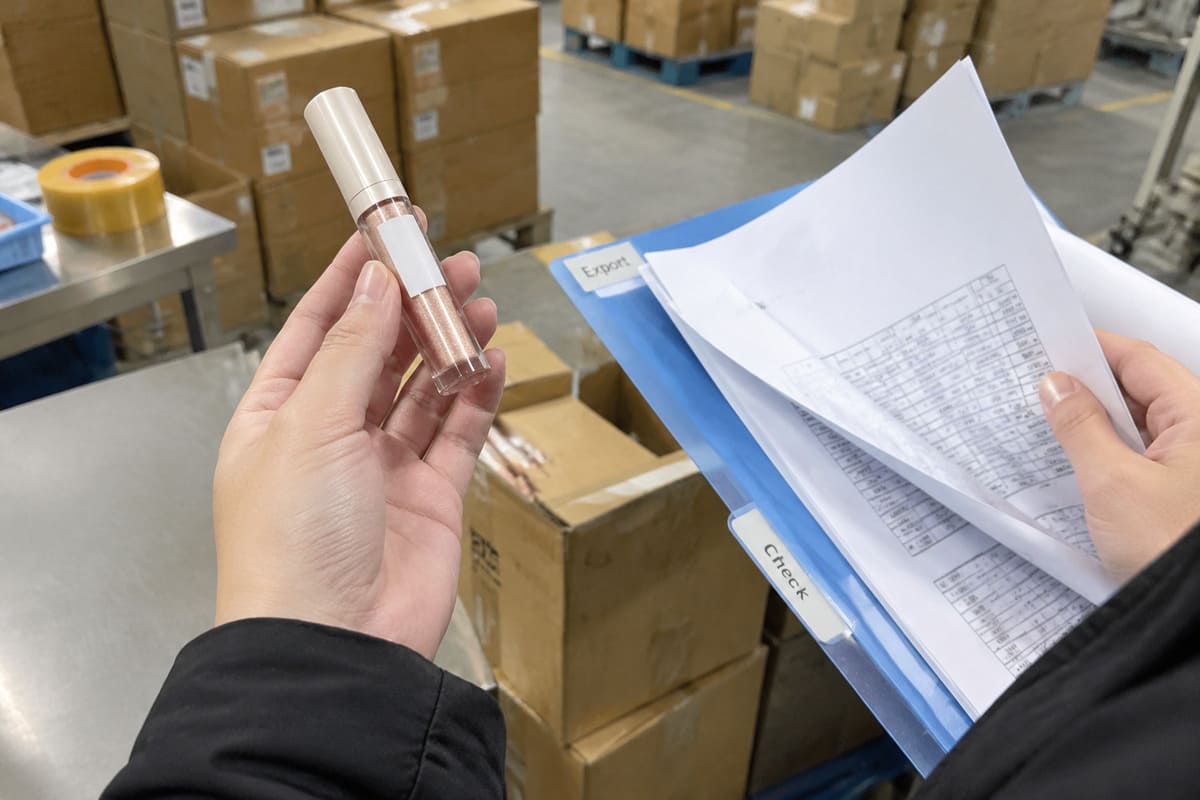
Why film flexibility matters
A film former creates the continuous layer that holds pigment on the eyelid. When the eyelid moves, the film stretches and contracts. A hard film may crack under movement. Those micro-cracks can become visible creases or flakes. A flexible film can better accommodate movement.
Public cosmetic formulation research has reported useful evidence in this area. Flexible film formers based on MQ resin technology, such as BRB Color Lock, have been described as recovering completely from micro-cracks after stretching.7 By comparison, traditional hard films can show severe cracking after approximately 3 cm of stretch. I treat this as formulation evidence, not as a substitute for testing the complete finished product.
| Film-former characteristic | Potential benefit | Buyer question |
|---|---|---|
| High flexibility | Better movement accommodation | Does the film remain comfortable after repeated eyelid movement? |
| Strong adhesion | Lower transfer risk | Does color stay in place under heat and humidity? |
| Controlled dry-down | Better blending and setting balance | How many seconds does the user have to blend? |
| Low brittleness | Lower flaking risk | Does the film crack after flexing or rubbing? |
| Compatibility with pigments | More even color | Does shimmer separate or settle in the package? |
| Solvent compatibility | Better formula stability | Does the film former remain stable over shelf life? |
How I assess a film-forming system
I do not select a film former based only on its technical name. I assess the complete formula through a development sequence:
- Screen the raw material in a simple base.
- Test compatibility with selected pigments and pearl materials.
- Review viscosity and filling behavior.
- Measure dry-down and transfer behavior.
- Apply the formula at thin and heavy film thicknesses.
- Conduct flexing and wear evaluations.
- Review stability in the final package.
- Confirm the formula’s safety and regulatory documentation.
The formula must also work with the packaging. A film-forming system can perform well in a laboratory sample but create problems if the product dries around the applicator, blocks the wiper, or separates during storage.
I pay close attention to the relationship between solids, volatile materials, emollients, and pigments. Too much volatile material may create a fast dry-down but increase tightness or brittleness. Too much emollient may improve comfort but increase transfer. Too much pigment can create a thick film that settles into eyelid folds.
A practical buyer specification
For a mature-skin liquid eyeshadow, I would usually begin with this product brief:
- Buildable medium-to-high color payoff
- Flexible, non-brittle film
- Controlled dry-down
- Low flaking after repeated movement
- Satin or fine-shimmer finish
- Stable pigment dispersion
- Applicator suitable for thin placement
- Performance review in warm and humid conditions
- Claims supported by product testing
A qualified cosmetic chemist must make the final technical decision. My role as a manufacturer is to connect the buyer’s positioning with a realistic formula, package, test schedule, and production plan.
What Certifications Are Required for Exporting Liquid Eyeshadow to the Middle East?
Export compliance is often discussed too late. A buyer may approve the shade range and packaging before checking whether the destination market requires product notification, conformity documentation, responsible importer information, or specific labeling.
Standard answer
For liquid eyeshadow exported to Saudi Arabia and other Middle Eastern markets, the exact requirements depend on the destination country, product classification, importer, ingredients, labeling, and current authority rules.8 For Saudi Arabia, buyers should confirm the current SFDA requirements, prepare applicable conformity documentation such as a recognized Certificate of Conformity where required, and complete the relevant eCosma product notification process with the local importer or responsible party before shipment. Documents must be verified against current official requirements.
Why “Middle East” is not one compliance system
The Middle East includes multiple national markets. Saudi Arabia, the United Arab Emirates, Kuwait, Qatar, Bahrain, Oman, and other countries can apply different registration, labeling, customs, and conformity requirements.9 A document accepted in one country may not automatically satisfy another country.
| Export question | Why it matters |
|---|---|
| Which country will receive the goods? | Requirements differ by national authority |
| Who is the importer? | The importer may manage notification and local compliance |
| Is the product classified as a cosmetic? | Classification affects documentation |
| What are the ingredients? | Restricted substances and colorants must be reviewed |
| Is Arabic labeling required? | Local labeling rules may apply |
| Is a CoC required? | Product conformity procedures can vary |
| Has the product been notified? | Shipment timing may depend on notification status |
| Are claims acceptable? | Cosmetic claims should not become medical claims |
For Saudi Arabia, I work with the buyer and importer to prepare the relevant product information before shipment. This can include product specifications, ingredient information, artwork, batch details, manufacturer information, safety-related documents, and conformity paperwork requested by the market.
I do not advise a brand to treat a certificate as a universal guarantee. Buyers should verify each document’s issuer, validity, product scope, batch scope, and destination-market acceptance. They should also confirm whether the current importer is authorized to complete the local notification process.
A practical document checklist
The exact list must be confirmed for each shipment, but I normally organize the compliance discussion around:
- Commercial invoice
- Packing list
- Product name and shade information
- Ingredient list using accepted nomenclature
- Product specification
- Certificate of Analysis where applicable
- Safety or quality documentation requested by the importer
- Label and packaging artwork
- Manufacturer information
- Applicable Certificate of Conformity documentation
- eCosma product notification information for Saudi Arabia, where applicable
- Shipping and customs documents
I recommend beginning this review before the final packaging order. A late artwork change can affect printing, MOQ, and lead time. A late compliance request can also delay shipment after production has already been completed.
For Middle East launches, I ask the buyer three questions first:
- Which country will receive the first shipment?
- Who will act as the local importer or responsible party?
- Does the buyer already have a conformity and product notification workflow?
These questions establish the compliance path without making unsupported claims. Product performance and documentation must move together.
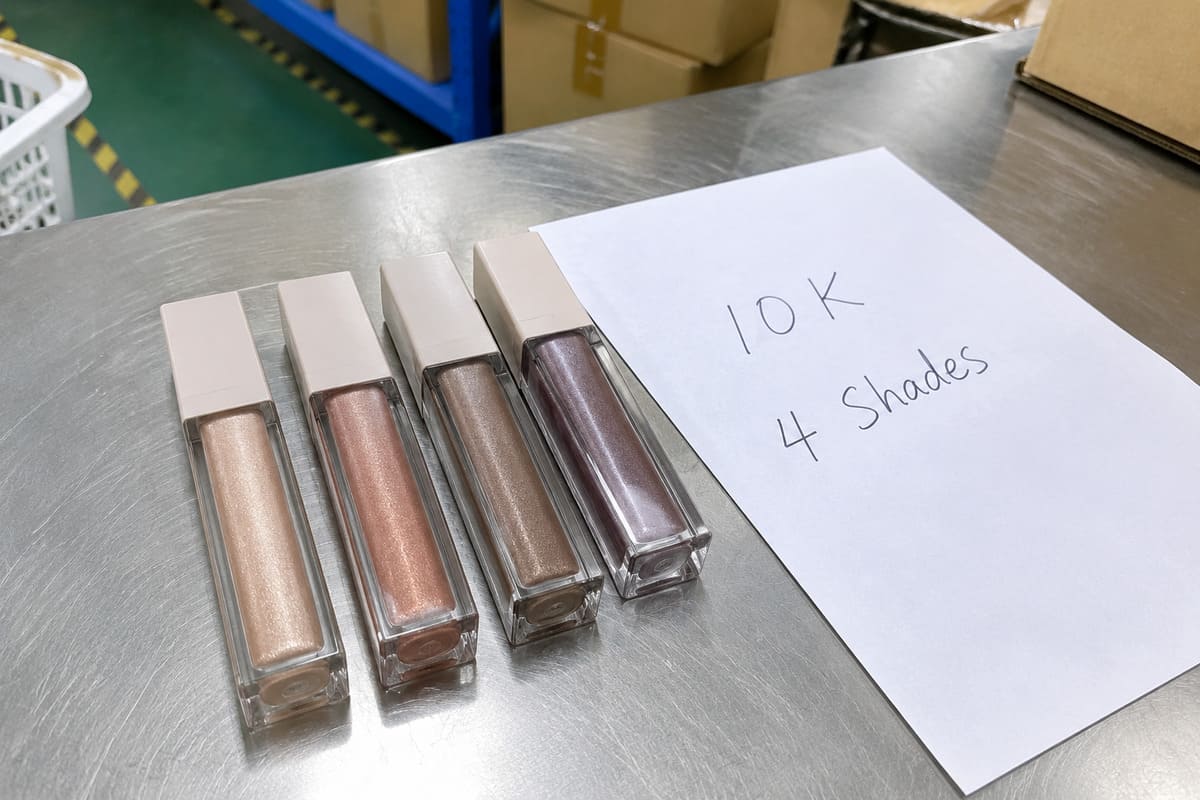
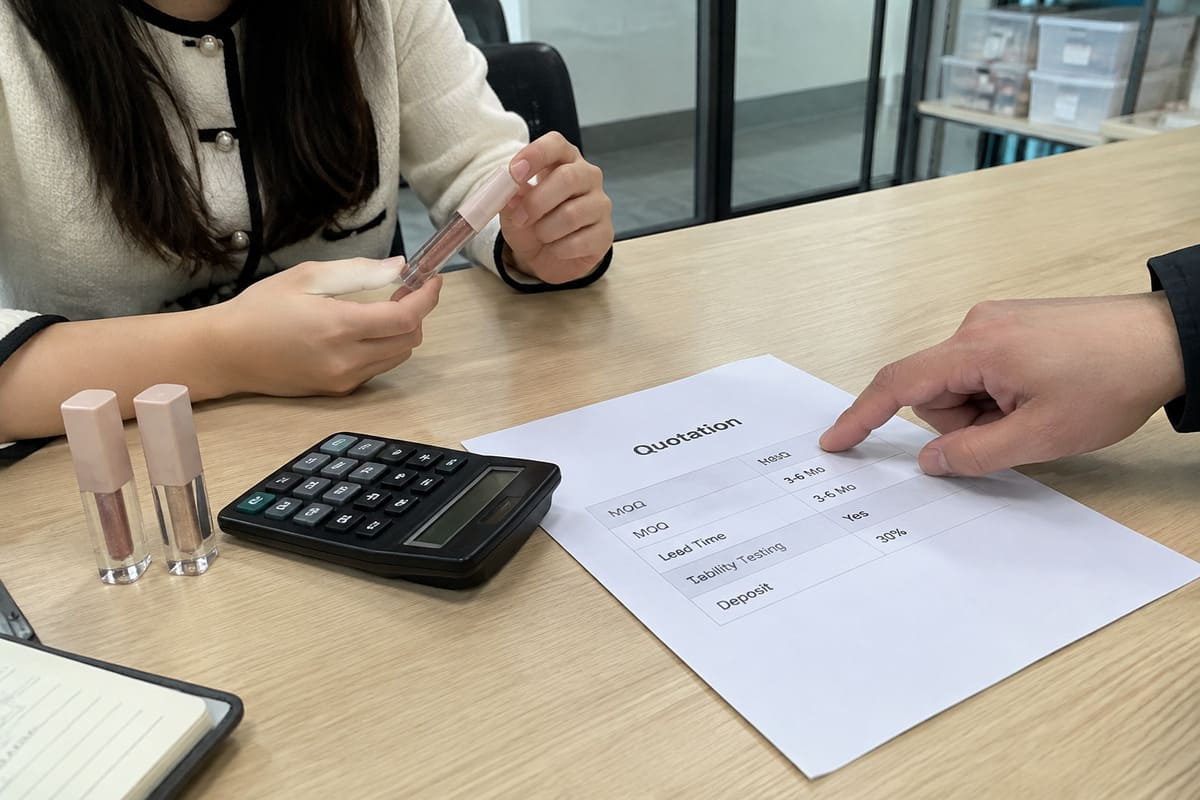
A 10,000-unit MOQ can make a promising product concept feel inaccessible.10 In liquid eyeshadow, the MOQ is often linked to tubes, applicators, wipers, sealing rings, filling setup, shade changeover, and packaging production. It is not simply a number selected by the factory.
Standard answer
A Middle East client can manage a 10,000-unit liquid eyeshadow MOQ by reducing SKU complexity, selecting an existing packaging format, using a shared film-forming base, launching a focused four-shade range, and coordinating compliance before production. The client should also model sell-through, replenishment timing, storage, and cash flow before paying a deposit.
The launch structure I recommend
In one representative launch discussion, I worked through the numbers with a Middle East-oriented brand that wanted a mature-skin liquid eyeshadow range. The first idea included eight shades, custom components, multiple finishes, and extensive packaging decoration. That design created unnecessary risk.
I helped reduce the first launch to four neutral shades:
- Soft champagne
- Warm bronze
- Muted rose
- Deep brown
The brand kept the mature-skin positioning but avoided launching too many variables at once.
| Launch decision | Higher-risk approach | Controlled approach |
|---|---|---|
| Shade count | 8 to 12 shades | 4 coordinated shades |
| Packaging | Fully custom component | Existing tube and applicator |
| Formula | Multiple bases | One validated base |
| Finish | Several complex effects | Satin and fine shimmer |
| Market | Multiple countries at once | One primary market first |
| Compliance | Started after production | Started before artwork approval |
| Inventory | Mixed designs and shades | Concentrated stock plan |
The 10,000 units can be distributed across four shades, depending on the final supplier quotation and packaging configuration. The exact allocation must be confirmed before production. The brand should not assume that every factory permits any split arrangement.
Why packaging creates the MOQ
Liquid eyeshadow packaging usually contains several production-dependent elements:
- Tube or bottle
- Applicator
- Wiper
- Cap
- Sealing ring
- Printed or decorated surface
- Outer carton
- Filling and crimping or closing process
Component suppliers may require large-volume runs. A custom mold can add tooling cost and extend the schedule. A standard component can reduce development time, but it may limit the brand’s visual differentiation.
The filling process also matters. A liquid filling line needs controlled dosing. A tolerance such as approximately ±0.05 g may be required depending on the product and equipment.11 Changeovers between shades require cleaning, line preparation, and quality checks. A factory must account for those costs even when the finished product looks small.
How I would reduce inventory risk
I would use the following sequence:
- Select an existing formula base.
- Confirm four shades with lab samples.
- Test the shades in final packaging.
- Approve artwork and required documents.
- Complete the required accelerated stability stage before filling where feasible.
- Produce the first controlled run.
- Track customer feedback, shade velocity, creasing complaints, and replenishment requests.
- Expand the range only after the first launch produces useful data.
This approach does not remove the MOQ. It makes the MOQ more manageable by concentrating investment in fewer variables.
For a brand with limited budget, I may recommend a powder palette at approximately 2,000 units first. The powder product can test the color story, mature-skin messaging, and customer response. If buyers respond positively to the positioning, the brand can use that evidence to justify the later liquid eyeshadow investment.
What Are the Real Costs and Lead Times of Custom Liquid Eyeshadow Formulas?
The visible product price is only one part of a liquid eyeshadow launch. Buyers also pay through testing time, component MOQ, artwork revisions, filling setup, quality control, documentation, and inventory financing.
Standard answer
Custom liquid eyeshadow costs and lead times depend on formula development, packaging selection, shade count, testing, artwork, MOQ, filling requirements, and destination-market documentation. A realistic project often requires several months from brief to shipment, with stability testing commonly taking approximately 3 to 6 months. Buyers should request a line-item quotation and written production schedule before placing a deposit.
Main cost categories
I separate the launch budget into development costs and production costs. This makes the quotation easier to understand.
| Cost category | Typical cost driver | Buyer control |
|---|---|---|
| Formula development | New base, special finish, raw materials | Use an existing base where suitable |
| Shade development | Number of shades and revision rounds | Start with a focused range |
| Packaging | Standard or custom components | Select stock components initially |
| Tooling | Custom mold or special decoration | Avoid tooling for validation launch |
| Testing | Stability, compatibility, microbiological or safety-related work | Confirm required testing early |
| Filling | Batch size, precision, and changeover | Group shades efficiently |
| Artwork | Carton, tube, label, and regulatory text | Freeze artwork before production |
| Documentation | Market-specific compliance package | Involve the importer early |
| Freight | Carton volume, weight, destination, Incoterms | Compare shipping options |
| Inventory | Finished goods and safety stock | Align quantity with sell-through |
I do not give a universal price without knowing the formula, packaging, shade count, order quantity, and destination. A custom liquid eyeshadow can have a very different cost from a standard product in stock packaging.
Lead-time structure
A buyer should expect the project to contain several stages:
| Stage | Main activity | Approximate planning consideration |
|---|---|---|
| Brief and quotation | Confirm market, shades, quantity, package | Several business days to a few weeks |
| Formula sampling | Prepare and review lab samples | Often multiple rounds |
| Package sampling | Check applicator, wiper, and visual finish | Depends on component availability |
| Stability and compatibility | Evaluate formula and package behavior | Often 3 to 6 months for full stability |
| Artwork and documents | Approve labels and compliance files | Must precede production |
| Component purchasing | Order tubes, applicators, cartons, and closures | Strongly affected by MOQ |
| Filling and QC | Fill, close, inspect, and pack | Depends on total quantity and SKU count |
| Shipment | Export and destination procedures | Depends on documents and freight |
In some situations, a factory may use an accelerated stability program to support production planning. However, accelerated testing does not replace all required evaluation, and it does not allow a buyer to ignore longer-term stability evidence. The final testing approach should be determined by qualified professionals and the destination-market requirements.
My two-path recommendation
Path A: The budget is ready and the market is clear.
I recommend moving directly into liquid eyeshadow with:
- Approximately 10,000 units as the initial packaging-based MOQ
- An existing film-forming base
- Four neutral or market-relevant shades
- Standard packaging with custom branding
- A controlled dry-down and flexible film
- A three-month accelerated stability program before filling where appropriate
- Early compliance coordination with the importer
Path B: The budget is limited and the positioning needs validation.
I recommend starting with:
- A powder palette at approximately 2,000 units, subject to quotation
- A four-to-six-shade color story
- Mature-skin messaging focused on blendability and texture
- Customer review tracking
- Sales data by shade and channel
- A later move into liquid eyeshadow after validation
I advise new brands not to imitate high-end influencer lines immediately. For mature skin, the first performance priorities should be low creasing, low settling, low flaking, comfortable wear, and easy application. Heavy shimmer and elaborate storytelling cannot compensate for a formula that fails during everyday use.
Frequently Asked Questions
Are liquid eyeshadows suitable for mature eyelids?
They can be suitable when the formula forms a flexible, comfortable film and the user applies a thin layer. The finished product should be evaluated for creasing, flaking, transfer, dry-down time, and fine-line settling. A liquid format alone does not guarantee mature-skin performance.
What is the typical MOQ for private label liquid eyeshadow?
For many liquid eyeshadow packaging programs, the MOQ starts at approximately 10,000 units. The exact quantity depends on the tube, applicator, wiper, sealing system, decoration method, shade split, and supplier production requirements.
How long does custom liquid eyeshadow development take?
The total project can require several months. Formula sampling, packaging approval, stability testing, artwork, component purchasing, filling, quality control, and export documentation all affect the schedule. Stability testing may commonly take 3 to 6 months, depending on the selected program.
What should Middle East buyers verify before exporting liquid eyeshadow?
Buyers should confirm the destination country, importer responsibilities, ingredient acceptability, labeling requirements, conformity documentation, and product notification process. For Saudi Arabia, the buyer should verify current SFDA requirements, applicable CoC documentation, and eCosma notification requirements before shipment.
Is powder eyeshadow a better first product for a small brand?
Powder eyeshadow can be a lower-risk validation product because it may support a lower MOQ, simpler shade testing, and easier inventory management. It is useful when the brand wants to validate a mature-skin color story before investing in liquid filling and specialized packaging.
Conclusion
Liquid eyeshadows can be a strong mature-skin product opportunity, but the advantage does not come from the liquid format alone. The key factors are the flexible film-forming system, controlled dry-down, pigment dispersion, applicator, stability, packaging MOQ, and market compliance. A ready-funded brand with a clear Middle East launch can begin with approximately 10,000 units and a focused four-shade range. A cautious brand can validate the concept with powder first. At Vertina Beauty, I can review the formula direction, packaging, MOQ, testing plan, lead time, and export documents before you place a deposit.
"Acrylic Films in Cosmetics: Decoding the Structural ... - PMC", https://pmc.ncbi.nlm.nih.gov/articles/PMC12581122/. A flexible cosmetic film may accommodate repeated substrate movement more effectively than a brittle film, which provides a mechanistic basis for reduced cracking and flaking during wear. Evidence role: mechanism; source type: paper. Supports: A source should explain how flexible cosmetic films accommodate substrate movement and how film properties can affect cracking, flaking, and wear.. Scope note: This mechanism does not directly establish improved performance for every liquid eyeshadow formula or eyelid condition. ↩
"Hydrolipidic Characteristics and Clinical Efficacy of a ... - PMC", https://pmc.ncbi.nlm.nih.gov/articles/PMC9861166/. Comparative cosmetic performance is generally dependent on formulation properties, application method, skin characteristics, and the intended finish rather than on product format alone. Evidence role: general_support; source type: research. Supports: A source should support the context-dependent nature of cosmetic format performance and the absence of a universally superior eyeshadow format.. Scope note: A general formulation source may not provide a direct head-to-head trial involving mature eyelids and commercial eyeshadow products. ↩
"Decoding Cosmetic Complexities: A Comprehensive Guide to ...", https://pmc.ncbi.nlm.nih.gov/articles/PMC10818968/. Liquid and powder color cosmetics differ in film formation, particle handling, application behavior, and manufacturing requirements, factors that can influence adhesion, blendability, and development complexity. Evidence role: general_support; source type: research. Supports: A source should describe how liquid film formation can affect adhesion and how powder systems differ in blending behavior and manufacturing complexity.. Scope note: These format-level distinctions do not prove that every liquid product adheres better or that every powder product is cheaper. ↩
"Cosmetic powder suspensions in compliant, fingerprintlike ...", https://pubmed.ncbi.nlm.nih.gov/21974683/. Particle size, dispersion, and reflectance influence the optical uniformity of cosmetic films, providing a plausible basis for visible accumulation or texture emphasis in skin folds. Evidence role: mechanism; source type: paper. Supports: A source should explain how particle size, dispersion, and surface reflectance influence the visible texture of cosmetic films on uneven skin.. Scope note: The cited mechanism would not by itself establish the appearance of a particular shimmer shade or finished eyeshadow. ↩
"Research on the intrinsic mechanism of the darkening of liquid ...", https://pmc.ncbi.nlm.nih.gov/articles/PMC9838777/. Increasing pigment or solids loading can alter viscosity and deposited film thickness, which may affect leveling and uniformity on an uneven substrate even when initial color payoff is high. Evidence role: mechanism; source type: paper. Supports: A source should explain how pigment or solids loading affects viscosity, deposited film thickness, uniformity, and wear behavior.. Scope note: The relationship is formulation-specific and does not establish a universal pigment threshold for mature eyelids. ↩
"Acrylic Films in Cosmetics: Decoding the Structural ... - PMC", https://pmc.ncbi.nlm.nih.gov/articles/PMC12581122/. In cosmetic film systems, greater flexibility and elongation can improve resistance to fracture during repeated deformation, supporting the proposed relationship between film flexibility and reduced flaking. Evidence role: mechanism; source type: paper. Supports: A source should connect polymer flexibility and elongation with resistance to cracking or flaking under repeated deformation.. Scope note: Laboratory stretch or fracture results are contextual and do not directly predict pigment settling or full-day eyelid wear. ↩
"Self-Healing Silicone Materials: Looking Back and Moving ...", https://pubmed.ncbi.nlm.nih.gov/37504174/. Published or independently documented testing of MQ resin-containing films may demonstrate recovery or reduced crack propagation after deformation under specified laboratory conditions. Evidence role: mechanism; source type: paper. Supports: A source should report measured recovery or crack-resistance behavior for MQ resin-based cosmetic films under a defined stretching protocol.. Scope note: Evidence for a named supplier technology may be proprietary or product-specific and should not be generalized to all MQ resin systems or finished eyeshadows. ↩
"Summary of Cosmetics Labeling Requirements", https://www.fda.gov/cosmetics/cosmetics-labeling-regulations/summary-cosmetics-labeling-requirements. Official cosmetic regulations commonly make market access contingent on jurisdiction-specific classification, ingredient restrictions, labeling, responsible-party information, and notification or conformity procedures. Evidence role: expert_consensus; source type: government. Supports: Official regulatory sources should establish that cosmetic market access requirements are jurisdiction-specific and can depend on classification, labeling, responsible parties, ingredients, and notification procedures.. Scope note: Requirements change over time and must be checked against the current rules of the specific destination country. ↩
"Cosmetics legislation and product registration in Gulf ...", https://dev.ceway.eu/international-services/gcc/. Regional alignment does not eliminate national implementation differences; cosmetic registration, labeling, customs, and conformity procedures may therefore require country-specific verification. Evidence role: historical_context; source type: institution. Supports: An official regional or national regulatory source should document differences or separate procedures among the named markets.. Scope note: A regional overview may omit importer-specific or product-specific requirements and should not replace advice from the relevant national authority. ↩
"How Can I Create My Own Makeup Brand? (A Startup Founder's ...", https://vertinabeauty.com/how-can-i-create-my-own-makeup-brand-a-startup-founders-guide-to-first-launch/. Higher minimum order quantities can increase upfront working-capital commitments and inventory exposure when demand is uncertain, particularly for smaller firms with limited purchasing scale. Evidence role: general_support; source type: paper. Supports: A source should explain how high minimum order quantities increase inventory exposure, working-capital requirements, and demand-forecast risk for smaller firms.. Scope note: The financial impact of 10,000 units depends on unit cost, selling rate, shelf life, payment terms, and the firm’s available capital. ↩
"Summary of Cosmetics Labeling Requirements", https://www.fda.gov/cosmetics/cosmetics-labeling-regulations/summary-cosmetics-labeling-requirements. Applicable net-content rules and equipment specifications determine acceptable fill-weight variation; any tolerance such as ±0.05 g must therefore be tied to the product, package size, measurement system, and governing jurisdiction. Evidence role: statistic; source type: government. Supports: A source should establish applicable net-content tolerances or explain the measurement accuracy achievable for cosmetic liquid filling equipment.. Scope note: A general legal net-content tolerance is not equivalent to a manufacturer’s internal process specification. ↩