How Can I Create My Own Makeup Brand? (A Startup Founder’s Guide to First Launch)
When first-time founders search for how to create their own makeup brand, what they truly need is not a startup checklist, but a supply chain partner who can help them make their first launch accurate and guide them through the pitfalls of budget, product selection, and factory communication. I hear the same fear behind “How can I create my own makeup brand?”: wasting scarce capital.
To create your own makeup brand, I recommend choosing one validated hero product, defining the target customer and sales channel, reserving money for testing and marketing, and selecting an OEM/ODM manufacturer that communicates clearly. I believe the safest principle is simple: survive first, validate demand, and then invest in deeper customization.
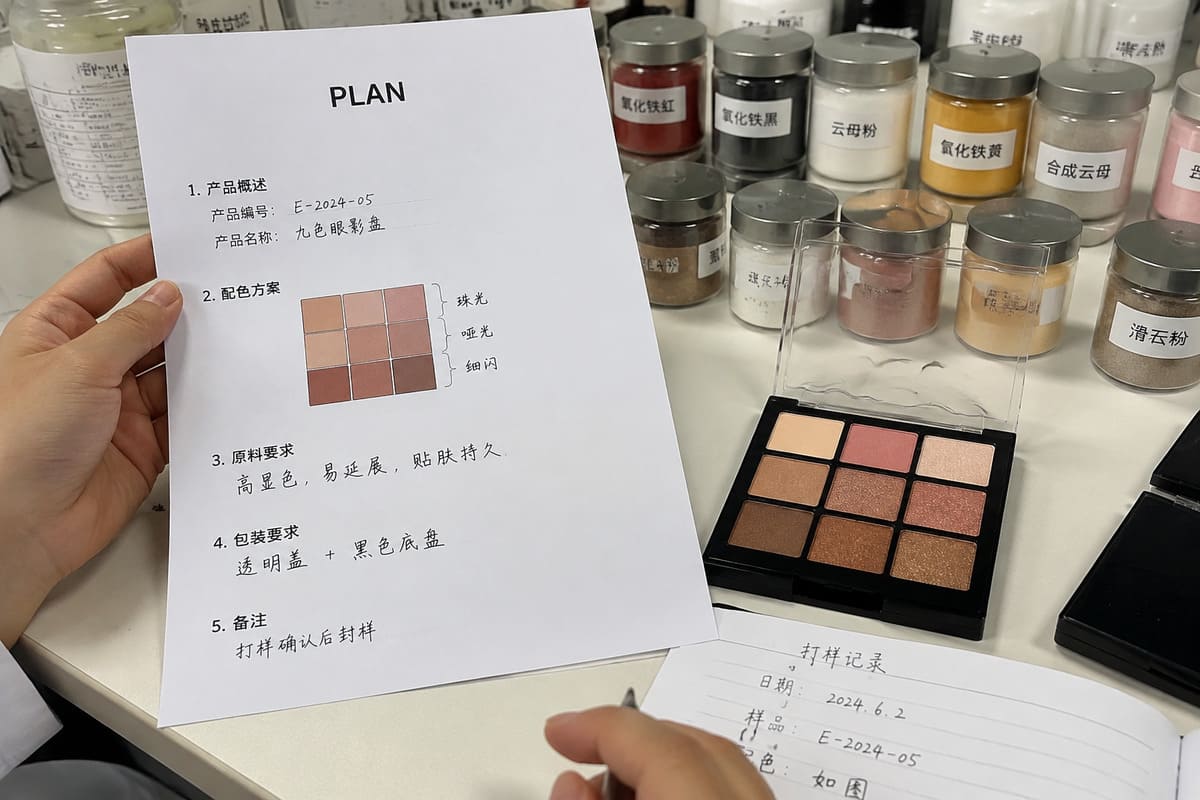
I have seen founders spend too much on beautiful packaging before confirming whether customers want the product inside. I have also seen small brands grow steadily from one well-chosen palette. The difference usually comes from early decisions about positioning, inventory, customization, quality control, and supplier cooperation.
What Does “Creating a Makeup Brand” Really Mean for First-Timers?
Creating a makeup brand sounds creative and exciting, but the operational work can quickly become overwhelming. A founder must connect a product concept with formulation, packaging, compliance, inventory, pricing, and distribution.1 If one link fails, the entire first launch can become expensive.
For a first-time founder, creating a makeup brand means building a commercially viable supply chain around a clearly defined customer. I help founders translate demand into a product specification, select an appropriate manufacturing route, verify samples, plan quality controls, prepare market-specific documentation, and order an inventory quantity that they can realistically sell.
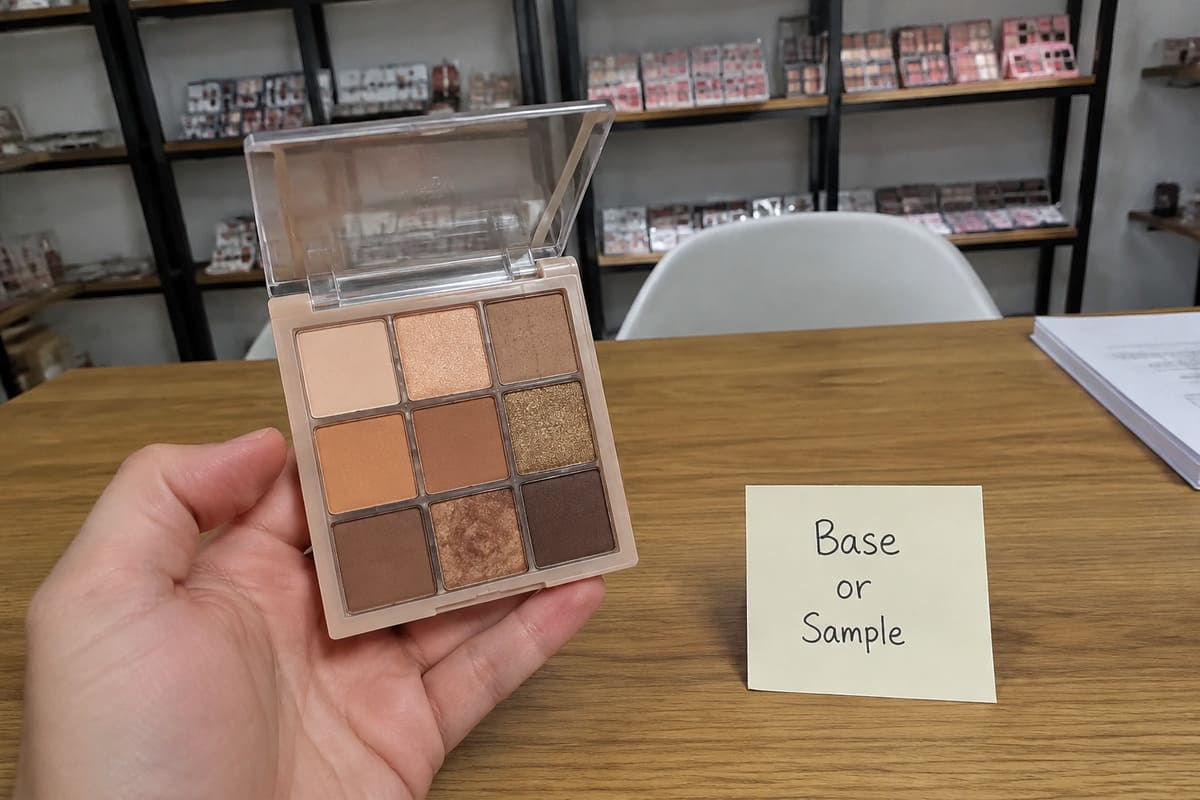
I Start with the Customer, Not the Formula
When a founder asks me, “How can I create my own makeup brand?”, I do not begin by asking how many eyeshadow colors they want. I first ask three more important questions:
- Who will buy the product?
- Where will the founder sell it?
- What evidence shows that the customer wants it?
A bold 12-shade sparkle palette may work well for a TikTok creator with an audience that loves dramatic makeup. The same product may be a poor fit for a minimalist boutique serving professional customers. Neither concept is automatically right or wrong. The sales context determines the better choice.
A founder should define at least the following before requesting quotations:
| Decision area | Question I ask | Why it affects production |
|---|---|---|
| Target customer | Who is expected to buy? | Guides shade, texture, price, and packaging |
| Sales channel | TikTok, Amazon, retail, wholesale, or salon? | Changes margin, labeling, and inventory needs |
| Target market | In which country will the product be sold? | Determines regulatory and documentation needs |
| Retail price | What price will the customer accept? | Sets the maximum sustainable landed cost |
| Product promise | What is the main reason to buy? | Prevents an unfocused product specification |
| Demand evidence | Has anything similar sold before? | Reduces product-market-fit risk |
I Separate Product Development from Brand Building
A product and a brand are related, but they are not identical. The product includes the formula, shades, pan sizes, components, carton, labeling, and performance. The brand includes positioning, visual identity, pricing, customer service, content, and the reason customers remember the product.
A factory can help with many product-development tasks. We can support shade selection, formula matching, special-effect pigments, packaging options, samples, and production planning. However, I cannot manufacture customer demand. The founder still needs a clear audience and a practical sales plan.
I would rather help a founder launch one accurate product than manufacture five products that consume the entire budget.
I Choose the Manufacturing Route Deliberately
I usually explain three common routes:
| Manufacturing route | Best use | Main advantage | Main limitation |
|---|---|---|---|
| Existing formula and standard packaging2 | Market testing and fast launches | Lower cost and shorter development | Less exclusivity |
| Existing base with custom shades or decoration | Emerging brands with a clear identity | Balanced differentiation and risk | Some MOQs increase |
| Fully custom formula and packaging | Validated brands with more capital | Strongest product ownership | More sampling, tooling, testing, and time |
For a first makeup brand launch, I often recommend starting between the first and second routes. A founder can use a proven base formula while customizing shades, artwork, logos, or the outer carton. This approach can create a recognizable product without forcing the founder to fund every possible customization at once.
What Are the 3 Keys to a Safe First Makeup Brand Launch?
A first launch becomes dangerous when enthusiasm replaces evidence. Founders often want custom formulas, several product categories, expensive molds, and large inventories at the same time. That combination can consume the budget before the brand receives meaningful customer feedback.
The three keys to a safer first makeup brand launch are accuracy, supplier fit, and disciplined budgeting. I recommend building on proven demand, choosing a factory that gives realistic answers, and using limited capital on the product features customers value most. I treat low MOQ as a risk-control tool, not the entire strategy.
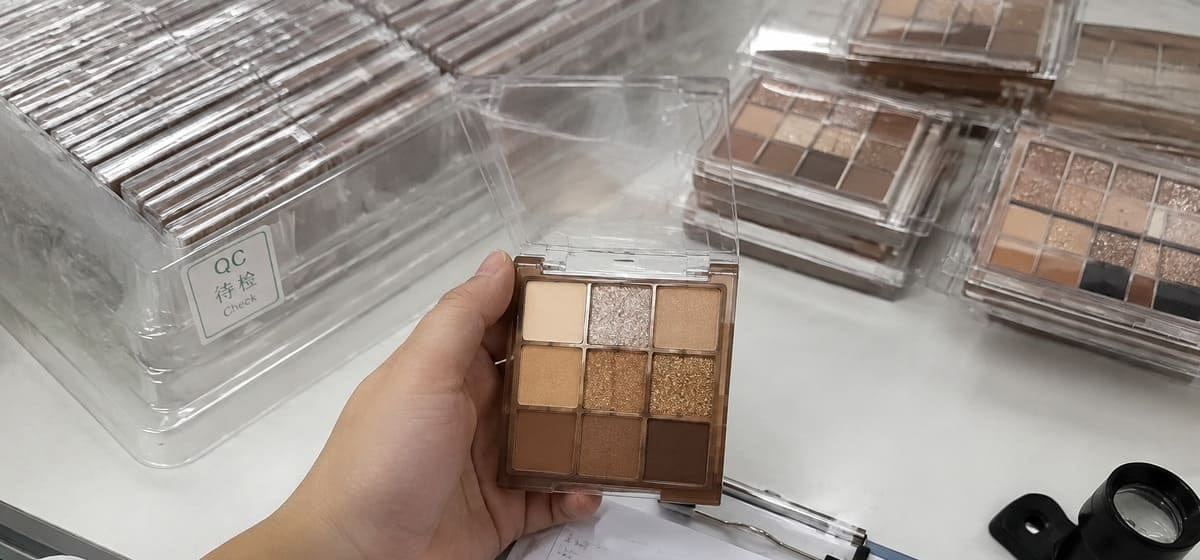
1. I Aim for Accurate, Not Merely Small
A small order can still be the wrong order. If a founder orders 300 units of an untested palette that customers do not understand, the lower quantity only reduces the size of the mistake. It does not make the product accurate.
I advise founders with previous selling experience to use that information. For example, a seller may already know that customers prefer:
- Warm neutral matte shades
- One high-impact sparkle topper
- Smooth shimmer formulas
- A mirror inside the palette
- Compact packaging that is easy to ship
- A retail price below a particular threshold
That evidence should guide the first private-label product. The founder can produce a 1.5-times improvement of something proven rather than a completely unfamiliar concept.
I use “1.5-times improvement” as a decision principle, not a laboratory measurement. The new product should be visibly better, but it should remain familiar enough for the existing customer to understand.
2. I Evaluate the Factory Beyond Its MOQ
Low MOQ matters because it reduces inventory exposure.3 However, a low number on a sales page does not guarantee a safe makeup brand launch. The stated MOQ may apply only to stock goods without custom shades, printing, cartons, or accessories.
I suggest checking these points before selecting an OEM makeup manufacturer:
| Supplier question | Strong answer | Warning sign |
|---|---|---|
| What does the MOQ include? | The supplier separates formula, packaging, and printing MOQs | The supplier gives one vague number |
| Can the supplier reproduce an approved sample? | The supplier records formula, shade, and component references | The supplier relies on visual memory |
| How are incoming components checked? | The supplier explains sampling and rejection procedures | The supplier says problems “never happen” |
| What happens if a shade changes? | The supplier has an approval and change-control process | The supplier substitutes without approval |
| Can documents support my target market? | The supplier asks where the goods will be sold | The supplier makes universal compliance claims |
| Is the lead time realistic? | The supplier separates sampling, components, production, and inspection | The supplier promises immediate delivery for everything |
I prefer honest limitations over attractive but unreliable promises. A responsible manufacturer should explain what is standard, what is customized, what requires testing, and what may increase cost.
3. I Protect the Budget Before I Expand the Idea
A startup budget must cover more than the factory invoice. Founders often forget freight, import charges, design, product photography, test units, platform fees, samples, and marketing.
I recommend separating the budget before approving production:
- Product and packaging
- Sample development
- Quality or safety evaluation
- Freight and import expenses
- Content and launch marketing
- Contingency reserve
- Reorder cash
If the first order consumes every available dollar, the founder may have no money left to sell or replenish the product. That situation can damage even a promising makeup brand.
How Did We Help a First-Time Makeup Brand Founder with a 10K Budget?
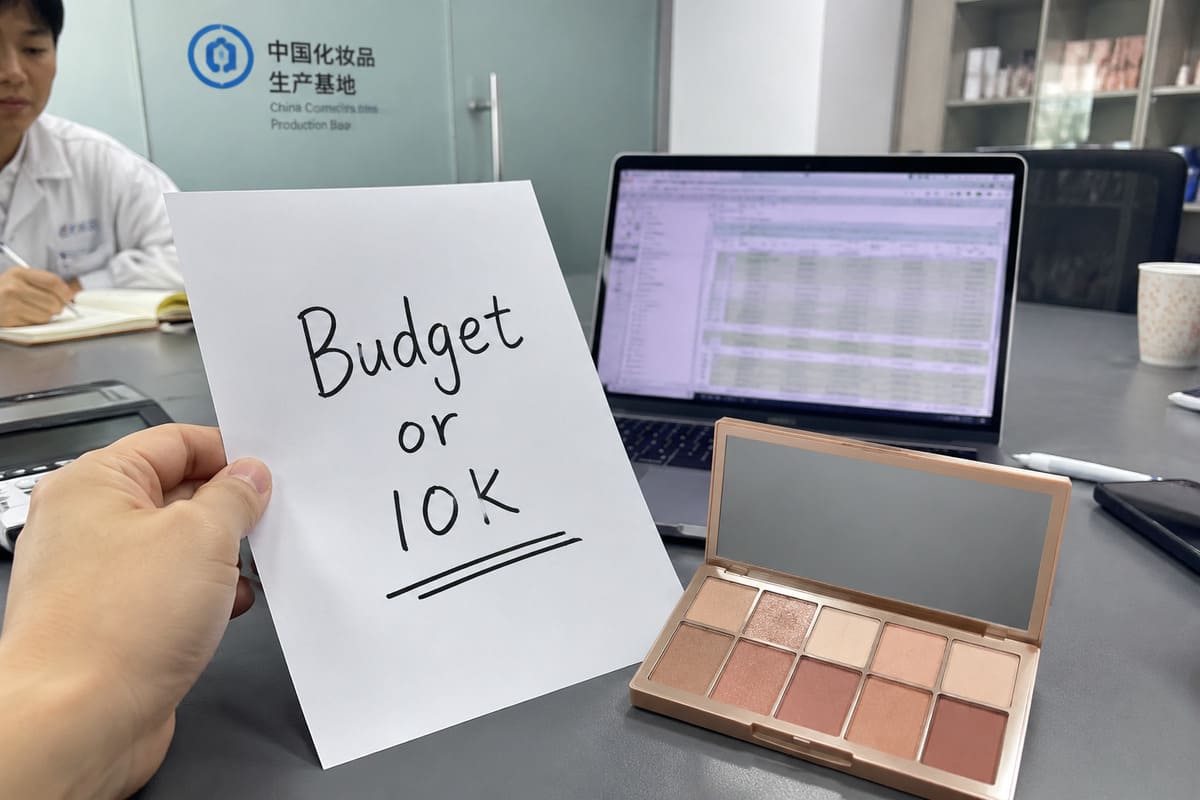
A founder once approached us with a budget below US$10,000 and a long list of ideas. He wanted several products, extensive shade development, and premium packaging. The ambition was understandable, but the proposed scope risked spreading his limited capital across too many untested decisions.
We helped the founder narrow his launch to an upgraded 12-shade eyeshadow palette based on his previous sales experience. Before quoting, we confirmed his customers, sales channel, and product history. We then improved requested matte, shimmer, and sparkle shades while keeping the initial packaging changes controlled and financially manageable.
I Asked for Evidence Before Preparing Samples
The founder initially felt that he had to start from zero to create his own makeup brand. During our discussions, he explained that he had already sold 12-shade palettes successfully. He also knew which shades customers used, which effects they requested, and which packaging details caused complaints.
That information changed our development direction.
Instead of treating him as a complete beginner, we treated his sales history as a small but valuable product dataset. We discussed:
- Which matte shades had the most visible usage
- Which shimmer effects customers photographed and shared
- Whether customers wanted one sparkle shade or several
- Which shades remained untouched
- Whether packaging damage occurred during shipping
- What retail price had already worked
- How much visual change his existing audience would accept
We then advised him to survive first, then develop. We did not recommend launching an unrelated dream product simply because it felt new.
I Turned the Existing Palette into a Controlled Upgrade
Our development plan focused on a 1.5-times upgrade. The exact details depended on sample evaluation, but the structure looked like this:
| Product element | Previous experience | First-launch decision |
|---|---|---|
| Palette format | 12 shades had sold successfully | Keep the familiar 12-shade structure |
| Matte shades | Customers requested stronger payoff | Review improved matte options |
| Shimmers | Existing demand was proven | Refine texture and shade balance |
| Sparkle effect | Customers wanted more visual impact | Add a deliberate special-effect shade |
| Packaging | Familiar format worked | Upgrade artwork and selected details |
| Custom mold | No evidence that it would increase sales | Defer until later |
| Product range | Founder wanted multiple categories | Launch one hero product first |
We communicated extensively before making samples because sample rounds cost time and money. A detailed product brief reduced random revisions.
I Would Divide a US$10,000 Budget Carefully
The following example is a planning model, not a fixed quotation. Actual costs depend on the product, quantity, target market, packaging, freight route, testing, and customization.
| Budget category | Illustrative allocation | Purpose |
|---|---|---|
| Product and primary packaging | $4,500–$5,500 | Inventory for the hero product |
| Sampling and artwork setup | $500–$1,000 | Shade review, mock-ups, and revisions |
| Testing and compliance preparation | $700–$1,500 | Depends heavily on target market |
| Freight and import reserve | $800–$1,500 | Shipping, duties, broker, or local costs |
| Content and launch activity | $1,000–$1,500 | Photography, samples, creators, or ads |
| Contingency | $500–$1,000 | Unexpected corrections or cost changes |
I would not treat these figures as supplier promises. I would request a line-item quotation and confirm which items are included. I would also obtain professional advice on taxes, import rules, claims, and local cosmetic regulations.
The main lesson from this case was not that every founder should make a 12-shade palette. The lesson was that a first launch should use the founder’s best available evidence.
Why Do Most New Makeup Brands Fail on Their First Inventory Order?
A weak first inventory decision can trap cash for months. In my experience, the most common problem is not always poor product quality. The deeper problem is a mismatch among the product concept, customer demand, selling price, sales channel, and ordered quantity.
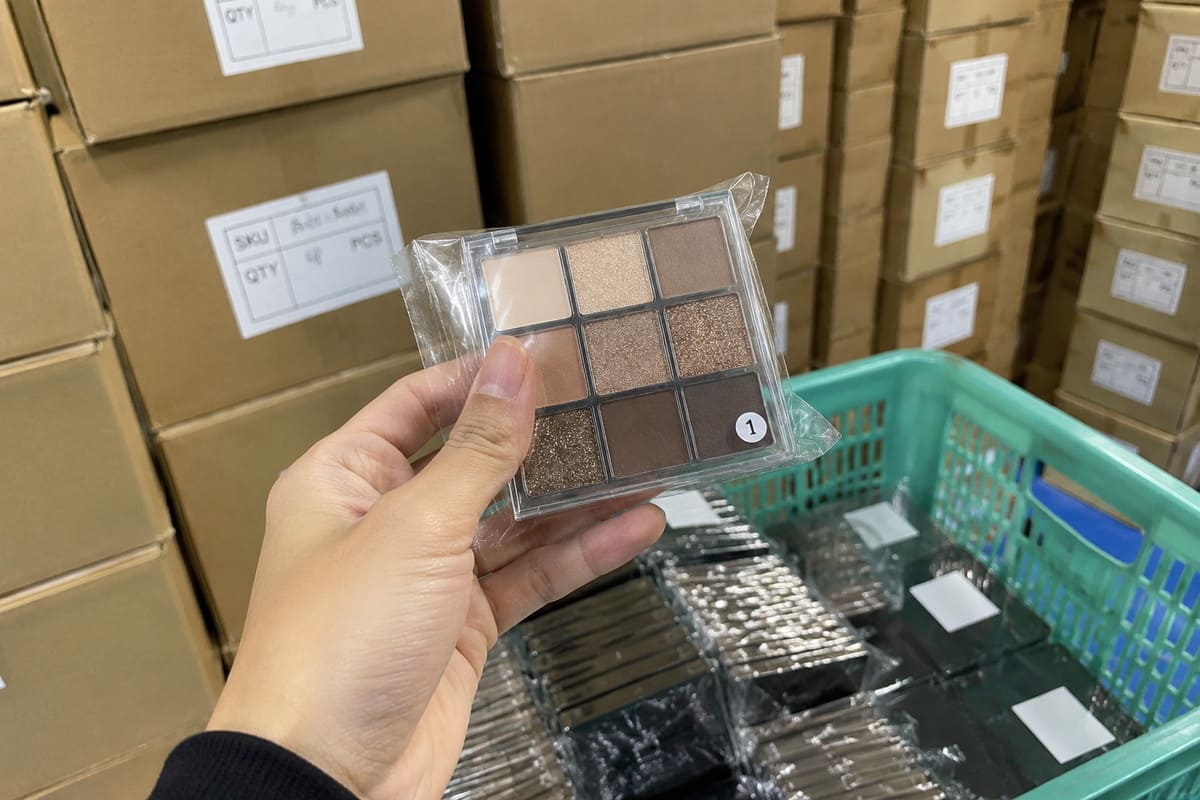
New makeup brands often struggle with first inventory because they order what the founder personally wants instead of what the market has demonstrated it will buy.4 Other causes include excessive SKUs, underestimated landed costs, unverified packaging, unrealistic lead times, and spending so much on production that little budget remains for selling.
I Watch for Product-Market Mismatch
I take the statement “most brands fail because the direction is wrong” as a practical observation, not a universal statistical claim. Public business-failure data rarely isolates cosmetics inventory as one single cause. However, the operational pattern is easy to recognize during product inquiries.
A founder may choose shades because they look beautiful in a digital rendering. The customer may prefer wearable colors. A founder may select heavy luxury packaging. The shipping cost may make the final retail price uncompetitive. A founder may order six products to look established. The marketing budget may only support one.
These decisions can produce a technically acceptable product that is commercially difficult to sell.
I Treat SKU Count as a Cash-Flow Decision
Every additional shade or product can create more complexity:5
- Separate inventory exposure
- More artwork versions
- More component planning
- More photography
- More product pages
- More samples
- More forecasting errors
- More slow-moving stock
A simple inventory-risk example shows the issue:
| Launch plan | SKUs | Units per SKU | Total units | Relative forecasting difficulty |
|---|---|---|---|---|
| One hero palette | 1 | 500 | 500 | Lower |
| Four palette colorways | 4 | 300 | 1,200 | Medium |
| Palette, blush, liner, and highlighter | 8 | 300 | 2,400 | Higher |
The quantities are illustrative, but the logic applies broadly. A low MOQ per SKU can still create a large total order if the founder chooses too many SKUs.
I Verify the Approved Sample and Production Standard
A good sample does not automatically guarantee a consistent production batch.6 Before approving an inventory order, I recommend documenting:
- Shade references and acceptable color range
- Texture and payoff expectations
- Pan fill and net-content requirements
- Component color and decoration
- Artwork version
- Barcode and batch-code placement
- Carton dimensions
- Assembly standard
- Drop, vibration, or transit testing where appropriate
- Inspection method and acceptance criteria
For color cosmetics, appearance can vary with lighting, substrate, application pressure, and pigment characteristics. Special-effect eyeshadows are particularly sensitive because chameleon and sparkle pigments look different at different angles.7 I recommend evaluating samples under agreed lighting and on relevant skin tones or standardized substrates.
I Do Not Treat Compliance as a Generic Certificate
A founder should identify the target market before finalizing the formula and label. There is no single universal certificate that makes a cosmetic legal everywhere.
For example:
- The European Union generally requires a designated Responsible Person, a Product Information File, a Cosmetic Product Safety Report, compliant labeling, and notification through the CPNP under Regulation (EC) No 1223/2009.
- The United States requires companies to assess obligations under the Federal Food, Drug, and Cosmetic Act and the Modernization of Cosmetics Regulation Act, including applicable facility registration, product listing, safety substantiation, labeling, and adverse-event responsibilities.
- Saudi Arabia requires market-specific product and importer procedures through the Saudi Food and Drug Authority. Product notification, ingredient, label, and local responsible-party requirements should be checked against the current SFDA system before shipment.
Certifications and test reports are documents that buyers should verify for scope, issuer, date, product coverage, and target-market relevance. I recommend using a qualified cosmetic regulatory professional for application-specific decisions because legal requirements can change.
What Should I Know About Budget, Makeup MOQ, and When to Scale Up?
MOQ can look like the main obstacle when someone asks, “How can I create my own makeup brand?” In reality, the lowest possible quantity is not always the best commercial choice. A tiny order may carry a high unit cost, while a large order can create dangerous inventory exposure.
I recommend choosing an MOQ that balances unit economics with realistic sell-through. A founder should scale only after the first makeup brand product shows repeatable demand, acceptable customer feedback, manageable return rates, and enough cash to fund a reorder without stopping marketing or normal operations.
I Ask What the MOQ Actually Refers To
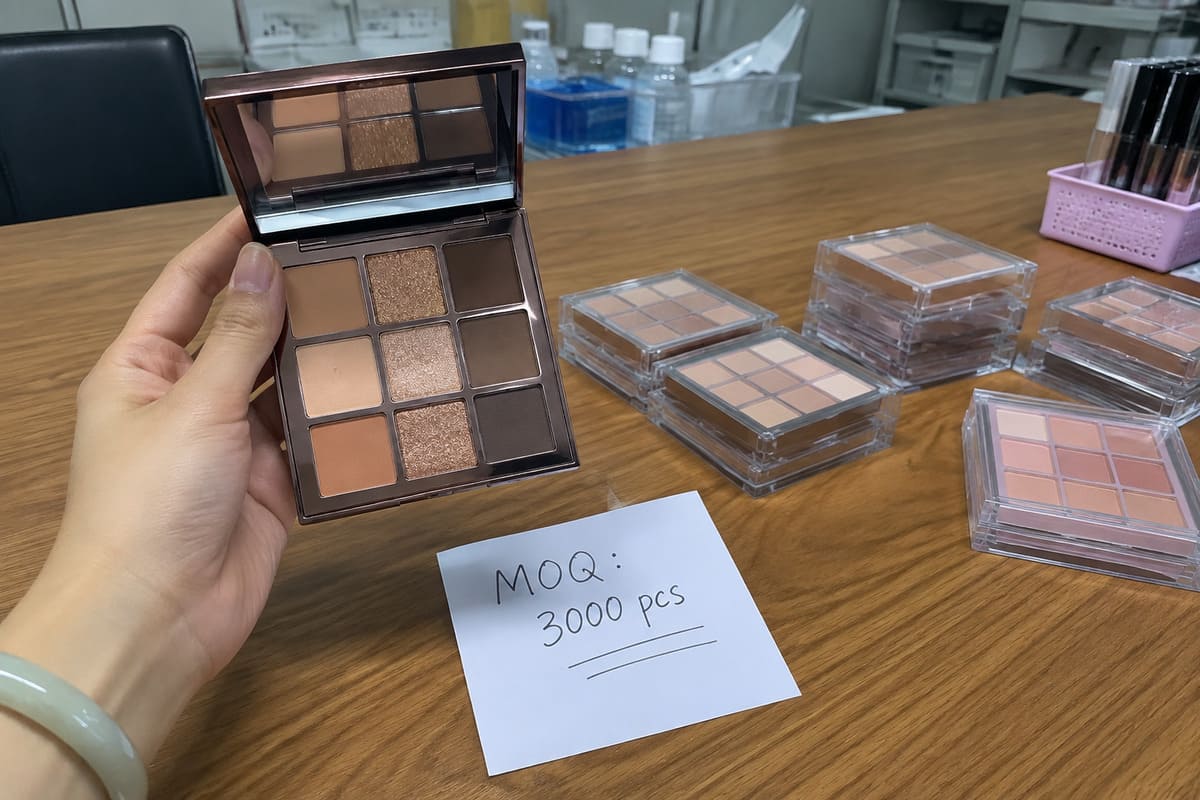
A cosmetic product can have several different minimums. One supplier may advertise a low MOQ for the finished item, while the customized carton or printed component has a much higher production requirement.
I separate the minimums clearly:
| MOQ type | What it covers | Common purchasing issue |
|---|---|---|
| Formula MOQ | Bulk powder or filled units | Custom formulas may require larger batches |
| Component MOQ | Palette, tube, pan, or case | Component suppliers set separate minimums |
| Decoration MOQ | Printing, hot stamping, or coating | Setup cost makes tiny runs expensive |
| Carton MOQ | Folding box or display carton | Excess cartons may remain after production |
| Finished-goods MOQ | Fully assembled product | It may apply only to standard options |
Vertina Beauty supports flexible low-MOQ options for selected standard and popular products, but I would still confirm each project individually. Product format, shade count, packaging, printing, and stock availability can all change the feasible quantity.
I Use Standardization Strategically
Standard packaging does not have to look generic. A founder can often build a stronger identity through:
- Well-designed artwork
- A distinctive shade story
- Custom shade names
- Carefully chosen surface finishes
- A branded outer carton
- Strong product photography
- Consistent visual communication
I generally recommend that a budget-limited founder use existing shades, proven base formulas, or standard components where they fit the concept. The founder can reserve custom molds and complex decoration for a later stage.
When demand becomes more predictable, we can explore more advanced options. These may include custom component colors, exclusive shade development, special-effect pigments, custom structural packaging, and 3D-printed prototypes for mold confirmation.
A 3D-printed prototype can help confirm dimensions, shape, ergonomics, pan layout, and visual proportions before metal tooling begins. However, it does not perfectly reproduce the final material, surface finish, hinge life, or mass-production behavior. The founder should still approve final production samples and relevant component tests.
I Scale When the Evidence Supports It
I look for operational signals rather than excitement alone:
- Customers buy at the intended retail price.
- The product receives consistent positive feedback.
- The sales channel can repeat the result.
- The brand understands its monthly sell-through.
- Returns and complaints remain manageable.
- The founder can fund replenishment and marketing together.
- The supplier can maintain the approved quality standard.
A basic reorder calculation can help:
Reorder point = average weekly sales × total replenishment lead time in weeks + safety stock.
If a makeup brand sells 50 palettes per week and needs eight weeks for replenishment, its base lead-time demand is 400 palettes. The founder must then add safety stock based on sales volatility, shipping risk, and campaign plans.
I would rather receive repeat orders from a healthy customer than drain a founder’s budget through one oversized purchase. Large orders can improve unit economics, but only when demand and cash flow can support them.
What Else Should I Know Before I Create My Own Makeup Brand?
Can I create my own makeup brand with private-label products?
Yes. I can use a proven formula and standard packaging as the foundation for a private-label makeup brand, then customize the logo, artwork, outer carton, or selected shades. This route usually reduces development time and cost, but I still need to verify product quality, labeling, documentation, and target-market requirements.
How many products should my first makeup brand launch include?
I usually recommend one hero product or a tightly connected small collection. A focused launch makes inventory, content, customer feedback, and cash flow easier to manage. I only recommend multiple categories when the founder has reliable demand data, adequate marketing resources, and enough capital for reorders.
How long does OEM makeup development take?
The timeline depends on formula customization, sample rounds, component availability, testing, artwork approval, and production scheduling. A stock-based project can move faster than a custom formula with new packaging. I ask the manufacturer for a milestone schedule rather than relying on one general delivery promise.
Should I choose the cheapest makeup manufacturer?
I would not choose on unit price alone. I would compare the approved sample, MOQ terms, communication, quality controls, component standards, change management, documentation, defect handling, and lead-time reliability. A low quotation can become expensive if the product must be remade, relabeled, airfreighted, discounted, or recalled.
Do I need a custom formula to create my own makeup brand?
No. Many founders can launch with an existing base formula that meets their performance and target-market needs. I recommend a custom formula when it supports a clear product claim or demonstrated customer requirement. Custom development should create commercial value, not simply add cost and delay.
What Should I Do Next to Create My Own Makeup Brand?
To create my own makeup brand safely, I would begin with a defined customer, a realistic sales channel, one accurate hero product, and a budget that covers more than inventory. I would also verify samples, quality requirements, landed costs, and market-specific compliance before production. At Vertina Beauty, we support selected low-MOQ projects and OEM/ODM development for eyeshadow, blush, highlighter, and other color cosmetics. Contact us with your target market, budget, expected quantity, product idea, and sales experience so we can discuss the most practical first-launch route.
"Cosmetics Labeling Guide", https://www.fda.gov/cosmetics/cosmetics-labeling-regulations/cosmetics-labeling-guide. Cosmetic commercialization entails linked product, packaging, safety, labeling, and market-placement obligations rather than formulation alone, as reflected in major cosmetics regulatory frameworks. Evidence role: general_support; source type: government. Supports: Cosmetic products placed on the market are subject to interconnected requirements concerning safety assessment, labeling, responsible parties, manufacturing controls, and market placement.. Scope note: Specific obligations vary by jurisdiction and do not prescribe a universal business-launch process. ↩
"Makeup kit - Source Cosmetic Manufacturer", https://vertinabeauty.com/makeupkit/. Product-development research generally finds that reuse of established designs or components can reduce development work and lead time relative to wholly new designs. Evidence role: mechanism; source type: research. Supports: Manufacturing and product-development literature explains that reuse of established designs and components can avoid some design, validation, and tooling activities.. Scope note: The magnitude of savings depends on the formula, component availability, required testing, and market-specific compliance work. ↩
"Minimum Order Of Quantity", https://sandbox.dss.ucdavis.edu/minimum-order-of-quantity. Inventory-management literature recognizes that order quantity affects capital tied up in stock and the risk of carrying excess inventory when demand is uncertain. Evidence role: mechanism; source type: education. Supports: Inventory-management principles show that larger purchases increase capital committed to stock and can increase carrying and obsolescence exposure when demand is uncertain.. Scope note: A lower MOQ can raise unit costs, so it does not by itself establish the economically optimal order size. ↩
"What Is the Highest Rated Eyeshadow Palette? Market Data ...", https://vertinabeauty.com/what-is-the-highest-rated-eyeshadow-palette-market-data-for-b2b-buyers/. Research on entrepreneurial uncertainty emphasizes customer validation and product-market fit because products developed without evidence of demand face elevated commercialization risk. Evidence role: general_support; source type: research. Supports: Entrepreneurship and lean-startup research emphasizes customer validation and product-market fit as important under conditions of uncertain demand.. Scope note: This literature supports the general risk mechanism but does not establish that it is the predominant cause of failure for all new makeup brands. ↩
"Building the supply chain of the future", https://www.nist.gov/document/buildingthesupplychainpdf. Operations-management research associates broader product assortments with increased forecasting, inventory-control, and replenishment complexity. Evidence role: mechanism; source type: paper. Supports: Operations research examines how expanded assortments and SKU counts increase forecasting, inventory, replenishment, and supply-chain complexity.. Scope note: The operational effect of each additional SKU depends on demand correlation, common components, production flexibility, and channel design. ↩
"GMP Guidelines/Inspection Checklist for Cosmetics", https://www.fda.gov/cosmetics/cosmetics-guidance-documents/good-manufacturing-practice-gmp-guidelinesinspection-checklist-cosmetics. Cosmetics good-manufacturing-practice guidance calls for documented production and quality-control procedures because approval of a development sample alone does not control variation in commercial batches. Evidence role: mechanism; source type: institution. Supports: Cosmetics good manufacturing practice frameworks require documented production controls, quality checks, traceability, and procedures intended to maintain batch consistency.. Scope note: Conformity with a GMP framework reduces but cannot eliminate all production variation or defects. ↩
"Iridescence", https://en.wikipedia.org/wiki/Iridescence. Optics literature describes interference and goniochromatic pigments as producing appearance changes that depend on illumination and viewing angle. Evidence role: mechanism; source type: paper. Supports: Optics research describes goniochromatic and interference pigments as materials whose perceived color or appearance changes with illumination and viewing geometry.. Scope note: The observed effect in a finished eyeshadow also depends on particle size, formulation, surface texture, substrate, and application method. ↩