When B2B buyers search for the best eyeshadow brand, what they truly need is not a consumer ranking list, but a benchmarking analysis framework that helps them distinguish between marketing-driven brands and product-driven brands. I use that framework to help buyers identify what they can realistically reproduce, test, and improve through sourcing.
For B2B sourcing, the best eyeshadow brand is not automatically the most famous one. I define a useful benchmark as a brand with products that sell consistently, clear and repeatable product strengths, a price point that fits the target channel, and performance that a supplier can help reproduce. I also study customer complaints to find opportunities for a better version.
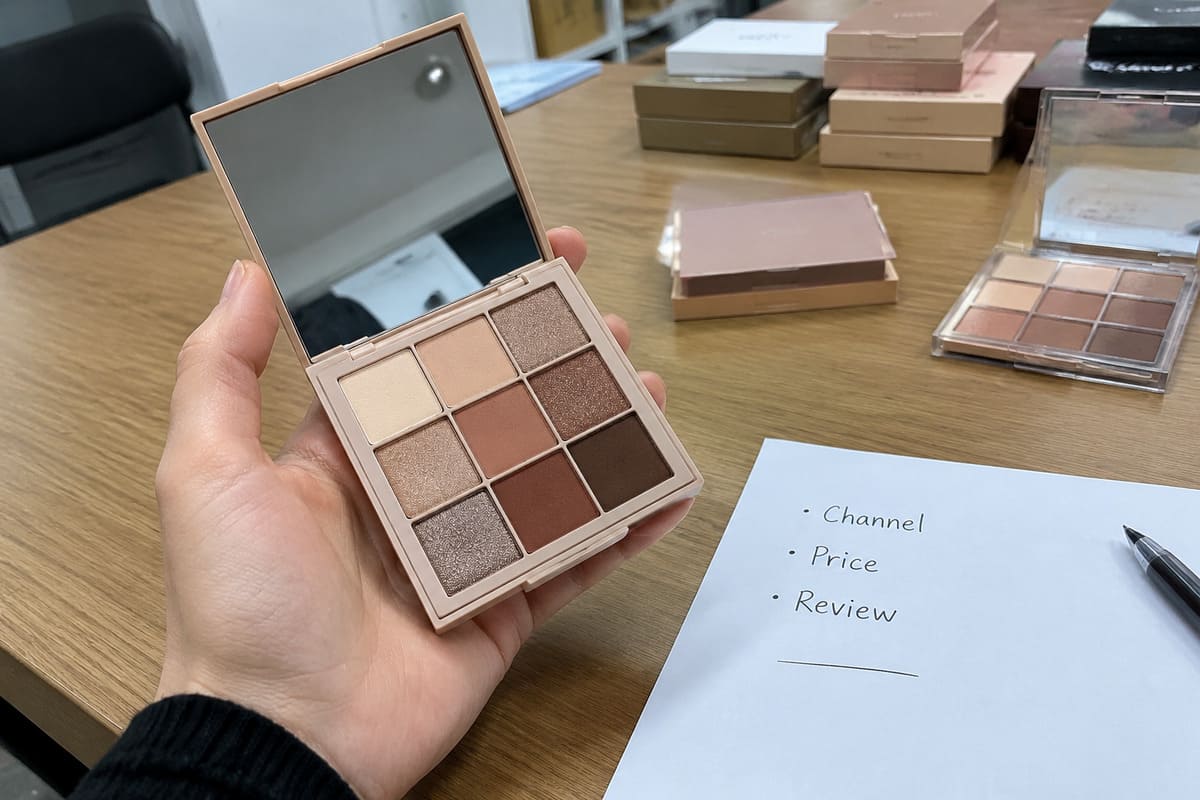
A strong benchmark helps buyers make practical decisions about formula, shades, packaging, pricing, and order size. I start with evidence of demand and product performance, then ask whether the brand’s success can translate to a new market, a different budget, or a smaller launch.
What Does “Best Eyeshadow Brand” Really Mean for B2B Sourcing?
A buyer can admire a famous brand and still choose the wrong product to benchmark. The risk is that online visibility can look like proof of demand, even when the product’s success depends on marketing resources a new brand cannot match. I separate brand recognition from the supply chain evidence that buyers can act on.
For B2B sourcing, I define the best eyeshadow brand as a useful reference point when it demonstrates consistent demand in the buyer’s target market and its product strengths can be translated into realistic specifications. I assess channel performance, shade relevance, formula quality, packaging, price, and recurring customer feedback before recommending a benchmark.
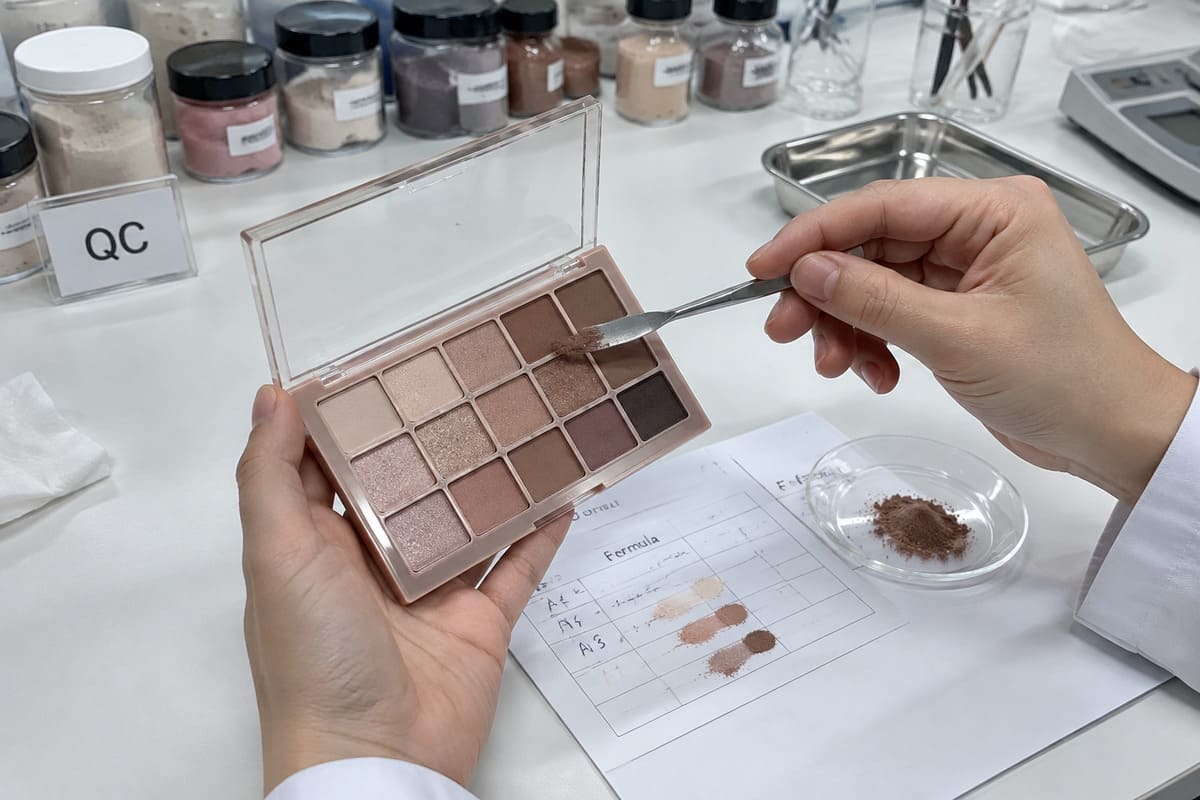
I separate brand popularity from benchmark value
When I evaluate a brand with a client, I ask a different question from “Which brand is trending?” I ask, “Which part of this brand’s success can we reproduce at a viable cost?” That distinction keeps the sourcing conversation focused on controllable decisions instead of admiration.
I review evidence across several areas:
| Evaluation area | What I look for | Why it matters to sourcing |
|---|---|---|
| Sales channel | Stable presence in local retail, supermarkets, or repeat wholesale orders | It can show demand beyond a short online campaign |
| Shade range | Everyday shades, trend shades, or a clear balance of both | It affects stock risk and the number of SKUs to launch |
| Product performance | Repeat praise or complaints about texture, fallout, wear, or payoff | It points to formula requirements and improvement areas |
| Packaging | Practicality, durability, shelf visibility, and cost | It affects freight, retail presentation, and unit economics |
| Price position | Retail price and the margin expected by each channel | It helps establish a workable target cost |
| Customer feedback | Patterns across multiple reviews and platforms | It can reveal a second-generation product opportunity |
I do not treat any single source as decisive. A high review score may come from a small sample, while a strong social media presence may reflect promotion rather than repeat purchases1. I look for patterns across channels and ask the buyer to compare those patterns with what they already know about their customers.
I also distinguish between a product reference and a business model reference. A product reference might be an eyeshadow’s color story, finish, or package format. A business model reference might involve large advertising budgets, celebrity partnerships, or a global retail footprint. A small brand may be able to develop a similar shade story, but it may not be able to reproduce a multinational company’s media spend.
I use the same caution with market statistics. Figures such as a specific annual growth rate or a claimed percentage of products requiring reformulation need a traceable source, a clear date, and a defined market. I do not use them as settled facts without that evidence. For market access questions, I recommend that buyers verify current requirements for their destination country with qualified regulatory professionals and review any relevant supplier documents directly.
What Supply Chain Capabilities Define the Best Eyeshadow Brand?
A consumer may describe an eyeshadow as “smooth,” “highly pigmented,” or “long-lasting.” Those phrases are useful starting points, but they are not purchasing specifications. I translate customer language into formula, raw material, process, quality, and packaging questions that a buyer can discuss with a supplier.
The best eyeshadow brand for a sourcing benchmark links consumer praise to repeatable production capabilities. I examine how ingredient selection, particle size, binder balance, pigment load, formula stability, and batch controls may contribute to the product experience, then confirm the specific requirements through samples and supplier documentation.
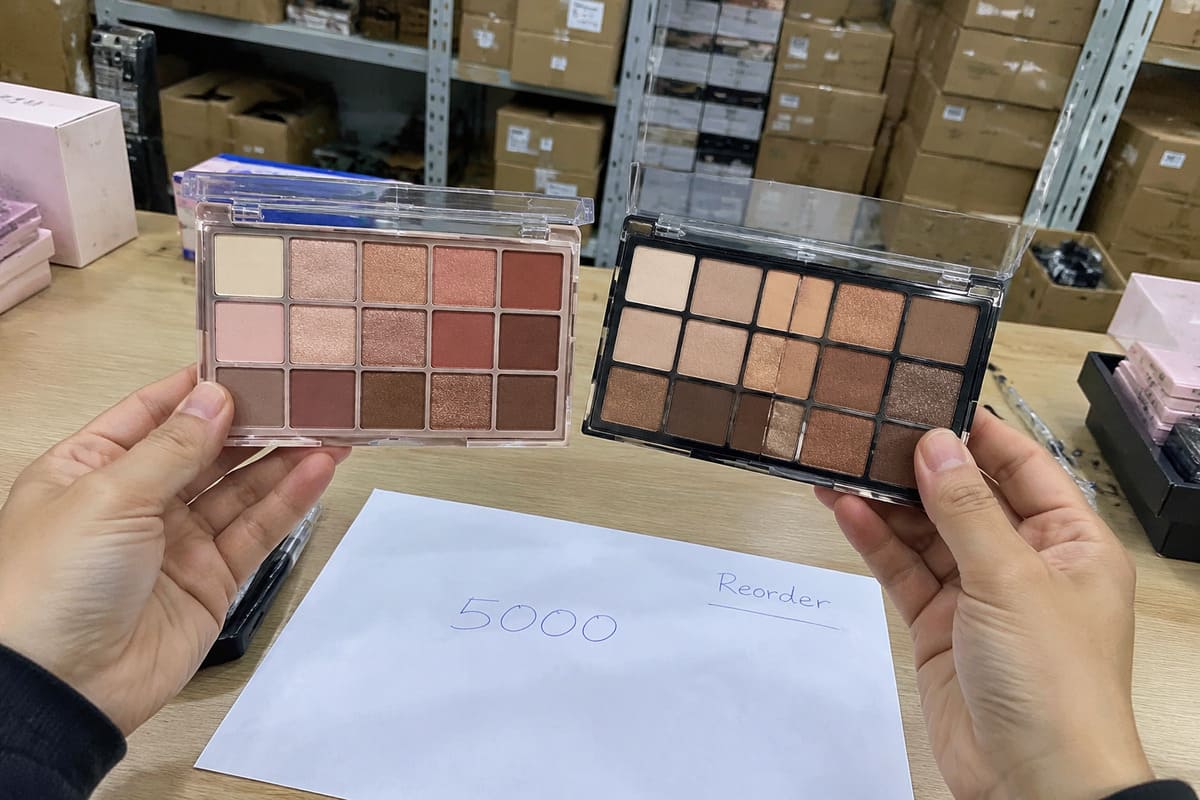
I translate product reviews into sourcing questions
A review that says “the powder feels silky” does not tell a buyer which material or process created that feel. It does tell me what to investigate. I use customer feedback to form hypotheses, then I ask the manufacturer to evaluate those hypotheses through samples, technical discussion, and agreed specifications.
| Consumer feedback | Supply chain factors I investigate | Buyer follow-up |
|---|---|---|
| “Fine, smooth texture” | Mica selection, particle size, surface treatment, and processing | Does the sample match the target feel at the proposed cost? |
| “No fallout” | Particle size, binder system, compression, and application conditions2 | Does fallout remain acceptable across shades and production samples? |
| “Strong color payoff” | Pigment load, pigment dispersion, shade formulation, and stability3 | Does the shade meet the brief without compromising wear or consistency? |
| “Lasts all day” | Base formula, adhesion, application conditions, and batch consistency | What wear test or evaluation method supports the claim? |
| “Looks different in every light” | Special-effect pigment selection, particle structure, and shade base | Is the effect visible under agreed lighting and on the intended market’s preferred skin tones? |
I am careful not to promise that one ingredient or process will guarantee a consumer outcome. Mica sources can vary in cost and performance4, and formula adjustments can change both the feel and the production economics. A buyer should evaluate the complete sample and specification rather than rely on one ingredient name as shorthand for quality.
The same discipline applies to vegan or “clean” positioning. Some brands choose to replace talc with cornstarch or other alternatives to support a product concept. Those choices may require additional formulation work and can affect cost, texture, and performance. I help buyers compare the value of the positioning against the intended customer’s priorities, but I do not treat terms such as “clean” or “safe”5 as substitutes for a precise ingredient specification and appropriate substantiation.
I evaluate repeatability, not just a single sample
A sample can be promising and still leave important questions unanswered. A sourcing team should agree on what it will evaluate before moving toward production: shade identity, pressed powder integrity, pan fit, package function, appearance, and any relevant test criteria. The team should also clarify how it will review pre-production and production samples.
I recommend that buyers record:
- The approved shade references and any acceptable variation.
- The packaging materials, dimensions, decoration, and closure requirements.
- The target order quantity and the supplier’s applicable MOQ.
- The sample approval process and the required production checks.
- Any claims, testing, or market documents that the buyer needs to verify.
A buyer should not assume that a supplier holds a certification or that a document automatically satisfies the destination market. I encourage clients to request relevant documents, verify their scope and validity, and obtain qualified regulatory advice for application-specific decisions.
How Did We Help a Client Choose the Right Brand to Benchmark?
A client can arrive with a clear favorite and still benefit from a second look at the evidence. In one Southeast Asian project, the client first wanted to copy a highly visible influencer brand. I helped him compare that idea with brands that had a more established presence in local physical retail.
We helped a Southeast Asian client shift from copying an influencer-led brand to benchmarking a brand with stable local offline sales. We examined practical shades, packaging fit, price positioning, and recurring online complaints. The client launched an order of 5,000 units, sold through the stock quickly, and placed a reorder.
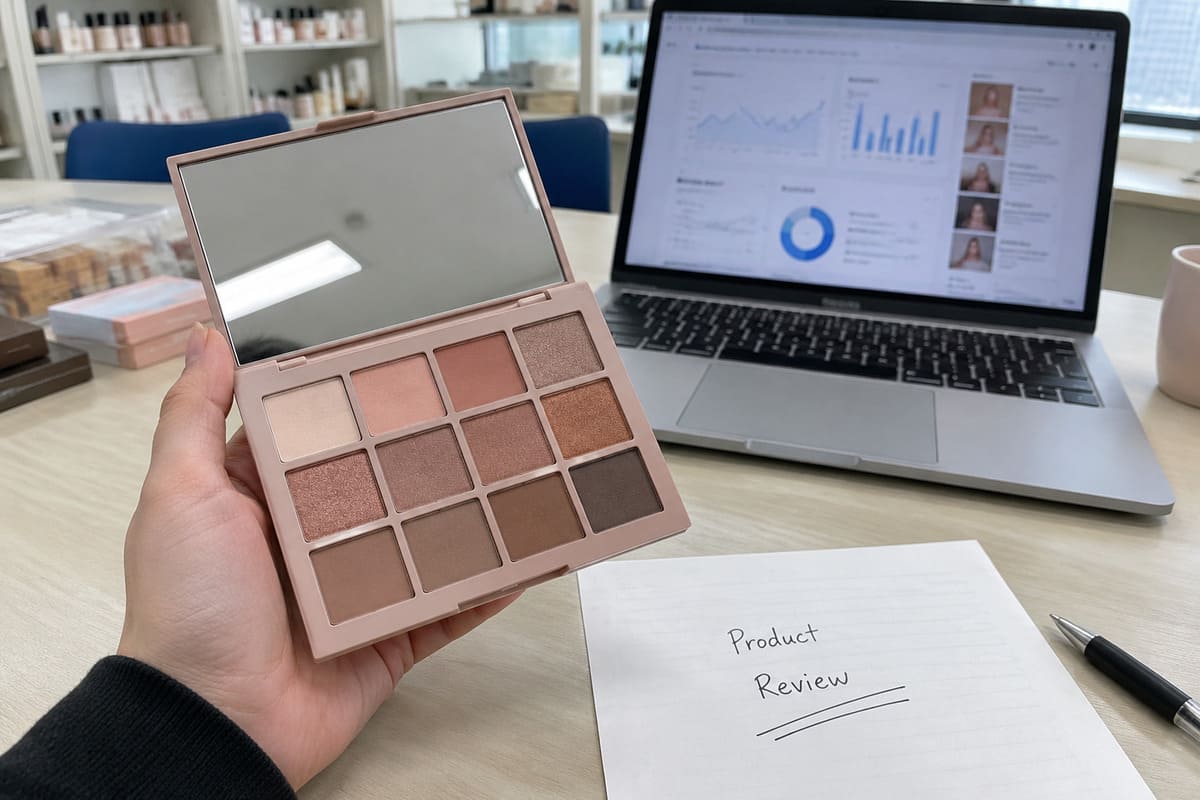
I started with the client’s sales reality
The client’s initial choice had strong online visibility. That visibility made the brand easy to recognize, but it did not answer the most important sourcing question: could the client reproduce the conditions behind its sales? An influencer campaign can attract attention, but a new importer or emerging brand may not have comparable access to creators, advertising budgets, or audience reach.
I suggested that we also examine brands selling through supermarkets and local retail stores. Offline presence was not proof of success on its own6, but it gave us another signal to investigate. We looked at the product through the client’s actual business model: which shades might suit local buying habits, whether the packaging made sense for the intended shelf and price, and whether the product could support the client’s margin expectations.
I also reviewed recurring negative feedback across online channels. I did not treat every complaint as a defect. Instead, I looked for repeated themes that could guide a better brief. A complaint about shade usefulness, wear, or packaging can identify a product gap, but the buyer needs to confirm that the issue matters to their own customers.
We used a practical comparison, not a copy list
The benchmark exercise focused on three kinds of evidence:
- Product features worth referencing: We considered the shade practicality, package fit, and price positioning that appeared relevant to the client’s channel.
- Potential weaknesses to improve: We reviewed repeated negative comments and converted useful patterns into questions for the next product brief.
- Launch risks: We considered the size of the first order and how much inventory the client could support with its own sales channels.
The client ultimately placed an order for 5,000 units. The products sold out quickly, and the client reordered. I do not interpret one project as a guarantee that the same strategy will work in another country or channel. I see it as an example of why a benchmark should match the buyer’s own market conditions.
For me, the important lesson was not “offline always beats online.” It was that local sell-through evidence can be more useful than online rankings7 when the buyer plans to sell through local retail or distribution. I recommend that each buyer compare evidence from the channels it intends to use and test the assumptions with a controlled launch.
Why Do Marketing-Driven Brands Fail as Benchmark Targets?
A brand with strong advertising can create the appearance of product-led momentum. Buyers may try to reproduce its visual identity or product assortment without realizing that its reach depends on paid campaigns, influencer relationships, or retail access. I help buyers separate what they can source from what they cannot reasonably copy.
Marketing-driven brands fail as benchmark targets when a buyer mistakes visibility for a repeatable product advantage. A new brand may be able to reference a shade story or package concept, but it usually cannot reproduce a major company’s media spend, creator network, or distribution. I therefore assess product performance and channel fit separately from promotional reach.
I separate controllable product factors from external advantages
A useful benchmark should tell a buyer what to develop, what to source, and what to test. It should not encourage a buyer to spend beyond its capacity to imitate a competitor’s advertising strategy. I use the following distinction during early sourcing conversations:
| Brand success driver | Buyer’s ability to reproduce it | How I assess it |
|---|---|---|
| Shade selection and finish | Often possible through custom shade development | Define a shade brief and approve samples |
| Formula feel and payoff | Possible to develop, subject to materials and testing | Compare samples against agreed performance criteria |
| Package format | Often possible, depending on design, cost, and MOQ | Review fit, function, decoration, and landed cost |
| Influencer reach | Difficult to reproduce without relationships and budget | Treat as a marketing investment, not a formula specification |
| Large retail footprint | Depends on buyer relationships and distribution access | Validate with channel partners before forecasting volume |
| Brand recognition | Builds over time and varies by market | Do not treat awareness as guaranteed launch demand |
I have seen buyers focus on copying the visible part of a brand while overlooking the less visible reasons it succeeds. If a brand sells because it has broad retail distribution, then duplicating its colors will not give a new brand the same shelf access. If its sales depend on a creator campaign, a comparable product alone may not generate equivalent traffic.
I also advise clients to study negative reviews with care. A review pattern may identify a genuine weakness, but it may also reflect a mismatch between the product and a consumer’s expectations. I look for repeated, specific complaints across more than one channel and then ask whether the buyer’s target audience shares the same concern.
I look for evidence of product-market fit
I consider a product-led benchmark more useful when the product has a clear purpose, the target customer understands its value, and the price fits the sales channel. The product does not need to be technically complex. A focused palette with practical colors and dependable packaging can be a better reference than a viral release with a broad assortment that a new buyer cannot stock efficiently.
Before choosing a benchmark, I ask the buyer:
- Which channel will sell the product first?
- Which customer segment will make the first purchase?
- Which product attribute will distinguish the offer?
- What evidence supports the expected sales volume?
- What is the maximum inventory risk the buyer can carry?
These questions do not remove risk. They make the risk visible before the buyer commits to a large order. I would rather help a client identify a narrow, testable product opportunity than encourage them to compete directly with a large brand on the same marketing track.
How Should Buyers Compare Budget, MOQ, and Scale-Up for the Best Eyeshadow Brand?
A first order has to balance product ambition with cash flow and inventory risk. A custom concept may need more development work than a standard product, while a lower starting quantity may be available for selected products but not every formula or package. I help buyers connect the benchmark choice to a launch plan they can support.
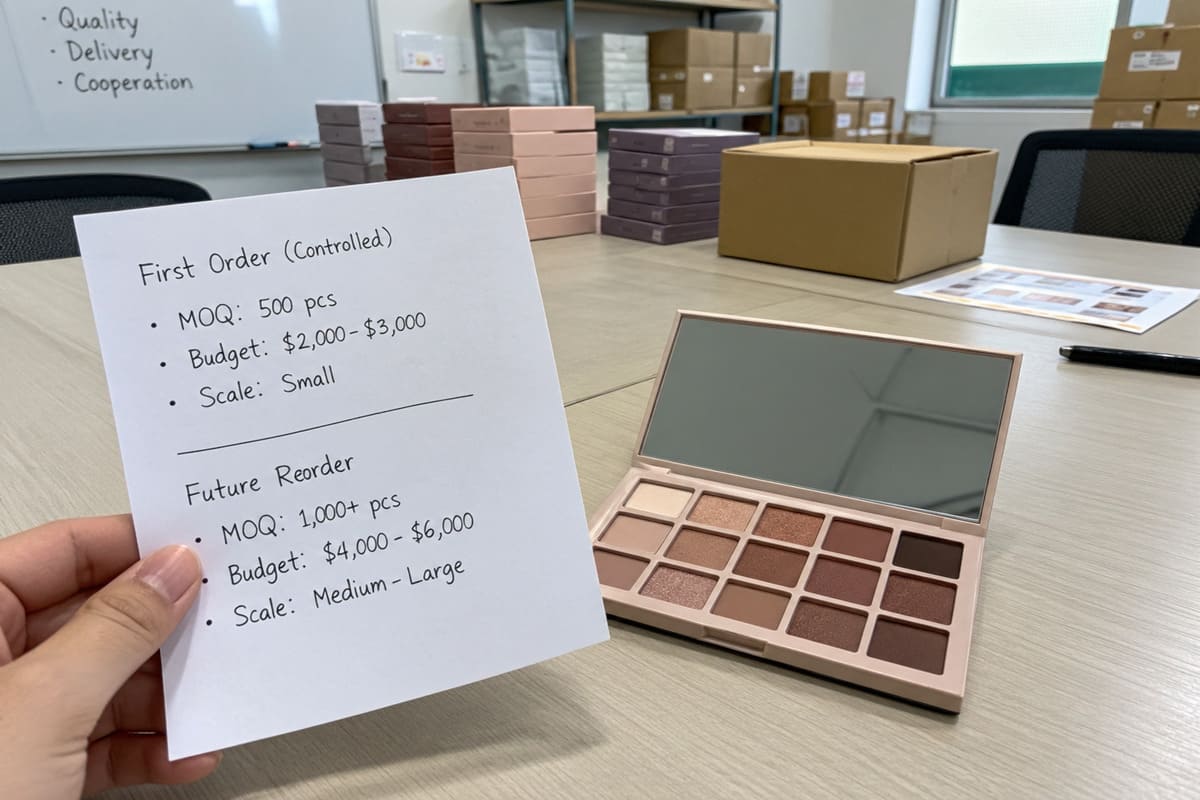
I compare budget, MOQ, and scale-up by matching the product specification to the buyer’s sales channel and test capacity. Buyers should confirm MOQ by SKU, formula, packaging, and customization level; start with a controlled order where possible; collect market feedback; and scale only after sales data supports replenishment.
I define the order around the test, not an abstract minimum
There is no responsible single MOQ answer without knowing the product and customization scope. A standard product, a custom shade, and a fully customized package can have different production requirements. At Vertina Beauty, we offer flexible low MOQ for selected standard and popular products, but I confirm the applicable quantity against the specific SKUs and project details.
I recommend that buyers request a written quotation that separates the main cost and order variables:
| Variable | What I ask the buyer and supplier to clarify |
|---|---|
| Product type | Is the buyer sourcing an existing eyeshadow or developing a custom formula? |
| Shade count | How many shades will be produced, and does each shade have a separate MOQ? |
| Packaging | Is the buyer selecting existing packaging or requesting custom components? |
| Decoration | What printing, color, finish, or logo requirements affect cost and lead time? |
| Sample work | What development or approval steps are needed before production? |
| Order volume | What is the MOQ for each SKU, and what changes at larger quantities? |
| Delivery plan | Are any selected products available from stock, or does the project need production time? |
I do not encourage buyers to treat a low MOQ as a reason to skip product validation. A small first order is most useful when the buyer already knows how it will sell the product and collect feedback. A buyer should identify the first sales channel, target customer, price, and success measures before placing the order.
I scale after real customer feedback
A controlled launch can help an emerging brand learn8 which part of its product brief is working. The buyer may hear that the shade range needs more everyday options, the texture does not last as expected, or the package is inconvenient to use. Those comments are more useful than general praise because they can inform a specific product adjustment.
I encourage buyers to capture feedback in a simple format:
- Record which shades sell and which remain in stock.
- Collect repeated customer comments rather than reacting to a single opinion.
- Compare sell-through by channel and price point.
- Separate product complaints from delivery or retail presentation issues.
- Discuss targeted changes with the supplier before the reorder.
I also ask buyers to account for the total project budget, not only the factory unit price. Samples, package customization, freight, import costs, local compliance work, and marketing can affect the amount of capital required9. Those costs vary by product and destination, so I recommend that the buyer verify them with the relevant service providers.
The goal is not to make every first order as small as possible. The goal is to limit avoidable exposure while collecting enough information to make the next decision. If the first product performs well, the buyer can discuss a larger order, broader shade range, or upgraded package with a clearer basis for investment.
Frequently Asked Questions
Is the most popular eyeshadow brand the best benchmark for a new brand?
Not necessarily. I treat popularity as one signal, not proof that the product can be reproduced successfully. I also assess the brand’s channel, shade choices, customer feedback, pricing, and reliance on marketing. A less visible brand with stable local retail sales may offer more useful sourcing lessons.
How can I tell whether an eyeshadow brand is product-driven?
I look for evidence that customers value repeatable product attributes, such as usable shades, texture, color payoff, wear, and practical packaging. I compare feedback across channels and check whether those strengths fit the buyer’s target market. I do not infer product quality from social media visibility alone.
What information should I provide when requesting an eyeshadow OEM or ODM quote?
I recommend sharing the target market, product type, shade direction, expected order quantity, package preference, sales channel, and any required documentation. The supplier can then clarify whether an existing product or custom development is a better fit and confirm the MOQ for the specific project.
Can I start with a low MOQ and expand the order later?
That may be possible for selected standard products, but the applicable MOQ depends on the product, shades, packaging, and customization. I advise buyers to confirm the terms for each SKU before planning a launch. Buyers should also use the first order to gather feedback that can guide a well-supported reorder.
Conclusion
I define the best eyeshadow brand for B2B sourcing as a benchmark that reveals repeatable product strengths, credible market demand, and realistic opportunities for improvement. I compare channel evidence, formula requirements, customer complaints, budget, and MOQ before recommending a direction. Emerging brands do not need to copy the largest competitor; they need a product and launch plan that fit their own customers. Share your target market, concept, and expected first-order quantity with Vertina Beauty to discuss low-MOQ options and custom eyeshadow OEM/ODM development.
"Sustainable customer retention through social media ... - PMC", https://pmc.ncbi.nlm.nih.gov/articles/PMC8896689/. Marketing research distinguishes social-media exposure and engagement from subsequent purchasing and retention, indicating that promotional visibility alone is not a direct measure of repeat buying. Evidence role: mechanism; source type: paper. Supports: Consumer and marketing research can support the distinction between promotional engagement and behavioral indicators such as retention or repurchase.. Scope note: Some campaigns do produce measurable sales and repeat purchases, so the claim is a caution about inference rather than a universal rule. ↩
"The effect of excipient particle size on the reduction of ... - PMC", https://pmc.ncbi.nlm.nih.gov/articles/PMC9043665/. Studies of particulate compaction and pressed cosmetic powders indicate that particle characteristics, binder composition, and compaction conditions influence cohesion, friability, and the likelihood of powder fallout during use. Evidence role: mechanism; source type: paper. Supports: Powder technology and cosmetic formulation research can support the role of particle size, binders, compaction, and handling conditions in cohesion and fallout.. Scope note: The effect is formulation-specific and does not allow a citation to predict fallout for a particular eyeshadow without testing. ↩
"What Eyeshadows Do Professional Makeup Artists Use? A Pro ...", https://vertinabeauty.com/what-eyeshadows-do-professional-makeup-artists-use-a-pro-level-supply-guide/. Pigment-formulation studies indicate that concentration, dispersion quality, particle characteristics, and the surrounding matrix influence color strength and shade uniformity. Evidence role: mechanism; source type: paper. Supports: Pigment science can support the relationship between pigment concentration, dispersion, formulation composition, and observed color strength or uniformity.. Scope note: These mechanisms do not establish a specific performance threshold or guarantee a consumer-perceived level of payoff. ↩
"Correlation of optical properties with particle size, ...", https://www.pnnl.gov/publications/correlation-optical-properties-particle-size-morphology-and-polymorph-fine-and-nano. Cosmetic materials research shows that mica particle size, morphology, surface treatment, and grade can influence optical and sensory properties in powder formulations. Evidence role: mechanism; source type: paper. Supports: Materials research can support the relationship between mica particle characteristics, surface treatment, optical behavior, tactile properties, and formulation cost.. Scope note: The source may explain material behavior without establishing the commercial cost difference among particular suppliers or grades. ↩
"Modernization of Cosmetics Regulation Act of 2022 (MoCRA)", https://www.fda.gov/cosmetics/cosmetics-laws-regulations/modernization-cosmetics-regulation-act-2022-mocra. Regulatory guidance generally requires cosmetic claims to be supported and not misleading, while terms such as “clean” may lack a single harmonized legal definition and therefore require context-specific substantiation. Evidence role: definition; source type: government. Supports: Government guidance can support the need for cosmetic claims to be truthful, appropriately substantiated, and assessed under the applicable jurisdiction's rules.. Scope note: Requirements and legal meanings differ across jurisdictions, and the absence of a universal definition does not by itself prohibit every use of the term. ↩
"BRAND PLACEMENT AND CONSUMER CHOICE - PMC - NIH", https://pmc.ncbi.nlm.nih.gov/articles/PMC2741065/. Retail research distinguishes distribution or shelf availability from sell-through, indicating that physical presence can provide market access evidence without independently proving consumer demand or profitability. Evidence role: general_support; source type: paper. Supports: Retail and marketing research can support the distinction between product availability, distribution breadth, and actual sell-through.. Scope note: The strength of the signal depends on store type, geographic coverage, inventory records, and the quality of available sales data. ↩
"How Online Reviews Influence Sales", https://spiegel.medill.northwestern.edu/how-online-reviews-influence-sales/. Demand-forecasting research supports using sales and sell-through data from a comparable market or channel as a more directly relevant indicator than generalized popularity rankings. Evidence role: general_support; source type: paper. Supports: Demand-forecasting research can support the relevance of market- and channel-specific sales data when forecasting performance in a comparable channel.. Scope note: Local sell-through may not transfer to a different market, price, retailer, or distribution system, and rankings can contain useful supplementary information. ↩
"Navigating new product development: Uncovering factors and ...", https://pmc.ncbi.nlm.nih.gov/articles/PMC10788447/. Research on market testing and staged commercialization indicates that limited launches can generate evidence about customer response and execution risks before larger-scale investment. Evidence role: mechanism; source type: paper. Supports: New-product and market-testing research can support the use of limited launches to gather behavioral and customer feedback before committing to broader distribution.. Scope note: Results from a controlled or limited launch may be affected by novelty, limited awareness, and channel-specific conditions and therefore may not predict full-market performance. ↩
"Importing Cosmetics", https://www.fda.gov/industry/importing-fda-regulated-products/importing-cosmetics. Import and product-compliance guidance recognizes that the cost of placing goods on a market can include transport, duties, customs procedures, documentation, testing, and regulatory compliance in addition to the supplier's unit price. Evidence role: general_support; source type: government. Supports: Trade and regulatory guidance can support the inclusion of transport, customs, documentation, testing, and compliance expenses in an importer's total landed or launch cost.. Scope note: The actual amount depends on the product classification, destination, shipment terms, regulatory regime, and commercial arrangements. ↩