Searching for a clean makeup manufacturer feels easy until you read the fine print. Every factory page lists the same promises: no parabens, no sulfates, no phthalates. The claims look identical, so you pick one. Then a retailer asks for documentation, your supplier goes quiet, and your launch window closes while you scramble for proof that never existed.
A clean makeup manufacturer is a factory that can prove its "clean" claim with region-specific ingredient screening, retailer certification readiness, and batch-level documentation. "Free-from" marketing is a label. Verifiable clean is a document trail that survives customs checks, retail audits, and regulatory review. The difference is paperwork your factory can produce on demand.
I have watched founders learn this difference the hard way. The gap between "we make clean products" and "here is the evidence" is where launches die. Below, I break down what the claim really means, why no single definition exists, and how to sequence your launch so you never over-invest before you know which standard applies.
What Does "Clean Makeup Manufacturer" Really Mean for a Brand Founder?
You found a factory with a beautiful "clean beauty" page. It feels safe. Then you realize you cannot tell whether that page is a real screening system or a marketing graphic, and your retail buyer will ask for the one thing the page does not show: proof.
For a brand founder, a true clean makeup manufacturer is one that screens every formula against your target market and retailer restricted list, harmonizes the INCI, and assembles supporting documents during sampling. It treats "clean" as a supply-chain audit tied to your specific market, not a universal marketing badge applied to all products.
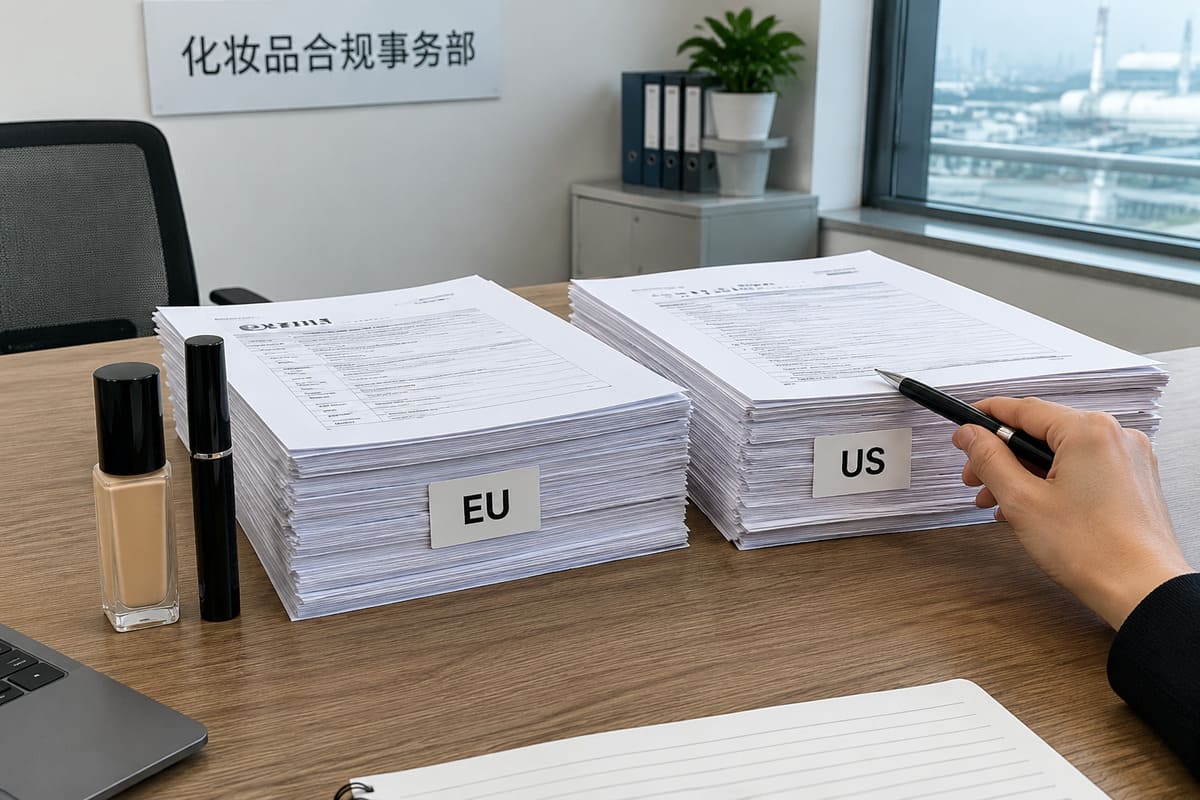
Here is the reframe I give every founder. The buyer is not asking, "Who can make a formula without a few ingredients?" Almost any factory can drop parabens. The real question is, "Which factory can hand me a document package so my clean claim holds up when a retailer or regulator asks?"
I will share a short story I return to often. A US founder came to me after a painful season. He had chosen a factory that marketed "clean" formulas. Before his retail launch, the retailer requested documentation aligned with a specific clean standard. The factory had a generic free-from list, but no systematic screening against the retailer's restricted list and no toxicology support. The retailer gave him 30 days. The factory could not produce the paperwork. He had to reformulate, retest, and resubmit. That took 12 weeks and cost $8,000 in extra testing. His seasonal window had already closed by launch.
What a real clean makeup manufacturer provides:
- Market-specific screening, not a one-size list
- INCI harmonization and allergen review for your sales regions
- Documentation built during sampling, so it exists before a buyer asks
- Honest scope limits, so you know what the factory does and does not cover
A factory that promises every product is "clean" without asking where you sell is not being helpful. It is skipping the question that decides whether your claim is legal.
The "Clean" Definition Trap: Why EU, US, and Retailer Lists Don't Match
You assume "clean" means the same thing everywhere. It does not. A formula that passes in one market can be non-compliant in another, and you may not discover the mismatch until a shipment is held or a listing is rejected.
"Clean" has no universal legal definition. The EU restricts over 1,600 cosmetic ingredients1, the US federal framework is less restrictive2, and retailers like Credo, Sephora, and Ulta each maintain their own restricted lists3. A formula can be fully "clean" for one market and fail another. Any factory offering a single universal clean list is waving a red flag.
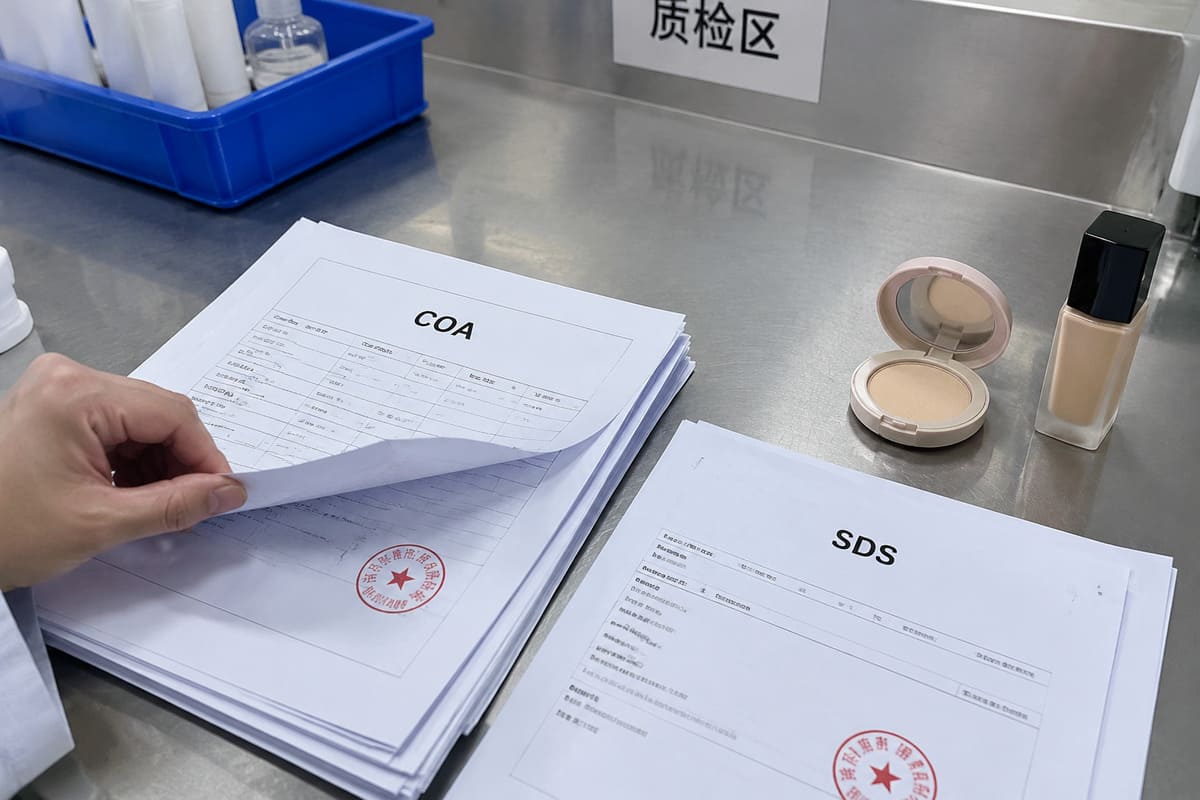
This is the trap that catches new brands. "Clean" sounds like a fixed line. In practice, it is several moving lines that disagree with each other. A responsible clean makeup manufacturer screens against the standard that governs your market, not a generic checklist pulled from a competitor's website.
Look at how the standards diverge:
| Standard | Scope | Approximate restrictions | Who sets it |
|---|---|---|---|
| EU Cosmetics Regulation | Legal, market access | 1,600+ banned/restricted ingredients | EU regulator |
| US federal framework | Legal, market access | Shorter prohibited/restricted list | US regulator |
| Retailer clean lists (Credo, Sephora, Ulta) | Private, shelf access | Each retailer's own list | Individual retailer |
A few consequences follow directly from this table:
- A "clean" formula is market-bound. Passing a retailer list does not mean passing EU legal requirements, and vice versa.
- Retailer lists are stricter than law in some areas. A product can be legal yet rejected by a retailer's clean program.
- "Universal clean" is marketing, not compliance. No single list satisfies every market and every retailer at once.
I treat certifications and restricted-list conformance as documents you must verify against your actual sales channel. For application-specific decisions, especially EU market entry, I recommend a qualified regulatory or toxicology professional review the formula. The factory supports that review with data. It does not replace it.
My practical rule: confirm the target market and the specific retailer first. Then screen. Screening before you know the standard is guessing, and guessing is what cost that US founder his season.
The Three-Layer Audit: What a Verifiable Clean Supply Chain Actually Requires?
You want one clean certificate that settles everything. There isn't one. Clean readiness sits across three separate layers, and a factory can pass one while failing the other two, which is exactly where founders get surprised.
A verifiable clean supply chain requires three layers: ingredient compliance by market, retailer certification readiness, and a document evidence chain. A clean makeup manufacturer must pass all three. Screening alone is not enough without GMP-ready certification participation and traceable records like COAs, stability reports, and batch documentation.
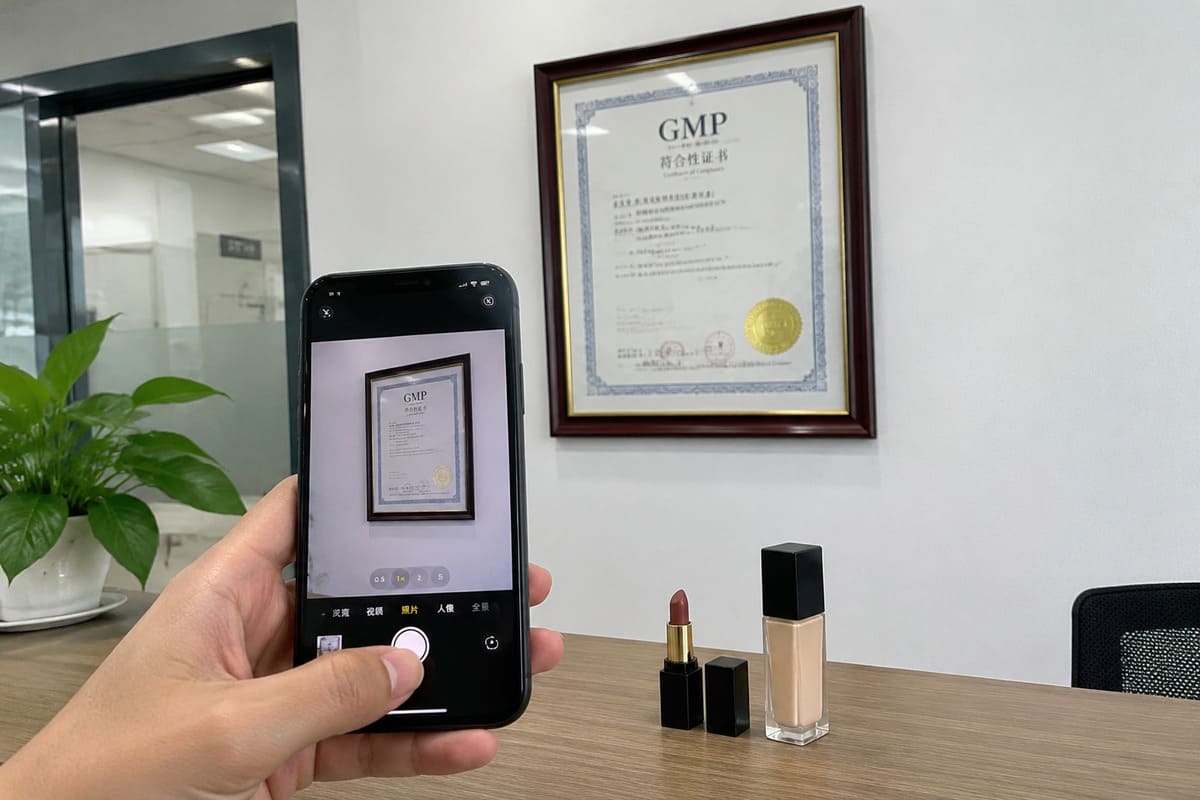
Let me break down each layer, because this is the framework I use to evaluate any factory, including an honest assessment of my own.
Layer 1: Ingredient Compliance by Market
The factory must screen against your target market's restrictions: the EU's 1,600+ banned ingredients, US federal requirements, and the retailer-specific lists that apply to your shelf. If a factory offers one "universal clean list" and never asks where you sell, that is a warning sign. Compliance is regional. The screening must be regional too.
Layer 2: Retailer Certification Readiness
Retailers are pushing verification upstream to the factory.4 Programs like Credo Qualified require GMP or ISO 22716 systems, facility registration, internal review, and fees.5 A factory either participates in these programs or provides equivalent documentation. Many white-label factories simply will not make this operational investment, which is why their "clean" page stops at free-from claims.
Layer 3: Document Evidence Chain
This is the layer that fails most often. A verifiable clean status needs traceable records:
| Document | What it proves | When buyers ask for it |
|---|---|---|
| COA (Certificate of Analysis)6 | Batch meets spec | Retail onboarding, customs |
| MSDS/SDS | Safety handling data | Shipping, import |
| Stability report7 | Shelf life holds | Retail review, QC |
| Batch records | Traceability by lot | Audit, recall readiness |
| INCI harmonization | Labeling matches market | Regulatory, labeling review |
"Clean" without this chain is a claim, not a status. When I rebuilt that US founder's project, we did the opposite of his first factory. We confirmed the target market and retailer list, screened the formula against the right restricted list, provided INCI harmonization and allergen review, and built the documentation package during sampling. The product passed retail review. The same documentation later supported his MoCRA facility registration and product listing obligations. The paperwork did double duty because it was real.
Retailer Certification Is Moving Upstream: What Credo Qualified Means for Your Factory Choice?
You think retailer clean standards are the retailer's problem. Increasingly, they are your factory's problem, and if your factory cannot meet them, the gap becomes your problem at the worst possible moment: 30 days before launch.
Credo Qualified is a retailer program that audits contract manufacturers directly. It requires GMP certification, facility review, and fees, signaling that "clean" is becoming a supply-chain audit rather than a marketing slogan. For your factory choice, it means you must select a manufacturer willing to participate in or document against these upstream programs.
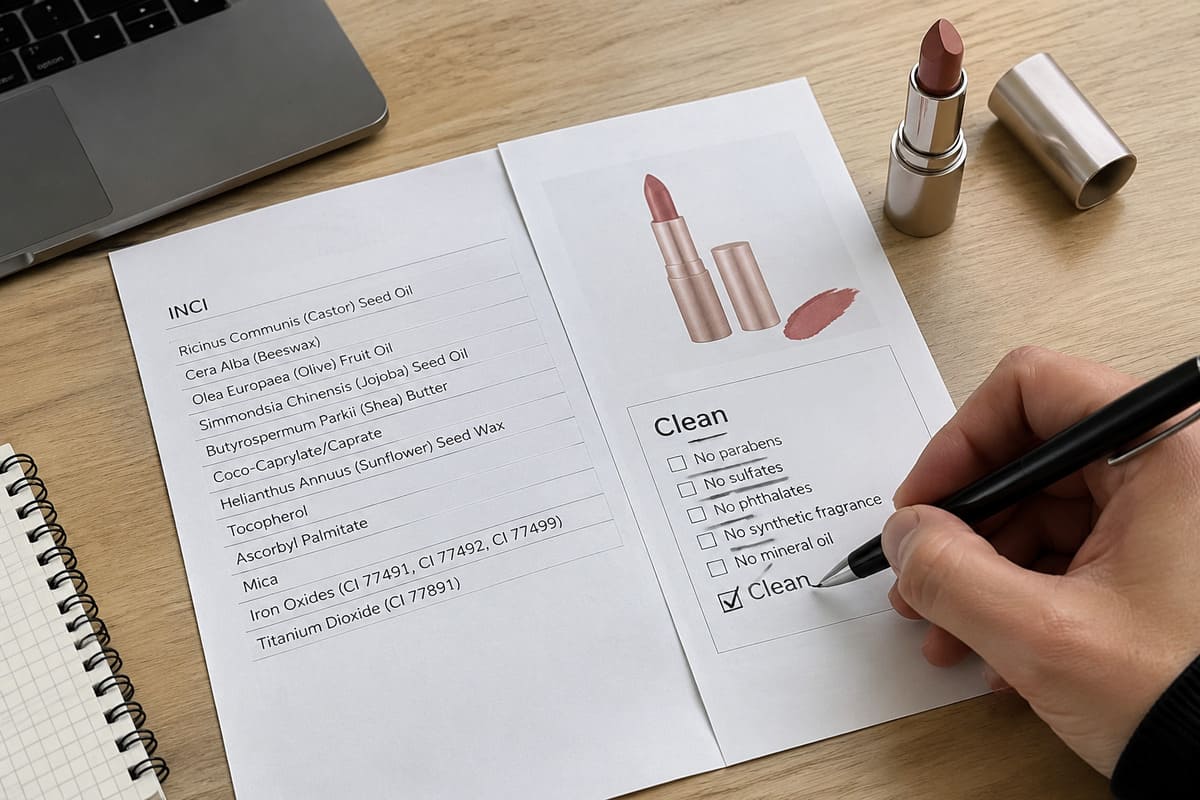
The economics explain why so many factories avoid this. Credo Beauty's Credo Qualified program imposes real operational costs on contract manufacturers:
| Item | Cost / timeline |
|---|---|
| Application fee8 | $3,500 |
| Annual licensing fee | $1,500 |
| Review process | 6–12 weeks |
| Prerequisite | GMP / ISO 22716 systems, facility registration |
This is not a marketing exercise. It is an operational investment, and most white-label factories are unwilling to make it. That unwillingness is useful information for you. When a factory says "we are clean" but cannot describe its GMP systems or any certification participation, you are looking at a free-from label, not a verifiable program.
I want to be precise about my own boundaries here, because trust matters more than a sales pitch. I treat GMP and any certification status as documents a buyer should verify for their specific channel. I support retailer certification documentation and screen by target market. I do not assume the Responsible Person role.9 MoCRA facility registration, product listing, and EU CPNP notification remain your legal obligation as the brand10, with my documentation support behind you. Clean readiness is a shared project, and I am clear about which parts I own.
The Greenwashing Risk: Why Vague "Clean" Claims Can Hurt Your Brand?
You believe a soft "clean" claim is harmless marketing. Regulators now disagree. Vague sustainability and "clean" language has moved from fuzzy branding into legal exposure, and the brand making the claim carries the risk, not the factory that printed the label.
Vague "clean" claims now carry legal risk. The EU's Green Claims Directive targets unsubstantiated sustainability claims11, meaning unproven "clean" or "natural" language can expose your brand to penalties. A claim without documentation is no longer just weak marketing. It is a liability your factory's evidence chain must be able to defend.
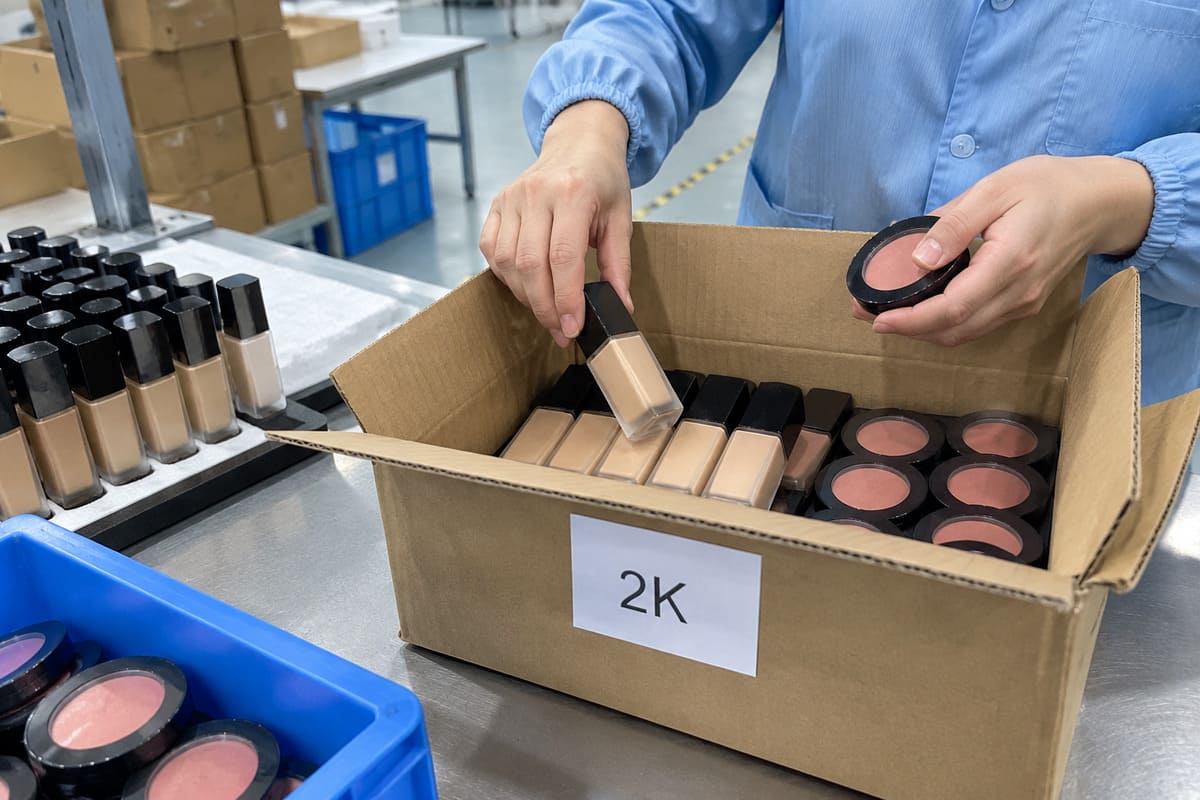
Here is why this hits brands harder than factories. When a regulator or retailer challenges a claim, they ask the brand owner for substantiation. If your clean makeup manufacturer built no evidence chain, you stand alone with a marketing word and nothing behind it.
What turns a risky claim into a defensible one:
- Specific language tied to specific screening. "Formulated without [listed ingredients] per [market standard]" beats a bare "clean."
- Documentation that matches the claim. Every claim on the label should trace to a record you can produce.
- Market-correct scope. A claim valid for one retailer list is not automatically valid for EU legal requirements.
I will not help a brand make a claim it cannot support. I would rather narrow the wording to what the documents prove than let a founder ship a liability. Describing a product at its real size is not a weakness. In a market where regulators are tightening, it is the safer commercial position.
A Practical Path: Validate First, Then Invest in Verified Clean Formulation?
You want to launch a custom clean line immediately. I usually advise against starting there. Rushing into a bespoke clean formula before you know your market and retailer standard is how founders spend money screening against the wrong list, then pay again to redo it.
The practical path is to validate first, then invest. If you have only a vague "clean" concept with no confirmed market or retailer channel, start with a standard product to test your color story and audience. Once the market and retailer standard are confirmed, move into verified clean formulation with the correct ingredient list, document requirements, and MOQ expectations.
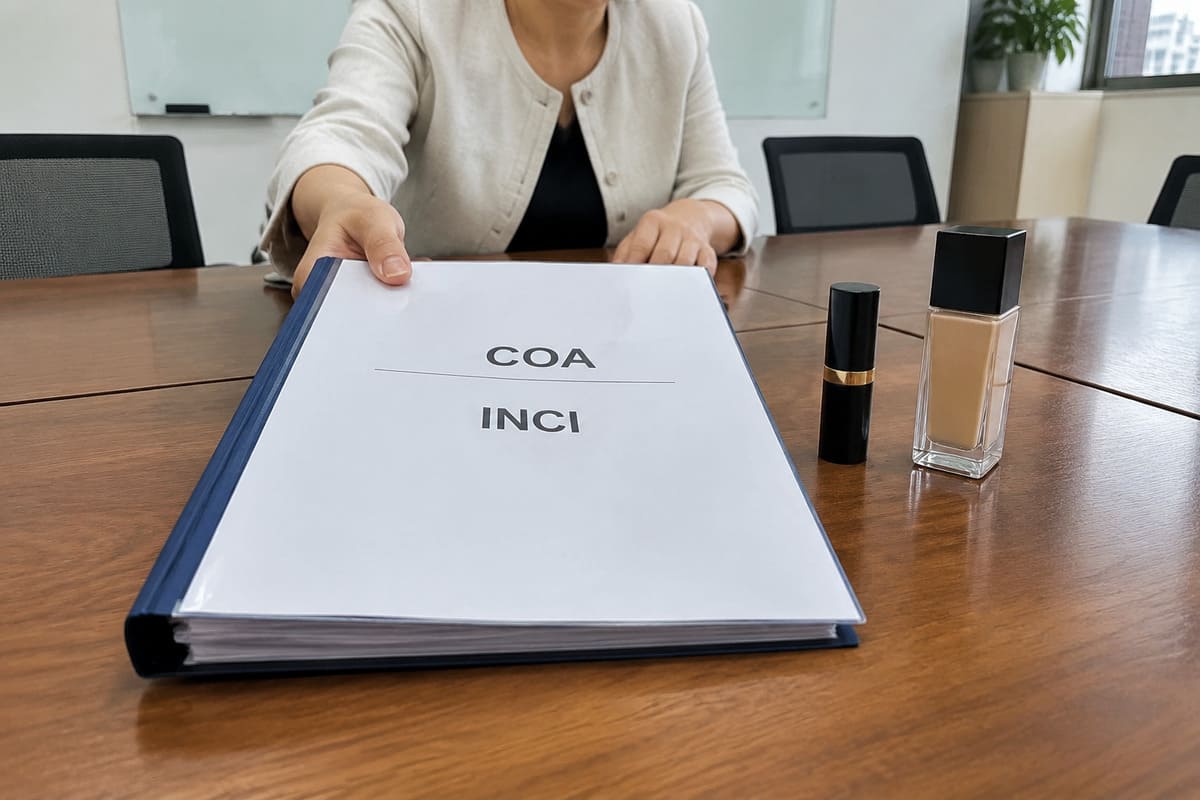
I am honest about a trade-off most clean pages hide: verifiable clean is often not cheaper or lower-MOQ than conventional production. Clean formulations carry higher ingredient screening costs and different volume thresholds. A real clean program is an investment, not a discount.
So I sequence launches instead of rushing them:
| Phase | Goal | Suggested starting point |
|---|---|---|
| 1. Validate | Test color story and audience | ~2,000-unit standard eyeshadow palette |
| 2. Confirm standard | Lock target market and retailer list | US / EU / SEA + specific retailer |
| 3. Invest in clean | Screen and document against the right standard | Custom formulation with correct MOQ |
When a founder validates first, the Phase 3 investment lands on a proven product and the right standard. The screening is done once, against the list that actually governs the sale. That is the difference between the $8,000 reformulation story and a launch that ships on time.
Frequently Asked Questions
Is there a single "clean" certification that works for every market?
No. Clean beauty has no universal legal definition. The EU restricts over 1,600 ingredients, the US federal framework is less restrictive, and retailers like Credo, Sephora, and Ulta each maintain separate lists. You must confirm your target market and retailer, then screen against that specific standard. A factory claiming a universal clean list is overstating.
What documents should I ask a clean makeup manufacturer to provide?
Request a market-specific ingredient screening, INCI harmonization, allergen review, COAs, SDS, stability reports, and batch records. Ask whether the factory participates in retailer certification programs or can provide equivalent documentation. Treat every certificate as something to verify against your actual sales channel, ideally with a qualified regulatory professional reviewing your formula.
Does clean formulation cost more than conventional production?
Often, yes. Verifiable clean typically carries higher ingredient screening costs and different MOQ structures. It is not automatically cheaper or lower-MOQ than a conventional formula. Treat a clean program as an operational investment and budget for screening and documentation, not just the formula itself.
Who is legally responsible for compliance, the factory or my brand?
Your brand holds the legal obligations. MoCRA facility registration, product listing, and EU CPNP notification remain the brand's responsibility. A good factory supports you with screening and documentation, but it does not assume the Responsible Person role. Confirm these obligations early and consult a qualified professional for your specific markets.
Should I start with a custom clean formula or a standard product?
If your market and retailer channel are not yet confirmed, start with a standard product, such as a 2,000-unit eyeshadow palette, to validate your color story and audience. Move into verified clean formulation only after you know which standard applies. Sequencing protects you from screening against the wrong list.
Conclusion
Choosing a clean makeup manufacturer is not about finding a factory that lists "no parabens." It is about finding one that can prove its claim. Clean has no universal definition, so screening must match your specific market and retailer. Verification sits across three layers: ingredient compliance by market, retailer certification readiness, and a traceable document chain. Retailers are auditing factories upstream, and regulators are penalizing vague claims. My advice stays simple: validate your product first, confirm your standard, then invest in verified clean formulation with eyes open on cost and MOQ. If you want help screening a formula against your target market and building the documentation during sampling, send me your market and retailer list, and I will map the exact evidence your launch needs.
"What Ingredients Should I Avoid in Eye Shadow? A ... - Vertina Beauty", https://vertinabeauty.com/what-ingredients-should-i-avoid-in-eye-shadow-a-compliance-guide-for-buyers/. Regulation (EC) No 1223/2009 of the European Parliament and of the Council establishes lists of prohibited (Annex II) and restricted (Annex III) substances in cosmetic products; Annex II alone contains well over one thousand entries. Evidence role: statistic; source type: government. Supports: The EU Cosmetics Regulation (EC) No 1223/2009 prohibits or restricts over 1,600 substances through its annexes.. Scope note: The exact count fluctuates as the annexes are amended, so a precise figure should be read as the total at the date of the cited consolidated text. ↩
"Prohibited & Restricted Ingredients in Cosmetics", https://www.fda.gov/cosmetics/cosmetics-laws-regulations/prohibited-restricted-ingredients-cosmetics. The US Food and Drug Administration lists a limited set of prohibited and restricted cosmetic ingredients under the Federal Food, Drug, and Cosmetic Act, far fewer than the entries in the EU annexes. Evidence role: general_support; source type: government. Supports: US federal law prohibits or restricts a comparatively short list of ingredients in cosmetics relative to the EU.. Scope note: Counts alone do not capture differences in enforcement mechanism or scope, so the comparison supports relative stringency rather than a full equivalence of the two frameworks. ↩
"Clean + Planet Aware at Sephora", https://www.sephora.com/beauty/clean-planet-aware. Published retailer standards (Clean at Sephora, Ulta's Conscious Beauty, and Credo's Clean Standard) each define their own list of restricted ingredients, confirming that these programs are separate and non-identical. Evidence role: case_reference; source type: other. Supports: Credo, Sephora, and Ulta each publish distinct ingredient restriction standards for products they carry.. Scope note: These are retailer-controlled commercial documents subject to revision and are not legal standards, so they evidence private program divergence rather than regulatory requirements. ↩
"Program Integrity", https://www.hrsa.gov/opa/program-integrity?_sp=71a58765-55ad-47a8-a509-5a82d01a49c5. Documentation of retailer manufacturer-qualification programs indicates that ingredient and quality verification is being assessed at the factory level rather than solely at the finished-brand level. Evidence role: general_support; source type: institution. Supports: Retailer clean-beauty programs increasingly require verification at the contract manufacturer level.. Scope note: Evidence drawn from individual retailer programs supports the direction of the trend but does not quantify how widespread the practice is across the industry. ↩
"Credo Qualified Business", https://credobeauty.com/pages/credo-qualified?srsltid=AYCX9vKerutYMS2Rdt85HInHC_mBgARI3TqfStYGwpEYuNR5Kdj1xZ_G. Credo Beauty's published Credo Qualified program materials describe eligibility requirements for contract manufacturers, including quality-system certification and a structured review process. Evidence role: case_reference; source type: other. Supports: The Credo Qualified program sets requirements including recognized GMP/ISO 22716 systems, facility registration, and a review process with fees.. Scope note: Program terms are set by the retailer and change over time, so the citation supports the described structure at the date accessed rather than fixed criteria. ↩
"Certificate of analysis", https://en.wikipedia.org/wiki/Certificate_of_analysis. Reference definitions describe a Certificate of Analysis as a quality document confirming that a specific batch of a product has been tested and conforms to stated specifications. Evidence role: definition; source type: encyclopedia. Supports: A Certificate of Analysis is a document certifying that a product batch has been tested against and meets defined specifications.. Scope note: General definitions do not establish the specific tests or acceptance criteria required for cosmetic products in any given market. ↩
"Shelf Life and Expiration Dating of Cosmetics", https://www.fda.gov/cosmetics/cosmetics-labeling/shelf-life-and-expiration-dating-cosmetics. Industry guidance on cosmetic stability testing describes protocols for evaluating a product's stability over time to support shelf-life and period-after-opening determinations. Evidence role: mechanism; source type: institution. Supports: Stability testing is used to establish and document a cosmetic product's shelf life and physical, chemical, and microbiological stability.. Scope note: Guidance documents describe recommended methods rather than a single mandated protocol, so they support the purpose of stability testing rather than a fixed universal standard. ↩
"Apply for a Sole Owner license - CSLB - CA.gov", https://www.cslb.ca.gov/contractors/applicants/Apply_for_a_Sole_Owner_License/default.aspx. Credo Beauty's program documentation states the application fee, annual licensing fee, and review timeline for contract manufacturers seeking Credo Qualified status. Evidence role: statistic; source type: other. Supports: The Credo Qualified program's published fee schedule and review timeline for contract manufacturers.. Scope note: Fees and timelines are set commercially and revised periodically, so the figures reflect the schedule in effect at the cited date only. ↩
"What Ingredients Should I Avoid in Eye Shadow? A ... - Vertina Beauty", https://vertinabeauty.com/what-ingredients-should-i-avoid-in-eye-shadow-a-compliance-guide-for-buyers/. Article 4 of Regulation (EC) No 1223/2009 requires that each cosmetic product placed on the EU market have a designated responsible person established within the Union who ensures compliance with the regulation. Evidence role: definition; source type: government. Supports: EU cosmetics law designates a 'responsible person' who must ensure compliance for each product placed on the market.. Scope note: The source defines the statutory role but does not address private contractual arrangements between a brand and its manufacturer. ↩
"Registration & Listing of Cosmetic Product Facilities and ...", https://www.fda.gov/cosmetics/registration-listing-cosmetic-product-facilities-and-products. The Modernization of Cosmetics Regulation Act (MoCRA) requires cosmetic facility registration and product listing with the FDA, while Regulation (EC) No 1223/2009 requires notification through the Cosmetic Products Notification Portal (CPNP) prior to placing a product on the EU market. Evidence role: mechanism; source type: government. Supports: MoCRA requires facility registration and product listing with FDA, and the EU Cosmetics Regulation requires CPNP notification by the responsible person.. Scope note: The precise allocation of these duties depends on the contractual roles of brand owner, manufacturer, and responsible person, so the source confirms the obligations exist rather than who bears them in a specific supply arrangement. ↩
"Green claims - Environment - European Commission", https://environment.ec.europa.eu/topics/circular-economy-topics/green-claims_en. The European Commission's proposal for a Directive on green claims sets rules requiring traders to substantiate voluntary environmental claims before making them to consumers. Evidence role: mechanism; source type: government. Supports: The EU Green Claims Directive requires substantiation of explicit environmental claims and targets unsubstantiated green marketing.. Scope note: As a directive still moving through the EU legislative process, its final obligations and penalties may differ from the proposal, so it evidences regulatory direction rather than settled enforced law. ↩