Cosmetic Contract Manufacturers: Agile Full-Category Production
When brands search for cosmetic contract manufacturers, they see the giants first—Catalent, Cosmax, KDC/ONE1. You keep scrolling because you already sense the problem. The giants have the capacity, but they lock it away for massive orders. You are stuck between two bad options: rejected by the giants for a realistic order, or let down by a tiny factory that presses eyeshadow but cannot touch a serum or a fragrance.
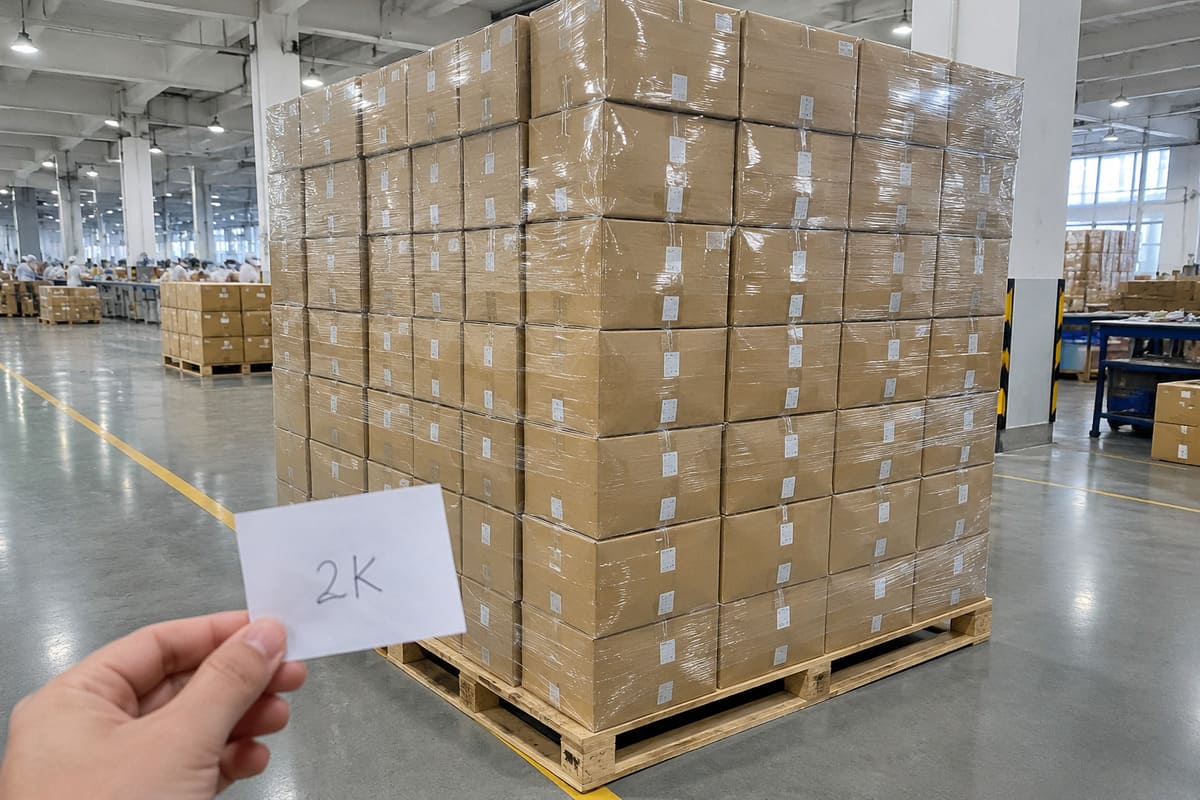
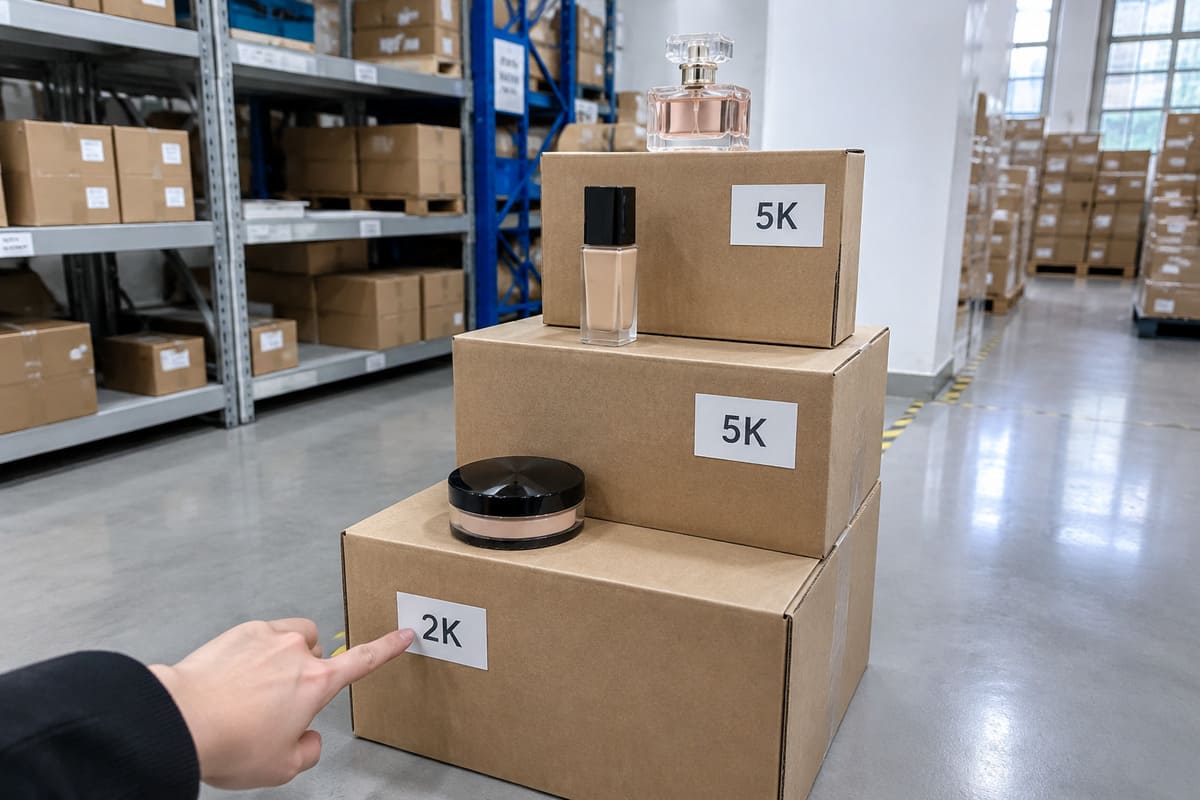
The best cosmetic contract manufacturers for a growing brand are not the giants, but agile factories that run truly separate production lines for powder, liquid, and fragrance under one roof. They let you validate a powder product from 2,000 units and scale liquid or fragrance lines at 5,000 to 10,000 units, so you build a full multi-category brand without a 30,000-unit-per-SKU barrier.
So how do you tell a real full-category factory from a sales pitch? The difference is not what a supplier claims. The difference is in the production structure. Let me break down what actually matters, starting with why the biggest names on your screen keep saying no.
Why Do Giants Dominate the SERP—but Refuse Your Order?
You find the industry titans in seconds. Then you send your order size, and the conversation ends. It feels personal. It is not. It is math.
Global CDMOs dominate search results because of brand authority and scale2, but they bind their capacity to mega-brands with guaranteed volume. A realistic launch order—say a few thousand units across several SKUs—does not fit their minimums, which often start at 30,000 units per SKU3. They refuse your order because their business model depends on long, high-volume runs.
Growing brands keep scrolling for a reason. The top results do not serve them. Let me explain the structural logic behind this, because it tells you where to look next.
The Economics of Capacity Binding
A large contract manufacturer runs expensive, high-throughput equipment. That equipment is profitable only when it runs long batches without changeovers. Every time a line switches formulas or colors, the factory loses hours to cleaning and recalibration.4 A 30,000-unit run spreads that cost thin. A 2,000-unit run does not.
So the giants make a rational choice. They reserve their lines for clients who commit to volume—often the same multinational beauty conglomerates year after year. Your order, however real and funded, becomes noise they filter out.
What This Means for You
Consider the trade-off plainly:
| Factor | Global Giants | Agile Full-Category Factory |
|---|---|---|
| Typical MOQ | 30,000+ units/SKU | 2,000 units (powder) |
| Order priority | Reserved for mega-brands | Built for growing brands |
| Multi-category under one roof | Yes, but gated by volume | Yes, with realistic MOQs |
| Responsiveness | Slow, formal | Fast, direct |
The lesson is simple. The giants are not the realistic path for a brand that is building, not yet dominating. An agile supply chain is. But agility only matters if the factory can genuinely handle more than one category—which brings us to the hard test.
How Do You Tell a True Full-Category Factory From a Fake One?
Every supplier on earth will tell you they can make "anything." I hear it constantly. The problem is that "we can do everything" is often a trap, because multi-category production is an engineering reality, not a sales claim.
You separate a real full-category factory from a fake one by interrogating the production structure, not the pitch. Ask three acid-test questions: How do you isolate powder dust from sterile liquid filling? Do you have dedicated R&D teams for pigments, emulsions, and fragrance? Can you provide compliance data for color additives, preservatives, and fragrance allergens at once? No structural answer means no real capability.
These three questions filter out the pretenders fast. A broker relabeling other people's goods cannot answer them. Let me walk through each one, because these are the metrics serious buyers use.
Acid Test 1: Production Line Isolation
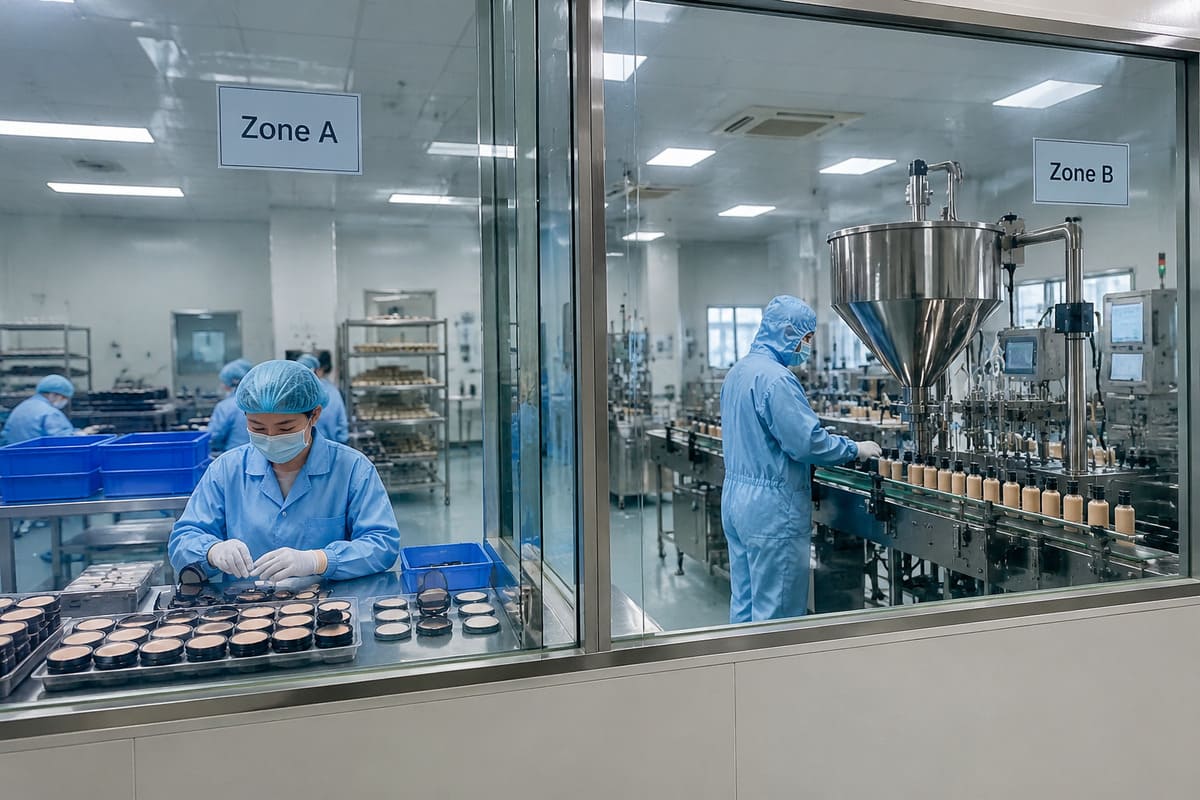
Powder and liquid cannot share space. Powder manufacturing throws fine pigment dust into the air5. Liquid filling—especially for serums or anything near the eye—demands a controlled, low-contamination environment.6 If airborne powder drifts into a liquid filling line, you get contamination risk and failed quality checks.
A real full-category factory runs physically separated zones with their own air handling. Ask where the powder room sits relative to the liquid line. A vague answer is your warning sign.
Acid Test 2: Dedicated R&D Teams Across Categories
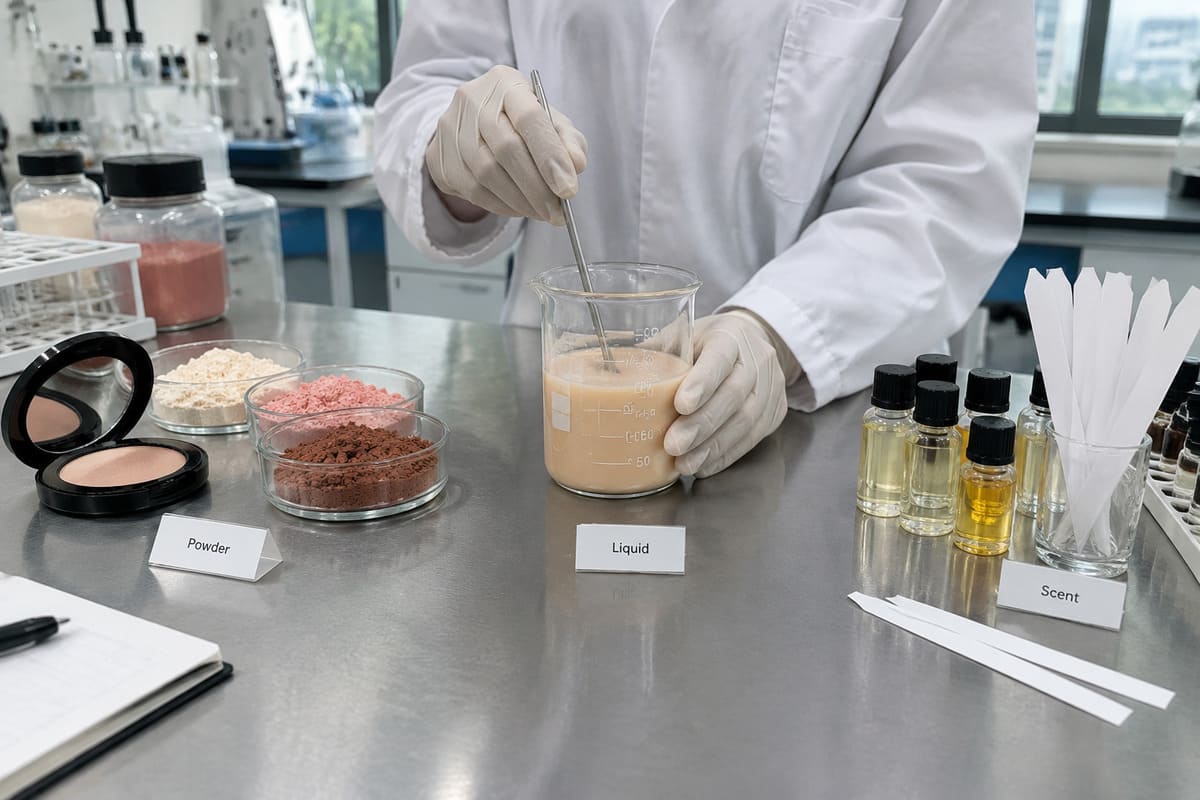
Formulating a high-payoff eyeshadow is a different science from stabilizing an emulsion or balancing a fragrance accord. One generalist chemist cannot master all three at a professional level.
- Pigment chemists handle color payoff, dispersion, and that chameleon or sparkle effect.
- Emulsion specialists manage texture, stability, and preservation in liquids and creams.
- Fragrance developers build scent profiles and manage allergen thresholds.
Ask who leads each category. If the answer is one name for everything, the depth is not there.
Acid Test 3: Multi-Database Compliance
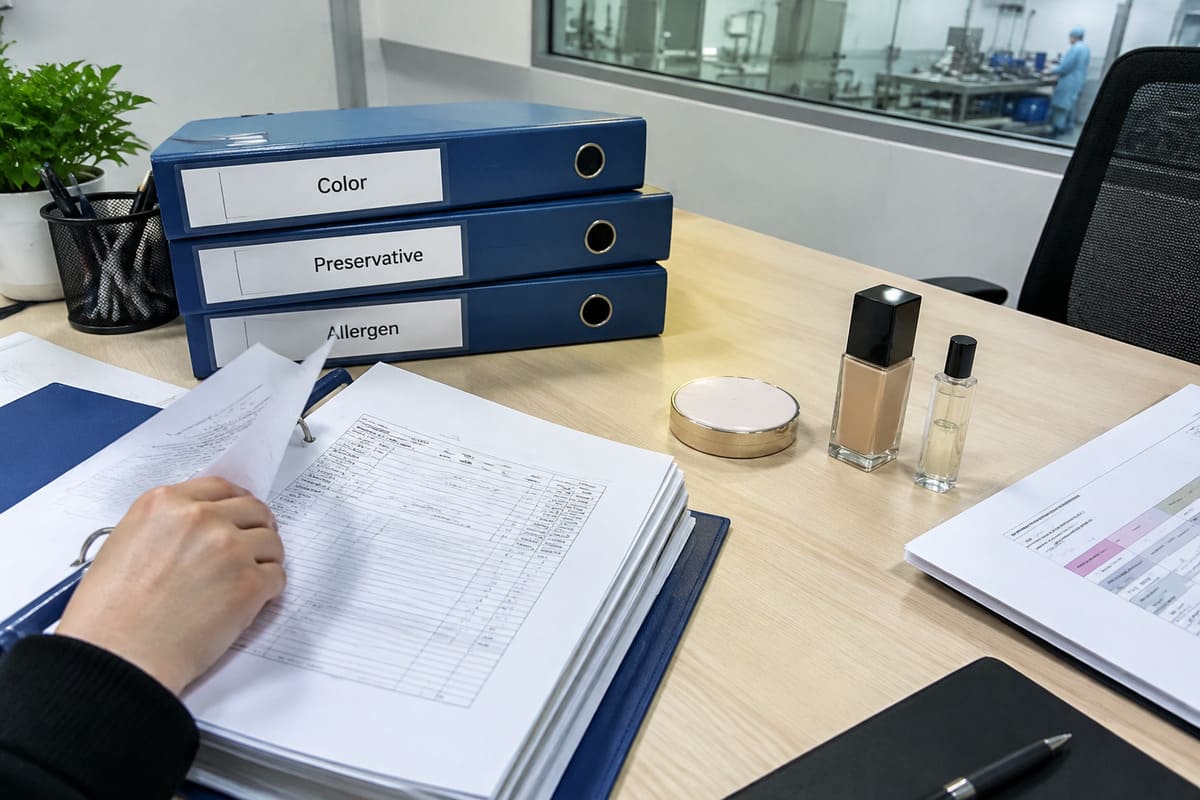
Each category carries its own regulatory world. Color additives face strict approved-use lists.7 Preservatives have concentration limits.8 Fragrances carry allergen declaration rules in the EU and elsewhere.9 A true full-category factory maintains all three compliance databases at once. I always tell buyers to treat any certification as a document to verify, and to bring in qualified regulatory review for their specific target market.
What Does an Agile Supply Chain Actually Look Like in Practice?
The phrase "agile supply chain" gets thrown around until it means nothing. You deserve a concrete picture, not a buzzword. The real test is whether the best cosmetic contract manufacturers can actually integrate your mixed order into one schedule.
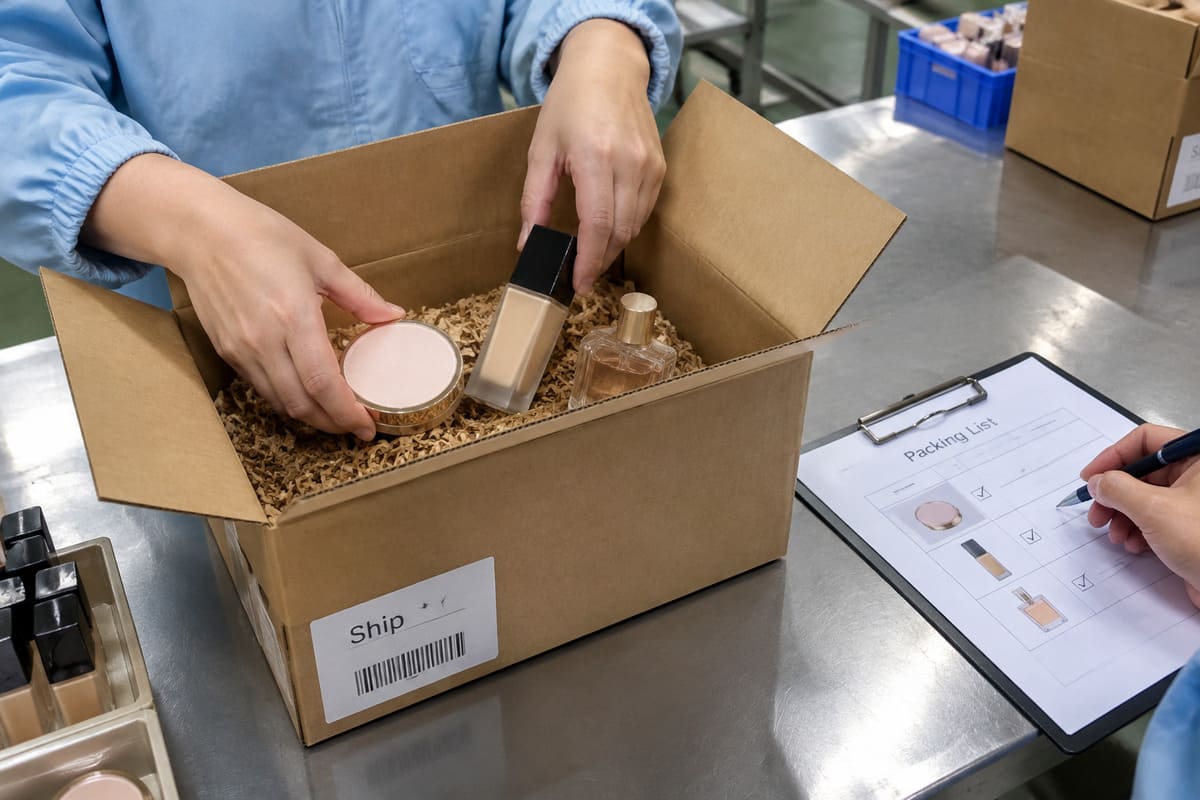
An agile supply chain in practice means a single factory develops your powder, liquid, and fragrance products in parallel on isolated lines, each with its own realistic MOQ, then integrates them into one coordinated production and delivery schedule. You get a full product line without stitching together three separate vendors or hitting a single crippling minimum.
Here is how that plays out when a brand comes to us with a mixed launch. Let me show the mechanics honestly.
Parallel Development, One Schedule
Say you want an eyeshadow palette, a facial highlighter powder, and a liquid product. In a fragmented model, you would chase three suppliers, three sample rounds, three shipping timelines, and three quality standards. The coordination cost alone can sink a small team.
An integrated factory runs these in parallel:
- Powder line develops and validates the palette and highlighter from 2,000 units each.
- Liquid line formulates the liquid product, scaling at its realistic threshold.
- Scheduling aligns both so they finish and ship together.
Realistic MOQs by Category
This is where honesty separates real factories from fantasy. The minimums differ by category because the engineering differs. Here is the Vertina reality:
| Category | Minimum Order | Why |
|---|---|---|
| Powder (eyeshadow, blush, highlighter) | 2,000 units | Faster changeovers, agile validation |
| Liquid lines | 5,000–10,000 units | Filling setup and compliance cost |
| Fragrance | 5,000–10,000 units | Filling, allergen compliance, batch economics |
Anyone promising 2,000 units of a custom fragrance is either losing money or misleading you. The filling setup and compliance work for liquids and fragrance simply cost more to amortize. A trustworthy partner tells you this upfront instead of surprising you later.
Speed Where It Counts
Agility also means fast response. Trends move quickly on TikTok and Instagram, and a missed window is lost revenue.10 Our powder category, with its lower MOQ and quicker changeovers, lets you test a bold concept, read the market, and reorder before the trend cools. That is the practical value of agility—not just lower minimums, but faster iteration.
Why Is an Agile Supply Chain the Best Path for Growing Brands?
You might still wonder whether you should just wait, grow, and eventually qualify for a giant. I understand the instinct. But the timing rarely works in your favor, and the reasons are structural.
An agile supply chain is the best path for growing brands because the giants will not take you until you already have the volume you are trying to build, creating a chicken-and-egg trap. Agile cosmetic contract manufacturers let you launch a multi-category line at realistic volumes, prove demand, and scale—turning a validated brand into exactly the client the giants eventually court.
The math of growth favors the agile model. Let me make the case with the trade-offs laid bare.
The Chicken-and-Egg Trap
To earn a giant's attention, you need volume. To build volume, you need products on the market. To get products made, you need a factory that will take a realistic order. The giants break this loop in the wrong place—they demand the volume first. An agile factory breaks it in the right place by letting you produce, launch, and learn.
Risk and Capital Efficiency
Starting at 2,000 units on powder means a smaller upfront spend and far less inventory risk. You are not betting your capital on a 30,000-unit guess. You test, read real sales data, and commit bigger only to proven winners.
- Lower试错 cost: validate ideas cheaply before scaling.
- Less dead stock: avoid warehouses full of a color that did not sell.
- Faster reorders: restock the hits while the trend is hot.
Building the Full Brand, Not One Product
Modern consumers expect range.11 A brand with one eyeshadow palette looks thin next to one offering eyes, face, and a signature scent. An agile full-category partner lets you present a complete brand story from launch, which matters enormously for retail buyers and online conversion alike. For application-specific claims or market-entry decisions, I always recommend bringing in qualified regulatory and market professionals.
What We Can Promise—and What We Cannot
I would rather lose your order than mislead you into one. Trust in this industry comes from clear boundaries, so let me state ours plainly, since this is the part most suppliers avoid.
We can promise integrated multi-category development across isolated powder, liquid, and fragrance lines, with powder validation from 2,000 units and liquid or fragrance from 5,000 to 10,000 units. We cannot do white-label relabeling, and we are not the right fit if you only want 100 units to test the waters. We build real brands, not repackaged stock.
Here is the boundary in black and white:
What we can do:
- Develop custom powder, liquid, and fragrance lines on structurally separated production.
- Offer agile powder validation from 2,000 units.
- Run liquid and fragrance at realistic 5,000–10,000 unit thresholds.
- Integrate your mixed order into one coordinated schedule.
- Support compliance discussions for color additives, preservatives, and allergens, treating every certificate as a document you should independently verify.
What we cannot do:
- No white-label relabeling of someone else's product as yours.
- No 100-unit hobby orders—that is not contract manufacturing, and we filter that noise out so serious clients get our full attention.
- No promises on application-specific regulatory outcomes without qualified professional review for your target market.
This filtering is not arrogance. It protects the clients who are genuinely building. When we say no to a 100-unit request, we say yes faster to a brand ready for a real launch.
Frequently Asked Questions
What is the difference between OEM and ODM cosmetic contract manufacturers?
OEM means we produce to your existing formula and specs. ODM means we handle development too—formula, color, and packaging12—so you bring a concept and we build it. Most growing brands use ODM for custom powder, liquid, and fragrance lines because they lack an in-house lab.
What is a realistic minimum order for a full cosmetic product line?
It depends on category. Powder products like eyeshadow and blush start around 2,000 units each. Liquid and fragrance lines start at 5,000 to 10,000 units because filling setup and compliance cost more to amortize. Any factory quoting the same low MOQ for all categories is not being straight with you.
How do I verify a factory can really handle multiple categories?
Ask three structural questions: Are powder and liquid lines physically isolated with separate air handling? Are there dedicated R&D teams for pigments, emulsions, and fragrance? Can they provide compliance data across all three at once? A factory with real capability answers specifically. A broker cannot.
Should I use a large CDMO or an agile factory for my launch?
If you can commit to 30,000+ units per SKU with guaranteed repeat volume, a large CDMO fits. If you are building and validating, an agile factory fits far better. The giants reserve capacity for mega-brands, which leaves agile partners as the realistic path for growth-stage brands.
Do you offer samples before a full production order?
Yes. Serious brands should always evaluate samples for color payoff, texture, and quality before committing to a run. Sampling lets you confirm the product meets your standard and lets us confirm the formula is stable at scale before full production.
Conclusion
The best cosmetic contract manufacturers for a growing brand are rarely the giants at the top of your search results. The giants bind their capacity to mega-orders, and small single-category factories cannot build a real multi-category line. An agile supply chain solves both problems—with honest, category-specific MOQs, structurally isolated production lines, and dedicated R&D across powder, liquid, and fragrance. We filter out the noise so we can give serious brands our full focus. If you are ready to build a real, multi-category brand and refuse to be ignored by the giants, reach out to Vertina with your target market and launch plan, and we will map a realistic production schedule together.
"Cosmax Official Website", https://www.cosmax.com/en/. Company profiles describe Cosmax and KDC/ONE as major contract manufacturers in the beauty and personal care industry, supporting their characterization as large-scale players. Evidence role: general_support; source type: encyclopedia. Supports: These named firms are large contract development and manufacturing organizations in the cosmetics and personal care sector.. Scope note: Encyclopedic or corporate profiles confirm relative scale but do not independently verify their ranking against all competitors at a given point in time. ↩
"Six Ways to Improve Your Site's Ranking (SEO)", https://www.mtu.edu/umc/services/websites/seo/. Research and published ranking guidance indicate that site authority and brand recognition are associated with greater search visibility. Evidence role: general_support; source type: research. Supports: Established site authority and brand signals correlate with higher search engine visibility.. Scope note: Ranking factors are multifaceted and often not publicly disclosed, so the correlation is contextual rather than a direct causal proof for this industry. ↩
"OEM Makeup Manufacturer: 5 Questions to Verify Real ...", https://vertinabeauty.com/oem-makeup-manufacturer-5-questions-to-verify-real-customization/. Industry reporting on cosmetic contract manufacturing indicates that large manufacturers set substantial per-SKU minimum order quantities to amortize setup costs. Evidence role: statistic; source type: institution. Supports: Large cosmetic contract manufacturers typically impose high per-SKU minimum order quantities.. Scope note: Published MOQ ranges vary by manufacturer, product type, and region, so the specific 30,000-unit figure may not generalize to all large CDMOs. ↩
"Economies of scale", https://en.wikipedia.org/wiki/Economies_of_scale. Operations research on batch manufacturing documents that setup and changeover activities, including cleaning and recalibration, impose downtime costs that favor longer production runs. Evidence role: mechanism; source type: research. Supports: Line changeovers in batch manufacturing require cleaning and recalibration that reduce effective production time.. Scope note: General manufacturing literature supports the mechanism but may not quantify changeover costs specific to cosmetic powder and liquid lines. ↩
"Hazard Communication Guidance for Combustible Dusts", http://www.osha.gov/publications/3371combustible-dust. Occupational safety guidance on powder handling confirms that processing fine powders generates airborne particulate requiring containment and ventilation controls. Evidence role: mechanism; source type: government. Supports: Powder handling and processing release airborne particulate that requires dust-control measures.. Scope note: Occupational safety sources address dust generation generally and may not specifically address cosmetic pigment powders or cross-contamination of adjacent liquid lines. ↩
"GMP Guidelines/Inspection Checklist for Cosmetics", https://www.fda.gov/cosmetics/cosmetics-guidance-documents/good-manufacturing-practice-gmp-guidelinesinspection-checklist-cosmetics. Cosmetic good manufacturing practice standards specify environmental controls to limit microbial and particulate contamination during filling, with stricter attention for products used near the eye. Evidence role: mechanism; source type: institution. Supports: Good manufacturing practice for cosmetics requires controlled, low-contamination filling environments, with heightened concern for eye-area products.. Scope note: GMP standards describe general requirements and do not directly establish the specific contamination risk from adjacent powder lines. ↩
"Color Additives Permitted for Use in Cosmetics", https://www.fda.gov/cosmetics/cosmetic-ingredient-names/color-additives-permitted-use-cosmetics. Cosmetic regulations maintain positive lists of permitted color additives, restricting their use to approved substances and conditions. Evidence role: definition; source type: government. Supports: Regulatory frameworks restrict cosmetic color additives to approved substances with defined conditions of use.. Scope note: Specific approved lists differ by jurisdiction, so a single source may not cover all target markets referenced in the article. ↩
"Parabens in Cosmetics", https://www.fda.gov/cosmetics/cosmetic-ingredients/parabens-cosmetics. Regulatory annexes of permitted preservatives specify maximum authorized concentrations and conditions of use in cosmetic products. Evidence role: definition; source type: government. Supports: Cosmetic regulations set maximum permitted concentrations for allowed preservatives.. Scope note: Concentration limits are jurisdiction-specific and may vary between regulatory regimes not all covered by one source. ↩
"Allergens in Cosmetics", https://www.fda.gov/cosmetics/cosmetic-ingredients/allergens-cosmetics. EU cosmetic legislation mandates the declaration of designated fragrance allergens on product labels when present above defined thresholds. Evidence role: definition; source type: government. Supports: EU cosmetic regulation requires labelling declaration of specified fragrance allergens above threshold concentrations.. Scope note: The source primarily documents EU rules; the article's broader 'and elsewhere' claim would require additional jurisdiction-specific sources. ↩
"The Impact of TikTok Influencers on Gen Z the Cosmetic Industry", https://digitalcommons.bryant.edu/cgi/viewcontent.cgi?article=1000&context=honors_mathematicseconomics. Research on social commerce indicates that platforms such as TikTok and Instagram accelerate trend diffusion and shape purchasing decisions in the beauty category. Evidence role: general_support; source type: paper. Supports: Social media platforms shorten beauty trend cycles and influence consumer purchasing behavior.. Scope note: Academic findings describe general trend dynamics but may not directly quantify revenue lost from a missed launch window. ↩
"Factors affecting consumers' repurchase intention toward skin ...", https://pmc.ncbi.nlm.nih.gov/articles/PMC11180304/. Market research on beauty consumer behavior suggests that assortment breadth influences brand perception and purchase consideration. Evidence role: general_support; source type: research. Supports: Consumers in the beauty category value broader product assortments and multi-category brand offerings.. Scope note: Consumer preference findings vary by segment and market, so they offer contextual support rather than a universal expectation for all brands. ↩
"Original design manufacturer", https://en.wikipedia.org/wiki/Original_design_manufacturer. Reference definitions distinguish original equipment manufacturing, which builds to a client's specifications, from original design manufacturing, which also encompasses product design and development. Evidence role: definition; source type: encyclopedia. Supports: OEM denotes production to a client's specifications, whereas ODM includes design and development of the product.. Scope note: General definitions apply across industries and may not reflect sector-specific usage conventions in cosmetics. ↩