You researched whether you need FDA approval to sell cosmetics, got a quick "no," and shipped your first order with confidence. Then a platform froze your listing and asked for a registration number you could not produce. That gap between "no approval needed" and "still blocked from selling" is where most new brands get hurt. Let me map the real obligations.
You do not need FDA approval to sell cosmetics in the United States. The FDA does not pre-approve cosmetic products or ingredients before they reach the market, with the single exception of color additives.1 However, under MoCRA, you must still complete facility registration, product listing, safety substantiation, and serious adverse event reporting2. "No approval" does not mean "no rules."
So the real question is not whether approval exists. The real question is who does what. Below I break down the MoCRA responsibility map, show which tasks belong to you versus your factory, and explain exactly what to request before you ship.
What Does "FDA Approval" Really Mean for a Cosmetics Brand?
You keep seeing the phrase "FDA approved" on competitor listings and supplier pitches. It sounds like a stamp you need. Many founders chase a certificate that does not exist, waste weeks, and still miss the filings that actually matter.
For cosmetics, "FDA approval" is largely a myth. The FDA does not approve cosmetic products, formulas, or most ingredients before sale. It regulates them. The only pre-market approval requirement applies to color additives.3 A facility registration or product listing number is not an approval and does not mean the FDA endorsed your product.
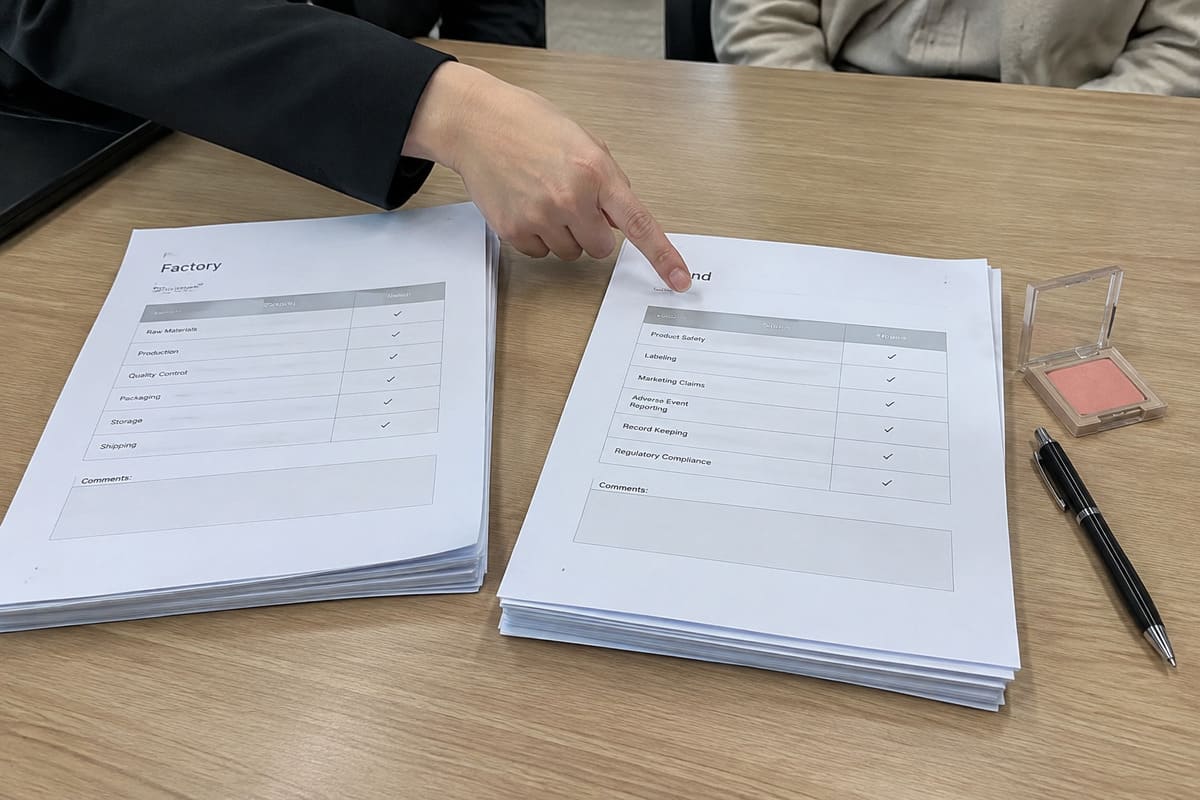
Here is why this distinction matters so much. When Amazon or TikTok Shop asks for "FDA registration," they are not asking for an approval certificate. They are usually asking for your factory's FEI number or a screenshot of your product listing on Cosmetics Direct.
The FDA states this plainly: registration and listing are not an approval program, and the numbers issued do not indicate FDA approval4 of the facility or product.
What the FDA Does and Does Not Do
| FDA Role | Cosmetics (Non-Color) | Color Additives | Drugs |
|---|---|---|---|
| Pre-market approval | No | Yes | Yes |
| Facility registration required | Yes (MoCRA) | Yes | Yes |
| Product listing required | Yes (MoCRA) | N/A | N/A |
| Issues an "approval certificate" | No | No | Yes |
If a supplier promises you an "FDA certificate" for a standard eyeshadow or blush, treat that as a red flag. They either misunderstand the system or they are misleading you. I have seen both, and neither is a partner you want on a compliance-sensitive launch.
The MoCRA Responsibility Map: What Brand Owners vs. Manufacturers Must Do?
You assume the factory handles "all the FDA stuff" because they make the product. That assumption is the single most expensive mistake I see. The law does not assign every task to the manufacturer, and platforms enforce the parts that fall on you.
Under MoCRA, the facility registers with the FDA, but the Responsible Person carries the product-level obligations. The Responsible Person is the manufacturer, packer, or distributor whose name appears on the label.5 For most private-label brands, that is the brand owner, not the Chinese factory. Four actions are mandatory: facility registration, product listing, safety substantiation, and serious adverse event reporting.
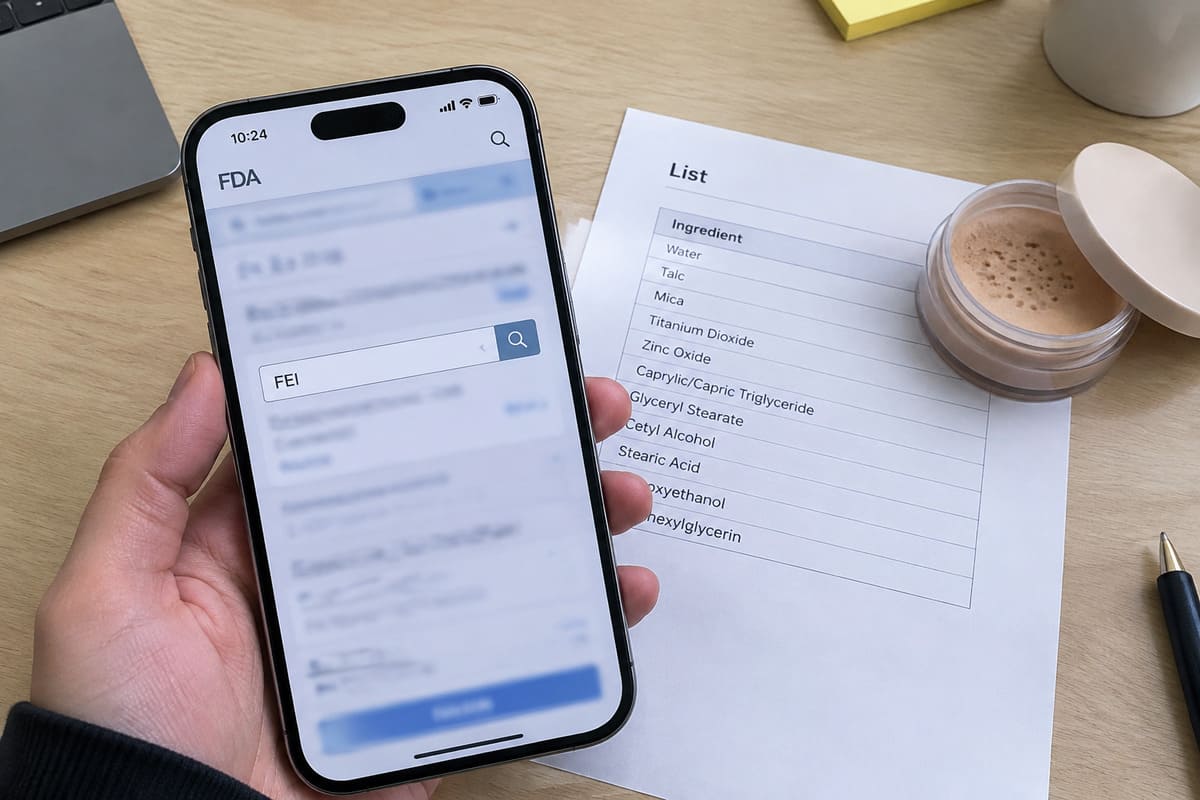
Let me give you the real case that made this concrete for me. A client assumed that because cosmetics do not need FDA approval, he could ship without any MoCRA filings. His TikTok Shop listing then asked for proof of facility registration. He could not provide it. The listing was suspended for three weeks.
He had already paid for inventory and ads. Every day he could not sell, he was bleeding cash. The product was fine. The problem was that he did not know the factory's FEI number was needed for his product listing, and the factory had not proactively handed it over.
We explained the split. Our facility registration was done. His product listing and safety substantiation were his obligations as the Responsible Person. We sent our FEI number, ingredient lists, and stability reports. He completed his product listing through Cosmetics Direct, and the listing was restored.
The Four Mandatory Actions, Mapped
| MoCRA Action | Brand Owner (Responsible Person) | Manufacturer |
|---|---|---|
| Facility Registration | Obtain the factory's FEI number for product listing | Register the facility with FDA; renew every two years6 |
| Product Listing | Submit each product's ingredients and facility FEI; update annually7 | Provide accurate ingredient lists and FEI number |
| Safety Substantiation | Hold adequate safety data for each product8 | Provide raw material safety data and stability test reports |
| Adverse Event Reporting | Receive and report serious adverse events9 | Provide batch traceability information for investigations |
Read that table twice. Three of the four product-level duties sit on your side as the brand owner. The factory supports you with documents, but it cannot carry your legal role for you.
Facility Registration vs. Product Listing: Who Submits What?
You hear "facility registration" and "product listing" used as if they are the same thing. They are not. Mixing them up is exactly what led my client's listing to freeze, because he thought one covered the other.
Facility registration is submitted by the manufacturing facility and identifies where products are made, producing an FEI number. Product listing is submitted by the Responsible Person for each specific product and includes its ingredients and the facility FEI number. The factory registers the facility. You, the brand owner, list the products.10
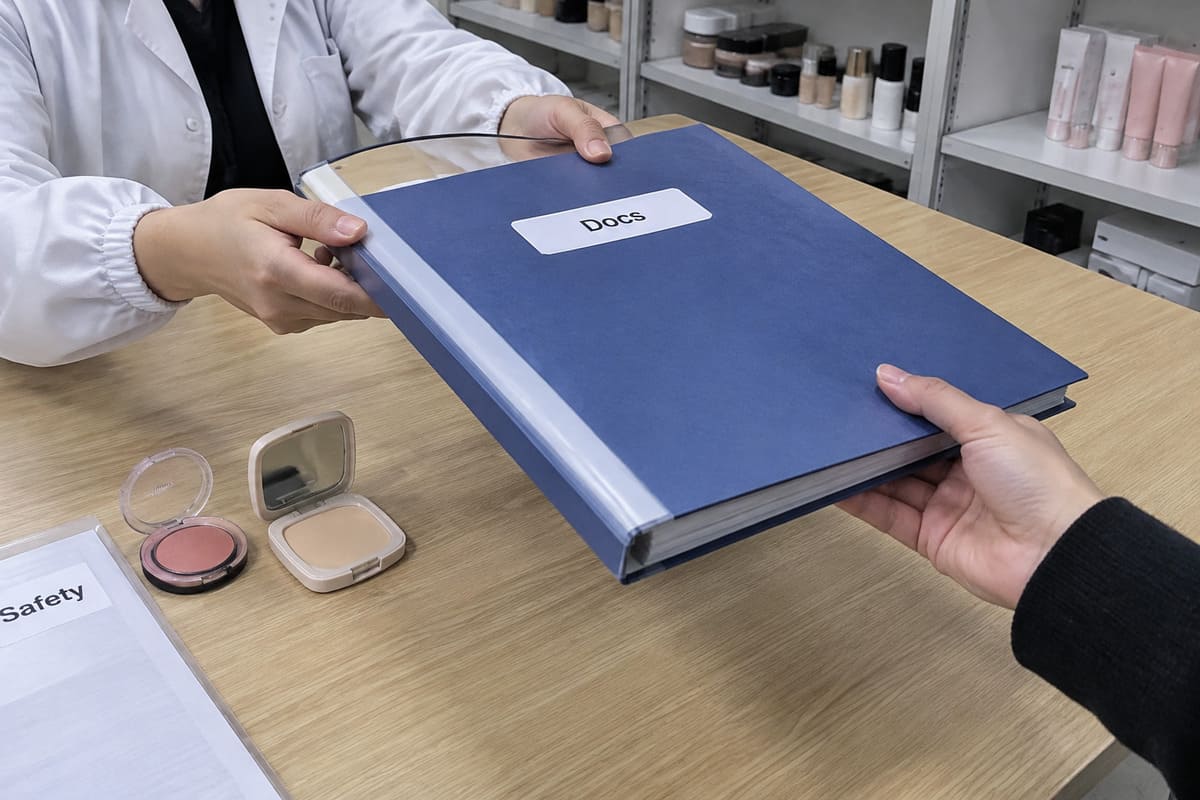
Think of it as two separate keys for two separate locks. The factory holds one. You hold the other. A platform asking for "FDA registration" may want either, so you need to understand both.
Side-by-Side Comparison
| Attribute | Facility Registration | Product Listing |
|---|---|---|
| Who submits | Manufacturer / facility | Responsible Person (usually brand owner) |
| Output | FEI number | Listing number per product |
| Covers | The physical facility | Each individual product + ingredients |
| Renewal | Every two years | Updated annually |
| Platform usually asks for | FEI number | Cosmetics Direct listing screenshot |
- The FEI number comes from your factory. Request it in writing before production.
- The product listing is yours to file through FDA's Cosmetics Direct portal11.
- Each product you sell needs its own listing entry. One palette, one lipstick line, one blush stick all list separately.
I tell every client the same thing. Get the FEI number early, then do your own product listing. Do not wait for a platform to demand proof, because by then you are already losing selling days.
What Documents Should You Request from Your Factory Before Launch?
You are excited to launch and focused on packaging and marketing. Compliance paperwork feels like something you can chase later. Then "later" arrives as a suspension notice, and you are emailing a factory across a 12-hour time difference, begging for files you should have collected months ago.
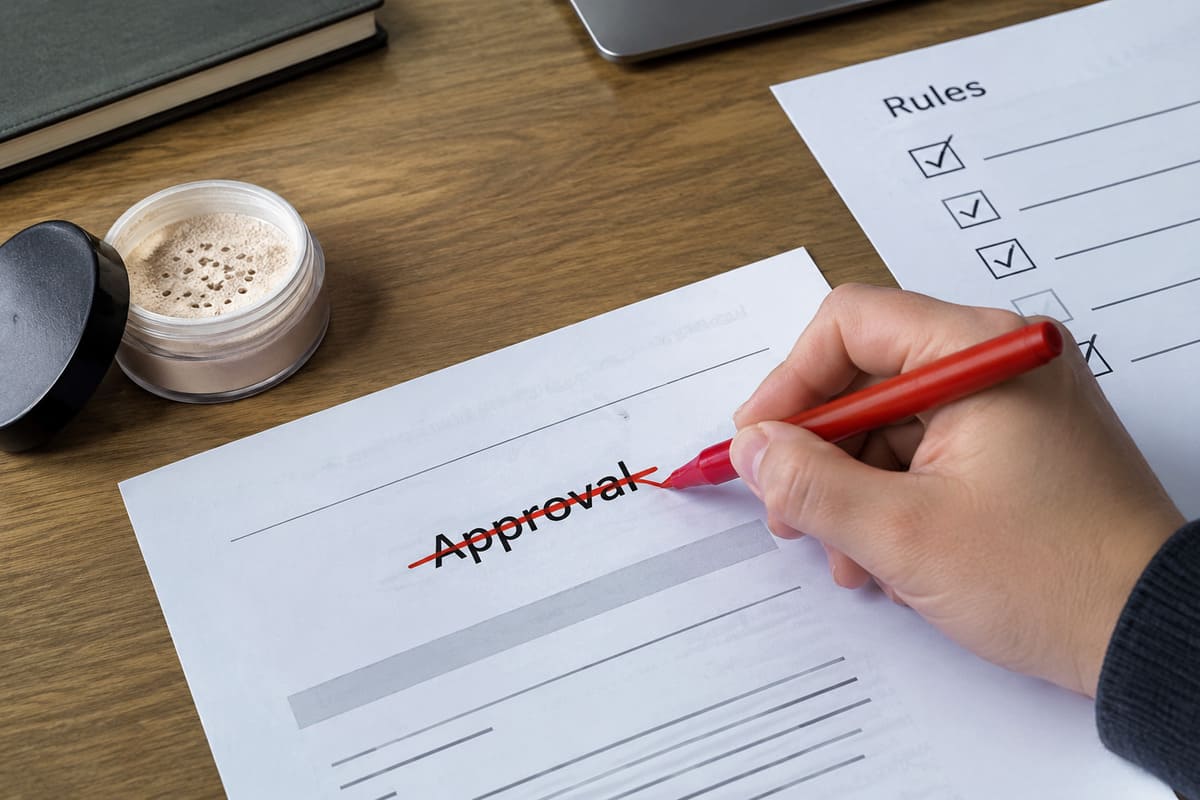
Before launch, request four things from your factory: the FDA facility FEI number, a full and accurate ingredient list per product, raw material safety data, and stability test reports. These documents let you complete your product listing, build your safety substantiation file, and respond to any platform or customs request without delay.
Your Pre-Launch Document Checklist
| Document | Why You Need It | Used For |
|---|---|---|
| FEI number | Required field in product listing | Product listing, platform verification |
| Full ingredient list (INCI) | Must match label and listing | Product listing, label compliance |
| Raw material safety data | Supports safety substantiation | MoCRA safety file |
| Stability test reports | Evidence product is safe over shelf life | Safety substantiation |
| Batch traceability info | Needed if an adverse event is investigated | Adverse event reporting |
Here is how we handle it at Vertina Beauty, so you know what a responsive factory looks like. We maintain an active facility registration and provide the FEI number, ingredient lists, raw material safety data, and stability reports on request. We also support batch traceability. That is the factory's half of the responsibility map.
What we do not do is act as your Responsible Person. I want to be direct about that, because a factory that pretends otherwise is setting you up to fail. Product listing, safety substantiation ownership, and adverse event reporting stay with you. We hand you the raw materials of compliance. You assemble and own the filing.
A practical tip from experience: ask for these documents as a condition in your purchase order, not as a favor after payment. Factories respond faster when the request is part of the deal.
How to Avoid the "No Approval = No Rules" Trap?
You read "cosmetics do not need FDA approval" and your brain filed it as "cosmetics are unregulated." That mental shortcut feels like relief. It is actually the trap that gets listings suspended, shipments held, and brands cited.
Avoid the trap by separating two ideas: the absence of pre-market approval does not mean the absence of mandatory obligations. MoCRA imposes registration, listing, safety substantiation, and reporting duties even though no approval exists. Treat "no approval" as "different rules," not "no rules," and assign each rule an owner before you sell.
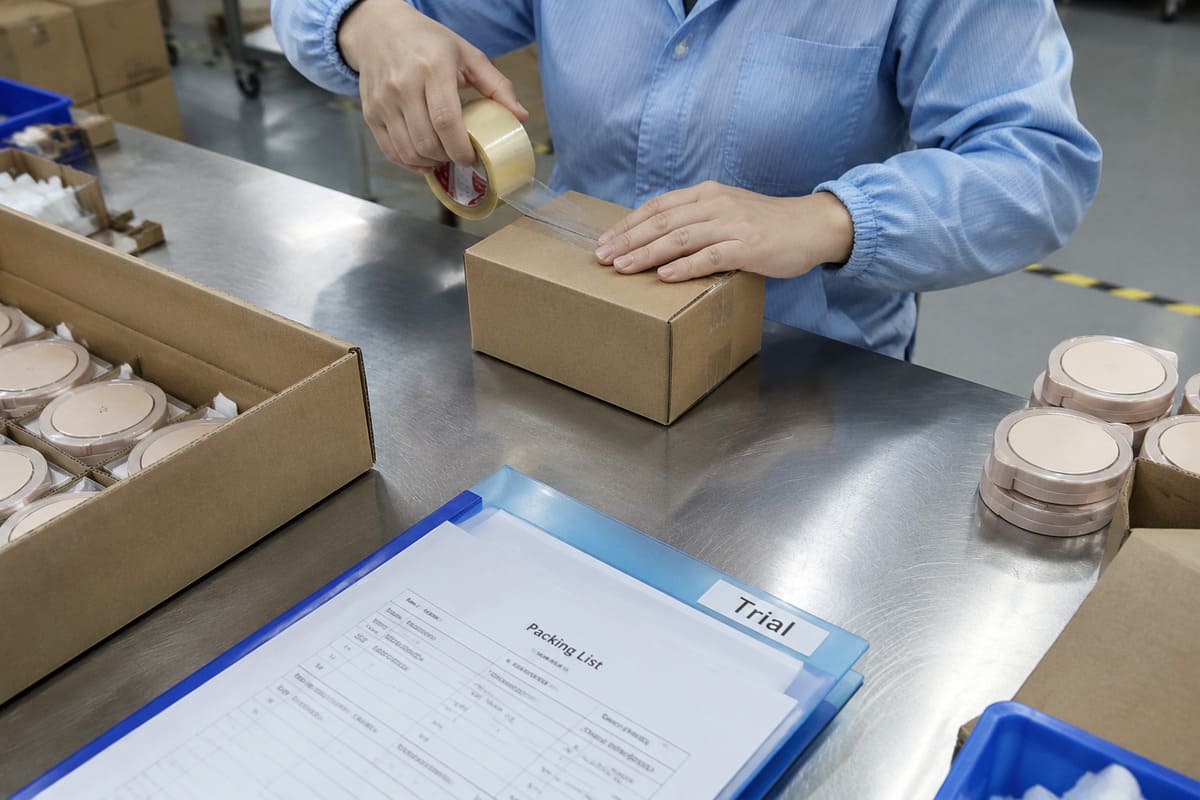
The brands that get stuck all share one belief: they think a quiet market means a lawless one. Platforms changed that. Amazon and TikTok Shop now actively request registration proof12, and they enforce it by freezing your revenue, not by sending a warning letter.
Signs You Are Walking Into the Trap
- You believe the factory handles "everything FDA" without a written document list.
- A supplier offered you an "FDA approval certificate" and you felt reassured.
- You have no copy of your facility's FEI number.
- You have not filed a product listing on Cosmetics Direct.
- You cannot name who your Responsible Person is.
If more than one of those applies, pause before you ship. Fixing this now costs a few emails. Fixing it after a suspension costs weeks of lost sales and ad spend, exactly what happened to the client I described earlier.
How to Start with a Compliant Low-Risk Trial Order?
You want to launch big to prove your brand, but committing to a large custom run before your compliance is sorted doubles your risk. If the paperwork lags, you are sitting on expensive inventory you legally cannot sell yet.
Start with a small standard trial order while your MoCRA filings progress in parallel. Select standard products that are already in production, run compliance and procurement on parallel tracks, and scale to custom work only after your product listing and safety file are complete. This keeps your cash exposure low while you learn the system.
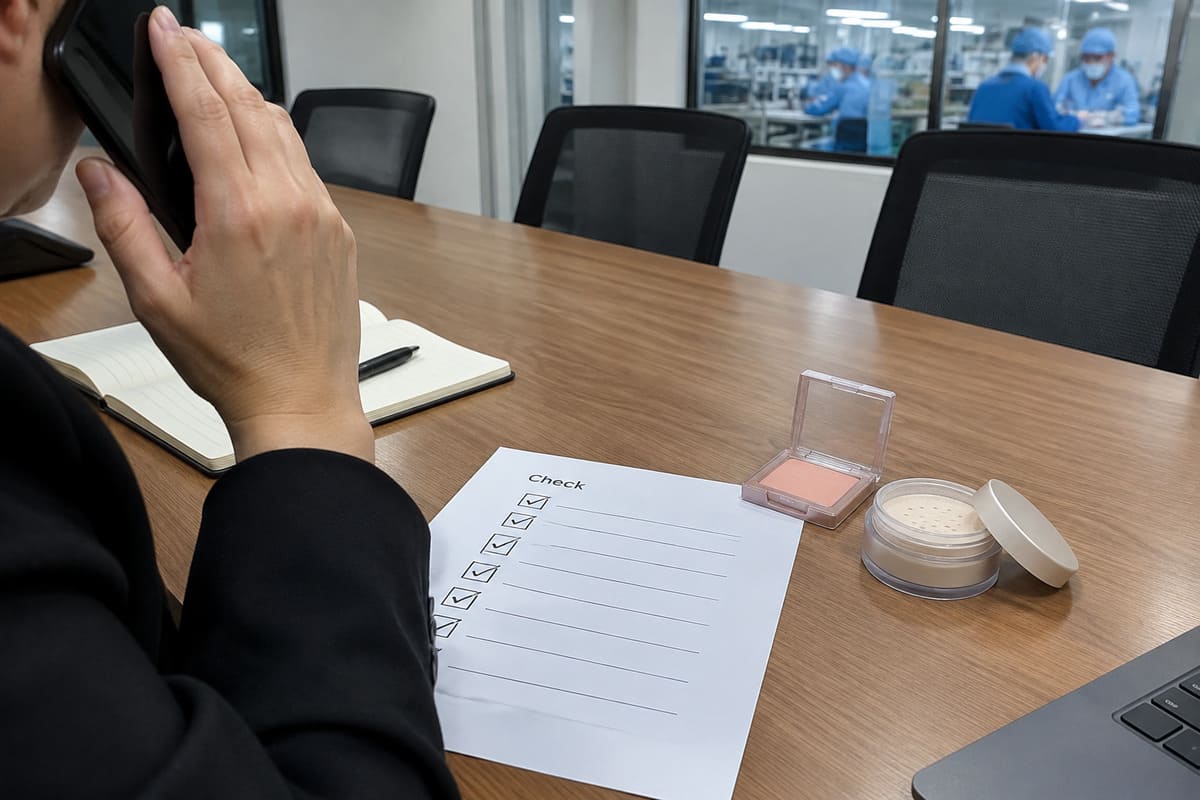
Here is the approach I recommend to first-time brand founders. Do not wait until your full custom order is ready to sort out compliance. Move both at once.
A Parallel-Track Launch Plan
| Track | Week 1-2 | Week 3-4 | Week 5-6 |
|---|---|---|---|
| Procurement | Place standard trial order | Production and QC | Ship trial units |
| Compliance | Request FEI + documents | File product listing | Confirm listing live |
For scale, keep these numbers realistic:
- Standard eyeshadow palette trial: selected standard palettes from 2,000 units, ideal for testing the market and your compliance workflow together.
- Full custom products: a realistic custom order typically requires 5,000 to 10,000 units, worth committing to once your filings are confirmed.
I built this parallel approach after watching too many founders freeze their cash in inventory while their listing sat suspended. A trial order lets you validate demand, learn the MoCRA workflow on a small batch, and only then commit to a large custom run with full confidence.
Frequently Asked Questions
Do I need FDA approval to sell cosmetics online?
No. You do not need FDA approval to sell cosmetics online or in stores. The FDA does not pre-approve cosmetic products or ingredients, except color additives. You do need to complete MoCRA obligations: facility registration by the factory and product listing plus safety substantiation by you as the Responsible Person.
Is a facility FEI number the same as FDA approval?
No. An FEI number confirms a facility is registered with the FDA. It is not approval of the facility or any product. The FDA states that registration and listing numbers do not indicate approval. Platforms often request the FEI number as proof of registration, not as a certificate of approval.
Who is the Responsible Person for a private-label cosmetics brand?
For most private-label brands, the Responsible Person is the brand owner whose name appears on the label, not the contract manufacturer. The Responsible Person holds the product listing, safety substantiation, and adverse event reporting duties. The factory supports these with documents but cannot legally assume the role.
What should I do if a supplier offers an "FDA certificate"?
Treat it as a warning sign. The FDA does not issue approval certificates for standard cosmetics. A supplier promising one either misunderstands MoCRA or is misleading you. Ask instead for their FEI number, ingredient lists, and stability reports, which are the documents that actually support your compliance.
Can I start selling before my MoCRA filings are complete?
You should not. Selling without a product listing risks platform suspension and customs delays. Run compliance and procurement in parallel. Start with a small standard trial order while you complete your facility FEI collection, product listing, and safety file, then scale to custom production.
Conclusion
So, do you need FDA approval to sell cosmetics? No, because the FDA does not approve cosmetic products before sale, apart from color additives. But that answer hides the real work. Under MoCRA, you still owe facility registration, product listing, safety substantiation, and adverse event reporting, and three of those four product-level duties sit on you as the Responsible Person, not your factory. Get the FEI number early, file your own product listing, and keep your safety documents in order. If you want to launch safely, start with a standard trial order and let us hand you the factory documents you need while your filings move in parallel.
"FDA Authority Over Cosmetics: How Cosmetics Are Not ...", https://www.fda.gov/cosmetics/cosmetics-laws-regulations/fda-authority-over-cosmetics-how-cosmetics-are-not-fda-approved-are-fda-regulated. The U.S. Food and Drug Administration states that cosmetic products and ingredients, other than color additives, are not subject to FDA premarket approval. Evidence role: definition; source type: government. Supports: The FDA does not approve cosmetics before they go to market, while color additives require premarket approval.. ↩
"Modernization of Cosmetics Regulation Act of 2022 (MoCRA)", https://www.fda.gov/cosmetics/cosmetics-laws-regulations/modernization-cosmetics-regulation-act-2022-mocra. The FDA's guidance on the Modernization of Cosmetics Regulation Act of 2022 describes requirements including facility registration, product listing, safety substantiation, and adverse event reporting. Evidence role: general_support; source type: government. Supports: MoCRA establishes requirements for facility registration, product listing, safety substantiation, and serious adverse event reporting.. ↩
"Color Additives | FDA", https://www.fda.gov/industry/color-additives. The FDA requires premarket approval of color additives used in cosmetics, distinguishing them from other cosmetic ingredients that are not pre-approved. Evidence role: mechanism; source type: government. Supports: Color additives used in cosmetics must be approved by the FDA before use.. ↩
"How to Find the Best OEM Makeup Kit Manufacturers with Low ...", https://vertinabeauty.com/2025/03/07/how-to-find-the-best-oem-makeup-kit-manufacturers-with-low-moq/. The FDA clarifies that registering a cosmetic facility or listing a product does not denote FDA approval, and registration or listing numbers do not indicate agency endorsement. Evidence role: definition; source type: government. Supports: FDA registration and listing of cosmetic facilities and products do not constitute FDA approval of the facility or product.. ↩
"Modernization of Cosmetics Regulation Act of 2022 (MoCRA)", https://www.fda.gov/cosmetics/cosmetics-laws-regulations/modernization-cosmetics-regulation-act-2022-mocra. The FDA defines the Responsible Person under MoCRA as the manufacturer, packer, or distributor whose name appears on the label of a cosmetic product. Evidence role: definition; source type: government. Supports: Under MoCRA, the Responsible Person is the manufacturer, packer, or distributor whose name appears on the product label.. ↩
"Registration & Listing of Cosmetic Product Facilities and ...", https://www.fda.gov/cosmetics/registration-listing-cosmetic-product-facilities-and-products. FDA guidance indicates that cosmetic facility registrations under MoCRA must be renewed every two years. Evidence role: mechanism; source type: government. Supports: MoCRA requires cosmetic facility registrations to be renewed on a biennial basis.. ↩
"Best Eyeshadow Brand: A Supply Chain ... - Vertina Beauty", https://vertinabeauty.com/best-eyeshadow-brand-a-supply-chain-breakdown-for-sourcing-decisions/. FDA guidance on MoCRA product listing describes an annual update requirement for listed cosmetic products. Evidence role: mechanism; source type: government. Supports: MoCRA requires cosmetic product listings to be updated annually.. ↩
"Modernization of Cosmetics Regulation Act of 2022 (MoCRA)", https://www.fda.gov/cosmetics/cosmetics-laws-regulations/modernization-cosmetics-regulation-act-2022-mocra. The FDA's MoCRA framework requires the Responsible Person to maintain records supporting adequate substantiation of safety for each marketed cosmetic product. Evidence role: mechanism; source type: government. Supports: MoCRA requires the Responsible Person to ensure and maintain adequate substantiation of the safety of each cosmetic product.. ↩
"Serious Adverse Event Reporting for Cosmetic Products", https://www.fda.gov/cosmetics/cosmetics-news-events/fda-issues-updated-instructions-serious-adverse-event-reporting-cosmetic-products. Under MoCRA, the FDA requires the Responsible Person to report serious adverse events linked to cosmetic products within a specified timeframe. Evidence role: mechanism; source type: government. Supports: MoCRA requires the Responsible Person to report serious adverse events associated with cosmetic products to the FDA.. Scope note: The exact reporting window and definition of a serious adverse event should be confirmed against current FDA guidance, which may be updated. ↩
"Modernization of Cosmetics Regulation Act of 2022 (MoCRA)", https://www.fda.gov/cosmetics/cosmetics-laws-regulations/modernization-cosmetics-regulation-act-2022-mocra. FDA guidance assigns product listing obligations to the Responsible Person and facility registration to the manufacturing facility under MoCRA. Evidence role: mechanism; source type: government. Supports: Under MoCRA the Responsible Person submits product listings while facilities are separately registered by the facility.. ↩
"Registration & Listing of Cosmetic Product Facilities and ...", https://www.fda.gov/cosmetics/registration-listing-cosmetic-product-facilities-and-products. The FDA identifies Cosmetics Direct as the electronic submission portal for cosmetic facility registration and product listing under MoCRA. Evidence role: general_support; source type: government. Supports: The FDA offers the Cosmetics Direct electronic portal for submitting cosmetic facility registrations and product listings under MoCRA.. ↩
"Registration & Listing of Cosmetic Product Facilities and ...", https://www.fda.gov/cosmetics/registration-listing-cosmetic-product-facilities-and-products. Platform seller policies indicate that cosmetic listings may require documentation of FDA registration or MoCRA compliance. Evidence role: case_reference; source type: other. Supports: E-commerce platforms require cosmetic sellers to document FDA registration or listing compliance.. Scope note: Platform policies change frequently and vary by region and category, so current published seller guidance should be consulted directly as direct confirmation. ↩