A makeup kit manufacturer promises you a finished dream: a beautiful set with your logo, ready to sell. Then the quote arrives. The MOQ is 12,000 units, not the 2,000 you planned. Panic sets in. You wonder if you are being scammed. You are not. The real trap is packaging, and almost nobody explains it.
A makeup kit manufacturer sets high MOQs (usually 6,000–12,000 units) because the kit's minimum is dictated by its packaging components, not its formula. Custom lipstick tubes, compacts, and rigid gift boxes typically require 10,000–17,000 units from packaging suppliers.1 Your kit MOQ can never be lower than your highest-MOQ component.
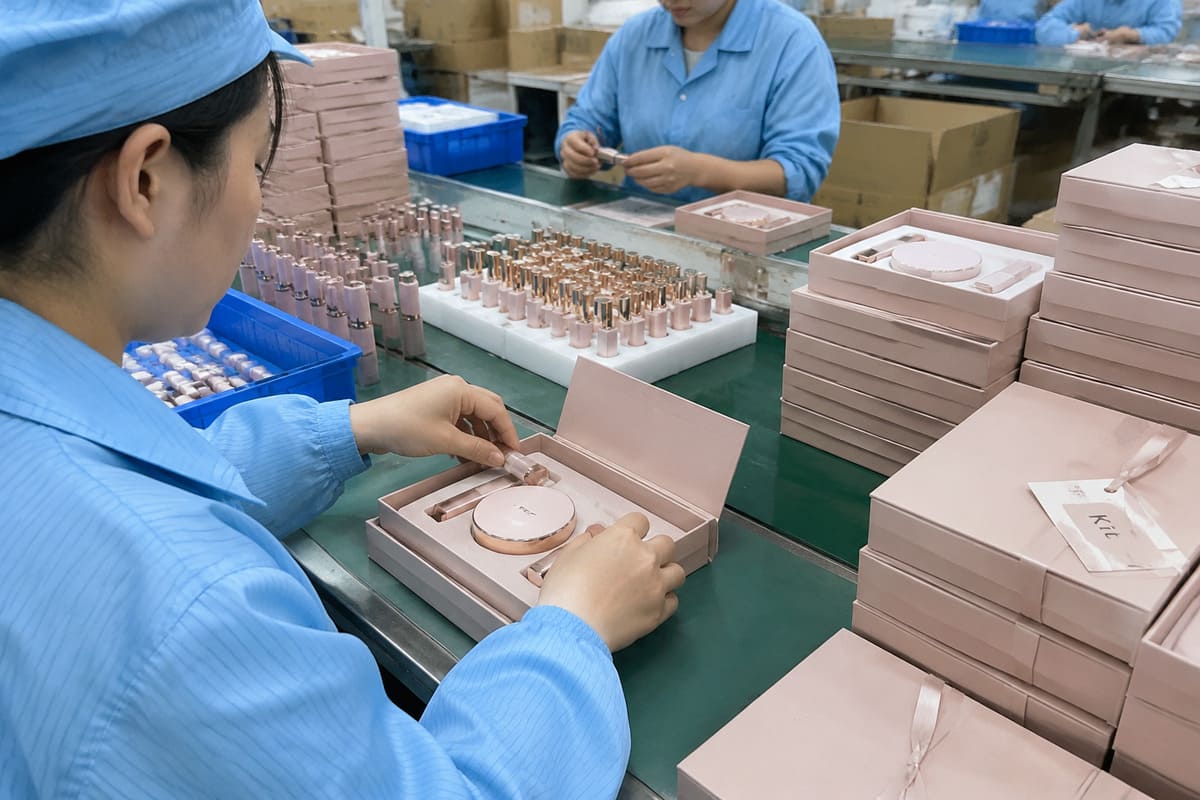
So the question is not "Who sells the cheapest kit?" The real question is how you avoid being held hostage by a single tube or compact case. Below, I break down the hidden mechanics and show you a smarter sequence to launch.
What Does "Makeup Kit Manufacturer" Really Mean for a Brand Founder?
You searched "makeup kit manufacturer" expecting a factory that makes kits. You found grids of pretty sets with inquiry buttons. The message seems simple: we have kits, ask for a price. But that framing hides the truth about how a kit is actually built.
A makeup kit manufacturer is not a single-product factory. It is a coordination hub that manages multiple formulas, multiple packaging suppliers, and a complex assembly process. The word "kit" describes a project, not a product. That distinction is why MOQs are high and why timelines stretch.
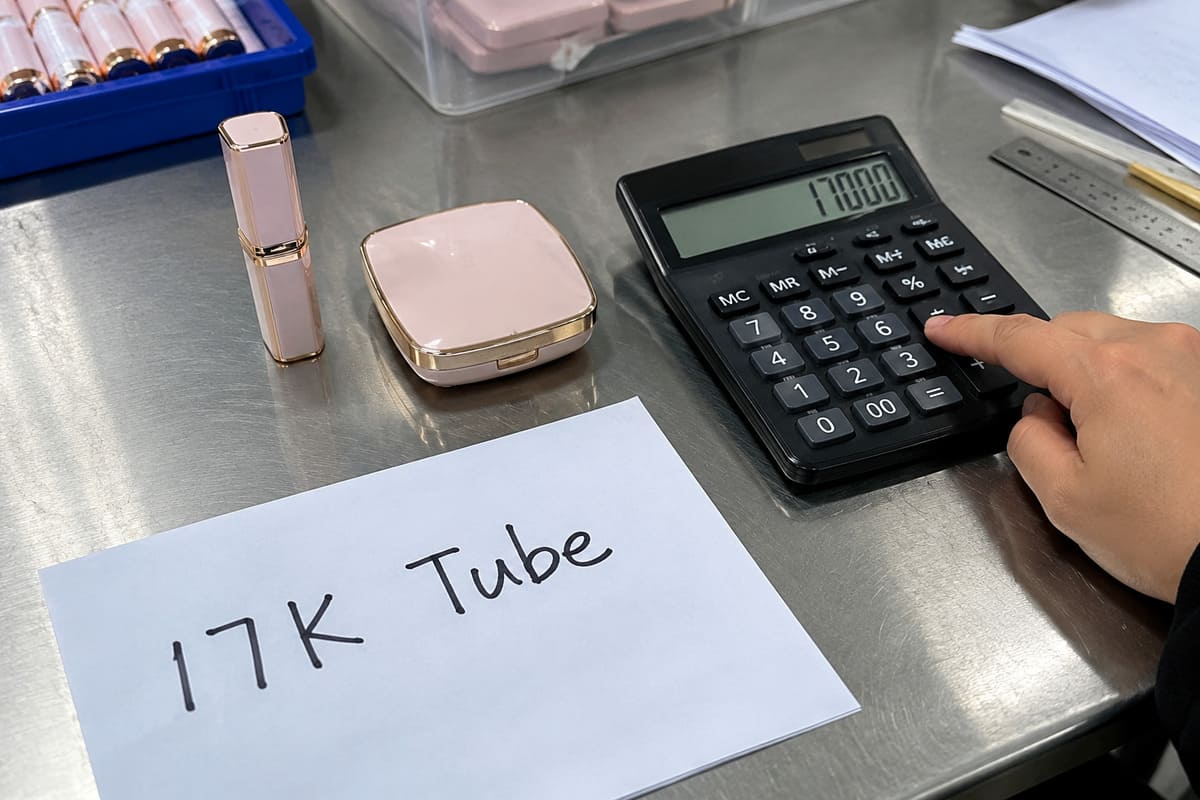
When you talk to a kit maker, you need to understand what sits behind the curtain. A kit combines items from different production streams.
What actually goes into a "simple" kit?
Picture a holiday gift set with an eyeshadow palette, a lipstick, and a compact powder. That looks like one product. It is really three supply chains converging.
- The eyeshadow palette comes from a pressed-powder line with its own magnet trays and pans.
- The lipstick needs a filled bullet plus a custom tube from a separate packaging vendor.
- The compact powder needs a pressed cake inside a custom case with a mirror.
- The gift box that holds everything is itself a rigid-box order with its own minimum.
Each of those four streams has a different lead time, a different quality standard, and a different MOQ. A good manufacturer coordinates all of them into one BOM (bill of materials). A weak one outsources half of it and hopes the pieces line up.
Why the grid of kits can mislead you
Those beautiful catalog kits usually use stock packaging with a sticker or simple print. That is how a factory can show you a "kit" at a low entry point. The moment you ask for a custom tube shape or a branded compact, you leave the stock world and enter the MOQ reality. I say this not to discourage you, but so your budget survives first contact.
The Bucket Effect: Why Your Kit's MOQ Is Held Hostage by Packaging (Not the Formula)?
You think the formula is the hard part. You worry about pigment quality, shade accuracy, and wear time. Those matter. But they are rarely what blocks a small launch. The thing that actually traps founders is a plastic tube.
The bucket effect means your kit's MOQ equals the highest MOQ among all its components.2 Since custom packaging suppliers demand 10,000–17,000 units for tubes, compacts, and rigid boxes, packaging—not formula—sets the floor. One high-MOQ component forces the entire kit up to that number.
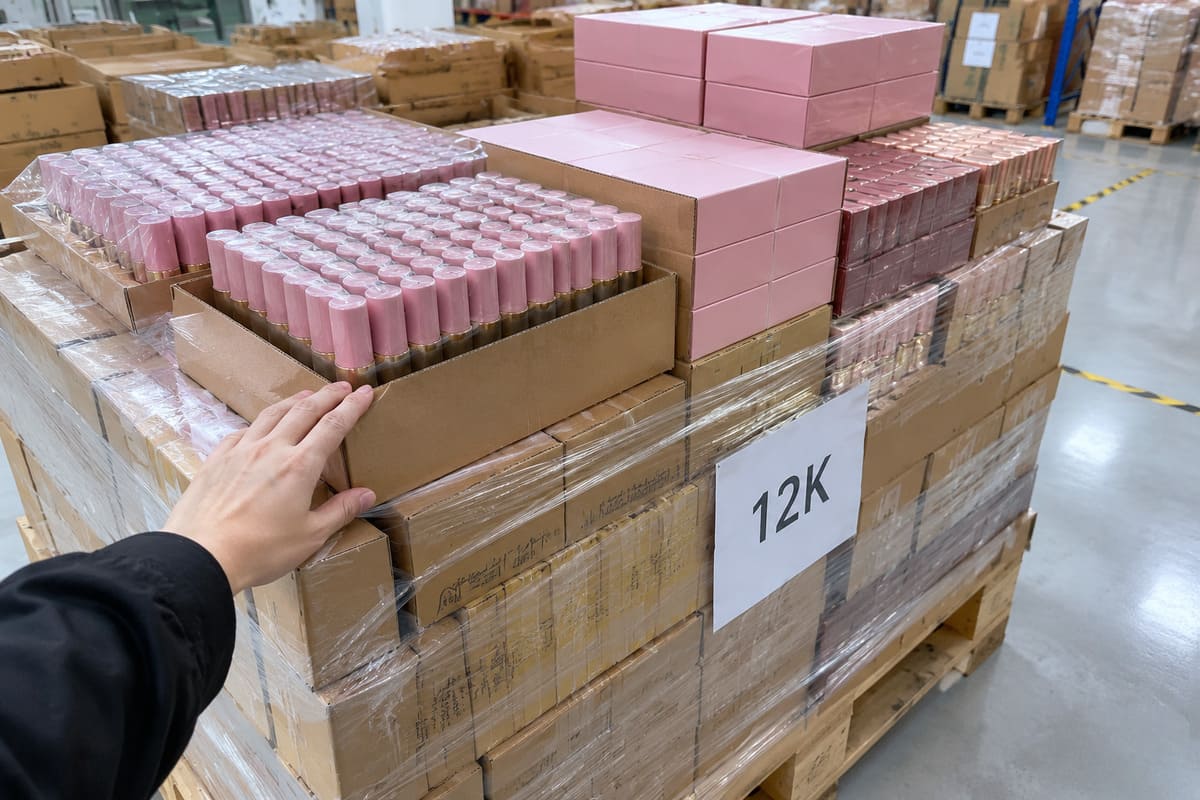
A U.S. founder I worked with learned this the hard way. He wanted a 2,000-unit holiday set and assumed the MOQ came from the eyeshadow palette. Then he saw the numbers. The lipstick tube he loved required an 18,000-unit minimum from the packaging supplier. The custom compact case required 17,000 units. His formula was never the problem. His tube was.
Why packaging MOQs are so high
Custom packaging needs tooling. A new tube shape or compact case requires a mold, and molds are expensive to cut and run.3 The packaging factory recovers that cost by spreading it across a large run. Printing, electroplating, and color matching on hard components also need large batches to stay economical.
| Kit Component | Typical Custom MOQ | Why It's High |
|---|---|---|
| Lipstick tube (custom) | 10,000–18,000 | Injection mold tooling + print setup4 |
| Eyeshadow compact (custom) | 10,000–17,000 | Mold, hinge, mirror assembly |
| Rigid gift box (custom) | 4,500–12,000 | Die-cut, print plates, finishing |
| Pressed powder pans/formula | 2,000–5,000 | Formula batch, lower tooling cost |
Notice the pattern. The formula-driven items sit at the bottom. The packaging-driven items sit at the top. Your kit floats up to the highest row.
The two bad options at 2,000 sets
If you insist on a 2,000-set custom kit, you get squeezed into one of two corners:
- Use generic stock packaging. You get a fast, cheap kit with zero differentiation. Your tube looks like a thousand other tubes.
- Buy the full packaging minimum. You order 17,000 empty tubes just to print your logo, then sit on 15,000 units of dead inventory.
Neither is a healthy start for a young brand. The honest move is to change the sequence, which I explain further down.
The Real Cost: Why 6,000–12,000 Units Is the Industry Standard for a Reason?
You see "MOQ 6,000" on every listing and assume factories coordinated to gouge you. That suspicion is natural. But the number is not a conspiracy. It is arithmetic, and once you see the math, the frustration turns into strategy.
The 6,000–12,000 unit standard exists because it is the lowest point where custom packaging economics work across multiple components. Multi-color sets on Alibaba commonly list 6,000-unit MOQs, with custom gift-box kits ranging from 4,500 to 12,000 units.5 The range reflects the packaging MOQ threshold, not supplier greed.
Let me show the real cost structure of a custom kit versus a validation order. Numbers below are illustrative ranges, and your actual quote depends on component choices.
| Launch Path | Units | Packaging Type | Capital at Risk | Differentiation |
|---|---|---|---|---|
| Full custom kit | 12,000 | Custom tube + compact + box | High | High |
| Mid custom kit | 6,000 | Semi-custom (stock + print) | Medium-High | Medium |
| Stock kit + sticker | 2,000 | Generic stock | Low | Low |
| Core product validation | 2,000 | Standard palette | Low | Medium |
Reading the table like a buyer
The full custom kit gives you the most brand control and the most financial exposure. For a funded brand with proven demand, that trade is fine. For a first-time founder testing a concept, it is a heavy bet on an unvalidated audience.
The core product validation path sits in a sweet spot. You launch a real, sellable product at low volume, you get genuine differentiation through color and formula, and you keep your cash. I will expand on this path in a later section, because I believe it is the right default for most new brands.
A note on "too good to be true" quotes
If a factory offers you a fully custom multi-category kit at 2,000 units with custom tubes and compacts, treat it as a red flag. They are probably using stock packaging and calling it custom, or they plan to cut corners on QC and assembly. Ask them directly which components are custom-tooled and what the packaging supplier's MOQ is. A straight answer tells you a lot about who you are dealing with.
Color Consistency and Assembly: Why These Are the Two Hidden Nightmares of Kit Production?
You budgeted for MOQ. Good. But two silent risks can wreck a kit even when the quantity works out: color drift across categories and messy assembly. These are the problems founders discover only after the first batch ships.
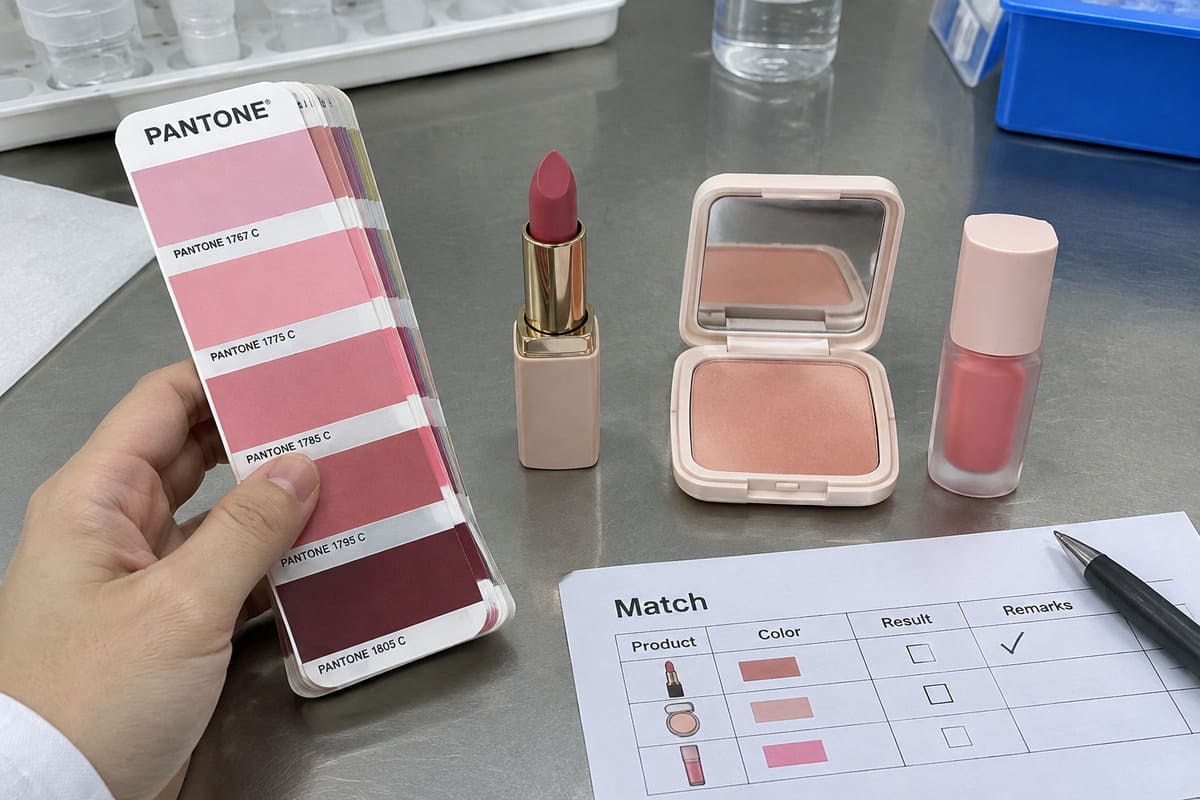
Color consistency and assembly are the two most underestimated risks in kit production. Powder, cream, and liquid formulas react differently to the same Pantone reference, so a kit can look like a patchwork.6 Assembly is a separate operational skill, and many "kit factories" outsource it, creating quality and timeline gaps.
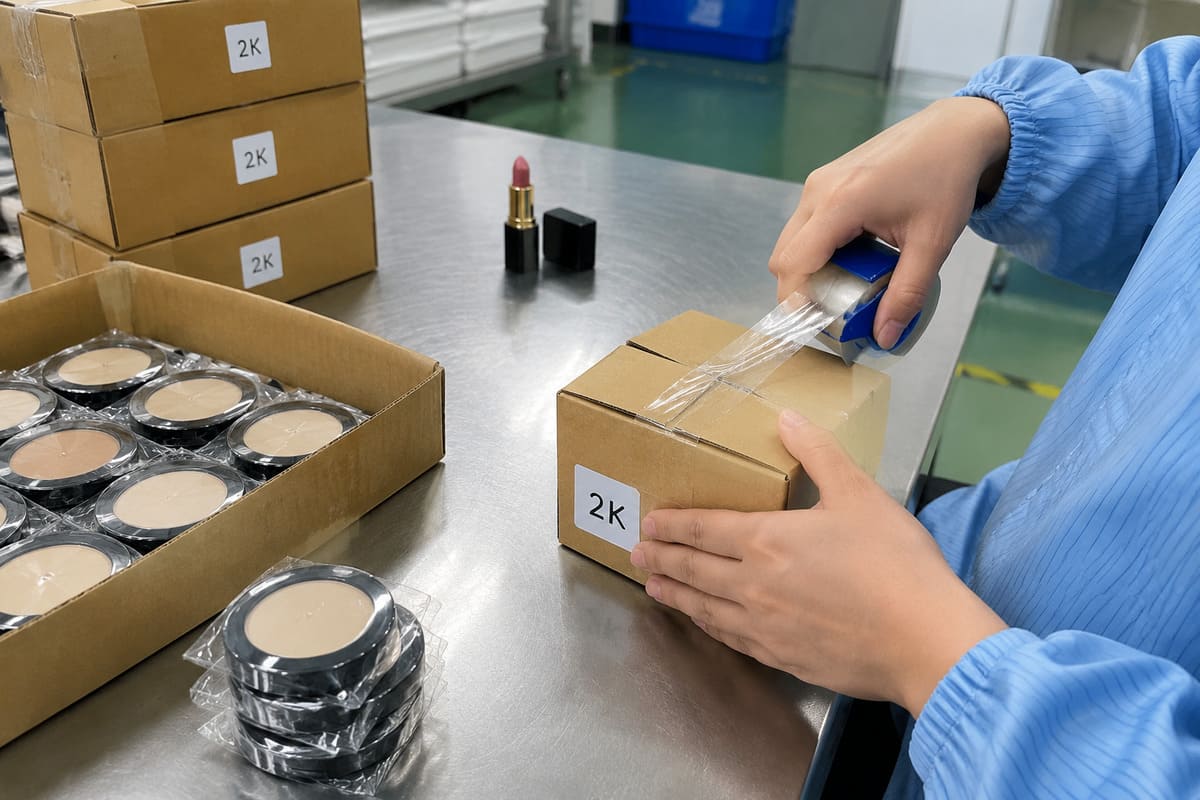
Why cross-category color is so hard
A single Pantone code looks like one color. But pigment behaves differently depending on its base.
- [Powder scatters light and often reads lighter and cooler.](https://en.wikipedia.org/wiki/Diffuse_reflection)%%%FOOTNOTE_REF_7%%%
- Cream holds pigment densely and reads richer.
- [Liquid can shift as it dries and interacts with film-formers.](https://preserve.lehigh.edu/lehigh-scholarship/graduate-publications-theses-dissertations/theses-dissertations/drying)%%%FOOTNOTE_REF_8%%%
Match a lipstick, a cream blush, and a powder eyeshadow to the same reference without a unified color lab, and you get three cousins instead of a family. For a "color story" kit, that mismatch destroys the whole concept. An in-house color lab with unified QC is the only reliable fix.
Why assembly is its own discipline
Putting a kit together is not packing a box. It involves:
- BOM management — tracking every component, pan, tube, and insert.
- Incoming component inspection — checking tubes and compacts for defects before fill.
- Fill and press QC — verifying each formula meets spec.
- Final assembly and check — placing items correctly, sealing, and inspecting the finished set.
When a factory outsources assembly, accountability splinters. If a compact arrives scratched, who owns the fix? When one supplier slips, the whole timeline slides. I prefer a single system where formula, packaging coordination, and assembly live under one roof, because that is where quality and schedules actually hold.
| Risk Area | What Goes Wrong | How to Prevent It |
|---|---|---|
| Color drift | Shades mismatch across categories | In-house color lab, unified Pantone QC |
| Component defects | Scratched or warped packaging | Incoming inspection before fill |
| Assembly errors | Wrong placement, poor sealing | BOM control, final-check protocol |
| Timeline slip | One outsourced supplier delays all | Single-system coordination |
A Smarter Path: Why Validate With 2,000 Units of Your Core Product First?
You want a full kit. I understand the appeal. But launching an unvalidated custom kit at 12,000 units is one of the fastest ways to burn a startup budget. There is a path that protects your cash and still gets you to market quickly.
The smartest path to a makeup kit is not to start with the kit. Start with 2,000 units of your core product—usually an eyeshadow palette—to validate your color story and audience. Once you have real sales data, coordinate the full kit using packaging options that match your proven volume.
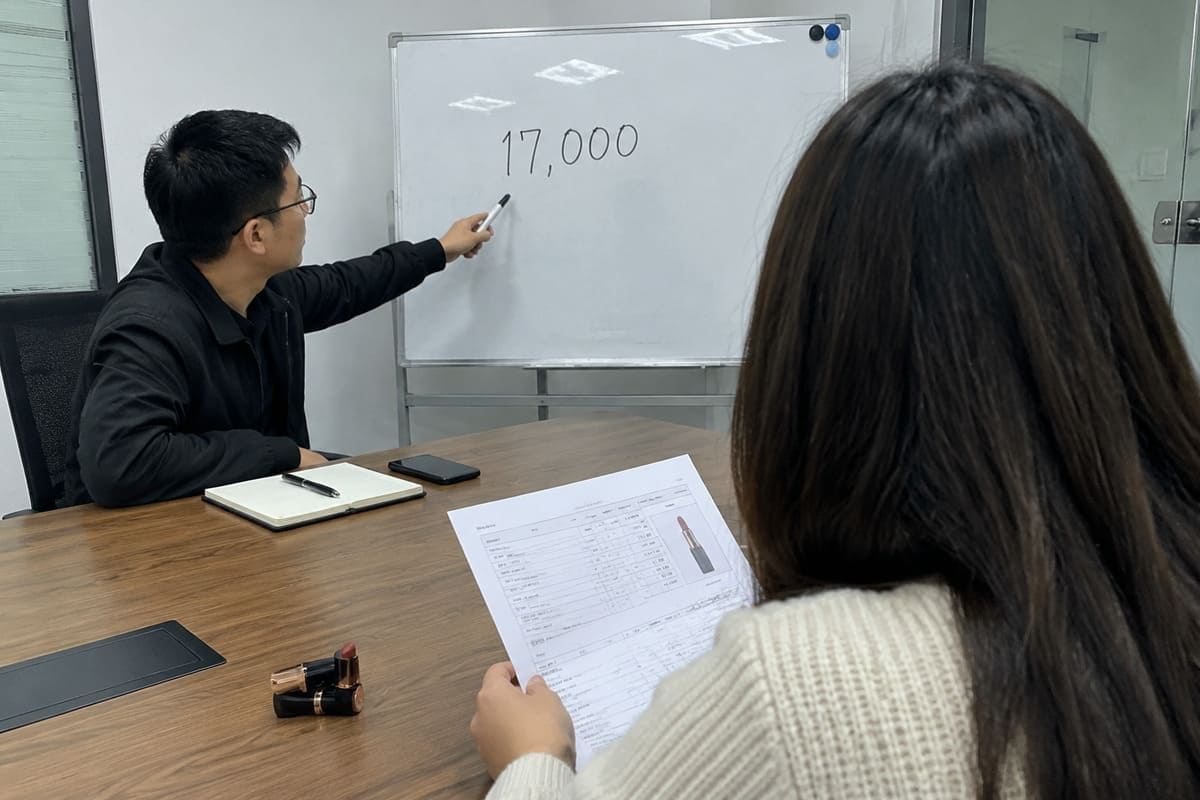
This is exactly how I reframed the U.S. founder's problem. He was staring at a forced choice between abandoning his packaging dream or ordering 17,000 sets. Both felt like losing. So we changed the question.
I told him: "Don't launch a custom kit yet. Launch with 2,000 units of our standard eyeshadow palette. Prove your color story. Build your audience. Then come back, and we will coordinate the full kit using packaging that fits your new volume." Today he is selling his palette and planning the kit for next year, this time with the leverage of real data instead of a guess.
Why this sequence works
- [You de-risk the concept. Real sales beat gut feeling.](https://pmc.ncbi.nlm.nih.gov/articles/PMC7893682/)%%%FOOTNOTE_REF_9%%% If the palette sells, the kit is worth building.
- You preserve cash. A 2,000-unit palette costs a fraction of a 12,000-unit custom kit.
- You gain negotiating leverage. With sales data, you can commit to a higher volume confidently, or negotiate packaging MOQs from a position of strength.
- You still differentiate. A custom shade palette already sets you apart, even on stock-adjacent packaging.
The validation-to-kit roadmap
| Stage | Order | Goal | Outcome |
|---|---|---|---|
| 1. Validate | 2,000 palettes | Test shades + audience | Real sales data |
| 2. Analyze | — | Review sell-through | Confident forecast |
| 3. Scale | 6,000–12,000 kit | Build full custom kit | Packaging MOQ now justified |
By the time you reach stage three, the packaging MOQ that once terrified you is simply a line item you can afford, because your volume finally matches it.
What We Will Tell You Honestly Before You Commit?
You have probably been promised the world by sales reps who vanish after the deposit. I would rather lose a quick order than set you up to fail. So here is the honest version, including the parts that are inconvenient for me to say.
I will tell you the truth about MOQs upfront. If your lipstick tube requires 17,000 units, I will say your kit MOQ is 17,000 unless you switch to stock packaging or wait for more capital. I will not pretend a fully custom 2,000-unit multi-category kit is realistic, because it is not.
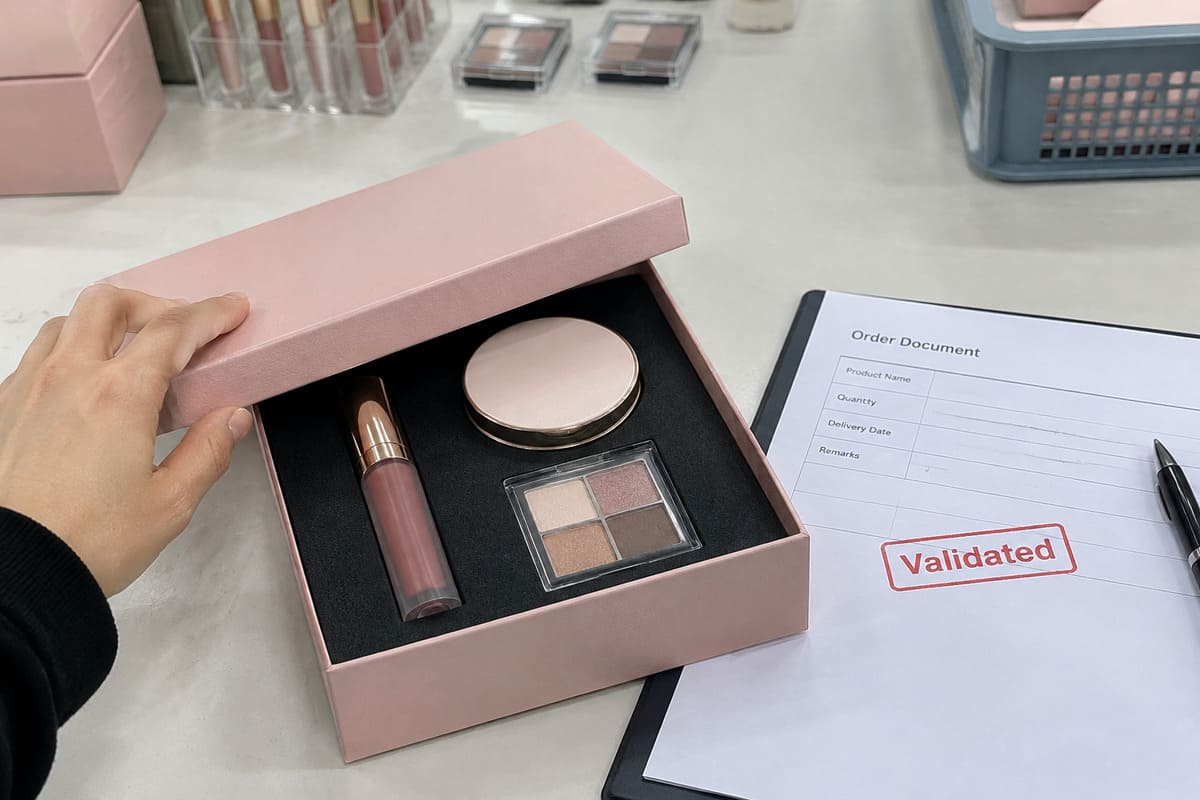
Here is where I draw the line between what I can and cannot promise.
What I do
- 2,000-unit validation trials on standard eyeshadow palettes, so you can test the market at low cost.
- Full INCI and compliance documents10, which I treat as papers you should verify against your target market's rules.
- Single-system kit coordination when you scale—formula, packaging, and assembly managed together.
What I do not do
- I do not claim a fully custom multi-category kit is realistic at 2,000 units.
- I do not hide the packaging bottleneck to win a deposit.
- I do not use stock packaging and call it "custom."
A word on compliance and certifications
Certifications and test reports are documents buyers should verify for their specific market. Rules differ sharply between regions, and application-specific decisions deserve qualified professional evaluation.11 I will share what I have and tell you honestly what I do not have, then help you match a compliance plan to your target market. Treat any certificate as a starting point for your own due diligence, not a final guarantee.
Frequently Asked Questions
Why is the MOQ for a custom makeup kit so high?
The MOQ is high because packaging controls it. Custom lipstick tubes, compacts, and rigid boxes require 10,000–17,000 units from packaging suppliers due to mold tooling and print setup costs. Your kit's minimum cannot drop below its highest-MOQ component, which is why custom kits start around 6,000–12,000 units.
Can I really start a makeup brand with only 2,000 units?
Yes, but start with a single core product, not a full custom kit. A 2,000-unit eyeshadow palette validates your color story and audience at low cost. Once you have sales data, you can scale into a full kit with packaging volumes that finally match your proven demand.
What is the difference between stock and custom packaging?
Stock packaging uses existing molds, so you can order small quantities with a logo sticker or simple print. Custom packaging uses new tooling for a unique shape, which triggers MOQs of 10,000–17,000 units. Stock means low cost and low differentiation; custom means high cost and high brand control.
Why do kit colors sometimes look mismatched?
Powder, cream, and liquid formulas react differently to the same Pantone reference. Without an in-house color lab and unified QC, a lipstick, blush, and eyeshadow matched to one code can read as three different shades. A unified color system is the only reliable way to keep a kit's color story consistent.
How long does custom makeup kit production take?
Timelines vary, but custom kits take longer than single products because multiple supply chains must converge. Packaging tooling alone can add weeks. Assembly, component inspection, and QC extend it further. A validation order of a single product ships faster, which is another reason to start there.
Conclusion
Choosing a makeup kit manufacturer comes down to one truth: packaging, not formula, controls your MOQ. Custom tubes and compacts demand 10,000–17,000 units, which pushes true custom kits to 6,000–12,000 sets12. The bucket effect is real, and one component can hold your whole launch hostage. The smart sequence is to validate with 2,000 units of your core product first, gather real sales data, then scale into a full kit with leverage on your side. Color consistency and assembly deserve equal attention. If you want an honest assessment of your MOQ reality, reach out and I will tell you the truth before you commit a dollar.
"Why Is Flower Knows So Popular? A Supply Chain ... - Vertina Beauty", https://vertinabeauty.com/why-is-flower-knows-so-popular-a-supply-chain-breakdown-for-new-brands/. Industry packaging guidance indicates that custom-tooled cosmetic components such as tubes and compacts commonly require large minimum runs to offset tooling costs. Evidence role: statistic; source type: institution. Supports: Custom-tooled cosmetic packaging typically carries high minimum order quantities driven by mold and setup costs.. Scope note: Specific unit thresholds vary by supplier, material, and region, so the 10,000–17,000 figure should be read as indicative rather than a fixed standard. ↩
"Liebig's law of the minimum", https://en.wikipedia.org/wiki/Liebig%27s_law_of_the_minimum. The limiting-factor principle, exemplified by Liebig's law of the minimum, holds that a system's result is governed by its scarcest or most constraining component, which parallels the article's 'bucket effect' framing. Evidence role: definition; source type: encyclopedia. Supports: The output or capacity of a system bound by multiple inputs is limited by its most constraining input, a principle expressed in the limiting-factor concept.. Scope note: The principle is drawn from biology and systems theory by analogy and is not a direct statement about packaging supply chains. ↩
"How Expensive is Injection Molding? | Biggest Cost Factors", https://www.atlasfibre.com/how-expensive-is-injection-molding/. Manufacturing engineering literature describes injection molding as a high-fixed-cost process in which mold tooling expense is distributed across the production run, favoring large batch sizes. Evidence role: mechanism; source type: education. Supports: Injection molding involves high fixed tooling costs that are amortized over production volume, raising minimum economical run sizes.. Scope note: The source explains the general cost structure of injection molding and does not quantify MOQs for cosmetic packaging specifically. ↩
"How to Estimate Injection Molding Cost?", https://formlabs.com/blog/injection-molding-cost/. Manufacturing process references indicate that both injection molding and print setup involve fixed costs incurred per run, which economically favor higher order quantities. Evidence role: mechanism; source type: education. Supports: Injection molding and printing processes carry significant fixed setup costs that incentivize larger production runs.. Scope note: Sources describe cost drivers in general manufacturing terms and do not provide cosmetic-tube-specific MOQ thresholds. ↩
"How to Find the Best OEM Makeup Kit Manufacturers with Low ...", https://vertinabeauty.com/2025/03/07/how-to-find-the-best-oem-makeup-kit-manufacturers-with-low-moq/. Trade and contract-manufacturing resources report that private-label cosmetic sets typically require minimum orders in the thousands of units, consistent with the cited range. Evidence role: statistic; source type: institution. Supports: Contract manufacturing and private-label makeup sets commonly carry minimum order quantities in the multi-thousand-unit range.. Scope note: Marketplace listings fluctuate and are not an audited data source, so observed MOQs are indicative of prevailing practice rather than a fixed industry figure. ↩
"Pigment", https://en.wikipedia.org/wiki/Pigment. Color and materials science research establishes that pigment appearance is influenced by the binder, refractive index, and surface light-scattering of the medium, which can cause the same colorant to read differently across formulations. Evidence role: mechanism; source type: research. Supports: Perceived color of a pigment depends on the surrounding medium and surface structure, so identical colorants appear different across formulation bases.. Scope note: The underlying research addresses pigment and color physics generally rather than cosmetic kit matching specifically. ↩
"Diffuse reflection", https://en.wikipedia.org/wiki/Diffuse_reflection. Optics and color-science literature on diffuse reflectance supports that finely divided powders scatter light strongly, raising perceived lightness compared with compact or liquid media. Evidence role: mechanism; source type: research. Supports: Powders produce high diffuse light scattering, which increases apparent lightness relative to denser or glossier media.. Scope note: The physics is general; the specific 'cooler' shift and cosmetic context are extrapolations beyond the core optical finding. ↩
"Drying Inhomogeneity during Film Formation of Waterborne ...", https://preserve.lehigh.edu/lehigh-scholarship/graduate-publications-theses-dissertations/theses-dissertations/drying. Cosmetic formulation research on film-forming polymers notes that film formation during drying changes surface and optical characteristics, which can affect the final perceived color. Evidence role: mechanism; source type: paper. Supports: Film-forming polymers in liquid cosmetics alter the film's optical properties as they dry, which can change perceived color.. Scope note: Available sources describe film-former behavior broadly; the magnitude of color shift depends on the specific formulation and is not quantified. ↩
"The role of product development practices on new ... - PMC", https://pmc.ncbi.nlm.nih.gov/articles/PMC7893682/. Product-development and lean-startup literature supports the practice of validating demand through a minimal offering before scaling, as a means of reducing launch risk. Evidence role: expert_consensus; source type: research. Supports: Validating market demand with a minimal initial offering before scaling reduces the risk of overcommitting resources to unvalidated products.. Scope note: This body of work supports the general strategy and does not address the specific economics of cosmetic kit packaging MOQs. ↩
"International Nomenclature of Cosmetic Ingredients", https://en.wikipedia.org/wiki/International_Nomenclature_of_Cosmetic_Ingredients. Reference sources define INCI as the International Nomenclature of Cosmetic Ingredients, a standardized naming system used for ingredient disclosure on cosmetic labels in many markets. Evidence role: definition; source type: encyclopedia. Supports: INCI (International Nomenclature of Cosmetic Ingredients) is a standardized system used to name cosmetic ingredients on product labels.. Scope note: The definition establishes what INCI is but does not confirm the specific compliance requirements of any particular target market. ↩
"Cosmetics & U.S. Law", https://www.fda.gov/cosmetics/cosmetics-laws-regulations/cosmetics-us-law. Government regulatory sources document that cosmetic ingredient restrictions and pre-market requirements differ across jurisdictions, supporting the claim that rules vary by region. Evidence role: general_support; source type: government. Supports: Cosmetic product requirements, including ingredient restrictions and safety documentation, differ between regulatory jurisdictions such as the EU and the US.. Scope note: Regulatory frameworks change over time, so cited sources reflect requirements as of their publication date. ↩
"How to Find the Best OEM Makeup Kit Manufacturers with Low ...", https://vertinabeauty.com/2025/03/07/how-to-find-the-best-oem-makeup-kit-manufacturers-with-low-moq/. Contract manufacturing resources indicate that fully customized cosmetic kits typically require minimum orders in the thousands of units, consistent with the stated 6,000–12,000 range. Evidence role: statistic; source type: institution. Supports: Fully customized multi-component cosmetic kits generally require minimum orders in the multi-thousand-unit range due to component tooling constraints.. Scope note: Exact MOQ ranges depend on component selection and supplier, so the figure represents a common band rather than a universal standard. ↩