Searching for a makeup manufacturer Dubai feels like the obvious first move for a Middle East beauty brand. You see private-label MOQs as low as 100 units and the prestige of a "Made in UAE" label. Then you ask for your own formula and your own compact, and the quote jumps to 5,000 units. Suddenly you are stuck choosing between a generic product and a $30,000 bet.
When a makeup manufacturer in Dubai advertises a 100-unit MOQ, that price almost always means white-label repackaging1: a stock formula in stock packaging with your logo added. True custom formulation (OEM/Contract Manufacturing)2 in the UAE typically starts at 1,000 to 5,000 units with a 4 to 12 week development timeline. The 100-unit offer and the custom product are two different services at two different scales.
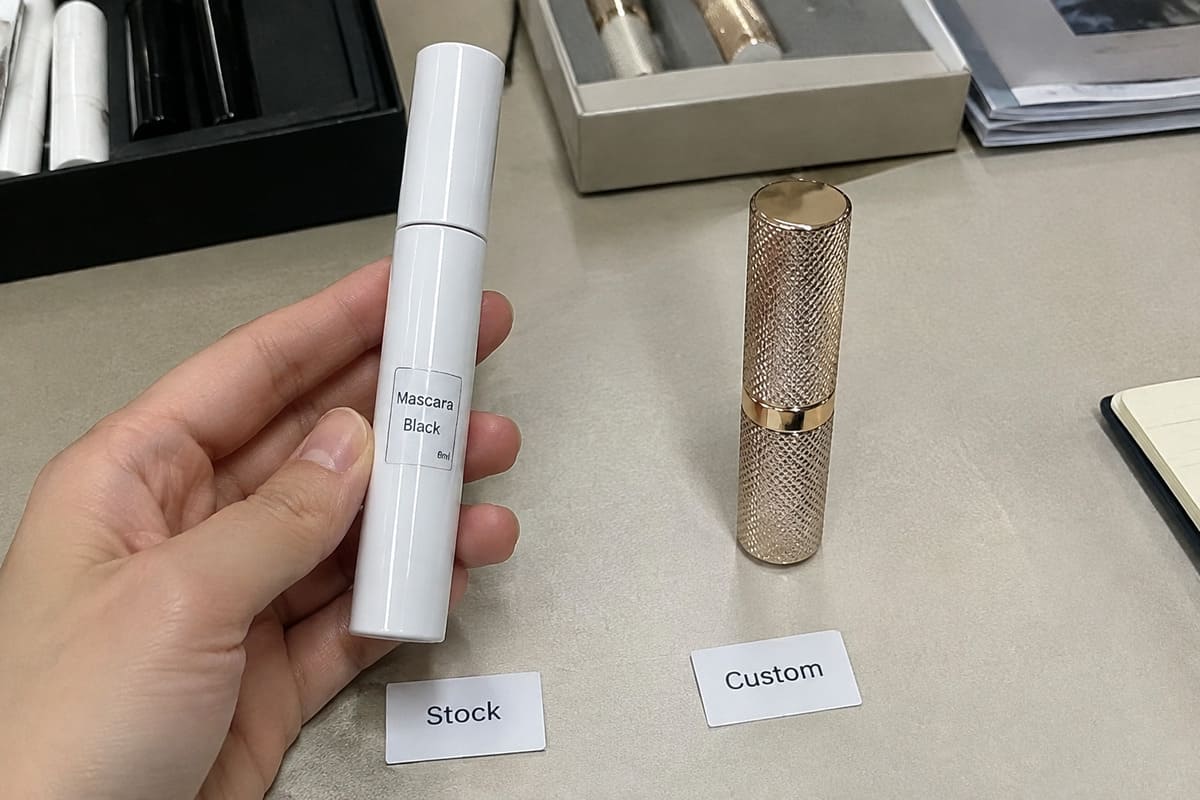
So the honest question is not "where is a factory in Dubai." It is "what do I actually get for that MOQ, what does differentiation really cost, and is there a path that avoids both white-label sameness and a cash-draining first order?" Let me break it down.
What Does "Makeup Manufacturer Dubai" Really Mean for a Brand Founder?
You type "makeup manufacturer Dubai" into Google expecting a clear answer. Instead you get a mix of trading companies, repackagers, and a handful of real factories, all using the same word: "manufacturer." The label hides what you are buying.
For most brand founders, a "makeup manufacturer Dubai" result is one of three things: a white-label repackager (your logo on a stock product), a trading agent (who sources elsewhere and marks up), or a genuine contract manufacturer. Only the last builds a product that is truly yours, and it carries a much higher MOQ.
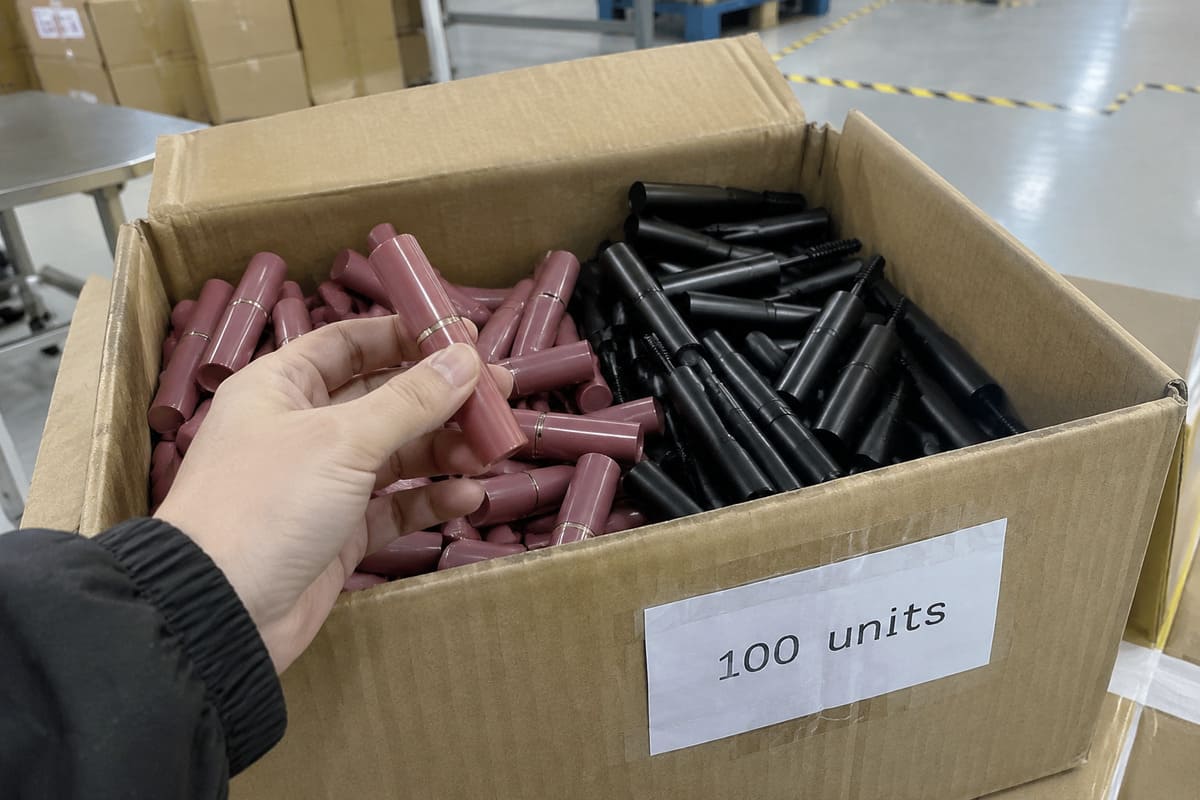
Here is where the confusion costs you money. The three supplier types are priced and structured differently, and the cheap MOQ you saw belongs to the option that gives you the least control.
| Supplier type | What you actually get | Typical MOQ | Your brand ownership |
|---|---|---|---|
| White-label repackager | Stock formula + stock packaging + your logo | 100–500 units | Low (label only) |
| Trading agent | Sourced product, marked up, longer chain | Varies | Low to medium |
| Contract manufacturer (OEM/ODM) | Custom formula, custom mold, your spec | 1,000–5,000 units | High |
Why the word "manufacturer" misleads new buyers
I have watched founders assume "manufacturer" guarantees custom work. It does not. A repackager is technically handling your order inside a facility, so the word is not a lie. But the product on the shelf is the same base that ten other brands are selling. If your goal is a distinct shade range or a special-effect eyeshadow, a 100-unit "manufacturer" rarely delivers it. You need to read the quote for what it includes: formula development, mold tooling, and stability testing. If those line items are missing, you are looking at white-label, not manufacturing.
Why Does a 100-Unit MOQ in Dubai Mean White-Label, Not Custom Formulation?
A founder I worked with got excited about a "100 unit, private label, fast" message from a Dubai factory. Then he asked two questions: can you tweak the formula, and can I use my own compact? The MOQ jumped to 5,000 and the timeline to 12 weeks. He felt misled, but the factory was consistent. He had simply crossed from one service into another.
A 100-unit MOQ works only because the factory is not developing anything new. The formula, the pan, and the packaging already exist and are produced in bulk for many clients. The moment you request a custom formula or a private mold, the factory must run a dedicated production line, which forces a 1,000 to 5,000 unit minimum and a 4 to 12 week timeline.
The economics are simple. A stock product spreads tooling and development cost across thousands of units already in the pipeline, so your 100 units ride along cheaply. A custom product makes you the only buyer of that formula and that mold, so you absorb the full setup cost. That is why the number moves so sharply.
- 100–500 units: stock formula, stock pan, stock compact, your logo. No formula edits.
- 1,000–2,000 units: often the entry point for minor customization (color selection from an existing library, printed packaging).
- 5,000+ units: full custom formulation, private molds, and bespoke packaging.
There is nothing wrong with white-label if a stock product fits your plan. The problem is believing you bought differentiation when you bought a label. Ask the factory directly: "Is this your stock formula, and can I change it?" The answer tells you which service you are really in.
What Does True Customization Actually Require in the UAE?
Say you want a product that is genuinely yours. A unique chameleon eyeshadow, a custom-pressed palette, your own compact design. The dream is real, and so is the cost structure behind it. Underestimating it is how founders run out of cash halfway through development.
True customization from a makeup manufacturer in the UAE typically requires 1,000 to 5,000 units per SKU, with some factories setting a standard 5,000-unit MOQ. Development timelines run 4 to 12 weeks, covering formula work, mold tooling, lab testing, and stability reports3. This is OEM/Contract Manufacturing, a different service from white-label private label.
Understanding where the time and money go helps you plan rather than panic. Here is the breakdown I share with founders before they commit.
| Stage | What happens | Typical time |
|---|---|---|
| Formula development | Lab builds or adjusts the formula to your spec | 2–4 weeks |
| Sampling and approval | You test, revise, and sign off | 1–3 weeks |
| Mold / tooling | Custom compact or pan tooling (if required) | 2–4 weeks |
| Stability and testing | Shelf-life, compatibility, safety checks | 2–6 weeks (can overlap) |
| Bulk production | Full run after approval | 2–4 weeks |
The real cash math of a 5,000-unit custom order
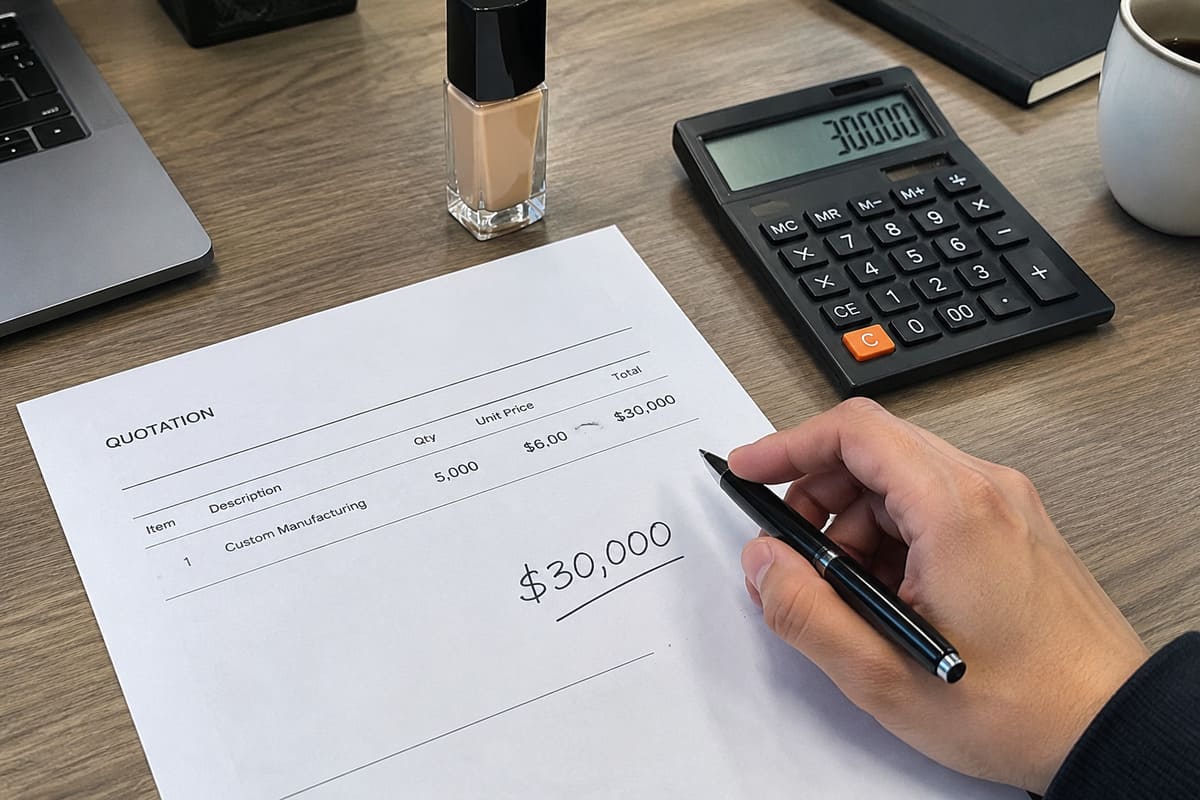
Let me put numbers on the fear. Suppose a custom palette costs $6 landed per unit. A 5,000-unit order is a $30,000 commitment before you have sold a single piece, and that excludes marketing, shipping to your market, and registration fees. For an established brand with sell-through data, that is a reasonable bet. For a first-time founder with no proof of demand, it is a gamble that can end the business before it starts. This is the exact trap my client hit: he did not have $30,000 to risk, but he also refused to sell a generic product. The way out is not to choose between those two. The way out is to sequence them, which I will come back to.
What Is the Real Landed Cost of Importing Makeup Into the UAE?
Many founders stay local because they assume importing is expensive and complicated. They picture surprise fees and stuck shipments. The fear is understandable, but it is based on vague dread rather than actual numbers.
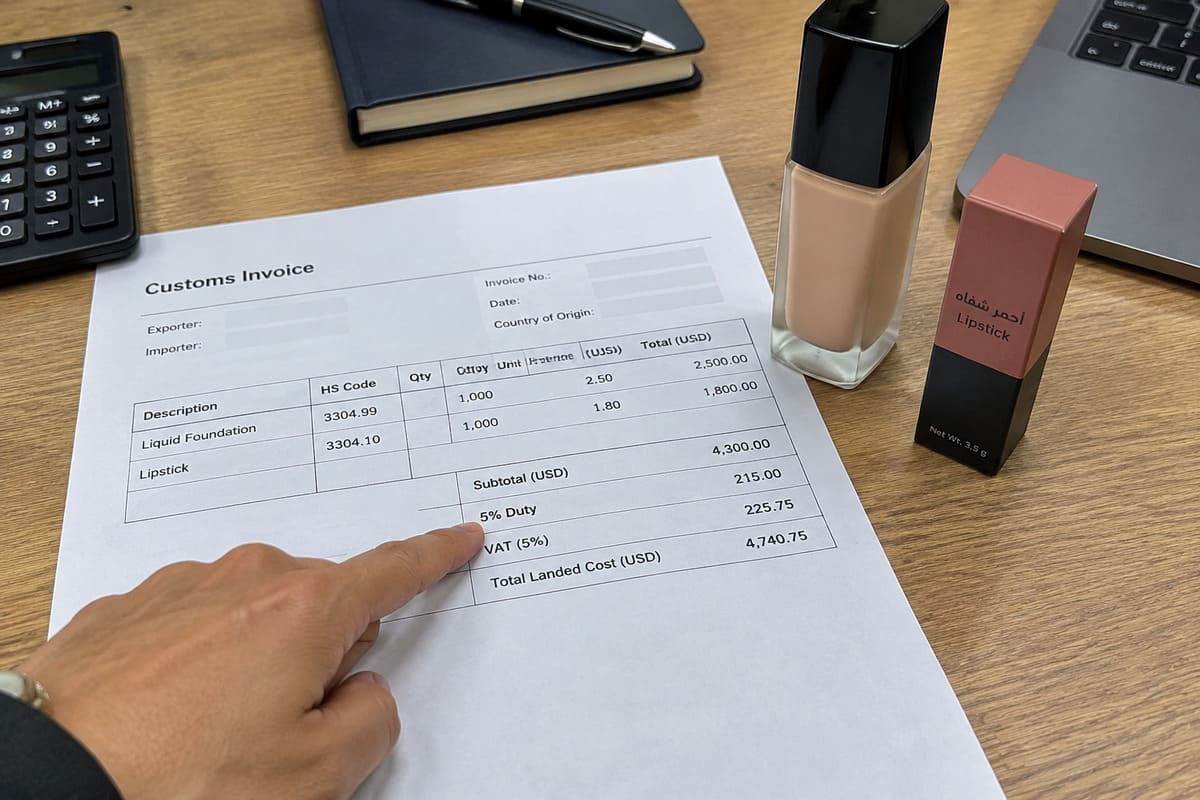
The landed cost of importing cosmetics into the UAE is calculable, not catastrophic. UAE customs duty is typically 5% on CIF value4. Saudi Arabia may apply 5% duty plus 15% VAT, with some cosmetics duties reaching 12–20%5. The China–GCC FTA could reduce cosmetics (HS 33) duty by roughly 7.4 percentage points6, saving about $7,400 on a $100,000 shipment.
That $7,400 is not pocket change. It can fund a 2,000-unit trial run and a micro-influencer campaign. The point is that cross-border cost is a line item you plan around, not a reason to settle for white-label.
| Cost component | UAE | Saudi Arabia |
|---|---|---|
| Customs duty (CIF) | ~5% | ~5% (cosmetics can reach 12–20%) |
| VAT | 5% | 15% |
| FTA potential (China–GCC, HS 33) | ~7.4 pt reduction possible | ~7.4 pt reduction possible |
| Registration | ESMA-related requirements | SFDA importer registration |
Who is responsible for compliance?
This is the part founders most often get wrong, so I state it plainly. The registration and safety obligations sit with the importer or brand owner, not the overseas factory.
- Saudi SFDA7 requires importer registration, a local agent, and product listing through eCOSMA/CPNP-SA.
- UAE carries ESMA-related requirements for cosmetic products.
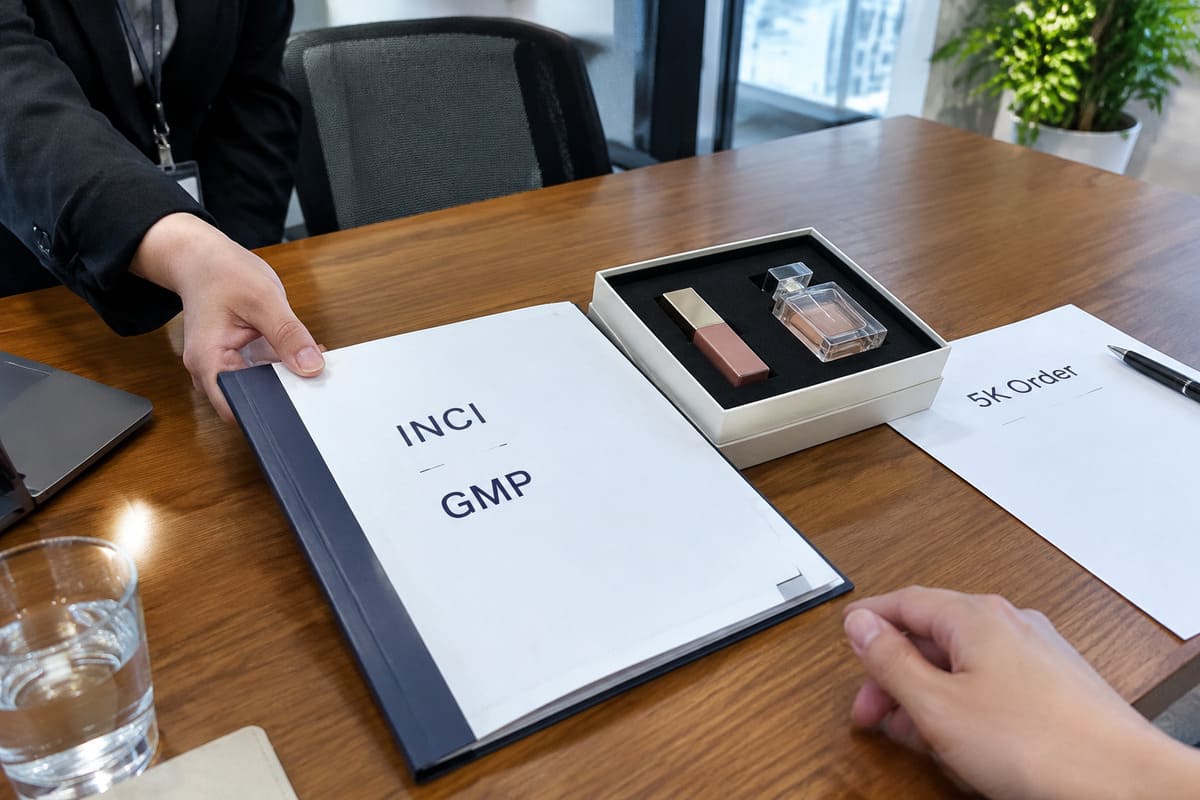
- Your factory provides GMP documentation8, INCI lists9, stability reports, and Free Sale Certificates to support your filing.
I want to be clear about the boundary here: we supply the documents that make your registration possible. We do not file on your behalf, and we do not assume your vigilance obligations. Treat every certificate as a document you verify and submit, and work with a qualified regulatory agent in your target market for the final filing.
Is the Guangdong Alternative a Smarter Way to Validate the Middle East Market?
A new brand's biggest enemy is not cost. It is uncertainty. You do not yet know which shades sell, which packaging converts, or whether your concept resonates in Riyadh or Dubai. Spending $30,000 on custom units to answer that question is backwards.
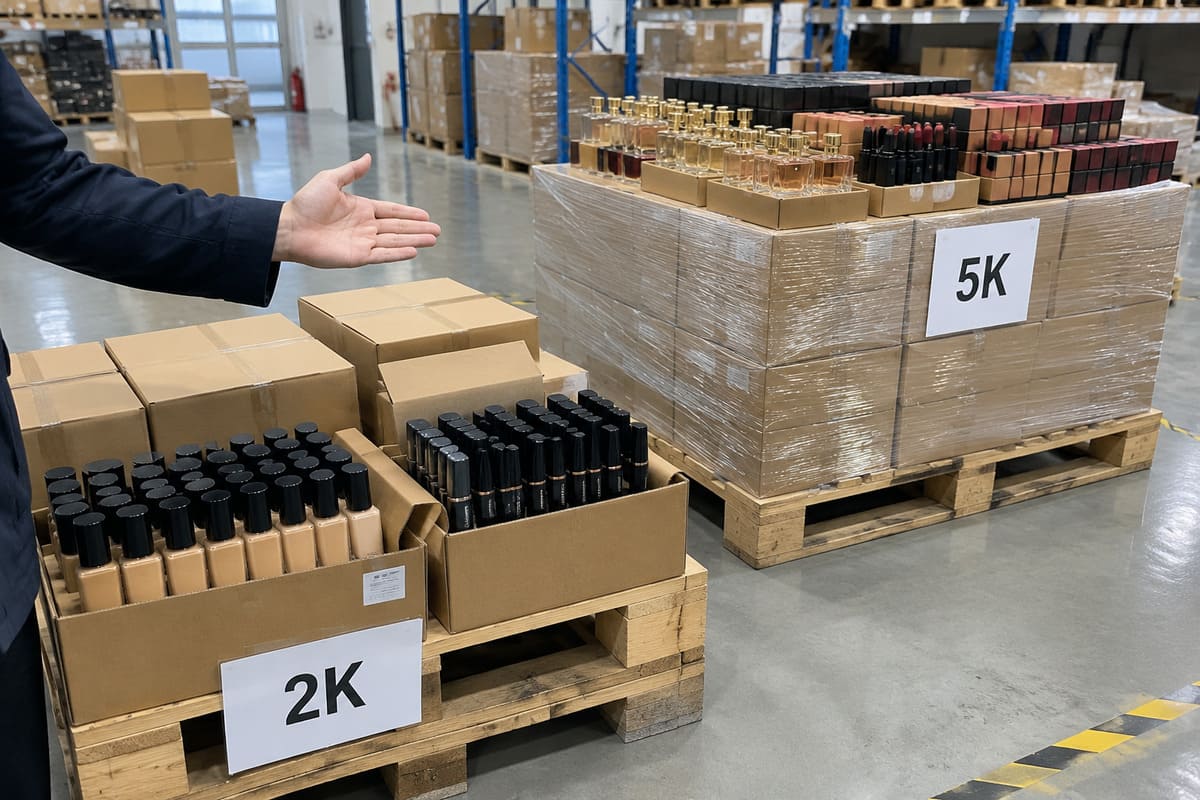
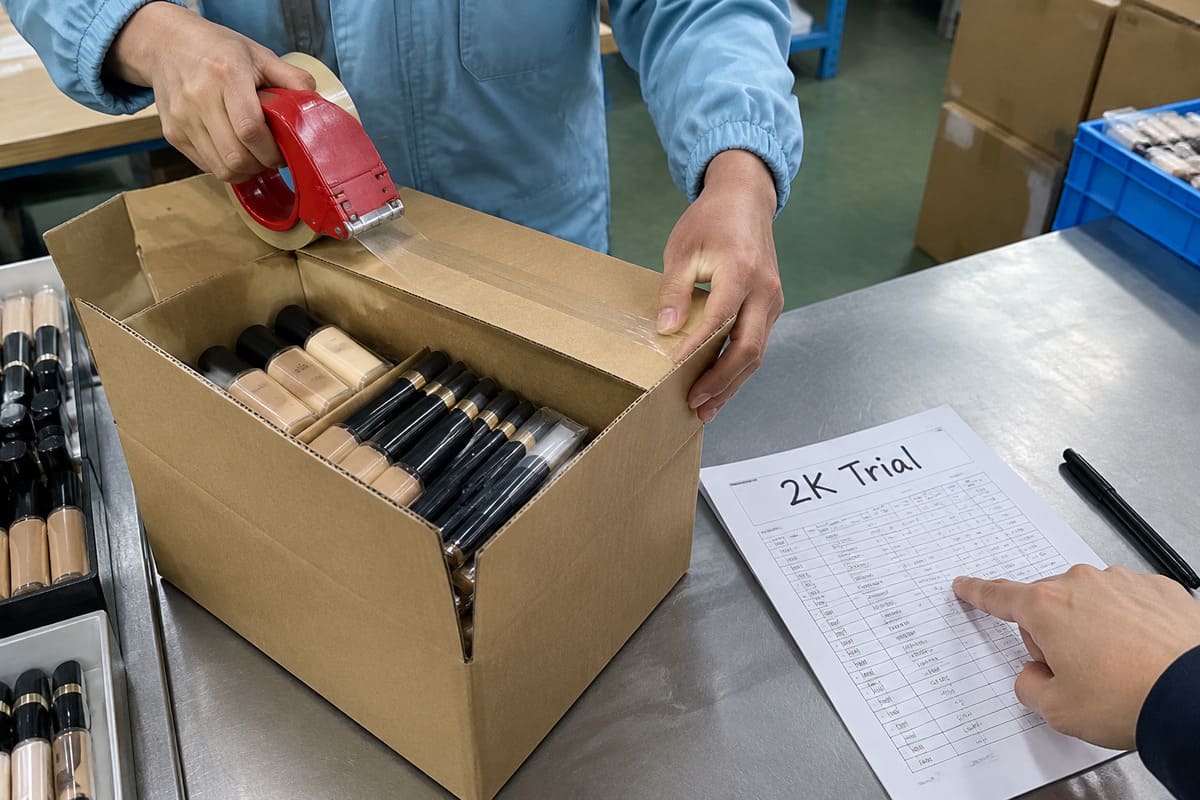
The Guangdong alternative lets you validate the Middle East market before committing to full customization. A 2,000-unit order of a standard eyeshadow palette tests real demand at a fraction of the cash risk, while a later 5,000+ unit run funds true differentiation once you have sales data. You buy evidence first, then buy uniqueness.
Here is the thinking behind the two thresholds, and why each number exists for a different purpose.
| Order stage | Purpose | Units | What it answers |
|---|---|---|---|
| Validation trial | Test the market with a quality stock product | 2,000 | Does demand exist? Which SKUs sell? |
| Differentiation run | Build a product that is truly yours | 5,000+ | How do I stand out once demand is proven? |
Why 2,000 units, not 100?
A 100-unit white-label order is too small to tell you anything real. You cannot run a proper campaign, you cannot reach retail, and you cannot read sell-through. A 2,000-unit trial of a strong standard palette, from an agile Guangdong supply chain, is large enough to generate genuine market data and small enough to survive if a shade flops. It gives you stock, inventory to support marketing, and a reason to talk to distributors. When that trial sells through, you have earned the right to spend on customization, and you have the revenue to pay for it. That is a very different position from guessing with $30,000 up front.
How Can You Start With a Low-Risk Trial and Scale Without Burning Cash?
The founder I mentioned was stuck between two bad options: rent a label with 100 generic units, or gamble $30,000 on 5,000 custom units with zero sales proof. Both felt wrong because both skipped the step that matters most, which is evidence.
Start with a 2,000-unit validation trial of a standard palette to prove demand, use the sales data to justify a 5,000+ unit custom run for true differentiation, then add a "Made in UAE" line only for the specific SKUs where that local premium is proven. Sequence the decisions so each order is funded by the results of the last.
We reframed my client's whole plan around this sequence, and it removed the false choice entirely.
- Validate (2,000 units, Guangdong). We supplied a standard eyeshadow palette and the INCI, GMP, stability reports, and Free Sale Certificate documentation he needed for his SFDA/ESMA filing. The 5% UAE CIF duty and the potential FTA reduction kept the landed cost known and controlled. The filing stayed his responsibility; we provided the papers.
- Differentiate (5,000+ units). Once the trial sold through, he used the revenue to fund a custom formulation and private mold. Now the $30,000 bet was backed by data, not hope.
- Localize selectively. For the few SKUs where "Made in UAE" clearly added value, he added a Dubai-made line. Not for the whole range, only where the premium was proven.
The smartest brands I work with do not start with the most expensive option. They start with the one that gives them evidence, then let the data decide the next order.
Frequently Asked Questions
What certifications do I need to export cosmetics to Saudi Arabia?
To sell cosmetics in Saudi Arabia, the importer must register with the SFDA, appoint a local authorized agent, and list each product through the eCOSMA/CPNP-SA system10. Your manufacturer supplies GMP documentation, INCI lists, stability reports, and a Free Sale Certificate. The registration and ongoing safety obligations remain with you as the importer.
Is a makeup manufacturer Dubai always better than importing?
Not always. A makeup manufacturer in Dubai is the rational choice if your priority is the "Made in UAE" label and your budget fits white-label. If you want to validate demand, control cost, and then differentiate, importing a validation trial first and customizing later usually gives you more product control for less upfront cash.
What is the real MOQ for custom makeup in the UAE?
True custom formulation (OEM/Contract Manufacturing) in the UAE typically starts at 1,000 to 5,000 units per SKU, with some factories setting a standard 5,000-unit minimum. Development runs 4 to 12 weeks. The 100 to 500 unit offers you see advertised are white-label repackaging, not custom formulation.
How much duty will I pay importing makeup into the UAE?
UAE customs duty is typically 5% of the CIF value, plus 5% VAT. Saudi Arabia applies 15% VAT11 and cosmetics duties that can reach 12–20%. The China–GCC FTA may reduce cosmetics (HS 33) duty by around 7.4 percentage points, roughly $7,400 saved on a $100,000 shipment.
Can I start a makeup brand with only 100 units?
You can, but 100 units is almost always white-label: a stock product with your logo. It is too small to generate real market data or support a marketing campaign. A 2,000-unit validation trial gives you enough inventory to test demand properly while keeping cash risk manageable.
Conclusion
Choosing a makeup manufacturer Dubai is not really a location question, it is a sequencing question. A 100-unit MOQ means white-label, not a brand. True customization in the UAE starts at 1,000 to 5,000 units over 4 to 12 weeks. The landed cost of importing is a calculable 5% duty, not a catastrophe, and compliance responsibility sits with you as the importer while your factory supplies the supporting documents. The lowest-risk path is to validate with a 2,000-unit trial, differentiate with a 5,000+ unit custom run once demand is proven, then localize only where "Made in UAE" earns its premium. If you want to map that sequence for your product, send me your target market and first-order size, and I will build you a costed plan.
"White-label product", https://en.wikipedia.org/wiki/White-label_product. Reference sources describe white-label products as standardized goods produced by one company and rebranded by others for resale under their own labels. Evidence role: definition; source type: encyclopedia. Supports: White-label goods are standardized products manufactured for rebranding and sale under multiple buyers' labels.. ↩
"What is an Original Equipment Manufacturer (OEM)? - NITAAC", https://nitaac.nih.gov/resources/frequently-asked-questions/what-original-equipment-manufacturer-oem. Reference sources define contract and original equipment manufacturing as production built to a client's own specification, distinct from relabeling a manufacturer's existing stock product. Evidence role: definition; source type: encyclopedia. Supports: Contract/OEM manufacturing involves producing goods to a client's custom specification, which differs from relabeling an existing stock product.. Scope note: General definitions may not capture cosmetics-industry-specific usage of OEM versus ODM. ↩
"Shelf Life and Expiration Dating of Cosmetics", https://www.fda.gov/cosmetics/cosmetics-labeling/shelf-life-and-expiration-dating-cosmetics. Published guidance on cosmetic stability testing describes its use in assessing shelf-life, packaging compatibility, and product integrity over the intended period of use. Evidence role: mechanism; source type: research. Supports: Stability testing evaluates a cosmetic product's physical, chemical, and microbiological integrity over time to establish shelf-life and safety.. Scope note: Testing protocols and acceptance criteria vary by product type and regulatory jurisdiction. ↩
"Saudi Arabia - Import Tariffs", https://www.trade.gov/country-commercial-guides/saudi-arabia-import-tariffs. The UAE applies the GCC common external tariff of 5% on the CIF value of most imported goods, as documented by UAE federal customs authorities. Evidence role: statistic; source type: government. Supports: The UAE levies a general 5% import duty assessed on the CIF value of most goods.. Scope note: The general 5% rate may not reflect product-specific or category-specific duty treatment for all cosmetics HS codes. ↩
"Chapter 33", https://hts.usitc.gov/reststop/file?release=currentRelease&filename=Chapter%2033. Saudi tariff schedules list elevated duty rates for selected cosmetic and perfumery goods above the standard GCC rate, as published in official customs tariff references. Evidence role: statistic; source type: government. Supports: Certain cosmetic product categories imported into Saudi Arabia may attract customs duties above the standard 5% rate.. Scope note: The exact 12–20% figure depends on specific HS subheadings and may not apply uniformly across all cosmetics. ↩
"Challenges and Opportunities of the China-Gulf ...", https://repository.uclawsf.edu/cgi/viewcontent.cgi?article=1002&context=hastings_international_comparative_law_review. Trade policy analyses of the China–GCC free trade negotiations describe prospective tariff reductions on cosmetics under HS chapter 33. Evidence role: statistic; source type: institution. Supports: A China–GCC free trade agreement would reduce tariffs on cosmetic products classified under HS 33.. Scope note: The China–GCC FTA was not fully concluded as of recent reporting, so the specific 7.4 percentage-point figure is a projection rather than an enforced rate. ↩
"How to Find a Cosmetics Manufacturer: A Buyer's Guide to Verifying ...", https://vertinabeauty.com/how-to-find-a-cosmetics-manufacturer-a-buyers-guide-to-verifying-real-factories/. The Saudi Food and Drug Authority is the national regulator for cosmetic products, administering importer registration and product notification under its official guidance. Evidence role: definition; source type: government. Supports: The SFDA is the Saudi regulatory body responsible for cosmetics oversight, including importer registration and product notification.. ↩
"GMP Guidelines/Inspection Checklist for Cosmetics", https://www.fda.gov/cosmetics/cosmetics-guidance-documents/good-manufacturing-practice-gmp-guidelinesinspection-checklist-cosmetics. ISO 22716 defines Good Manufacturing Practice guidelines for cosmetics covering production, control, storage, and shipment, supporting regulatory documentation. Evidence role: definition; source type: institution. Supports: Good Manufacturing Practice for cosmetics is a defined quality-assurance standard used to support regulatory filings.. Scope note: GMP compliance supports but does not by itself guarantee acceptance of a specific market's product registration. ↩
"Cosmetics Labeling Guide", https://www.fda.gov/cosmetics/cosmetics-labeling-regulations/cosmetics-labeling-guide. The International Nomenclature of Cosmetic Ingredients provides a standardized system of ingredient names used on cosmetic product labels across jurisdictions. Evidence role: definition; source type: encyclopedia. Supports: INCI is an internationally standardized naming system for cosmetic ingredients used in product labeling.. ↩
"(Guidance and Requirements of Cosmetic product ...", https://sfda.gov.sa/sites/default/files/2021-05/GuidanceRequirementsCosmeticProductNotification.pdf. The SFDA requires cosmetic product notification through its electronic cosmetics registration system, as described in the authority's procedural documentation. Evidence role: mechanism; source type: government. Supports: Saudi Arabia requires cosmetic products to be registered through the SFDA's electronic cosmetics notification platform.. Scope note: The specific system naming (eCosma/CPNP-SA) may differ from current SFDA terminology. ↩
"Value-added-tax rate increases: A comparative study using ...", https://pmc.ncbi.nlm.nih.gov/articles/PMC10028327/. Saudi Arabia increased its standard VAT rate to 15% effective July 2020, as published by the Saudi Zakat, Tax and Customs Authority. Evidence role: statistic; source type: government. Supports: Saudi Arabia's standard VAT rate is 15%.. ↩