Searching for a makeup manufacturer Germany often feels like the safe, premium choice, but then the quotes arrive and the math stops working. You see "50-unit MOQ" and think the barrier is low. Then you ask about a custom shade or a private mold, and suddenly the number jumps to 1,500 units. You are stuck between a generic product and a scary cash commitment. There is a smarter path.
A makeup manufacturer Germany advertising a 50-unit MOQ is almost always selling white-label: a stock formula in stock packaging with your logo added. True custom formulation (OEM/contract manufacturing) in Germany typically starts at 1,500 units per variant, with 2–8 week development timelines. The "low MOQ" is not a shortcut to a brand; it is a shortcut to sameness.
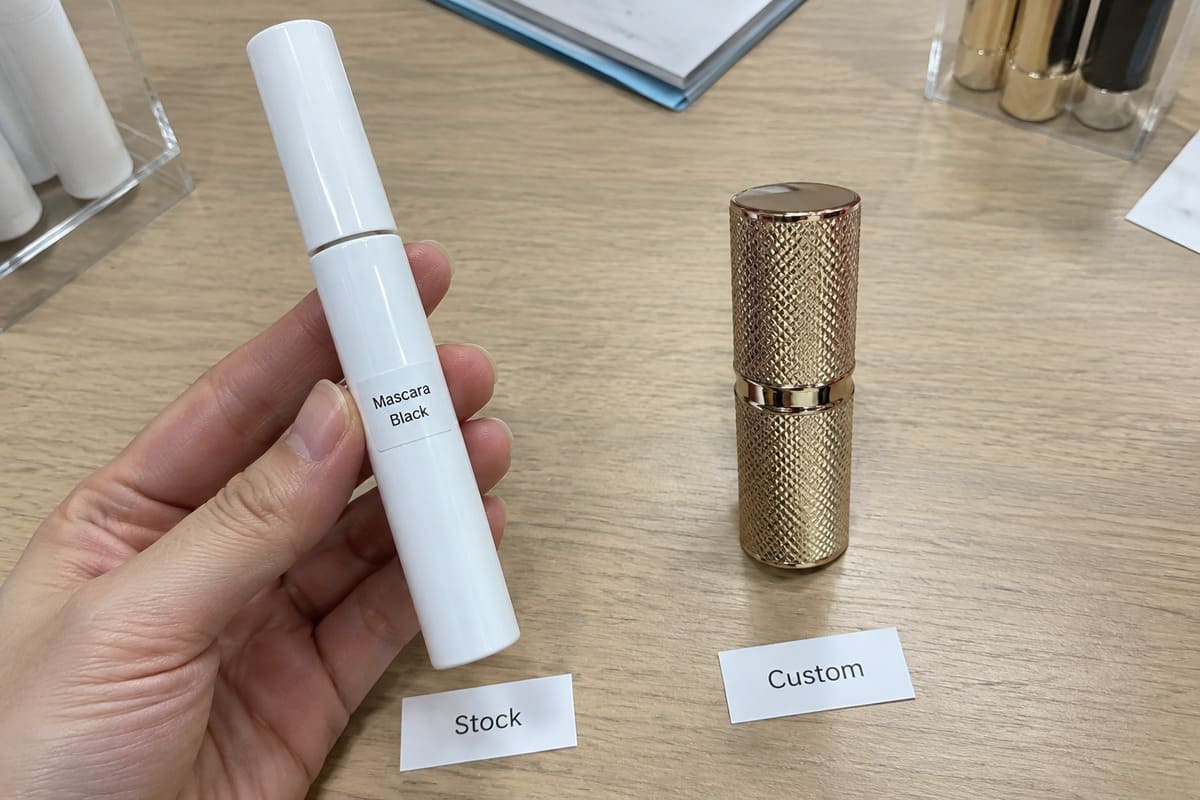
So the real question is not "Where is a factory in Germany?" It is "What is the lowest-risk path to a differentiated product in Europe?" Let me break down what the numbers actually mean, where the hidden costs hide, and how I help founders validate the EU market without betting the company.
What Does "Makeup Manufacturer Germany" Really Mean for a Brand Founder?
You type the phrase into Google expecting a clear answer. Instead you get a spectrum of offers, from 50-unit "private label" to 30,000-unit industrial contracts. The confusion is the problem. Without a map, founders anchor on the lowest number and discover the catch too late.
For a brand founder, "makeup manufacturer Germany" splits into two very different services. Private label (50–500 units) is repackaging an existing stock product. OEM/contract manufacturing (1,500+ units) is building a product that is genuinely yours. They share a search term but almost nothing else.
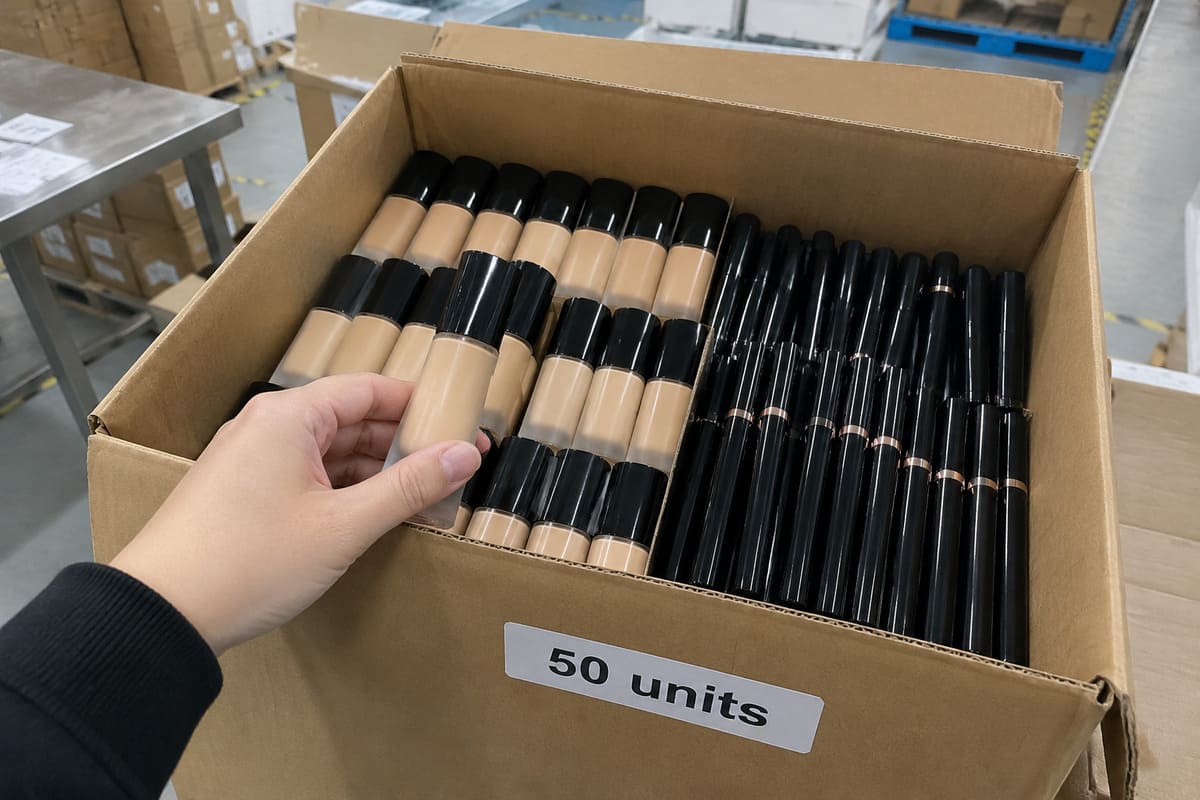
The gap between those two services is where most budgets break. Let me show you what sits inside each tier.
How Do Private Label and OEM Differ in Practice?
I talk to founders every week who assume "private label" means "my brand." It does not. It means your sticker on a shared product. Here is the honest breakdown:
| Service Tier | Typical MOQ | What You Control | What You Don't |
|---|---|---|---|
| White-label / Private label | 50–500 units | Logo, outer carton, sometimes the sticker | Formula, shade, texture, pack mold |
| OEM (custom formula) | 1,500+ units/variant | Shade, finish, texture, often packaging | Base chassis limits |
| ODM (co-developed) | 1,500–5,000 units | Concept, shade story, pack design | Shared R&D library |
The lesson is simple. If your competitor can buy the identical palette from the same stock catalog, you have a logo, not a brand. Differentiation starts where the stock catalog ends. That boundary, in Germany, sits far above 50 units.
I am not saying white-label is wrong. For testing a visual identity or a gifting SKU, 50 units can make sense. But founders should name what they are buying. When a buyer tells me "I want a shade nobody else has," I know we are no longer talking about a 50-unit order. We are talking about tooling, lab time, and a real minimum run.
The German Manufacturing Reality: Why "50-Unit MOQ" Means White-Label, Not Custom Formulation
The "Made in Germany" label carries real prestige1, and factories know it. So the marketing leads with the smallest, friendliest number. The agitation comes when you try to make the product actually yours and the quote triples. That surprise costs founders weeks of wasted planning.
In Germany, a 50–500 unit offer is a stock formula in stock packaging. The factory keeps a library of pre-developed products and lets you brand the outside. The moment you request a custom shade, a new texture, or a private compact mold, the order reclassifies as OEM and the MOQ jumps to 1,500+ units per variant.
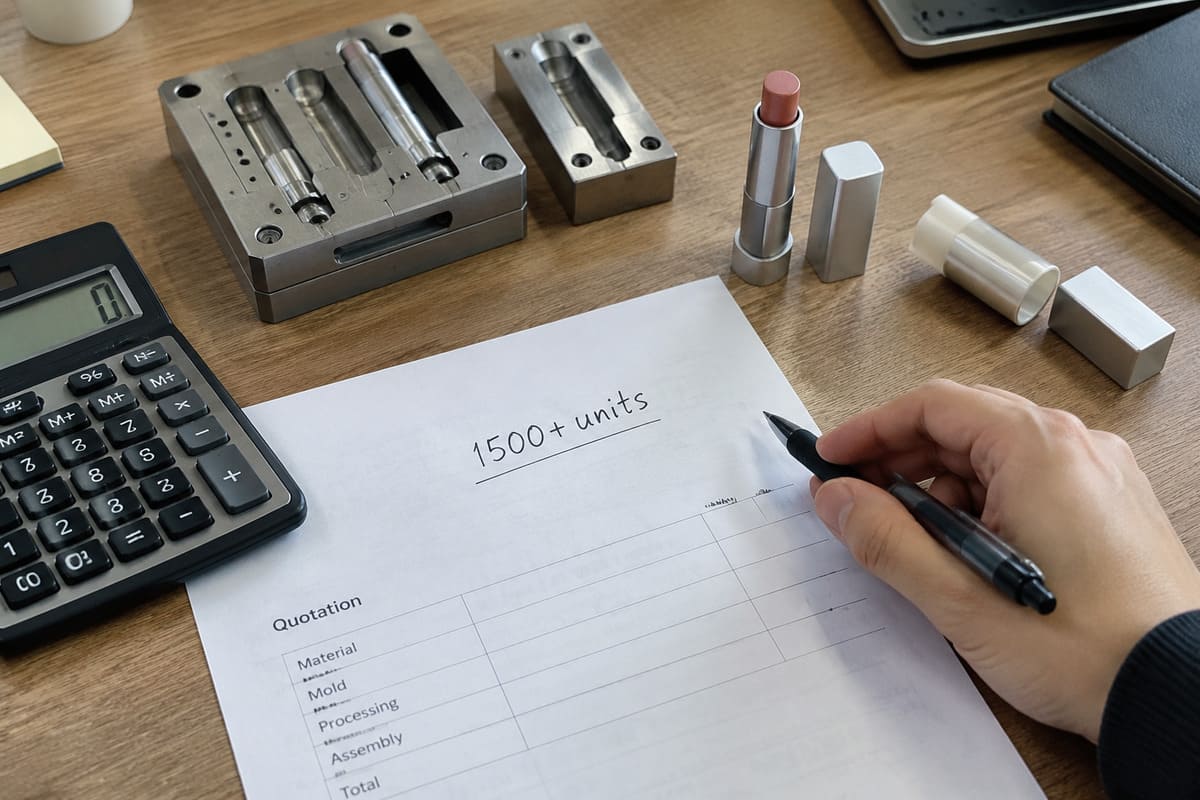
This is not a trick. It is economics. A custom run requires lab development, pilot batches, stability testing, and often new tooling. None of that is viable at 50 units.
What Actually Happens When You Ask for Custom?
Let me share a real pattern. A German founder I worked with contacted a local private-label factory. The headline offer was "50 units." He got excited. Then he asked two questions: Can I develop a custom shade? Can I get my own compact mold?
The answer came back fast. That is OEM/contract manufacturing. MOQ 1,500+ units per variant. Timeline 2–8 weeks for development. He was stuck between white-label sameness and a heavy cash commitment he was not ready to make.
Here is why the threshold exists. The costs below do not shrink just because your order is small:
- Lab development: formulating and matching a custom shade takes bench time regardless of batch size.
- Pilot and stability batches:2 you need samples that survive heat, time, and transit.
- Tooling and molds: a private compact mold can cost thousands before unit one ships.
- Documentation: INCI lists, GMP records, and stability data are prepared per formula3.
Spread those fixed costs across 50 units and the per-unit price is absurd. Spread them across 1,500 and the math finally breathes. That is the real reason the MOQ sits where it does.
What True Customization Actually Requires in Germany (1,500+ Units and 2–8 Weeks)
Founders often believe "custom" is a feature you toggle on. In reality it is a project with a minimum size and a clock. Underestimating that leads to blown launch dates and strained cash. Knowing the true numbers up front protects your timeline and your budget.
True customization from a makeup manufacturer Germany typically requires 1,500+ units per variant and a 2–8 week development window. This covers formulation, shade matching, pilot batches, stability testing, and documentation. Established German manufacturers such as Nele Kosmetik reflect this standard. The 1,500-unit floor is the point where custom R&D becomes economically viable.
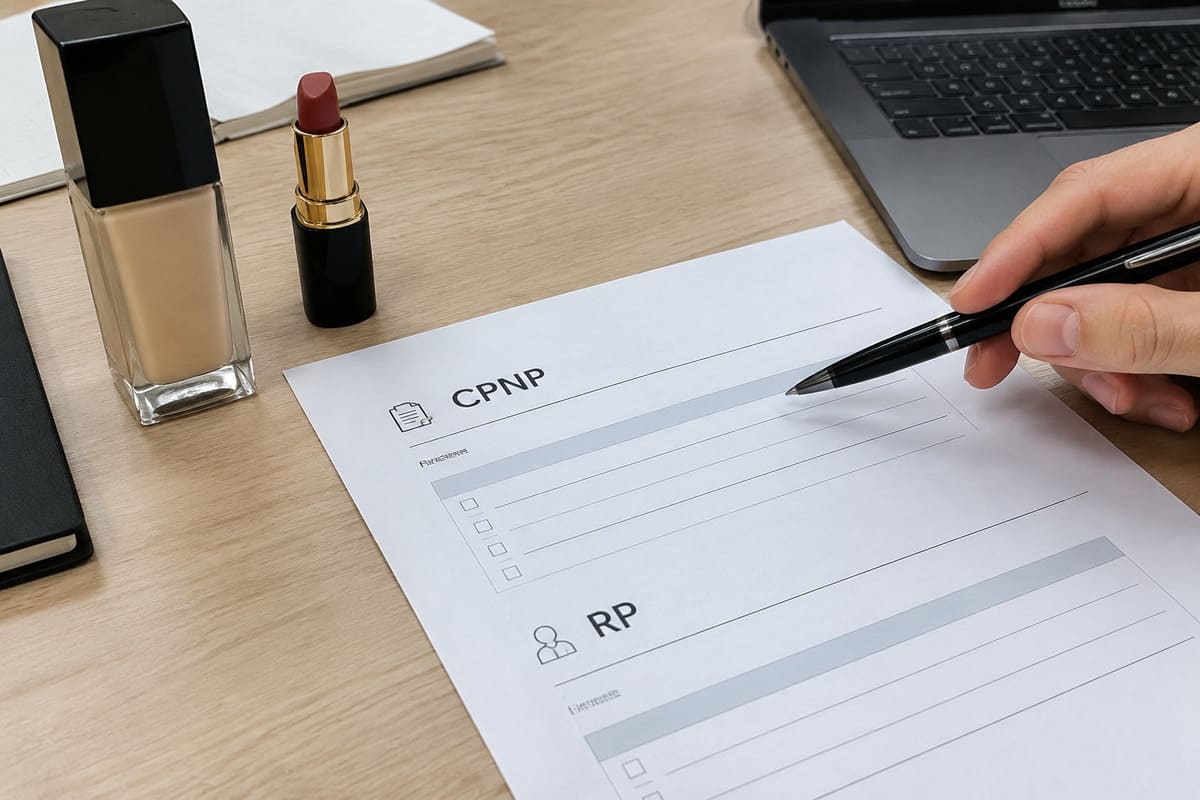
Let me lay out what that commitment really looks like, because "1,500 units" is only part of the picture.
What Does a Real Custom Project Timeline Look Like?
A custom project is a sequence, not a single purchase. Here is a realistic view:
| Phase | Typical Duration | What You Receive |
|---|---|---|
| Brief and shade targeting | 3–7 days | Agreed concept and references |
| Formulation and lab matching | 1–3 weeks | Lab samples for approval |
| Stability and compatibility testing | 2–4 weeks (can overlap) | Stability report |
| Pilot batch | 1–2 weeks | Pre-production sample |
| Production | 2–4 weeks | Finished goods |
Add it up and a serious custom launch often spans two to three months once you include approvals. The "2–8 weeks" quoted for development rarely includes shipping, compliance filing, or your own review cycles.
Now consider the cash. At 1,500 units per variant, and most brands launch with at least three or four shades, you are committing to 4,500–6,000 units before a single sale. For a first-time founder, that is a large bet on an unvalidated product. This is exactly where I think the "local vs. agile" decision deserves a cooler, more numerical look.
The Cost Nobody Calculates: China's 60% FOB Advantage and the CPNP/RP Compliance Path
Many founders avoid non-EU sourcing because they fear hidden costs and compliance chaos. That fear is understandable, but it is usually based on vague dread rather than a spreadsheet. When you actually run the numbers, the picture changes.
Chinese factories typically offer FOB unit prices of $0.50–$2.00, versus $3.00–$8.00 in Europe4, a roughly 60% cost advantage driven by supply-cluster density, not lower quality5. Typical MOQs are around 3,000 units in China versus up to 30,000 units at large European manufacturers. EU compliance is calculable: it requires a Responsible Person (RP), CPNP notification6, a CPSR safety assessment7, and ISO 22716 GMP8.
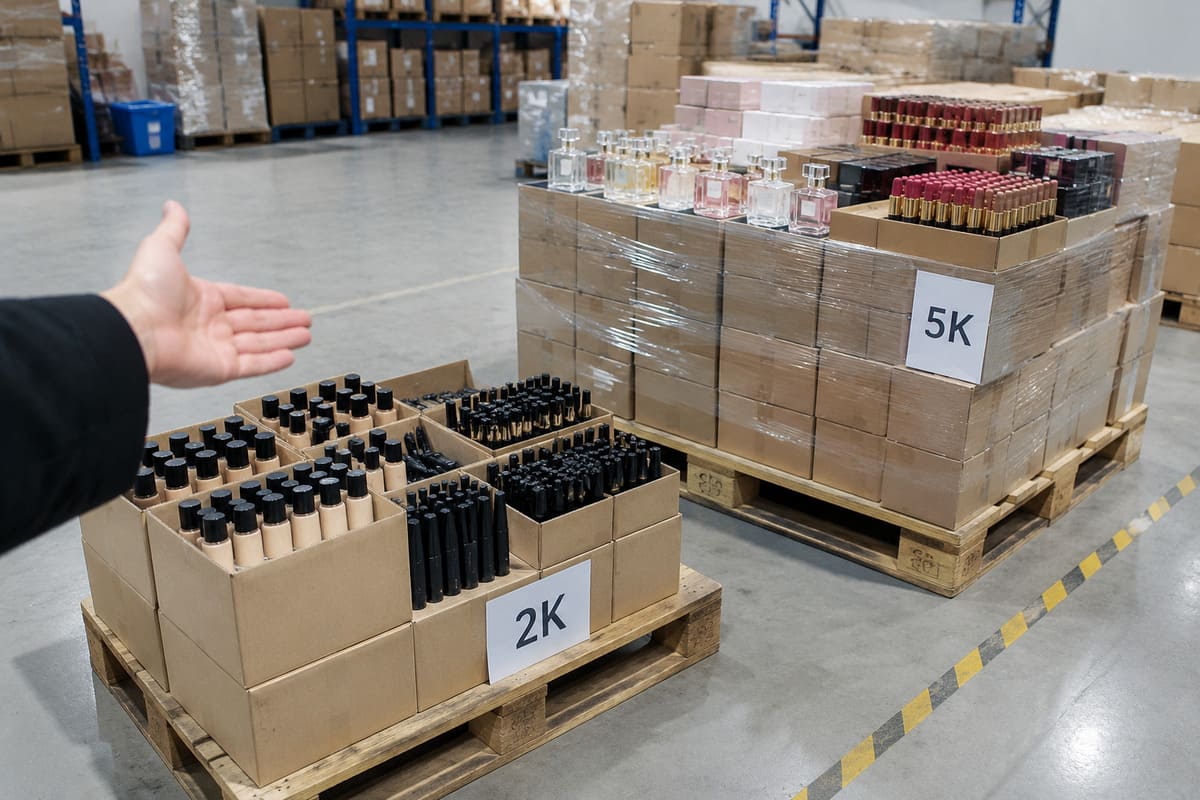
The key word is calculable. The 60% you save on unit cost is usually more than enough to fund your compliance path. Let me separate what the factory owns from what you own.
Who Is Responsible for EU Compliance?
This is the part founders get wrong most often, so I want to be strict and precise here. Regulatory responsibility under EU Cosmetics Regulation 1223/20099 sits with the Responsible Person (RP) and the brand owner, not the overseas factory.
| Requirement | Who Provides It | Notes |
|---|---|---|
| ISO 22716 GMP | Factory | Manufacturing standard |
| INCI ingredient list | Factory | Per formula |
| Stability report | Factory | Supporting documentation |
| CPSR supporting data | Factory | Feeds the safety assessment |
| CPSR (safety assessment) | Your RP / assessor | Legal document |
| RP appointment | You (brand owner) | Must be EU-based10 |
| CPNP notification | You / your RP | EU portal filing |
Read that table carefully. A good factory gives you the technical dossier: GMP, INCI, stability, and CPSR supporting data. But the RP appointment and the CPNP filing remain your legal obligation as the brand owner. No overseas factory can assume them for you, and any factory that claims it can is misleading you.
Here is the cost logic that convinced my German founder. A third-party RP service plus CPNP notification for the first year is a real but bounded expense. The 60% he saved on FOB unit cost covered it with room to spare. Compliance was not the wall he feared. It was a line item.
The Guangdong Alternative: 2,000 Units to Validate the EU Market, 5,000+ to Differentiate
The trap founders fall into is a false choice: either accept white-label sameness or gamble on a huge custom run. Both options carry real risk, and neither lets you learn before you spend big. There is a middle path built around validation.
My Guangdong supply chain11 offers a 2,000-unit validation trial on standard eyeshadow palettes at an FOB cost roughly 40% of a European quote. You test the EU market first, then use real sales data to decide whether to scale to 5,000+ units for true custom formulation. This sequences your risk instead of front-loading it.
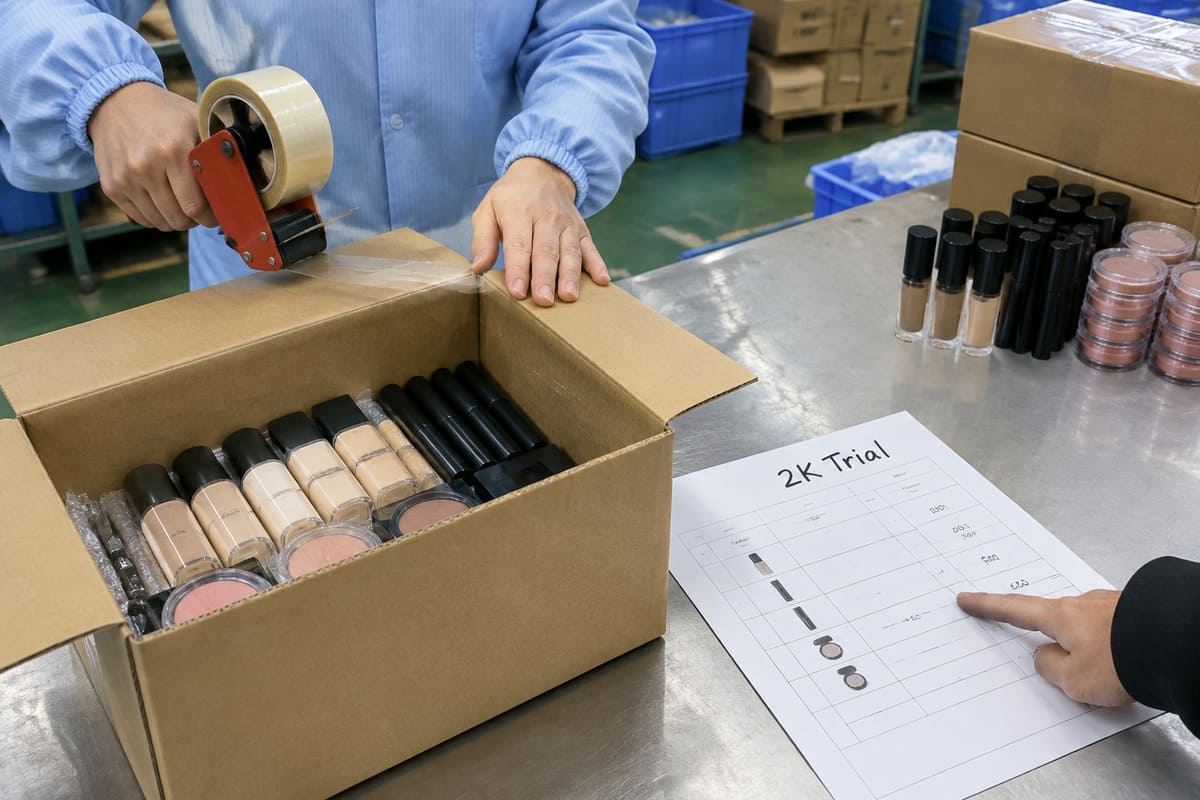
I want to be clear about where I fit and where I do not. I do not compete with giants like Schwan Cosmetics on a hundred years of heritage12 or their point-makeup pencils. I compete on agility, transparent pricing, and a launch path for powder-based color cosmetics that a startup can actually afford.
How Does the Validate-Then-Scale Sequence Work?
The idea is to spend the smallest amount needed to learn the most. Here is the ladder I recommend:
| Step | Volume | Purpose | Product Type |
|---|---|---|---|
| 1. Validate | 2,000 units | Prove EU demand | Standard eyeshadow palette |
| 2. Differentiate | 5,000+ units | Build a unique product | Custom shades / formula |
| 3. Localize (optional) | Per SKU | Earn "Made in Germany" premium | German-made line |
Step one is the one most founders skip, and it is the one that saves them. At 2,000 units of a proven standard palette, your cash exposure is low and your FOB cost is roughly 40% of the European alternative. You learn whether the market wants your brand before you pour money into custom tooling.
Only after the trial sells through do you move to step two. Now you are scaling with evidence, not hope. And step three stays optional. If, and only if, the "Made in Germany" premium proves itself on specific SKUs, you add a local line for those. You are not choosing identity over economics. You are earning your way into both.
A Real Path: How to Start with a Low-Risk Trial and Scale Without Burning Cash
Launching a beauty brand is expensive and unforgiving. One oversized order of an unvalidated product can drain a startup before it finds its audience. The founders who survive are the ones who treat their first order as an experiment, not a monument.
The lowest-risk path is a sequence: start with a 2,000-unit standard eyeshadow palette from Guangdong to validate EU demand, use the sales data to justify 5,000+ units of true custom formulation, and add a "Made in Germany" line only for SKUs where the premium is proven. This controls cash while keeping differentiation in reach.
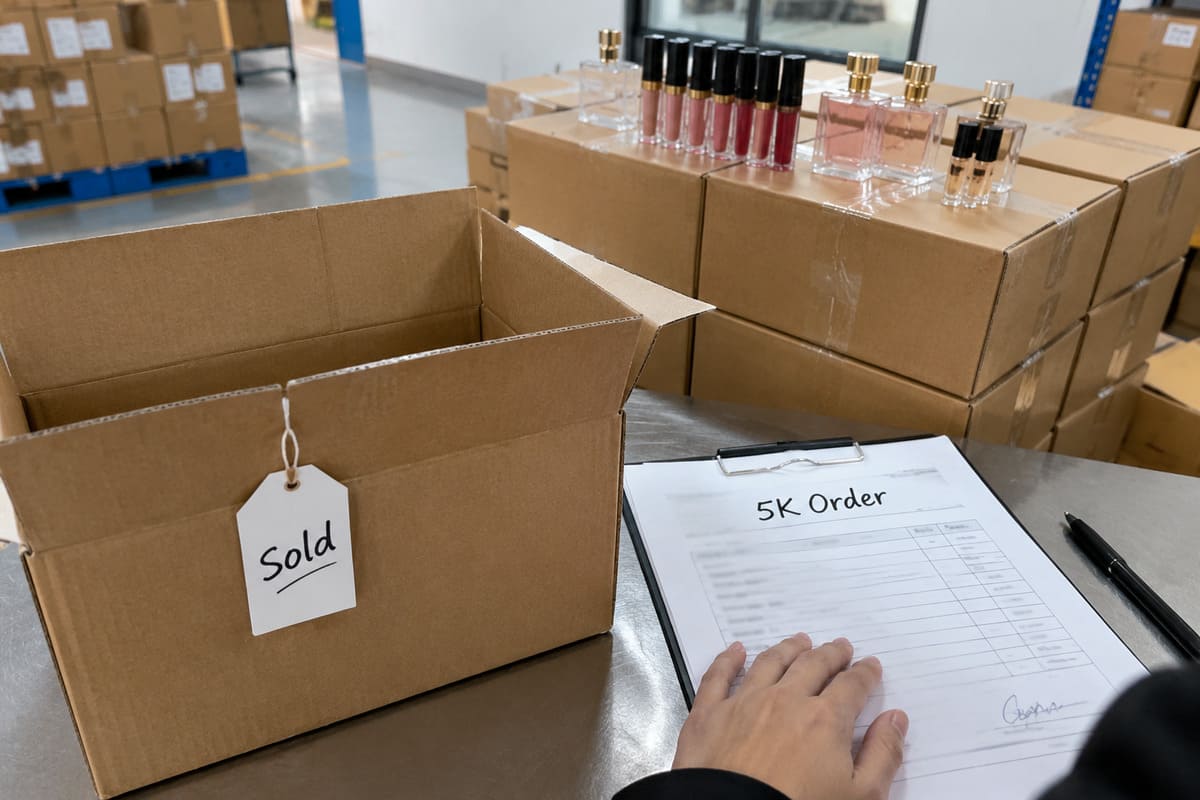
Let me be honest about what I will and will not promise, because trust is the whole point.
What Do I Do, and What Do I Refuse to Do?
Here is my boundary, stated plainly:
- What I do: I offer a 2,000-unit validation trial on standard eyeshadow palettes. I provide INCI, GMP, stability reports, and CPSR supporting data to support your RP and CPNP filings. I support 5,000–10,000 unit custom orders when you are ready to differentiate.
- What I won't do: I won't claim 50 units builds a real brand, because it is white-label. I won't pretend to assume your RP or CPNP obligations, because those remain legally yours. I won't hide the compliance cost, because CPNP and RP are calculable, not a reason to abandon differentiation.
And a realistic boundary, because not every founder should choose me. If your sole priority is "Made in Germany" and your budget allows only white-label, a German private-label partner is a rational choice. I will tell you that directly. But if you want to validate the European market first, control cost, and then differentiate, the Guangdong-to-custom sequence is, in my experience, the path that burns the least cash.
Frequently Asked Questions
Is a 50-unit MOQ from a makeup manufacturer Germany really custom?
No. A 50–500 unit offer is almost always white-label: a stock formula in stock packaging with your branding added. True custom formulation in Germany reclassifies as OEM and typically starts at 1,500+ units per variant, with a 2–8 week development timeline. The low MOQ buys a logo, not a unique product.
How much cheaper is China than Europe for cosmetics manufacturing?
Chinese factories typically quote FOB unit prices of $0.50–$2.00, versus $3.00–$8.00 in Europe, a roughly 60% advantage. This reflects supply-cluster density, not lower quality. Typical MOQs run around 3,000 units in China versus up to 30,000 units at large European manufacturers. The savings usually cover your EU compliance costs.
Who is legally responsible for EU cosmetics compliance?
The Responsible Person (RP) and the brand owner are legally responsible, not the overseas factory. The EU requires an EU-based RP, CPNP notification, a CPSR safety assessment, and ISO 22716 GMP. Your factory provides GMP, INCI, stability reports, and CPSR supporting data, but you appoint the RP and file the CPNP yourself.
What is the smallest realistic order to test the EU market?
A 2,000-unit standard eyeshadow palette is a practical validation volume. At roughly 40% of a European FOB quote, it keeps cash exposure low while generating real sales data. You then use that data to justify scaling to 5,000+ units for true custom formulation, rather than gambling on a large custom run first.
Should I always choose a local German manufacturer?
Not always. If your sole priority is the "Made in Germany" label and your budget allows only white-label, a German private-label partner is rational. If you want to validate demand, control cost, and then differentiate, a validate-then-scale sequence from an agile supply chain usually carries less risk and preserves more capital.
Conclusion
Choosing a makeup manufacturer Germany is not a simple yes-or-no decision, and the 50-unit MOQ is the number that misleads founders most. That figure means white-label sameness; true custom formulation starts at 1,500+ units with a 2–8 week timeline. Meanwhile, cross-border sourcing offers a roughly 60% FOB advantage, and EU compliance through an RP, CPNP, CPSR, and ISO 22716 GMP is calculable, not catastrophic. The smart path validates first, differentiates second, and localizes only where the premium proves itself. If you want to test the EU market with a low-risk 2,000-unit trial, let's map your sequence together.
"The Influence of Country of Origin on Consumer Perception ...", https://www.preprints.org/manuscript/202411.0992. Marketing research on country-of-origin effects documents that the 'Made in Germany' designation is associated with elevated consumer quality perceptions. Evidence role: general_support; source type: research. Supports: That country-of-origin cues, and 'Made in Germany' in particular, influence consumer perceptions of product quality.. Scope note: Supports general perception effects rather than any quantified premium specific to cosmetics. ↩
"What Ingredients Should I Avoid in Eye Shadow? A ... - Vertina Beauty", https://vertinabeauty.com/what-ingredients-should-i-avoid-in-eye-shadow-a-compliance-guide-for-buyers/. Industry and standards guidance on cosmetic stability testing describes its role in determining product shelf life and resistance to temperature and storage conditions. Evidence role: mechanism; source type: institution. Supports: That stability testing is a standard step to establish the shelf life and physical integrity of cosmetic products.. Scope note: Supports the general purpose of stability testing rather than any specific batch-size or timeline claim in the article. ↩
"International Nomenclature of Cosmetic Ingredients", https://en.wikipedia.org/wiki/International_Nomenclature_of_Cosmetic_Ingredients. The International Nomenclature of Cosmetic Ingredients provides the standardized ingredient naming used for labeling cosmetic products, as referenced in EU cosmetics labeling requirements. Evidence role: definition; source type: government. Supports: That the INCI system provides standardized ingredient names used for mandatory cosmetic ingredient labeling.. ↩
"A Data-Driven Comparison for Private Label Brand Owners", https://www.poleviewfactory.com/tr/news/cosmetics-manufacturer-europe-vs-china-a-data-driven-comparison-for-private-label-brand-owners/. Industry pricing surveys on contract cosmetics manufacturing indicate meaningful per-unit cost differences between Asian and European producers. Evidence role: statistic; source type: institution. Supports: That cosmetics manufacturing unit costs differ substantially between Asian and European producers.. Scope note: Any available source is unlikely to match the article's exact dollar ranges; it can only corroborate the direction and general magnitude of the gap. ↩
"Everything you always wanted to know about ...", https://www.incontext.indiana.edu/2020/mar-apr/article1.asp. Economic research on industrial agglomeration indicates that dense supplier clusters can reduce input and coordination costs for manufacturers. Evidence role: general_support; source type: research. Supports: That geographic clustering of suppliers can lower production costs through agglomeration economies.. Scope note: This supports the general mechanism of cluster-driven cost reduction but does not verify the specific 60% figure or the China-versus-Europe cosmetics comparison. ↩
"Cosmetic product notification portal", https://single-market-economy.ec.europa.eu/sectors/cosmetics/cosmetic-product-notification-portal_en. European Commission documentation on the Cosmetic Products Notification Portal describes the notification process required under the Cosmetics Regulation prior to market placement. Evidence role: mechanism; source type: government. Supports: That the European Commission operates the CPNP and requires notification of cosmetic products before they are placed on the EU market.. ↩
"What Ingredients Should I Avoid in Eye Shadow? A ... - Vertina Beauty", https://vertinabeauty.com/what-ingredients-should-i-avoid-in-eye-shadow-a-compliance-guide-for-buyers/. Annex I of Regulation (EC) No 1223/2009 specifies the content and structure of the Cosmetic Product Safety Report required for products placed on the EU market. Evidence role: mechanism; source type: government. Supports: That a Cosmetic Product Safety Report is mandated under the EU Cosmetics Regulation and its content is specified in Annex I.. ↩
"Guidance for Industry - Cosmetic Good Manufacturing ...", https://www.fda.gov/media/86366/download. ISO 22716 is published by the International Organization for Standardization and provides guidelines on good manufacturing practices for cosmetic products. Evidence role: definition; source type: institution. Supports: That ISO 22716 sets out good manufacturing practice guidelines specifically for the cosmetics industry.. ↩
"EC Regulation 1223/2009 on cosmetics", https://en.wikipedia.org/wiki/EC_Regulation_1223/2009_on_cosmetics. Regulation (EC) No 1223/2009 of the European Parliament and of the Council on cosmetic products defines the Responsible Person and sets out that compliance obligations rest with that party for products made available on the EU market. Evidence role: definition; source type: government. Supports: That Regulation (EC) No 1223/2009 establishes the Responsible Person as the party legally accountable for compliance of cosmetic products placed on the EU market.. ↩
"The Responsible Person – Cosmetics Regulation 1223/2009", https://www.ecosistant.eu/en/the-responsible-person-role-under-the-cosmetics-regulation-1223-2009/. Article 4 of Regulation (EC) No 1223/2009 requires that the designated Responsible Person be established within the Union for each cosmetic product placed on the market. Evidence role: mechanism; source type: government. Supports: That the Responsible Person designated under the Cosmetics Regulation must be a natural or legal person established within the Union.. ↩
"Factory Tour - Real Cosmetic Manufacturing Facility", https://vertinabeauty.com/factory-tour-behind-the-scenes/. Reference material on Guangdong province describes its role as a concentrated center of light manufacturing and export-oriented production in China. Evidence role: historical_context; source type: encyclopedia. Supports: That Guangdong is one of China's leading manufacturing and export regions with dense light-industry production.. Scope note: General regional context; does not specifically quantify the province's share of cosmetics manufacturing. ↩
"Schwan-Stabilo", https://en.wikipedia.org/wiki/Schwan-Stabilo. Reference material on Schwan Cosmetics documents its long operating history and specialization in cosmetic pencil manufacturing. Evidence role: case_reference; source type: encyclopedia. Supports: That Schwan Cosmetics is a long-established cosmetics manufacturer known for pencil-based point-makeup products.. Scope note: The article directly names this entity, so a company or encyclopedic source is appropriate; the precise 'hundred years' figure should be confirmed against the source. ↩