Searching for a makeup manufacturer in Canada feels simple until the quotes arrive. You see "No MOQs" and "Made in Canada" and think you found the shortcut. Then you ask about custom formula or packaging, and the dream shrinks fast. I have watched founders lose months to this exact trap.
A makeup manufacturer in Canada offering "No MOQ" almost always means white-label: stock formulas and stock packaging with your logo added1. True custom formulation in Canada typically starts at 5,000 units per shade (Cosmetica) to 10,000 units per SKU (Delon Laboratories). "No MOQ" buys speed, not differentiation.
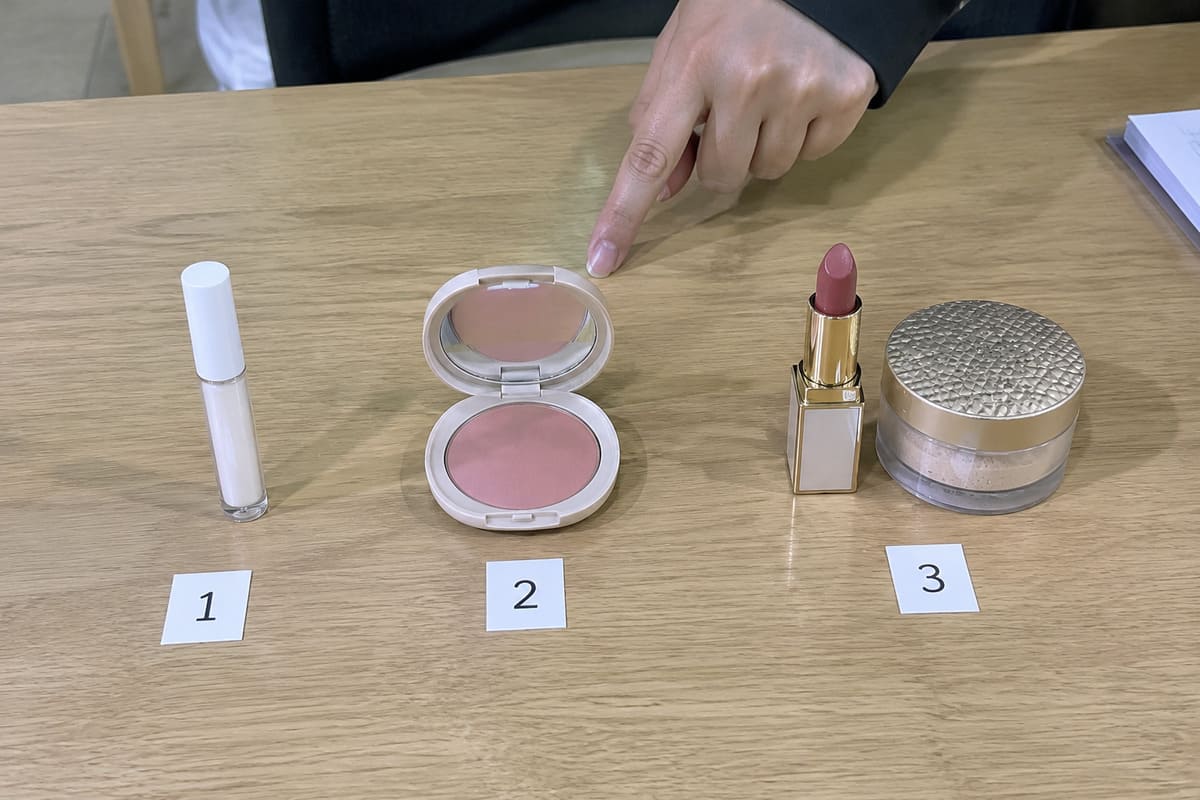
So the real decision is not local versus overseas. The real decision is this: do you want a product that is actually yours, and what does that cost in cash, time, and risk? Keep reading. The numbers below surprised the founder I helped last year.
What Does "Makeup Manufacturer in Canada" Really Mean for a Brand Founder?
Most founders type that phrase into Google expecting one answer. They get three very different business models wearing the same label. That confusion is where the money leaks out.
For a brand founder, "makeup manufacturer in Canada" splits into three models: white-label repackaging (stock formula plus your logo), true custom formulation (your own recipe and packaging), and staged hybrid supply. Each has a different MOQ, cash commitment, and timeline. Picking the wrong one wastes months.
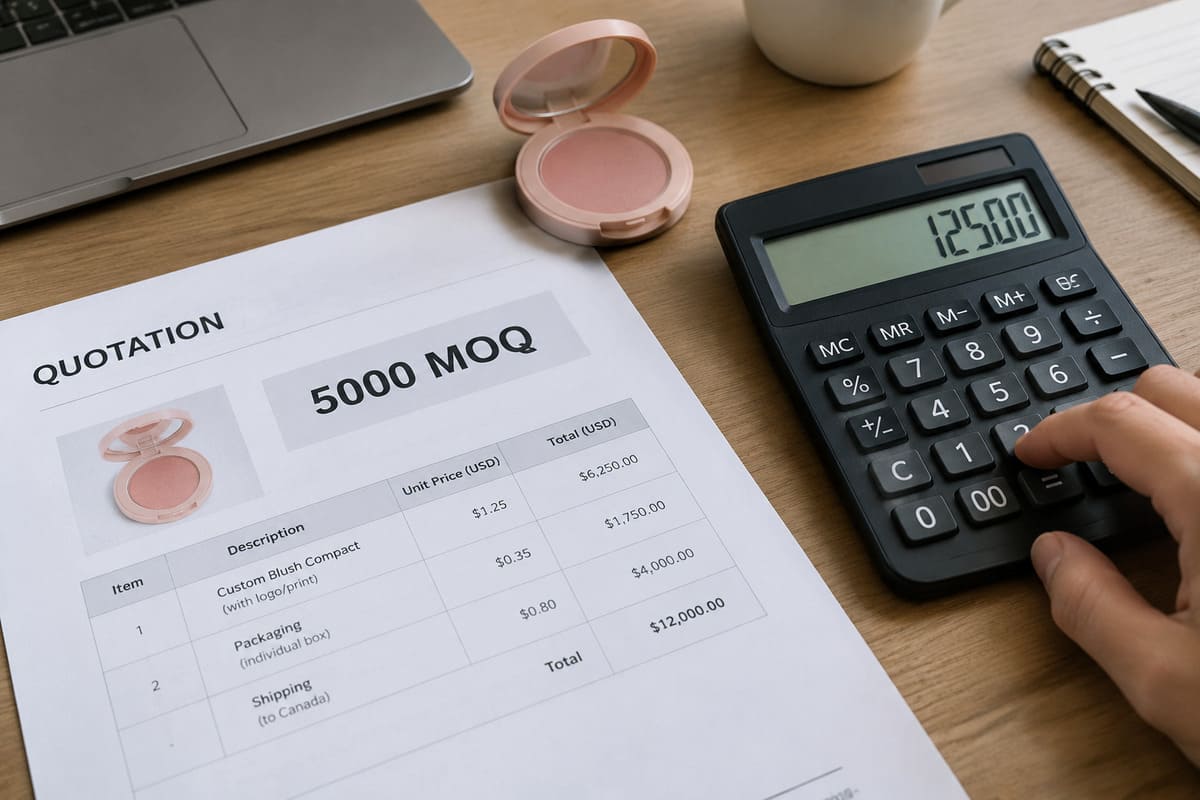
The word "manufacturer" hides a lot. Let me break down what each model actually gives you.
The Three Models Behind One Search Term
When a founder contacts me, I ask one question first: do you want to sell a product, or sell your product? The gap between those two is the entire article.
- White-label (No MOQ): You choose a proven formula from a catalog. You add a logo. You confirm the order. Fast and cheap, but your palette is identical to every other brand buying from the same catalog.
- True custom: You develop a unique formula, choose shades, and often tool custom packaging. This is a real brand asset. It also demands 5,000 to 10,000 units and a long development cycle.
- Staged hybrid: You validate demand with a standard product at a low volume, then reinvest in custom once sales prove the concept.
| Model | Typical MOQ | Differentiation | Cash Risk | Timeline |
|---|---|---|---|---|
| White-label ("No MOQ") | 1–250 units | None | Very low | 2–3 weeks |
| True custom (Canada) | 5,000–10,000 units | High | High | 12–22 weeks |
| Staged hybrid | 2,000 → 5,000+ units | Grows with sales | Controlled | Trial first, then custom |
Here is the hard truth. "No MOQ" is not a gift. It is a signal that you are renting a label, not building one. That is fine if testing is your only goal. It is a disaster if you believed you were creating something unique.
The Canadian Manufacturing Reality: Why "No MOQ" and True Customization Rarely Coexist
Founders get frustrated here, and I understand why. The marketing promised flexibility. The factory floor runs on chemistry and tooling costs. Those two things do not care about marketing copy.
"No MOQ" and true customization rarely coexist because custom formulation and custom packaging carry fixed setup costs—R&D, stability testing, mold tooling, and minimum raw material buys. A manufacturer can only waive MOQs by reusing stock formulas and stock components. The moment you customize, those fixed costs force a minimum run.
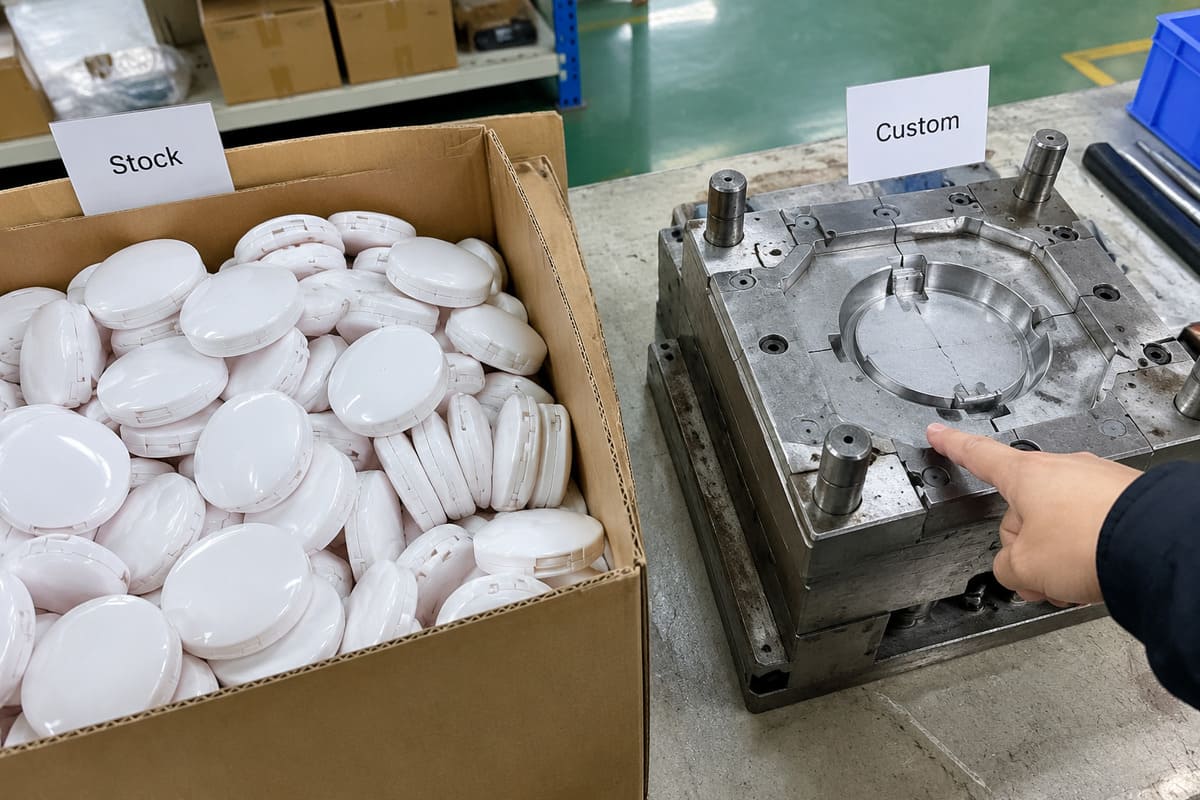
This is not a trick played on buyers. It is physics and accounting. Understanding it changes how you negotiate.
Why the Economics Force a Minimum
A custom eyeshadow formula needs lab time, pigment sourcing, stability and compatibility testing, and a bulk batch that cannot run below a certain weight. A custom compact needs a mold, and molds cost thousands before a single unit ships.
Think about the cost drivers behind a custom run:
- R&D and formulation: Chemists develop and adjust the recipe. This is paid time, not a free catalog pull.
- [Stability and safety testing: Required before a product can legally and safely sell](https://www.fda.gov/cosmetics/cosmetics-laws-regulations/modernization-cosmetics-regulation-act-2022-mocra)%%%FOOTNOTE_REF_2%%%.
- Minimum raw material purchase: Pigments and specialty effects (like chameleon or sparkle finishes) come in minimum lot sizes3.
- Packaging tooling: Custom molds for a compact or palette carry a fixed setup fee spread across the run.
When a Canadian lab waives the MOQ, it is skipping every one of those steps by using what already exists. That is the entire mechanism. No differentiation, no setup cost, no minimum. I tell founders this plainly because pretending otherwise sets them up to fail. The eyeshadow palettes and sparkle finishes I help clients build at my own factory follow the same logic—custom color work carries a real floor.
What Pinnacle Cosmetics (and Others) Actually Offer: White-Label vs. Custom Formulation
Pinnacle Cosmetics usually ranks at the top for a makeup manufacturer in Canada, and the page is genuinely appealing. I want to be fair to them. Their model is rational and well-marketed. It just is not what many founders think it is.
Pinnacle Cosmetics markets "No MOQs" and "Made in Canada," but its documented process is white-label: choose from proven formulations, add your logo, confirm the order. This is repackaging, not custom formulation. Delon Laboratories lists ~10,000 units per SKU for custom work; Cosmetica averages ~5,000 units per shade.
I had a founder who contacted Pinnacle first. The "No MOQs" promise excited him. Then he asked a simple question: can I tweak the formula or get a custom compact? The answer was essentially, "Choose from our catalog, add your logo, and that's your brand." He realized "No MOQ" meant "No differentiation." He was not building a brand. He was renting a label.
Mapping the Canadian Options Side by Side
To make an honest decision, you need the real thresholds laid next to each other. Treat vendor certifications and claims as documents to verify directly with each supplier, since terms change.
| Supplier | Model | Stated MOQ | New Launch Timeline |
|---|---|---|---|
| Pinnacle Cosmetics | White-label | "No MOQs" (stock only) | 2–3 weeks |
| Cosmetica | True custom | ~5,000 units / shade / SKU | Development cycle applies |
| Delon Laboratories | True custom | ~10,000 units / SKU | 12–22 weeks |
| Boutique labs | Mixed | 250-unit entry (often white-label) | Varies |
Notice the pattern. The boutique "250-unit" entry points usually apply to white-label or standard formats. The moment you request custom packaging, supplier minimums climb. So the founder's instinct was right: he was stuck between white-label sameness and a heavy custom commitment. For application-specific formulation or regulatory decisions, I always recommend qualified professional evaluation rather than taking any single marketing page at face value.
The Landed Cost Nobody Calculates: 6.5% MFN Tariff + Health Canada CNF
Here is where founders either panic or overpay. They assume importing is a legal minefield. It is not. It is arithmetic. I walk every client through the exact numbers so the fear disappears.
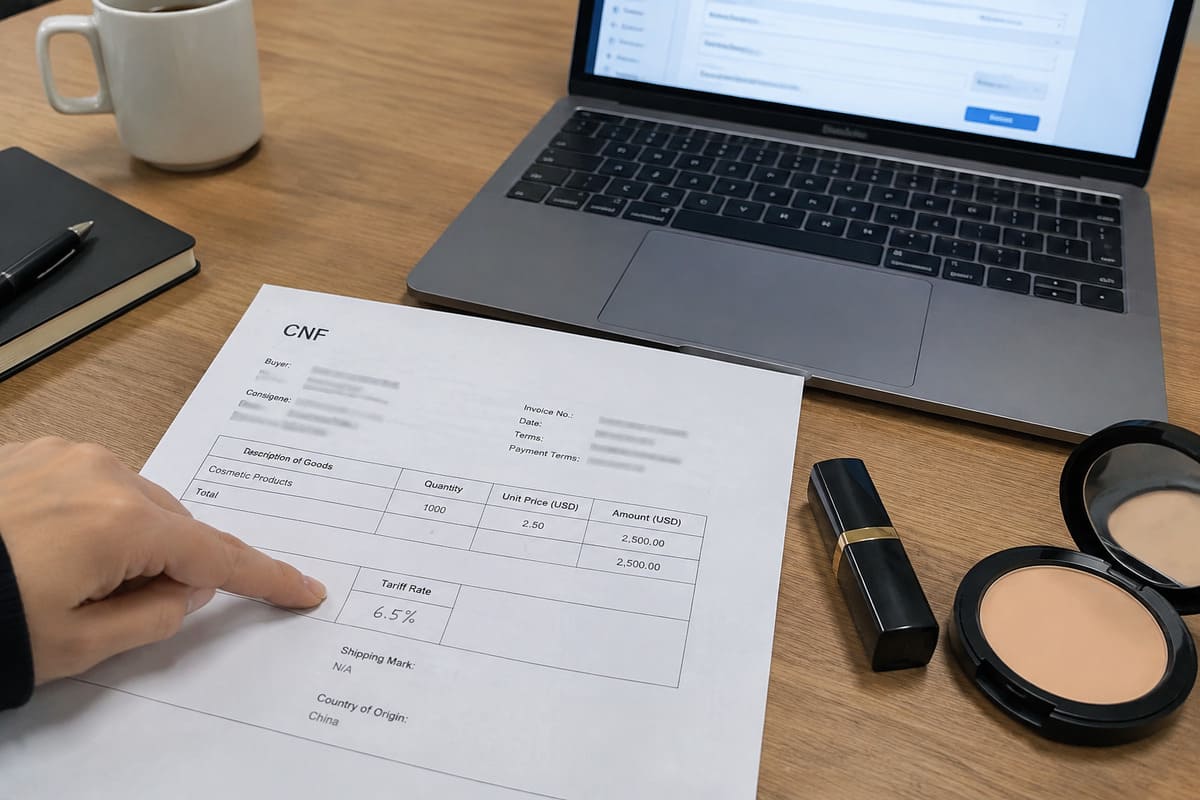
Importing cosmetics under HS 3304 into Canada4 carries a 6.5% MFN tariff on FOB value for Chinese-origin goods5. On a $15,000 shipment, that is $975—significant but predictable. Health Canada also requires a Cosmetic Notification Form (CNF) within 10 days of first sale6, filed by the importer, not the overseas factory.
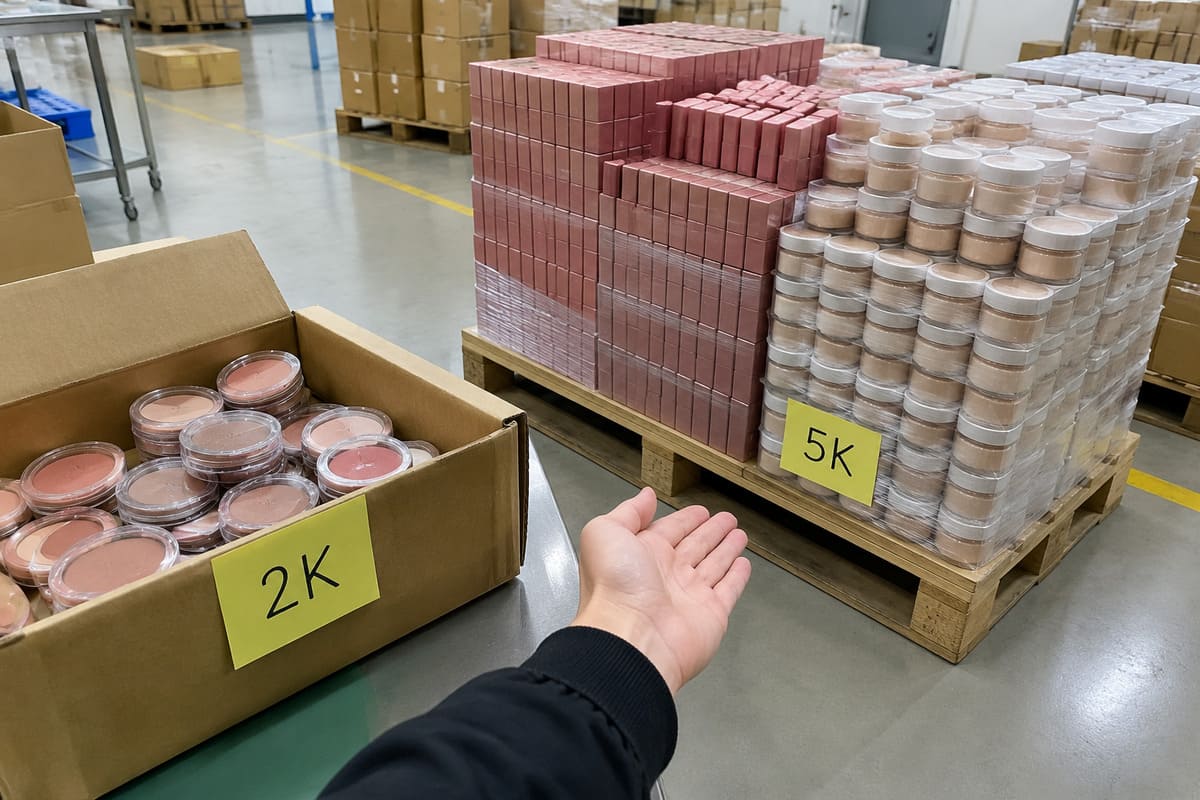
These are calculable costs. They are not reasons to accept a white-label product that cannot sell in the first place.
Breaking Down the Real Import Math
Let me show the full picture on a sample $15,000 FOB order. CETA's 0% rate applies to EU-origin goods, not Chinese-origin7. Chinese-origin cosmetics under this heading do not qualify for CUSMA or CPTPP preferential rates8.
| Cost Item | Rate | On $15,000 FOB | Notes |
|---|---|---|---|
| MFN tariff (HS 3304) | 6.5% | $975 | Predictable, per CBSA schedules |
| GST/HST | 5%+ | ~$750+ | Generally recoverable for registered businesses |
| CNF filing | Minutes online | $0 gov. fee | Importer files, factory supplies data |
The CNF deserves attention. It must be filed within 10 days of first sale by the manufacturer or importer—meaning the brand owner, not the overseas factory. Once the factory provides INCI and concentration data, the online filing takes minutes. From March 2025, a Canadian address is required on the CNF9. Treat these as documents to verify against current Health Canada guidance, and consult a qualified regulatory professional for your specific products.
My honest take: the duty and the CNF are real work, but they are a few hundred dollars and a short form. They should never be the reason you launch a product identical to ten competitors.
The Guangdong Alternative: 2,000 Units to Validate, 5,000+ to Differentiate
So if "No MOQ" means sameness and Canadian custom starts at 5,000–10,000 units, is there a middle path? Yes. This is the part founders rarely hear about, because most suppliers want either the fast white-label sale or the big custom order.
A staged Guangdong supply path10 lets a founder validate Canadian demand with a 2,000-unit standard eyeshadow palette, then scale to 5,000–10,000 units for true custom formulation and private molds once sales data justify the investment. This path uses market evidence—not guesswork—to decide when to spend on differentiation.
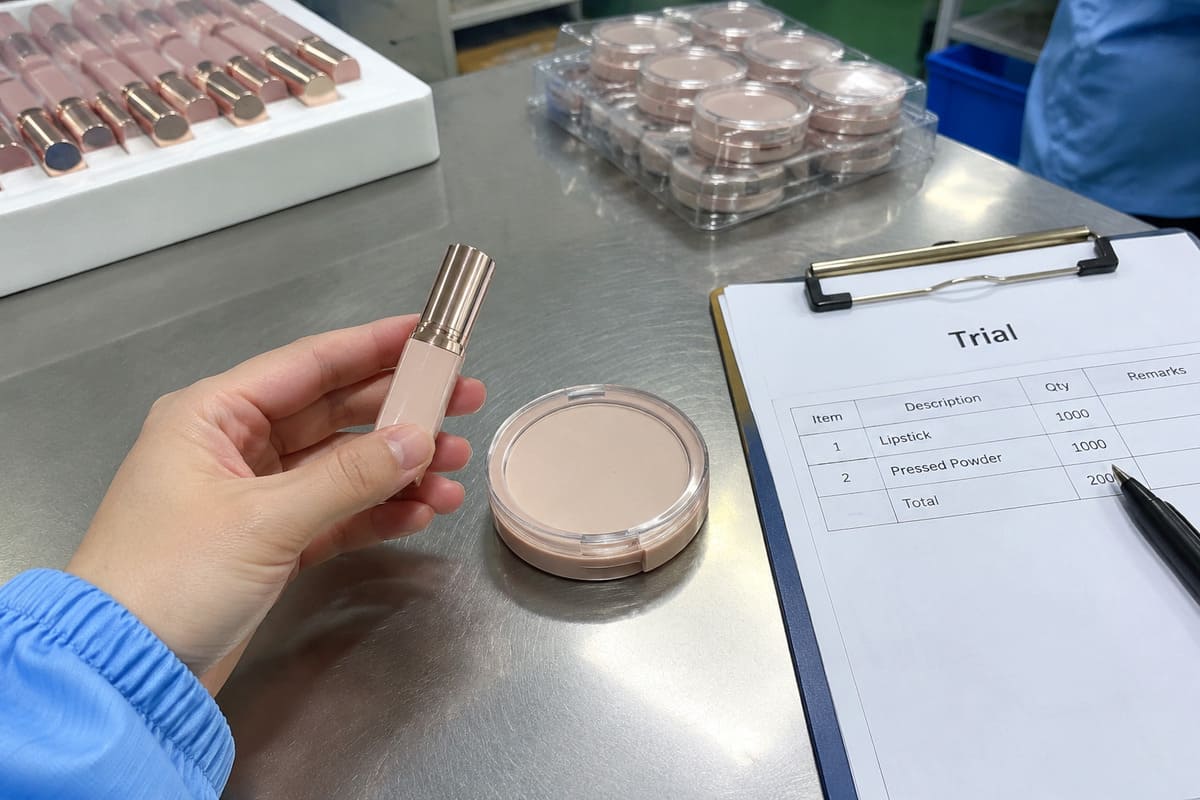
The logic is simple. Spend a little to learn. Spend more only when the market says yes.
Why Staging Beats an All-or-Nothing Bet
A 2,000-unit standard palette is large enough to test real retail and e-commerce demand, but small enough that the cash risk stays controlled. If it sells through, you have proof. If it stalls, you have not sunk 10,000 units of custom inventory into a guess.
Here is how I frame the two stages for clients:
- Stage 1 — Validate (2,000 units): A proven standard eyeshadow palette. Low cash risk. The 6.5% tariff on this shipment is a known, manageable number. You get real sell-through data.
- Stage 2 — Differentiate (5,000+ units): Once the trial sells, you commit to a custom formula and exclusive packaging with private molds. Now you are building a brand asset, backed by evidence.
| Stage | Volume | Goal | Cash Risk | Decision Trigger |
|---|---|---|---|---|
| Validate | 2,000 units | Prove demand | Low | Launch readiness |
| Differentiate | 5,000–10,000 units | Build unique brand | Controlled | Trial sold through |
This is the only path I know that lets sales data—not a salesperson—decide when you invest in differentiation. It respects your cash and your ambition at the same time.
A Real Path: How to Start with a Low-Risk Trial and Scale Without Burning Cash
Theory is nice. Founders need a sequence they can act on Monday. Here is the exact path I walked one Canadian founder through, start to finish.
The lowest-risk path is: launch a 2,000-unit standard palette to validate Canadian demand, file your CNF using factory-supplied INCI and safety data, treat the 6.5% tariff as a planned cost, and only commit to 5,000+ units of custom formulation once the trial sells through. Market evidence gates every cash increase.
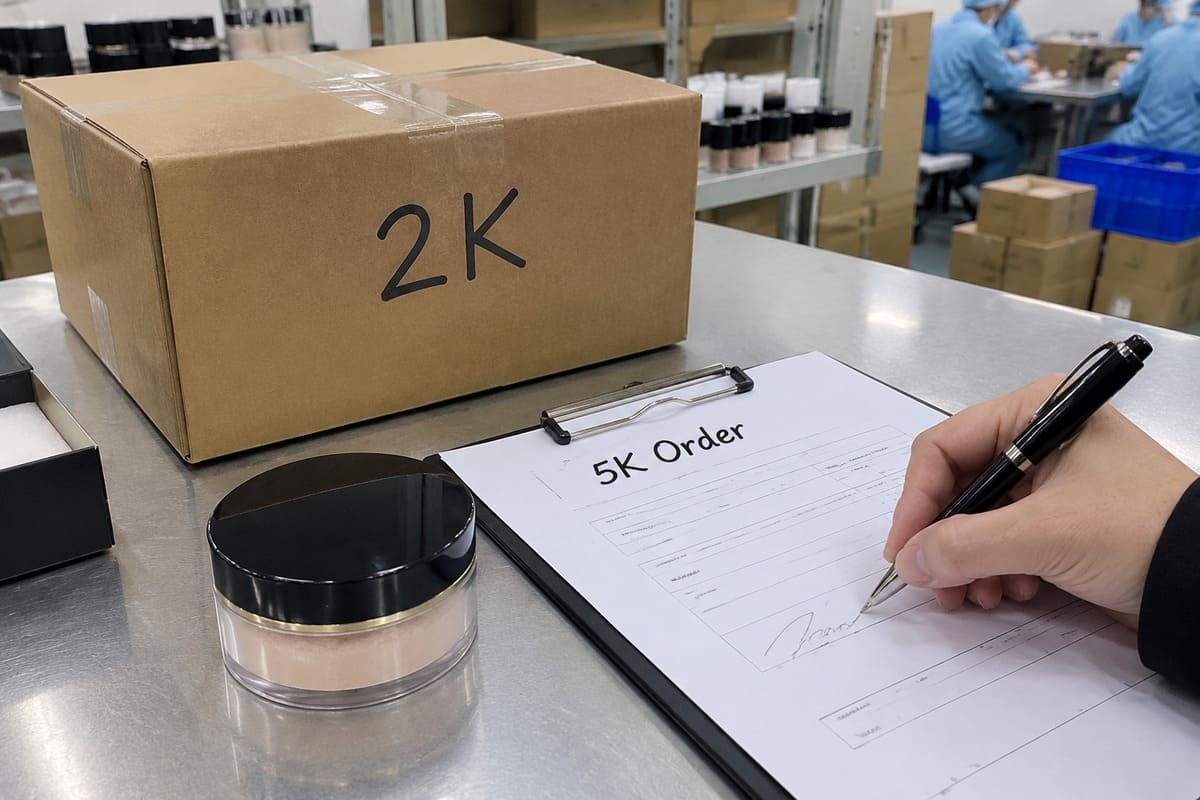
That founder was stuck between Pinnacle's sameness and Delon's 10,000-unit commitment. We reframed the whole problem.
The Step-by-Step Sequence I Use
- Validate first. Order a 2,000-unit standard eyeshadow palette. Keep cash risk low while you learn.
- Handle compliance correctly. I provided INCI lists, concentration data, and safety documentation to support his Health Canada CNF. The filing itself stayed his responsibility as the importer. That division is important and honest.
- Budget the import. The 6.5% MFN tariff on the 2,000-unit shipment was a planned line item, not a surprise.
- Read the data. The trial sold through. That was the green light.
- Then differentiate. He moved to 5,000 units for a custom formula and exclusive packaging. Now the product was genuinely his.
I will be direct about tradeoffs. If your only goal is to launch fast with minimal cash and you accept white-label sameness, Pinnacle's model is a rational choice. I will not pretend otherwise. But if your goal is a differentiated brand with a controlled risk path, the staged option is the more honest starting point.
Frequently Asked Questions
Does "No MOQ" from a makeup manufacturer in Canada mean I can customize my formula?
No. "No MOQ" almost always means white-label: you select a stock formula and stock packaging, then add your logo. Custom formulation and custom packaging carry fixed setup costs that force a minimum run, typically 5,000 to 10,000 units depending on the supplier.
What is the real MOQ for true custom cosmetics in Canada?
True custom formulation in Canada generally starts around 5,000 units per shade per SKU at Cosmetica and roughly 10,000 units per SKU at Delon Laboratories. Development timelines for new custom launches can run 12 to 22 weeks. Verify current figures directly with each supplier.
How much does importing cosmetics into Canada actually cost?
Cosmetics under HS 3304 face a 6.5% MFN tariff on FOB value for Chinese-origin goods, plus 5% or higher GST/HST that registered businesses can usually recover11. On a $15,000 FOB order, the tariff is $975. These are predictable, calculable costs.
Who files the Health Canada CNF, the factory or me?
You do, as the importer or manufacturer. The overseas factory supplies the INCI list, concentration data, and safety documentation. You file the Cosmetic Notification Form within 10 days of first sale. From March 2025, a Canadian address is required on the form.
Can I start small and scale to custom later?
Yes. A staged path lets you validate demand with a 2,000-unit standard palette, then reinvest in 5,000-plus units of true custom formulation once the trial sells through. This uses real sales data to decide when to commit cash to differentiation.
Conclusion
Choosing a makeup manufacturer in Canada is not really about geography. It is about understanding that "No MOQ" means white-label sameness, while true custom formulation starts at 5,000 to 10,000 units. The 6.5% tariff and the CNF filing are real but calculable—never a reason to accept a product you cannot differentiate. The smartest path I have seen validates demand with a low-risk 2,000-unit trial, then scales to custom only when sales justify the spend. If you want to map that staged path for your own brand, send me your target shades and first-order estimate, and I will build you a specific plan.
"White-label product", https://en.wikipedia.org/wiki/White-label_product. Reference definitions describe a white-label product as one manufactured by one firm and sold under another firm's brand, typically without modification to the underlying product. Evidence role: definition; source type: encyclopedia. Supports: That white-label products are generic goods produced by one company and rebranded by others to appear self-made.. Scope note: Usage of 'white label' versus 'private label' varies across industries, so the definition supports the general concept rather than a cosmetics-specific standard. ↩
"Modernization of Cosmetics Regulation Act of 2022 (MoCRA)", https://www.fda.gov/cosmetics/cosmetics-laws-regulations/modernization-cosmetics-regulation-act-2022-mocra. Regulatory guidance on cosmetics, such as Health Canada's safety requirements under the Food and Drugs Act and Cosmetic Regulations, requires that products not pose a health risk under customary use. Evidence role: general_support; source type: government. Supports: That cosmetics must be safe under normal use and that safety substantiation is expected before sale.. Scope note: Specific testing protocols, including stability testing, are not always mandated by name; requirements vary by product and jurisdiction, so this supports the general obligation rather than a fixed test list. ↩
"How to Find the Best OEM Makeup Kit Manufacturers with Low ...", https://vertinabeauty.com/2025/03/07/how-to-find-the-best-oem-makeup-kit-manufacturers-with-low-moq/. Technical and supplier documentation for cosmetic colorants indicates they are sold in standard lot sizes, establishing a minimum raw-material commitment for custom formulation. Evidence role: general_support; source type: other. Supports: That cosmetic colorants and effect pigments are typically supplied in defined minimum quantities, contributing to minimum production runs.. Scope note: Minimum lot sizes differ by supplier and pigment type; a general source supports the existence of minimums rather than any specific threshold. ↩
"Skincare vs. Medicaments", https://www.dhs.gov/medialibrary/assets/video/63812. The World Customs Organization Harmonized System nomenclature defines heading 3304 as covering beauty or make-up preparations and preparations for the care of the skin. Evidence role: definition; source type: institution. Supports: That HS heading 3304 covers beauty, make-up and skin-care preparations.. Scope note: Exact sub-heading classification depends on product composition and function and may require a specific ruling. ↩
"3304.99.50.00 - Harmonized Tariff Schedule", https://hts.usitc.gov/search?query=3304995000. The Canada Border Services Agency Customs Tariff lists the Most-Favoured-Nation rate for heading 3304 (beauty, make-up and skin-care preparations), which governs non-preferential origins including China. Evidence role: statistic; source type: government. Supports: The Most-Favoured-Nation duty rate applicable to goods under HS heading 3304 imported into Canada.. Scope note: Tariff schedules are revised periodically; the exact rate must be confirmed against the edition in force at the time of import. ↩
"Notification of Cosmetics", https://www.canada.ca/en/health-canada/services/consumer-product-safety/cosmetics/notification-cosmetics.html. Health Canada's guidance on cosmetic notification, issued under the Cosmetic Regulations, specifies that a Cosmetic Notification Form must be submitted within ten days of first sale in Canada. Evidence role: mechanism; source type: government. Supports: The obligation to notify Health Canada of a cosmetic within 10 days of first sale in Canada.. ↩
"EU-Canada Comprehensive and Economic Trade Agreement", https://trade.ec.europa.eu/access-to-markets/en/content/eu-canada-comprehensive-and-economic-trade-agreement. The Canada–European Union Comprehensive Economic and Trade Agreement and Canada's corresponding tariff treatment provide that preferential duty rates apply only to goods satisfying the agreement's rules of origin. Evidence role: mechanism; source type: government. Supports: That CETA preferential (zero) tariff treatment applies to EU-originating goods and not to goods of other origins.. Scope note: Origin determination follows detailed rules; the zero rate's applicability to a given shipment depends on documented EU origin. ↩
"PL 114-26", https://www.congress.gov/crs_external_products/IF/HTML/IF12078.web.html. Government summaries of CUSMA and the CPTPP identify their signatory parties and origin requirements, which exclude non-party origins such as China from preferential rates. Evidence role: mechanism; source type: government. Supports: That China is not a party to CUSMA or CPTPP and its goods therefore do not receive those agreements' preferential tariff rates.. ↩
"Guide for Cosmetic Notifications", https://www.canada.ca/en/health-canada/services/consumer-product-safety/cosmetics/notification-cosmetics/guide.html. Health Canada guidance or regulatory amendment documents the addition of a Canadian-address field to the Cosmetic Notification Form effective March 2025. Evidence role: mechanism; source type: government. Supports: A requirement, effective March 2025, that a Canadian address be included on the Cosmetic Notification Form.. Scope note: Effective dates for regulatory amendments can be adjusted; verify the current guidance for the precise requirement and timing. ↩
"How to Find a Cosmetics Manufacturer: A Buyer's Guide to Verifying ...", https://vertinabeauty.com/how-to-find-a-cosmetics-manufacturer-a-buyers-guide-to-verifying-real-factories/. Industry and trade analyses of China's cosmetics sector identify Guangdong as a leading province for cosmetics production and manufacturing enterprises. Evidence role: general_support; source type: research. Supports: That Guangdong province concentrates a large share of China's cosmetics manufacturing capacity.. Scope note: Such sources describe the region's capacity in aggregate and do not vouch for any individual supplier or minimum order terms. ↩
"Input tax credits", https://www.canada.ca/en/revenue-agency/services/tax/businesses/topics/gst-hst-businesses/calculate-prepare-report/input-tax-credit.html. Canada Revenue Agency guidance on GST/HST and imports explains that registrants may generally claim input tax credits for tax paid on commercial imports. Evidence role: mechanism; source type: government. Supports: That GST/HST paid on imported goods may generally be recovered as input tax credits by GST/HST-registered businesses.. Scope note: Eligibility to recover depends on the importer's registration status and use of the goods; it is contextual rather than automatic. ↩