Searching for a makeup manufacturer in India looks easy at first. You find factories advertising 500-unit private-label runs and the proud "Make in India" badge1. Then you ask one question about custom formulation, and the quote jumps to 3,000 units. The gap between the ad and the reality can stall your launch before it starts.
A makeup manufacturer in India will quote private-label MOQs of 500 to 1,000 units, but those are stock formulas in stock packaging with your logo added. True OEM custom formulation typically starts at 3,000 to 5,000 units per SKU with 6 to 8 week timelines. The "low MOQ" is a shortcut to sameness, not to a differentiated brand.
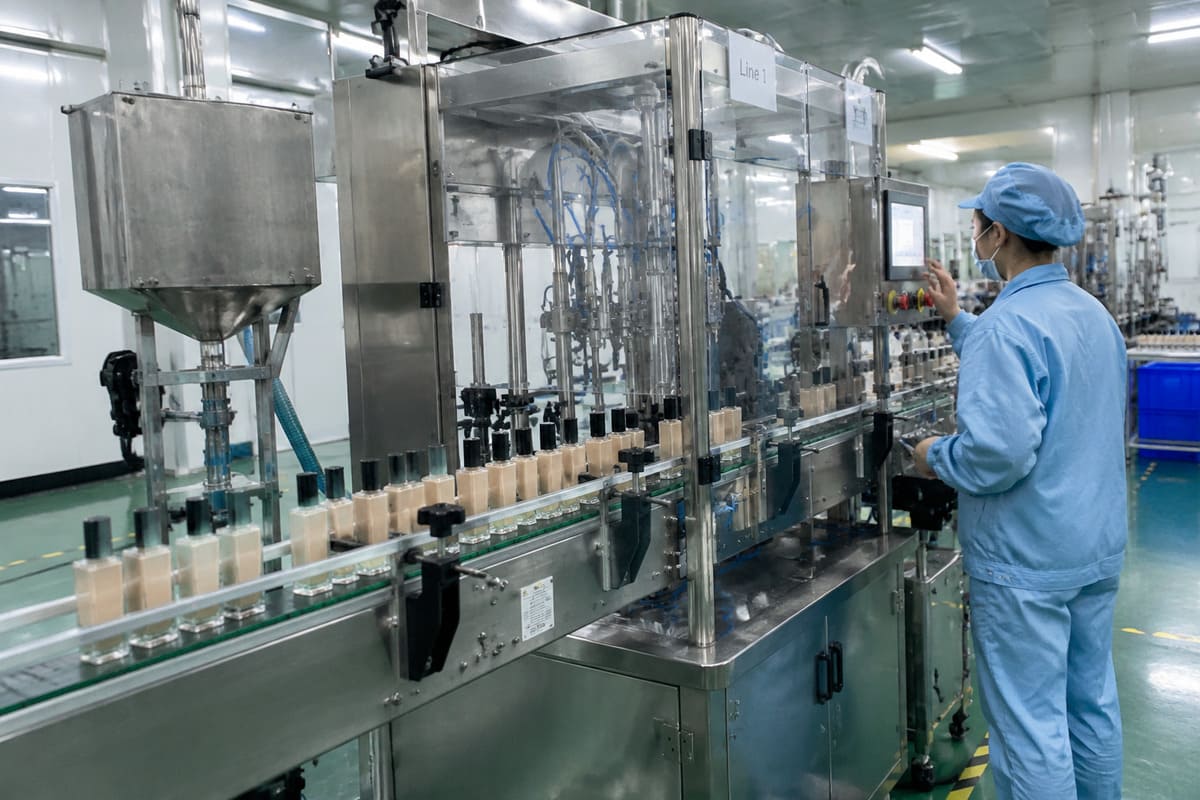
So the real choice is not simply "local or imported." The real choice is about risk, cost, and differentiation. Below I break down what each MOQ actually buys you, what import math really looks like, and a sequence that lets you test the market without a heavy cash commitment.
What Does "Makeup Manufacturer in India" Really Mean for a Brand Founder?
You type "makeup manufacturer in India" because you want a product that feels like yours. Then the sales call reveals two very different services hiding under one label. One is fast and cheap. One is custom and expensive. Confusing them wastes money.
For a brand founder, a makeup manufacturer in India usually offers two separate services: white-label (500 to 1,000 units of a stock product with your logo) and OEM contract manufacturing (3,000 to 5,000 units of a custom formula or mold). The word "manufacturer" alone does not tell you which one you are buying.
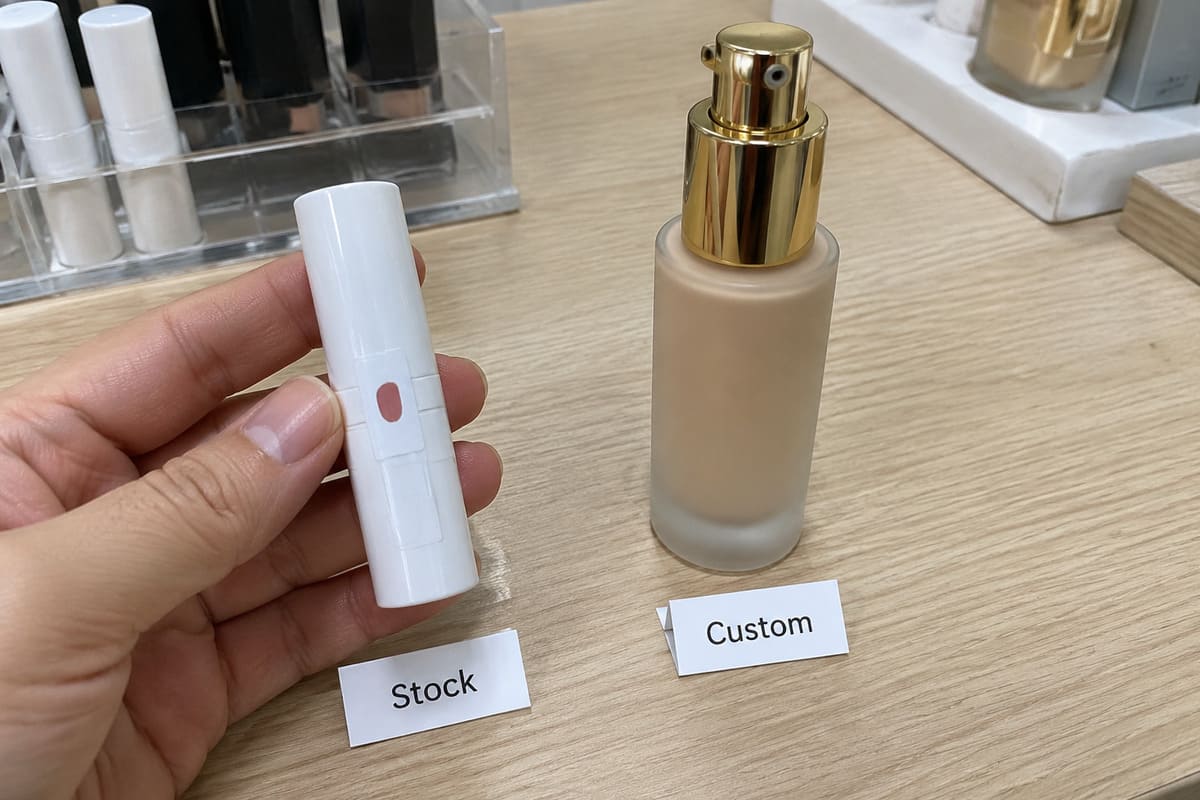
When founders ask me for help, they are rarely asking "Where is a factory?" They are asking a sharper set of questions. Is this 500-unit offer actually my formula, or is it a catalog product with a sticker? If I want something truly mine, what is the real threshold? And is there a path that does not force me to pick between zero differentiation and a 3,000-unit cash commitment?
What is the difference between white-label and OEM?
Here is the distinction I draw for every client:
- White-label (private label): A stock formula, stock packaging, your logo. Fast, low MOQ, low cost. Everyone else can buy the same base.
- OEM / contract manufacturing: Your formula, your shade, often your mold or packaging. Higher MOQ, longer timeline, real differentiation.
| Service type | Typical MOQ | Timeline | What is "yours" |
|---|---|---|---|
| White-label | 500–1,000 units | 1–2 weeks | Logo only |
| OEM custom | 3,000–5,000 units | 6–8 weeks | Formula, shade, mold |
A founder I worked with assumed "500 units, private label" meant a custom palette. It did not. The 500 units bought him a catalog product his competitors could also order. That single misunderstanding is the most common trap in this market. Knowing which service you are buying is the first real step toward a brand instead of a lookalike.
The Indian Manufacturing Reality: Why "500-Unit MOQ" Means White-Label, Not Custom Formulation
The 500-unit offer feels like a gift. Low risk, low spend, "Make in India" on the box. Then your product arrives and it looks like three other brands on the same shelf. You paid to differentiate and got sameness instead.
A 500 to 1,000 unit MOQ from a makeup manufacturer in India almost always means white-label: a stock formula and stock packaging with your branding applied. Custom formulation, custom shades, and private molds are classified as OEM work, which starts at 3,000 to 5,000 units per SKU. Low MOQ and true customization rarely exist in the same order.
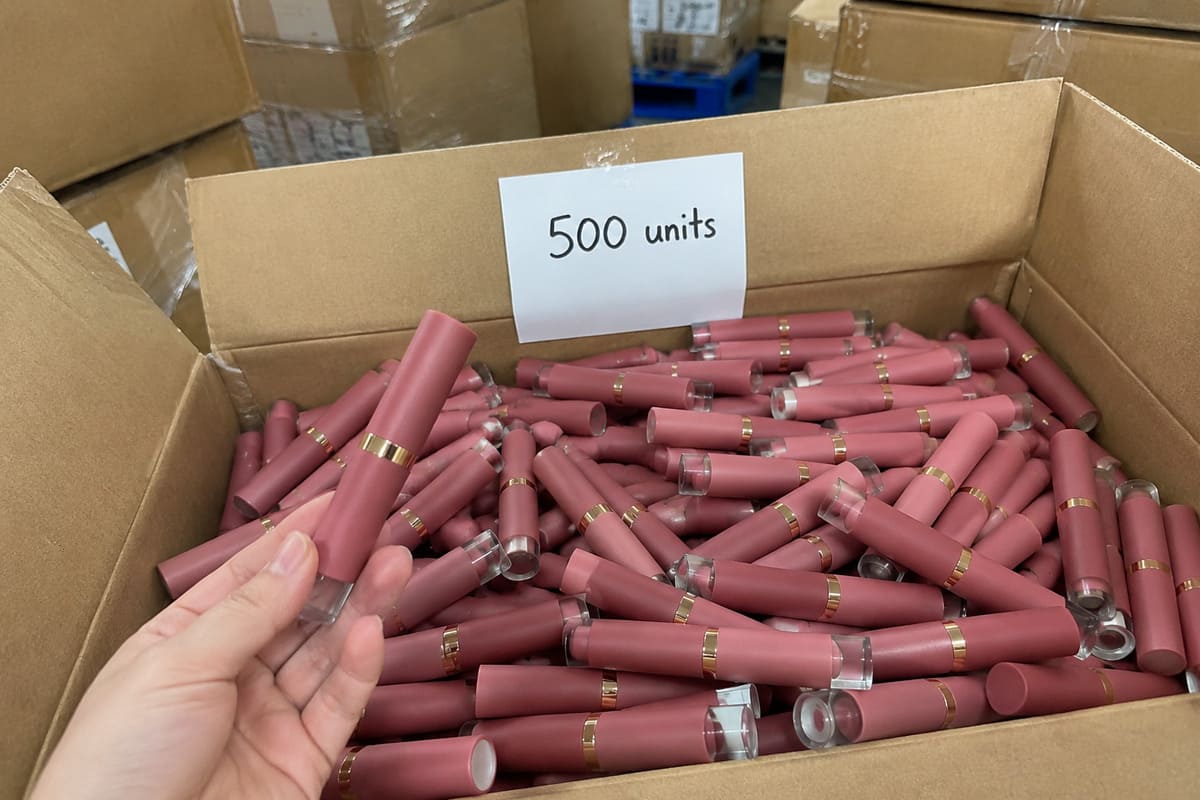
The reason is simple economics. Custom formulation requires lab time, raw material minimums, stability testing, and often tooling. A factory cannot recover those costs across 500 units. So they split the menu: cheap stock products at low MOQ, custom work at high MOQ.
Why can't factories offer custom work at 500 units?
The cost structure makes it impossible to price sensibly. Consider what a custom run demands:
- Raw material minimums. Pigments and bases are sold in bulk2. A 500-unit run cannot absorb a minimum pigment purchase.
- Lab and R&D time. Shade matching and formula development cost the same whether you order 500 or 5,000.
- Tooling and molds. A private compact mold is a fixed cost in the thousands of dollars3.
- Stability and compatibility testing. Required for any new formula, regardless of order size.
Spread across 500 units, each of these pushes the per-unit price past what any founder would pay. Spread across 5,000, the math works. This is why I tell founders plainly: the 500-unit offer is real and useful, but it is a white-label product. It is a fine way to test a concept. It is not a way to own a formula. If your goal is a product competitors cannot copy, you are looking at the 3,000 to 5,000 unit tier, full stop.
What True Customization Actually Requires in India (3,000–5,000 Units and 6–8 Weeks)?
You decided you want a real product. Your shade, your finish, your compact. The factory says yes, then names a number that changes your whole plan. The jump from 500 to 3,000 units is not a negotiation tactic. It is the floor.
True customization from a makeup manufacturer in India typically requires 3,000 to 5,000 units per SKU, with a development timeline of 6 to 8 weeks. This covers formula development, shade matching, stability testing, and often custom tooling. These numbers reflect raw material minimums and R&D cost recovery, not arbitrary gatekeeping.
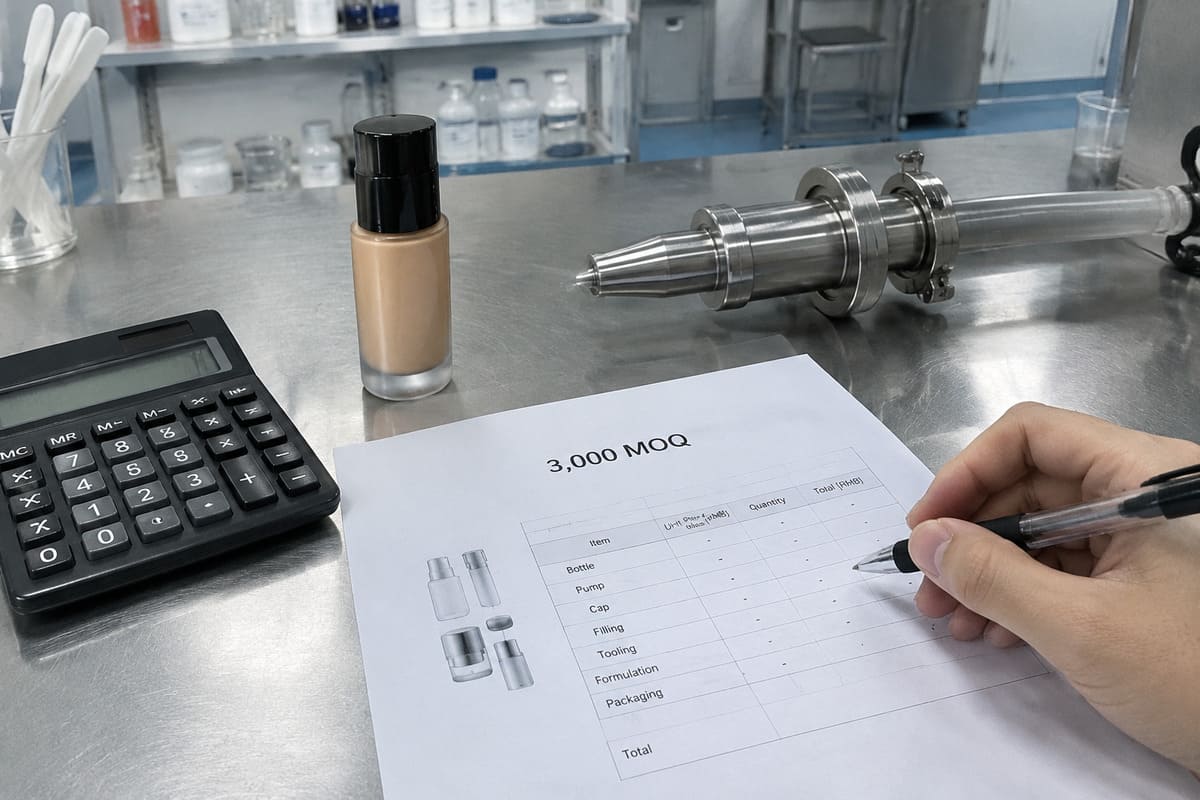
The timeline matters as much as the MOQ. Six to eight weeks is development time, before production and shipping. For a founder chasing a seasonal trend, that lead time can mean missing the window entirely.
What does the 6–8 week timeline include?
Here is the realistic breakdown I share with clients so no one is surprised:
| Phase | Typical duration | What happens |
|---|---|---|
| Formula development | 1–2 weeks | Base selection, initial lab samples |
| Shade matching | 1–2 weeks | Color iterations, approval rounds |
| Stability testing | 2–4 weeks | Heat, cold, and compatibility checks |
| Tooling (if needed) | 2–3 weeks | Custom mold or packaging production |
| Pre-production sample | 1 week | Final sign-off before the full run |
Several of these overlap, which is how factories reach 6 to 8 weeks instead of 12. But you cannot skip stability testing4, and you should not want to. A palette that cracks in a hot warehouse or separates on a shelf destroys a young brand's reputation faster than any delay.
So the honest picture is this. True customization in India is achievable and high quality, but it demands roughly 3,000 to 5,000 units of cash commitment and two months of lead time per SKU. For a funded brand, that is reasonable. For a founder validating a first concept, it is a heavy bet on an unproven product. That tension is exactly where most founders get stuck, and it is why the next two sections matter.
The Cost Nobody Calculates: 30%+ Import Duty, CDSCO Registration, and the China Supply Chain?
Someone tells you to just import from China at half the price. Sounds obvious. Then your shipment sits in customs for weeks, and the landed cost is nowhere near the FOB quote. The savings are real, but only if you do the full math.
Importing cosmetics into India adds roughly 30% or more in duties on top of the FOB price: Basic Customs Duty of 10 to 20 percent5, 18 percent IGST6, and a 10 percent Social Welfare Surcharge on the BCD7. Every product also requires CDSCO registration before arrival. Chinese FOB prices run 50 to 70 percent below Indian quotes8, so the net saving is still substantial, but it must be calculated, not assumed.
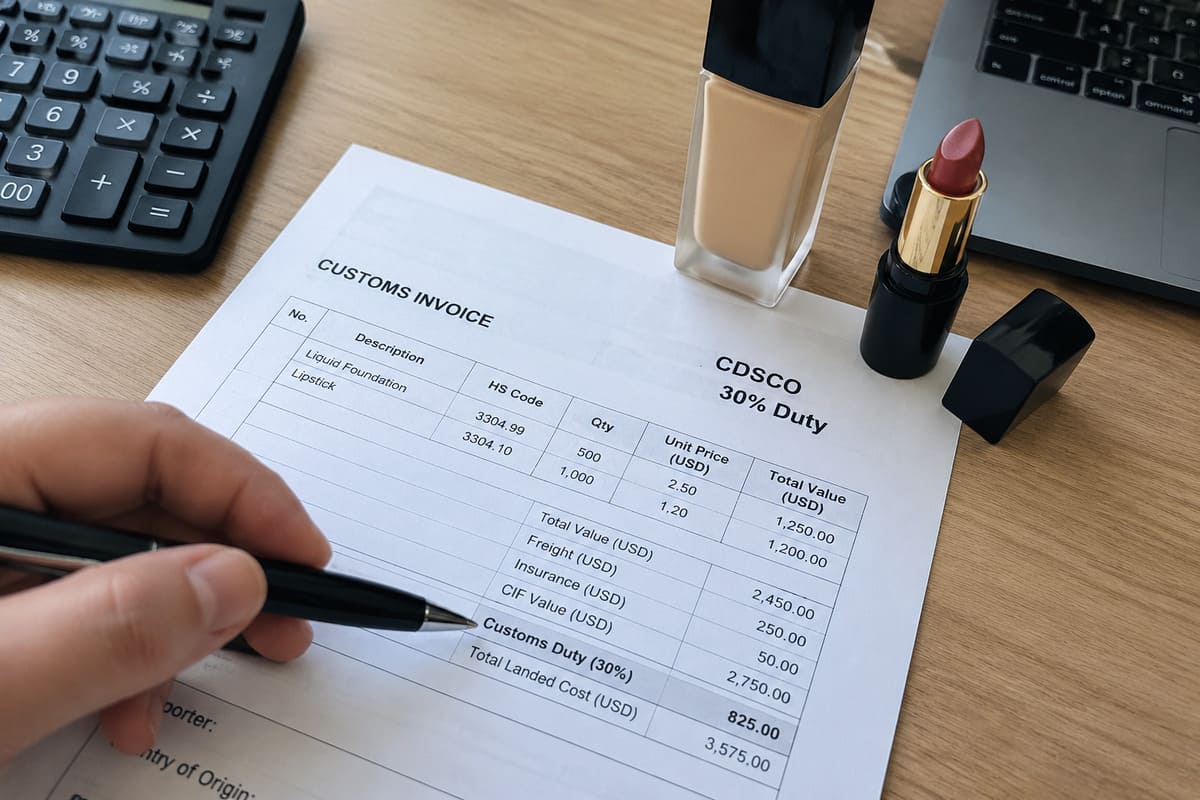
Let me show the real math on a sample order. Numbers are illustrative, but the structure is accurate.
How do you calculate the true landed cost?
| Cost component | Rate | On a $10,000 FOB order |
|---|---|---|
| FOB unit price (China) | Base | $10,000 |
| Basic Customs Duty (BCD) | 10%–20% | $1,000–$2,000 |
| Social Welfare Surcharge | 10% of BCD | $100–$200 |
| IGST | 18% | ~$2,000 |
| Approx. landed cost | — | $13,100–$14,200 |
Even after a 30%+ tax wall, if the Chinese FOB price is 50 to 70 percent below the Indian quote, you often remain ahead. But there is a second gate that duties do not open: CDSCO registration.
Every imported cosmetic must be registered with India's Central Drugs Standard Control Organisation before the shipment arrives9. This is a product-by-product process that takes weeks to months. Unregistered goods are refused entry even if every duty is paid10. India customs does not accept vague promises.
This is where I am direct with clients. We do not just ship product. We ship the evidence. We provide the full document package that CDSCO and Indian customs require:
- INCI ingredient listings
- GMP certificate11
- COA (Certificate of Analysis)
- Stability reports
- Free Sale Certificate12
The CDSCO filing and import licence remain your legal obligation as the importer. We cannot and will not assume that for you. But with a clean document set, the filing is a process, not a gamble. Treat certifications as documents you must verify and file, not as a box someone else quietly checks.
The Guangdong Alternative: 2,000 Units to Validate the Indian Market, 5,000+ to Differentiate?
You are caught between two bad options. White-label at 500 units gives you nothing unique. Custom at 3,000 units is a big bet on a product no customer has tested. There is a third path that most founders never consider.
A Guangdong supply chain lets you order 2,000 units of a high-quality standard eyeshadow palette at an FOB cost roughly 30 to 50 percent of an Indian custom quote. You validate real Indian market demand first, then use sales data to decide whether to scale to 5,000+ units of true custom formulation. Validation comes before the heavy cash commitment, not after.
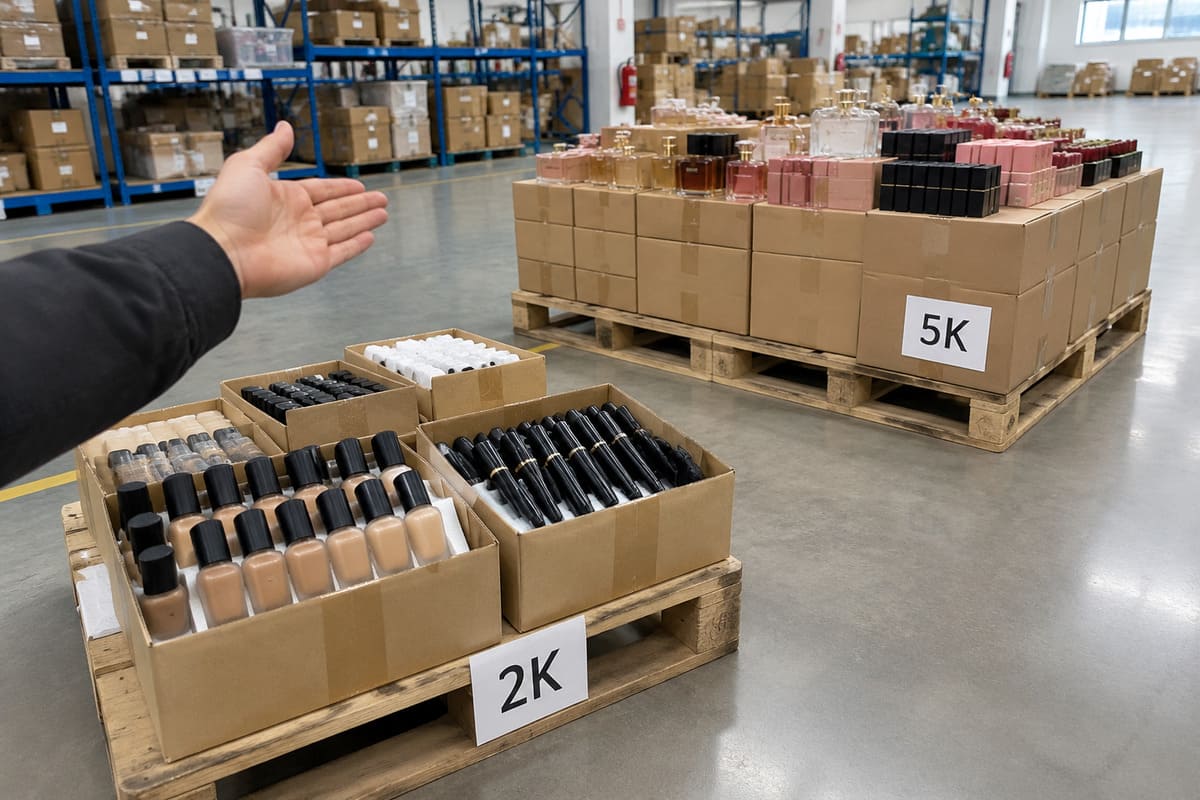
This is the reframe I use most often. The founder stuck between sameness and a 3,000-unit custom bet does not actually need to choose yet. He needs data.
Why does 2,000 units beat both extremes for validation?
Compare the three starting points honestly:
| Path | Upfront units | Differentiation | Cash risk | Best for |
|---|---|---|---|---|
| India white-label | 500–1,000 | None | Low | "Make in India" badge only |
| India custom OEM | 3,000–5,000 | High | High | Funded, proven concept |
| Guangdong validation | 2,000 | Medium (quality) | Lower than custom | Testing demand first |
The 2,000-unit Guangdong palette is a quality product, not a logo sticker. It is good enough to sell, review, and build an audience. Because the FOB cost is so much lower, even after India's 30%+ duties and CDSCO filing, the total upfront cash often stays below the 3,000-unit Indian custom MOQ.
I always stay transparent about the tradeoffs. Import duties are real. CDSCO takes time. A medium-differentiation palette is not a fully bespoke formula. But for a founder who needs to prove the market exists before betting on tooling, 2,000 units of validation stock is the lowest-risk way to generate real sales data. Application-specific decisions still deserve qualified professional evaluation, so I treat this as a starting framework, not a universal rule.
A Real Path: How to Start with a Low-Risk Trial and Scale Without Burning Cash?
You want to launch without betting the whole budget on a guess. You have seen that 500 units means sameness and 3,000 means a cash-heavy leap of faith. What you need is a sequence, not a single all-or-nothing order.
The lowest-risk path is a three-step sequence: order 2,000 validation units from Guangdong to test real demand, use the sell-through data to justify a 5,000+ unit custom run, then add a Make-in-India line only for the specific SKUs where local manufacturing earns a proven premium. Each step is funded by the revenue of the step before it.
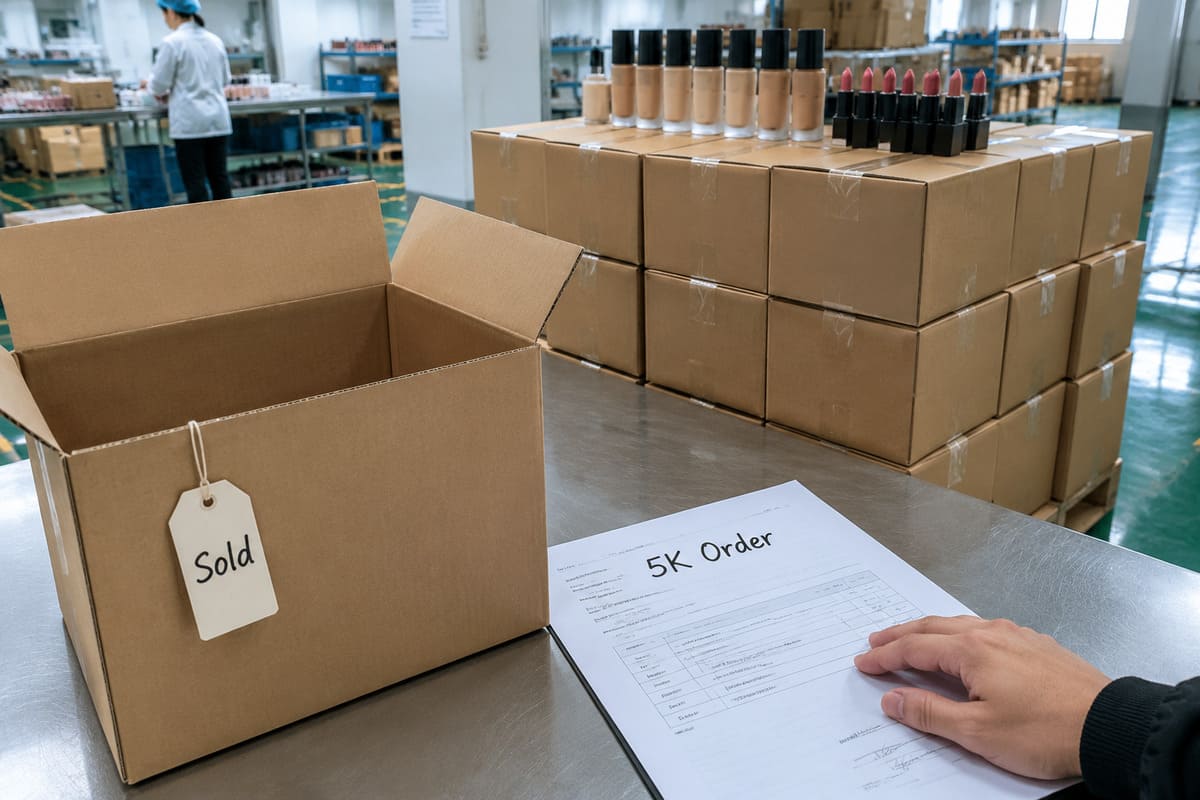
This is exactly how one founder I worked with escaped the trap. He had been quoted 500 white-label units or a 3,000-unit custom MOQ with a 6 to 8 week timeline. Stuck between the two, he nearly abandoned the launch.
What does the three-step scaling sequence look like?
We reframed the problem and ran it in stages:
- Validate (2,000 units, Guangdong). A standard eyeshadow palette at 30 to 50 percent of the Indian custom quote. We were transparent that BCD, IGST, SWS, and CDSCO would add cost and time. Even so, total upfront cash stayed below the 3,000-unit custom MOQ. We supplied INCI, GMP, stability reports, and a Free Sale Certificate for his CDSCO filing.
- Differentiate (5,000+ units). Once the trial sold through, he had real numbers. He used that revenue and that confidence to commit to a custom formulation run.
- Localize selectively (Make in India). For the specific SKUs where the local badge drove measurable sales, he added an Indian-made line. Only where the premium was proven, never on assumption.
| Step | Trigger to advance | Funded by |
|---|---|---|
| 2,000-unit trial | Launch decision | Initial budget |
| 5,000+ custom | Trial sells through | Trial revenue |
| Make-in-India line | Local premium proven | Custom-line revenue |
The sequence protects your cash at every stage. You never commit to the expensive step until the cheaper step proves demand.
Here is my honest boundary. If your single priority is the "Make in India" label and your budget only allows white-label, an Indian private-label partner is a rational, legitimate choice. I will not pretend otherwise. But if you want to validate first, control cost, and then differentiate, this sequence does it without burning cash on an unproven guess.
Frequently Asked Questions
What is the real MOQ for a custom product from a makeup manufacturer in India?
True custom formulation typically starts at 3,000 to 5,000 units per SKU with a 6 to 8 week development timeline. Offers at 500 to 1,000 units are white-label: stock formulas and packaging with your logo added, not a formula you own.
Is importing cosmetics from China into India actually cheaper?
Often yes, but you must calculate it. Chinese FOB prices run 50 to 70 percent below Indian quotes. India adds roughly 30% or more in duties (BCD 10–20%, IGST 18%, SWS 10% of BCD). Even after that, the net saving is usually substantial for many categories.
Do I need CDSCO registration to import makeup into India?
Yes. CDSCO registration is mandatory for every imported cosmetic before the shipment arrives. It is a product-by-product process taking weeks to months. Unregistered goods are refused entry even if all duties are paid. The filing is your legal obligation as the importer.
What documents do I need to clear Indian customs for cosmetics?
You should verify and file INCI ingredient lists, a GMP certificate, COA, stability reports, and a Free Sale Certificate. Your factory supplies these documents; the CDSCO filing and import licence remain your responsibility as the brand owner. Documents must match the shipment exactly.
How many units should I order to test the Indian market first?
A 2,000-unit standard palette is a practical validation volume. It is a sellable quality product, and even after import duties and CDSCO costs, total upfront cash often stays below the 3,000-unit Indian custom MOQ. Use the sales data before committing to custom tooling.
Conclusion
Choosing a makeup manufacturer in India is less about location and more about matching MOQ to your actual goal. A 500-unit offer is white-label sameness. True custom formulation starts at 3,000 to 5,000 units and 6 to 8 weeks. Cross-border supply from Guangdong carries a calculable 30%+ duty plus CDSCO filing, not a catastrophe. The smartest path is a sequence: validate with 2,000 units, differentiate at 5,000+, then localize only where the premium is proven. If you want help mapping that sequence and preparing the exact customs document package, reach out and I will build the plan with you.
"Make in India", https://en.wikipedia.org/wiki/Make_in_India. Reference material on the "Make in India" initiative describes it as a Government of India campaign launched in 2014 to encourage domestic manufacturing, supporting the article's reference to the badge. Evidence role: definition; source type: encyclopedia. Supports: The nature and origin of the "Make in India" initiative as a government program promoting domestic manufacturing.. Scope note: The source describes the initiative generally and does not address its specific use or value in the cosmetics sector. ↩
"Cosmetic Ingredient Suppliers: Fact Sheet", https://www.fda.gov/cosmetics/resources-industry-cosmetics/cosmetic-ingredient-suppliers-fact-sheet. Trade and supplier documentation on cosmetic raw materials indicates that pigments and bases are commonly sold with bulk minimum order quantities, supporting the article's cost-structure rationale. Evidence role: general_support; source type: other. Supports: That cosmetic pigments and base materials are typically supplied under bulk minimum order quantities.. Scope note: Minimum quantities differ by supplier and material grade, and the support is contextual rather than a direct measure of the article's per-unit cost claim. ↩
"Liquid Eyeshadow vs Powder: Which Should a New ... - Vertina Beauty", https://vertinabeauty.com/liquid-eyeshadow-vs-powder-which-should-a-new-southeast-asian-brand-start-with/. Manufacturing and tooling cost analyses indicate that custom injection molds typically entail upfront fixed costs ranging into the thousands of dollars, supporting the article's characterization of compact-mold expense. Evidence role: statistic; source type: research. Supports: That custom injection-mold tooling for packaging carries fixed costs in the thousands of dollars.. Scope note: Tooling costs vary widely by mold complexity, material, and supplier region, so the figure is indicative rather than specific to cosmetic compacts. ↩
"Cosmetics Guidance Documents", https://www.fda.gov/cosmetics/cosmetics-guidance-regulation/cosmetics-guidance-documents. Published cosmetic stability testing guidance (e.g., ISO 18811 and industry association protocols) describes stability assessment as a standard practice to verify that a product maintains quality over its shelf life, supporting the claim that it should not be omitted. Evidence role: mechanism; source type: institution. Supports: That stability testing is a standard, expected step in cosmetic formula development to ensure product integrity.. Scope note: Guidance describes recommended practice rather than a universal legal mandate, and specific requirements vary by jurisdiction. ↩
"3304 - Harmonized Tariff Schedule", https://hts.usitc.gov/search?query=beauty. The Indian Customs Tariff maintained by the Central Board of Indirect Taxes and Customs lists Basic Customs Duty rates for cosmetics (HS Chapter 33) within a range consistent with the figures cited. Evidence role: statistic; source type: government. Supports: The Basic Customs Duty rate range applicable to imported cosmetic products in India.. Scope note: Rates differ by specific tariff line and may be altered by annual budget changes or trade agreements. ↩
"GST Goods and Services Rates", https://cbic-gst.gov.in/hindi/gst-goods-services-rates.html. Indian GST rate schedules published by the Central Board of Indirect Taxes and Customs classify most cosmetic products under the 18 percent IGST slab, supporting the rate cited for imports. Evidence role: statistic; source type: government. Supports: The IGST rate levied on imported cosmetic products in India.. Scope note: Rate slabs vary by HS code and are periodically revised, so the applicable rate for a specific product should be confirmed against the current tariff notification. ↩
"India to Levy New Surcharge on Imported Goods", https://apps.fas.usda.gov/newgainapi/api/report/downloadreportbyfilename?filename=India%20to%20Levy%20New%20Surcharge%20on%20Imported%20Goods_New%20Delhi_India_2-27-2018.pdf. The Social Welfare Surcharge introduced under the Finance Act, 2018 is levied at 10 percent on the aggregate customs duties, supporting the article's description of the surcharge and its base. Evidence role: statistic; source type: government. Supports: The existence and 10 percent rate of the Social Welfare Surcharge calculated on Basic Customs Duty.. Scope note: Exemptions and rate variations apply to certain goods, so applicability to a specific cosmetic import should be verified. ↩
"China Cosmetic OEM Cost & Pricing Guide 2026 - 8OEM", https://8oem.com/guides/cosmetic-oem-cost-pricing-guide.html. Comparative manufacturing cost studies for consumer goods point to notably lower production costs in China relative to India in several categories, offering contextual support for the stated price gap. Evidence role: statistic; source type: research. Supports: A substantial cost differential between Chinese and Indian cosmetic manufacturing prices.. Scope note: General manufacturing cost comparisons do not isolate cosmetics FOB pricing, so the specific 50–70 percent figure is not directly verified. ↩
"Cosmetics Rules, 2020", https://cdsco.gov.in/opencms/opencms/en/Acts-and-rules/Cosmetics-Rules/. The Cosmetics Rules, 2020 administered by the CDSCO require a registration certificate for cosmetics imported for sale in India, supporting the stated pre-import registration obligation. Evidence role: mechanism; source type: government. Supports: The legal requirement to register imported cosmetics with CDSCO prior to importation.. Scope note: Procedural details and exemptions are defined within the Rules and should be checked against the current regulatory text. ↩
"Importing cosmetics, and medical instruments for commercial ...", https://www.help.cbp.gov/s/article/Article-1406. CDSCO import guidance indicates that cosmetics offered for import without a valid registration certificate are not permitted clearance, supporting the claim that duty payment alone does not secure entry. Evidence role: mechanism; source type: government. Supports: That customs clearance of imported cosmetics is contingent on valid CDSCO registration.. Scope note: Enforcement outcomes can depend on case-specific customs discretion and documentation completeness. ↩
"GMP Guidelines/Inspection Checklist for Cosmetics", https://www.fda.gov/cosmetics/cosmetics-guidance-documents/good-manufacturing-practice-gmp-guidelinesinspection-checklist-cosmetics. The ISO 22716 standard defines Good Manufacturing Practices for cosmetics, supporting the article's reference to a GMP certificate as a recognized quality-assurance document. Evidence role: definition; source type: institution. Supports: The meaning of a GMP certificate and its relevance to cosmetic manufacturing quality assurance.. Scope note: The standard defines manufacturing practice generally and does not itself establish India's specific import documentation list. ↩
"Certificate of Free Sale | Commonwealth of Pennsylvania", https://www.pa.gov/agencies/pda/food/food-safety/food-manufacturing-packing-holding-and-distribution/certificate-of-free-sale. Government trade guidance describes a Certificate of Free Sale as official confirmation that a product is freely marketed in the exporting country, supporting its inclusion in the import document package. Evidence role: definition; source type: government. Supports: The purpose of a Free Sale Certificate as evidence that a product is legally sold in its country of origin, used in import documentation.. Scope note: Whether a Free Sale Certificate is mandatory for a given cosmetic import depends on the destination regulator's current requirements. ↩