What Should Brands Know About a Private Label Neutral Eyeshadow Palette for Mature Skin?
When I discuss a private label neutral eyeshadow palette for mature skin with a brand, I start with the launch risk, not the shade names. Mature customers may be concerned about creasing, dryness, fallout, and powder settling into visible texture.1 A palette that looks appealing in a color chart can still disappoint in use, so I help buyers evaluate the formula before they commit to a large order.
A private label neutral eyeshadow palette for mature skin should be evaluated for comfortable wear, fine powder texture, manageable fallout, and performance on the intended customer’s eyelids, not just for shade selection. I recommend starting with an existing suitable base formula, testing a six-shade palette with a 2,000-unit trial, and reviewing customer feedback for about three months before considering full formula customization.
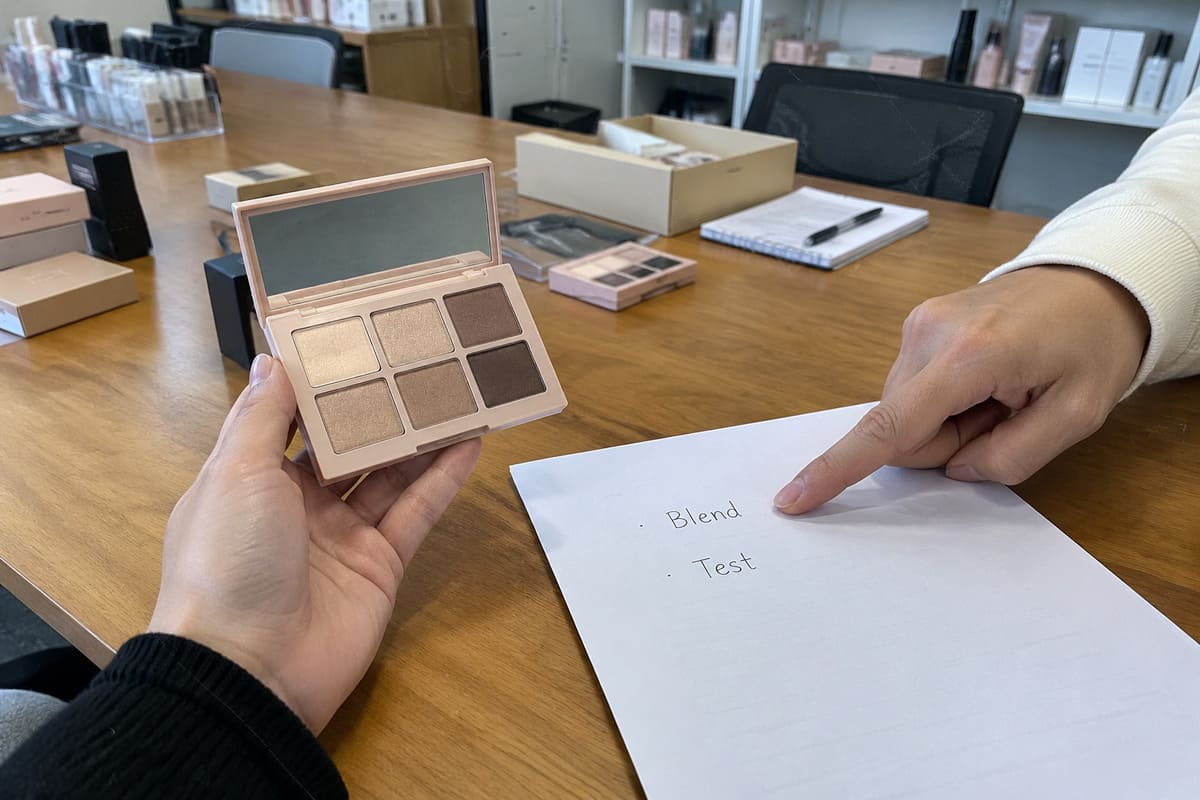
I see “neutral” as the visual direction and “mature skin” as the product brief. That distinction affects formula choice, testing, price, and the launch plan. Below, I explain how I would assess the opportunity, what I would verify with a supplier, and where I would avoid making assumptions.
What Does “Mature Skin” Really Mean for a Private Label Eyeshadow Palette?
“Mature skin” is not one uniform skin type or a precise technical category. When I develop a brief for a private label neutral eyeshadow palette for mature skin, I treat the phrase as a description of customer concerns and use conditions, such as visible eyelid texture, dryness, or a preference for a softer finish. That keeps the product brief useful without relying on age stereotypes.
For product development, “mature skin” should describe the needs the brand intends to address, not an assumed formula requirement based only on a customer’s age. I recommend defining those needs in practical terms, such as blendability, powder feel, fallout, finish, and wear, then testing the palette with representative users.
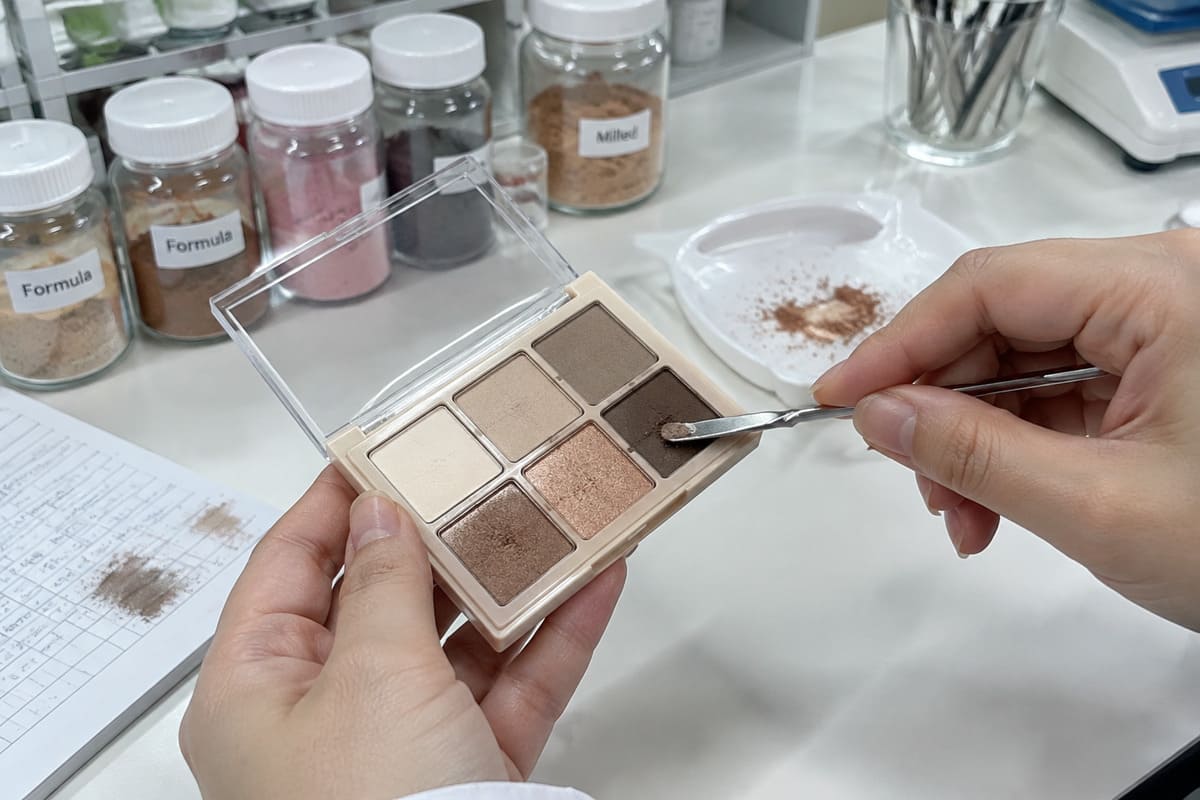
Turn the audience label into testable requirements
I ask buyers to write down what the customer should notice during application and wear. A brief that says “for mature skin” is too broad to guide a formulation review. A brief that specifies “low visible fallout during application” or “comfortable, non-drying feel” gives the development team something observable to assess.
I also distinguish between a customer concern and a product claim. A buyer may want a palette that is less likely to emphasize texture, but that does not automatically support a claim such as “will not crease” or “suitable for every mature eyelid.” I recommend that brands substantiate performance claims with appropriate product testing and review the wording for each target market.
| Broad phrase | More useful product requirement |
|---|---|
| “For mature skin” | Identify the intended user and the eyelid concerns to address |
| “No creasing” | Define wear conditions and assess creasing in a structured user test |
| “Soft texture” | Evaluate powder feel, blendability, and visible settling |
| “Natural neutrals” | Specify shade range, undertone, finish, and intensity |
| “Long-wearing” | Define wear duration and the conditions used to assess it |
A neutral palette also needs a clear point of view. Warm browns, cool taupes, muted rose, and soft matte shades can all be called neutral, but they do not serve every customer equally. I recommend selecting shades around a specific market and undertone range rather than trying to include every possible neutral.
When I speak with a brand founder, I encourage them to treat customer interviews, wear tests, and competitor reviews as inputs to the brief. They can reveal whether buyers are most concerned about dryness, fallout, low pigmentation, or a finish that looks too shimmery. Those findings help the brand choose an appropriate formula and avoid a palette that is neutral in color but poorly matched to the customer’s expectations.
Why Is Formulation, Not Color, the Real Risk for Mature-Skin Eyeshadow?
Shade selection is highly visible, so buyers often begin there. I understand why: color creates the first impression in a product listing. But I consider the formula the larger launch risk for a private label neutral eyeshadow palette for mature skin, because the customer experiences texture, fallout, and wear after purchase, not just the colors shown online.
For a mature-skin eyeshadow launch, color determines the palette’s visual identity, while the formula determines much of its application and wear experience. Buyers should assess powder texture, pigment level, blendability, fallout, and finish with samples before approving bulk production.
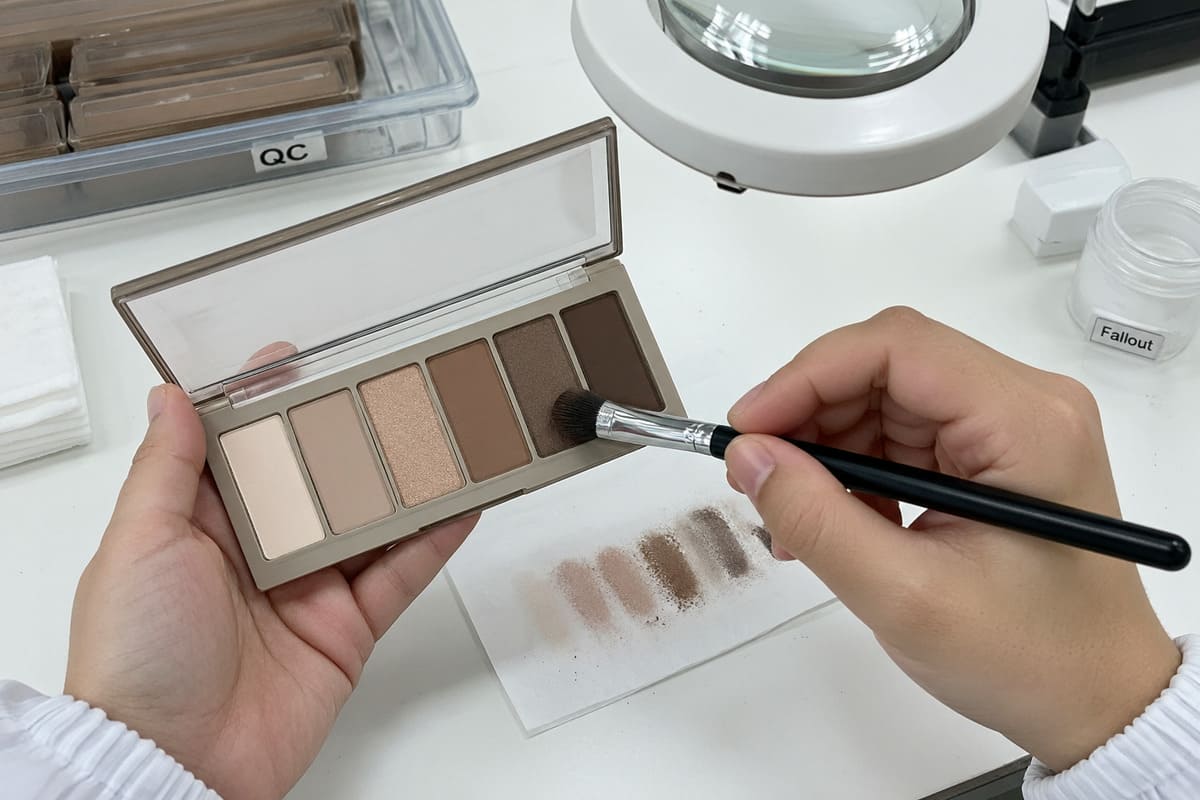
The formula is a system, not a single ingredient
I evaluate the formula as a combination of powder texture, ingredient system, pigment ratio, and pressing process. A palette can have attractive shades but still feel dry, apply unevenly, or produce more fallout than a customer expects. Fine milling can help create a softer-looking powder and reduce the chance that coarse particles will make application look messy.2 I often recommend evaluating finely milled mica-based options3, while noting that the final formula and ingredient choices need to be reviewed for the intended product and market.
I do not treat mica as a guarantee of performance. The overall formula, particle characteristics, shade pigments, and manufacturing process all matter. A sample needs to be assessed as a finished pressed product, not judged from an ingredient name alone.
I would ask a supplier to provide samples and a written specification for the exact formula under consideration. Then I would check:
- Whether the powder picks up and blends as expected.
- How much product falls during application.
- Whether the finish suits the brand brief, including any shimmer level.
- Whether different shades perform consistently.
- Whether the palette remains intact through normal handling and packaging.
I also caution brands against leaning on heavy shimmer simply because it makes a product look dramatic in promotional images. Some mature customers may prefer a softer finish, but preferences vary. A brand should verify the choice with its own audience instead of assuming that every customer over a certain age wants matte shades.
For a first launch, I usually favor an established base formula with a carefully selected neutral shade range. This approach can lower development complexity while giving the brand room to test packaging, positioning, and customer response. If negative reviews later cluster around a clear formula issue, the brand has more specific evidence to guide a custom brief.
Which Formulation Metrics Determine Whether a Mature-Skin Palette Will Fail?
A buyer cannot predict a palette’s market performance from a shade card alone. I recommend using a structured evaluation plan for a private label neutral eyeshadow palette for mature skin, with clear sample criteria and documented decisions. The goal is not to invent a universal pass score; it is to make sure the buyer, brand, and supplier agree on what will be evaluated.
The most useful evaluation areas are powder texture, fallout, blendability, pigmentation, finish, wear, and consistency across shades.4 I recommend recording results for each shade and testing samples with people who reflect the intended customer, using a written protocol before bulk production is approved.
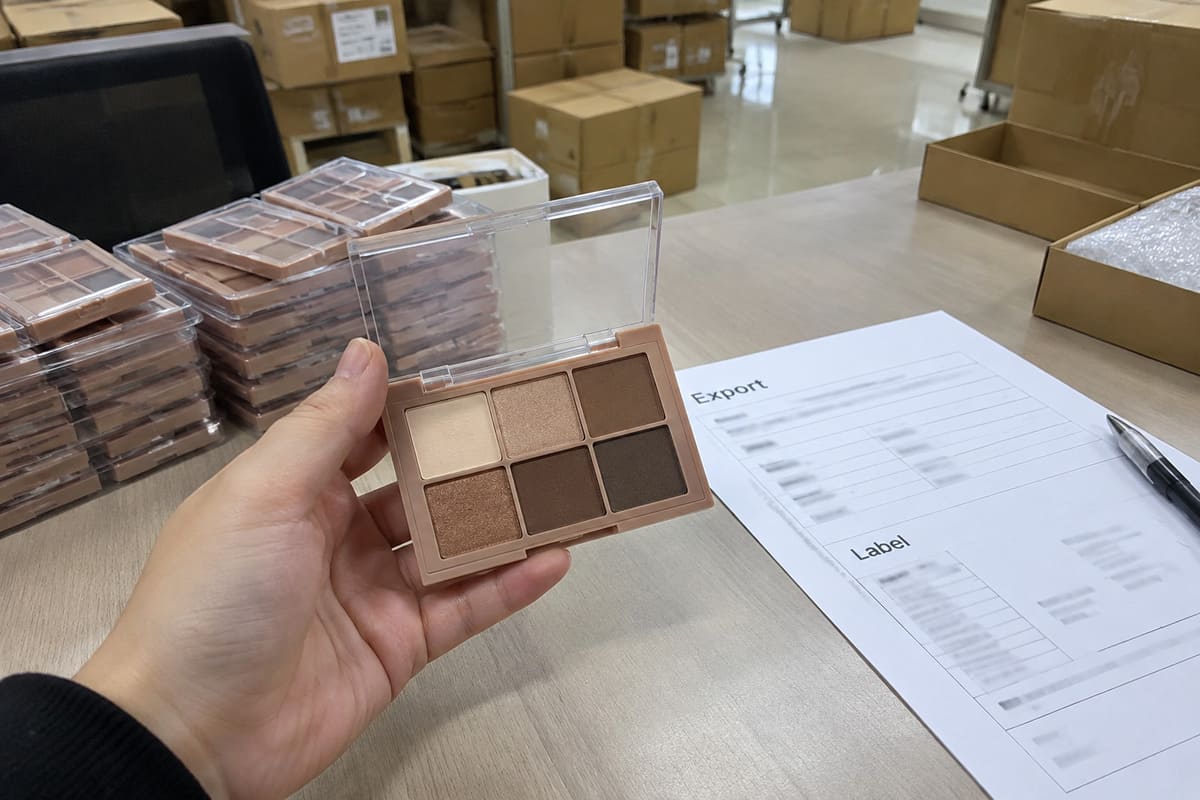
Build an evaluation sheet before reviewing samples
I ask buyers to avoid vague notes such as “good quality” or “not soft enough.” Those comments are difficult to turn into a manufacturing decision. Instead, the team can record what it observed, under what conditions, and which shade was tested.
| Evaluation area | What I would record | Why it matters |
|---|---|---|
| Powder feel | Whether the powder feels fine, dry, or coarse during pickup | Helps identify texture concerns |
| Fallout | Visible loose powder during application and blending | Influences application experience and review risk |
| Blendability | Whether edges blend evenly without excessive effort | Helps assess usability |
| Pigment payoff | Color intensity after one or more passes | Checks whether the shade matches the brief |
| Finish | Matte, satin, shimmer, or other intended effect | Confirms the palette’s visual direction |
| Wear observations | Changes in appearance over the agreed wear period | Supports appropriate product claims |
| Shade consistency | Differences in application between pans | Helps identify a palette-level issue |
I recommend that the team test every shade, because performance can vary across a palette5. A dark matte, a light shimmer, and a mid-tone neutral may behave differently. The tester should note the tool used, the amount applied, and whether a primer was used. These details do not make a small test equivalent to a formal laboratory study, but they make internal comparisons more meaningful.
I also recommend testing the actual production-equivalent sample where possible. A lab sample can differ from a final pressed product or packaged unit.6 Before approving a production run, buyers should agree with the supplier on the approved sample, product specifications, packaging details, and any quality checks that apply to the order.
There is no single public metric that can guarantee a palette will succeed with mature customers.7 The brand must define its own acceptance criteria and substantiate claims according to the markets where it plans to sell. For application-specific or regulatory decisions, I recommend qualified professional evaluation. For sourcing, I focus on having clear written requirements and a traceable approval process.
What Certifications Are Required for Exporting Private Label Eyeshadow to the Middle East?
There is no single certification that I can responsibly describe as required for every Middle East destination. Requirements can vary by country, product classification, importer, and current regulations.8 For a private label neutral eyeshadow palette for mature skin, I recommend confirming the destination country and product route before treating any certificate or registration document as sufficient for export.
Middle East export requirements are country-specific; there is no universal certificate that automatically clears every eyeshadow product across the region. Before shipment, the brand and importer should verify applicable product registration, ingredient, labeling, safety-document, and customs requirements with the destination-country authority or a qualified local regulatory professional.
Verify the destination before you approve packaging
I first ask where the goods will be sold. “Middle East” is a useful commercial region, but it is not one regulatory jurisdiction. A product destined for Saudi Arabia may follow a different registration and import process from a product destined for the UAE9 or another market. Requirements can also change, so buyers should not rely on a supplier’s general statement or an old document without checking whether it applies to the exact product and shipment.
A buyer can begin with this verification checklist:
- Confirm the destination country and importer of record.
- Ask the importer or local regulatory adviser which product registration and notification steps apply.
- Review the ingredient list and product safety documentation against destination requirements.
- Confirm labeling language, claims, responsible-party details, and packaging particulars.
- Check whether specific test reports, certificates, or other documents are required for the product and route.
- Verify current requirements with the relevant authority or qualified local professional before shipment.
This list is a procurement starting point, not a legal determination. A certificate may be relevant in one situation and insufficient in another. Buyers should ask what the document covers, who issued it, which product or facility it applies to, and whether it is current and accepted for the destination. I recommend requesting copies for review rather than relying on a verbal assurance.
At Vertina Beauty, our supplied business context identifies Southeast Asia, the Middle East, Africa, and South America as current core markets. That experience does not replace country-specific verification, and I would not claim that one document guarantees market access. When a buyer asks about a certification or regulatory requirement, I first clarify the market and then recommend matching the documentation plan to the order.
How Did a Middle East Client Validate a Mature-Skin Palette with a 2,000-Unit Trial?
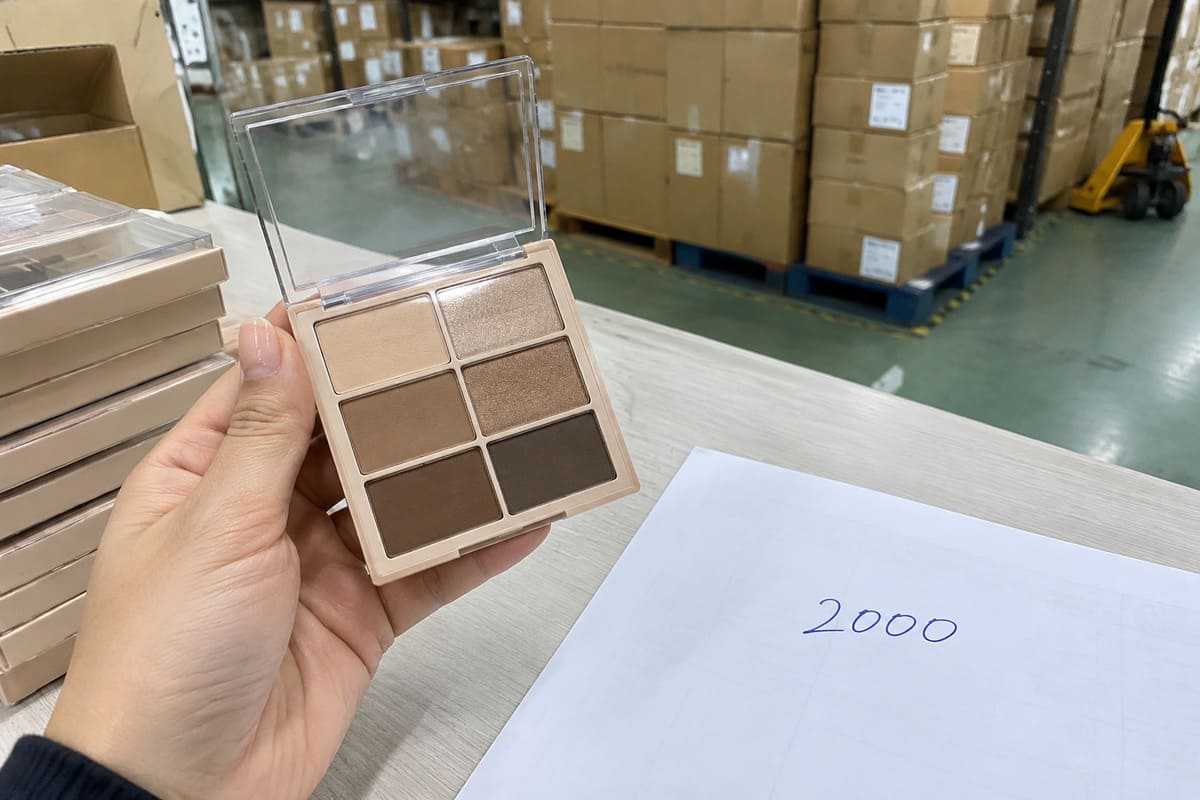
A 2,000-unit trial can help a brand learn before it commits to a larger customized run. I want to be clear about the evidence here: the supplied business information does not include a documented client case or customer results. So I will not present an invented client story as fact. Instead, I describe the validation workflow I would recommend for a Middle East buyer considering a private label neutral eyeshadow palette for mature skin.
A 2,000-unit trial should test the product and the commercial assumptions together. I recommend using an existing suitable base formula, launching a six-shade neutral palette with custom branding and packaging, and reviewing sales, repeat purchase, and complaint themes over approximately three months10 before deciding whether full customization is justified.
Use the trial to answer specific questions
I would begin by agreeing on what the trial should prove. A small order is not useful if the brand does not know what decisions it will make from the results. The trial should test product acceptance, market fit, packaging, and the brand’s ability to reach the intended customers.
A practical trial plan could look like this:
| Stage | Buyer action | Evidence to collect |
|---|---|---|
| Before order | Approve sample, shade direction, packaging, and written specifications | Sample approval and product brief |
| Production planning | Confirm quantity, artwork, lead time, and applicable documents | Purchase order and agreed timeline |
| Launch | Sell through selected channels in the target market | Sell-through and customer questions |
| Review period | Track feedback for about three months | Repeat orders, review themes, returns, and complaints |
| Next decision | Keep the base formula, adjust the palette, or investigate customization | Documented decision and revised brief |
I recommend grouping feedback by theme instead of reacting to one isolated review. If comments repeatedly mention fallout, that issue deserves a formula or application review. If customers like the texture but want cooler shades, the opportunity may be color selection rather than full formula customization. If the palette sells slowly, the cause could be marketing, pricing, distribution, or product fit. The brand should avoid assuming that every weak result is a formula failure.
I would also check the economics of the channel. A 2,000-unit order needs a realistic sales plan, suitable storage, and a defined approach to replenishment. The trial quantity is not automatically low risk if the brand has no route to market.
Once the trial produces usable evidence, I would compare customer feedback with the original product brief. A stable set of positive performance signals may justify a larger order. A repeated, specific problem may justify changing the formula or the shade mix. The purpose is to make the next investment based on observed demand and product feedback, rather than on a guess about what customers might prefer.
What Are the Real Costs and MOQ Limits of Custom Mature-Skin Formulas?
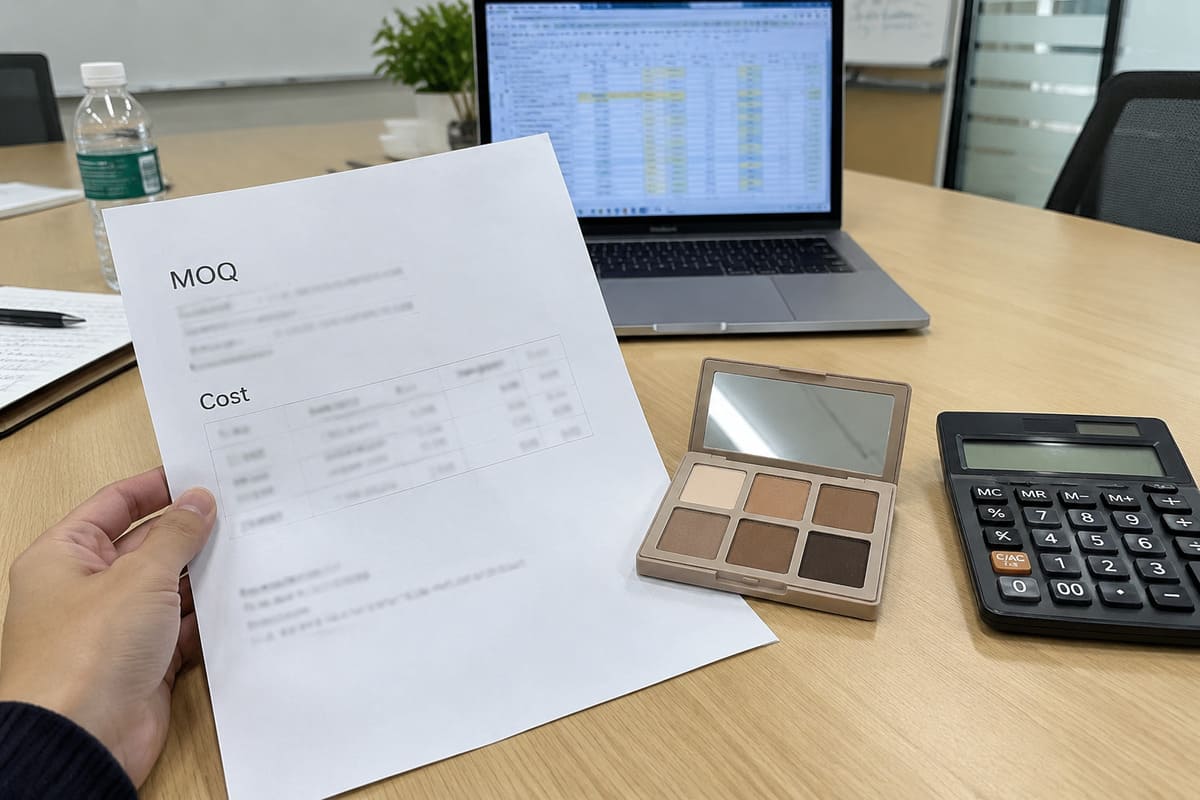
A fully custom formula can give a brand more control, but it usually adds development work, time, and cost. I do not quote an exact price or MOQ without knowing the product and packaging requirements. For a private label neutral eyeshadow palette for mature skin, I recommend comparing an existing base formula with a custom development route before paying a deposit.
The cost and MOQ for custom eyeshadow depend on the formula, shade count, packaging, testing, artwork, and production requirements. Buyers should request a written quotation that separates these items and confirms lead time, payment terms, sample approvals, and what is included before placing a deposit.
Compare the two sourcing routes
I usually explain two paths. The first uses an existing formula and focuses customization on shade selection, branding, and packaging. The second develops a more tailored formula. The first route can be more suitable for a market test, while the second can be useful when a brand has specific performance requirements that existing options do not meet.
| Cost or timing factor | Existing base formula | Custom formula |
|---|---|---|
| Formula development | Usually limited to selection and review | Requires additional development and approval |
| Shade work | Depends on available options and requested changes | May involve custom shade development |
| Packaging | Can still be customized, subject to options | Can be customized, with separate requirements |
| MOQ | Depends on product and packaging configuration | May be higher; confirm in the supplier quote |
| Lead time | Confirm for stock, components, and production schedule | Allow for development, sampling, and approval steps |
| Main tradeoff | Faster path to testing, less formula control | More control, with added cost and complexity |
I advise buyers to ask for a quotation that identifies the costs instead of treating “custom” as one line item. Relevant questions include:
- Does the quote include the formula, pans, palette case, and outer packaging?
- Are samples, revisions, and artwork preparation included?
- What is the MOQ for the formula, each component, and the finished set?
- How does the lead time change if the brand requests new shades or packaging?
- What payment schedule and approval points apply?
- Which quality documents and product specifications will be available?
I also encourage brands with limited budgets not to imitate high-end influencer lines before they understand their own customer. For mature-skin positioning, comfort, repeat purchase, and review control may be more important than a complicated story or a highly reflective finish. A well-defined six-shade palette can be a more disciplined starting point than a larger collection with unclear demand.
At Vertina Beauty, we offer low MOQs for some standard and selected products, but the exact minimum depends on the product and order configuration. I would confirm the quantity, cost, and schedule for the buyer’s specific brief before a deposit is placed. That is more useful than quoting a general MOQ that may not apply to the requested formula or packaging.
Frequently Asked Questions
Is a neutral eyeshadow palette automatically suitable for mature skin?
No. “Neutral” describes the shade direction, not the formula or wear experience. I recommend assessing texture, fallout, blendability, finish, and wear with samples before approving production.
Should a brand choose matte shades only for mature customers?
Not automatically. Customer preferences vary. I recommend choosing matte, satin, or shimmer finishes based on the brand’s audience research and sample testing rather than age-based assumptions.
Is a 2,000-unit order a guaranteed low-risk test?
No. A 2,000-unit trial can reduce the scale of the initial commitment compared with a larger order, but it still requires a sales plan, budget, and product review process. The appropriate quantity depends on the brand’s channel and expected demand.
Does one certification cover eyeshadow exports throughout the Middle East?
No. Requirements vary by destination country and product route. The importer or a qualified local regulatory professional should verify current registration, labeling, ingredient, and documentation requirements for the exact market.
When should a brand invest in a custom eyeshadow formula?
I would consider full customization after the brand has identified a specific product need that an existing formula cannot meet. Trial sales and repeated customer feedback can help distinguish a formula problem from a shade, packaging, or marketing issue.
Conclusion
I treat a private label neutral eyeshadow palette for mature skin as a sourcing decision, not just a color selection exercise. Brands should define the customer’s needs, assess samples shade by shade, verify export requirements for the exact destination, and use a trial order to collect meaningful product and sales feedback. An existing base formula with a six-shade palette can be a practical first step, while full customization can wait until evidence supports it. Contact Vertina Beauty with your target market, shade brief, and estimated order quantity so we can review a suitable formula, MOQ, packaging, and timeline before you place a deposit.
"Ocular adverse events associated with eye makeup - PMC - NIH", https://pmc.ncbi.nlm.nih.gov/articles/PMC12571810/. Research on aging eyelid skin and cosmetic application may support the relevance of texture, dryness, and wear-related concerns for some older users. Evidence role: general_support; source type: paper. Supports: Research describing age-related eyelid changes and cosmetic-use concerns among older consumers.. Scope note: Such evidence may address skin changes or consumer preferences separately and does not establish that all mature customers share these concerns. ↩
"A concise summary of powder processing methodologies for ...", https://pmc.ncbi.nlm.nih.gov/articles/PMC10245010/. Powder-science research indicates that particle-size distribution can influence flow, adhesion, deposition, and sensory characteristics in cosmetic powders. Evidence role: mechanism; source type: paper. Supports: Studies linking particle-size distribution and powder properties with flow, adhesion, feel, or deposition behavior.. Scope note: Results from powders or application systems other than pressed eyeshadow may not directly predict fallout or appearance for a particular finished palette. ↩
"Toxicological Safety, Antimicrobial Efficacy, and Sensory ...", https://pmc.ncbi.nlm.nih.gov/articles/PMC12435160/. Technical sources describe mica as a commonly used platelet mineral in color cosmetics and characterize its optical and powder properties. Evidence role: general_support; source type: research. Supports: Technical literature describing mica's use and physical properties in color cosmetics.. Scope note: Use of mica does not by itself demonstrate superior comfort, blendability, reduced fallout, or suitability for mature eyelids. ↩
"The preservative efficacy testing method for powdered eye ...", https://pubmed.ncbi.nlm.nih.gov/14528392/. Cosmetic sensory and formulation literature identifies attributes such as texture, color payoff, spreadability, fallout, finish, and wear as relevant dimensions of color-cosmetic performance. Evidence role: expert_consensus; source type: paper. Supports: Technical or sensory-evaluation literature identifying relevant attributes for color-cosmetic powder assessment.. Scope note: The literature may not validate this exact seven-item framework or establish that each dimension has equal importance for mature-skin users. ↩
"Discoloration of liquid foundation across the shade color ...", https://pmc.ncbi.nlm.nih.gov/articles/PMC12480899/. Color-cosmetic formulation studies indicate that pigment composition and concentration can affect powder cohesion, payoff, blending, and application behavior across shades. Evidence role: mechanism; source type: paper. Supports: Evidence that pigment type, concentration, and formulation differences can alter powder application and performance between shades.. Scope note: The effect depends on the specific formula and manufacturing process and cannot be inferred for every palette without testing. ↩
"(PDF) Stability Testing of Cosmetic Products", https://www.academia.edu/76650539/Stability_Testing_of_Cosmetic_Products. Cosmetic manufacturing literature recognizes that scale-up and changes in processing, pressing, and packaging conditions can affect the properties of finished powder products. Evidence role: general_support; source type: research. Supports: Manufacturing literature concerning scale-up, batch-to-batch variation, pressing conditions, and packaging effects on powder products.. Scope note: The source may establish a general manufacturing principle rather than demonstrate a difference for the particular eyeshadow sample under review. ↩
"Population‐Based Cosmetics Exposure Parameters: Survey ...", https://pmc.ncbi.nlm.nih.gov/articles/PMC12481470/. New-product and consumer-behavior research supports the view that commercial outcomes arise from multiple product, market, channel, and consumer factors rather than from a single universal performance metric. Evidence role: general_support; source type: paper. Supports: Research indicating that product success depends on multiple interacting factors and cannot be inferred from one performance metric alone.. Scope note: This evidence supports the general limitation of prediction and does not quantify the predictive value of any particular eyeshadow metric. ↩
"Registration & Listing of Cosmetic Product Facilities and ...", https://www.fda.gov/cosmetics/registration-listing-cosmetic-product-facilities-and-products. Official regulatory guidance demonstrates that cosmetic products are subject to destination-specific registration, labeling, import, and documentation requirements. Evidence role: definition; source type: government. Supports: Official rules showing that cosmetic registration, import, labeling, and documentation requirements differ by jurisdiction and product route.. Scope note: A source for one country or authority cannot establish the requirements for every Middle Eastern market or importer arrangement. ↩
"What is required to import #cosmetics into the Gulf countries ...", https://www.facebook.com/SGSMiddleEast/posts/what-is-required-to-import-cosmetics-into-the-gulf-countries-including-bahrain-k/170734909344211/. Official Saudi and UAE regulatory materials document distinct national procedures for cosmetic product registration, importation, labeling, and compliance review. Evidence role: historical_context; source type: government. Supports: Current official sources describing the separate regulatory authorities and procedures applicable to cosmetics in Saudi Arabia and the UAE.. Scope note: Procedures can change, and the applicable route may also depend on the importer, product classification, and sales channel. ↩
"Eyeshadow Manufacturer: How Can Buyers Find a ... - Vertina Beauty", https://vertinabeauty.com/eyeshadow-manufacturer-how-can-buyers-find-a-reliable-factory/. Consumer-product evaluation research supports using sales behavior, repeat purchase, returns, and complaint patterns as complementary indicators of early product acceptance. Evidence role: statistic; source type: research. Supports: Research on early-market indicators, repeat purchase measurement, complaint analysis, and pilot evaluation in consumer products.. Scope note: Those indicators are affected by channel reach, pricing, promotion, and replenishment timing; a three-month window may be too short to establish repeat purchase reliably. ↩