You searched for the best makeup manufacturers in the USA, and now you are staring at a quote that would eat your entire launch budget. The dream of a "Made in USA" label feels great until you see a 5,000-unit minimum at double the per-unit cost you expected. One wrong move here, and your brand runs out of cash before the first ad ever goes live.
The best makeup manufacturers in the USA include giants like Estée Lauder and Coty1, plus contract factories such as Mana Products and Columbia Cosmetics2. But "best" depends on your stage. For startups, true U.S. custom formulation demands a 1,000–5,000 unit MOQ at 40–60% higher cost, which often drains the marketing budget a launch actually needs.
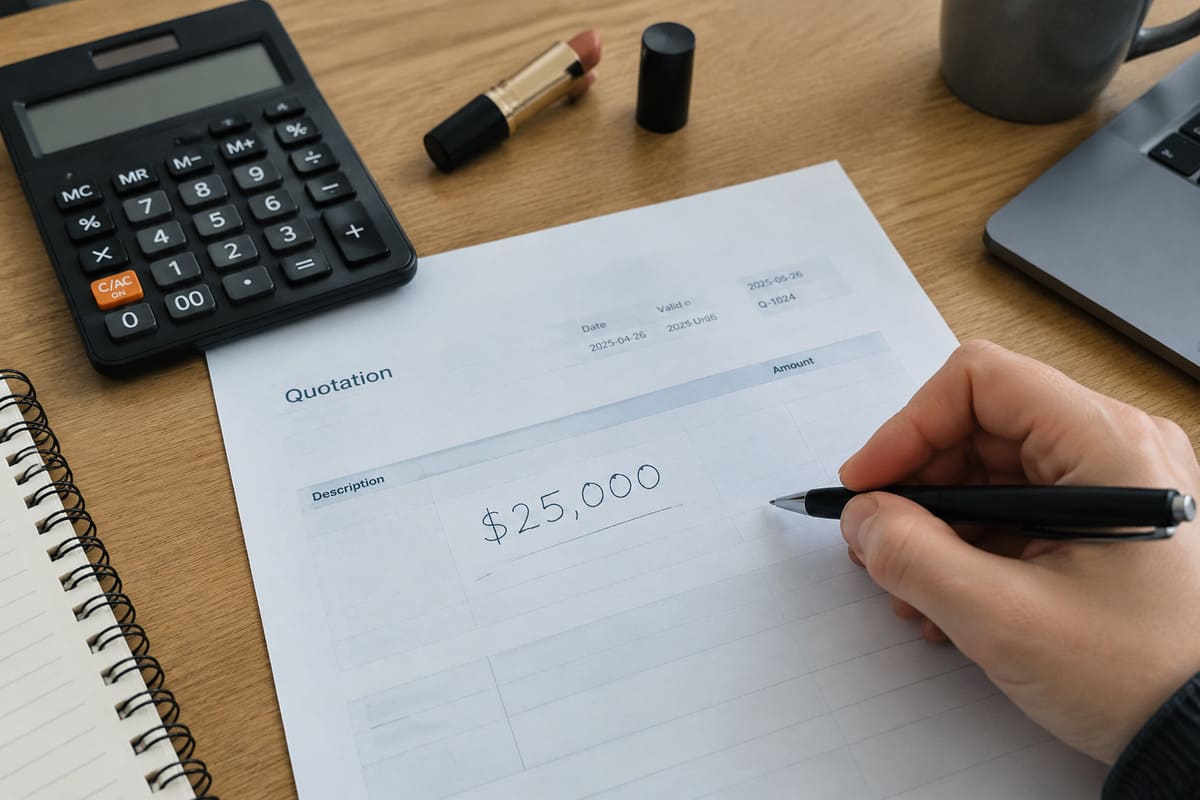
So the real question is not which factory is biggest. The question is whether the "Made in USA" label is worth risking your cash flow, and what sequence protects you while you test the market. Let me break down what these manufacturers actually offer and where the hidden costs hide.
What Does "Best Makeup Manufacturer in the USA" Really Mean for a Startup?
You read a ranked list of the best makeup manufacturers in the USA and assume the top name is your best choice. Then you request a quote. The minimum order and the price per unit tell a very different story, and suddenly "best" feels like a word written for someone with a much bigger budget than yours.
For a startup, the best makeup manufacturer in the USA is not the largest or most awarded factory. It is the partner that matches your current stage and cash flow. A top-ranked domestic factory built for 5,000-unit custom runs is the wrong fit if that single order consumes the capital you need to sell the product.
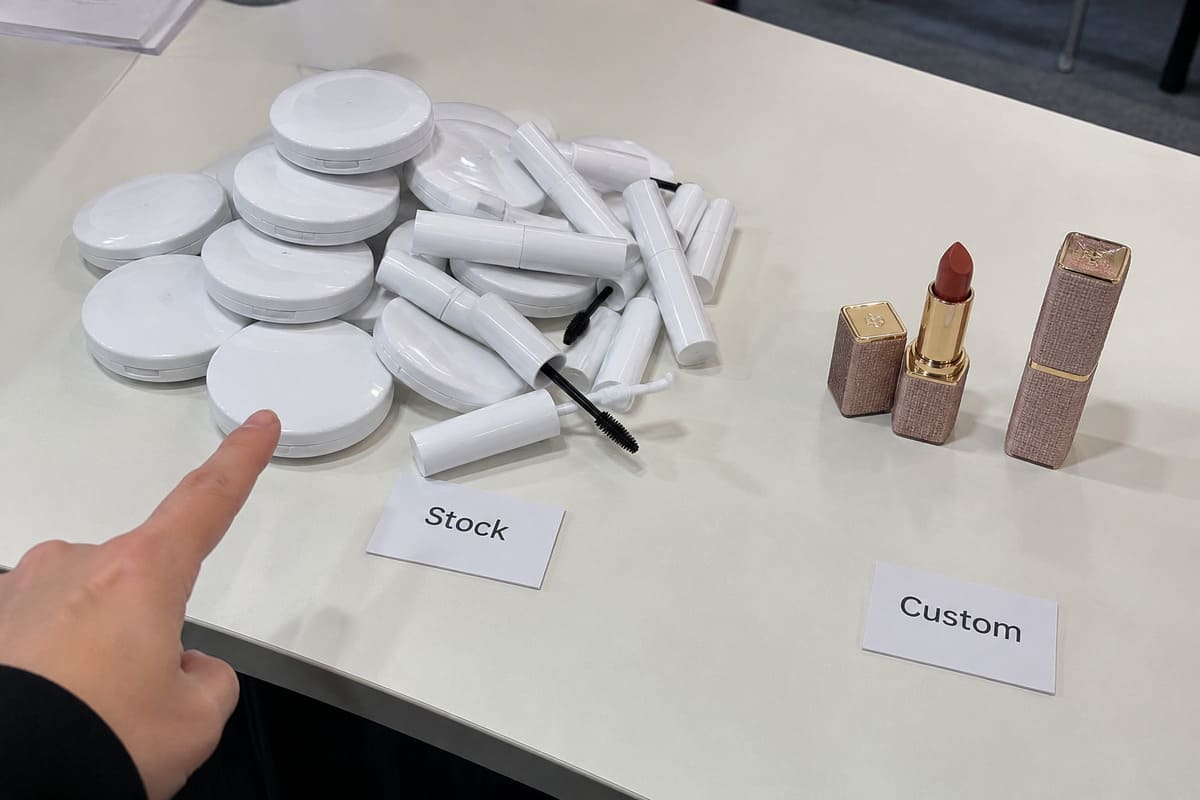
Most "best in the USA" lists rank factories by size, client roster, and equipment. Those are real strengths. But they answer a question you probably are not asking.
The question behind the question
When a founder types "best cosmetics manufacturer," the surface request is a vendor list. The real worry underneath is different:
- Will one order wipe out my budget?
- Can I test demand before I commit to a big run?
- What happens to my brand if the first batch does not sell?
I have watched founders fall in love with a factory's portfolio and ignore the one number that mattered: how much capital they would have left after paying for inventory. A beautiful product with zero marketing budget is an invisible product.
A better definition of "best"
| Priority | Who "best" means for you |
|---|---|
| Strictly "Made in USA" branding | A domestic contract manufacturer |
| Fast domestic shipping and reorders | A U.S. factory with stock |
| Low-risk market validation | An agile supplier with low validation MOQs |
| True custom formula at scale | Whoever offers the cost and MOQ your margins allow |
The "best" label is relative. Define it by your stage, not by a ranking you did not write.
The American Manufacturing Reality: Why Low MOQ Means White-Label
You find a U.S. factory advertising a 25-unit minimum and feel relieved. You picture your own custom shade range at a tiny order size. Then you read the fine print. Those low numbers almost never apply to a formula that is truly yours, and that gap can cost you a brand identity.
In the U.S., genuine low-MOQ offers of 10 to 50 units are almost always white-label stock products. You are buying an existing formula with your logo on it. True custom formulation, meaning your own shades, textures, and finishes, typically starts at an MOQ of 1,000 to 5,000 units3.
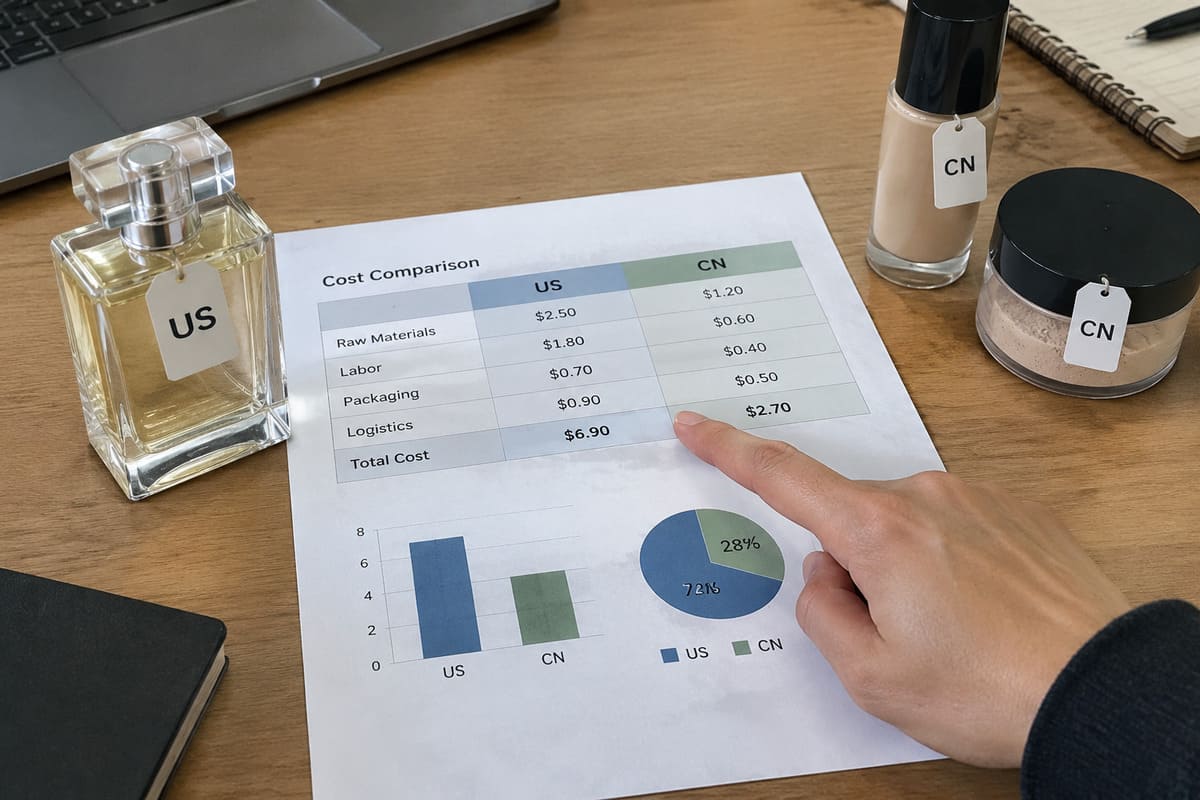
This is the single biggest source of confusion I see among first-time founders. Two very different products wear the same word: "custom."
White-label versus true custom
- White-label (private label): You pick from a catalog of ready formulas, add your logo, and buy small quantities. Fast and cheap, but your competitor can buy the exact same product.
- True ODM/OEM custom: You develop your own shades, pigments, and packaging. This differentiates your brand, but it requires tooling, formula development, and a much higher minimum run.
Both are legitimate. The problem starts when a low-MOQ white-label quote gets mistaken for a custom one. Founders plan a unique brand around a formula that fifty other sellers already use.
Why the minimums climb for custom work
Custom color cosmetics carry fixed setup costs that a factory must spread across the order:
- Pigment sourcing. Custom shades need specific pigment batches, often with their own minimums4.
- Formula development. Lab time, stability testing, and revisions cost money before a single unit ships.
- Pressing and tooling. Pressed powders need specific pans and press settings.
- Packaging minimums. Custom components frequently carry their own 3,000–5,000 unit floors5.
Spread those fixed costs across 50 units and the per-unit price becomes absurd. Spread them across 5,000, and it finally makes sense. That math is why the minimums exist. It is not a trick. It is the economics of custom production.
The Real Cost Breakdown: US Customization vs. Agile Global Supply Chains
You have a budget in your head and a product in your heart. Then the quotes arrive, and the numbers force a decision you did not expect. Do you pay the domestic premium, or do you look at a global supply chain that changes the whole equation? The difference is rarely small.
U.S. custom color cosmetics typically cost 40–60% more per unit than production in China's Guangdong supply chain cluster6. That premium comes from labor rates and material supply chain differences7. The domestic advantage is faster shipping and the "Made in USA" label, not a lower price.
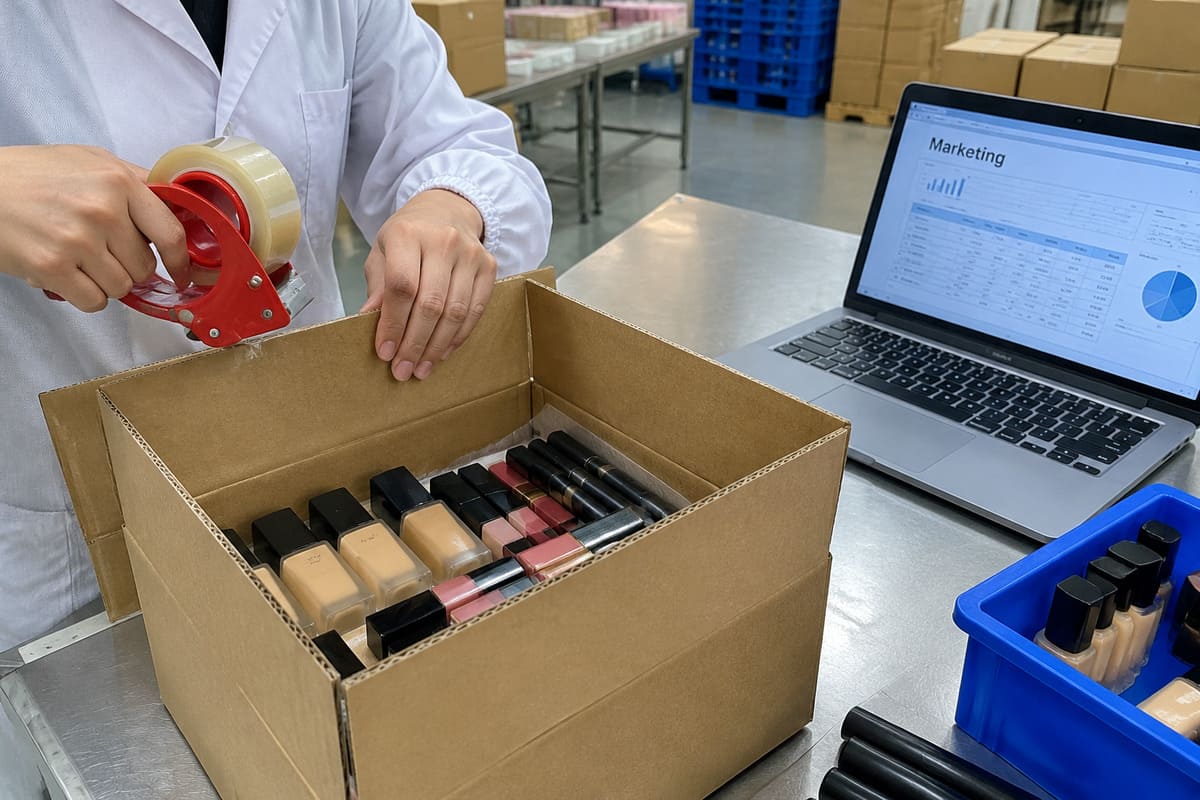
I want to be fair here. U.S. manufacturing is genuinely excellent for domestic logistics and quick reorders. If your buyers care deeply about a domestic label, that value is real. But for a founder counting every dollar, the cost gap deserves a clear look.
A simplified cost scenario
Imagine a custom 12-shade eyeshadow palette. The numbers below are illustrative, not a quote, but they match patterns I see often:
| Factor | U.S. custom run | Guangdong custom run |
|---|---|---|
| Typical custom MOQ | 5,000 units | 5,000–10,000 units |
| Relative per-unit cost | Baseline | ~40–60% lower |
| Shipping to U.S. | Fast, domestic | Longer lead time |
| "Made in USA" label | Yes | No |
| Pigment/packaging ecosystem | Good | Very deep |
Where the overseas premium disappears
The Guangdong cluster concentrates pigment suppliers, packaging makers, and pressing equipment in one region8. That density lowers material costs and speeds up development. As a manufacturer inside one of these clusters, I will not pretend we beat a U.S. factory on domestic shipping speed. We cannot. What we offer instead is a lower per-unit cost and a tiered path that lets you validate before you scale.
The trade-off you are really choosing
- Pay the U.S. premium for domestic logistics and a label your buyers value.
- Choose an agile global supply chain for a lower unit cost and the freedom to test demand first.
Neither is universally "better." The right choice depends on your brand's promise and your bank balance.
A Real Case: How One Founder Avoided the Cash Flow Trap by Validating First
Picture a founder with $10,000, a strong aesthetic, and a dream palette. He contacts a top-ranked domestic factory from a "best in the USA" list. The quote arrives. The minimum is 5,000 units, and the per-unit cost is nearly double his plan. In one email, his whole strategy collapses.
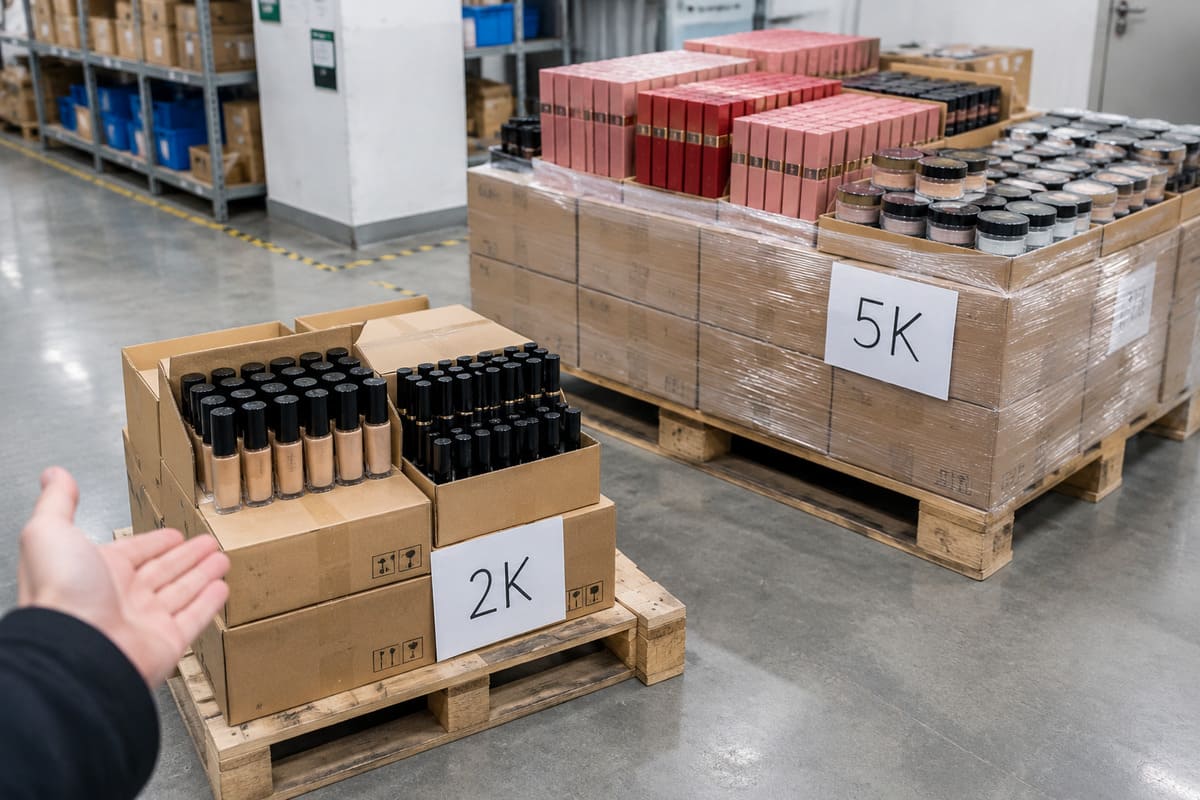
One founder I worked with faced a 5,000-unit MOQ at roughly double his budget for a custom 12-shade palette. Spending it all on inventory would have left nothing for marketing. Instead, he started with a 2,000-unit standard palette, saved over 40% on unit cost, and funded TikTok micro-influencers with the difference9.
The choice in front of him
He had two bad options and one smart one:
- Spend everything on domestic inventory. Great label, zero marketing budget, invisible launch.
- Abandon the product entirely. Safe, but no business.
- Validate first, then scale. Lower risk, preserved capital.
We ran the numbers together. By starting with a 2,000-unit standard eyeshadow palette instead of a 5,000-unit custom run, he cut his initial unit cost by more than 40%. That saved capital became his marketing fund.
What happened next
He hired micro-influencers, tested messaging, and watched which shades moved. The palette sold through. Then he used that revenue, not fresh savings, to fund his next batch. He survived his first year. The brands I have seen fail at this stage usually failed the same way: they poured 80% of their budget into "Made in USA" inventory and had nothing left to tell anyone the product existed.
The lesson is not "avoid the USA." The lesson is sequence your spending so a slow first month does not kill the company.
The Smart Path: 2,000 Units to Validate, 5,000+ to Scale
You do not have to pick between a reckless big order and no product at all. There is a middle path that treats your first run as an experiment, not a bet-the-company moment. Skip this step, and you are gambling your whole budget on an untested guess.
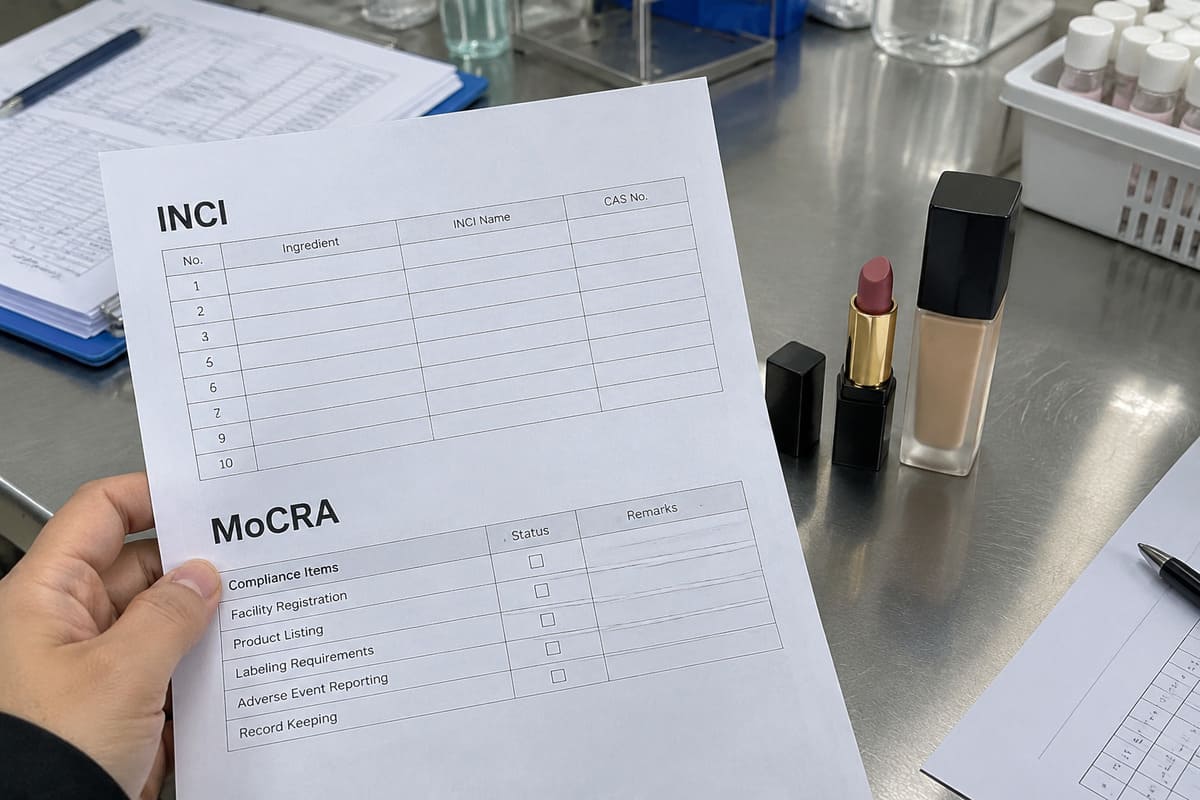
The smart path is a two-stage sequence. Start with roughly 2,000 units of a standard, proven color cosmetic to validate real market demand at a lower cost. Then move to 5,000–10,000 units of true custom formulation once sales prove the concept and fund the larger run.
Stage one: validate with 2,000 units
- Use a standard, market-tested palette to keep cost and risk low.
- Preserve the majority of your budget for customer acquisition.
- Learn which shades, price points, and messages actually convert.
- Treat the data as your real product. The palette just generates it.
Stage two: scale with custom at 5,000+
- Reinvest revenue from stage one, not your original savings.
- Commit to true custom formula and packaging now that demand is proven.
- Order 5,000–10,000 units where per-unit economics improve.
- Build the differentiated brand identity you wanted from the start.
Why the sequence protects your cash
If you have $10,000, do not spend $9,000 on inventory. Spend a controlled amount to validate, keep the rest for marketing, and let the market fund your scale-up.
This is the core financial logic. Many of the best makeup manufacturers in the USA are built for stage two. Very few protect you during stage one. Matching the right production stage to your cash position is the whole game.
What Compliance Documents You Must Verify Before You Commit
You found a factory, a price, and a plan. Now comes the part founders skip and regret. Paperwork feels boring next to a gorgeous palette, but one missing document can block your product at customs or trigger a recall10. That risk is worth a few hours of careful checking.
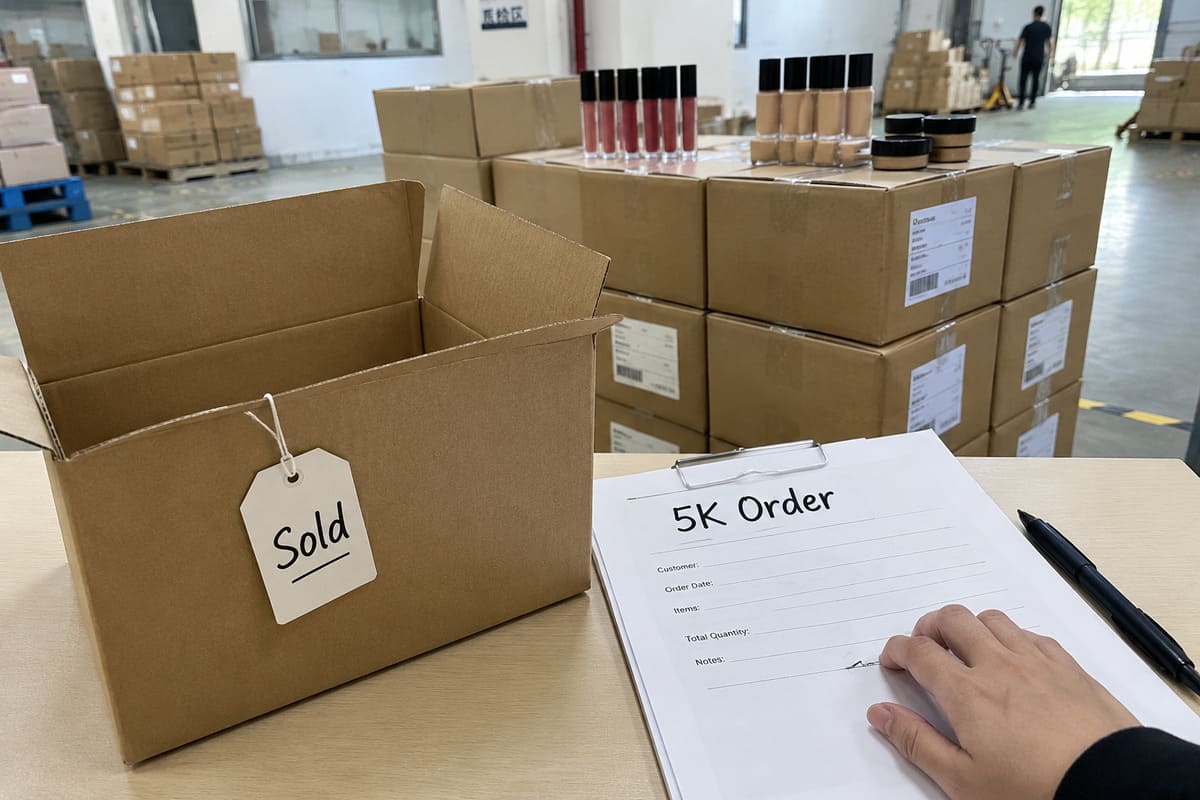
Before committing, verify your product's MoCRA registration readiness, a complete INCI ingredient list, safety and stability test reports, and any market-specific documentation. Treat every certificate as a document to confirm independently, not a claim to take on trust. For application-specific regulatory questions, consult a qualified compliance professional.
The documents to request and verify
- MoCRA compliance (U.S.): The Modernization of Cosmetics Regulation Act sets facility registration and product listing rules for the U.S. market11. Confirm your manufacturer supports the required documentation.
- INCI ingredient list: A full International Nomenclature of Cosmetic Ingredients list is the backbone of labeling and import review12.
- Safety and stability reports: Ask for testing records that show the formula is stable and safe over its shelf life.
- Market-specific requirements: Different regions carry different rules. If you sell outside the U.S., confirm what each destination needs.
How to verify, not just collect
- Ask for documents in writing and check issue dates and scope.
- Confirm that a certificate covers your specific product, not just the facility in general.
- Where a claim affects a legal or safety decision, have a qualified professional review it.
I will be direct about my own position. We provide full FDA/MoCRA compliance documentation and INCI lists to support your market entry. But I still recommend you verify every document yourself. A trustworthy partner welcomes that scrutiny. Treat any supplier who resists it as a warning sign.
Frequently Asked Questions
Who are the best makeup manufacturers in the USA for a new brand?
The best choice for a new brand is the manufacturer that matches your stage and cash flow, not the biggest name on a ranking. Large domestic factories like Mana Products suit high-volume custom runs. For low-risk validation, a partner offering small standard runs usually protects your budget better.
What is the minimum order for custom makeup in the USA?
True custom formulation in the USA typically starts at a 1,000 to 5,000 unit MOQ, because setup costs for pigments, formulas, and packaging must spread across the order. Advertised minimums of 10 to 50 units are almost always white-label stock products, not custom formulas.
Is overseas makeup manufacturing cheaper than "Made in USA"?
Yes, usually. Custom color cosmetics from China's Guangdong cluster often cost 40–60% less per unit than comparable U.S. production, mainly due to labor and material supply chain density. The U.S. advantage is faster domestic shipping and the "Made in USA" label, not a lower unit price.
How many units should I order for my first launch?
A validation run of roughly 2,000 units of a proven standard product is a sensible first step. It tests real demand while preserving marketing capital. Once sales confirm the concept, reinvest revenue into a 5,000–10,000 unit custom run to scale.
What compliance should I check before manufacturing cosmetics?
Verify MoCRA registration readiness, a complete INCI ingredient list, and safety and stability test reports before you commit. Treat each certificate as a document to confirm independently. For questions specific to your product or target market, consult a qualified regulatory professional.
Conclusion
The best makeup manufacturers in the USA are genuinely strong, but "best" only means something relative to your stage and your cash flow. True domestic custom runs demand 1,000–5,000 units at a 40–60% premium, and that cost can swallow the marketing budget your launch needs. Low-MOQ options are usually white-label stock, not your own formula. The smarter sequence is clear: validate with roughly 2,000 units of a proven product, preserve capital, then scale to 5,000+ custom units with revenue. If you want to test the market without betting your whole budget, talk to us about a 2,000-unit validation palette with full compliance documentation.
"Coty", https://en.wikipedia.org/wiki/Coty. Corporate and encyclopedic profiles identify Estée Lauder Companies and Coty Inc. as among the largest cosmetics firms by revenue, supporting their characterization as industry leaders. Evidence role: general_support; source type: encyclopedia. Supports: Estée Lauder and Coty are major cosmetics companies with significant U.S. operations and revenue.. Scope note: Company size by revenue does not by itself confirm they are the best or most relevant manufacturers for startup-scale orders. ↩
"Mana Products", https://www.linkedin.com/company/mana-products. Company records and industry directories document Mana Products and Columbia Cosmetics as U.S. contract and private-label cosmetic manufacturers, supporting their use as domestic manufacturing examples. Evidence role: case_reference; source type: other. Supports: Mana Products and Columbia Cosmetics operate as U.S.-based contract cosmetic manufacturers.. Scope note: Directory listings confirm existence and category but not the relative quality ranking implied by the article. ↩
"How to Find the Best OEM Makeup Kit Manufacturers with Low ...", https://vertinabeauty.com/2025/03/07/how-to-find-the-best-oem-makeup-kit-manufacturers-with-low-moq/. Industry analyses of contract cosmetic manufacturing report that custom formulation imposes minimum order quantities in the range of roughly 1,000 to 5,000 units, consistent with the figures cited. Evidence role: statistic; source type: research. Supports: Custom cosmetic formulation carries minimum order quantities substantially higher than white-label stock products, commonly in the low thousands of units.. Scope note: MOQ ranges vary by product category, factory, and region; published figures are typical rather than fixed thresholds. ↩
"Color Additives and Cosmetics: Fact Sheet", https://www.fda.gov/industry/color-additives/color-additives-and-cosmetics-fact-sheet. Technical literature on color cosmetic formulation describes pigment sourcing as a constrained input with batch and supplier minimums, supporting the stated cost-driver mechanism. Evidence role: mechanism; source type: research. Supports: Custom cosmetic color development depends on specific pigment inputs that commonly carry their own supplier minimum quantities.. Scope note: Supplier minimums vary widely and sources may describe general formulation practice rather than fixed pigment order thresholds. ↩
"How to Find the Best OEM Makeup Kit Manufacturers with Low ...", https://vertinabeauty.com/2025/03/07/how-to-find-the-best-oem-makeup-kit-manufacturers-with-low-moq/. Packaging industry sources report that custom cosmetic components carry minimum order quantities in the low thousands, consistent with the 3,000–5,000 unit figure cited. Evidence role: statistic; source type: other. Supports: Custom cosmetic packaging components typically require minimum orders in the thousands of units due to tooling and production setup.. Scope note: Packaging MOQs depend on component type, material, and supplier, so the stated range is indicative rather than universal. ↩
"Makeup Manufacturer Australia: The Real Cost of “Local” vs ...", https://vertinabeauty.com/makeup-manufacturer-australia-the-real-cost-of-local-vs-true-customization/. Comparative manufacturing cost studies indicate meaningful per-unit cost differences between U.S. and Chinese cosmetic production driven by labor and input costs, consistent with the stated 40–60% range. Evidence role: statistic; source type: research. Supports: Cosmetic production in Chinese manufacturing clusters is materially cheaper per unit than comparable U.S. domestic production.. Scope note: Precise percentages depend on product complexity, order volume, and timing; a single generalized figure may not match specific quotes. ↩
"The Implications of Trade with China on U.S. Labor and Wages", https://sccei.fsi.stanford.edu/china-briefs/implications-trade-china-us-labor-wages-new-perspective-longstanding-debate. Labor statistics and trade analyses document substantial manufacturing wage differences between the U.S. and China, supporting labor and input costs as drivers of the production cost gap. Evidence role: mechanism; source type: government. Supports: Labor cost differentials and concentrated material supply chains contribute to lower manufacturing unit costs in China relative to the United States.. Scope note: Aggregate manufacturing wage and input data are not specific to the cosmetics sector and illustrate rather than directly prove the stated premium. ↩
"Relative quantitative data of cosmetics consumption", https://pubmed.ncbi.nlm.nih.gov/41672219/. Studies of China's cosmetics industry identify Guangdong, particularly the Guangzhou area, as a concentrated manufacturing cluster for cosmetic production and related supply inputs. Evidence role: general_support; source type: research. Supports: Guangdong province contains a concentrated cluster of cosmetics manufacturing, materials, and packaging suppliers.. Scope note: Cluster research describes the broader cosmetics ecosystem and may not quantify the specific density of pigment and pressing equipment suppliers. ↩
"Influencer Marketing on Tiktok and Instagram", https://ir.ua.edu/items/0ce3043f-0831-4363-90a1-b10b0d97457b. Marketing research on influencer tiers reports that micro-influencers often achieve higher relative engagement at lower cost, supporting their use as a cost-efficient launch channel. Evidence role: general_support; source type: paper. Supports: Micro-influencer marketing can deliver higher engagement at lower cost than larger-scale influencer campaigns for emerging brands.. Scope note: Findings on influencer effectiveness vary by category and platform and do not guarantee results for any specific cosmetics launch. ↩
"Cosmetics Importers", https://www.fda.gov/cosmetics/cosmetics-international-activities/cosmetics-importers. FDA import and enforcement records document detention and refusal of cosmetic shipments and recalls tied to compliance and documentation failures, supporting the stated risk. Evidence role: general_support; source type: government. Supports: Inadequate or missing cosmetic documentation can lead to import refusal, detention, or recall under regulatory enforcement.. Scope note: Enforcement data illustrate that such outcomes occur but do not establish that a single missing document always triggers them. ↩
"Registration & Listing of Cosmetic Product Facilities and ...", https://www.fda.gov/cosmetics/registration-listing-cosmetic-product-facilities-and-products. The U.S. Food and Drug Administration's guidance on the Modernization of Cosmetics Regulation Act confirms mandatory facility registration and product listing requirements, directly supporting the statement. Evidence role: definition; source type: government. Supports: MoCRA requires cosmetic facility registration and product listing with the FDA for products marketed in the United States.. ↩
"International Nomenclature of Cosmetic Ingredients", https://en.wikipedia.org/wiki/International_Nomenclature_of_Cosmetic_Ingredients. Documentation of the International Nomenclature of Cosmetic Ingredients system confirms its function as the standardized naming convention underpinning cosmetic ingredient labeling. Evidence role: definition; source type: institution. Supports: INCI provides the standardized naming system used for cosmetic ingredient labeling across major markets.. Scope note: Standards documentation confirms INCI's labeling role but may not describe its specific weight in customs or import review processes. ↩