Searching for the best makeup manufacturer feels simple until you open the first listicle. You see giants like L'Oréal and a row of single-category U.S. factories. You are not building one lipstick. You are building a brand. Those lists answer the wrong question, and that gap costs founders real money.
The best makeup manufacturer for a new brand is not the biggest factory or the #1 specialist in one product. It is the partner who can produce your core color cosmetics, your companion skincare, and your signature fragrance under one roof, with one visual standard and one quality team. Brand cohesion beats single-category prestige every time.

So why do the famous "Top 10" rankings keep pointing founders in the wrong direction? The answer sits in how those lists are built, who they serve, and the hidden costs they never mention. Let me walk you through it.
What Does "Best Makeup Manufacturer" Really Mean for a Founder?
You type "best makeup manufacturer" into Google expecting clarity. Instead you get nine specialized U.S. factories and one foreign option tacked on at the end. None of them answer your actual question. The confusion grows, and the clock on your launch keeps ticking.
For a founder, the best makeup manufacturer is the one who matches your business model, not your single product. You are not sourcing one SKU. You are sourcing a coherent brand. The right partner handles your eyeshadow palette, your skincare set, and your fragrance together, so your lead times, packaging, and quality standards stay aligned.
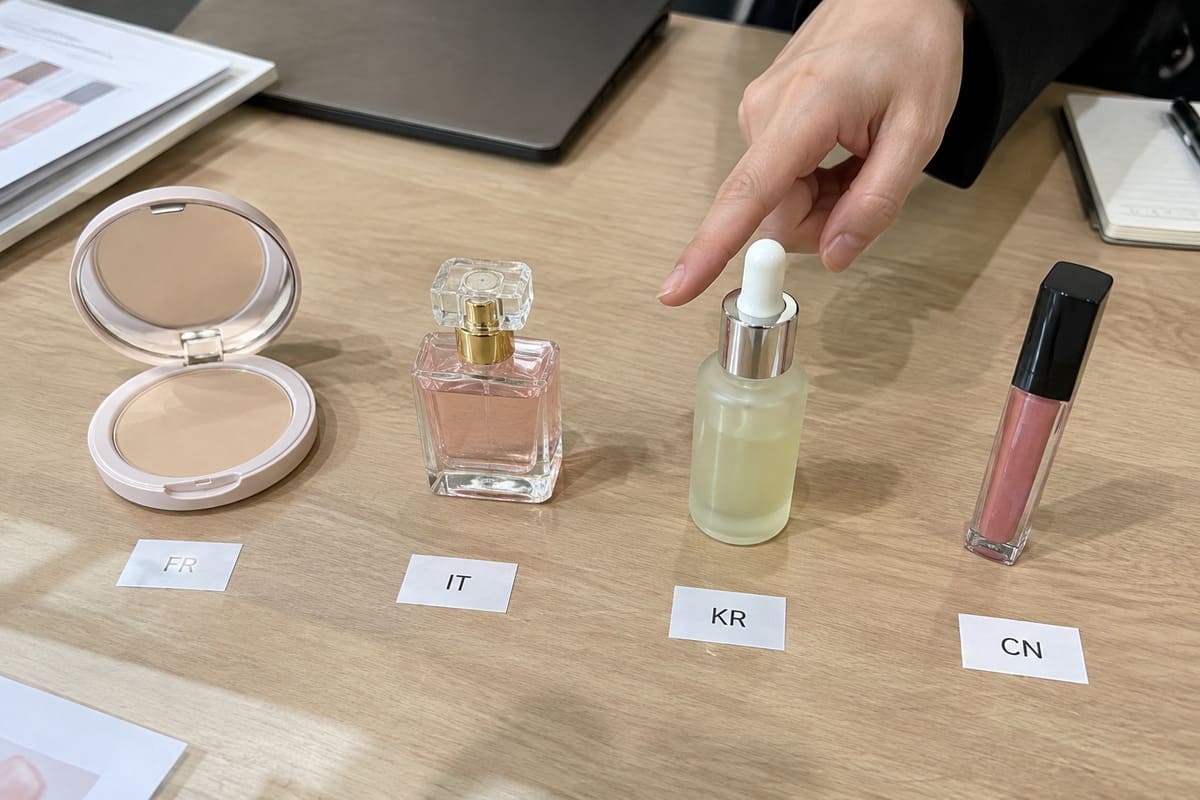
This distinction changes everything about how you evaluate suppliers. Let me break down what founders actually need versus what the rankings measure.
Why "Best" Depends on Your Launch Goal
A listicle treats "best" as a fixed trophy. In procurement, "best" is relative to your goal. If you sell a single anti-aging serum, a specialized skincare lab may serve you well. But most new beauty founders are not single-product businesses. They launch a look, a mood, a color story that spans several product types at once.
Here is how the definition shifts depending on what you are building:
| Founder Goal | What "Best" Means | Common Ranking Blind Spot |
|---|---|---|
| Single lipstick line | Deep specialist, high volume | Lists handle this well |
| Full color + skincare + scent | Multi-category one-stop partner | Lists ignore this entirely |
| Trend-driven micro-launch | Low MOQ, fast delivery | Lists favor giant MOQs |
| Clean Beauty positioning1 | Ingredient transparency, compliance support | Lists rarely verify this |
Based on our experience serving global B2B buyers, the "Top 10" format was built for single-category sourcing. It ranks factories by size and specialty, not by their ability to unify a brand. A founder reading that list is measuring the wrong thing. You do not need the world's biggest pressed-powder line. You need a team that can take your Pantone color across a compact, a jar, and a bottle without a single mismatch. That is the real meaning of "best" for a brand builder, and it is the question I answer every day.
The Fragmented Supply Chain Trap: Why You Shouldn't Hire 3 Different Factories
You found a great powder factory. You found a separate skincare lab. You found a fragrance house. Three "best in class" suppliers. It feels smart. Then the invoices, the sample rounds, and the shipping dates stop lining up. Suddenly you are not a founder. You are a logistics manager.
Hiring three different factories triples your communication load and fractures your timeline. Each factory sets its own lead time, its own minimum order, and its own printing process. The result is packaging color mismatches, staggered delivery dates, and a launch that slips. Supply chain fragmentation is the single most common reason new brands miss their window.2
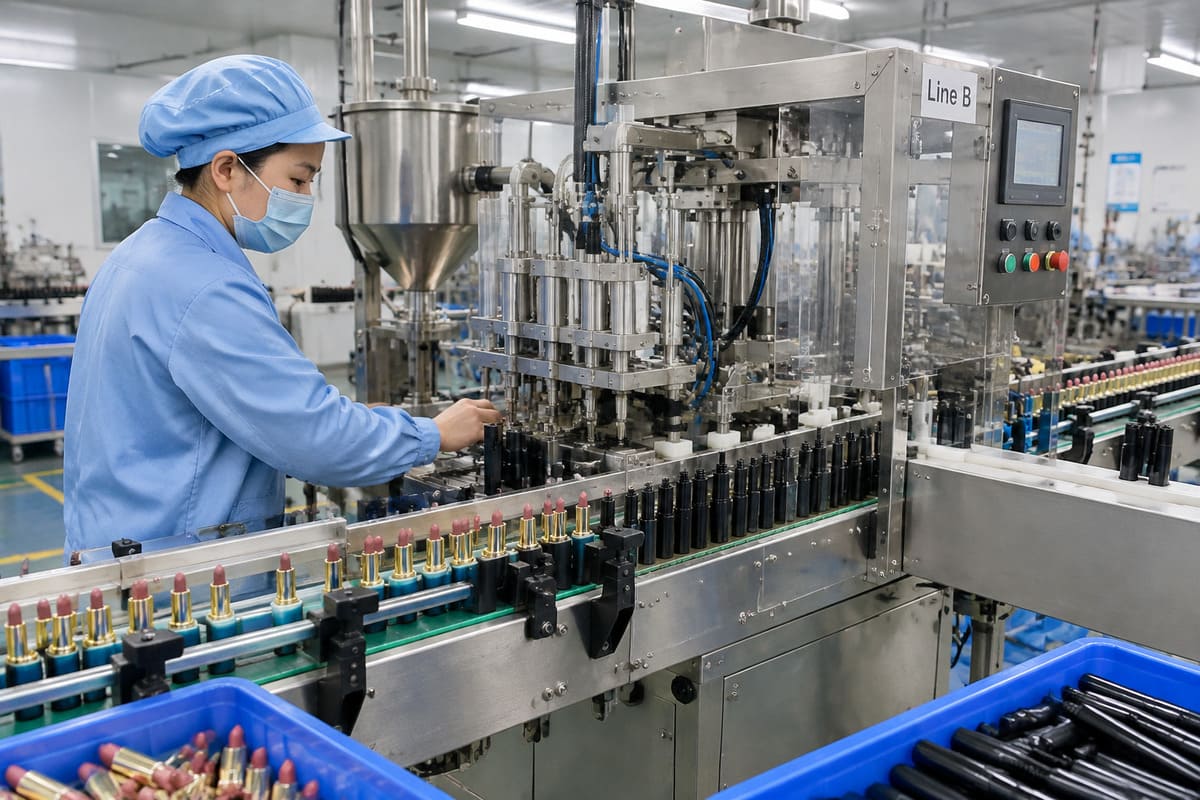
The hidden costs rarely show up in a quote. They show up in your calendar and your cash flow. Let me quantify what fragmentation really does.
The True Cost of Managing Multiple Suppliers
When founders split production across three factories, the pain is predictable. I have watched it happen too many times. Here is the pattern:
- Tripled communication: Three sets of emails, three sample approval cycles, three time zones.
- Misaligned lead times: Your palette is ready in June, your serum in August, your fragrance in October.
- Color drift: Each factory uses a different printing process, so your "signature teal" looks different on every box.3
- Multiple shipments: Three containers, three sets of freight charges, three customs clearances.
- No single quality standard: Each factory defines "acceptable" differently, and you absorb the inconsistency.
This table shows the contrast clearly:
| Factor | 3 Separate Factories | 1 One-Stop Partner |
|---|---|---|
| Lead time alignment | Staggered (June–October) | Coordinated, single window |
| Communication channels | 3 teams, 3 cycles | 1 team, 1 cycle |
| Packaging consistency | Variable (different printers) | Unified Pantone & finish |
| Logistics | 3 shipments, 3 freight bills | 1 consolidated container |
| Quality control | 3 standards | 1 standard |
The lesson is simple. A beauty brand lives or dies on cohesion. A customer who picks up your palette and your serum should feel they belong to the same world. Three factories cannot guarantee that. One coordinated partner can. This is why the "best makeup manufacturer" for a cohesive brand is often the one who consolidates, not the one who specializes narrowest.
The One-Stop Solution: Can a Powder-Based Factory Handle Your Skincare and Fragrance Too?
You know your core strength is color. Maybe your first product is an eyeshadow palette. But your brand vision includes a matching skincare set and a signature scent. The natural worry hits: can a powder factory really make my serum and my perfume, or am I compromising quality?
Yes, a powder-based factory can handle skincare and fragrance, but only with a dedicated engineering team for liquids and emulsions. Powder pressing and liquid filling use different equipment and different formulation science.4 The honest answer is that a one-stop partner must have genuinely expanded capability, not just a sales promise. Ask what they produce in-house versus outsource.

Honesty here matters more than hype. Let me explain exactly where the real capability lines sit, so you can evaluate any supplier critically.
Where the Capability Lines Actually Sit
I will be direct about this, because vague claims hurt founders. Powder color cosmetics are our deepest moat. That is where we press, shade-match, and scale with confidence from low volumes. Skincare and fragrance are different engineering disciplines. They require emulsification, filling lines, stability testing5, and for fragrance, maceration time6. A credible one-stop factory invests in a separate team for these, and tells you plainly how the process differs.
The strength of China's Guangdong cluster makes this realistic in a way most regions cannot match.7 Within an hour's drive, you can source pigments, skincare actives, packaging, and fragrance oils. That density is why a single coordinating factory can pull a full line together without flying components across the world.
Here is how the categories compare on the metrics that matter:
| Category | Typical MOQ | Development Time | Core Equipment |
|---|---|---|---|
| Powder color cosmetics | From 2,000 units | 2–4 weeks | Pressing, pigment blending |
| Skincare (creams/serums) | 5,000–10,000 units | 6–10 weeks | Emulsification, filling lines |
| Fragrance | 5,000–10,000 units | 8–12 weeks (maceration) | Compounding, maceration tanks |
Notice the differences. A real partner does not flatten these numbers into a single marketing figure. We tell you upfront that liquids and fragrances carry higher minimums and longer timelines than powders. That transparency is how you separate a true one-stop partner from a factory that overpromises and underdelivers.
The 3 Pillars of a True Multi-Category Partner
Plenty of factories will claim they can do everything. The word "one-stop" gets thrown around until it means nothing. You are left unsure how to tell a genuine multi-category partner from a middleman stitching together subcontractors. The risk of choosing wrong is a fractured, off-brand launch.
A true multi-category partner rests on three pillars: visual consistency across all packaging, supply chain synergy that aligns lead times and shipping, and realistic tiered entry that gives you honest MOQs per category. If a supplier cannot demonstrate all three, they are not a true one-stop partner, no matter what their website says.
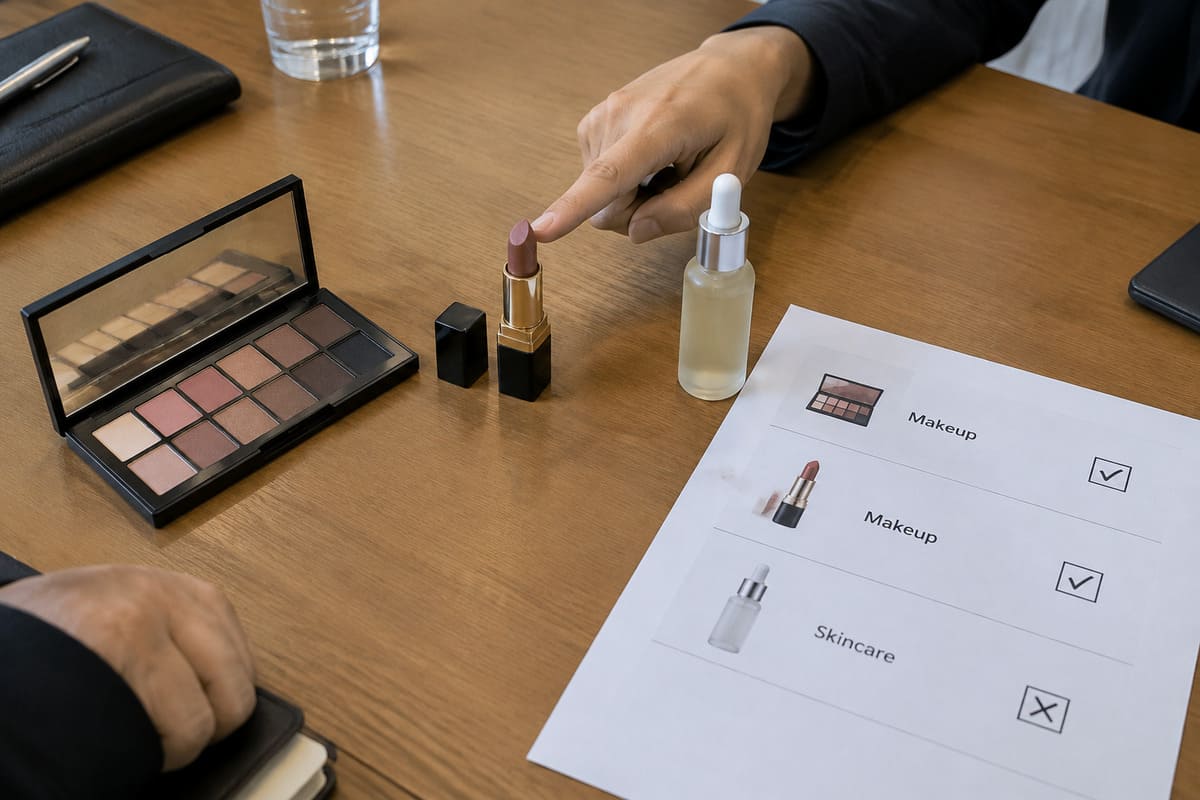
Each pillar protects you from a specific failure mode. Let me break them down one by one.
Pillar 1: Visual Consistency
Different factories use different printing processes, so your "signature color" drifts from product to product. A true one-stop partner ensures your eyeshadow compact, skincare jar, and perfume bottle share the same Pantone color, the same logo finish, and the same unboxing feel8. This is what makes a shelf of your products look like one brand instead of three unrelated items.
Pillar 2: Supply Chain Synergy
Consolidating production means one shipping container, aligned lead times, and a single quality control standard. You save on logistics. More importantly, you escape the nightmare where one product is ready and the other is delayed. Synergy turns a chaotic multi-factory juggle into a single, predictable schedule you can plan a launch around.
Pillar 3: Realistic Tiered Entry
We do not lie to you. Our deepest strength is powder-based cosmetics, available from 2,000 units. For expanded categories like skincare and fragrance, the MOQ and development timelines differ, typically 5,000 to 10,000 units depending on the formula. We give you the real numbers upfront, so you plan with facts instead of surprises.
| Pillar | What It Protects Against | How to Verify It |
|---|---|---|
| Visual consistency | Off-brand, mismatched packaging | Request cross-product samples |
| Supply chain synergy | Delayed, staggered launches | Ask for a consolidated timeline |
| Realistic tiered entry | Hidden MOQs and cost surprises | Get written MOQs per category |
When all three pillars are present, you have found a partner, not just a vendor. That combination, far more than a ranking position, is what makes a factory the best makeup manufacturer for a cohesive brand.
A Real Case: How One Founder Launched an Entire Product Line from One Factory
Let me tell you about a founder who learned this the hard way. He had a beautiful vision: a "color aesthetic" brand built around an eyeshadow palette, a matching skincare set, and a signature fragrance. He did what the listicles told him to do. He hired three specialized Los Angeles factories. It nearly sank his launch.
One founder split his color, skincare, and fragrance across three Los Angeles factories. He received three different lead times. His palettes arrived in June, his skincare jars in August, his fragrance bottles in October. By the time he had a complete set, his launch window had closed. He discounted everything to clear inventory.9 Consolidating with one partner would have saved his timeline and his margin.
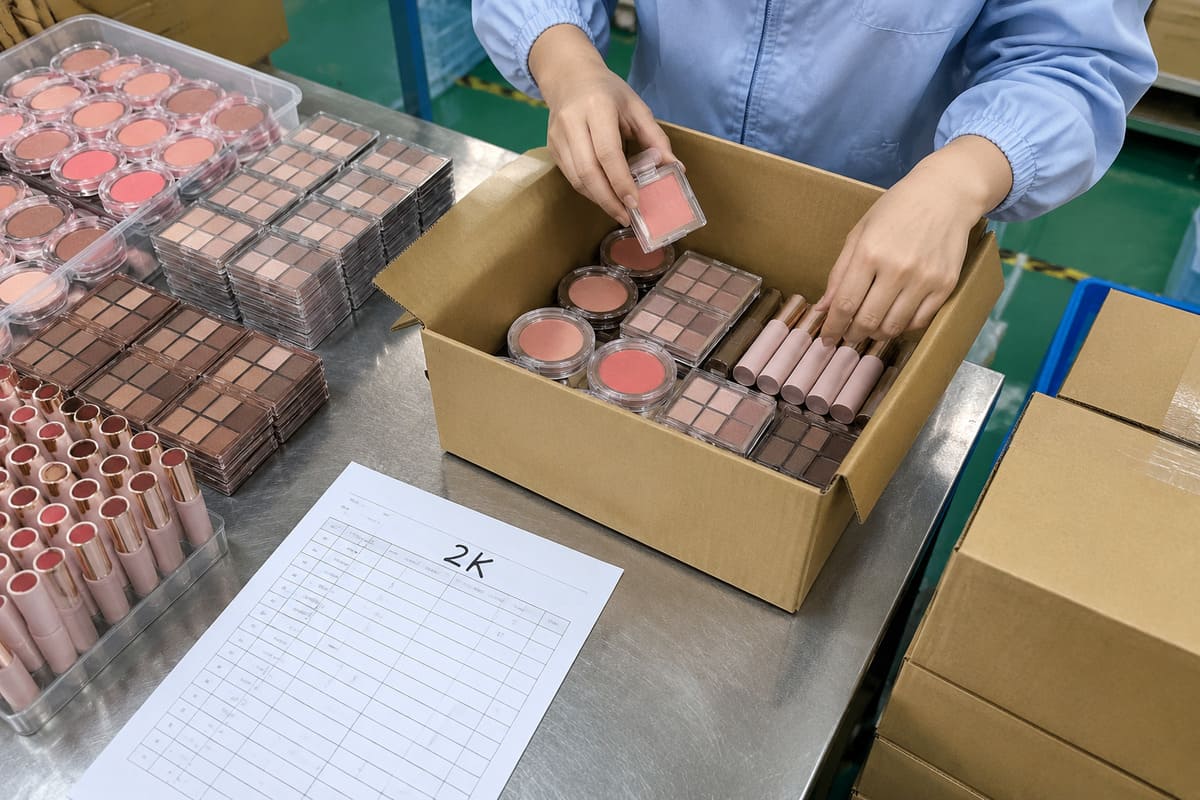
This story is worth unpacking, because the mistakes are so common and so avoidable. Here is how it played out and how we helped.
From Three Factories to One Roof
His three factories each optimized for themselves, not for his brand. The powder specialist ran fast. The skincare lab had a longer queue. The fragrance house needed maceration time no one had warned him about. Three local suppliers, three disconnected schedules, one broken launch.
The timeline told the whole story:
| Product | Factory | Arrival | Impact |
|---|---|---|---|
| Eyeshadow palette | LA Factory A | June | Ready, waiting |
| Skincare set | LA Factory B | August | Capital tied up |
| Fragrance | LA Factory C | October | Window missed |
We stepped in. Using our core strength in powder color cosmetics, combined with our expanded engineering team for skincare and fragrance, we produced the entire line under one roof. We started with a 2,000-unit eyeshadow palette trial to validate his market first. Once the palette proved demand, we coordinated the skincare and fragrance production on an aligned schedule. One team. One quality standard. One shipment.
The second launch landed on time, with packaging that finally looked like a single brand. His margin recovered because he never had to discount to clear mismatched stock. That is the power of a one-stop partner, and it is why I believe the best makeup manufacturer for a brand builder is measured by coordination, not just by category skill.
The Smart Path: Start with 2,000 Units of Powder, Then Expand
You believe in your full vision: color, skincare, scent, all at once. The temptation is to produce everything in the first run. But launching three unvalidated categories simultaneously ties up your cash and multiplies your risk10. If the market does not respond, you are stuck with inventory across three product types.
The smart path is to start with a 2,000-unit powder trial, validate demand, then expand into skincare and fragrance. Powder color cosmetics carry the lowest MOQ and fastest turnaround11, making them the ideal market test. Once your core product sells, you reinvest into higher-MOQ categories with real data, not guesses. This sequencing protects your capital and your brand.
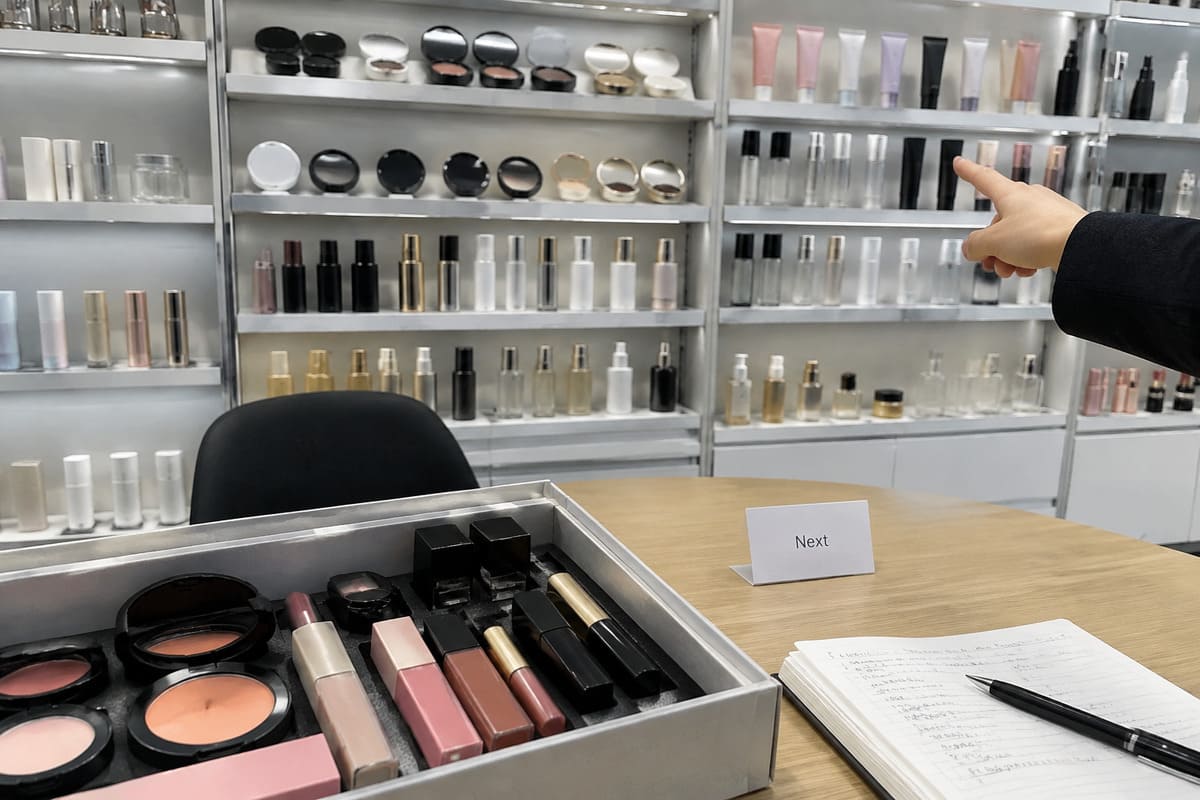
This phased approach is not a limitation. It is a strategy that the single-category "Top 10" lists never discuss. Let me show you the full roadmap.
The Tiered Launch Roadmap
Smart founders treat their first run as a test, not a bet-the-company moment. I always recommend starting where the MOQ is lowest and the feedback is fastest. That is powder. A 2,000-unit eyeshadow palette tells you whether your color story resonates before you commit to five-figure skincare and fragrance runs.
Here is the sequence I recommend:
- Phase 1 — Validate: Launch a 2,000-unit powder palette. Low MOQ, fast delivery, real market feedback.
- Phase 2 — Expand core: Add companion powders (blush, highlighter) using the same packaging language.
- Phase 3 — Enter liquids: Introduce skincare at 5,000–10,000 units, now funded by proven sales.
- Phase 4 — Complete the world: Add your signature fragrance, with timeline planned around maceration.
| Phase | Category | MOQ | Risk Level | Purpose |
|---|---|---|---|---|
| 1 | Powder palette | 2,000 | Low | Validate demand |
| 2 | Companion powders | 2,000 | Low | Build range |
| 3 | Skincare | 5,000–10,000 | Medium | Expand with data |
| 4 | Fragrance | 5,000–10,000 | Medium | Complete the brand |
I will be honest about where we fit. If your primary product is a high-tech anti-aging serum, I may point you toward a specialized skincare lab. We do not claim to be the best at every category on earth. But if you are building a cohesive beauty brand around color, starting with powder and expanding outward, we are one of the few partners who can carry you through every phase with one team and one standard.
Frequently Asked Questions
Is the biggest factory always the best makeup manufacturer?
No. The biggest factory is optimized for massive single-category runs, which usually means high MOQs and little flexibility.12 For a new brand, the best makeup manufacturer is the one that fits your model, offers reasonable minimums, and can unify multiple product categories under one coherent standard.
Can one factory really match my packaging across powder, skincare, and fragrance?
Yes, if the factory controls or coordinates printing and packaging in-house. A true one-stop partner ensures the same Pantone color, logo finish, and unboxing experience across your compact, jar, and bottle. Always request cross-product samples before committing, so you can verify consistency yourself.
What MOQ should I expect for skincare and fragrance versus powder?
Powder color cosmetics typically start around 2,000 units. Skincare and fragrance usually require 5,000 to 10,000 units, depending on the formula, because liquids and emulsions need different equipment and longer development. A trustworthy supplier gives you these numbers upfront rather than quoting one flat figure.
Why do "Top 10" lists feature mostly single-category factories?
Because those lists are written for single-product sourcing. They rank factories by size and specialty, which favors narrow specialists. They rarely measure brand cohesion, multi-category capability, or low-MOQ flexibility, which are exactly what new founders building a full product line actually need.
Should I launch all my products at once or start small?
Start small. Validate your market with a low-MOQ powder product first, then reinvest in higher-MOQ categories like skincare and fragrance once you have real sales data. This phased approach protects your capital and reduces the risk of unsold inventory across multiple categories.
Conclusion
The best makeup manufacturer for a new brand is not the name at the top of a "Top 10" list. Those rankings serve single-category launches, not founders building a cohesive world of color, skincare, and fragrance. The real win is avoiding supply chain fragmentation: one team, one Pantone standard, one aligned timeline, one shipment. Start with a 2,000-unit powder trial, validate your market, then expand into higher-MOQ categories with real data behind you. If you are building a unified beauty brand, let's talk about your core palette first, then map out your full product line together.
"Cosmetics Labeling Guide", https://www.fda.gov/cosmetics/cosmetics-labeling-regulations/cosmetics-labeling-guide. Regulatory guidance notes that terms such as "clean" or "natural" lack a standardized legal definition in cosmetics, supporting the article's implication that clean-beauty positioning hinges on transparency and compliance rather than a fixed standard. Evidence role: definition; source type: government. Supports: "Clean" and similar beauty terms are not formally defined in cosmetic regulation, placing emphasis on ingredient disclosure and compliance.. Scope note: Regulatory sources address terminology and labeling rather than any specific supplier's compliance capabilities. ↩
"Supply chain disruptions and resilience: a major review ... - PMC", https://pmc.ncbi.nlm.nih.gov/articles/PMC7792559/. Operations and supply-chain research links multi-supplier coordination to higher lead-time variability and delivery risk, offering contextual support for the claim that fragmentation contributes to missed launch windows. Evidence role: general_support; source type: research. Supports: Coordinating multiple independent suppliers increases lead-time variability and the risk of delayed product launches.. Scope note: Available research supports the general mechanism but does not establish fragmentation as the single most common cause for new beauty brands specifically. ↩
"Color Reproduction for Printing | New Mexico State University", https://brand.nmsu.edu/color-reproduction-for-printing/index.html. Printing and color-science literature documents that identical color specifications can render differently depending on process, ink, and substrate, supporting the claim that separate printers cause color drift. Evidence role: mechanism; source type: education. Supports: Color reproduction of the same target color can vary across different printing processes and substrates.. Scope note: The general mechanism does not quantify the magnitude of drift for the specific packaging types named in the article. ↩
"Cosmetic Mixing: Emulsions, Powders & Process Control", https://admix.com/en/blog/improving-personal-care-cosmetic-mixing-performance. Cosmetic science and manufacturing literature distinguishes dry pressing and pigment blending for powders from emulsification and filling for liquids, supporting the claim that these categories involve different equipment and formulation disciplines. Evidence role: mechanism; source type: education. Supports: Pressed-powder production and liquid/emulsion production rely on distinct equipment and formulation processes.. Scope note: Technical sources describe general processes and do not address any particular factory's in-house capabilities. ↩
"Stability Testing of Cosmetics | MakingCosmetics", https://www.makingcosmetics.com/Stability-Testing-of-Cosmetics_ep_59.html?lang=en_US. Cosmetic manufacturing guidelines identify emulsification and stability testing as standard steps for emulsion-based products, supporting the article's description of skincare production requirements. Evidence role: mechanism; source type: institution. Supports: Emulsion-based skincare products undergo emulsification and stability testing as standard production and quality steps.. Scope note: Guidelines describe general industry practice rather than the processes of the specific manufacturer discussed. ↩
"Aging vs. Maceration in Perfumes: Which One is Better?", https://jasmine-perfumes.com.tr/aging-vs-maceration-in-perfume/. Perfumery references describe maceration as a maturation period during which fragrance compounds blend and stabilize prior to filling, supporting the article's reference to maceration as a distinct production step. Evidence role: definition; source type: encyclopedia. Supports: Maceration is a recognized stage in perfume production in which the fragrance concentrate is aged before bottling.. Scope note: General descriptions of maceration do not validate the article's specific 8–12 week timeline figure. ↩
"How to Find a Cosmetics Manufacturer: A Buyer's Guide to Verifying ...", https://vertinabeauty.com/how-to-find-a-cosmetics-manufacturer-a-buyers-guide-to-verifying-real-factories/. Industry and government data on China's cosmetics sector document a high concentration of licensed manufacturers and raw-material suppliers in Guangdong province, supporting the claim of regional clustering. Evidence role: statistic; source type: government. Supports: Guangdong accounts for a large share of China's cosmetics manufacturing and hosts a dense supplier ecosystem.. Scope note: Aggregate regional statistics do not confirm the article's specific claim that all component categories are sourceable within an hour's drive. ↩
"Pantone", https://en.wikipedia.org/wiki/Pantone. Reference sources describe the Pantone Matching System as a proprietary color standard enabling consistent color specification across different producers, supporting its use as a cross-product consistency benchmark. Evidence role: definition; source type: encyclopedia. Supports: The Pantone Matching System is a standardized color reference used to specify and reproduce consistent colors across manufacturers and print processes.. Scope note: Defining the Pantone system does not verify that any given factory can hold the standard across powder, jar, and bottle substrates. ↩
"On the Nature of Working Capital: Understanding its Mysteries ...", https://som.yale.edu/sites/default/files/2025-04/On%20the%20Nature%20of%20Working%20Capital%20Understanding%20its%20Mysteries%20and%20Complexities.pdf. Retail and inventory-management references document that excess or aging inventory increases carrying costs and typically requires markdowns that erode margin, offering contextual support for the case study's described outcome. Evidence role: general_support; source type: institution. Supports: Holding unsold inventory raises carrying costs and often leads to margin-eroding markdowns.. Scope note: This supports the general financial mechanism but cannot verify the specific unlabeled case described in the article. ↩
"The keys to the minimum viable product strategy - Mel", https://blogs.uoc.edu/mel/the-keys-to-the-minimum-viable-product-strategy/. Product-development and entrepreneurship literature supports staged validation before full-scale commitment as a means of reducing inventory and capital risk, aligning with the article's phased-launch recommendation. Evidence role: general_support; source type: research. Supports: Validating demand with a limited initial offering before scaling reduces capital and inventory risk.. Scope note: The literature addresses product development broadly and is not specific to beauty manufacturing MOQs. ↩
"Cosmetics Labeling Guide", https://www.fda.gov/cosmetics/cosmetics-labeling-regulations/cosmetics-labeling-guide. Private-label and contract-manufacturing industry sources indicate that MOQs and lead times vary by category, with emulsions and fragrances typically carrying higher minimums, providing contextual support for the article's tiered figures. Evidence role: general_support; source type: other. Supports: Minimum order quantities and development timelines differ across cosmetic product categories, with liquids and fragrances often requiring larger runs.. Scope note: Industry overviews describe general ranges and do not confirm the article's exact 2,000 and 5,000–10,000 unit figures. ↩
"An Empirical Study of Flexibility in Manufacturing", https://sloanreview.mit.edu/article/an-empirical-study-of-flexibility-in-manufacturing/. Manufacturing economics literature on economies of scale and setup costs supports the relationship between large-batch optimization and higher minimum order quantities with reduced flexibility. Evidence role: mechanism; source type: education. Supports: High-volume manufacturing optimized for scale tends to require larger minimum runs and offers less small-batch flexibility.. Scope note: General manufacturing economics does not confirm that this pattern holds uniformly across all large cosmetics factories. ↩