When you search for a colour cosmetic manufacturer, you are rarely looking for one product. You want a partner to build an entire color line. The problem? The search results trap you in a specialization dilemma. Most suppliers press powder or flip low-MOQ stock, and the moment you need a palette, a gloss, and a foundation together, you hit a wall.
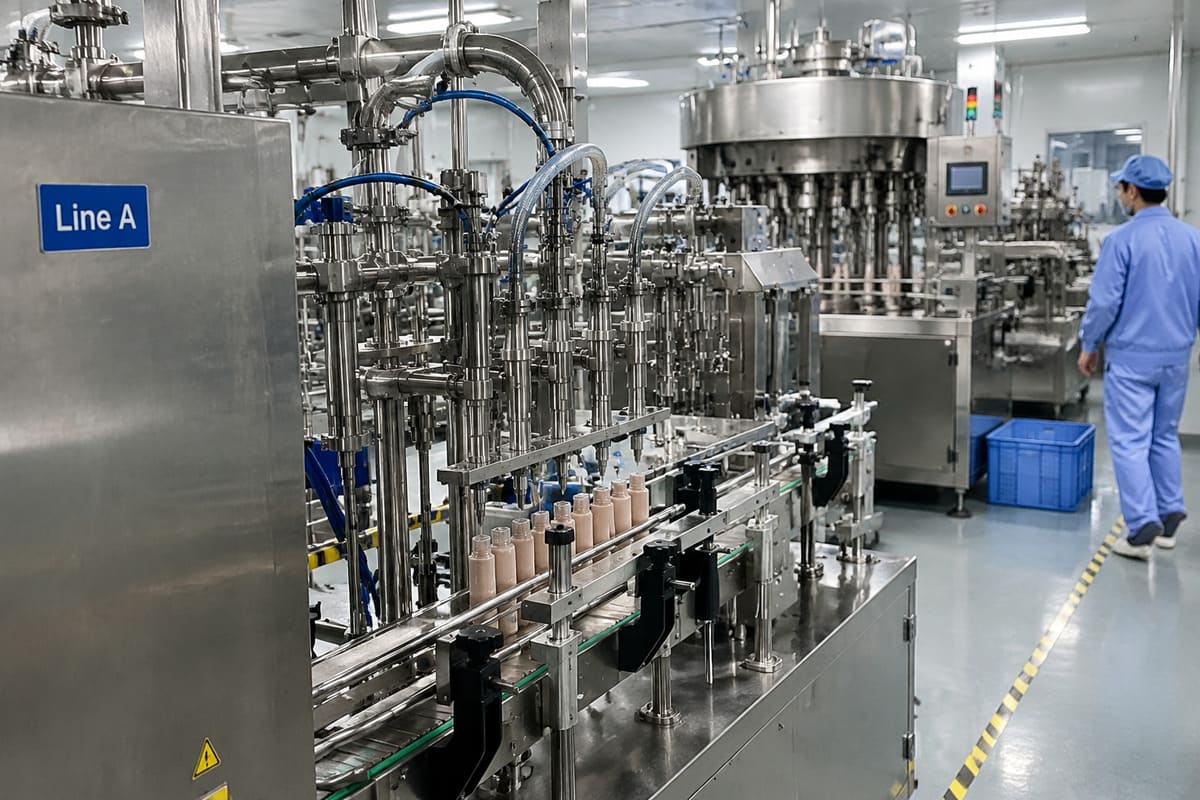
A true colour cosmetic manufacturer integrates powder, lip, and liquid engineering under one compliance roof. It is not just about pressing powder. The defining capability is three structural synergies: strict physical line isolation, cross-formulation color coordination to control ΔE variance1, and a unified compliance database that bundles every category into a single Product Information File (PIF)2.
I have watched too many brands get burned by the "coordinate for you" promise. So let me break down what full-matrix really means, how the patchwork trap collapses launches, and the exact questions I would ask any factory before I trusted it with my brand.
Why Do Most Colour Cosmetic Manufacturers Struggle With Full-Matrix Production?
You find a factory that nails eyeshadow. Then you ask for lip gloss and foundation. Suddenly the confident tone wobbles. Most colour cosmetic manufacturers struggle here because they are built lopsided. One category is their core, and everything else is borrowed capacity.
Most colour cosmetic manufacturers struggle with full-matrix production because it is a heavy-asset engineering challenge. Dry powder pressing and sterile liquid filling require physically separate environments, different R&D teams, and distinct compliance tracks. Global giants can do it but impose huge MOQs3, while small factories can only handle a single category of stock.
The market feels confusing for a structural reason. Full-matrix color manufacturing sits in a gap that most players cannot fill.
The Market Is Split Into Two Camps
On one side, you have the giants. They own the equipment, the labs, and the certifications. But they ignore small-to-mid brands because their MOQs start at tens of thousands of units per SKU. On the other side, you have small factories and trading companies. They offer low MOQs, but only within one narrow lane, usually powder or pre-made catalog stock.
| Supplier Type | Category Range | Typical MOQ | Compliance Model | Fit For |
|---|---|---|---|---|
| Global giant OEM | Full matrix | 20,000+ per SKU | Unified, in-house | Large established brands |
| Single-category factory | One lane only | 2,000–5,000 | Fragmented | Niche single-product brands |
| Trading company / stock | Catalog mix | 100+ | None (resold) | Quick resellers |
| Agile full-matrix factory | Powder-led, scalable | 2,000 powder / 5,000+ liquid | Unified PIF | Serious multi-category brands |
This is the gap I work in. I bridge the agility of a small factory with the engineering discipline of a giant. I start with my strongest card, powder color at a 2,000-unit validation threshold, then scale to lip and base makeup lines based on real project evaluation. I do not promise "low-MOQ everything," because that promise is a lie the moment sterile filling costs enter the room.
What Happens When You Source From Three Different Factories?
It looks clever at first. Factory A presses your eyeshadow, Factory B fills your lip gloss, Factory C makes your foundation. You save a few cents per unit. Then launch day approaches and the whole structure buckles. The savings vanish, and so does your timeline.
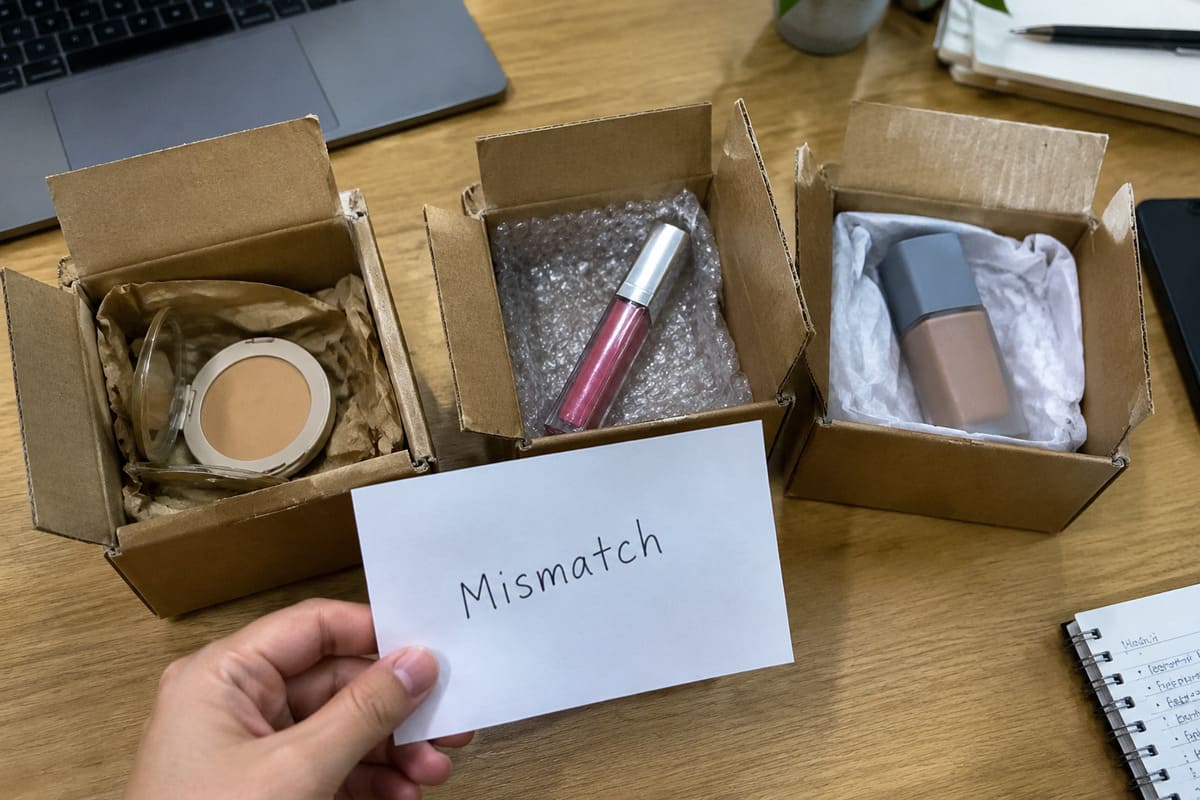
When you source from three different factories, you face two fatal risks: color disconnect and lead-time collapse. Separate factories use different pigment lots, so your eyeshadow and lip color never truly match. And because each factory runs its own schedule, a single packaging delay at any one of them collapses your entire coordinated launch.
I call this the patchwork trap, and I have seen it sink promising launches that did everything else right.
Dry Powder and Wet Liquid Are Physically Incompatible
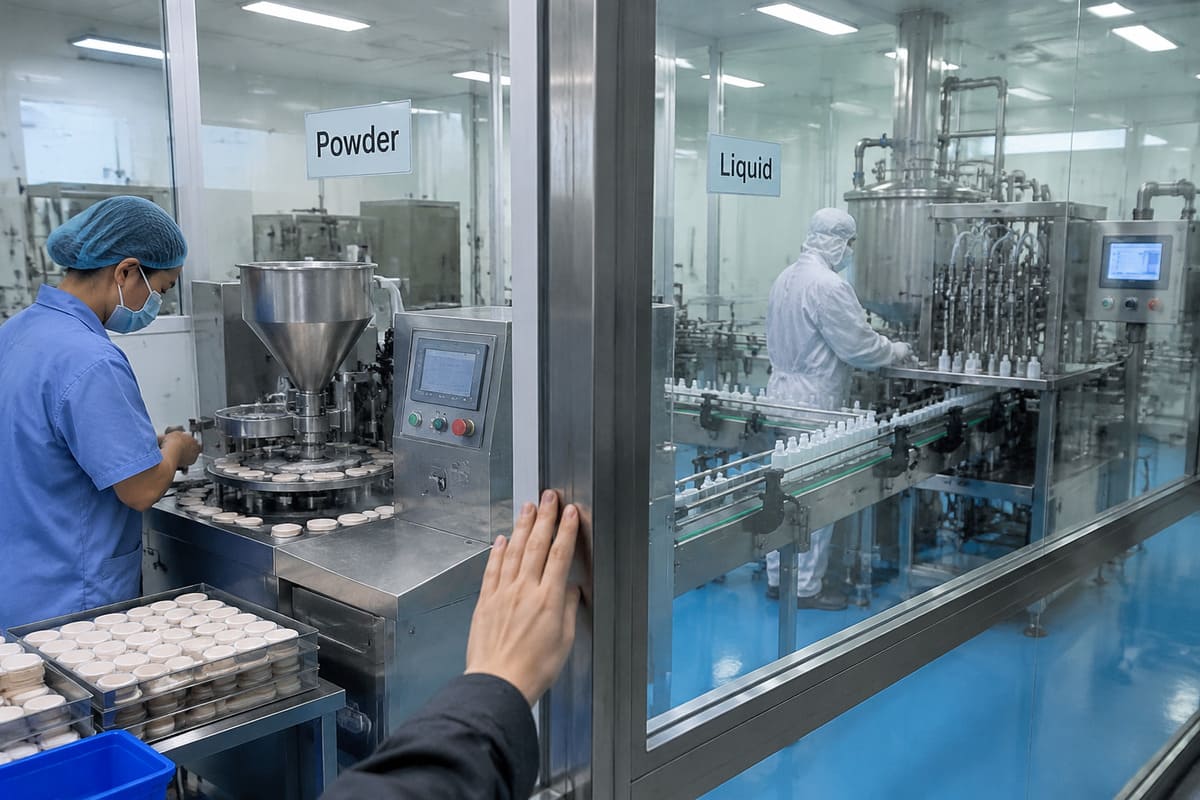
Here is the engineering truth most buyers never hear. Dry powder pressing throws fine particulate into the air4. Sterile liquid filling demands a controlled, low-contamination environment5. These two processes are physically incompatible in the same uncontrolled space. When you split them across unaffiliated factories, nobody owns the relationship between them.
The consequences stack up fast:
- Pigment lot drift: Factory A buys red pigment from one supplier batch, Factory B buys another. Your "matching" lip and cheek colors land at different hues.
- Schedule desync: Each factory optimizes its own line. Your foundation might be ready in week six while your palette waits in week ten.
- Packaging mismatch: Three factories order components separately. Finishes, printing tones, and box dimensions rarely align.
- No single accountability: When colors clash, each factory blames the other. You are left holding the problem.
Let me give you a quick scene from memory. A founder once came to me after assembling a "dream team" of three vendors. Her nude palette read warm, her matching gloss read cool, and her foundation undertone fought both. Three separately correct products, one incoherent brand. Only a synchronized, full-matrix colour cosmetic manufacturer can lock color and timeline together, because the coordination happens inside one building, under one project manager, before a single unit is produced.
How Do You Verify True Cross-Category Synergy?
Every factory will tell you it can "do it all." Talk is cheap in this industry. The marketing deck always looks impressive. So you need a way to separate real engineering capability from a confident sales pitch, and you need it in the first conversation.
You verify true cross-category synergy by testing how a factory responds to a full-matrix request. A fake full-matrix factory offers to subcontract and "coordinate" for you. A true colour cosmetic manufacturer immediately asks about shared color themes, pigment-base coordination between powder and liquid R&D teams, and how you want to sequence delivery given longer liquid filling times.
The Acid Test In Your First Conversation
Imagine you request eyeshadows, a lip gloss, and a foundation, all meant to share one color story. Listen carefully to the answer.
The trap answer: "No problem. We press the powder here, and I'll subcontract the lip gloss to my partner factory. We'll coordinate for you."
That is outsourcing dressed as capability. The word "coordinate" is doing a lot of hiding.
The real answer: "Are these three products sharing the same color theme? If so, our powder and liquid R&D teams need to coordinate on the pigment base so the final ΔE stays consistent. Also, liquid filling takes longer. How do you want to sequence the delivery?"
That response proves synergy lives upfront, in engineering coordination, not downstream in a subcontracting handoff.
The Three Interrogation Questions
If you want to go deeper, ask these three. They turn abstract "capabilities" into concrete, impossible-to-fake metrics.
| Question To Ask | Real Factory Answer | Fake Factory Signal |
|---|---|---|
| "How do you prevent powder dust from contaminating your sterile liquid filling lines?" | Describes physically isolated zones and air handling | Vague, admits mixed space, or has no liquid line |
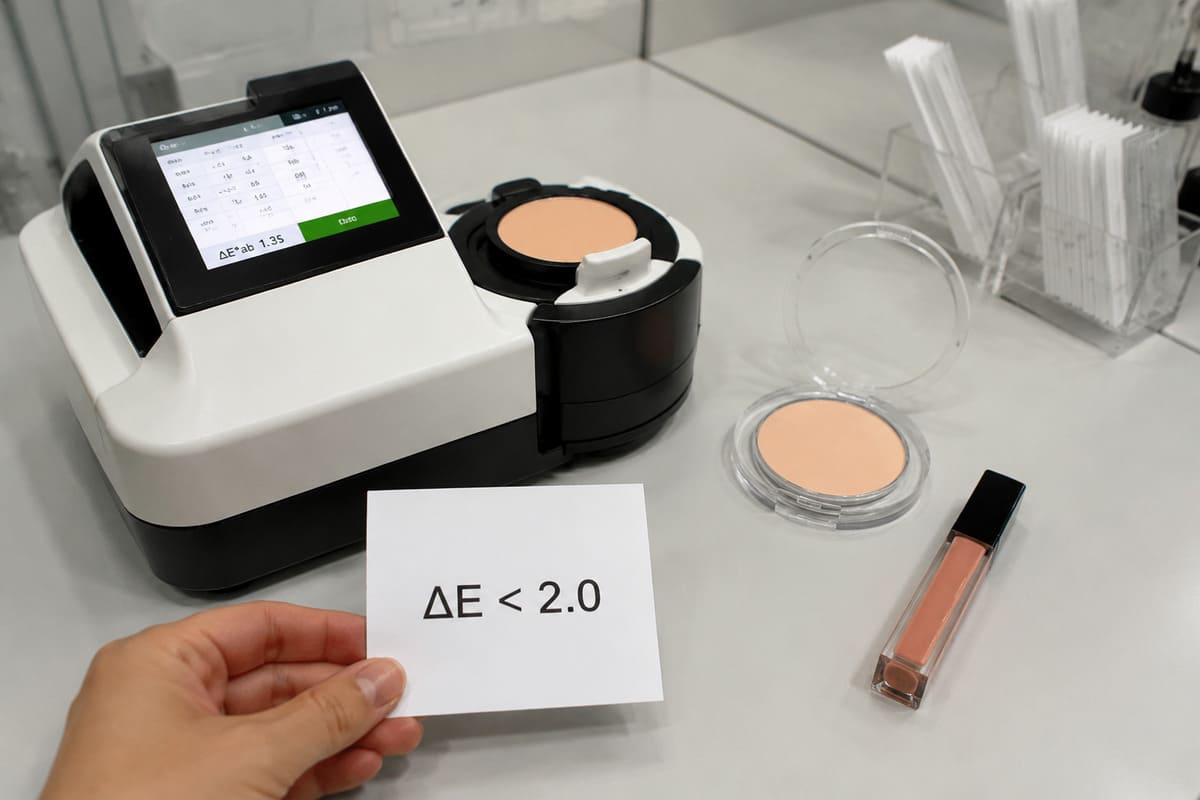
| "If my eyeshadow and lip gloss must match, how do you control color variance?" | Unified pigment base + spectrophotometer, ΔE < 2.0 | "We eyeball it" or "it'll be close" |
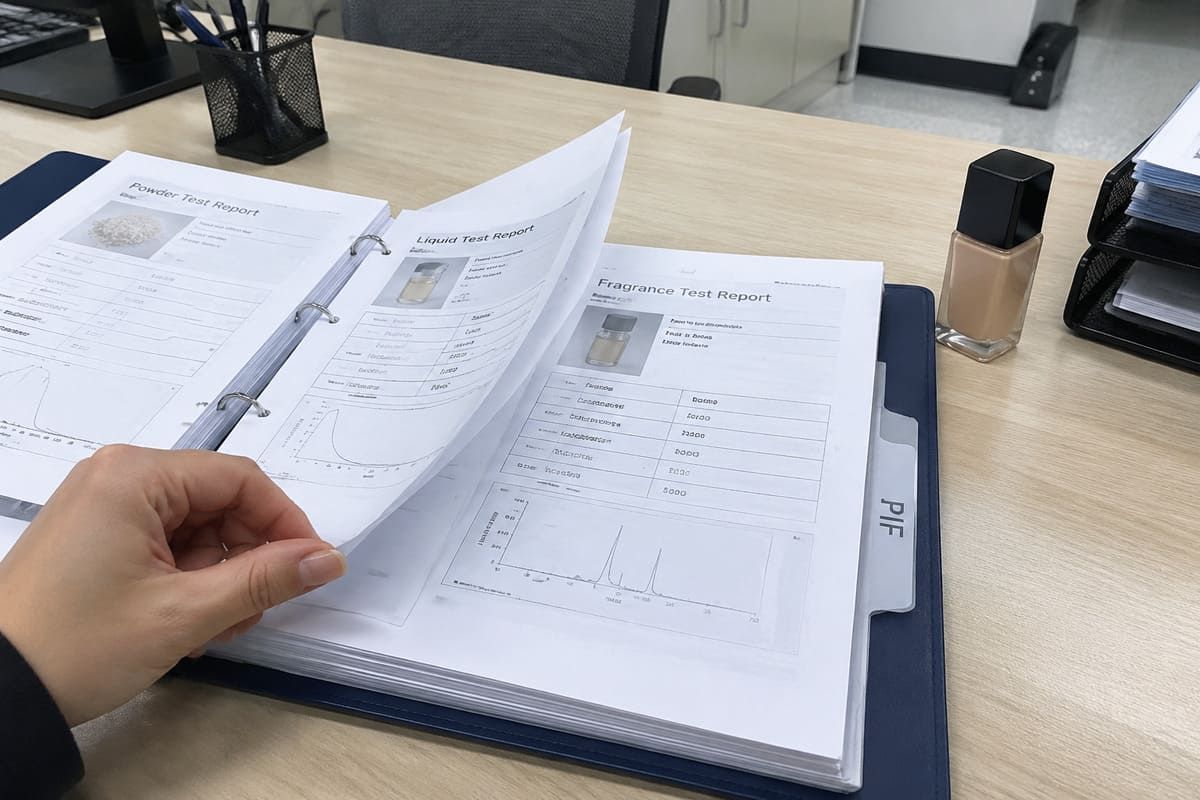
| "Can you consolidate powder, liquid, and fragrance testing into one PIF?" | Multi-category regulatory team, single file | Hands you fragmented, separate reports |
Ask all three. The gaps show up instantly.
Why Is Colour Management the Hardest Part of a Multi-Category Launch?
Buyers obsess over formula and price. The quiet killer is color. You can have a perfect powder and a perfect liquid, and still ship a brand that looks incoherent on the shelf because the two categories never spoke the same color language.
Colour management is the hardest part of a multi-category launch because different formula systems absorb and reflect pigment differently. A wax-based lip formula and a powder matrix render the same pigment at different hues6. Controlling this requires a unified pigment base and spectrophotometer verification7 to hold the final color variance below ΔE 2.0, the threshold where the human eye stops noticing a difference8.
Why the Same Pigment Looks Different Across Formats
A pigment does not behave identically in every base. In a pressed powder, it sits dry and reflects light directly. In a wax-based lip emulsion, it suspends in oils and waxes that shift its apparent tone. In a water-oil liquid foundation, emulsification changes coverage and undertone again. This is cross-formulation engineering, and it is where real manufacturers earn their keep.
Here is how I think about the ΔE scale:
| ΔE Range | What It Means | Launch Verdict |
|---|---|---|
| 0.0 – 1.0 | Not perceptible to the human eye9 | Ideal |
| 1.0 – 2.0 | Perceptible only on close inspection | Acceptable for matching sets |
| 2.0 – 3.5 | Noticeable in normal use | Risky for "matching" claims |
| 3.5+ | Obvious mismatch | Fails brand coherence |
To hold a matching set under ΔE 2.0 across powder and liquid, you need three things working together:
- A unified pigment base shared by both R&D teams, so color starts from the same source.
- Spectrophotometer verification at each stage, replacing subjective eyeballing with measured data.
- Coordinated lot planning, so a reorder six months later still matches the original run.
When powder and liquid teams sit under one roof, they calibrate against each other from day one. That is impossible when three factories each guess at "close enough."
What We Engineer—and What We Evaluate Per Project
I believe in being honest about boundaries, even when it costs me a lead. A serious buyer respects a factory that knows its limits. A factory that promises everything to everyone is usually hiding something. So here is my explicit line in the sand.
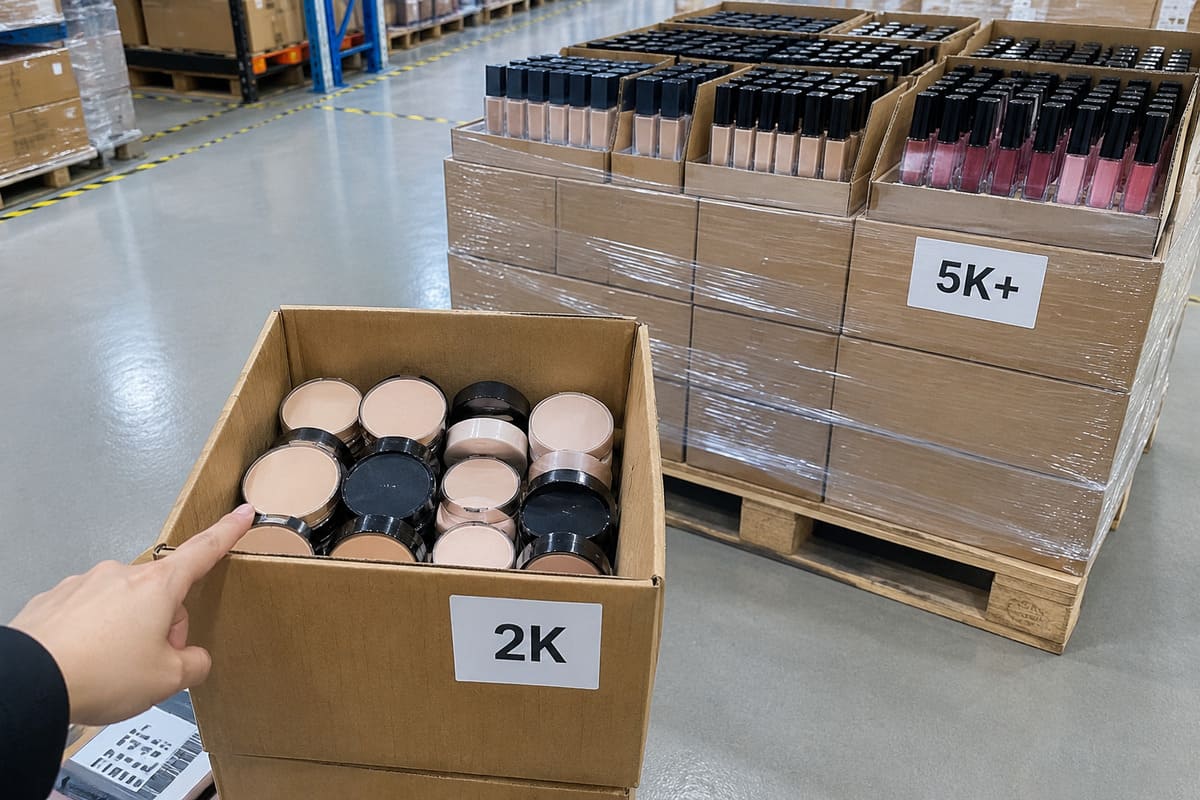
We engineer powder color as our absolute home turf, validated at a 2,000-unit threshold. For lip and liquid lines, the realistic starting MOQ is 5,000+ units because of sterile filling environments and mandatory microbiological testing10. If you need 100 units of a catalog product, a trading company serves you better. If you want real cross-category synergy under one roof, this is our standard.
Our Explicit Thresholds, No Guesswork
I would rather filter out mismatched traffic now than disappoint a buyer later. Here is exactly where I stand as a colour cosmetic manufacturer.
| Category | Starting MOQ | Why This Number | Our Confidence |
|---|---|---|---|
| Powder (eyeshadow, blush, highlighter, pressed) | 2,000 units | Low validation cost, our core engineering | Strongest card |
| Lip (gloss, liquid lip, balm) | 5,000+ units | Wax emulsification, filling line setup | Scale per project |
| Liquid base (foundation, concealer) | 5,000+ units | Sterile filling + microbial testing | Scale per project |
| Catalog stock, 100 units | Not our model | No synergy, no engineering value | Use trading companies |
The reason lip and liquid lines demand higher volumes is not arbitrary pricing. It is real cost. Sterile filling requires a controlled environment. Microbiological testing takes time and money. Water-based formulas need preservative efficacy challenge testing11. These are engineering realities, not negotiation tactics.
How We Scale With You
My approach is deliberate. I start where I am strongest, prove the color and quality at a low-risk 2,000-unit powder run, then expand into your lip and base lines as the project earns it. This protects your capital and builds trust through evidence rather than promises. We treat certifications as documents you should always verify for your target market, and we recommend qualified regulatory review for application-specific decisions. If you are ready to build a real multi-category color brand, my engineering team is ready to scale alongside you.
Frequently Asked Questions
What makes a colour cosmetic manufacturer "full-matrix"?
A full-matrix colour cosmetic manufacturer produces powder, lip, and liquid categories in-house under one compliance roof. The defining traits are physically isolated production lines, coordinated color R&D across formats, and a single consolidated Product Information File rather than fragmented reports from separate vendors.
What is a safe ΔE target for matching cosmetics across categories?
A ΔE below 2.0 is the practical target for a matching set. At this level, the difference is perceptible only on close inspection. Values above 2.0 become noticeable in normal use and risk undermining any "matching collection" claim your brand makes.
Why are lip and liquid MOQs higher than powder MOQs?
Lip and liquid products require sterile filling environments and mandatory microbiological testing, including preservative efficacy challenge tests12. These add real cost and time. That is why a realistic starting MOQ for lip and liquid lines is 5,000+ units, while powder validates at 2,000 units.
Can one factory consolidate testing into a single PIF?
Yes, a true multi-category manufacturer with an in-house regulatory team can bundle pigment, microbial, and heavy metal testing into one unified Product Information File. Treat every certification as a document you should verify for your specific target market before export.
Is sourcing from three factories ever a good idea?
Only if your products do not need to match in color or launch together. For a coordinated collection, multiple factories create pigment-lot drift and schedule desync. One delayed vendor can collapse your entire launch, so a synchronized full-matrix factory is the safer structure.
Conclusion
Choosing a colour cosmetic manufacturer is really a choice between a patchwork of vendors and a unified engineering system. The patchwork saves pennies and risks color disconnect and lead-time collapse. A true full-matrix partner locks color and timeline together under one roof, holding ΔE below 2.0 and consolidating compliance into one PIF. I start with powder at a 2,000-unit threshold and scale your lip and liquid lines by project. If you are ready to build a coherent multi-category color brand, send me your color theme and target market, and I will map the engineering path with you.
"Color difference", https://en.wikipedia.org/wiki/Color_difference. The International Commission on Illumination (CIE) defines ΔE as a scalar measure of color difference computed from coordinates in a uniform color space such as CIELAB. Evidence role: definition; source type: institution. Supports: That ΔE is a defined numerical measure of the perceived difference between two colors within a standardized color space.. Scope note: Multiple ΔE formulas exist (ΔE76, ΔE94, ΔE2000) that yield different values for the same color pair. ↩
"What Ingredients Should I Avoid in Eye Shadow? A Compliance ...", https://vertinabeauty.com/what-ingredients-should-i-avoid-in-eye-shadow-a-compliance-guide-for-buyers/. Under EU Regulation (EC) No 1223/2009, a responsible person must maintain a Product Information File containing the product description, safety report, manufacturing information, and proof of claimed effects. Evidence role: definition; source type: government. Supports: That the Product Information File is a regulatory document defined in cosmetics legislation and must contain safety and compliance data for a product placed on the market.. Scope note: The PIF requirement applies to the EU market; equivalent documentation obligations in other jurisdictions differ in structure and naming. ↩
"OEM Makeup Manufacturer: 5 Questions to Verify Real ...", https://vertinabeauty.com/oem-makeup-manufacturer-5-questions-to-verify-real-customization/. Industry analyses of cosmetic contract manufacturing describe market segmentation in which large-scale manufacturers concentrate on high-volume clients, consistent with higher minimum order thresholds. Evidence role: general_support; source type: institution. Supports: That the cosmetics contract-manufacturing sector is segmented by scale, with larger manufacturers typically serving higher-volume accounts.. Scope note: Specific MOQ figures vary by manufacturer and are rarely published, so support for the exact numbers is indirect. ↩
"Quantification of Airborne Dusts From Powders", https://www.cdc.gov/niosh/nmam/pdf/Chapter-AD.pdf. Occupational and industrial hygiene guidance documents airborne dust generation during dry powder handling and the use of containment and segregation to limit cross-contamination. Evidence role: general_support; source type: government. Supports: That handling and compressing dry powders releases airborne particulate requiring containment to prevent cross-contamination.. Scope note: General powder-handling guidance may not address cosmetic pressing specifically, so the support is contextual rather than cosmetic-industry-specific. ↩
"GMP Guidelines/Inspection Checklist for Cosmetics", https://www.fda.gov/cosmetics/cosmetics-guidance-documents/good-manufacturing-practice-gmp-guidelinesinspection-checklist-cosmetics. ISO 22716 sets out good manufacturing practice guidelines for cosmetics, including requirements for premises and environmental controls that support hygienic production and filling. Evidence role: general_support; source type: institution. Supports: That cosmetic good manufacturing practice requires controlled, hygienic production environments for filling operations.. Scope note: The standard addresses hygiene and GMP broadly and does not use the term 'sterile' in the pharmaceutical sense for most cosmetic filling. ↩
"Refractive Index of Pigments", https://vichem.vn/en/refractive-index-of-pigments/. Color-science literature on pigment optics indicates that perceived color depends on the refractive-index contrast and scattering behavior between the pigment and its surrounding medium, supporting the observation that identical pigments appear different across formulation bases. Evidence role: mechanism; source type: research. Supports: That a pigment's perceived color depends on its dispersion medium because the surrounding matrix alters light scattering and refractive-index contrast.. Scope note: General pigment optics findings may derive from coatings or plastics rather than cosmetic formulations specifically. ↩
"Comparison of instrumental methods for color change ... - PMC", https://pmc.ncbi.nlm.nih.gov/articles/PMC8891462/. Color measurement literature describes spectrophotometers quantifying reflectance and deriving CIELAB coordinates, enabling reproducible instrumental color evaluation rather than subjective visual matching. Evidence role: mechanism; source type: research. Supports: That spectrophotometric instruments quantify color in standardized color spaces, providing repeatable measurements independent of subjective visual judgment.. Scope note: Instrumental readings depend on geometry, illuminant, and sample presentation, so measured ΔE values are condition-dependent. ↩
"Color difference", https://en.wikipedia.org/wiki/Color_difference. Colorimetry literature reports that color differences in the range of roughly ΔE 1 to 2 approach the just-noticeable-difference threshold for average human observers under controlled viewing conditions. Evidence role: statistic; source type: research. Supports: That small CIE color differences around ΔE 1-2 correspond to the range where differences become difficult for an average observer to perceive.. Scope note: Perceptibility thresholds vary by ΔE formula (e.g., ΔE76 vs ΔE2000), illuminant, and observer, so a single fixed cutoff is an approximation rather than a universal constant. ↩
"Perceptibility and acceptability of CIELAB color differences in ...", https://pubmed.ncbi.nlm.nih.gov/17517460/. Experimental studies of color-difference perception report that differences below roughly ΔE 1 are typically not detectable by observers, consistent with the article's lowest band. Evidence role: statistic; source type: paper. Supports: That color differences below approximately ΔE 1 are generally imperceptible to observers under normal viewing conditions.. Scope note: Reported perceptibility bands vary across studies and depend on the ΔE formula and experimental viewing setup. ↩
"Microbiological Safety and Cosmetics", https://www.fda.gov/cosmetics/potential-contaminants-cosmetics/microbiological-safety-and-cosmetics. ISO 17516 specifies microbiological limits for cosmetics, and related safety frameworks require microbiological quality control, supporting the characterization of such testing as a mandatory compliance step. Evidence role: general_support; source type: institution. Supports: That microbiological quality and limit testing are recognized requirements for ensuring the safety of cosmetic products.. Scope note: Specific mandatory status depends on the target market's regulatory regime rather than the ISO standard alone. ↩
"Microbiological Quality Assessment of Skin and Body care ...", https://pmc.ncbi.nlm.nih.gov/articles/PMC10910155/. ISO 11930 specifies a procedure for assessing the antimicrobial protection of a cosmetic product through a preservation efficacy test, supporting the claim that water-based formulas undergo challenge testing. Evidence role: mechanism; source type: institution. Supports: That preservative efficacy (challenge) testing is a standardized method for evaluating the antimicrobial protection of water-containing cosmetic products.. Scope note: The standard describes test methodology and does not by itself mandate a specific minimum order volume or production cost. ↩
"Microbiological Quality Assessment of Skin and Body care ...", https://pmc.ncbi.nlm.nih.gov/articles/PMC10910155/. Standardized methods such as ISO 11930 define the preservative efficacy challenge test as inoculating a product with specified microorganisms and measuring their reduction over set intervals to confirm adequate preservation. Evidence role: definition; source type: institution. Supports: That a preservative efficacy challenge test involves deliberate microbial inoculation to verify a product's preservation system over a defined period.. Scope note: The standard defines methodology and acceptance criteria but does not quantify commercial time or cost impacts. ↩