Hunting for a cosmetic contract manufacturer from China feels like a shortcut to the world's best supply chain, until the search results trick you. You want a unique formula that sets your brand apart. Instead, sponsored ads shout "10-unit MOQ," and you quietly worry you'll pay custom prices for a stock product with your logo slapped on top.
A real cosmetic contract manufacturer from China cannot produce true custom formulas at 10 units, because genuine customization carries three hard costs: non-recurring engineering (NRE) for lab sampling and stability testing1, private mold tooling for unique packaging, and production-line cleaning between batches2. A low MOQ almost always signals a stock formula sold by a trading company, not a factory.
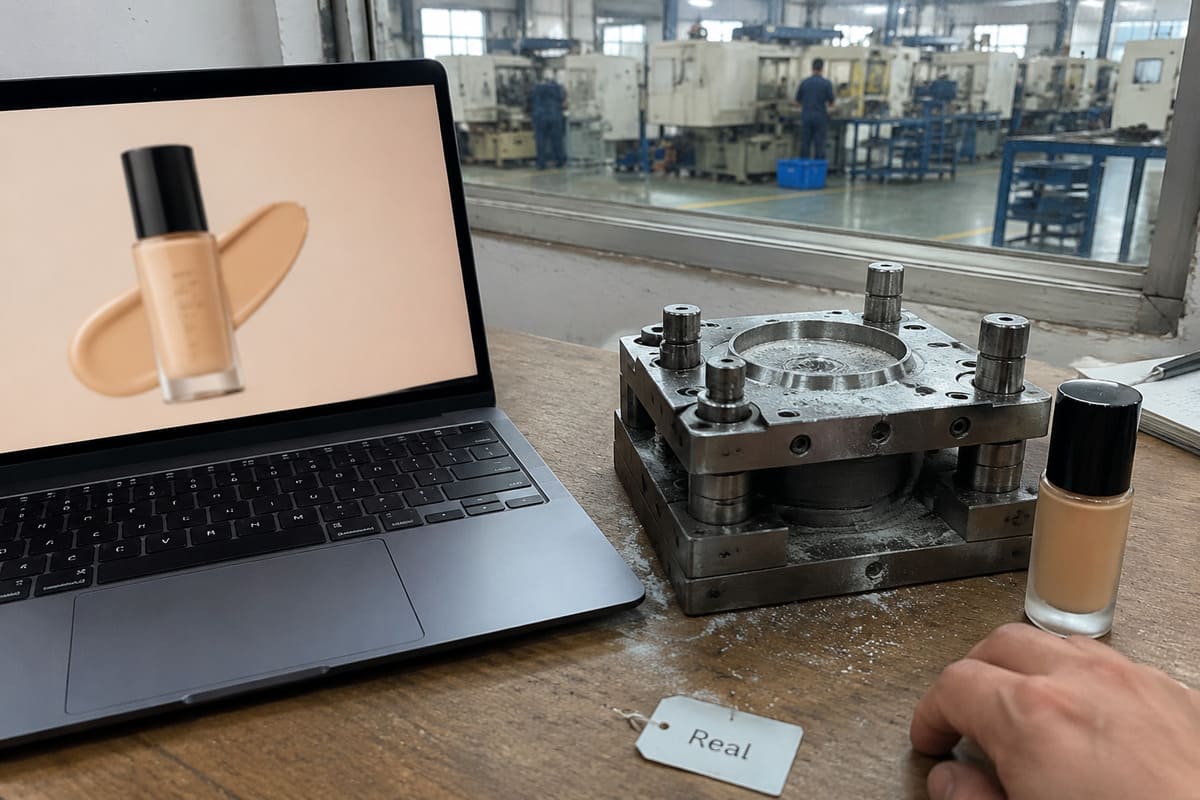
So if a low MOQ is a warning sign and not a gift, how do the ads get away with it? The answer sits in how Google Ads work and how the Chinese supply chain is actually shaped. Let me walk you through what I see from inside a real factory.
Why Does the SERP Promise 10-Unit Customization?
You type a serious sourcing query. You get a wall of ads promising "fully custom makeup, 10 pieces, no minimum." It looks like flexibility. It is usually bait, and it plays directly on your fear of being trapped.
The SERP promises 10-unit customization because buying search traffic is cheap, while building a real lab is expensive3. Trading companies dominate paid ads by reselling stock formulas and public molds. They label the catalog product as "custom," so their "MOQ" is really just a repackaging minimum, not a manufacturing run.
Here is the mechanism most buyers never see. The Chinese supply chain works like a funnel, and the loudest voices online sit at the bottom.
The Funnel Model of the Chinese Supply Chain
At the top are hardcore factories. We invest in clean rooms, R&D chemists, stability chambers, and compliance work. That capital goes into physical capacity, not click bids. At the bottom are trading companies. They own no lab and no production line.4 They own a catalog, a laptop, and an ad budget.
| Supply chain tier | What they own | Typical "MOQ" claim | Where you find them |
|---|---|---|---|
| Top: real factory (OEM/ODM) | Clean rooms, R&D, molds, QC lab | 2,000+ units for true custom | Trade shows, audits, referrals |
| Middle: hybrid | Some production, heavy outsourcing | Mixed, often vague | B2B platforms |
| Bottom: trading company | Catalog + ad budget | "10 units, fully custom" | Google Ads, marketplace ads |
The reason the bottom tier wins the SERP is simple. A factory spends its money on a nitrogen-flushed filling line5. A trader spends its money on keywords. You see the trader first because the trader paid to be first.
I am not saying every advertiser lies. I am saying the economics push cheap-traffic resellers to the front, and genuine manufacturers to the back. Once you understand that, the ad copy stops looking like opportunity and starts looking like a filter you need to pass through.
How Do You Spot a Trading Company in the First Conversation?
You only have one email or one call before you commit samples and money. That first exchange is your cheapest, fastest test. Miss the signal here and you risk months chasing a "factory" that was always a middleman.
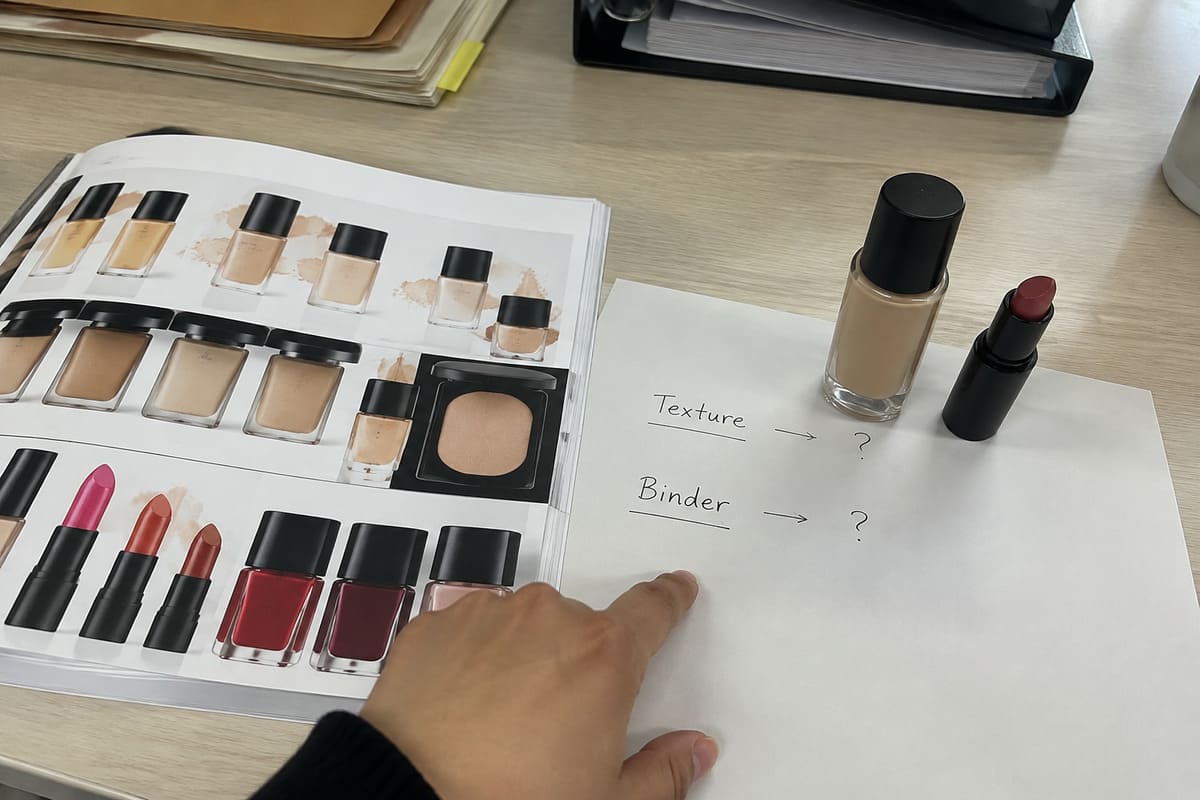
You spot a trading company in the first conversation by listening to the questions they ask you. A trader asks, "Which stock color and which shell do you want?" and quotes 100 units. A real factory asks, "What powder texture, finish, and binder system are you targeting?" and quotes 2,000 units. Traders start from a catalog; factories start from your formula brief.

I have had both conversations thousands of times, from my side of the table. The contrast is almost comical once you know what to listen for.
The First-Message Contrast
Here is what each side says when a brand founder reaches out about a custom eyeshadow palette.
| Topic | What a trader says | What a real factory says |
|---|---|---|
| Opening question | "Which catalog color do you like?" | "What finish and payoff do you want?" |
| Packaging | "Pick a shell from our stock options." | "Private mold or an existing mold? Let's scope tooling." |
| MOQ | "Only 100 units, super flexible." | "Powder validation starts at 2,000 units." |
| Formula | "Formula is ready, we can ship fast." | "We'll sample, then run stability testing." |
| Timeline | "3–5 days." | "Sampling 2–4 weeks, then production." |
A trader sells speed and low minimums because the product already exists in a warehouse. A real factory sells engineering because nothing exists yet. Your job is not actually in the lab. We will not make it unique.
One founder told me she almost signed with an advertiser quoting 50 units, until the sales rep could not name the binder in the pressed powder. She sent us the same brief. The first thing my team asked was whether she wanted a talc-based or talc-free base6, and what slip she expected on the skin. She said that single question told her she was finally talking to a factory.
What Three Questions Expose a "Fake Customization" Quote?
A polished quote can hide a stock product. The numbers look custom. The PDF looks professional. But the cost structure tells the truth, because real customization has costs a trader never incurs and therefore never charges.
Three questions expose a fake customization quote: First, what is the NRE cost for formulation and stability testing? Second, is the packaging a private mold or a public stock mold? Third, who absorbs the production-line cleaning loss between batches? A real factory answers each with specifics. A trader dodges and steers you back to the catalog.
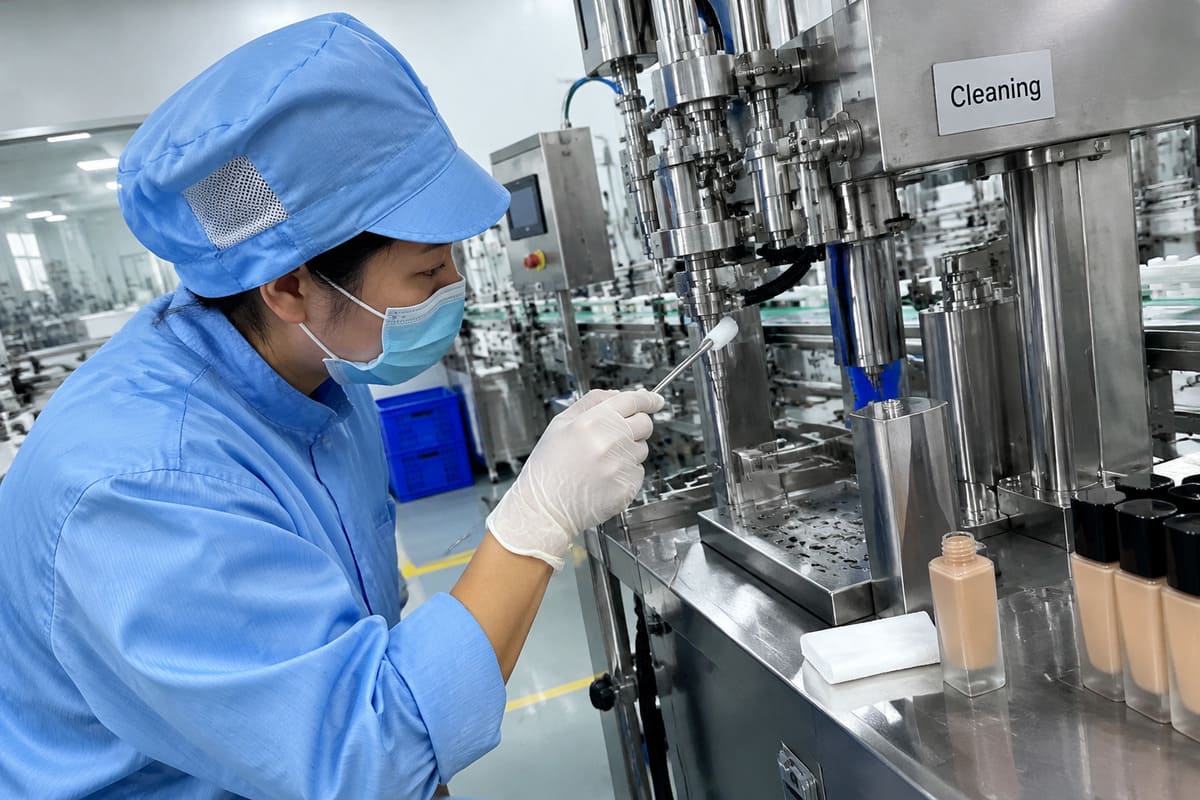
These three questions are what I privately call the soul-crushing questions, because they instantly break a fake quote. Let me explain why each one works.
The Three Soul-Crushing Questions
"What is your NRE charge for developing and testing my formula?" Non-recurring engineering covers lab hours, raw material trials, and stability testing. A real factory charges this because real chemists spend real days on it. A trader will say "no development fee" or "free" because there is no development. Free R&D means no R&D.
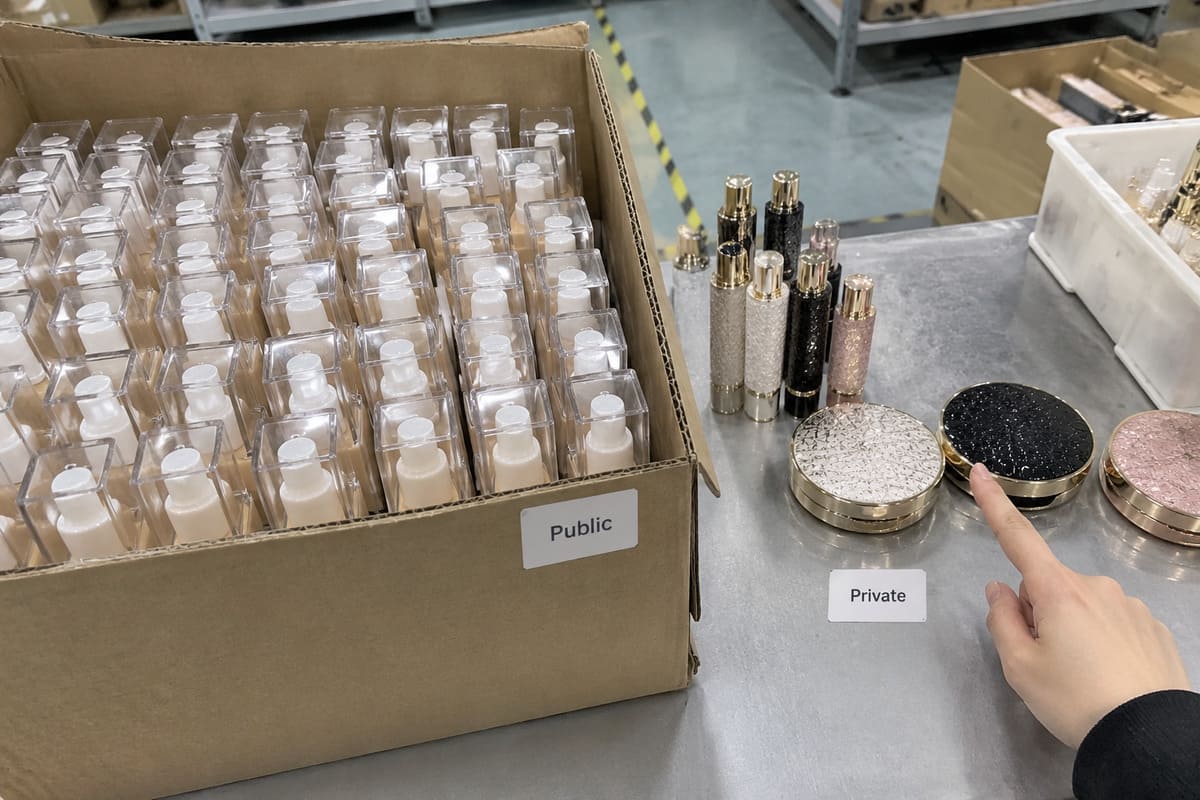
"Is this packaging a private mold or a public mold?" A private mold is tooling cut exclusively for your design, and it costs real money up front.7 A public mold is a shared, off-the-shelf shell anyone can buy. If the quote offers "custom packaging" at zero tooling cost, it is a public mold with your sticker on it.
"Who pays for cleaning the production line between batches?" Every custom batch forces a line changeover and a cleaning cycle to prevent cross-contamination.8 That cleaning is lost time and lost output. A factory factors it into the MOQ and price. A trader never mentions it, because they are drawing from pre-made stock and never clean a line for you.
Here is the cost breakdown traders quietly skip.
| Hard cost | Real factory | Trading company |
|---|---|---|
| NRE (formula + stability) | Charged, itemized | Skipped (no R&D) |
| Private mold tooling | Quoted up front | Avoided (public mold) |
| Line cleaning / changeover | Built into MOQ | Not applicable (stock) |
| Minimum for true custom | 2,000+ units | "10–100 units" |
If a supplier cannot speak clearly about these three cost centers, you are not looking at a manufacturer. You are looking at a reseller with good graphic design.
Why Do Real Chinese Factories Refuse Low-MOQ Orders?
It sounds backwards. You would think a factory would take any order it can get. Yet the serious ones say no to 10 or 50 units, and that refusal is one of the strongest trust signals you will find.
Real Chinese factories refuse low-MOQ custom orders because customization is an engineering project, not a retail transaction. The fixed costs of NRE, private molds, and line cleaning cannot be spread across 10 units without making the per-unit price absurd. A factory that says yes to 10 custom units is quietly selling you a stock product.
Think about the math. Suppose developing and testing a new pressed-powder formula costs a factory a fixed sum in lab time, plus mold tooling, plus one cleaning cycle. Those costs do not shrink when the order shrinks. They just get divided across fewer units.9
The Fixed-Cost Reality
| Order size | Fixed costs spread over | Per-unit burden | Verdict |
|---|---|---|---|
| 10 units | 10 | Extreme | Only viable as stock resale |
| 100 units | 100 | Very high | Still stock territory |
| 2,000 units | 2,000 | Reasonable | Real custom becomes rational |
A real factory refuses the 10-unit custom order for the same reason an architect will not design, permit, and build a custom house for the price of a tent. The engineering does not scale down to novelty quantities. When a factory holds that line, it is protecting you from paying custom prices for stock goods, even if it costs them the sale.
This is also why I treat MOQ as a diagnostic, not an obstacle. A high MOQ for true customization is honest. A suspiciously low MOQ for "full customization" is the tell.
What We Do—and Why We Refuse to Do 10 Units
I will be direct about where we stand, because vague suppliers are exactly the problem I am describing. We are Vertina Beauty, a color-cosmetics factory in Guangdong10 with roughly 100 people, focused on eye and face powder products, including chameleon and sparkle eyeshadows.
We refuse 10-unit white-label relabeling because we are a real manufacturer, not a dropshipper. Our powder customization validation starts at 2,000 units; liquids and fragrances start at 5,000. These minimums reflect the actual engineering costs of formulation, tooling, and clean production. If you want a quick catalog reseller, the advertisers suit you better than we do.
Here is our honest boundary, laid out plainly.
| What we do | What we refuse |
|---|---|
| Custom powder formulas from 2,000 units | 10-unit "fully custom" orders |
| Liquids and fragrances from 5,000 units | White-label relabeling on stock goods |
| Private mold packaging and ODM/OEM | Calling a public mold "custom" |
| Lab sampling, stability testing, QC | Free R&D claims |
Why the Invitation Matters
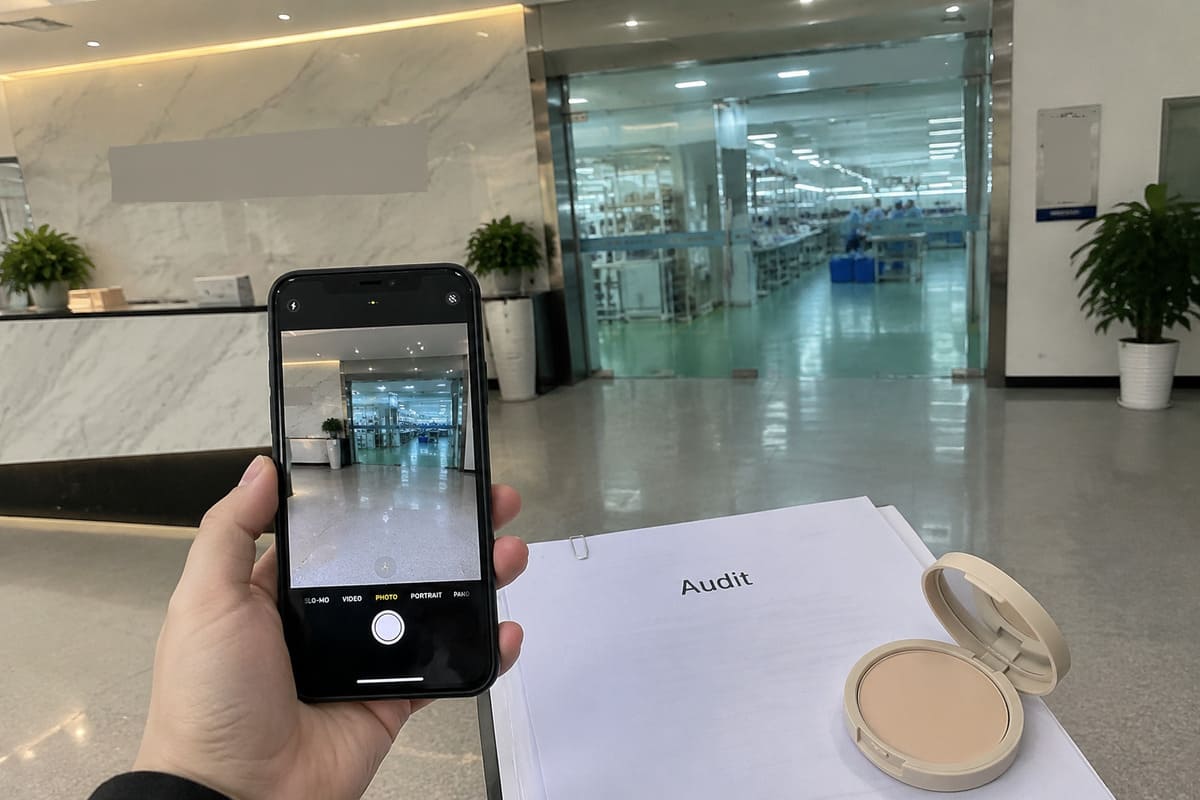
I would rather lose a sale than sell you a stock palette dressed as custom engineering. If you are serious about building a brand, I invite you to fly to Guangdong and audit our lines in person. Walk the clean areas. Watch a changeover. Ask my chemists about binders. A trading company cannot offer that, because there is nothing to tour.
For buyers testing a market on a tiny budget, the low-MOQ advertisers are a legitimate, cheaper path, and I will say so honestly. But for buyers investing in a real formula and a real brand, the minimums I quoted are the floor where true manufacturing begins.
Frequently Asked Questions
What is a realistic MOQ for custom cosmetics from a Chinese factory?
A realistic MOQ for true custom formulas is roughly 2,000 units for powders and 5,000 for liquids and fragrances. Lower numbers usually indicate a stock formula with custom packaging, not a custom product. Treat "10-unit full customization" as a strong signal of a trading company.
Is a low MOQ always a bad sign?
No, but context matters. A low MOQ on a clearly labeled stock item is fine and honest. A low MOQ advertised as "fully custom formulation" is the warning sign, because genuine formulation and tooling costs cannot spread across a handful of units.
How do I verify a cosmetic contract manufacturer from China is a real factory?
Ask about NRE formulation cost, private versus public molds, and line-cleaning responsibility. Request a video walkthrough of the production line, and if the order justifies it, arrange an in-person audit. Real factories answer with engineering specifics; traders redirect you to a catalog.
Should I ask about certifications in the first conversation?
You can, but focus first on formula capability and cost transparency, then confirm compliance for your target market. Certifications are documents you should independently verify, and application-specific regulatory decisions deserve review by a qualified compliance professional before you export.
What certifications might I need to export cosmetics?
It depends entirely on the destination market, such as FDA/MoCRA for the United States11, CPNP for the EU and UK12, and local registration schemes elsewhere. Confirm the current requirements with a regulatory specialist, and treat any supplier's certification claims as documents to verify, not take on faith.
Conclusion
Choosing a cosmetic contract manufacturer from China comes down to one hard truth: a low MOQ for "full customization" is a stock product in disguise. Real customization carries NRE, private mold, and line-cleaning costs that cannot vanish at 10 units. Use the three questions to expose a fake quote, read the first conversation for catalog language, and treat a high custom MOQ as honesty, not inflexibility. If you are ready to invest in genuine engineering, contact us for a formula brief, or come audit our Guangdong lines in person.
"Non-recurring engineering", https://en.wikipedia.org/wiki/Non-recurring_engineering. A general reference source defines non-recurring engineering as the one-time cost incurred to research, design, develop, and test a new product, distinct from recurring per-unit production costs. Evidence role: definition; source type: encyclopedia. Supports: Non-recurring engineering refers to the one-time cost of researching, developing, and testing a new product before production.. Scope note: General NRE definitions come from electronics and hardware manufacturing; applying the concept specifically to cosmetic formulation is an inference rather than a direct documented practice. ↩
"GMP Guidelines/Inspection Checklist for Cosmetics", https://www.fda.gov/cosmetics/cosmetics-guidance-documents/good-manufacturing-practice-gmp-guidelinesinspection-checklist-cosmetics. ISO 22716 and comparable cosmetic good manufacturing practice guidance specify equipment and line cleaning procedures between production runs to prevent cross-contamination, supporting the article's claim that changeover cleaning is a standard cost of batch production. Evidence role: mechanism; source type: institution. Supports: Cosmetic good manufacturing practice guidelines require cleaning of equipment and production lines between batches to prevent cross-contamination.. Scope note: The standards establish that cleaning is required, but do not quantify the lost time or output the article attributes to it. ↩
"Ad Auction Design and User Experience", https://theory.stanford.edu/~za/HidCost/HiddenCostAERB.pdf. Research on sponsored search auctions describes placement as allocated through a bid-based auction mechanism, supporting the article's point that ad position reflects willingness to pay rather than manufacturing capability. Evidence role: mechanism; source type: research. Supports: Search advertising placement is determined by an auction based on bids and ad quality rather than by the advertiser's operational capabilities.. Scope note: Auction research explains the placement mechanism generally and does not specifically document trading companies outbidding manufacturers in the cosmetics sector. ↩
"China - U.S. Export Controls", https://www.trade.gov/country-commercial-guides/china-us-export-controls. Trade economics literature on intermediated exporting documents that trading companies serve as intermediaries connecting foreign buyers with producers, often without holding manufacturing assets, supporting the article's distinction between traders and factories. Evidence role: general_support; source type: paper. Supports: Trading companies function as intermediaries in Chinese export supply chains, linking buyers to manufacturers without owning production facilities.. Scope note: The literature treats intermediation broadly across industries and does not specifically characterize cosmetics trading companies or their advertising behavior. ↩
"A nitrogen and vacuum pouch sealing machine is a food ...", https://www.instagram.com/reel/C7BncwhIXSb/?hl=en. Technical literature on inert-gas and modified-atmosphere filling describes nitrogen flushing as a method to displace oxygen and limit oxidative degradation during packaging, supporting the article's reference to it as a capital-intensive production capability. Evidence role: general_support; source type: research. Supports: Nitrogen flushing during filling displaces oxygen to reduce oxidation and extend product stability.. Scope note: The sources address filling technology generally rather than its specific use or prevalence in cosmetic powder and liquid manufacturing. ↩
"Flow and performance effects of talc alternatives on ...", https://pubmed.ncbi.nlm.nih.gov/34411305/. Cosmetic science literature identifies talc as a widely used filler contributing slip and texture in pressed powders, with talc-free formulations relying on alternative mineral or synthetic fillers, supporting the article's framing of this as a formulation decision. Evidence role: general_support; source type: paper. Supports: Talc is a common functional filler in pressed-powder cosmetics providing slip and texture, and talc-free formulations substitute alternative fillers.. Scope note: The sources establish talc's role but not the claim that asking about it reliably distinguishes a manufacturer from a trader. ↩
"Cost-Benefit Assessment of Additive Manufacturing for ...", https://docs.nlr.gov/docs/fy26osti/93799.pdf. Manufacturing engineering references describe injection-mold tooling as a significant upfront capital cost specific to a part's geometry, supporting the article's distinction between costly private molds and shared stock molds. Evidence role: general_support; source type: education. Supports: Custom injection molds are tooling fabricated for a specific design and represent a substantial one-time upfront cost compared with using existing shared molds.. Scope note: General tooling-cost references do not provide cosmetic-packaging-specific figures or confirm the pricing practices the article attributes to traders. ↩
"Validation of Cleaning Processes (7/93)", https://www.fda.gov/inspections-compliance-enforcement-and-criminal-investigations/inspection-guides/validation-cleaning-processes-793. Regulatory good manufacturing practice guidance on cleaning validation states that equipment must be cleaned between product changeovers to prevent carryover and cross-contamination, supporting the article's explanation of why line cleaning is necessary. Evidence role: mechanism; source type: government. Supports: Regulatory guidance requires cleaning between product changeovers to prevent carryover and cross-contamination between formulations.. Scope note: Cleaning-validation guidance is most developed for pharmaceuticals; its application to cosmetic powder lines is analogous rather than directly stated. ↩
"Economies of Scale: Definition, Types, and Strategies", https://online.hbs.edu/blog/post/economies-of-scale. Standard microeconomics teaching materials describe fixed costs as invariant to output level, meaning average fixed cost per unit declines with higher production volumes, which supports the article's reasoning about why low order quantities inflate per-unit custom cost. Evidence role: mechanism; source type: education. Supports: Fixed costs are independent of output quantity, so average fixed cost per unit falls as production volume rises and rises as volume falls.. Scope note: The principle explains cost behavior in general and does not establish the specific unit thresholds (10, 100, 2,000) the article cites for cosmetics. ↩
"How to Find a Cosmetics Manufacturer: A Buyer's Guide to Verifying ...", https://vertinabeauty.com/how-to-find-a-cosmetics-manufacturer-a-buyers-guide-to-verifying-real-factories/. Industry and trade reports identify Guangdong as a major center of China's cosmetics and daily chemical manufacturing, supporting the article's framing of a Guangdong location as consistent with a genuine production cluster. Evidence role: general_support; source type: institution. Supports: Guangdong province is a leading concentration of cosmetics and daily chemical manufacturing within China.. Scope note: Confirming the regional industry concentration does not verify the specific company's facilities or capabilities. ↩
"Modernization of Cosmetics Regulation Act of 2022 (MoCRA)", https://www.fda.gov/cosmetics/cosmetics-laws-regulations/modernization-cosmetics-regulation-act-2022-mocra. FDA guidance on the Modernization of Cosmetics Regulation Act of 2022 describes expanded federal requirements for cosmetic facility registration and product listing, supporting the article's reference to FDA/MoCRA as a US market requirement. Evidence role: general_support; source type: government. Supports: The Modernization of Cosmetics Regulation Act grants FDA expanded authority over cosmetic products, including facility registration and product listing requirements.. Scope note: The reference confirms the regulatory framework exists but does not establish which specific requirements apply to any given exporter or product. ↩
"What Ingredients Should I Avoid in Eye Shadow? A ... - Vertina Beauty", https://vertinabeauty.com/what-ingredients-should-i-avoid-in-eye-shadow-a-compliance-guide-for-buyers/. European Commission guidance under Regulation (EC) No 1223/2009 describes the Cosmetic Products Notification Portal as the mandatory pre-market notification system for cosmetics in the EU, with the UK operating a distinct scheme after leaving the EU, supporting the article's regulatory reference. Evidence role: general_support; source type: government. Supports: The EU Cosmetic Products Notification Portal requires notification of cosmetic products before placing them on the EU market, with a separate UK scheme following Brexit.. Scope note: The source confirms the notification systems exist but does not address which obligations fall on a Chinese manufacturer versus an EU or UK responsible person. ↩