Most eyeshadow palette manufacturers greet you with the same two promises: "50-unit MOQ" and "two-week turnaround." That sounds like a dream until your sample arrives. You open a plastic case, swatch the shades, and watch the matte crack while the shimmer flies away. You paid for a signature palette. You received a jigsaw puzzle.
A true eyeshadow palette is a physics problem, not a catalog selection. It requires balancing pigment load, binder systems, and pan-pressing tolerances across multiple textures. Factories that let you pick 12 stock shades and ship 50 units are selling a "stock puzzle." Real color engineering demands sampling cycles, custom press adjustments, and batch color control—which is why serious powder validation starts around 2,000 units1.
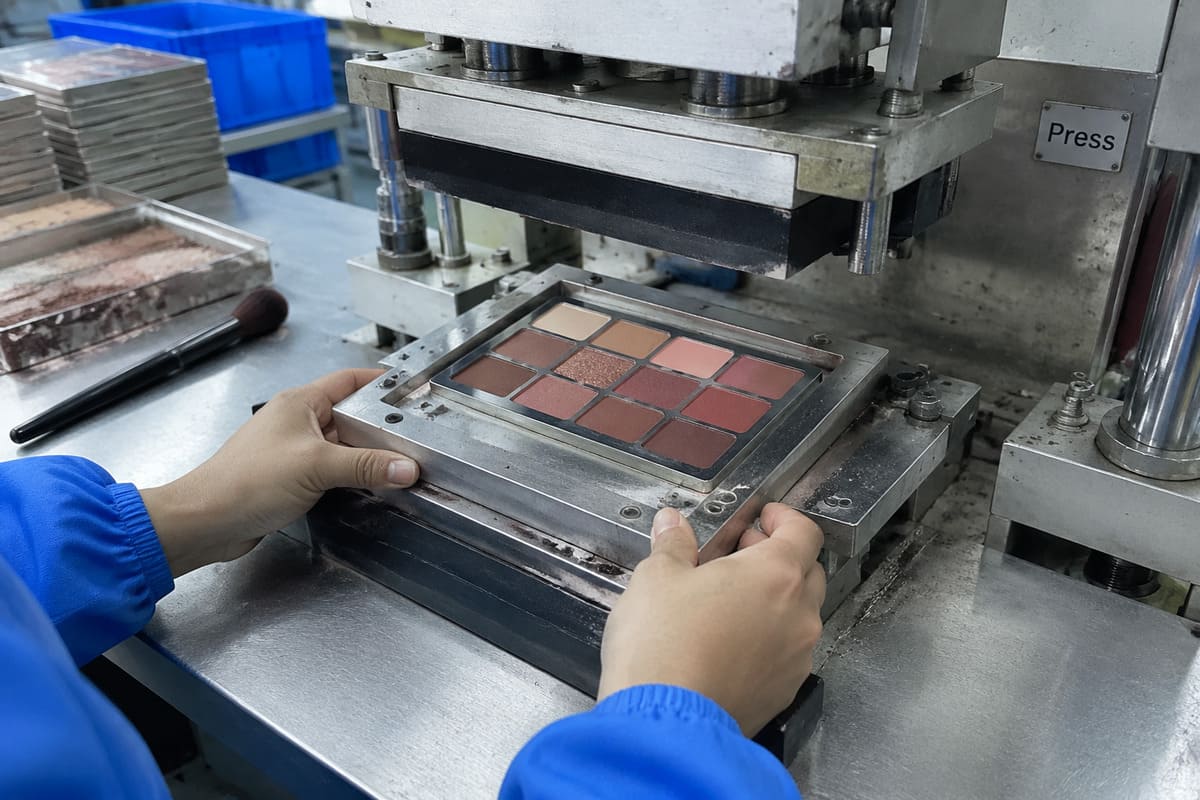
That gap between a promise and a performing product is where most brands lose money. Below, I break down why cheap palettes fail, the three questions that expose a stock puzzle factory, and why we at Vertina refuse to play the catalog game.
Why Do 50-Unit Palettes Often Fail at Market?
You found a factory offering 50-unit palettes. You picked your favorite 12 shades. Six weeks later, your customers complain the shadows are chalky and patchy. Your brand reputation takes the hit, not the factory.
50-unit palettes often fail because they use pre-approved stock shades pressed with a single standard binder and uniform pressure. This ignores the physical conflict between matte and shimmer textures. The result is chalky fallout, cracked pans, and poor blendability—a product that swatches badly and destroys repeat purchase.
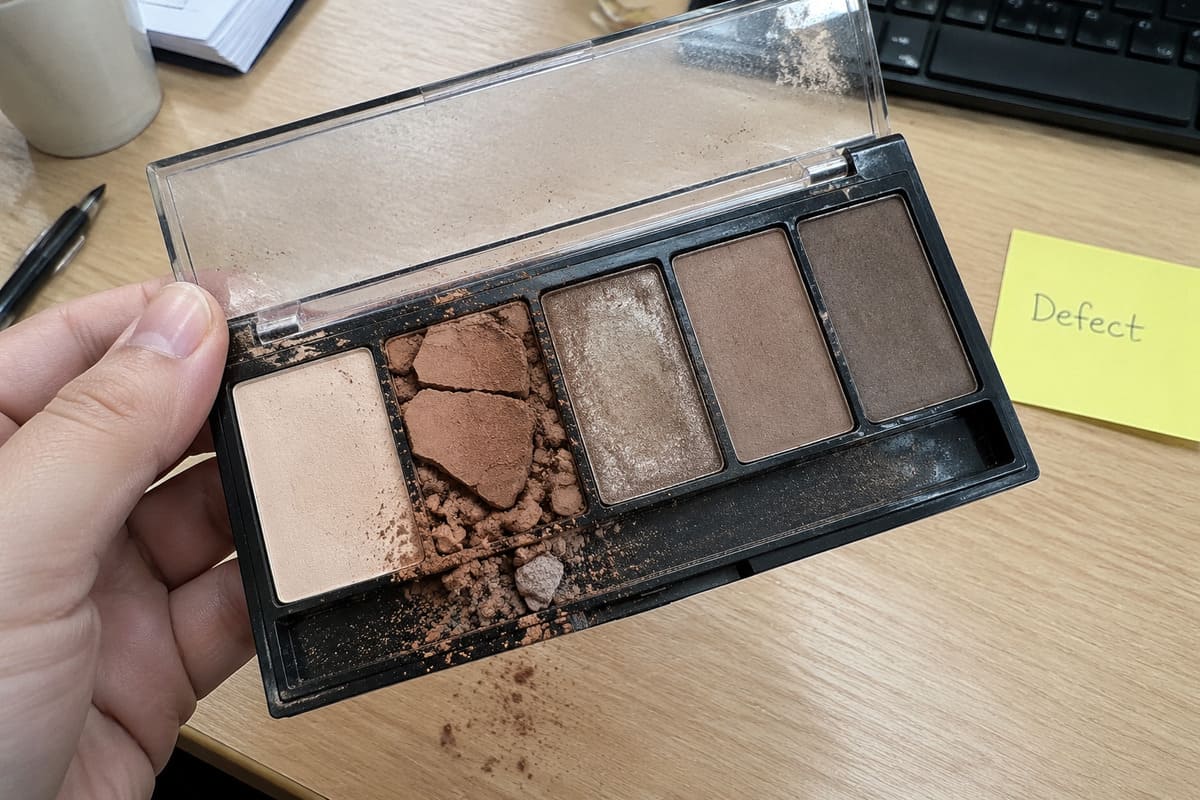
The transition from "cheap sample" to "market failure" is fast and brutal. Here is what actually breaks down.
What Goes Wrong Inside the Pan?
A stock puzzle supplier treats all 12 pans the same. That is the fatal error. Different finishes need different physics:
- Mattes carry a high pigment load. They need more binder and firmer pressure or they shatter in the pan2.
- Shimmers and pearls need light pressure. Too much force crushes the reflective particles and kills the glow3.
- Chameleon and duochrome shades rely on layered interference pigments that are extremely sensitive to both binder ratio and press force.
When a factory presses all of these with one setting, something always loses. Here is the typical damage:
| Problem | Root Cause | What the Buyer Sees |
|---|---|---|
| Chalky, dry mattes | Too little binder, over-pressed | Patchy swatches, no payoff |
| Cracked pans in transit | Wrong binder for high pigment load | Returns and breakage claims |
| Flat, dull shimmer | Over-pressed pearl particles | "It looked better online" reviews |
| Fallout and kickback | No pigment load tuning | Messy application, customer anger |
I have seen brands spend their launch budget on a 50-unit run, sell through, and then quietly disappear because the reorders never came. A palette that fails at market is not cheap. It is the most expensive mistake a new brand can make, because it burns the one thing you cannot rebuy: a customer's first impression4. Low MOQ feels like low risk. In reality, a bad formula pressed into a nice case is the highest risk of all.
What Three Physics Questions Expose a "Stock Puzzle" Factory?
You are about to send a deposit. You want to know if the factory on the other side is an engineer or a middleman with a color chart. You cannot visit the floor, so you need words that force the truth out.
Three technical questions expose a stock puzzle factory instantly: how they stop high-pigment mattes from shattering while keeping them blendable, how they manage press tolerances when a dry matte sits beside a soft shimmer, and how they control ΔE color variance across reorder batches. A trader fails all three because they never touch the formula.
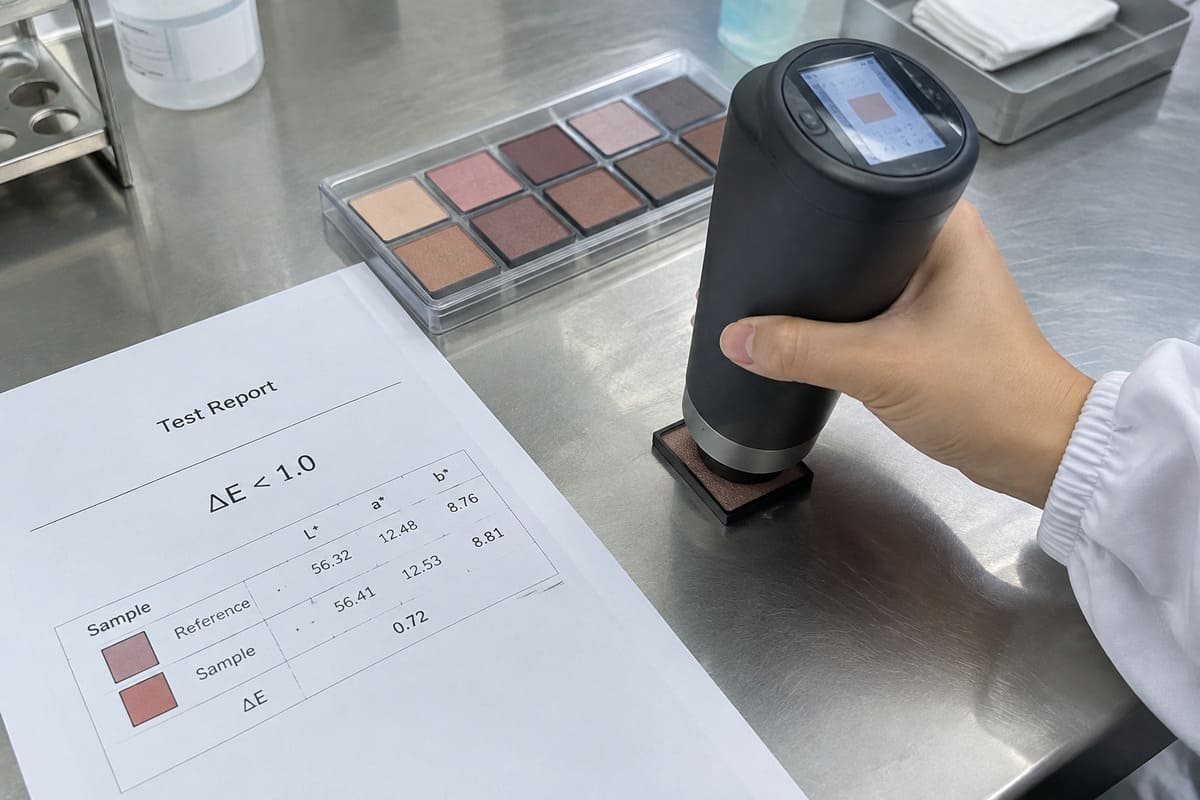
These are not trick questions. They are the exact conversations I have with serious buyers on the first call. Let me give you each one, word for word.
The Three Acid Tests You Can Ask Tomorrow
Here are the questions, what a real engineer answers, and the red flag that signals a stock puzzle supplier:
| Acid Test | The Question to Ask | Red Flag Answer |
|---|---|---|
| 1. Pigment Load | "If I want an extreme high-pigment matte red, how do you stop it from shattering in the pan while keeping it blendable?" | "No problem, our stock red is already stable." |
| 2. Multi-Pan Tolerance | "If an ultra-dry matte sits right next to an ultra-soft shimmer, how do you control press pressure and stop cross-contamination during pressing?" | "We press the whole palette together." |
| 3. Color Control | "For a 12-pan palette, how do you guarantee my reorder matches the first batch? Do you use a spectrophotometer to control ΔE?5" | "Our colors are always consistent, don't worry." |
Let me explain why each question works.
Pigment load is a balancing act. A matte red at high pigment concentration wants to crack because pigment particles do not bind well to each other6. A real factory answers with binder chemistry: "We adjust the binder-to-pigment ratio and add emollients to hold it together without drying it out7." A trader cannot answer because they never formulated the shade.
Multi-pan tolerance separates the pros from everyone else. Pressing a dry matte and a soft shimmer in the same layout means you cannot use one press setting. A serious answer involves pressing shades separately, controlling particle migration, and sequencing the press. A stock puzzle supplier presses everything at once, which is why your mattes and shimmers bleed into each other.
Color control is pure measurement. ΔE is the numeric difference between two colors8. A professional factory uses a spectrophotometer and locks pigment lots to keep ΔE under a target threshold—typically ΔE ≤ 1.0 for premium work, where the human eye cannot detect a difference9. A trader has no instrument and no lot control, so your second batch will drift. Any factory that says "don't worry" has already failed.
Why Is a Multi-Pan Palette an Engineering Challenge, Not a Catalog Selection?
You imagine a palette as picking colors you love. That feels creative and fun. Then the product underperforms and you realize color choice was the easy part. The hard part was the engineering you never saw.
A multi-pan palette is an engineering challenge because every finish behaves differently under pressure. Mattes, shimmers, and chameleon textures each need distinct binder systems and press forces. Combining them in one layout forces the factory to run multiple sampling rounds, tune each pan individually, and lock pigment lots—none of which a catalog selection provides.
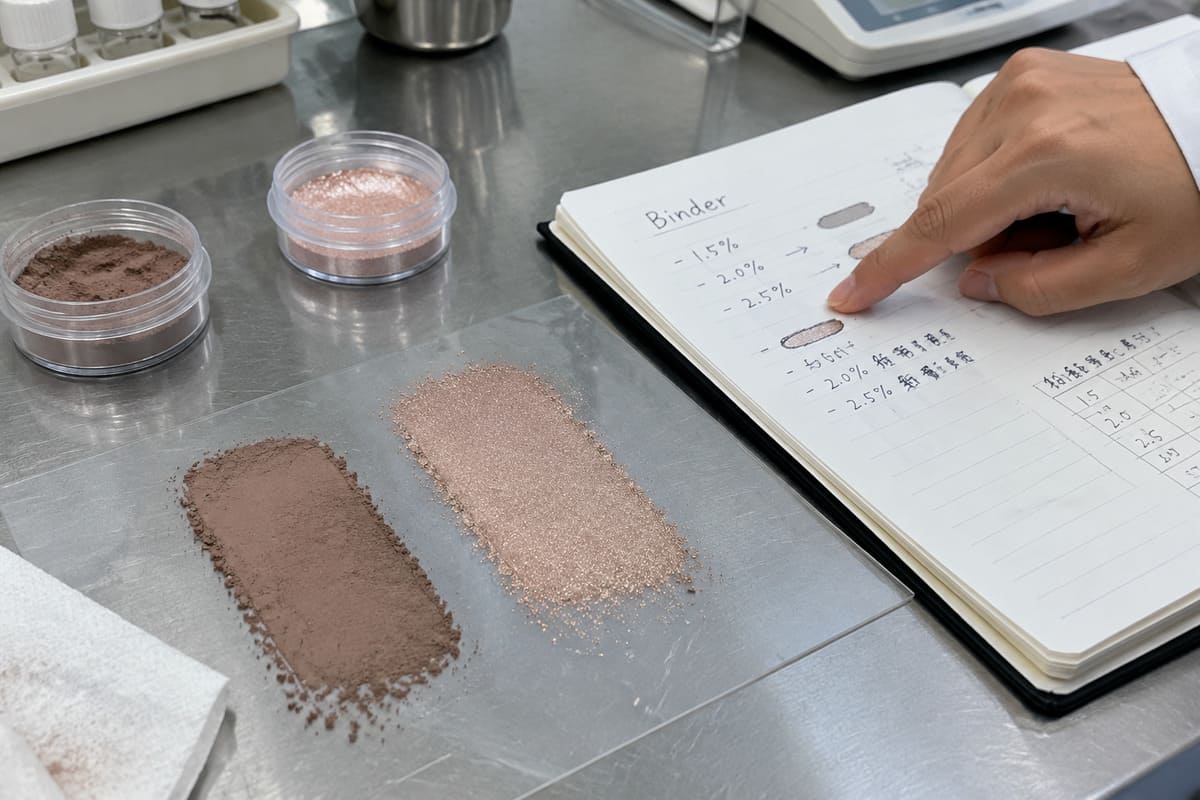
This is the heart of the issue. A palette is not 12 decisions about color. It is 12 separate physics problems that must coexist in one case.
Why Each Texture Fights the Others
Think of a palette as a room full of people with different needs, and you only have one thermostat. Mattes want it firm and dry. Shimmers want it soft and gentle. You cannot satisfy both with one setting, so you engineer around the conflict. Here is what real R&D looks like compared to the shortcut:
| Engineering Stage | True Color Engineering | Stock Puzzle Shortcut |
|---|---|---|
| Formula development | Custom binder per finish | Pre-approved stock formula |
| Sampling rounds | 2–4 rounds with adjustments | Zero—ship the stock shade |
| Press calibration | Pan-by-pan pressure tuning | Single uniform press |
| Pigment sourcing | Locked lots for consistency | Whatever is in the warehouse |
| Color verification | Spectrophotometer, ΔE target | Visual eyeball check |
The deeper reality is that finish compatibility drives the entire build. When you place an extreme matte next to a delicate duochrome, the matte's higher binder content and firmer press can physically contaminate the shimmer pan beside it during production10. Powder migrates. Pressure transfers. A factory that presses the full tray in one shot cannot stop this. A factory that engineers the palette presses incompatible textures in separate operations and controls the fill sequence.
I once worked with a brand that wanted a chameleon shade sitting directly beside a flat black matte. On paper, stunning. In the pan, a nightmare. The matte kept kicking dark particles into the chameleon, muddying its color shift. We solved it by pressing them in separate stages and adjusting the fill order. A stock puzzle factory would have shipped a muddy mess and called it done. That is the difference between selecting from a catalog and actually building a palette. The color is your vision. The physics is our job.
What We Engineer—and Why We Refuse to Do Stock Puzzles
You might be hoping I will offer you 50 units and a color chart. I will not. I would rather lose a quick order than ship you a product that damages your brand. That honesty is the whole point of this article.
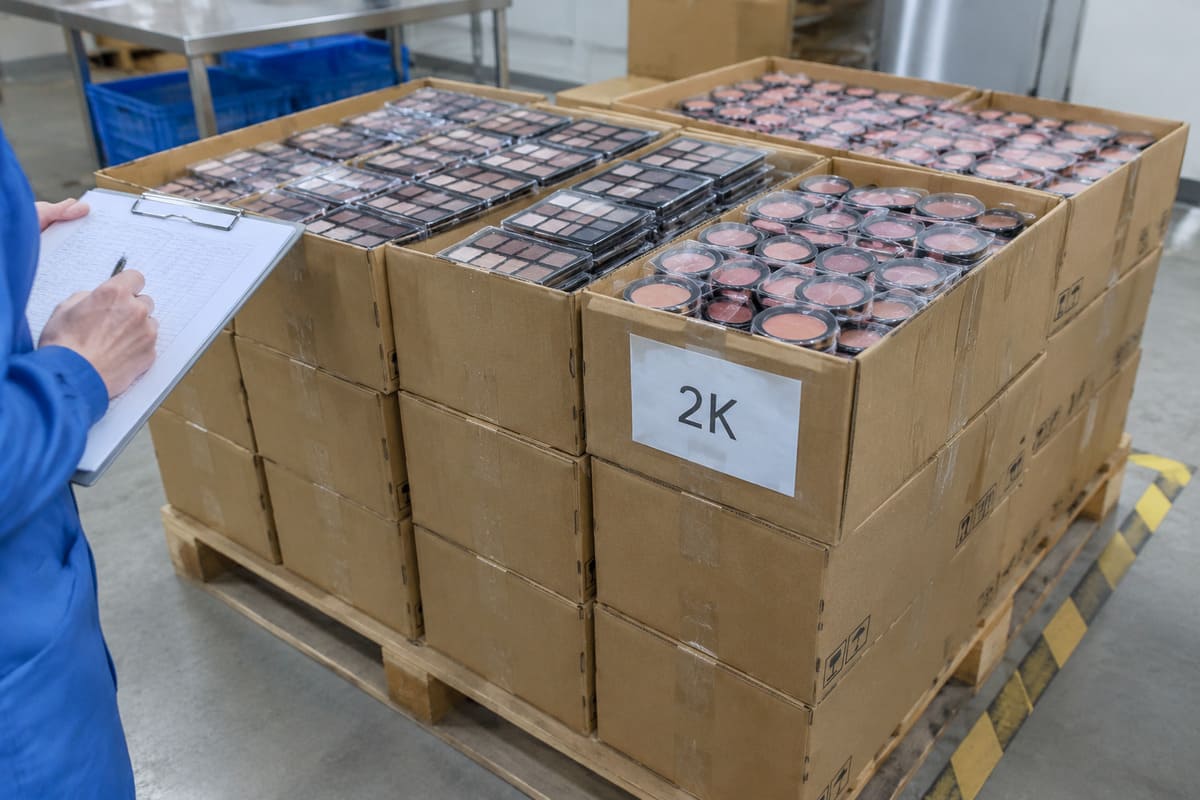
We refuse to do stock puzzles. We will not hand you a color chart and tell you to pick 12 shades for a 50-unit run. Our standard powder validation starts at 2,000 units because multi-texture pressing, physical compatibility testing, and ΔE color locking require real engineering cycles. If you want 50 units of a catalog product, traders can serve you. If you want a palette that defines your brand, this is our standard.
I want to be transparent about why this threshold exists and exactly what you get for it.
Why 2,000 Units Is a Floor, Not a Gate
The 2,000-unit threshold is not about gatekeeping or squeezing you for a bigger order. It is simple math on engineering cost. Here is how the process actually consumes resources:
| What We Do | Why It Costs | What You Avoid |
|---|---|---|
| Test pigment physical compatibility | Lab time, multiple trial presses | Cracked and contaminated pans |
| Tune binder per finish | Chemistry rounds per shade | Chalky mattes, dull shimmers |
| Lock pigment lots | Committed material purchase | Color drift on reorders |
| Spectrophotometer ΔE control | Instrument calibration, QC labor | Batch mismatch complaints |
| Multi-stage press setup | Separate operations per texture | Cross-contamination |
When a factory offers 50 units with none of this, you are not getting a deal. You are getting a stock product with your logo on the lid. Here is my honest comparison:
- Stock puzzle supplier: Fast, cheap, low MOQ, zero engineering. Good for a disposable gift item. Fatal for a brand.
- Color engineering factory (us): Higher MOQ, sampling cycles, real R&D. Built for brands that need to reorder and scale.
I say this to the right buyer: if your plan is to test a cheap catalog product, a trader is genuinely a better fit than I am. No hard feelings. But if you are building a color asset—something customers come back for, something that swatches beautifully and performs for your whole audience—then the 2,000-unit floor is not a barrier. It is the price of a palette that works. We ask about your textures before your colors. We test physical compatibility before we quote. We lock your lots so your tenth batch matches your first. That is what I mean by engineering a palette instead of assembling a puzzle.
Frequently Asked Questions
What is the real minimum order for a custom eyeshadow palette?
Among serious eyeshadow palette manufacturers, custom multi-texture powder validation typically starts around 2,000 units. Anything advertised at 50 units is almost always a stock product with custom packaging—not a custom-engineered formula. The higher floor reflects the sampling, binder tuning, and color-locking that real engineering requires.
What does ΔE mean and why should I care?
ΔE measures the numeric difference between two colors. For premium palette work, a ΔE of 1.0 or lower means the human eye cannot detect any difference between batches. If a factory cannot cite a ΔE target or does not own a spectrophotometer, your reorders will visibly drift in color. Always ask.
Can one factory press mattes and shimmers in the same palette?
Yes, but only with real engineering. Mattes need firmer pressure and more binder; shimmers need gentle pressure to protect pearl particles. A proper factory presses incompatible textures in separate stages to prevent cross-contamination. A single uniform press across all pans is the clearest sign of a stock puzzle operation.
Why do my cheap palette samples look chalky and fly away?
Chalky, powdery fallout comes from an untuned binder system and the wrong pressure for the pigment load11. Stock formulas use one generic binder for every shade, so high-pigment mattes end up dry and patchy. Correcting this requires custom binder adjustment per finish, which stock puzzle suppliers do not perform.
How do I verify a factory does real R&D before I pay?
Ask the three physics questions: pigment load stability, multi-pan press tolerance, and ΔE batch control. A real engineering factory answers with specifics—binder ratios, separate press stages, spectrophotometer readings. A trader deflects with "no problem" and "don't worry." The quality of the answer tells you everything before you send a deposit.
Conclusion
Choosing among eyeshadow palette manufacturers comes down to one distinction: are you buying color engineering or a stock puzzle? A real palette is a physics equation of pigment load, binder systems, and press tolerances—not a dozen shades picked off a chart. Use the three acid tests to expose any factory: pigment stability, multi-pan tolerance, and ΔE control. Remember that 50-unit promises usually mean stock products with your logo, while genuine custom work starts around 2,000 units for good engineering reasons. If you are ready to build a palette that defines your brand instead of a puzzle that fails at market, send me your texture needs and let our engineering team run the compatibility tests.
"OEM Makeup Manufacturer: 5 Questions to Verify Real ...", https://vertinabeauty.com/oem-makeup-manufacturer-5-questions-to-verify-real-customization/. Industry guidance on contract and private-label cosmetics notes that custom formulation and validation generally require larger minimum order quantities than relabeling existing stock products. Evidence role: general_support; source type: institution. Supports: Custom-formulated cosmetic production commonly carries higher minimum order quantities than stock or relabeled products.. Scope note: Available sources describe MOQ patterns generally and do not establish 2,000 units as a standard figure for eyeshadow powder validation. ↩
"Effect of Pigment-Acrylic Binder Ratio on the Surface and ...", https://www.journals.uc.edu/index.php/JALCA/article/view/8291. Cosmetic formulation literature describes binders and emollients as agents that promote inter-particle cohesion in pressed powders, with binder level and press force affecting payoff and resistance to cracking. Evidence role: mechanism; source type: research. Supports: Binder level and compaction pressure influence the cohesion and break resistance of pressed cosmetic powders.. Scope note: General formulation sources establish the relationship qualitatively and do not confirm the specific pigment-load thresholds the article implies. ↩
"High Shear Induces Platelet Dysfunction Leading to ... - PMC", https://pmc.ncbi.nlm.nih.gov/articles/PMC6108946/. Technical literature on effect pigments notes that platelet integrity governs sparkle and reflectivity, and that excessive shear or compaction can fracture platelets and diminish the optical effect. Evidence role: mechanism; source type: research. Supports: Mechanical stress can fracture platelet-shaped effect pigments, reducing their reflective and sparkle performance.. Scope note: Supporting sources address pigment handling broadly rather than the exact press forces used in eyeshadow manufacturing. ↩
"Decomposing Brand Loyalty: An Examination of ... - PMC - NIH", https://pmc.ncbi.nlm.nih.gov/articles/PMC11851547/. Consumer-behavior research links early product satisfaction to repurchase intention and retention, indicating that a poor first experience can reduce the likelihood of reorder. Evidence role: general_support; source type: paper. Supports: Initial product satisfaction influences repeat purchase intention and customer retention.. Scope note: The literature addresses satisfaction and loyalty broadly and does not isolate eyeshadow palettes or quantify the specific effect of a single failed launch. ↩
"Spectrophotometry", https://www.nist.gov/programs-projects/spectrophotometry. Metrology references describe spectrophotometry as measurement of reflectance or transmittance across wavelengths, from which colorimetric values and differences are computed for objective color control. Evidence role: mechanism; source type: government. Supports: Spectrophotometers measure spectral reflectance to derive color coordinates used for objective color comparison and quality control.. Scope note: General instrument descriptions do not confirm vendor-specific tolerances or any particular ΔE target used in cosmetics production. ↩
"Reviewing the Impact of Powder Cohesion on Continuous ...", https://pmc.ncbi.nlm.nih.gov/articles/PMC10305442/. Coatings and powder science describe a critical pigment volume concentration above which insufficient binder coats the pigment particles, reducing cohesion and mechanical strength. Evidence role: mechanism; source type: paper. Supports: Increasing pigment concentration relative to binder reduces the binder available to coat and bind particles, weakening the compact.. Scope note: The critical pigment volume concept is drawn from coatings science and applies by analogy; direct studies on pressed eyeshadow are limited. ↩
"'Pressed' for Powders: Replacing Dimethicone with Plant- ...", https://www.cosmeticsandtoiletries.com/magazine/article/22093743/cosmetics-toiletries-magazine-pressed-for-powders-replacing-dimethicone-with-plantderived-alternatives. Formulation literature describes emollients and binders in pressed color cosmetics as ingredients that aid particle binding and adhesion while influencing texture and payoff. Evidence role: mechanism; source type: research. Supports: Emollients and binders in pressed powder formulations contribute to particle cohesion and skin adhesion.. Scope note: General ingredient-function references support the mechanism but do not validate the specific ratios or outcomes claimed for a high-pigment matte red. ↩
"Color difference", https://en.wikipedia.org/wiki/Color_difference. Reference sources on colorimetry define ΔE as a quantified distance between two color coordinates in a uniform color space, with several standardized formulas (e.g., CIE76, CIEDE2000). Evidence role: definition; source type: encyclopedia. Supports: ΔE denotes a computed distance between two colors in a device-independent color space such as CIELAB.. Scope note: The article's phrasing is simplified; ΔE values depend on which formula and color space are applied. ↩
"Perceptibility and acceptability of CIELAB color differences in ...", https://pmc.ncbi.nlm.nih.gov/articles/PMC2041906/. Colorimetry studies on perceptibility and acceptability thresholds report that color differences around ΔE ≈ 1.0 lie near the limit of human visual discrimination under controlled conditions. Evidence role: statistic; source type: paper. Supports: Color differences near ΔE 1.0 approximate the perceptibility threshold for human observers under controlled viewing.. Scope note: Perceptual thresholds vary with illuminant, sample size, observer, and the specific ΔE formula used, so a single ΔE 1.0 cutoff is an approximation rather than a fixed boundary. ↩
"Investigating incidence of bacterial and fungal contamination ...", https://pmc.ncbi.nlm.nih.gov/articles/PMC5002883/. Industrial powder-handling and good manufacturing practice guidance notes that fine powders can become airborne or transfer between stations, requiring containment and sequencing to prevent cross-contamination. Evidence role: general_support; source type: institution. Supports: Powder handling processes generate airborne and transferable particulates that can cross-contaminate adjacent materials without containment.. Scope note: General manufacturing guidance supports the plausibility of cross-contamination but does not document the specific matte-to-shimmer transfer described. ↩
"What Is the Eyeshadow Trend in 2026? (A Sourcing & Formulation ...", https://vertinabeauty.com/what-is-the-eyeshadow-trend-in-2026-a-sourcing-formulation-guide/. Cosmetic formulation references attribute powder adhesion and fallout to binder content, emollient level, and compaction, which together govern how well particles bind to one another and to skin. Evidence role: mechanism; source type: research. Supports: Binder system and compaction affect powder adhesion, payoff, and the tendency to shed loose particles.. Scope note: Sources describe these factors qualitatively and do not quantify the fallout thresholds implied for specific pigment loads. ↩