When B2B buyers search for the eyeshadow trend in 2026, what they truly need is not a consumer trend report, but a “trend-to-supply-chain” translation guide that helps them turn trend predictions into producible, sellable products. At Vertina Beauty, we help brands evaluate color direction, formulation complexity, regional suitability, and low-MOQ testing before they commit to inventory.
The eyeshadow trend in 2026 is moving toward adaptable color stories, including soft purple, sepia smoke, reflective lids, and denim or cornflower blue.1 For B2B buyers, the correct response is not to purchase one trend color in large volume. Buyers should match each trend with pigment stability, texture control, regional skin-tone considerations, compliance requirements, and a low-MOQ market test before scaling production.
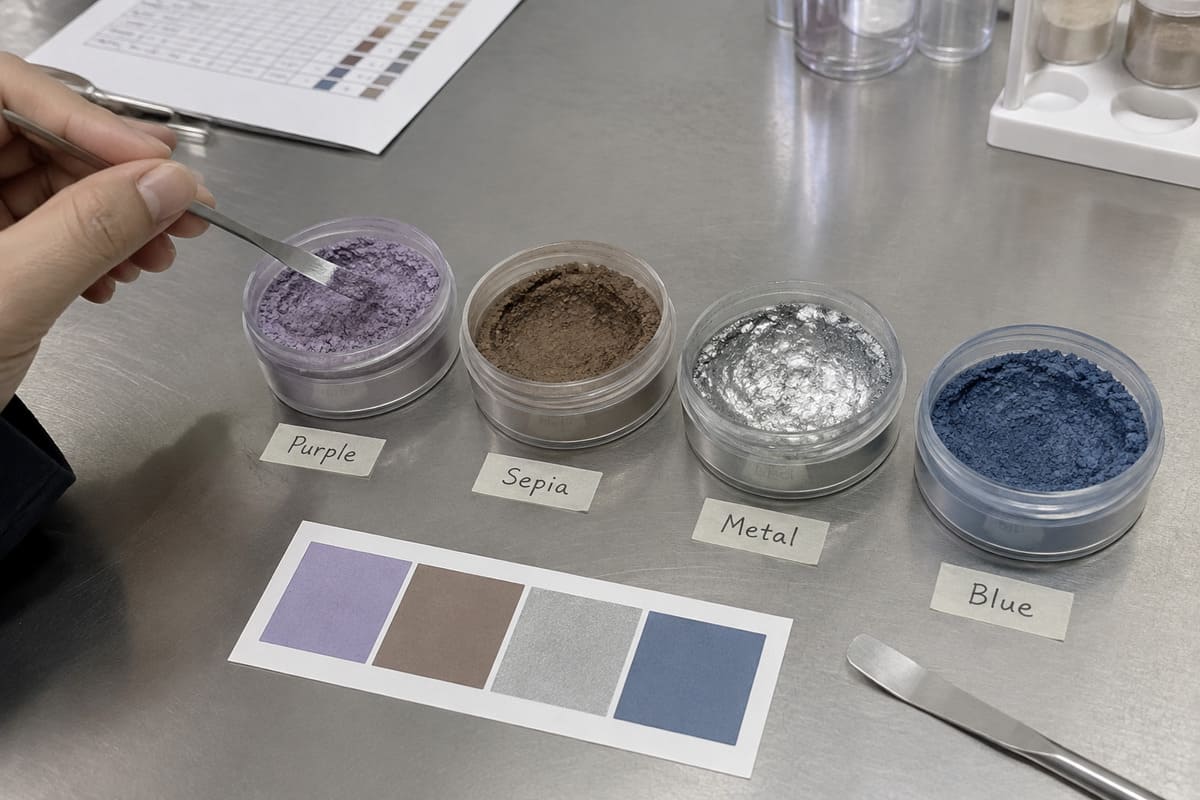
The commercial question is therefore more practical than “Which color will be popular?” Buyers need to know which trends their supplier can manufacture consistently, which formulas can pass market-specific review, and which product concept can be tested without creating excess stock. I use this framework when discussing custom eyeshadow projects with distributors, wholesalers, and emerging beauty brands.
What Are the Key Eyeshadow Trends for 2026?
The eyeshadow trend in 2026 is likely to favor expressive color with more wearable structure. Buyers can expect demand for soft purple, sepia-based smoky shades, reflective metallic finishes, and blue tones such as denim and cornflower. These directions combine visual impact with easier commercial adaptation than a palette built entirely around extreme colors.
Which color directions deserve attention?
The four trend directions I would place on a 2026 sourcing shortlist are:
- Soft purple
- Sepia smoke
- Reflective lids
- Denim and cornflower blue
Soft Purple: A High-Interest but Sensitive Direction
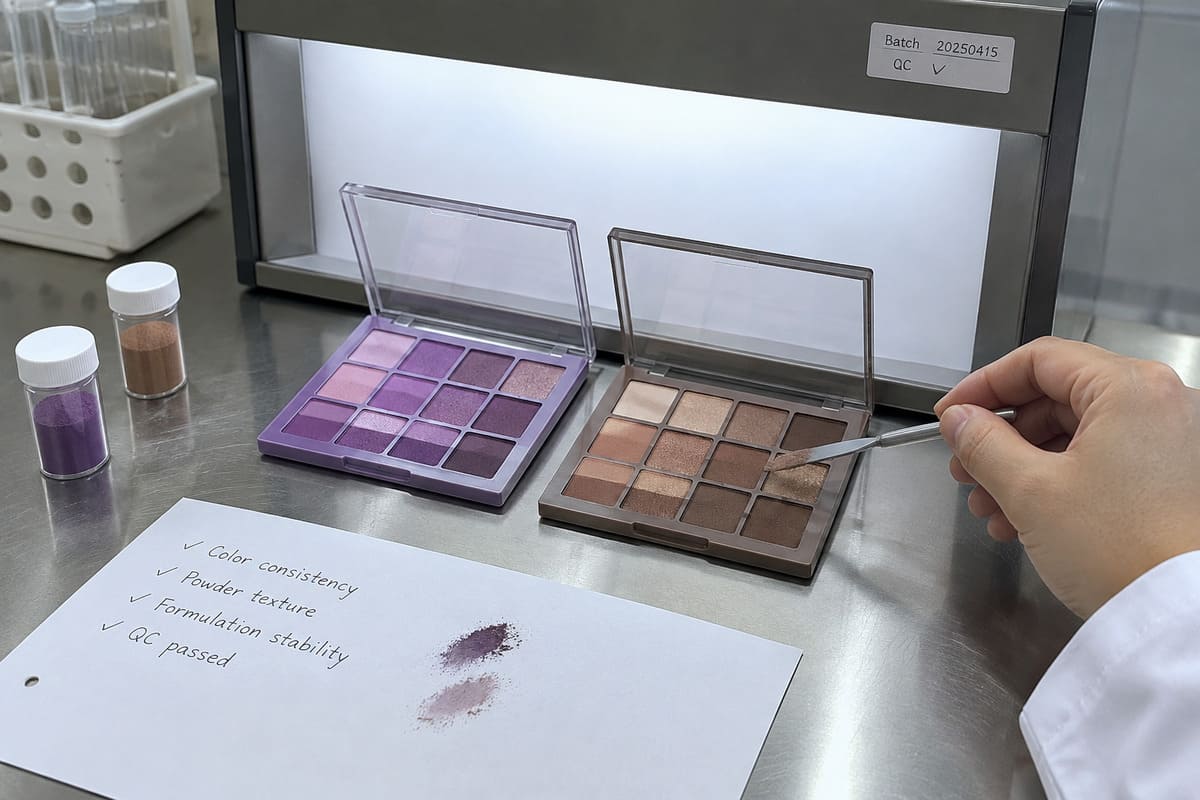
Soft purple can create a premium, editorial appearance. It can also become gray, muddy, or overly cool when the undertone is not controlled. This issue matters because the same shade can look different across skin tones and lighting conditions.
For many Western markets, lavender, mauve, and cool violet can perform well as recognizable fashion colors. In Southeast Asian markets, warm undertones may require a slightly redder, softer, or more neutral purple so the shade remains visible without looking dull.2 I do not treat “purple” as one formula. I normally review the base tone, pigment concentration, finish, and surrounding palette shades together.
Purple also requires disciplined production control. Specialty purple pigments can be difficult to match from batch to batch.3 Milling quality, pigment dispersion, and raw-material consistency all influence the final result.
Sepia Smoke: Wearability with Texture Complexity
Sepia smoke develops the traditional smoky-eye idea through brown, taupe, muted plum, and warm gray tones. This trend has broad commercial potential because it can appear fashionable while remaining suitable for daily use.
The challenge is texture balance. A sepia palette may include:
- Soft matte transition shades
- Deeper matte contour shades
- Fine micro-shimmer
- Satin or metallic accent shades
- A small number of deeper liner-like colors
A matte formula that is too dry may create patchiness. A formula that is too soft may produce excessive fallout or uneven pressing. The micro-shimmer shades must also sit naturally beside the mattes rather than appearing disconnected.
Reflective Lids: Strong Visual Impact, Higher Technical Demand
Reflective lids use metallic, high-sparkle, wet-look, or foil-like finishes. These shades are visually effective in product photography, short-form video, and in-store displays.4 They can help a brand create a stronger social media identity.
However, sparkle alone does not guarantee a good commercial product. Buyers should evaluate:
- Adhesion during application
- Fallout during wear
- Particle size and comfort
- Ease of removal
- Compatibility with the base formula
- Stability during shipping and storage
A supplier must control the balance between visual reflectivity and practical wear. I usually recommend testing a reflective shade in different application conditions, including brush application, fingertip application, and use over an eyeshadow primer.
Denim and Cornflower Blue: A Direction That Requires Market Review
Denim blue and cornflower blue offer a softer alternative to highly saturated cobalt or electric blue. These shades can work well in trend-focused palettes, especially when paired with taupe, beige, brown, or silver.
Blue pigments require careful market and regulatory review. Some blue lakes or colorants may have different restrictions depending on the destination market and intended use.5 A buyer should never approve a blue shade based only on a visual sample. The buyer should confirm the ingredient documentation and market-specific requirements before production.
What Supply Chain Capabilities Do These Eyeshadow Trends Require?
The eyeshadow trend in 2026 will reward suppliers that can translate visual references into stable, repeatable products. A factory must control pigment selection, milling, binder ratios, pressing density, color matching, packaging, and batch testing. A trend presentation is useful only when the supplier can reproduce it at commercial scale.
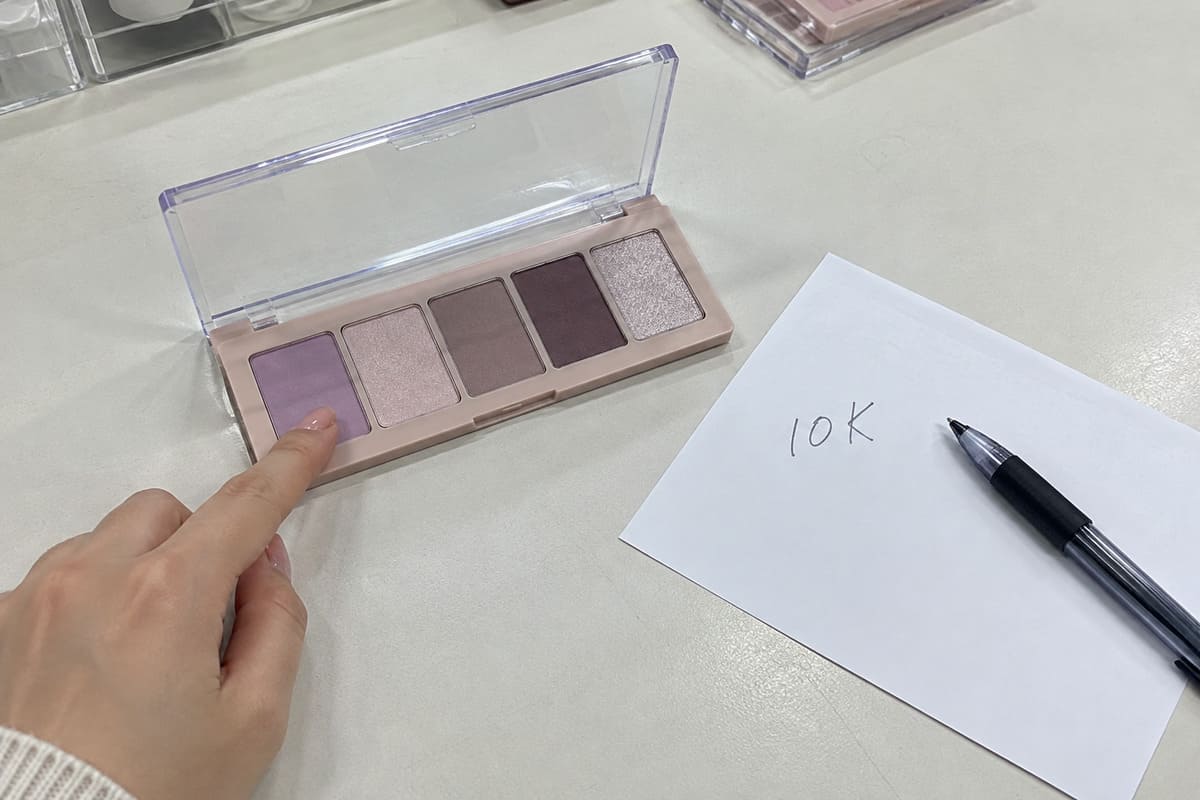
What does each trend require from a supplier?
| Trend direction | Main formulation requirement | Main production risk | Buyer evaluation point |
|---|---|---|---|
| Soft purple | Stable specialty pigments and fine dispersion | Batch-to-batch color variation | Request multiple batch references or color-control data |
| Sepia smoke | Balanced matte, satin, and micro-shimmer textures | Fallout, patchiness, or weak blendability | Check payoff, pressing density, and binder performance |
| Reflective lids | High-sparkle or metallic pigments with adhesion | Fallout and poor long wear | Test application, transfer, and storage stability |
| Denim and cornflower blue | Approved and market-suitable blue colorants | Regulatory or shade restrictions | Review ingredient documentation for each target market |
Pigment Dispersion and Milling
Fine milling helps distribute pigments more evenly through the base.6 It can improve color uniformity, payoff, and the visual smoothness of matte shades. It does not solve every formulation problem, but it gives the production team better control over the final appearance.
Purple and blue shades often show inconsistencies more clearly than neutral shades. A small change in pigment concentration or dispersion can create a noticeable difference. For this reason, I recommend that buyers approve a documented master sample and compare production batches against that reference.
Binder Ratio and Pressing Density
A pressed eyeshadow is not defined only by its pigment. The binder system and pressing process influence how the powder picks up, how it applies, and how well it remains intact inside the compact.
A formula with too little binder may create excess powder and fallout. A formula with too much binder may feel hard, reduce payoff, or become difficult to blend.7 Pressing density also matters. Two pans can contain similar ingredients but perform differently because they were pressed under different conditions.
Packaging and Logistics
Reflective and high-sparkle formulas may need packaging that limits powder movement during transport. A buyer should review pan fit, protective inserts, compact closure, and shipping conditions. Heat, humidity, vibration, and long-distance transportation can expose weaknesses that are not visible during a short factory test.8
At Vertina Beauty, we discuss the product format early because formulation and packaging are connected. A trend shade in a single pan may require a different protection approach from the same shade inside a multi-color palette.
Low-MOQ Testing as a Supply Chain Capability
Low MOQ is not only a sales advantage. It is a risk-control tool.9 It allows a brand to test:
- Shade acceptance
- Price positioning
- Packaging response
- Social media engagement
- Repeat-purchase behavior
- Regional differences in color preference
I prefer to help a buyer test a focused palette rather than produce a large quantity of one uncertain shade. A small initial order can generate useful market information before the buyer commits to a larger production run.
How Did We Help a Client Catch the 2026 Trend Window?
We helped a Southeast Asian client prepare for the 2026 trend season by adapting a soft purple concept instead of copying a Western color reference directly. The client was hesitant because purple appeared attractive in trend images but did not seem universally wearable. We reviewed regional skin-tone considerations, pigment stability, and order risk before recommending a low-MOQ launch.
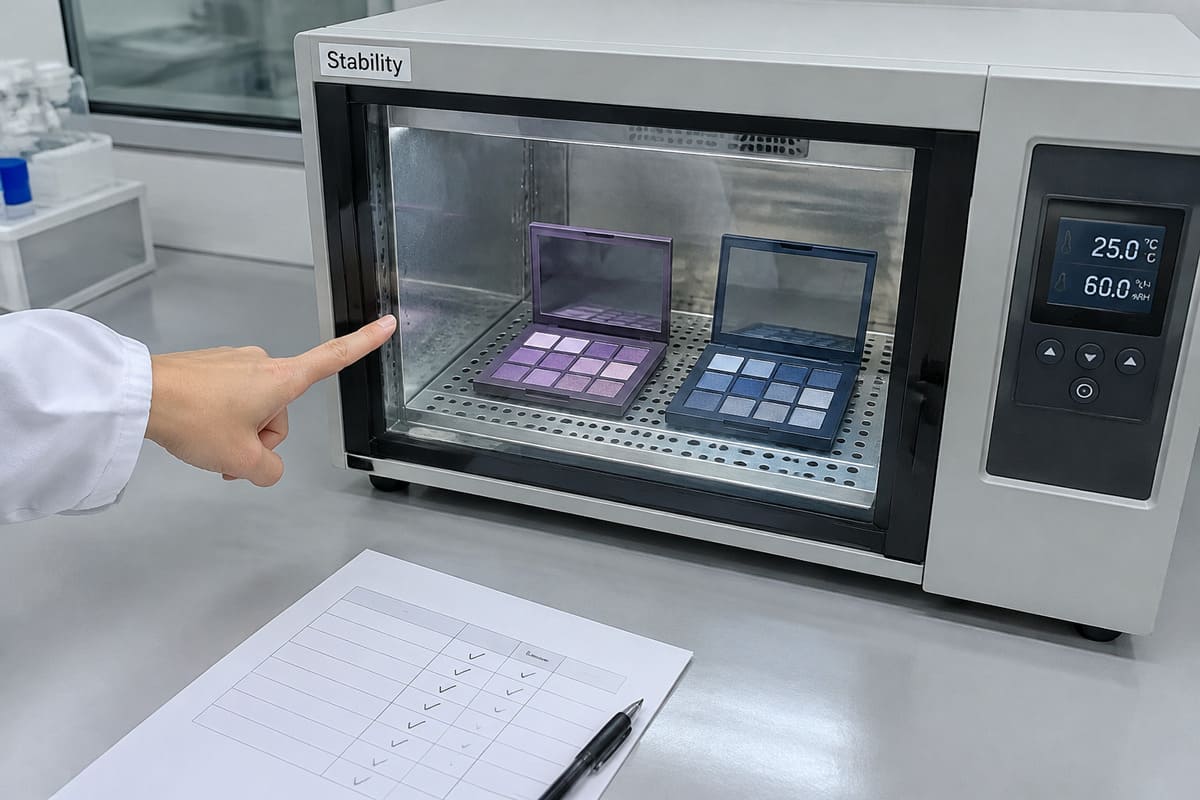
What did we evaluate before production?
We focused on three questions:
- Would the shade remain visible on warm Southeast Asian skin tones?
- Could the factory reproduce the purple consistently?
- Could the client test demand without holding excessive inventory?
The original reference leaned toward a cool, pale purple. We explained that this type of purple could look attractive in Western editorial content but could appear muddy or weak on some warm skin tones. We adjusted the tone by combining soft purple with more adaptable earthy shades. The result was a trend-led palette with a clearer commercial use case.
Why did the formulation require additional control?
Purple pigments can be sensitive to dispersion and batch variation. We therefore paid closer attention to pigment milling, shade matching, and production control. We compared the approved sample against the production result instead of relying only on a formula name or color description.
We also considered how the shade would appear beside other palette colors. A purple shade can look more wearable when paired with brown, taupe, beige, or muted rose. This approach helps the buyer sell a complete color story rather than an isolated novelty color.
Why did we recommend a low-MOQ trial?
The client did not want to make a large commitment before understanding local demand. We recommended a smaller initial run with a trend-focused combination palette. The client could then observe customer response through retail sales and social media activity.
The product later received unexpected attention on TikTok, and the client reordered 10,000 units. I do not present this result as a guarantee. The important lesson is the process that produced it. The client did not follow the purple trend blindly. We adapted the color, controlled the formulation risk, and tested the market before scaling.
What should buyers learn from the case?
A successful trend product usually depends on several connected decisions:
- The trend must fit the target market.
- The shade must work with local preferences and skin-tone needs.
- The supplier must understand the technical risk.
- The first order should match the buyer’s level of market confidence.
- The scaling decision should follow real sales or engagement data.
This framework is more reliable than ordering a large volume because a color appears frequently in trend reports.
Why Do Formula Compliance and Color Stability Matter More Than Ever?
Formula compliance and color stability matter because a trend product can fail after development if the formula is not suitable for the destination market or if the production color changes between batches. Market pressure is also increasing as brands face closer scrutiny of ingredients, documentation, and responsible sourcing.
Why is compliance part of trend planning?
A color trend is not commercially useful if the selected pigment cannot be used for the buyer’s target market or product application. Blue shades are a clear example. A pigment may look correct in a sample but require additional review for a particular destination.
Industry estimates also show continued growth in the global eyeshadow market, with some market analyses placing the category at approximately 6.87% CAGR. At the same time, regulatory expectations are becoming more detailed. Some industry reports have suggested that as many as 48% of new eyeshadow products may require reformulation in response to changing ingredient and market requirements. These figures vary by source and should be verified against current market data.
The broader point remains important: buyers should evaluate both aesthetics and documentation. A supplier should be able to discuss the intended market, ingredient information, testing needs, and any professional review required before launch.
Why does color stability affect repeat orders?
A customer expects the second production batch to look and perform like the first. A visible change in a hero shade can create complaints, inconsistent product photography, and retailer problems.
Color stability can be affected by:
- Raw-material variation
- Pigment dispersion
- Heat and humidity
- Light exposure
- Binder interaction
- Storage time
- Pressing conditions
I recommend that buyers ask how the supplier controls the approved color standard. The buyer should also clarify whether the supplier retains a production reference sample and what quality checks are performed before shipment.
How should buyers evaluate a compliance-ready supplier?
A buyer can begin with a practical document and sample checklist:
- Request the complete ingredient list for the specific formula.
- Confirm the intended sales markets.
- Ask which colorants are used in each shade.
- Request relevant raw-material or supplier documentation.
- Discuss stability, compatibility, and safety testing requirements.
- Verify any certification or compliance document independently.
- Obtain qualified professional advice for market-specific regulatory decisions.
Vertina Beauty can discuss formula direction and provide relevant product information, but buyers should verify documents and obtain specialist evaluation for their own markets. Compliance is a shared project, not a marketing phrase.
A Transparent Look at Low-MOQ Trend Testing and When to Scale Up
Low-MOQ trend testing allows buyers to reduce inventory exposure while collecting market evidence. It works best when the test has a defined purpose, a focused product concept, and clear criteria for reordering. It should not be treated as a guarantee that every trend shade will become a bestseller.
What should a low-MOQ trend test include?
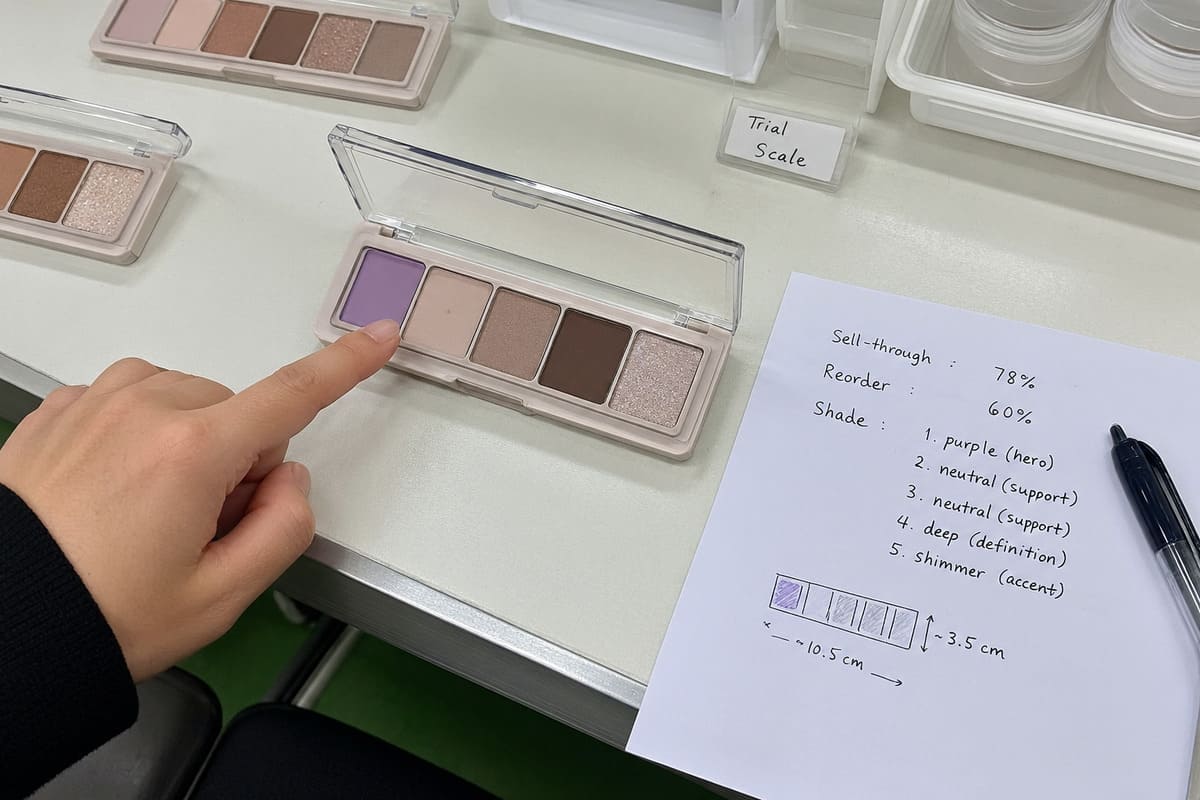
I normally recommend that buyers test a small combination rather than a single color. A practical trend-focused palette might include:
- One hero trend shade, such as soft purple
- Two wearable support shades
- One deeper definition shade
- One shimmer or reflective accent
- One neutral shade that helps increase daily usability
This structure gives the buyer more useful information. It shows whether customers reject the trend itself or simply need a more wearable way to use it.
What should buyers measure?
A buyer should define success before ordering. Useful indicators include:
| Measurement | What it can reveal |
|---|---|
| Sell-through rate | Whether the initial product is moving at the planned price |
| Reorder requests | Whether distributors or consumers want continued supply |
| Shade-level sales | Which colors are driving demand |
| Return or complaint rate | Whether texture, fallout, or color creates problems |
| Social engagement | Whether the product is generating attention |
| Regional response | Whether the trend works equally across target markets |
Social media attention can be useful, but it should not be the only scaling signal. A product can receive high views without generating repeat orders. Wholesale buyers should also review retailer feedback and actual sell-through.
When should a buyer scale up?
The buyer should consider scaling when several signals align:
- The hero shades sell consistently.
- Retailers or distributors request replenishment.
- The product meets the target margin.
- No significant formula or packaging complaints appear.
- The supplier can reproduce the shade and texture reliably.
- The buyer understands the compliance requirements for the next production volume.
The second order can also be used to improve the product. For example, the buyer may increase the most popular shade, reduce a slow-moving shade, adjust the packaging, or create a regional variation.
What are the limits of low-MOQ testing?
Low MOQ reduces risk, but it does not remove risk. Smaller production runs may have different unit economics, packaging limitations, or development costs. Some customized formulas and packaging components may still require minimum quantities because of raw-material or tooling constraints.
I discuss these limitations directly with buyers. A responsible supplier should explain what is flexible and what is not. My goal is to help a client build a repeatable product line, not to push a large first order that creates avoidable inventory pressure.
My preferred approach is simple: test the trend, measure the response, improve the product, and scale only when the evidence supports the decision.
Frequently Asked Questions
What is the biggest eyeshadow trend in 2026?
The leading commercial directions include soft purple, sepia smoke, reflective metallic finishes, and denim or cornflower blue. No single shade will perform equally well in every market. Buyers should adapt color temperature, palette composition, and formula finish to regional skin tones and customer preferences.
Is soft purple suitable for Southeast Asian markets?
Soft purple can work in Southeast Asian markets, but the undertone may need adjustment. A very cool or pale purple can appear dull on warm skin tones. We often recommend combining purple with earthy, taupe, brown, or muted rose shades and testing the concept through a low-MOQ order.
What is the recommended MOQ for a 2026 trend eyeshadow?
The MOQ depends on the formula, packaging, customization level, and product type. Vertina Beauty offers flexible low MOQ for selected standard products and trend-focused projects. We review the product concept, target market, and expected first order before confirming a specific quantity.
Are blue eyeshadows difficult to manufacture?
Blue eyeshadows can require additional pigment and compliance review. The technical challenge is not only achieving the correct color. The buyer must also confirm that the selected colorants are suitable for the target market and intended use. Ingredient documentation should be reviewed before commercial production.
How long does custom eyeshadow development take?
A custom eyeshadow project can take approximately 3–6 months, depending on formula development, shade approval, packaging, testing, revisions, and production scheduling. Buyers should begin early enough to leave time for sampling and market-specific compliance review.
Conclusion
The eyeshadow trend in 2026 is not simply a list of fashionable colors. It is a sourcing decision that connects shade direction, regional skin-tone suitability, formulation control, pigment stability, compliance documentation, packaging, and inventory risk. Soft purple, sepia smoke, reflective lids, and denim blue each require different manufacturing capabilities. At Vertina Beauty, we help B2B buyers test trend-focused concepts through flexible low-MOQ OEM/ODM production before they scale. Contact us with your target market, preferred trend direction, and expected order volume so we can evaluate a practical product path together.
"Changes in consumers' awareness and interest in cosmetic ...", https://pmc.ncbi.nlm.nih.gov/articles/PMC8727084/. A current beauty-industry forecast or consumer study may support the identification of soft purple, sepia, reflective, and blue eyeshadow directions as emerging commercial themes. Evidence role: general_support; source type: research. Supports: A credible trend or consumer study identifying increased interest in the specified eyeshadow color families or finishes.. Scope note: Trend forecasts indicate expected or observed interest rather than guaranteeing demand across all markets or sales channels. ↩
"Best Eyeshadow Palette Brand: A Supply Chain Analysis for Buyers ...", https://vertinabeauty.com/best-eyeshadow-palette-brand-a-supply-chain-analysis-for-buyers/. Colorimetric and cosmetic shade-matching research can support the relevance of regional skin-tone variation when selecting and evaluating purple eyeshadow shades. Evidence role: mechanism; source type: paper. Supports: Research documenting variation in skin color, undertone, or cosmetic shade perception relevant to Southeast Asian populations.. Scope note: Population-level skin-color data cannot by itself establish that one specific purple formulation will perform better for every Southeast Asian consumer. ↩
"Discoloration of liquid foundation across the shade color ...", https://pmc.ncbi.nlm.nih.gov/articles/PMC12480899/. Studies of cosmetic pigment processing and color measurement support the finding that raw-material variation and dispersion conditions can produce measurable batch-to-batch color differences. Evidence role: mechanism; source type: paper. Supports: Research describing how pigment chemistry, dispersion, and raw-material variation affect color consistency in cosmetic powders.. Scope note: The evidence may apply to pigment systems generally and may not demonstrate a uniquely higher risk for every purple pigment. ↩
"Effects of Design Aesthetics on the Perceived Value of a Product", https://pmc.ncbi.nlm.nih.gov/articles/PMC8359925/. Research on visual salience may support the proposition that reflective cosmetic finishes attract attention in photographic, video, or retail-display environments. Evidence role: general_support; source type: research. Supports: Research showing that reflective or high-contrast visual attributes can increase visual salience or attention in relevant marketing contexts.. Scope note: Visual attention does not necessarily translate into product preference, conversion, wear satisfaction, or repeat purchase. ↩
"Color Additives Permitted for Use in Cosmetics", https://www.fda.gov/cosmetics/cosmetic-ingredient-names/color-additives-permitted-use-cosmetics. Government color-additive regulations support the statement that the legality and permitted use of blue pigments can depend on the destination market and whether the product is intended for the eye area. Evidence role: definition; source type: government. Supports: Official cosmetic-colorant regulations or government guidance showing that permitted colorants and conditions of use vary by jurisdiction and product application.. Scope note: Regulatory status can change and must be checked against the current rules of each target market and the specific colorant identity. ↩
"Novel Colloidal Dispersing Concept in Aqueous Media ... - PMC", https://pmc.ncbi.nlm.nih.gov/articles/PMC9824523/. Powder-processing research supports the mechanism by which controlled particle size and dispersion can influence color uniformity and application performance in pressed cosmetic powders. Evidence role: mechanism; source type: paper. Supports: Experimental research linking particle-size reduction or milling conditions with pigment dispersion and pressed-powder performance.. Scope note: Milling effects depend on pigment type, binder system, particle-size distribution, and processing conditions; finer milling is not universally better. ↩
"A mechanistic powder compaction equation: Accounting for ...", https://researchwith.njit.edu/en/publications/a-mechanistic-powder-compaction-equation-accounting-for-the-effec/. Studies of pressed cosmetic powders support the relationship between binder level, compact hardness, cohesion, powder pickup, and fallout during application. Evidence role: mechanism; source type: paper. Supports: Research connecting binder composition or concentration with cohesion, hardness, powder pickup, fallout, and application performance.. Scope note: The direction and magnitude of these effects vary with binder chemistry, pigment loading, compression force, and the rest of the formulation. ↩
"Is the Best Eyeshadow Palette with All Colors ... - Vertina Beauty", https://vertinabeauty.com/is-the-best-eyeshadow-palette-with-all-colors-really-the-best-choice-for-b2b-buyers/. Packaging-validation standards and stability guidance support the use of environmental and transport testing to identify failures that may not appear in short-duration production checks. Evidence role: general_support; source type: institution. Supports: Packaging and stability standards describing the effects of vibration, temperature, humidity, and transport on packaged products.. Scope note: Standardized test conditions are proxies for real distribution environments and may not predict every route, package configuration, or climate. ↩
"What's the Best Eyeshadow Palette to Buy? A Low-Risk Buying ...", https://vertinabeauty.com/whats-the-best-eyeshadow-palette-to-buy-a-low-risk-buying-guide/. Operations and demand-planning research supports the use of staged production or pilot orders as a way to limit inventory exposure when demand is uncertain. Evidence role: general_support; source type: research. Supports: Research showing that pilot production, staged purchasing, or smaller initial inventory commitments can reduce exposure to uncertain demand.. Scope note: Small orders can increase unit costs, constrain customization, and produce less reliable demand estimates than larger or repeated samples. ↩