You want to create your own makeup brand, but every search leads to the same wall. You either hit factory giants who ignore your emails, or you find "50-unit" suppliers selling the same generic stock palette as a thousand Amazon sellers. The result? Weeks lost, cash at risk, and no real brand. Let me show you a different path.
To create your own makeup brand the right way, start with a 2,000-unit trial on a proven standard product to validate your market, then scale to a 5,000–10,000 unit custom order with exclusive formulas and custom molds for true differentiation. Avoid both the 50,000-unit giants and the ultra-low-MOQ generic sellers. Real brands live in the realistic middle.
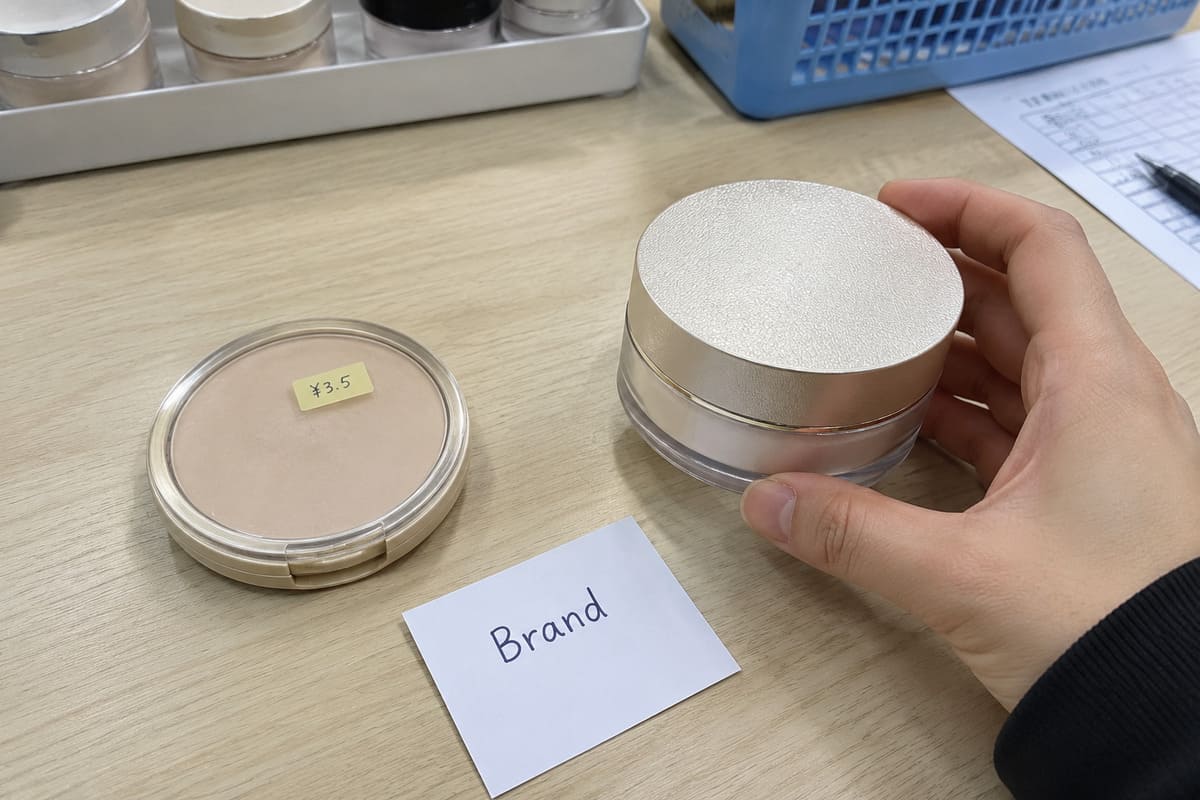
Most guides skip the part that actually matters. They list the biggest manufacturers and call it advice. But the biggest is almost never the right fit for a first-time founder. Below, I break down what the process really looks like, where beginners lose money, and how to find a partner who answers your emails.
What Does "Creating Your Own Makeup Brand" Really Mean in 2026?
You think launching a makeup brand means picking a logo and a pretty box. Then reality hits. You discover formulas, fill weights, regulatory labels, lead times, and MOQ walls. Suddenly the dream feels like a maze with no map.
Creating your own makeup brand in 2026 means building a differentiated product backed by a real supply chain. It is not slapping your name on a public formula. It involves four pillars: product concept, a manufacturing partner matched to your order size, market validation, and compliance for your target country. Branding without these is just reselling.
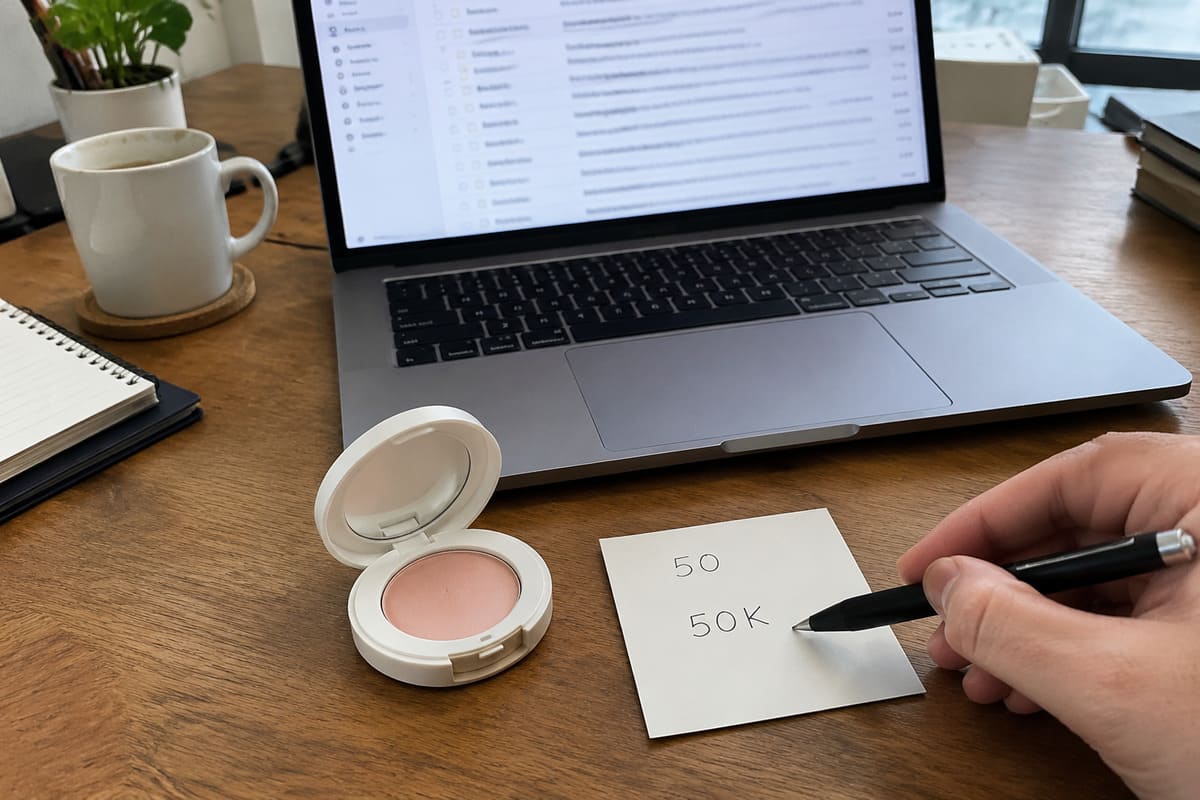
Let me bridge the gap between the fantasy and the real work. The word "brand" gets thrown around loosely, so I want to define it clearly before we go further.
What Separates a Real Brand From a Reseller?
A reseller buys generic stock products and adds a sticker. A real brand owns something defensible.1 That difference decides whether you build equity or just chase thin margins.
When I talk to founders, I draw this line immediately:
| Element | Generic Reseller | Real Makeup Brand |
|---|---|---|
| Formula | Public, shared by many sellers | Exclusive or adjusted for you |
| Packaging | Stock molds anyone can order | Custom mold or custom print |
| MOQ | 50–100 units | 2,000 (trial) to 10,000 (custom) |
| Differentiation | None — identical to competitors | Color, texture, concept you own |
| Margin control | Low, price-war territory | Higher, brand premium |
| Defensibility | Zero | Strong |
In 2026, consumers scroll fast. On TikTok and Instagram, a generic palette dies in silence because shoppers have seen it a hundred times.2 The "玩色" trend — chameleon shades, high-sparkle finishes, extreme color payoff3 — rewards founders who own a distinct look. That ownership is the whole point of creating a brand. If your product looks identical to a cheap knockoff, you did not build a brand. You bought inventory. I have watched too many founders learn this the expensive way, and I would rather you learn it here.
The 3 Deadly Traps Beginners Fall Into (And Why "Low MOQ" Platforms Like Blanka Are a Lie)
You start excited. You find a platform promising a 50-unit launch with no hassle. It feels like a shortcut. Then your first sale lands next to ten identical products at half your price, and the excitement turns to panic.
The three deadly traps are: the ultra-low-MOQ generic trap (50–100 units of public-formula stock), the giant factory wall (50,000+ unit minimums that ignore small buyers), and the silent-supplier trap (factories that never reply or hide their process). "Low MOQ" platforms sell the same generic products to everyone, which makes real differentiation impossible4.
I am not here to trash anyone's business model. But I owe you honesty, so let me break down each trap with the numbers behind it.
Why Is the "50-Unit" Illusion So Dangerous?
A 50-unit MOQ sounds friendly. The problem is what you are actually buying. At that volume, no factory can run a custom formula or a custom mold. The economics do not work. So the supplier gives you a shared stock product — the same palette your "competitors" are also rebranding.
Here is the honest comparison I give every founder:
| Supplier Type | Typical MOQ | Formula | Packaging | What You Really Get |
|---|---|---|---|---|
| Ultra-low-MOQ platform | 50–100 | Public | Stock | A rebrand, not a brand |
| Giant CDMO (L'Oréal-tier suppliers) | 50,000+ | Custom | Custom | Ignored emails if you're small |
| Realistic launch partner (us) | 2,000 trial / 5,000–10,000 custom | Adjustable → exclusive | Stock → custom | A validated, defensible product |
- The 50-Unit Illusion: You cannot build equity on a formula anyone can buy. Your margins collapse in a price war.
- The Giant's Wall: Top-10-list factories are built for multi-million-dollar orders5. A first-timer asking for 500 units is, as I often say, like walking into a Michelin-star kitchen and ordering a kid's meal. They will politely ignore you.
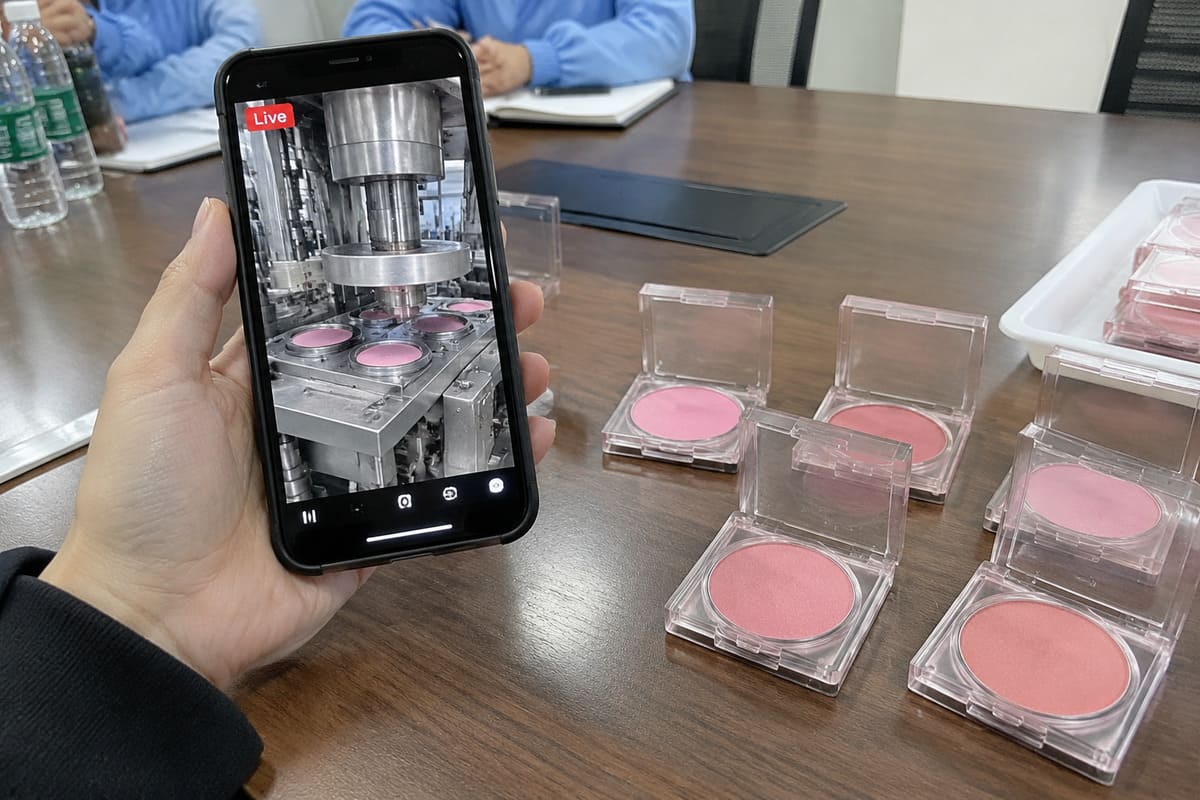
- The Silent-Supplier Trap: If a factory will not reply within 24 hours or show you a live line video before you pay, imagine the silence after you pay.
Data platforms like RevenueBase count roughly 842 private-label makeup manufacturers in the U.S. alone6. Most are built for scale, not for your launch. The trap is not that these options exist. The trap is believing they fit a first-time founder.
The Real Supply Chain Roadmap: Why 2,000 Units Is Your Validation Jump, and 5,000 Is Your Brand Moat?
You feel stuck between two bad choices. Go tiny and generic, or go huge and broke. That false choice stops most founders before they start. But there is a middle lane, and it is where real brands are actually born.
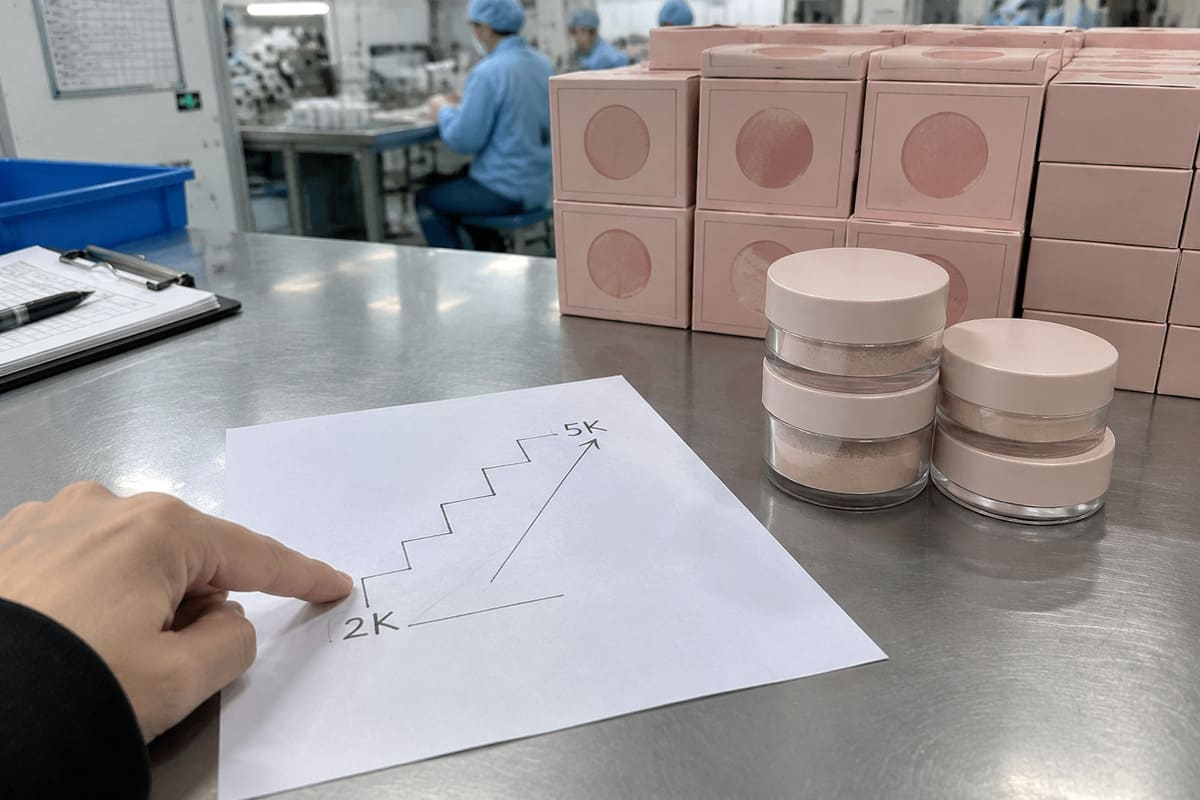
The realistic roadmap is a two-stage jump. First, a 2,000-unit trial on a proven standard product validates your market with controlled risk. Second, a 5,000–10,000 unit custom order funds exclusive formulas and custom molds, building a moat competitors cannot copy. 2,000 tests demand; 5,000 builds defensibility.
Let me explain why these specific numbers matter, because they are not arbitrary. They map to how manufacturing costs actually behave.
Why Does 2,000 Units Validate and 5,000 Units Defend?
At 2,000 units of a selected standard eyeshadow palette, I can give you a competitive price because the formula and mold already exist. You spend enough to test real demand, but not so much that a failed marketing campaign sinks you. This is market validation, not a gamble.
At 5,000–10,000 units, the math unlocks custom tooling. Custom molds and exclusive formulas carry fixed setup costs. Those costs only make sense when spread across enough units.7 That is why real differentiation starts here.
| Order Stage | Volume | Purpose | What It Unlocks | Primary Risk |
|---|---|---|---|---|
| Trial / Validation | 2,000 | Test market demand | Fast launch, low cost, proven product | Marketing miss (not supply) |
| Brand Moat | 5,000–10,000 | Build differentiation | Custom mold, exclusive formula | Requires validated demand first |
| Scale | 10,000+ | Grow market share | Full line expansion, better unit cost | Inventory management |
Think of it as a staircase, not a leap. I always tell founders to validate before they invest in a moat. The 2,000-unit trial answers one question: will people buy this? Once the answer is yes, the 5,000-unit custom order answers the next: can I own this category? Skipping stage one to rush into custom tooling is how founders burn cash on products the market never wanted. Skipping stage two keeps you forever generic. The roadmap works because each step pays for the next.
I have seen founders try to shortcut this. It rarely ends well. The staircase exists for a reason.
A Real Case: How a Founder Avoided the Generic White-Label Trap and Built a Real Brand?
Picture spending three full weeks emailing the "top 5" manufacturers from a famous industry blog. You wait. Nothing. The silence is brutal, and your launch date keeps slipping. That was exactly where one of my clients started.
A U.S. beauty founder contacted the top 5 listed manufacturers: three never replied, one demanded a 50,000-unit MOQ, and one offered 100 units of generic stock that looked identical to Amazon knockoffs. He came to us, ran a 2,000-unit trial to validate demand, then scaled to a 5,000-unit custom order with his own packaging. He found a top fit, not a top rank.
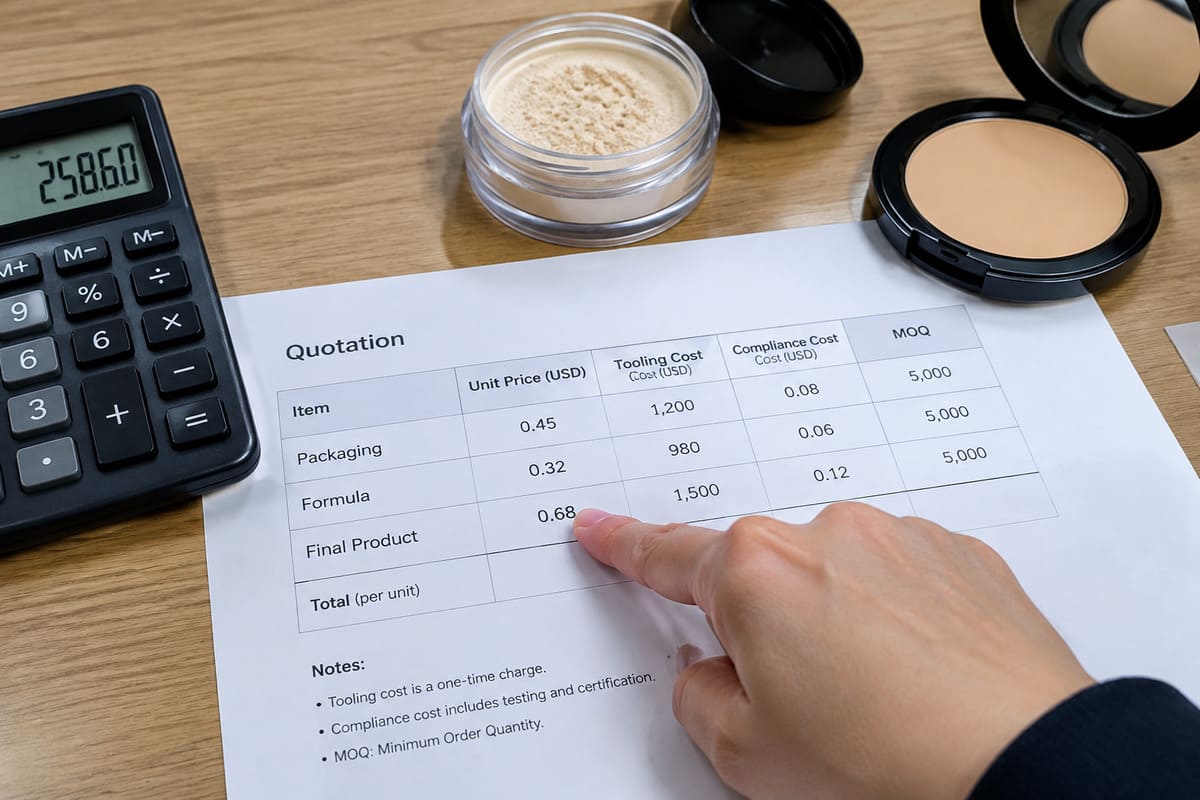
This story matters because it is not a brag. It is a map of the exact dead-ends you are likely to hit, and how one person walked through them.
What Did This Founder Actually Do Differently?
He stopped chasing rankings and started chasing fit. When he reached us, I told him the industry truth plainly: he did not need a giant CDMO, and he should not touch generic stock. Real differentiation needs 5,000–10,000 units for custom work. But to protect his cash, we started him on a 2,000-unit trial using our standard eyeshadow palettes.
Here is how his journey unfolded:
- Weeks 1–3: Contacted top-5-list giants. Three ignored him. One quoted 50,000 units. One offered 100-unit generic stock.
- The reset: He accepted that "biggest" did not mean "best fit."
- The trial: 2,000-unit standard palette order. Low cost, fast launch, real sales data.
- The validation: The market responded. Demand was real.
- The upgrade: Immediate 5,000-unit custom order with exclusive packaging.
"I didn't need the top manufacturer in the world. I needed the one that would actually answer me and grow with me." — my client, paraphrased.
The lesson sits in that quote. He avoided two traps at once. He did not get crushed by a 50,000-unit wall, and he did not drown in a sea of identical generic products. He built something he owned. The 2,000-unit trial made his risk survivable. The 5,000-unit custom order made his brand defensible. That sequence — validate, then differentiate — is the whole game.
What Are the Real Costs and MOQ Realities? (Before You Spend a Dime)
You see a low price online and assume that is the full cost. Then hidden fees, mold charges, and shipping stack up, and your budget cracks. Nobody warned you, and now the numbers do not add up. Let me give you the honest picture first.
The real cost of creating a makeup brand includes unit price, mold or tooling fees for custom work, formula development, packaging, compliance testing, and freight. A 2,000-unit standard trial minimizes upfront spend because it uses existing molds and formulas. Custom 5,000–10,000 unit orders add tooling and R&D costs but build exclusivity. Budget for compliance per target market.
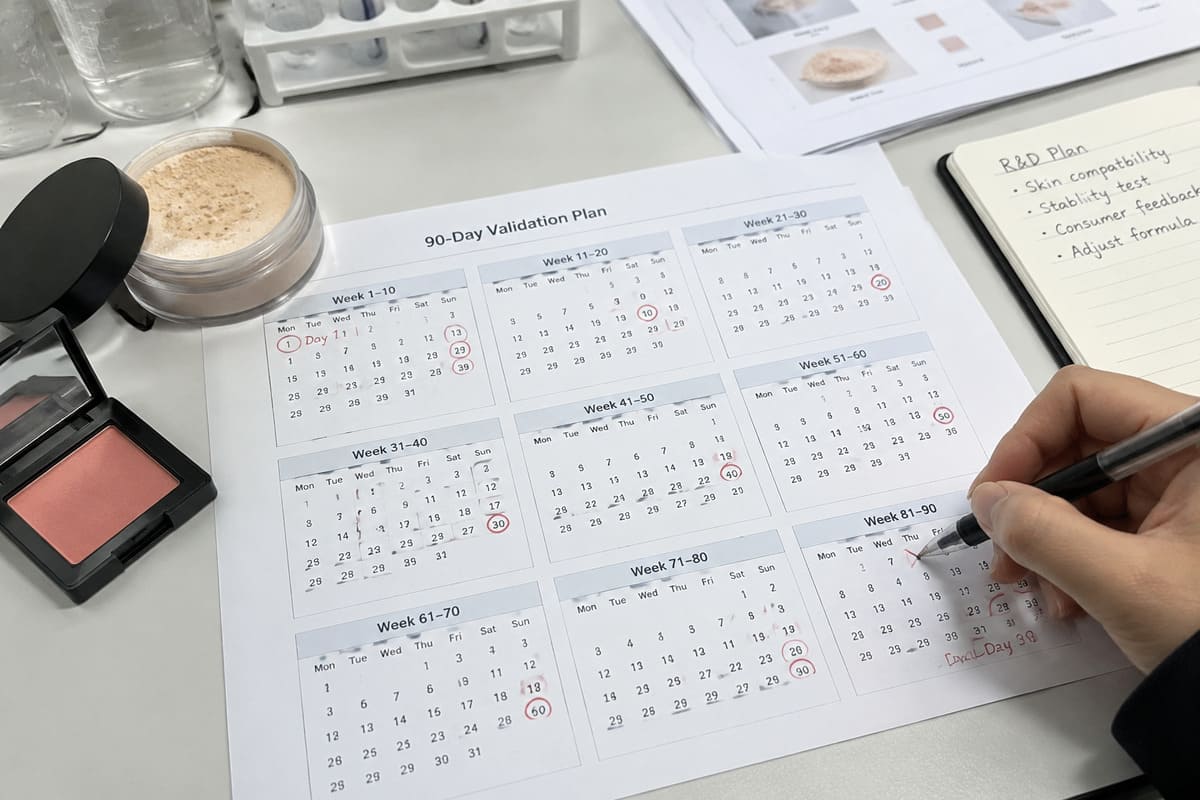
Now let me turn this into a framework you can actually plan around, because vague advice does not pay invoices.
Which Compliance Documents Should Buyers Verify Per Market?
This is where I must be precise, because regulation is not something to guess about. Requirements differ sharply by region. The table below is a general guide for buyers. You should always verify current requirements with a qualified compliance professional for your specific product and market, and treat any certification as a document to confirm, not assume.
| Target Market | Common Regulatory Reference | What Buyers Should Verify |
|---|---|---|
| United States | FDA cosmetic regulations, MoCRA8 | Ingredient compliance, facility registration, labeling |
| European Union | EC 1223/2009, REACH9 | CPNP notification, Responsible Person, safety assessment |
| Southeast Asia | ASEAN Cosmetic Directive10 | Product notification per country |
| Middle East (e.g., Saudi Arabia) | SFDA / GSO standards11 | Product registration, conformity documents |
I am honest with every client here: we have mature experience serving Southeast Asia, the Middle East, Africa, and South America, and we follow EU and U.S. regulatory trends closely. For any specific market entry, I recommend a qualified professional evaluation. Certifications are documents you, the buyer, should verify. I will tell you exactly what I know and what you must confirm independently.
A quick cost-planning checklist:
- Unit cost: Lower per unit as volume rises.
- Tooling: Only for custom molds (5,000+ territory).
- R&D: Formula adjustment or exclusive development.
- Compliance: Varies per market — budget early.
- Freight and duties: Depends on destination and Incoterms.
Your First Low-Risk Action Plan: From Concept to First Order?
You have read the warnings. Now the real fear creeps in: what is the actual first step? Analysis paralysis stops more brands than bad products do. So let me give you a clear, low-risk sequence you can start this week.
Your low-risk action plan has five steps: define your product concept and target market, choose a realistic 2,000-unit standard trial to validate demand, confirm compliance needs for your market, launch and measure real sales, then reinvest profits into a 5,000-unit custom order. Start small, validate, then invest in differentiation.
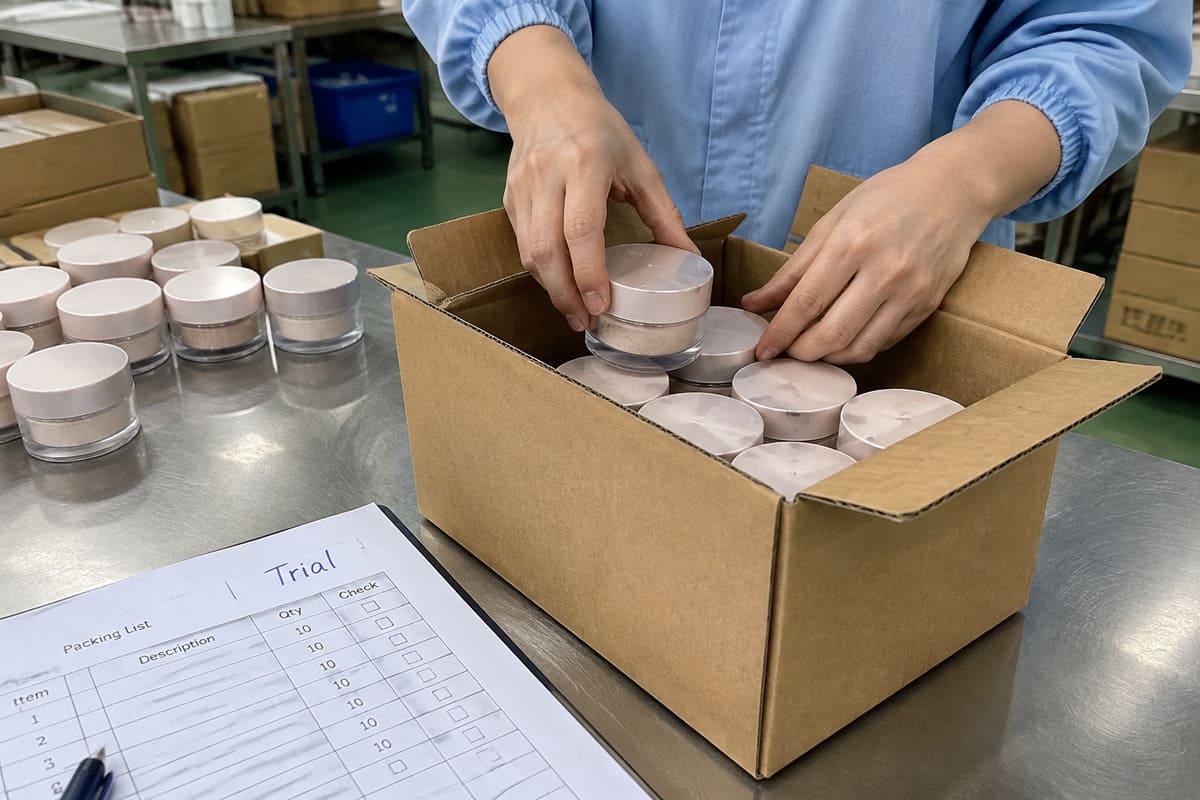
This plan keeps your supply chain from becoming the reason you fail. Here is the honest boundary: a 2,000-unit trial guarantees you can test the market safely. It does not guarantee your marketing will be a hit. But it ensures your supply chain won't sink you.
What Should My First 90 Days Look Like?
I like to compress the plan into a timeline so it feels real instead of abstract.
| Phase | Timeframe | Action | Outcome |
|---|---|---|---|
| Concept | Days 1–15 | Define product, color story, target market | Clear brief |
| Partner match | Days 15–30 | Request samples and quotes, check 24h reply speed | Shortlisted supplier |
| Trial order | Days 30–60 | Place 2,000-unit standard palette order | Launch-ready stock |
| Validate | Days 60–90 | Sell, gather data, measure demand | Go/no-go signal |
| Scale | Day 90+ | Upgrade to 5,000-unit custom order | Defensible brand |
Here is what I promise, and what I will not do:
- What I do: Offer a 2,000-unit trial on selected standard eyeshadow palettes. For true custom projects, I require a realistic 5,000–10,000 units. I will tell you exactly which tier you are in.
- What I don't do: I will not sell you cheap generic stock and call it a "brand." I will not force a 50,000-unit order on day one.
Start smart. Validate. Then invest in real differentiation.
Frequently Asked Questions
What is the minimum order to create my own makeup brand?
For a validated, low-risk start, I recommend a 2,000-unit trial on a proven standard product. For true custom work with exclusive formulas and custom molds, a realistic minimum is 5,000–10,000 units. Avoid 50-unit platforms — they only sell generic stock, not a real brand.
Why shouldn't I use a 50-unit low-MOQ supplier?
Because 50-unit MOQs only cover generic stock products with public formulas. Hundreds of other sellers rebrand the exact same item. You cannot build differentiation, margin, or brand equity on a product that looks identical to cheap knockoffs. It is reselling, not brand-building.
Can I really skip the giant manufacturers?
Yes, and you often should. Top-ranked CDMOs are built for multi-million-dollar orders and rarely reply to first-time founders. A realistic launch partner matched to your growth stage will answer your emails, share factory videos, and help you build a unique product.
How do I know a manufacturer is trustworthy?
Check three signals: do they reply within 24 hours, do they provide live factory videos, and do they answer technical questions directly? A real partner helps you adjust pigments, textures, and packaging. Silence before payment predicts silence after payment.
What certifications do I need to export my makeup brand?
It depends entirely on your target market — FDA and MoCRA for the U.S., EC 1223/2009 for the EU, ASEAN directives for Southeast Asia, SFDA/GSO for Saudi Arabia. Treat every certification as a document to verify, and consult a qualified compliance professional for your specific product.
Conclusion
If you want to create your own makeup brand, forget the "biggest manufacturer" lists. The real question is which partner fits your growth stage. Avoid the 50-unit generic trap and the 50,000-unit giant wall. Instead, validate demand with a 2,000-unit trial, then build a defensible moat with a 5,000–10,000 unit custom order. Start smart, validate your market, then invest in real differentiation. If you want a launch partner who answers your emails and tells you the honest truth about MOQs, reach out to me for samples and a realistic quote — let's build something you actually own.
"Examining Private-Label Brand Equity Dimensions", https://scholar.valpo.edu/cgi/viewcontent.cgi?article=1007&context=cba_fac_presentations. Foundational marketing scholarship on brand equity defines brand value as arising from differentiation and associations that competitors cannot easily replicate, supporting the article's distinction between a brand and a reseller. Evidence role: definition; source type: paper. Supports: The concept of brand equity as value derived from differentiated, defensible brand assets.. Scope note: Brand-equity theory is general and does not specifically address cosmetics private-label economics. ↩
"The Role of Social Media in Beauty Marketing - Scholars Archive", https://scholarsarchive.library.albany.edu/cgi/viewcontent.cgi?article=1072&context=honorscollege_business. Peer-reviewed studies on social commerce and consumer attention indicate that product novelty and differentiation influence engagement on image- and video-based platforms, consistent with the article's claim. Evidence role: mechanism; source type: paper. Supports: The role of social media platforms in shaping consumer attention toward novel or differentiated products.. Scope note: Academic findings address engagement mechanisms generally and do not specifically measure outcomes for generic versus branded cosmetic palettes. ↩
"The dark side of beauty: an in-depth analysis of the health ...", https://pmc.ncbi.nlm.nih.gov/articles/PMC11381309/. Market-research and beauty-trend analyses document growing consumer interest in high-pigment and multichrome color cosmetic finishes, supporting the article's characterization of a color-play trend. Evidence role: general_support; source type: research. Supports: The emergence of high-pigment, multichrome, and high-sparkle color cosmetics as a consumer trend.. Scope note: Trend reports reflect aggregate market signals and may not directly correspond to the specific 玩色 terminology or the article's regional framing. ↩
"Commodities Versus Differentiated Products | Ag Decision ...", https://www.extension.iastate.edu/agdm/wholefarm/html/c5-203.html. Research on private-label and commodity markets indicates that products sharing identical specifications tend toward price-based competition and reduced differentiation, consistent with the article's argument. Evidence role: general_support; source type: research. Supports: That products built on shared private-label formulas face reduced differentiation and price competition.. Scope note: Supporting literature addresses private-label dynamics broadly and is contextual rather than specific to cosmetic stock formulas. ↩
"FAQs", https://www.global-cosmetics.com/faqs/. Industry analyses of cosmetic contract development and manufacturing describe the scale orientation of leading manufacturers toward high-volume commercial clients, supporting the claim that first-time small buyers face high minimums. Evidence role: general_support; source type: institution. Supports: That large contract cosmetic manufacturers are structured around high-volume production for major clients.. Scope note: Industry overviews describe general scale patterns and do not confirm specific minimum-order figures or responsiveness to small buyers. ↩
"446199: All other health and personal care stores - Census Data", https://data.census.gov/profile/446199_-_All_other_health_and_personal_care_stores?codeset=naics~446199. Industry establishment counts from official economic census data provide a baseline for the scale of U.S. cosmetic manufacturing, though government categories for 'cosmetic manufacturing' may not map exactly to the article's narrower 'private-label makeup manufacturer' definition. Evidence role: statistic; source type: government. Supports: The approximate number of cosmetic manufacturing establishments operating in the United States.. Scope note: Government industry classifications may group cosmetic manufacturers more broadly than the private-label subset cited, so the figures offer contextual rather than exact confirmation. ↩
"Economies of Scale - Definition, Effects, Types, and Sources", https://corporatefinanceinstitute.com/resources/economics/economies-of-scale/. Standard economic references on economies of scale explain that fixed setup and tooling costs are distributed across output, lowering per-unit cost as volume rises, which supports the article's rationale for higher custom-order minimums. Evidence role: mechanism; source type: education. Supports: The principle that fixed tooling and setup costs decrease per unit as production volume increases.. Scope note: The general economic principle supports the cost logic but does not validate the article's specific 5,000-10,000 unit thresholds. ↩
"Modernization of Cosmetics Regulation Act of 2022 (MoCRA)", https://www.fda.gov/cosmetics/cosmetics-laws-regulations/modernization-cosmetics-regulation-act-2022-mocra. Official FDA guidance confirms that cosmetics marketed in the United States are subject to statutory requirements including facility registration, product listing, and labeling obligations introduced under MoCRA. Evidence role: definition; source type: government. Supports: The existence and scope of U.S. cosmetic regulation under the FDA and the Modernization of Cosmetics Regulation Act.. ↩
"EC Regulation 1223/2009 on cosmetics", https://en.wikipedia.org/wiki/EC_Regulation_1223/2009_on_cosmetics. The official text of Regulation (EC) No 1223/2009 establishes the obligations for cosmetic products placed on the EU market, including notification via the CPNP portal and the requirement to designate a Responsible Person. Evidence role: definition; source type: government. Supports: The EU cosmetic regulatory framework under Regulation EC 1223/2009, including CPNP notification, Responsible Person designation, and safety assessment duties.. ↩
"Liquid Eyeshadow vs Powder: Which Should a New Southeast ...", https://vertinabeauty.com/liquid-eyeshadow-vs-powder-which-should-a-new-southeast-asian-brand-start-with/. Official ASEAN documentation describes the harmonized cosmetic regulatory scheme under which products must be notified to the relevant national authority before marketing. Evidence role: definition; source type: institution. Supports: The existence of the ASEAN Cosmetic Directive and its requirement for product notification within member states.. Scope note: Implementation details vary by member state, so the directive supports the general requirement rather than any single country's exact procedure. ↩
"How to Find a Cosmetics Manufacturer: A Buyer's Guide to Verifying ...", https://vertinabeauty.com/how-to-find-a-cosmetics-manufacturer-a-buyers-guide-to-verifying-real-factories/. SFDA regulatory guidance outlines the product registration and conformity documentation required for cosmetics entering the Saudi market under applicable GSO standards. Evidence role: definition; source type: government. Supports: Cosmetic product registration and conformity requirements administered by the Saudi Food and Drug Authority and Gulf Standardization Organization.. ↩