Searching for a makeup manufacturer Europe feels like the safe first move for a new brand founder. The ads promise 100-unit MOQs and the prestige of a "Made in EU" label. Then the quotes arrive. You learn that the cheap option is not your product at all, and the real product costs a fortune. That gap is where most founders get stuck.
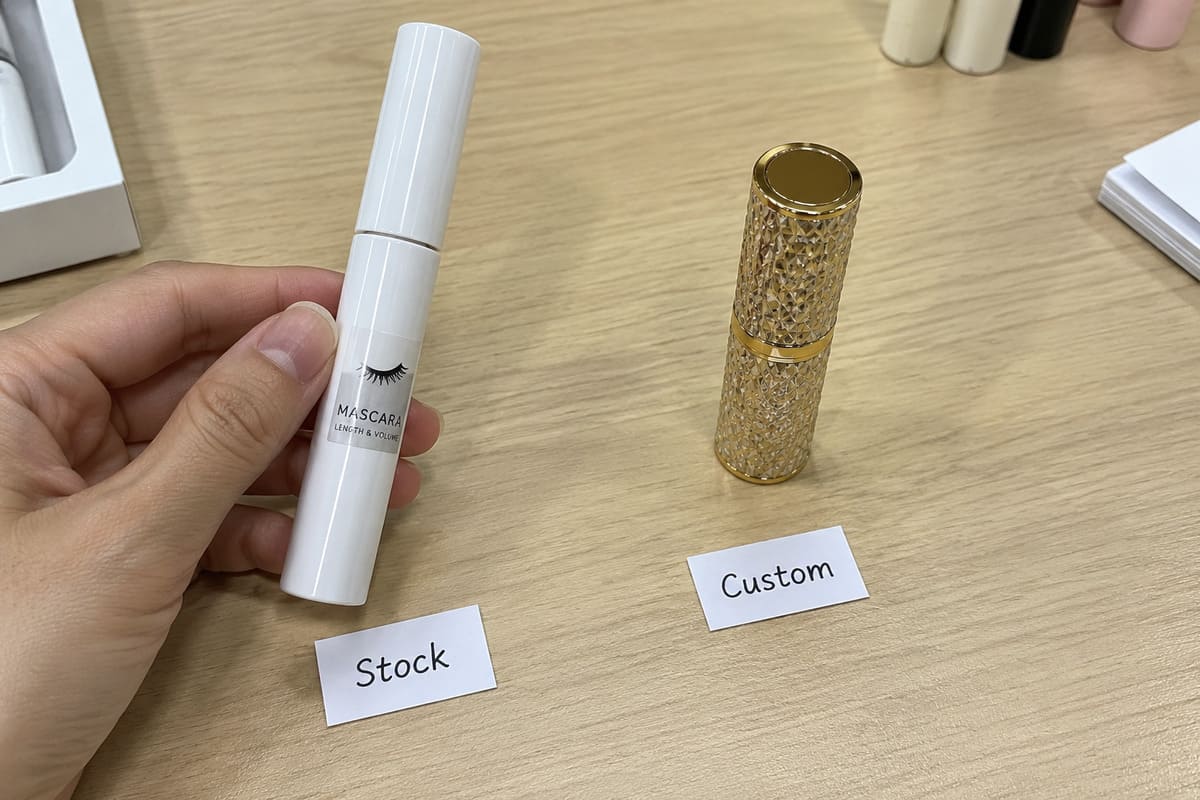
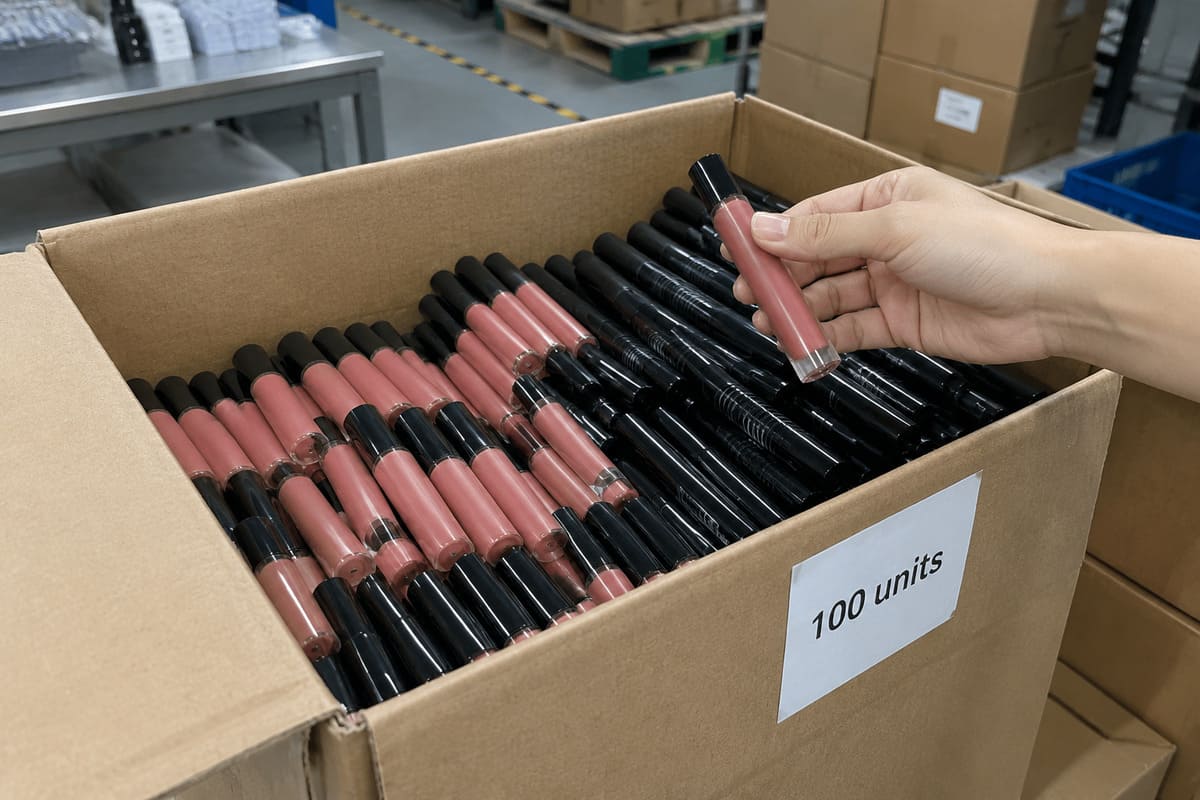
A makeup manufacturer Europe offer at 100–500 units is almost always white-label: stock formula, stock packaging, your logo added. True custom formulation (OEM/Contract Manufacturing) in the EU typically starts at 1,000–5,000 units with 3–6 month timelines1, and some factories set a standard 5,000-unit MOQ. The "low MOQ" is a shortcut to sameness, not to a real brand.
So the honest question is not "where is a factory in Europe?" It is "what is the lowest-risk path to a differentiated product in Europe?" Let me break down what the MOQ numbers actually mean, where the cost gap comes from, and how I help founders validate first and scale later.
What Does "Makeup Manufacturer Europe" Really Mean for a Brand Founder?
You type "makeup manufacturer Europe" into Google and the results look friendly. Low minimums, local shipping, a prestigious origin story. Then you ask one specific question about your own formula, and the conversation changes completely. The friendly number disappears.
For a brand founder, a makeup manufacturer Europe listing usually means one of two very different services. The first is private-label (white-label): a ready-made product with your logo. The second is OEM/Contract Manufacturing: a product built to your spec. The advertised "100 units" almost always refers to the first, never the second.
Why the confusion costs founders money
I talk to founders every week who assume "private label" and "custom" are the same thing with different price tags. They are not. They are two separate business models.
- Private label: You buy an existing SKU. The formula is fixed. The pan size, the finish, the packaging mold, all fixed. You add a sticker or a printed box. Speed is fast because nothing is developed.
- OEM / Contract Manufacturing: You define the shade, the texture, the pearl effect, the mold. The factory develops, tests, and documents it. This is your product. Nobody else can buy it.
The reason the distinction matters is simple. A real brand is built on differentiation.2 If ten other sellers can order the same stock palette from the same European catalog, your "brand" is just a logo on a commodity. The 100-unit entry point feels like a win, but it quietly removes the one thing that makes a beauty brand defensible: a product people cannot get anywhere else.
Here is how I frame the two models for clarity:
| Attribute | Private Label (White-Label) | OEM / Contract Manufacturing |
|---|---|---|
| Typical EU MOQ | 100–500 units | 1,000–5,000 units |
| Formula | Stock, shared | Custom, exclusive |
| Packaging | Stock mold | Custom / private mold |
| Timeline | Days to weeks | 3–6 months |
| Differentiation | None | High |
Why Does a "100-Unit MOQ" From a Makeup Manufacturer Europe Mean White-Label, Not Custom?
A founder I worked with found a local factory advertising "100 units." He was thrilled. Then he asked for a custom shade and a private-mold compact. The reply reframed everything: that was OEM, MOQ 1,000–5,000 units, timeline 3–6 months. The 100-unit price was never for his product.
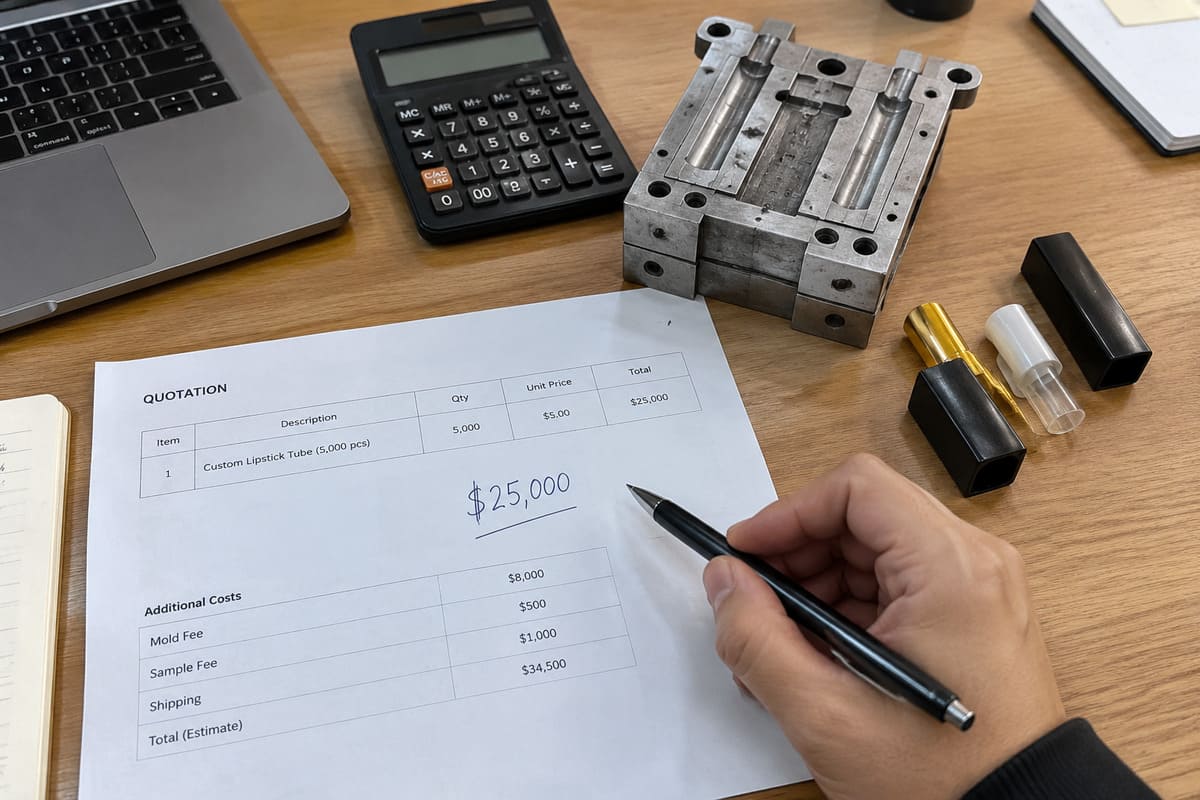
A 100-unit MOQ from a makeup manufacturer Europe means white-label because custom development has fixed costs that cannot be spread across 100 units. Formula R&D, stability testing, pigment sourcing, and a dedicated packaging mold only become economical at 1,000–5,000 units. Below that threshold, you are buying a stock product, not funding development.
The math behind the threshold
Custom cosmetic development carries costs that do not shrink when your order shrinks. Consider what sits behind a single custom shade:
- Formulation R&D. A chemist develops and adjusts the formula across multiple iterations.
- Stability and compatibility testing. The product must survive heat, time, and its own packaging.
- Pigment and raw material minimums. Suppliers sell pigments in bulk, not in sample jars.
- Custom packaging molds. A private compact mold is a one-time tooling cost in the thousands.
Spread those fixed costs over 100 units and the per-unit price becomes absurd. Spread them over 5,000 units and they become reasonable. That is the entire reason the industry splits into two tiers. The "low MOQ" is not a lie; it is simply a different product than the one a founder imagines.
I want to be direct here: 100 units does not build a brand. It builds a test of your logo on someone else's formula. That can be useful, but only if you know that is what you bought. The danger is paying brand-building prices for commodity-building results.
What Does True Customization Actually Require From a Makeup Manufacturer Europe?
Say you accept that you want a real product. Not a stock palette with a sticker, but a formula and a compact that are yours alone. The relief of "I finally understand the model" quickly turns into sticker shock when the custom quote lands.
True customization from a makeup manufacturer Europe typically requires 1,000–5,000 units per SKU, a development timeline of 3–6 months, and upfront investment in formula R&D plus packaging tooling. Some European factories set a standard MOQ of 5,000 units for custom work. This is the genuine cost of an exclusive, differentiated product.
What the 3–6 month timeline buys
Founders often react to the timeline before the price. Why so long? Because real development is sequential, and you cannot safely rush the regulatory-critical steps.
| Phase | Typical Duration | What Happens |
|---|---|---|
| Formula development | 4–8 weeks | Shade matching, texture, finish iterations |
| [Stability testing | 4–12 weeks | Heat, light, time, packaging compatibility](https://vertinabeauty.com/what-should-brands-know-about-a-private-label-neutral-eyeshadow-palette-for-mature-skin/)%%%FOOTNOTE_REF_3%%% |
| Packaging tooling | 4–8 weeks | Custom mold production and fitting |
| Pre-production samples | 2–4 weeks | Final approval and documentation |
These phases overlap, but the stability window is hard to compress. Skipping it is how brands end up with a product that separates, cracks, or fails on the shelf.
Now the dilemma becomes clear. A founder faces two bad-feeling options. Option one: white-label at 100 units, zero differentiation. Option two: true custom at 1,000–5,000 units, a heavy cash commitment and a half-year wait before a single sale. Most early-stage founders cannot comfortably write that second check before they have any market evidence. This is the exact trap, and it is why I stopped presenting those as the only two choices.
How Much Lower Is the FOB Cost, and Who Owns CPNP Compliance?
Here is where founders freeze. "If I go outside the EU to control cost, won't the regulatory burden and shipping eat the savings?" It is a fair fear, and it is usually based on guesswork rather than numbers. Let me replace the guesswork with figures.
A makeup manufacturer Europe typically quotes FOB unit prices 30–60% higher than a comparable Chinese factory4, driven by raw materials costing ~41% more and labor ~71% more5. These are structural cluster-density differences, not quality trade-offs. EU compliance (RP, CPNP, CPSR, ISO 22716 GMP) is the brand owner's legal responsibility, supported by factory documentation.6
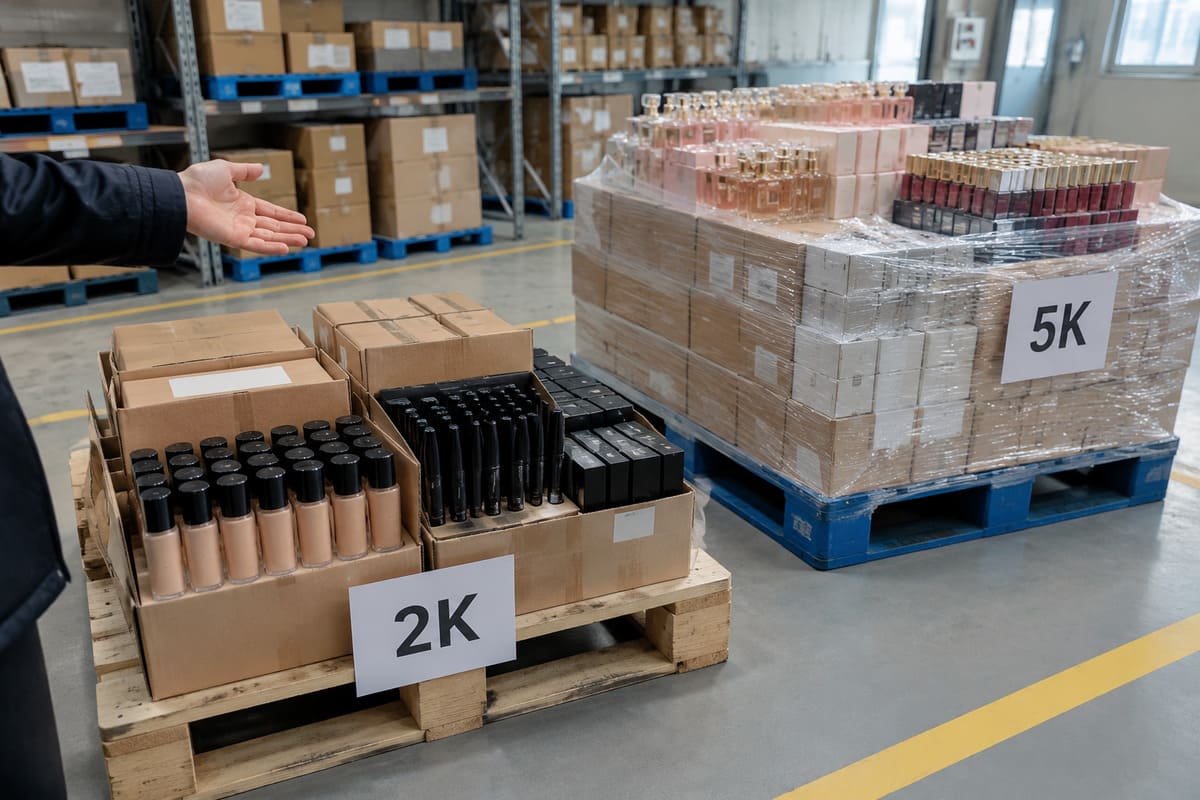
The cost gap is structural, not a corner-cut
The savings come from supply-chain geography, not from lowering standards. In clusters like Guangdong, pigment suppliers, packaging molders, and filling lines sit within the same region.7 That density compresses cost at every step.
| Cost Component | Relative Difference (China vs. EU) |
|---|---|
| FOB unit price | 30–60% lower |
| Raw materials | ~41% lower |
| Labor | ~71% lower |
Who holds the compliance obligations
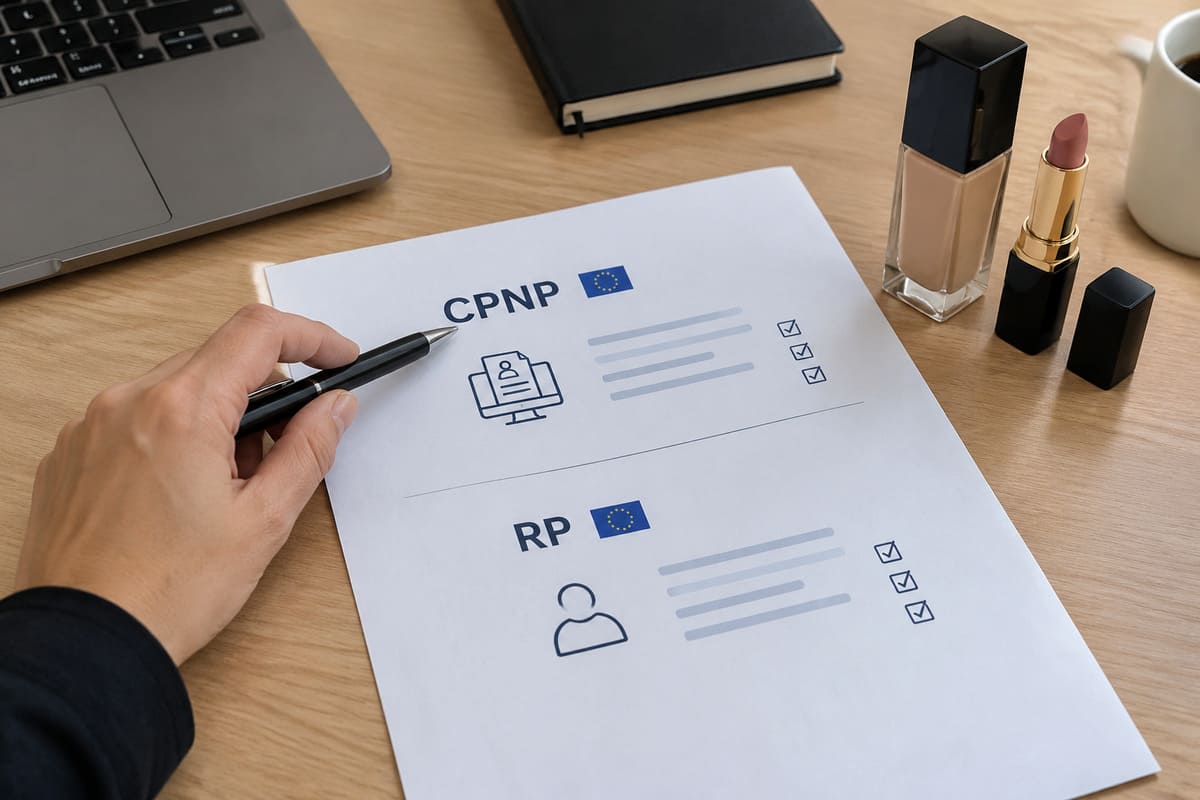
This is the part I never soften, because getting it wrong is dangerous. In the EU, the legal duties sit with the Responsible Person (RP) and the brand owner, not with an overseas factory. Treat any certificate as a document to verify, not a promise to trust.
| Requirement | What It Is | Who Owns It |
|---|---|---|
| [Responsible Person (RP) | EU-based legal entity](https://ecomundo.eu/en/blog/responsible-person-role-cosmetics)%%%FOOTNOTE_REF_8%%% | You (brand owner) |
| CPNP notification9 | EU product registration portal filing | You (brand owner) |
| CPSR10 | Cosmetic Product Safety Report | Assessor, using factory data |
| ISO 22716 GMP11 | Good Manufacturing Practice | Factory provides documentation |
What I provide as a factory: GMP records, INCI lists, stability reports, and CPSR supporting data. What remains yours: the RP appointment and the CPNP filing. I will not assume those obligations, and I will not pretend they vanish. They are calculable costs, not a reason to abandon differentiation. For application-specific or market-specific decisions, I always recommend a qualified regulatory professional or your appointed RP conduct the final evaluation.
Can 2,000 Units From Guangdong Validate the European Market Before I Commit to Custom?
Back to the founder stuck between white-label sameness and a 5,000-unit cash commitment. He did not need a third option invented from nothing. He needed the sequence reordered: evidence first, heavy commitment second.
Yes. A 2,000-unit standard eyeshadow palette from a Guangdong supply chain can validate the European market at roughly 50% of the FOB cost a makeup manufacturer Europe would charge. The savings, often $6,000–$8,000, can fund first-year CPNP notification and a third-party RP service, so you validate and stay compliant at the same time.
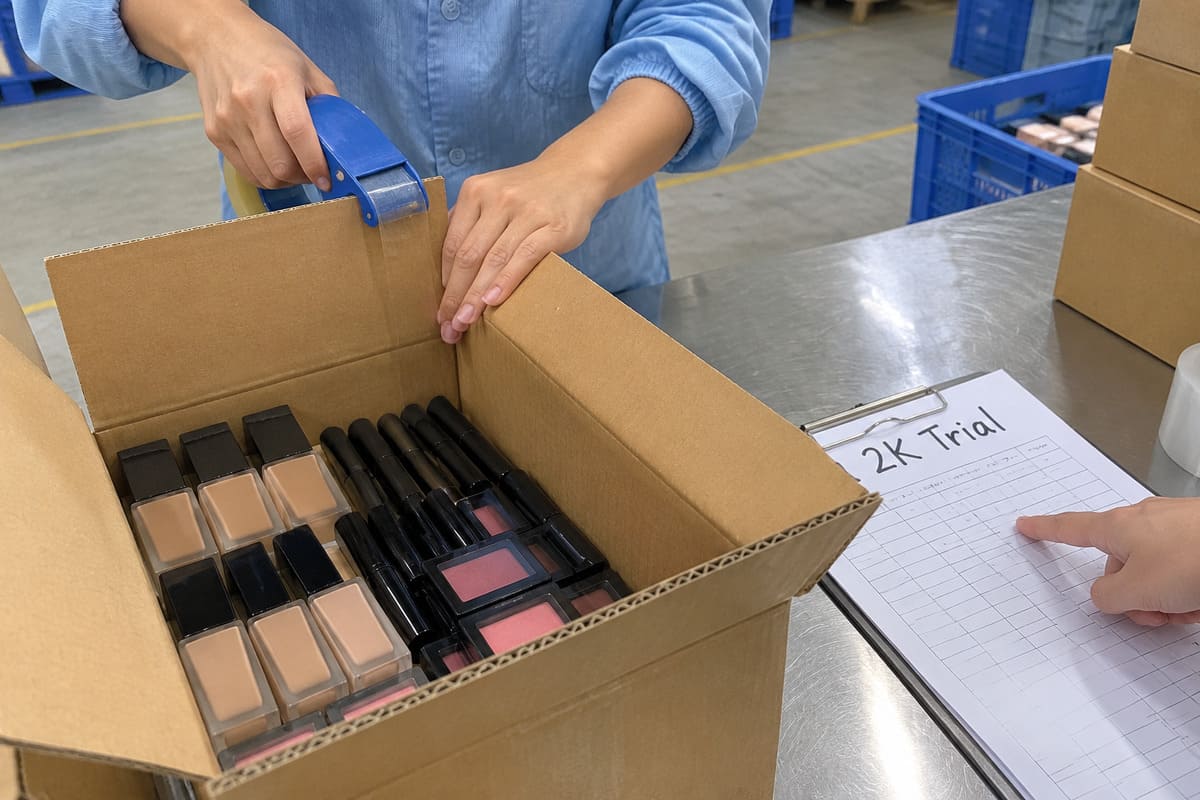
How the reframed path actually worked
We ran the founder's real numbers. The logic was not "cheaper is better." It was "use the structural savings to buy evidence and compliance instead of buying inventory risk."
| Item | European Custom (5,000u) | Guangdong Validation (2,000u) |
|---|---|---|
| Unit commitment | 5,000 | 2,000 |
| Relative FOB cost | Baseline | ~50% lower per unit |
| Cash saved | — | ~$6,000–$8,000 |
| Timeline to first sale | 3–6 months | Weeks |
| Differentiation | Full custom | Standard, logo-ready |
He put the saved $6,000–$8,000 toward CPNP notification and a first-year third-party RP service. He did not have to choose between compliance and differentiation; the supply-chain savings funded both. I supplied the INCI, GMP, stability reports, and CPSR supporting data. The RP and CPNP filing stayed his responsibility, exactly as the law requires.
Then the real benefit appeared. Once the 2,000-unit trial sold through, he had sales data, not a guess. He could now decide, with evidence, whether to scale to 5,000 units of true custom formulation, or to add a European-made line for the specific SKUs where "Made in EU" genuinely moved customers. The expensive decision became an informed decision.
What Does a Low-Risk Path With a Makeup Manufacturer Europe Look Like in Practice?
Nobody wants to burn a launch budget on a bet. The fear of a warehouse full of unsold stock, or of a compliance gap discovered after import, keeps good founders paralyzed. A clear sequence removes most of that fear.
A low-risk path treats a makeup manufacturer Europe as the final step, not the first. Start with a 2,000-unit validation order to test demand, use real sales data to justify a 5,000+ unit custom run, and add a local EU line only for SKUs where the "Made in EU" premium is proven. Evidence drives each commitment.
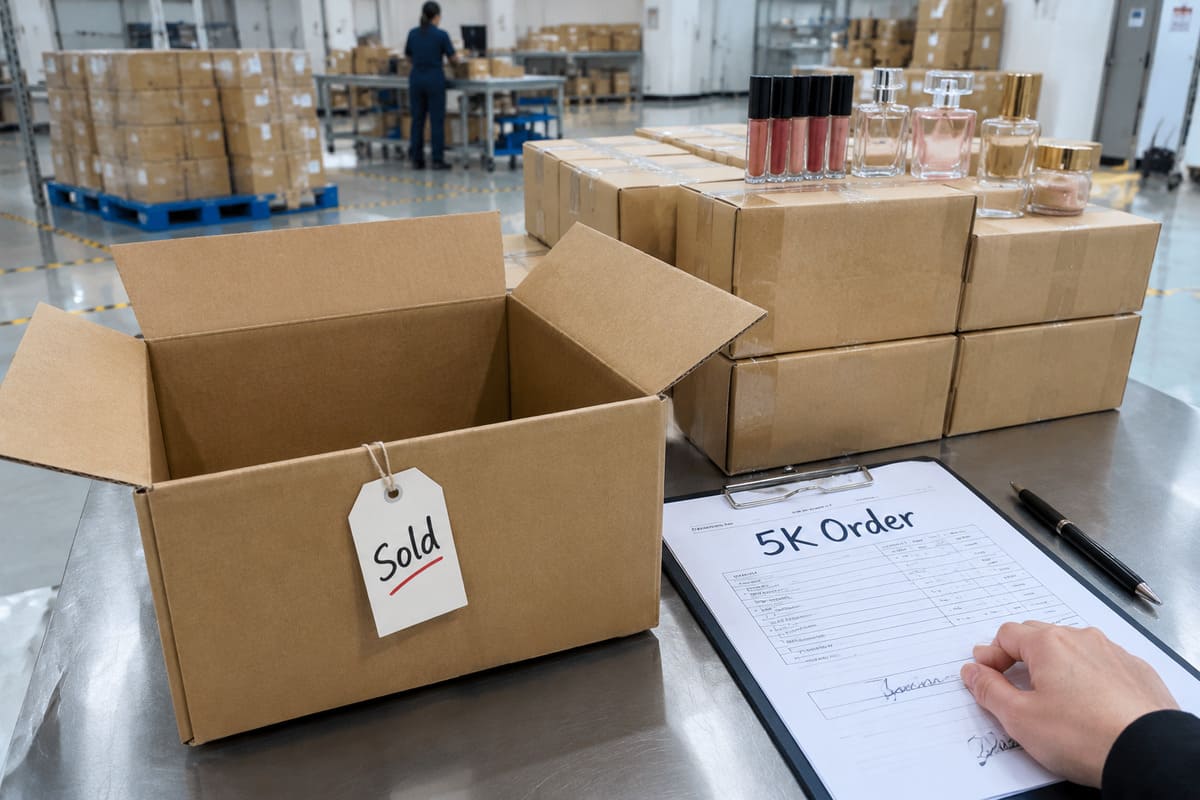
The three-stage sequence I recommend
- Validate (2,000 units). Standard, compliant, fast. Prove the market wants your concept. Fund RP and CPNP with the cost savings.
- Differentiate (5,000+ units). With sales data in hand, invest in true custom formulation and private molds. Now the development cost is backed by evidence.
- Localize selectively. For specific SKUs where buyers clearly pay a premium for origin, add a makeup manufacturer Europe line. Use it where it earns its cost, not everywhere by default.
Honest boundaries
I will not oversell this. There is a case where a European private-label partner is simply the right call.
If your only priority is the "Made in EU" label, and your budget supports white-label, a local private-label partner is a rational, honest choice. The sequence above is for founders who want to validate demand, control cost, and then differentiate with evidence.
What I commit to: a 2,000-unit validation trial on standard palettes, full documentation support (INCI, GMP, stability, CPSR data), and 5,000–10,000 unit custom capacity when you scale. What I will not do: claim 100 units builds a brand, assume your RP or CPNP duties, or hide the compliance cost. Treat certifications as documents to verify, and bring a qualified regulatory professional into any market-specific decision.
Frequently Asked Questions
Is a 100-unit MOQ from a makeup manufacturer Europe real custom formulation?
No. A 100-unit MOQ is almost always private-label: a stock formula in stock packaging with your logo added. True custom formulation (OEM) in the EU typically starts at 1,000–5,000 units with a 3–6 month development timeline, because R&D and tooling costs cannot be spread across 100 units.
How much cheaper is a Chinese factory than a makeup manufacturer Europe?
Chinese factories typically quote FOB unit prices 30–60% lower than European manufacturers. Raw materials cost roughly 41% less and labor roughly 71% less. This gap is structural, driven by supply-chain cluster density, not by cutting quality or skipping testing.
Who is legally responsible for CPNP and RP when I import cosmetics into the EU?
You are, as the brand owner. EU law requires a Responsible Person (RP), CPNP notification, a CPSR safety assessment, and ISO 22716 GMP. Your factory provides GMP records, INCI, stability reports, and CPSR supporting data, but the RP appointment and CPNP filing remain your legal obligation.
Can I validate the European market before committing to a 5,000-unit custom run?
Yes. A 2,000-unit standard palette trial lets you test real demand first. The FOB savings versus a European factory, often $6,000–$8,000, can cover first-year CPNP and RP costs. You then use actual sales data to decide whether to scale to full custom production.
When does "Made in EU" actually justify the higher cost?
When specific customers demonstrably pay a premium for the origin, or when a market or retailer requires it. Add a makeup manufacturer Europe line selectively, for the SKUs where the premium is proven by sales data, rather than applying it to your entire range by default.
Conclusion
Choosing a makeup manufacturer Europe is not a simple yes-or-no between local and overseas. The real trap is the 100-unit MOQ, which means white-label sameness, while true custom formulation starts at 1,000–5,000 units and a 3–6 month wait. The cross-border cost gap of 30–60% is structural and calculable, and EU compliance (RP, CPNP, CPSR, ISO 22716) stays your responsibility with factory documentation support. The smartest founders validate with a 2,000-unit trial, scale to custom on evidence, and localize only where "Made in EU" is proven to pay. Want to map your own validate-then-scale sequence? Let's run your numbers together.
"Makeup Manufacturer Australia: The Real Cost of “Local” vs ...", https://vertinabeauty.com/makeup-manufacturer-australia-the-real-cost-of-local-vs-true-customization/. Industry references on cosmetic contract manufacturing describe custom formulation as involving substantially higher minimum order quantities and multi-month development cycles relative to private-label products. Evidence role: general_support; source type: other. Supports: Industry descriptions of typical minimum order quantities and development timelines for custom cosmetic formulation.. Scope note: Reported MOQ and timeline ranges vary widely by manufacturer and product category and may not match the specific 1,000–5,000 unit and 3–6 month figures cited. ↩
"Evaluating Competitive Advantage of A New Product for ...", https://web.mst.edu/lib-circ/files/Special%20Collections/INCOSE2010/Evaluating%20Competitive%20Advantage%20of%20a%20New%20Product%20for%20Designing%20Successful%20Product%20Differentiation.pdf. Foundational marketing and competitive strategy literature identifies differentiation as a primary basis for sustainable competitive advantage and brand value. Evidence role: expert_consensus; source type: paper. Supports: Marketing and strategy scholarship establishing differentiation as a central source of competitive advantage and brand equity.. Scope note: The scholarship supports differentiation as a general principle rather than its specific application to small cosmetic startups. ↩
"What Should Brands Know About a Private Label ... - Vertina Beauty", https://vertinabeauty.com/what-should-brands-know-about-a-private-label-neutral-eyeshadow-palette-for-mature-skin/. Published cosmetic stability testing guidance describes evaluation of products under controlled temperature, light, and time conditions, including packaging compatibility, to confirm shelf stability. Evidence role: mechanism; source type: research. Supports: Cosmetic stability testing protocols assessing physical, chemical, and packaging compatibility over defined time and temperature conditions.. Scope note: Guidance documents describe test types and conditions but do not fix a universal 4–12 week duration, which varies by product and protocol. ↩
"Europe vs China Cosmetics Manufacturer: Transfer Guide", https://gzcosmeticslab.com/blog/europe-vs-china-cosmetics-manufacturer. Industry pricing surveys and trade data on contract cosmetics manufacturing provide context for the stated 30–60% FOB price differential between European and Chinese suppliers. Evidence role: statistic; source type: research. Supports: Trade and industry data on FOB pricing differentials between European and Chinese cosmetics contract manufacturers.. Scope note: Precise differentials depend on product type, order volume, and contract terms, so a single sourced figure may not reproduce the stated range exactly. ↩
"A Monte Carlo Analysis of Cost Competitiveness of Chinese ...", https://digitalcommons.nl.edu/cgi/viewcontent.cgi?article=1992&context=diss. Comparative industry cost analyses document substantial differences in labor and input costs between European and Chinese manufacturing bases, consistent with the magnitude of the figures cited. Evidence role: statistic; source type: research. Supports: Comparative cost data on labor and raw material inputs between EU and Chinese manufacturing, used to contextualize the cited percentage differences.. Scope note: Published comparisons vary by sector, year, and methodology; general manufacturing cost data may not map precisely to cosmetics-specific figures of 41% and 71%. ↩
"What Ingredients Should I Avoid in Eye Shadow? A ... - Vertina Beauty", https://vertinabeauty.com/what-ingredients-should-i-avoid-in-eye-shadow-a-compliance-guide-for-buyers/. Regulation (EC) No 1223/2009 of the European Parliament and of the Council establishes that each cosmetic product placed on the EU market must have a designated Responsible Person accountable for compliance obligations including notification and the product safety report. Evidence role: definition; source type: government. Supports: EU Regulation (EC) No 1223/2009 designates a Responsible Person who bears legal responsibility for compliance, notification, and safety of cosmetic products placed on the EU market.. Scope note: The regulation defines the Responsible Person role generally; it does not address contractual arrangements between a brand owner and an overseas manufacturer. ↩
"Economies of agglomeration", https://en.wikipedia.org/wiki/Economies_of_agglomeration. Economic geography literature on industrial agglomeration documents how co-location of suppliers and producers reduces transaction and input costs, supporting the described cluster-density mechanism. Evidence role: mechanism; source type: research. Supports: Economic research on industrial agglomeration showing that geographic clustering of suppliers reduces production and coordination costs.. Scope note: General agglomeration theory supports the mechanism but does not quantify the specific cost savings attributed to the Guangdong cosmetics cluster. ↩
"Understanding the Role of a Responsible Person in ...", https://ecomundo.eu/en/blog/responsible-person-role-cosmetics. Under Article 4 of Regulation (EC) No 1223/2009, only a cosmetic product for which a Responsible Person established within the Union is designated may be placed on the market. Evidence role: definition; source type: government. Supports: Regulation (EC) No 1223/2009 requires that the Responsible Person be a legal or natural person designated within the European Union.. ↩
"What Ingredients Should I Avoid in Eye Shadow? A ... - Vertina Beauty", https://vertinabeauty.com/what-ingredients-should-i-avoid-in-eye-shadow-a-compliance-guide-for-buyers/. The European Commission's Cosmetic Products Notification Portal is the official online system for notifying cosmetic products prior to their placement on the EU market, as required under Regulation (EC) No 1223/2009. Evidence role: definition; source type: government. Supports: The Cosmetic Products Notification Portal (CPNP) is the EU system through which a cosmetic product must be notified before being placed on the market.. ↩
"What Ingredients Should I Avoid in Eye Shadow? A ... - Vertina Beauty", https://vertinabeauty.com/what-ingredients-should-i-avoid-in-eye-shadow-a-compliance-guide-for-buyers/. Annex I of Regulation (EC) No 1223/2009 defines the structure and required content of the Cosmetic Product Safety Report, which must be completed before a product is placed on the EU market. Evidence role: definition; source type: government. Supports: The Cosmetic Product Safety Report is a mandatory document, structured per Annex I of Regulation (EC) No 1223/2009, required before a cosmetic product can be placed on the EU market.. ↩
"Guidance for Industry - Cosmetic Good Manufacturing ...", https://www.fda.gov/media/86366/download. ISO 22716 provides internationally recognized guidelines for good manufacturing practices in the cosmetics sector, covering production, control, storage, and shipment of finished products. Evidence role: definition; source type: institution. Supports: ISO 22716 specifies guidelines for good manufacturing practices (GMP) applicable to the production, control, storage, and shipment of cosmetic products.. Scope note: The standard sets manufacturing guidelines and does not by itself assign legal compliance responsibility among supply-chain parties. ↩