Searching for a makeup manufacturer Guangzhou feels easy until you realize most results are trading companies, not factories. You see "10,000 square meters" and "10,000 formulas," you send inquiries, and then you get ignored because your order is "too small." Worse, you fly over and get walked into a wholesale booth. Let me show you how to find the real source.
A real makeup manufacturer in Guangzhou owns production lines, holds a business license with "Manufacturing/Production" in its business scope, and can give you a live video tour of its factory floor. A trading company only resells generic stock. To verify a true factory, check the license, demand a live production video, and confirm GMP or FDA facility registration before paying any deposit1.
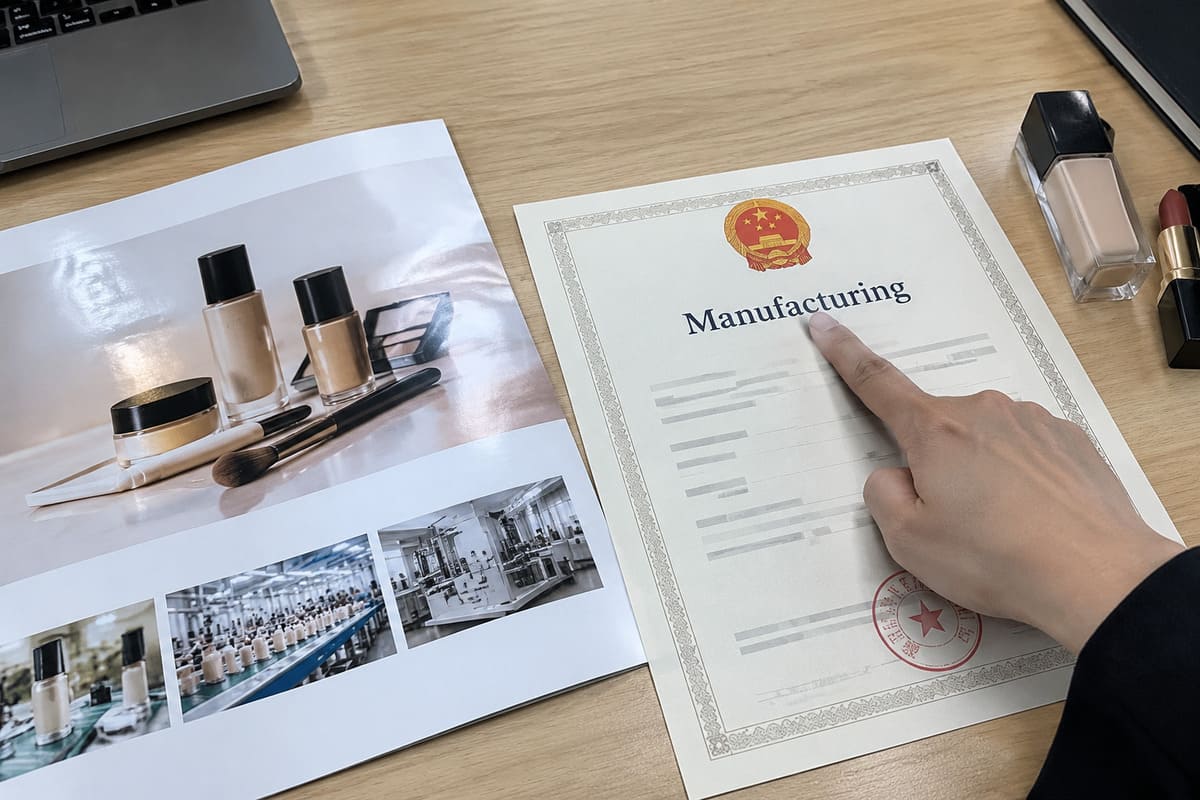
So how do you actually tell the two apart? And what is a realistic order size to launch a brand without drowning in inventory? I will walk you through the exact steps, the numbers, and the traps I watch founders fall into every month.
What Does "Makeup Manufacturer Guangzhou" Really Mean for a Brand Founder?
You type "makeup manufacturer Guangzhou" expecting a factory. Instead, you get a wall of identical listings with huge square-footage claims. You cannot tell who makes product and who just forwards your order to someone else. That confusion costs you money and months.
For a brand founder, "makeup manufacturer Guangzhou" should mean a company that develops, fills, and packs cosmetics in its own registered facility. Many listings using this phrase are cosmetics trading companies or wholesale resellers. The real distinction is control over production: a true factory sets your formula, controls quality, and documents compliance. A reseller cannot.
Here is why the gap matters once you move past the glossy catalog.
What Is a Factory Actually Responsible For?
When you work with a genuine Guangzhou cosmetics factory, that factory owns the whole chain from raw material to finished unit. A trading company sits in the middle and marks up a product it did not make. The difference shows up the moment something goes wrong.
| Responsibility | True Factory | Trading Company |
|---|---|---|
| Owns production lines | Yes | No |
| Controls formula and QC | Yes | No, relies on a supplier |
| Provides compliance docs (GMP, INCI) | Directly | Forwards, often incomplete |
| Handles custom color/packaging | In-house | Subcontracts out |
| Price transparency | Factory cost + margin | Hidden middleman markup |
| Accountability on defects | Direct and fast | Slow, passes blame |
I am a manufacturer in the Guangdong cluster, so I will be honest about my own category. We do not chase 50,000-unit giant orders. We work with founders who need a reliable launch partner. That means I care whether you can tell a real factory from a reseller, because the wrong choice usually ends with a damaged first batch and no one to call. A founder who understands this distinction asks sharper questions, and sharper questions protect your cash. The phrase on the search bar is the same for everyone. The company behind it is not.
The "Meibocheng" Illusion: Why the Biggest Wholesale Hub Is NOT a Factory?
You land in Guangzhou, open your map, and head straight to Meibocheng, the Beauty Exchange Center. Floors of color, endless booths, prices that look too good to refuse. It feels like the heart of manufacturing. It is not. It is the heart of trading.
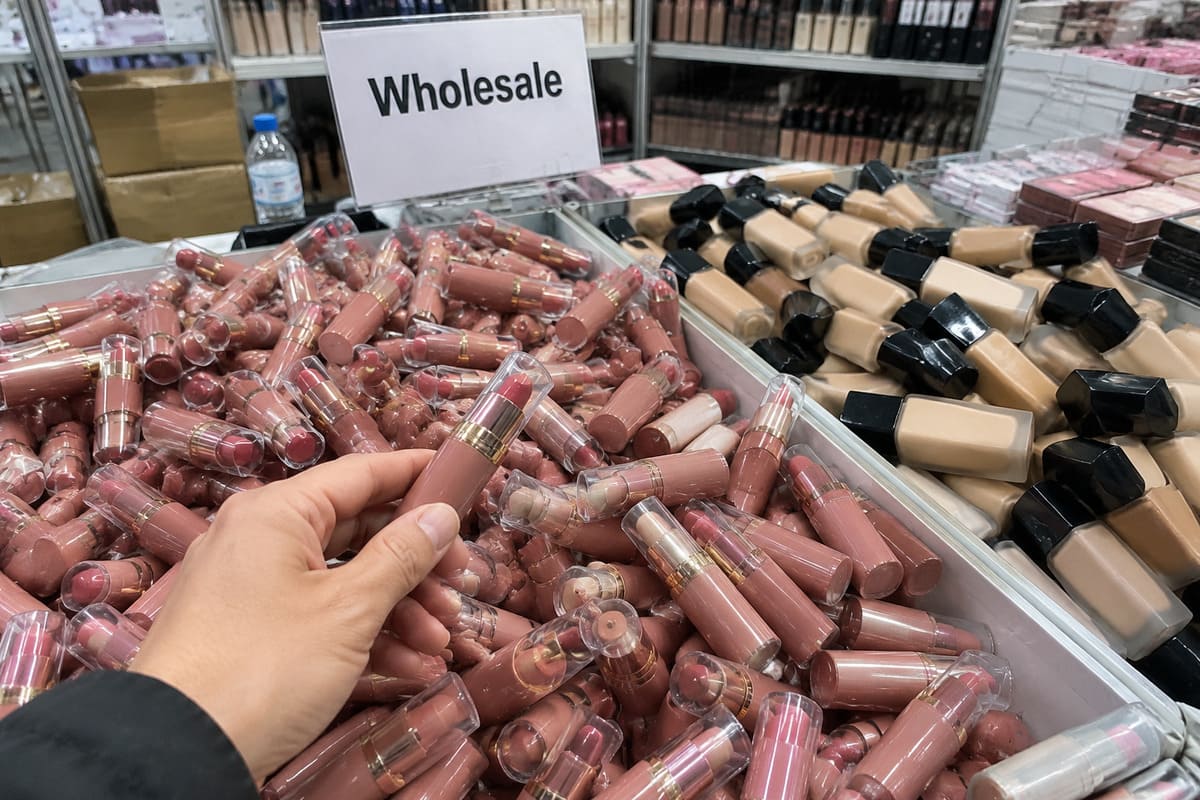
Meibocheng, Guangzhou's famous Beauty Exchange Center, is a wholesale trade hub, not a manufacturing site.2 Most vendors there are trading companies or distributors selling generic, white-label stock. You can buy ready-made product fast, but you cannot build a truly custom brand there. For real customization, you must trace the product back to its actual factory source.
Let me explain the illusion, because I have watched it cost founders real money.
Why Does Meibocheng Look Like a Factory When It Isn't?
A U.S. founder I worked with flew over and went straight to Meibocheng. A vendor showed him a gorgeous eyeshadow palette at an unbelievable price and promised fast delivery. He almost wired a deposit on the spot. I told him one thing: ask for the business license and check if the "Business Scope" lists "Manufacturing/Production."3 The vendor could not produce it. They were a trading company reselling stock.
The booth looked legitimate. Clean samples, confident pitch, low numbers. But a wholesale vendor optimizes for one thing: moving existing inventory. That creates three problems for a brand:
- No real customization. You get a generic palette thousands of other sellers already carry.
- No compliance ownership. The vendor cannot hand you the factory's GMP records or a clean INCI list.4
- No accountability. When a batch comes back greasy or cracked, the middleman points upstream and disappears.
Meibocheng is genuinely useful if you want cheap stock to resell quickly. I will say that plainly. But if your goal is a brand with its own identity and repeat customers, buying generic product off a wholesale floor is the opposite of what you need. The visual energy of the market tricks your brain into feeling you reached the source. You did not. The source is in an industrial park, behind a door you have to verify.
The Truth About "10,000 Formulas" and Unrealistic MOQs?
Every founder loves the headline: "10,000 formulas, custom anything, 100-unit minimum." It sounds like freedom. It is usually bait. The math behind real cosmetic manufacturing does not support tiny custom runs, and the people promising them are selling you something other than custom.
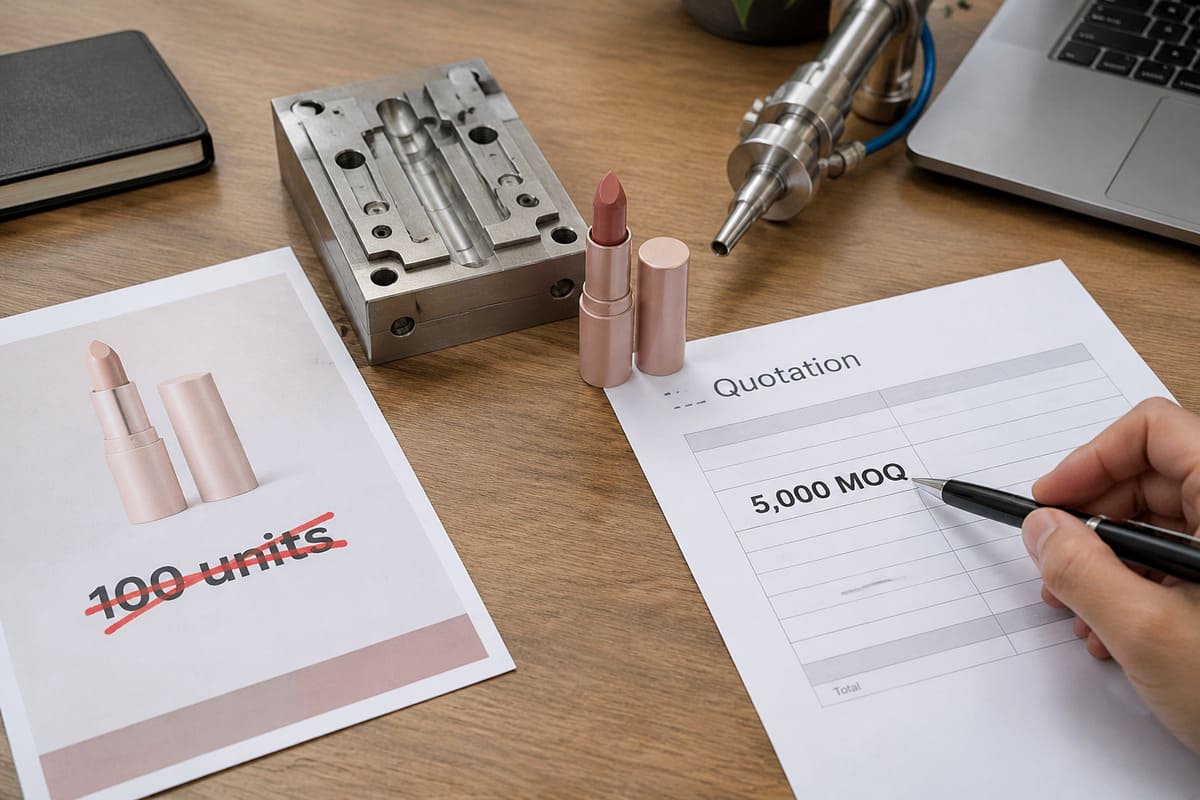
"10,000 formulas" is a marketing claim, not a customization promise. Giant factories that hold huge formula libraries typically require 50,000 or more units for true custom development.5 If any supplier quotes a 100-unit MOQ for a custom formula, they are almost always selling you a generic stock product with your logo on it, not a genuinely customized one.
Here is the part the catalogs leave out.
Why Can't a Real Custom Formula Have a 100-Unit MOQ?
Developing a true formula costs lab time, raw material minimums, stability testing, and a production line setup.6 Those costs are fixed. Spread across 100 units, the price per unit becomes impossible. Spread across thousands, it works. That is why the numbers tell you the truth even when the salesperson does not.
| Claim You See | What It Usually Means | Realistic MOQ |
|---|---|---|
| "100-unit custom formula" | Generic stock + your logo | Stock product, not custom |
| "10,000 formulas available" | Large stock library, big factory | 50,000+ for true custom |
| "Any color, low minimum" | Pre-made shade with relabeling | Stock product |
| "Custom powder, small trial" | Genuine validation run | 2,000 units (standard base) |
| "Custom liquid foundation" | New formulation + filling line | 5,000–10,000 per shade |
I want to be direct about my own numbers here, because transparency is the whole point. A custom liquid foundation cannot start at 100 units. The filling line, the shade matching, and the stability work make that uneconomical for everyone. When a vendor says yes to 100 units of "custom" liquid, they are handing you a generic base. You are paying brand prices for a commodity. The honest answer is less exciting but far more useful: small numbers work for standard powder bases, and real liquid or molded customization needs real volume. Anyone who tells you otherwise is protecting a sale, not your launch.
How to Verify a True Guangzhou Factory (Before You Book a Flight)?
You do not need to fly to Guangzhou to separate factories from resellers. You can do most of the verification from your laptop in an afternoon. The founders who get burned are the ones who skip this and trust a pretty catalog. Do the checks first. Book the flight later, if at all.
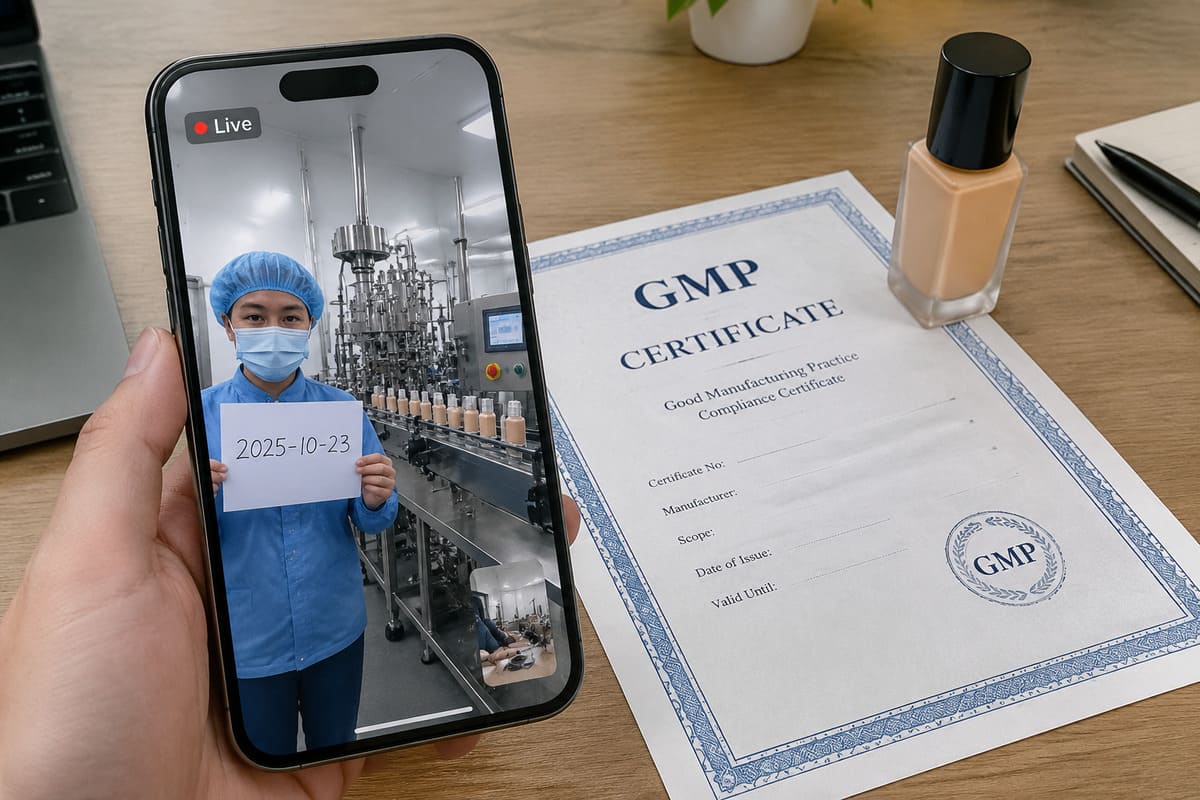
To verify a true Guangzhou makeup factory, complete three steps before paying anything: first, request the business license and confirm the "Business Scope" includes "Manufacturing" or "Production." Second, demand a live, unscripted video tour of the production lines. Third, ask for facility registrations such as GMP compliance and, for the U.S., FDA facility registration under MoCRA7.
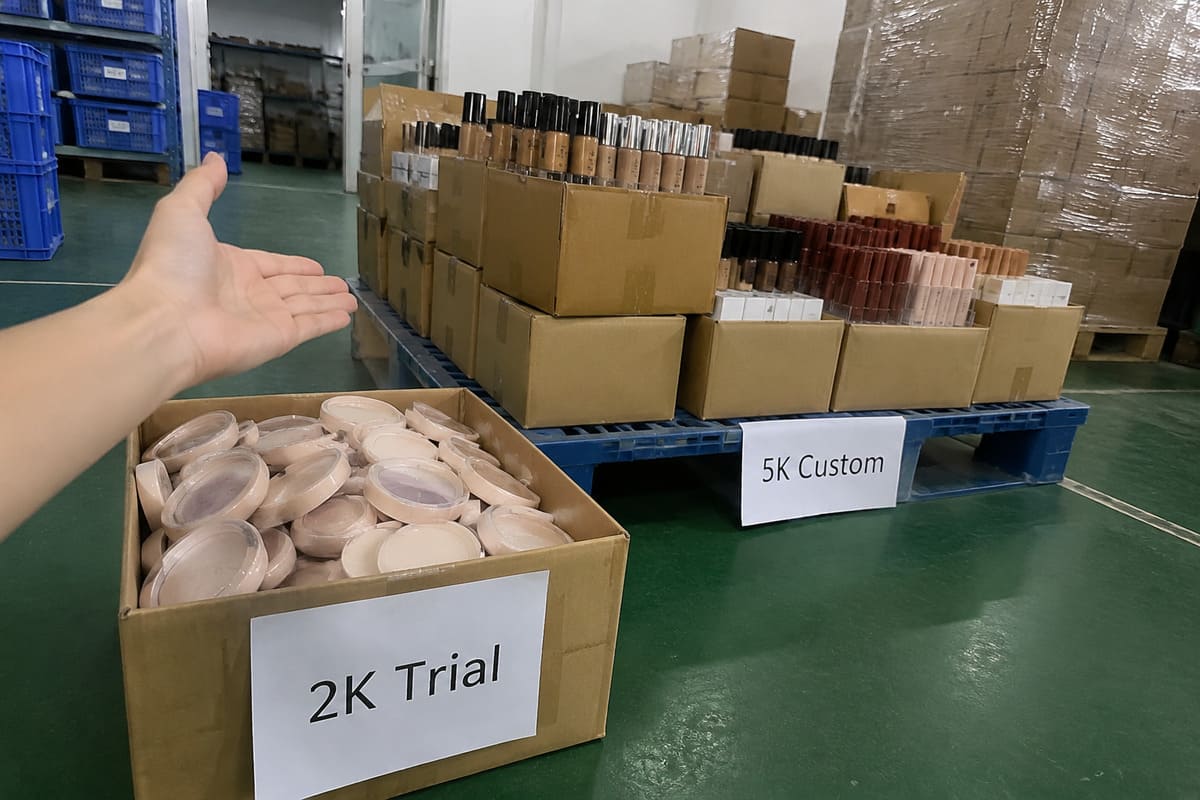
Let me break down each step so you know exactly what to ask.
What Are the Three Verification Steps in Detail?
Check the business license. Every legitimate Chinese factory has one. The key field is the business scope (经营范围). It must include manufacturing or production of cosmetics, not just "sales" or "trade." A trading company's license will say wholesale or retail. This single document ends most guessing games.
Demand a live video tour. A pre-recorded, polished video means nothing. Ask them to walk the floor on a live call, right now, and show you the filling line, the powder press, the packaging area, and staff working. A reseller cannot do this because there is no floor to show. I offer this to every serious inquiry, and I treat reluctance to do it as a red flag.
Confirm compliance registrations. Ask for GMP/GMPC documentation and, if you sell in the U.S., confirm they understand FDA facility registration and MoCRA requirements8. Treat every certificate as a document you should independently verify, not a claim you accept at face value.
I always recommend that buyers run these three steps in order. The license filters out most traders instantly. The live tour confirms the floor is real. The compliance check protects your market access. Together they cost you nothing and save you a disastrous first order. For application-specific regulatory decisions, I also suggest a qualified compliance professional review your target market's rules, because requirements shift by country and by product category.
The Real Starting Point: 2,000 Units of Powder, 5,000+ for Full Customization?
Founders often ask me for the smallest possible order, hoping to risk almost nothing. I understand the instinct. But a number that is too small is its own trap, because it usually means generic stock, not your brand. The honest starting point is higher than the Meibocheng pitch and far lower than the giants demand.
A realistic starting point with a true Guangzhou factory is 2,000 units for selected standard powder products like eyeshadow palettes, offered as a low-risk validation trial. For products needing new formulations, liquid filling, or custom molds, such as foundation, lipstick, or full kits, genuine customization starts at 5,000 to 10,000 units per shade or item.
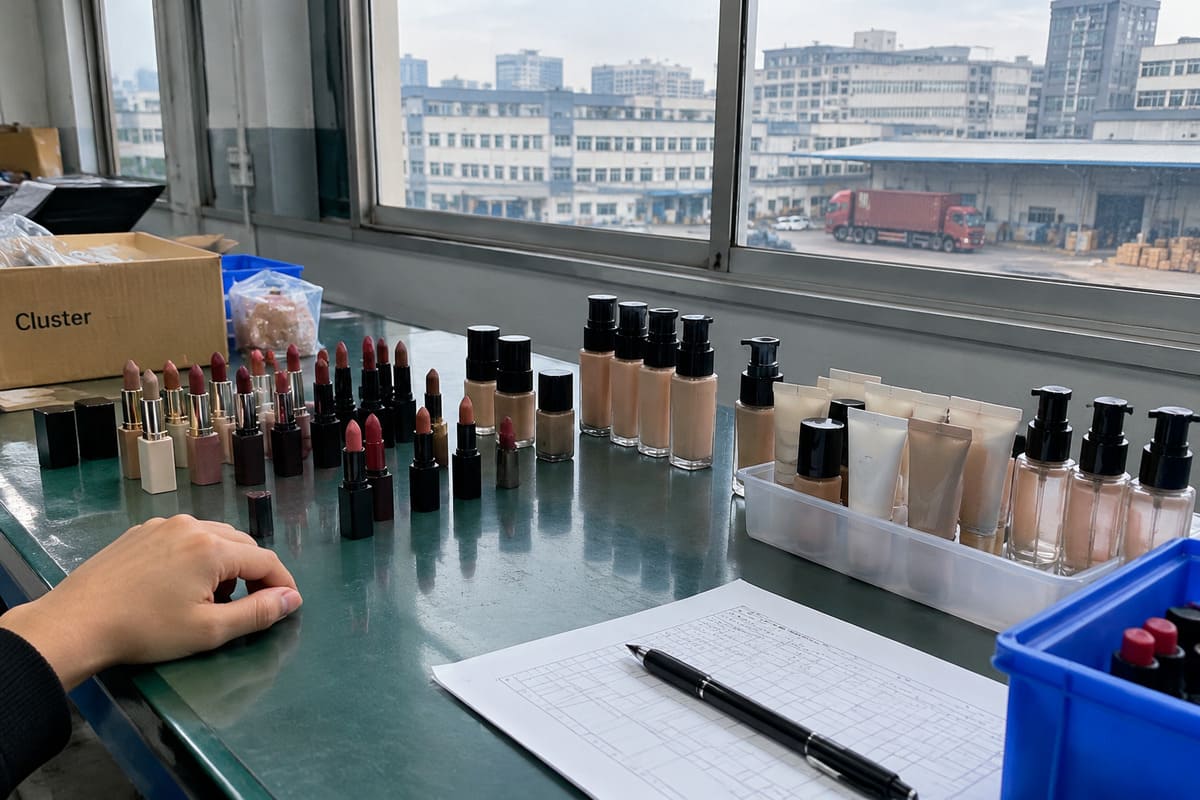
This staged approach is how I protect a founder's cash flow. Here is the logic.
How Does Staged MOQ Protect Your Cash Flow?
The founder I mentioned earlier started with a 2,000-unit standard eyeshadow palette trial. That let him test his brand and his audience with real market data, not guesses. When the palettes sold and he wanted to expand into liquid foundation, I told him upfront that liquid MOQs start at 5,000 units per shade. That honesty was not a sales tactic. It stopped him from over-ordering a category he had not validated yet.
| Product Category | Type | Realistic MOQ | Purpose |
|---|---|---|---|
| Standard eyeshadow palette | Powder base | 2,000 units | Low-risk brand validation |
| Blush, highlighter, pressed powder | Powder base | 2,000 units | Validation trial |
| Liquid foundation | New formulation + filling | 5,000–10,000 per shade | Full customization |
| Lipstick | Molded + filling | 5,000–10,000 | Full customization |
| Custom kits / private mold | Multi-component | 5,000–10,000+ | Full brand build |
The sequence matters: validate with powder, then scale into liquids and molds once the data supports it. I do not hide the 5,000-unit threshold to win a deal, because a founder crushed by unsold liquid foundation is not a repeat customer. Let the market prove your concept at 2,000 units first. Scale when the numbers earn it. That staging is the difference between a brand that survives its first year and one that ties up its budget in a warehouse.
Why the Guangdong Cluster Is Still Your Best Bet (If You Find the Right Partner)?
After all these warnings, you might wonder whether Guangzhou is worth the trouble at all. It is. The problem was never the region. The problem is confusing the wholesale front with the real supply chain. Once you reach a genuine factory, the Guangdong cluster gives you advantages no other region matches.
The Guangdong cluster remains the best choice for a makeup brand because it holds the world's densest ecosystem of cosmetic packaging suppliers, pigment labs, and formulation expertise9. The real advantage is not cheap labor; it is speed and access. But you can only tap this ecosystem by working directly with a verified factory, not a trading company.
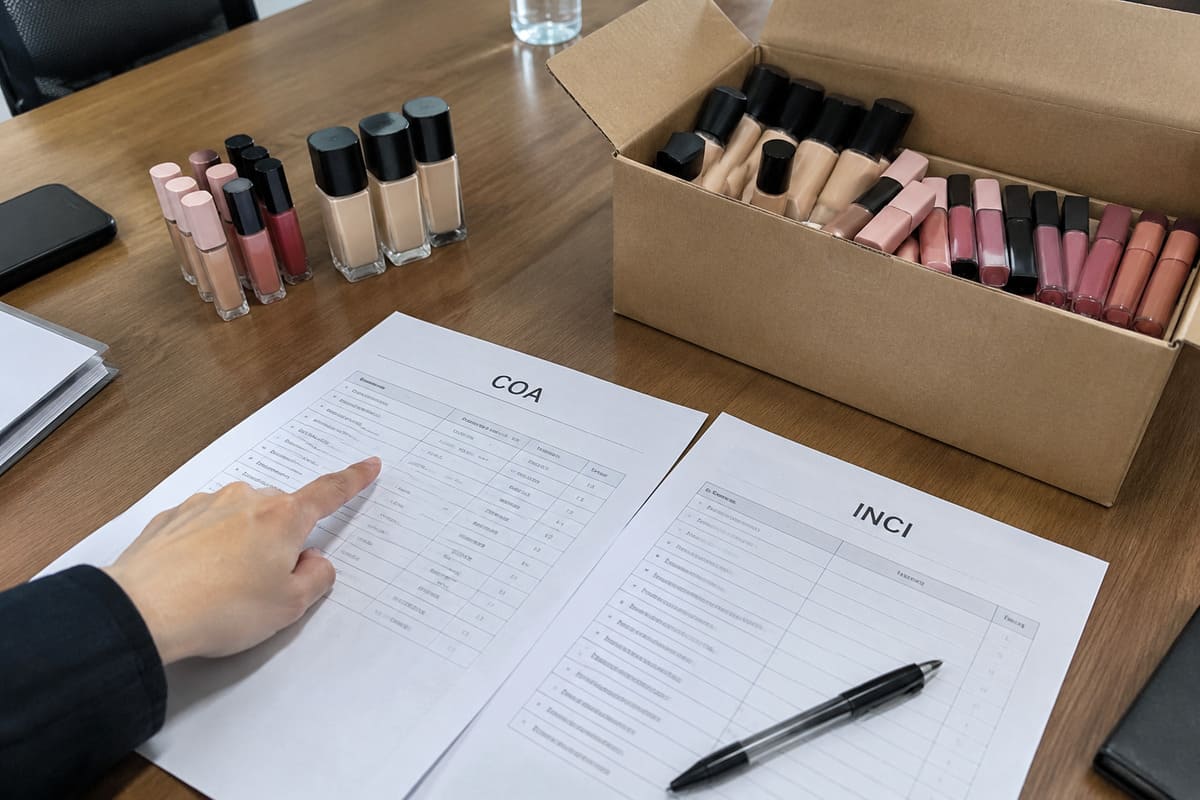
Here is what that ecosystem actually buys you.
What Does the Guangdong Supply Chain Give You That Others Don't?
The real benefit of a makeup manufacturer in Guangzhou is density. Packaging suppliers, pigment houses, and labs sit within a short drive of each other. That proximity means faster sampling, more color options, and quicker turnaround when a trend breaks on TikTok and you need to move10.
- Packaging access: Thousands of mold and component suppliers in one region. Custom compacts and palettes come together faster here than anywhere else.
- Pigment and effect expertise: This is where effect finishes like chameleon and sparkle shades are refined11. If you want "play-with-color" products, this cluster leads.
- Speed to market: A dense network shortens the gap between concept and shelf. Catching a short trend window becomes realistic instead of hopeful.
But none of this reaches you through a middleman. A trading company sells you a snapshot of this ecosystem, frozen as generic stock. A real factory plugs you into it live. That is why every point in this article circles back to the same action: verify the factory, then let the cluster work for you. I see the difference daily. The founders who win are not the ones who found the biggest factory. They are the ones who found the right partner inside the cluster and started at a size they could actually afford.
Frequently Asked Questions
How do I know if a Guangzhou supplier is a factory or a trading company?
Request the business license and read the "Business Scope" field. A factory lists "Manufacturing" or "Production" of cosmetics. A trading company lists "wholesale" or "sales" only. Then confirm with a live video tour of the production lines. Resellers cannot show a real floor.
Is Meibocheng a good place to start a cosmetics brand?
Meibocheng is excellent for buying generic stock to resell quickly, but it is a wholesale trade hub, not a manufacturing site. For a custom brand with its own formula, packaging, and compliance documents, you need to work directly with a verified factory, not a market vendor.
What is a realistic MOQ to launch a makeup brand?
For standard powder products like eyeshadow palettes, a 2,000-unit validation trial is realistic and low-risk. For liquid foundation, lipstick, or custom molds, genuine customization starts at 5,000 to 10,000 units per shade or item. Any "100-unit custom formula" offer is usually relabeled stock.
What certifications should I check before ordering from Guangzhou?
Ask for GMP or GMPC facility documentation and, for the U.S. market, FDA facility registration under MoCRA. Treat every certificate as a document to verify independently. For your specific target country, have a qualified compliance professional confirm the exact requirements, since rules vary by market and product.
Can I verify a factory without flying to Guangzhou?
Yes. Complete three remote steps first: check the business license, request a live and unscripted video tour of the production lines, and confirm compliance registrations. These cost nothing and filter out most trading companies before you ever book a flight or pay a deposit.
Conclusion
Finding a real makeup manufacturer in Guangzhou is not about chasing the biggest factory. It is about telling a true factory apart from a trading company and starting at a size that protects your cash. Verify the business license, demand a live video tour, and confirm compliance before you pay. Skip the Meibocheng illusion and the "100-unit custom formula" bait. Validate with a 2,000-unit powder trial, then scale to 5,000-plus units when the market earns it. If you are building a brand, not reselling stock, I would welcome a live video tour of our production lines so you can verify us yourself.
"GMP Guidelines/Inspection Checklist for Cosmetics", https://www.fda.gov/cosmetics/cosmetics-guidance-documents/good-manufacturing-practice-gmp-guidelinesinspection-checklist-cosmetics. ISO 22716 establishes guidelines for Good Manufacturing Practices covering the production, control, storage, and shipment of cosmetic products, supporting the article's use of GMP as a facility-level verification criterion. Evidence role: definition; source type: institution. Supports: Good Manufacturing Practice for cosmetics is defined by a recognized international standard governing production, control, storage, and shipment.. Scope note: Holding or referencing the standard does not confirm a specific facility's current certified compliance. ↩
"Guang Zhou Beauty Exchange Center ( Mei Bo Cheng ) is ...", https://www.instagram.com/p/Cu1QqXcNVLb/?hl=en. Independent descriptions of Guangzhou's Beauty Exchange Center characterize it as a wholesale distribution marketplace for beauty products, supporting the article's distinction between trading hubs and manufacturing facilities. Evidence role: case_reference; source type: other. Supports: The Beauty Exchange Center in Guangzhou functions primarily as a wholesale and trading marketplace for cosmetics.. Scope note: Such descriptions are contextual market profiles rather than audited evidence about every vendor's operating model. ↩
"China - Licensing Requirements for Professional Services", https://www.trade.gov/country-commercial-guides/china-licensing-requirements-professional-services. Chinese company registration regulations require each business license to specify a registered business scope, which limits the lawful activities of the entity; this supports the claim that the scope field distinguishes manufacturers from trading companies, though it does not establish how consistently the field is enforced in practice. Evidence role: mechanism; source type: government. Supports: Chinese business licenses record a legally registered business scope that constrains the activities a company may conduct.. Scope note: Regulatory registration of scope does not by itself verify that a given facility actually operates production lines. ↩
"International Nomenclature of Cosmetic Ingredients", https://en.wikipedia.org/wiki/International_Nomenclature_of_Cosmetic_Ingredients. Reference sources define the International Nomenclature of Cosmetic Ingredients (INCI) as a standardized system for naming ingredients used in cosmetic labeling, supporting the article's framing of an INCI list as a compliance deliverable. Evidence role: definition; source type: encyclopedia. Supports: INCI is a standardized international nomenclature system used to list cosmetic ingredients on product labels.. Scope note: The definition confirms what an INCI list is but not any particular supplier's ability or willingness to produce one. ↩
"Makeup Manufacturer Australia: The Real Cost of “Local” vs ...", https://vertinabeauty.com/makeup-manufacturer-australia-the-real-cost-of-local-vs-true-customization/. Analyses of contract and private-label cosmetics manufacturing describe fixed costs of formulation, testing, and line setup that push custom runs toward high minimum order volumes, providing contextual support for the article's MOQ ranges. Evidence role: general_support; source type: research. Supports: Custom cosmetic formulation carries fixed development and production-line setup costs that drive high minimum order quantities.. Scope note: Published figures vary widely by product type and manufacturer; the article's specific 50,000-unit threshold may not be directly documented. ↩
"Cosmetics Guidance Documents", https://www.fda.gov/cosmetics/cosmetics-guidance-regulation/cosmetics-guidance-documents. Industry and regulatory guidance on cosmetic stability testing describes it as a standard step to evaluate physical, chemical, and microbiological integrity over time, supporting the claim that stability work is a real cost in formula development. Evidence role: mechanism; source type: institution. Supports: Stability testing is an established component of cosmetic product development used to confirm quality over a product's shelf life.. Scope note: Guidance documents describe recommended practice rather than proving the specific cost structure asserted in the article. ↩
"Registration & Listing of Cosmetic Product Facilities and ...", https://www.fda.gov/cosmetics/registration-listing-cosmetic-product-facilities-and-products. FDA guidance on the Modernization of Cosmetics Regulation Act (MoCRA) describes facility registration and product listing obligations for cosmetic manufacturers marketing products in the United States, directly supporting the article's compliance claim. Evidence role: mechanism; source type: government. Supports: The Modernization of Cosmetics Regulation Act requires cosmetic product facilities to register with the FDA.. Scope note: Exact applicability depends on facility role, product category, and small-business exemptions that the article does not detail. ↩
"Modernization of Cosmetics Regulation Act of 2022 (MoCRA)", https://www.fda.gov/cosmetics/cosmetics-laws-regulations/modernization-cosmetics-regulation-act-2022-mocra. FDA materials outline the scope of obligations introduced by the Modernization of Cosmetics Regulation Act, including registration, product listing, adverse event reporting, and safety substantiation, supporting the article's reference to MoCRA requirements. Evidence role: general_support; source type: government. Supports: MoCRA establishes a set of compliance obligations for cosmetic manufacturers, including registration, product listing, and safety substantiation.. Scope note: The breadth of obligations varies by entity size and role, which the article does not specify. ↩
"Factory Tour - Real Cosmetic Manufacturing Facility", https://vertinabeauty.com/factory-tour-behind-the-scenes/. Industry analyses of China's cosmetics sector identify Guangdong as a leading manufacturing cluster with concentrated packaging, ingredient, and formulation capacity, supporting the article's claim of regional supply-chain density. Evidence role: general_support; source type: research. Supports: Guangdong is a major concentrated hub of China's cosmetics manufacturing and supply-chain activity.. Scope note: Cluster analyses establish regional concentration but may not substantiate the 'world's densest' superlative. ↩
"The Impact of TikTok Influencers on Gen Z the Cosmetic Industry", https://digitalcommons.bryant.edu/cgi/viewcontent.cgi?article=1000&context=honors_mathematicseconomics. Research on social commerce and beauty marketing documents how platforms such as TikTok accelerate trend formation and consumer purchasing cycles, providing contextual support for the article's emphasis on speed to market. Evidence role: general_support; source type: research. Supports: Social media platforms accelerate beauty trend cycles and influence consumer purchasing of cosmetics.. Scope note: Such studies describe general trend acceleration rather than quantifying the specific trend windows a manufacturer faces. ↩
"Which Company Makes the Best Eyeshadow? A ... - Vertina Beauty", https://vertinabeauty.com/which-company-makes-the-best-eyeshadow-a-full-chain-capability-guide/. Scientific literature on effect pigments describes interference and multilayer structures that produce color-travel and sparkle appearances in cosmetics, supporting the article's reference to chameleon and sparkle effect finishes. Evidence role: definition; source type: paper. Supports: Color-shifting and sparkle cosmetic finishes are produced using specialized effect pigments such as interference and multilayer pigments.. Scope note: Pigment science confirms the technology exists but not that any specific region refines it best. ↩