Searching for a private label makeup manufacturer Europe feels easy at first. You find factories advertising 100 to 500 unit minimums and a "Made in EU" badge that signals premium quality1. Then you ask about custom formulation and the number jumps to thousands of units. The low MOQ was never for a product that is truly yours. That gap is where most new brands stall.
A private label makeup manufacturer Europe at a 100–500 unit MOQ almost always sells white-label: stock formulas in stock packaging with your logo. True custom formulation (OEM/contract manufacturing) in the EU typically starts at 3,000–15,000 units2 with 8–16 week development timelines. The low MOQ buys speed and a label, not differentiation.
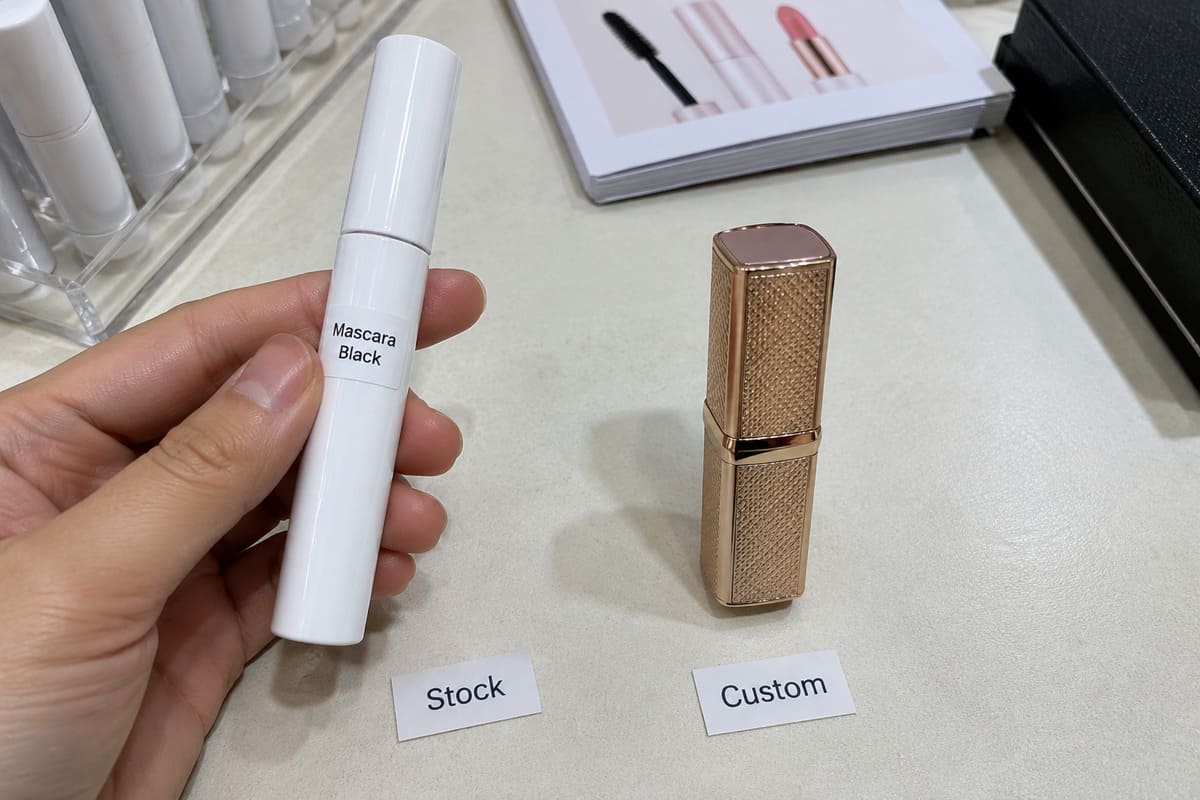
So the honest question is not "where is a factory in Europe?" It is "what is the lowest-risk path to a product that is actually mine?" Below, I break down what the MOQ really means, what custom work costs, and how I help founders validate the European market before committing serious cash.
What Does "Private Label Makeup Manufacturer Europe" Really Mean for a Founder?
You type the phrase into Google expecting a clear path to launch. Instead you get a spectrum of offers that use the same words to mean very different things. The confusion costs founders weeks and sometimes an entire budget spent on the wrong product.
For a founder, "private label makeup manufacturer Europe" usually means a factory that applies your branding to an existing stock formula. It rarely means bespoke color development or custom packaging molds. Those fall under OEM/contract manufacturing, a separate service with much higher minimums and longer lead times.
I talk to brand founders every week, and the same misunderstanding repeats. The term "private label" sits on a spectrum, and most advertised offers live at the simplest end.
The Three Tiers Hiding Behind One Phrase
- White-label: You buy a finished stock product and add your logo3. Fastest and cheapest. No formula control.
- Private label (light customization): Stock formula, but you may choose packaging from a catalog or tweak a shade from a pre-approved range.
- OEM / contract manufacturing: Custom formula, custom shade, sometimes custom molds. This is a product that is genuinely yours.
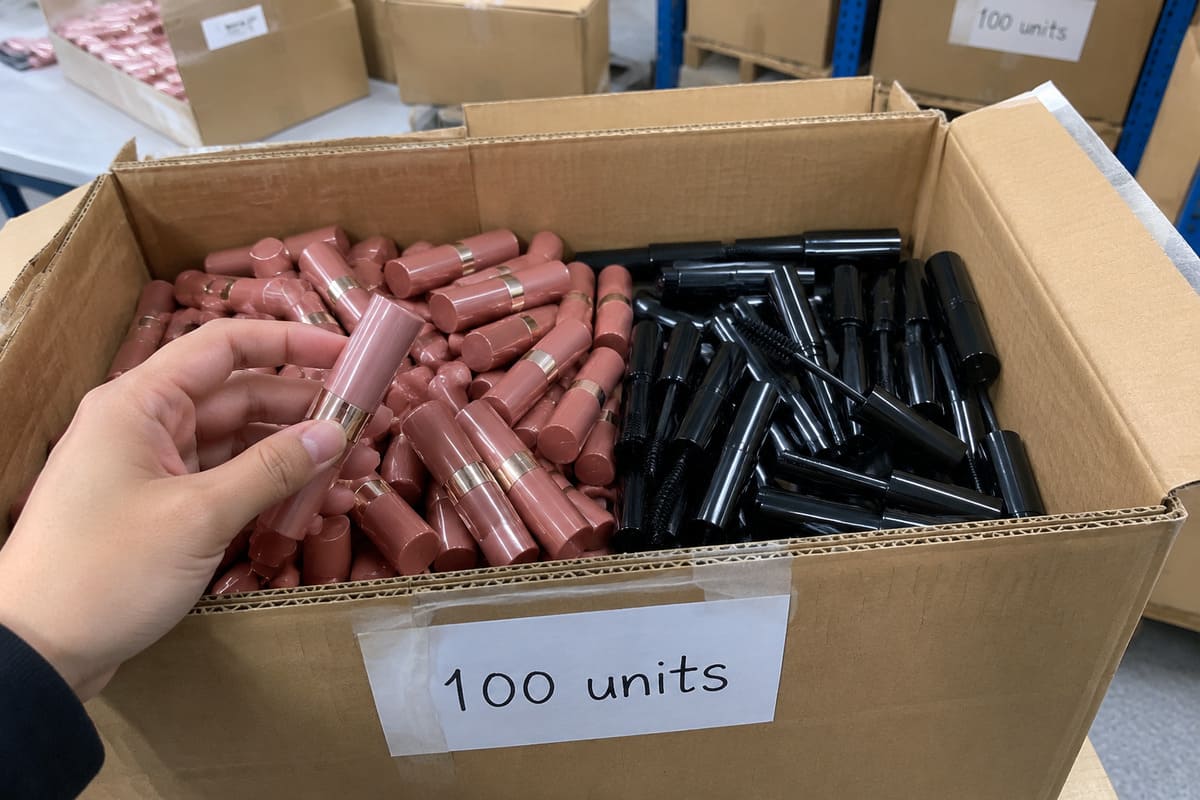
Here is the part founders miss. When a European supplier quotes "100 units," they are quoting tier one. The moment you ask for a private compact mold or a shade that does not exist in their catalog, you move to tier three, and the MOQ can multiply by 30 to 50 times.
One founder told me he had budgeted for "100 units of my palette" based on a quote. He had actually been quoted 100 units of a stock palette with a logo sticker. His real product idea required 3,000 to 5,000 units. That single misread nearly ended his launch before it began. Knowing which tier you are buying is the first skill every founder needs.
The European Private Label Reality: Why "100-Unit MOQ" Means White-Label, Not Custom Formulation
The "100-unit MOQ" headline reads like a gift to a new brand. Low risk, low cash, fast start. Then the product arrives and looks identical to three competitors on the same shelf, because it is the same stock formula.
A 100-unit MOQ in Europe means white-label repackaging. The factory cannot economically develop a new formula or shade for 100 units, so it sells you something already in production. You get your logo on a shared product, not a differentiated one. That is the trade-off nobody states up front.
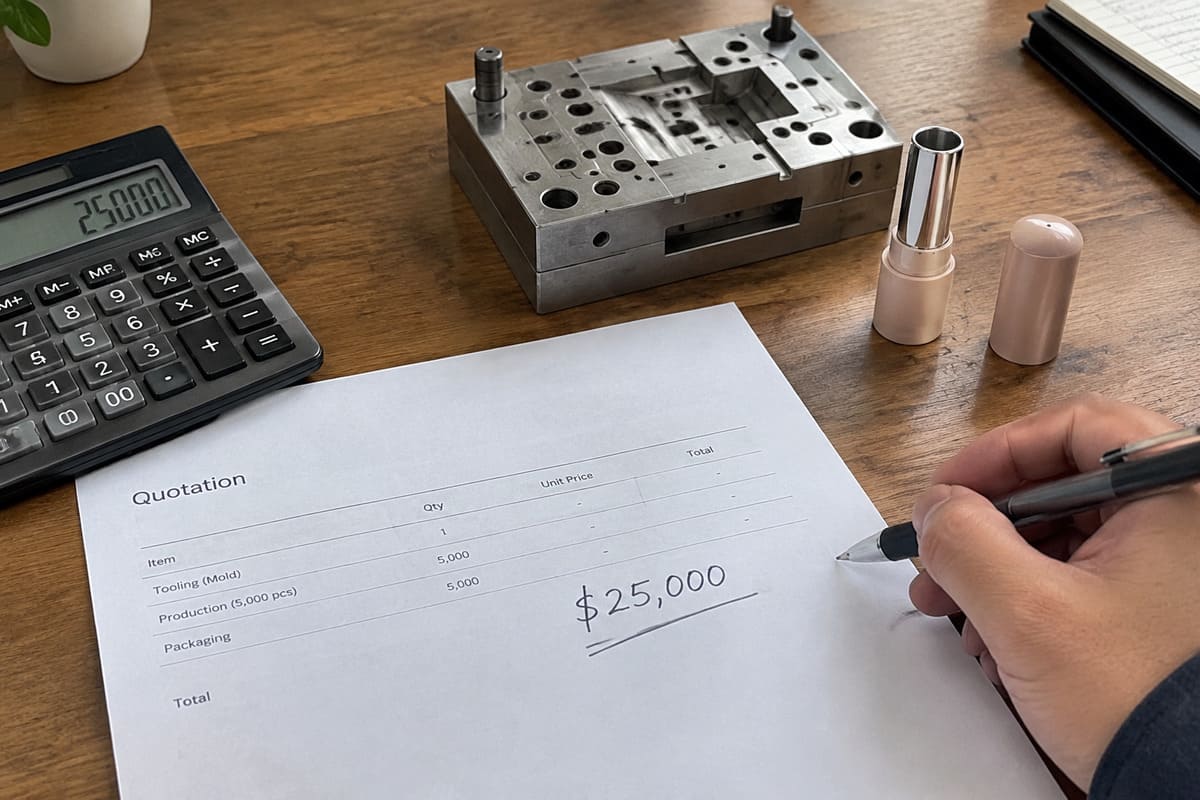
The economics are simple once you see them. Formula development, lab testing, and a custom production run carry fixed costs. Spread across 100 units, those costs make the per-unit price impossible. Spread across 5,000 units, they become reasonable. That is why the low MOQ and real customization cannot coexist.
What a 100-Unit Offer Actually Includes
| Feature | 100-Unit "Private Label" | What Founders Assume |
|---|---|---|
| Formula | Stock, shared with other brands | Custom to the brand |
| Shade range | Pre-set catalog colors | Chosen by the founder |
| Packaging | Stock component, logo added | Custom mold or design |
| Lead time | 2–4 weeks | Same |
| Differentiation | Low | High |
I am not against white-label. For testing a market or filling a quick gap, it is a smart, rational tool. The problem starts when a founder believes 100 units will build a defensible brand. It will not. It builds a logo on a product that competitors can buy from the same source next week.
The "low MOQ" is not a shortcut to a brand. It is a shortcut to sameness. If sameness is acceptable for your first test, use it deliberately. If you are selling on uniqueness, you need to understand what real customization requires, which is the next section.
What True Customization Actually Requires in Europe (3,000–15,000 Units and 8–16 Weeks)?
You have a shade nobody else sells and a compact design in your head. You want it made in Europe. Then the quote arrives, and the minimum is 5,000 units with a four-month timeline. The dream collides with the cash flow.
True custom formulation in Europe (OEM/contract manufacturing) typically requires 3,000 to 15,000 units per SKU, with 8 to 16 week development timelines4. Minimums vary by country and category: Germany roughly 5,000–8,000 units, Italy 5,000–15,000, Poland 3,000–5,0005. These figures reflect common industry ranges and should be confirmed with each factory directly.
These thresholds are not arbitrary. They cover lab time, raw material minimums, stability testing, and the cost of stopping a production line to run your unique batch. A factory earns nothing developing a one-off formula for a few hundred units, so it sets minimums that make the work viable.
Typical European Custom MOQ and Lead Times
| Country | Custom Formula MOQ (per SKU) | Development Lead Time |
|---|---|---|
| Germany | 5,000–8,000 units | 8–14 weeks |
| Italy | 5,000–15,000 units | 10–16 weeks |
| Poland | 3,000–5,000 units | 8–12 weeks |
Treat these as planning estimates, not quotes. Category matters too. A pressed powder palette with custom shades carries different tooling costs than a single loose highlighter.
Here is the squeeze a founder feels. On one side sits 100-unit white-label with zero differentiation. On the other sits a 5,000-unit custom order demanding a large upfront commitment before a single sale. Most founders cannot responsibly bet their launch capital on an untested product at 5,000 units. That gap, between sameness and heavy commitment, is the real problem. The next sections show how I help founders bridge it without betting the business.
The Cost Nobody Calculates: China's 30–50% FOB Advantage and the CPNP/RP Compliance Path
Founders often assume importing from outside the EU is either forbidden or so complex it is not worth it. That assumption quietly removes the cheapest, most flexible option from the table before anyone runs the numbers.
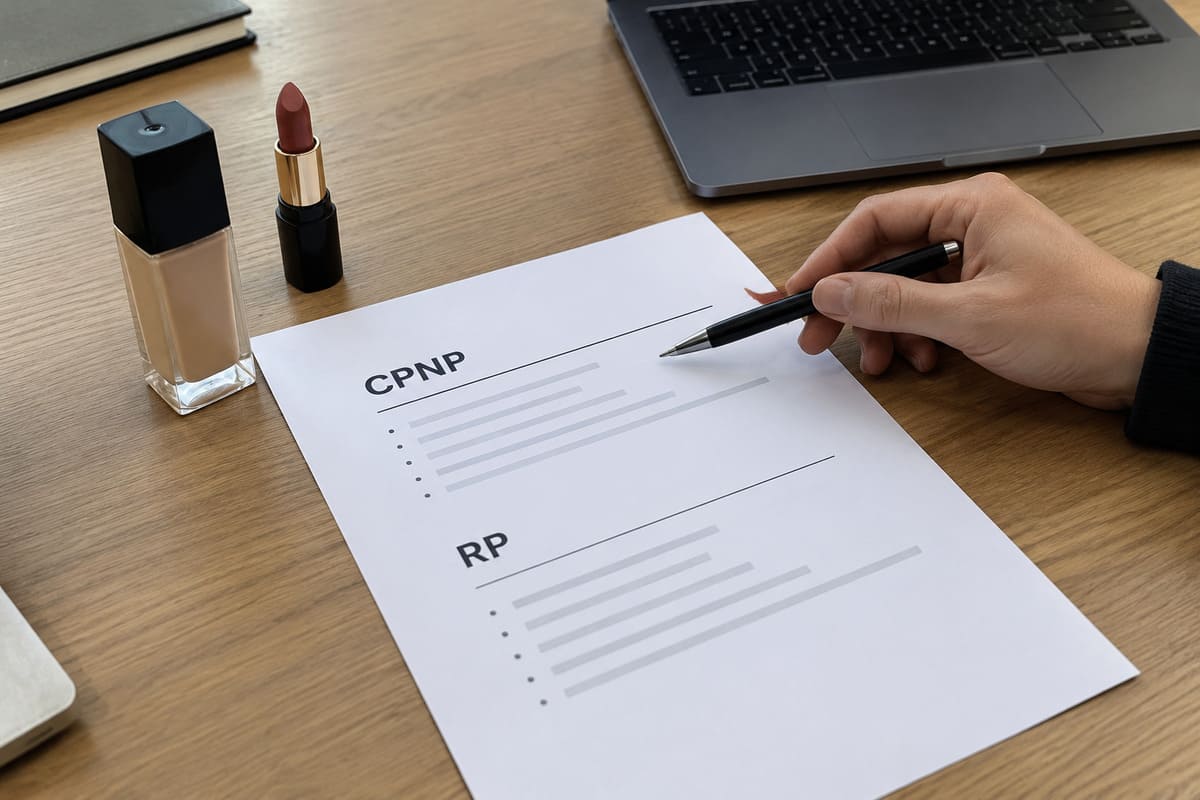
Chinese factories typically offer FOB unit prices 30% to 50% lower than European manufacturers6, with startup inventory budgets as low as $3,000–$8,000 for a private-label launch. The EU compliance path (Responsible Person, CPNP notification, CPSR safety assessment, ISO 22716 GMP7) is a calculable cost, not a barrier. It is also the legal obligation of the brand owner, not the overseas factory8.
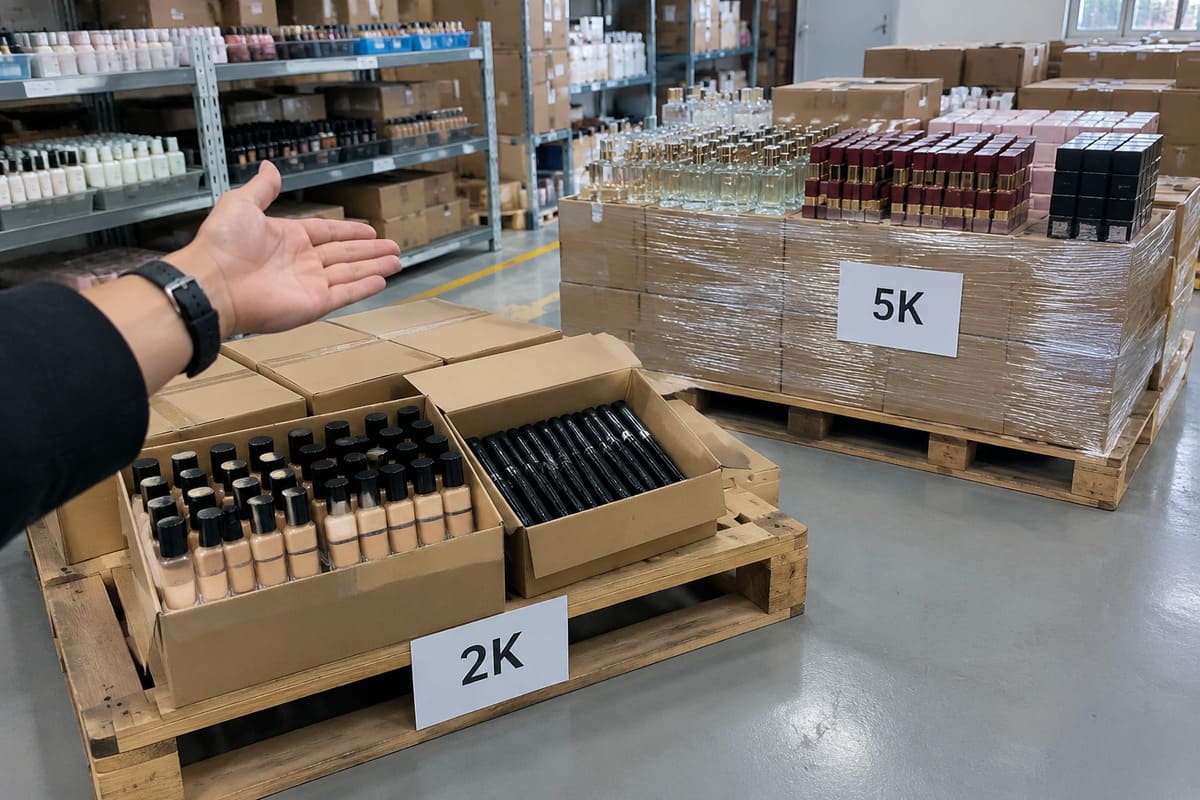
The cost gap is structural, driven by cluster density in regions like Guangdong where raw materials, components, and skilled labor sit close together9. It is not a quality trade-off by default. Quality depends on the specific factory, its documentation, and third-party testing you commission and verify.
Who Owns Each Compliance Step
I want to be exact here, because getting this wrong creates legal risk. The following reflects how the responsibilities are generally structured under EU cosmetic rules. Confirm your specific obligations with a qualified Responsible Person service or regulatory advisor.
| Requirement | Who Is Responsible | What the Factory Provides |
|---|---|---|
| Responsible Person (RP) appointment | Brand owner / importer | — |
| CPNP notification | Brand owner / RP | Formula and product data to support filing |
| CPSR safety assessment10 | Brand owner / RP (via assessor) | INCI, stability reports, supporting data |
| ISO 2271611 GMP | Factory | GMP documentation |
The pattern is clear. Your factory supplies the technical documents: GMP records, INCI lists, stability reports, and CPSR supporting data. The RP appointment and CPNP filing remain yours as the brand owner. A reputable overseas factory will not claim to handle your RP or CPNP obligations, and you should be cautious of any that promise to.
A Rough First-Year Compliance Budget
- Responsible Person service (third-party): often a few hundred to low thousands of euros per year
- CPSR safety assessment: variable by product count and complexity
- CPNP notification: the filing itself is free12; the supporting work is the cost
The point is that these numbers are knowable. When the FOB saving is $6,000–$8,000 against a European quote, that saving often covers the entire first-year compliance path with room left over. Verify current fees with providers before you budget.
The Guangdong Alternative: 2,000 Units to Validate the European Market, 5,000+ to Differentiate?
You are stuck between 100-unit sameness and a 5,000-unit cash commitment. Neither fits a founder who wants a real product but cannot gamble the launch budget on an unproven SKU. There is a middle step most people never consider.
A practical middle path is a 2,000-unit standard product run from a Guangdong supply chain to validate the European market first, then a 5,000+ unit custom order once sales data justifies it. The lower FOB cost funds compliance and leaves capital for the next stage, so you avoid choosing between differentiation and cash safety.
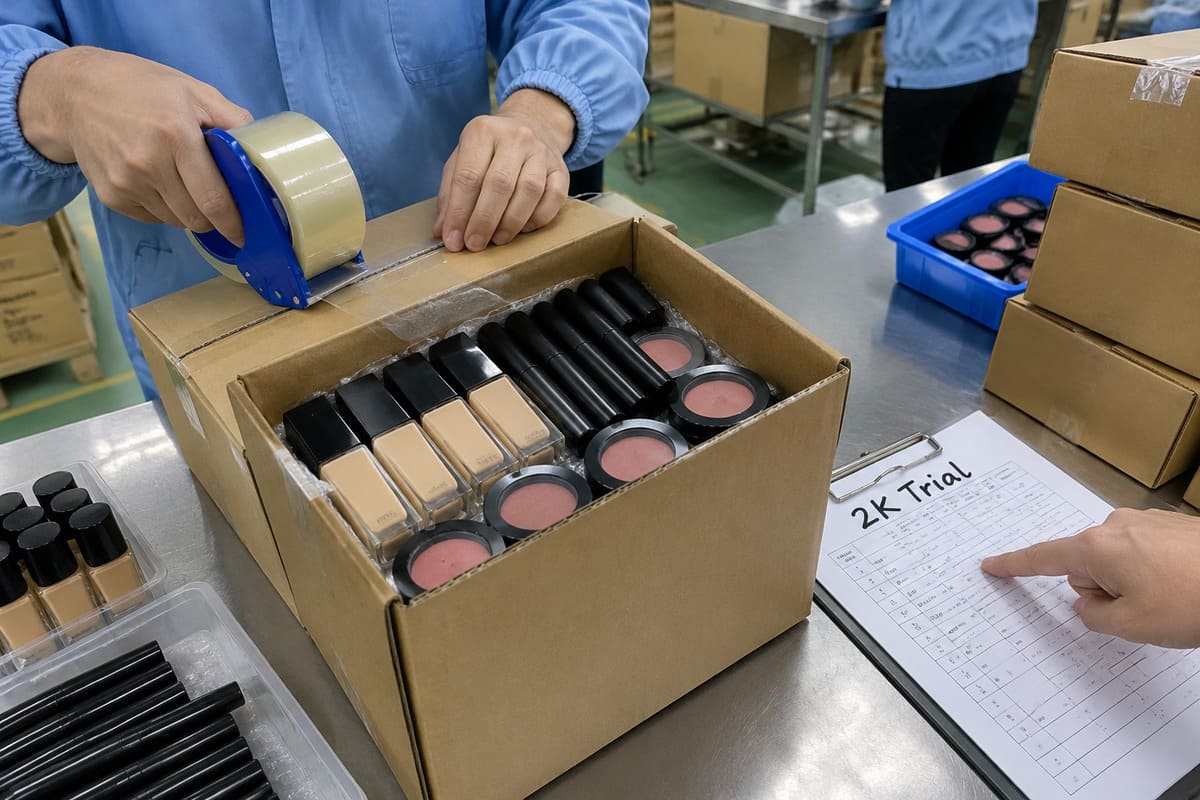
At Vertina Beauty we are a Guangdong-based makeup manufacturer focused on eye and face powder products, including our signature chameleon and sparkle eyeshadows. Our model is built around low MOQ, fast delivery, and documentation support, which maps directly onto this validation-first sequence.
Why 2,000 Units Is the Validation Sweet Spot
- Large enough to test real retail and online sell-through, not just friends and family.
- Small enough to limit downside if the market responds coldly.
- Priced well because standard formulas carry no development cost, so the FOB unit price runs roughly 50%–70% of a comparable European quote.
- Fast to produce from partial stock, so you catch a trend window instead of missing it.
The Scaling Logic
| Stage | Volume | Goal | What It Proves |
|---|---|---|---|
| 1. Validate | 2,000 units (standard) | Test market demand | Does the product sell? |
| 2. Differentiate | 5,000+ units (custom) | Build a unique SKU | Is custom worth the investment? |
| 3. Localize | European line, select SKUs | Capture "Made in EU" premium | Where does local actually pay? |
The sequence matters. You spend real customization money only after sales data says the demand is there. You add a European-made line only for the specific SKUs where the "Made in EU" story demonstrably lifts price or trust. This is how a founder differentiates without burning cash on assumptions.
A Real Path: How to Start with a Low-Risk Trial and Scale Without Burning Cash?
Most launch failures I see are not product failures. They are sequencing failures: too much cash committed too early to an unvalidated SKU, leaving nothing for compliance or a second attempt. The order of operations is the difference between a brand and a write-off.
The lowest-risk path is a staged sequence: run a 2,000-unit standard trial from a cost-efficient supply chain, use the FOB savings to fund your RP and CPNP compliance, let sell-through data decide the next move, then scale to 5,000+ custom units or add a local line only where it pays. Validate before you commit capital.
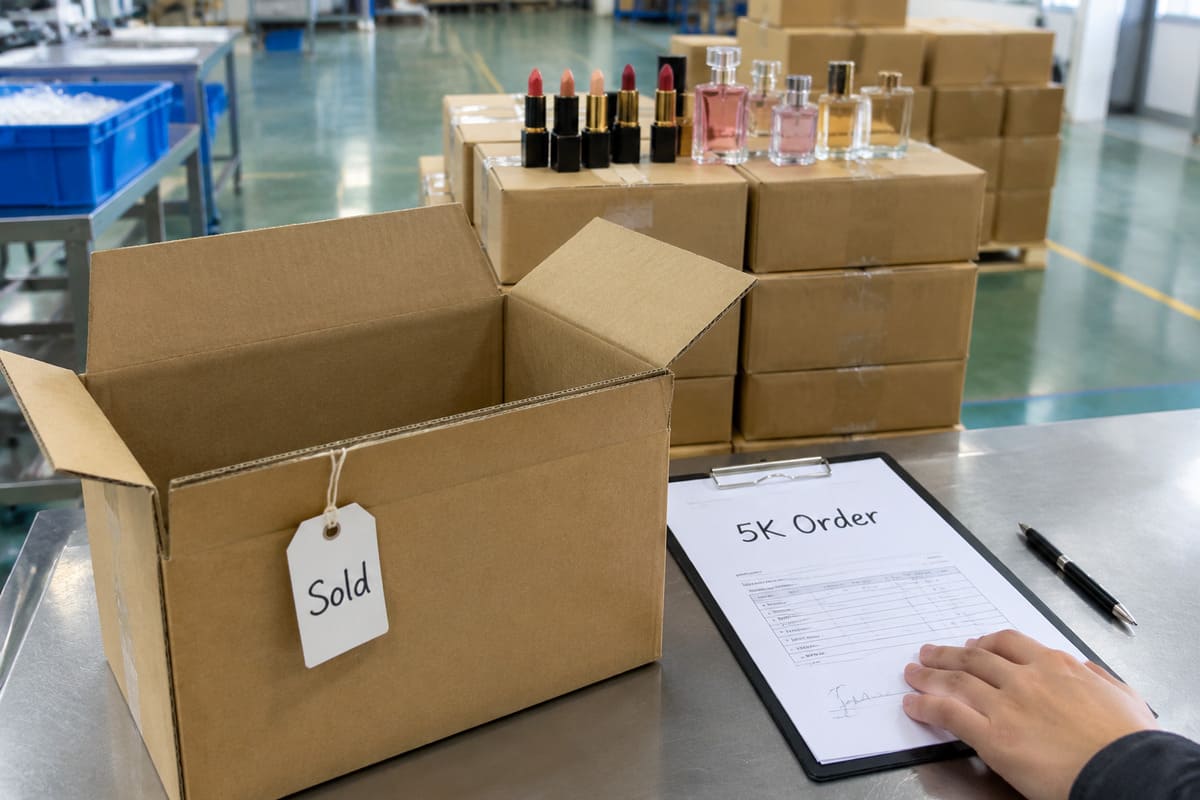
Let me show how this worked in practice. A European founder came to me after a local factory quoted "100 units," then revealed that his custom palette would actually require 3,000–5,000 units over an 8–16 week timeline. He felt trapped between a generic product and a commitment he could not safely fund.
We reframed it. Instead of forcing that choice, he ran a 2,000-unit standard eyeshadow palette through our Guangdong supply chain to validate the European market first. The FOB unit cost landed near 50%–70% of his European quote. The roughly $6,000–$8,000 he saved covered CPNP notification and a third-party RP service for the first year, with budget to spare.
He did not have to choose between compliance and differentiation. The supply chain saving funded both. We provided INCI, GMP, stability reports, and CPSR supporting data; the RP appointment and CPNP filing stayed his responsibility as brand owner, exactly as the law requires. Once the trial sold through, he used actual revenue to decide whether to scale to 5,000 units of true custom formulation or add a European-made line for the SKUs where "Made in EU" mattered to his buyers.
The Decision Framework I Give Founders
- If your only priority is the "Made in EU" label and your budget allows only white-label, a European private-label partner is a rational, honest choice. Use it.
- If you want to validate first, control cost, then differentiate, run the sequence: 2,000 units from Guangdong, then let sales data decide 5,000+ custom units, then add a local line only where the premium is proven.
That boundary is deliberate. I am not going to tell you China is always the answer or that local is always better. The right answer depends on your priority, your budget, and your market.
Frequently Asked Questions
Does a 100-unit private label order in Europe include custom formulation?
No. A 100-unit order in Europe is almost always white-label: a stock formula in stock packaging with your logo added. Custom formulation falls under OEM/contract manufacturing, which typically starts at 3,000–15,000 units with 8–16 week timelines. Confirm the exact scope in writing with any factory before ordering.
What is the real MOQ for custom makeup in Europe?
Custom formulation in Europe commonly runs 3,000–15,000 units per SKU. Typical ranges are Germany 5,000–8,000, Italy 5,000–15,000, and Poland 3,000–5,000, with 8–16 week development timelines. These are planning estimates based on common industry figures. Request current quotes from each factory, since category and tooling change the numbers.
Who is legally responsible for EU cosmetic compliance?
The brand owner or importer is responsible for appointing a Responsible Person (RP), filing the CPNP notification, and holding a CPSR safety assessment. The factory provides supporting documents like GMP records, INCI, and stability data. An overseas factory does not assume your RP or CPNP obligations. Verify your duties with a qualified RP service.
How much cheaper is importing makeup from China versus Europe?
Chinese factories typically quote FOB unit prices 30%–50% below European manufacturers, driven by supply-chain cluster density rather than a quality cut by default. Startup inventory budgets can run $3,000–$8,000. Factor in shipping, duties, and EU compliance costs to compare landed cost accurately, and commission independent testing to verify quality.
Can I start small and scale to custom later?
Yes, and I recommend it. Run a 2,000-unit standard product to validate demand, use the cost savings to fund compliance, then scale to 5,000+ custom units once sell-through data justifies the investment. This staged sequence avoids committing large capital to an unproven SKU while still giving you a real product to test.
Conclusion
Choosing a private label makeup manufacturer Europe is less about geography and more about sequencing. A 100-unit MOQ buys white-label sameness, not a brand. True customization in Europe starts at 3,000–15,000 units and 8–16 weeks, a heavy early bet. The cross-border cost gap of 30%–50% and the CPNP/RP compliance path are both calculable, not catastrophic. The smart move is to validate with a 2,000-unit trial, fund compliance with the savings, and scale to custom only when sales data earns it. If you want to map this sequence to your product and market, reach out and I will put together a trial plan and the documentation support you need.
"Estimating Consumer Willingness to Pay for Country-of-Origin ...", https://ageconsearch.umn.edu/record/31091/files/28020287.pdf. Marketing research on the country-of-origin effect finds that origin cues can positively shape perceived quality and willingness to pay, supporting the premium signaling attributed to a 'Made in EU' label. Evidence role: general_support; source type: paper. Supports: That country-of-origin cues such as 'Made in EU' influence consumer perceptions of product quality.. Scope note: The country-of-origin effect varies by product category and market, so general findings offer contextual rather than cosmetics-specific confirmation. ↩
"Contract Manufacturing and Packaging Agreement with ...", https://www.sec.gov/Archives/edgar/data/1431897/000119312512015538/d261388dex1017.htm. Industry guidance on cosmetic contract manufacturing indicates that bespoke formulation generally requires substantially higher minimum order quantities than stock repackaging, consistent with the ranges cited. Evidence role: statistic; source type: institution. Supports: Typical minimum order quantities for custom cosmetic formulation in European contract manufacturing.. Scope note: Published MOQ figures vary by manufacturer, product category, and year, so this provides contextual rather than definitive confirmation of the exact 3,000–15,000 unit range. ↩
"Private label", https://en.wikipedia.org/wiki/Private_label. Reference definitions of white-label products describe goods produced by one company and rebranded by another for sale, consistent with the article's characterization of adding a logo to a finished stock product. Evidence role: definition; source type: encyclopedia. Supports: The standard definition of white-label manufacturing as rebranding an existing finished product.. ↩
"Eyeshadow Manufacturer: How Can Buyers Find a ... - Vertina Beauty", https://vertinabeauty.com/eyeshadow-manufacturer-how-can-buyers-find-a-reliable-factory/. Technical literature on cosmetic product development describes multi-stage formulation and stability testing processes whose combined duration aligns with the cited multi-week timeline. Evidence role: general_support; source type: institution. Supports: The typical duration of custom cosmetic formulation and associated testing phases.. Scope note: Reported timelines are process-dependent and may differ from the specific 8–16 week window depending on product complexity and testing scope. ↩
"Italy - Cosmetics and Toiletries | Privacy Shield", https://www.privacyshield.gov/ps/article?id=Italy-Cosmetics-and-Toiletries. Industry profiles of European cosmetic manufacturing hubs describe differing scale and specialization by country, which supports the existence of country-level MOQ variation. Evidence role: statistic; source type: institution. Supports: Country-level variation in cosmetic manufacturing minimum order quantities across Germany, Italy, and Poland.. Scope note: General country profiles rarely publish standardized MOQ figures, so they contextualize rather than directly verify the specific per-country unit ranges. ↩
"Asian Cosmetics in Global Market: A Comparative Study of ...", https://dash.harvard.edu/bitstreams/a61452e7-2ccb-40a6-ba81-ba9a7ee77dab/download. Comparative analyses of manufacturing costs report lower labor and input costs in Chinese production clusters relative to Western Europe, consistent with the direction and approximate scale of the cited price gap. Evidence role: statistic; source type: institution. Supports: The magnitude of manufacturing cost differences between Chinese and European cosmetic production.. Scope note: Cost differentials fluctuate with currency, category, and logistics, so available comparisons support the trend rather than confirm the precise 30–50% figure. ↩
"Guidance for Industry - Cosmetic Good Manufacturing ...", https://www.fda.gov/media/86366/download. Regulation (EC) No 1223/2009 on cosmetic products sets out the obligations of a Responsible Person, notification through the CPNP, a product safety report, and adherence to good manufacturing practice. Evidence role: definition; source type: government. Supports: That EU law mandates a Responsible Person, CPNP notification, safety assessment, and GMP compliance for cosmetic products.. ↩
"What Ingredients Should I Avoid in Eye Shadow? A Compliance ...", https://vertinabeauty.com/what-ingredients-should-i-avoid-in-eye-shadow-a-compliance-guide-for-buyers/. Under Regulation (EC) No 1223/2009, an EU-established Responsible Person must be designated for each cosmetic product, and for imported goods this role falls to the importer or an appointed representative rather than the non-EU manufacturer. Evidence role: expert_consensus; source type: government. Supports: That the legal Responsible Person for an imported cosmetic is the importer or designated EU entity, not a non-EU manufacturer.. ↩
"Everything you always wanted to know about ...", https://www.incontext.indiana.edu/2020/mar-apr/article1.asp. Research in economic geography establishes that industrial agglomeration reduces input and coordination costs, providing a mechanism consistent with the cost advantages attributed to the Guangdong cluster. Evidence role: mechanism; source type: paper. Supports: That geographic clustering of suppliers and labor reduces production costs through agglomeration effects.. Scope note: General agglomeration research supports the mechanism but does not quantify the specific effect for cosmetics manufacturing in Guangdong. ↩
"What Ingredients Should I Avoid in Eye Shadow? A ... - Vertina Beauty", https://vertinabeauty.com/what-ingredients-should-i-avoid-in-eye-shadow-a-compliance-guide-for-buyers/. Annex I of Regulation (EC) No 1223/2009 defines the required structure and content of the Cosmetic Product Safety Report, establishing it as a mandatory safety assessment prior to market placement. Evidence role: definition; source type: government. Supports: That a Cosmetic Product Safety Report is a legally required safety assessment for EU cosmetics.. ↩
"Guidance for Industry - Cosmetic Good Manufacturing ...", https://www.fda.gov/media/86366/download. ISO 22716 specifies guidelines for the production, control, storage, and shipment of cosmetic products, serving as the recognized good manufacturing practice reference for the sector. Evidence role: definition; source type: institution. Supports: That ISO 22716 defines good manufacturing practice guidelines for the cosmetics industry.. ↩
"Cosmetic product notification portal", https://single-market-economy.ec.europa.eu/sectors/cosmetics/cosmetic-product-notification-portal_en. The European Commission's Cosmetic Products Notification Portal provides for electronic notification by Responsible Persons without a stated submission charge, supporting the claim that the filing itself is free. Evidence role: general_support; source type: government. Supports: That use of the Cosmetic Products Notification Portal does not require a filing fee.. Scope note: Official materials describe the portal process rather than explicitly itemizing the absence of fees, so this is contextual support. ↩