You searched for the major cosmetics manufacturing companies in the USA, and now you have a list of giants: Estée Lauder, P&G, Coty, e.l.f. You start drafting inquiry emails. But here is the problem. Most of these names will never reply to a first-time founder, and the ones that do want 50,000 units minimum. You could lose a full quarter chasing the wrong tier. Let me save you that quarter.
The major cosmetics manufacturing companies in the USA fall into two groups: in-house brand owners like Estée Lauder and e.l.f. that only make their own products, and large contract manufacturers like Mana Products that accept outside orders but require 50,000 to 100,000 unit minimums1. Neither group fits a startup testing the market with 2,000 units. A startup needs an agile manufacturer with tiered MOQs, not the biggest name on a ranking.
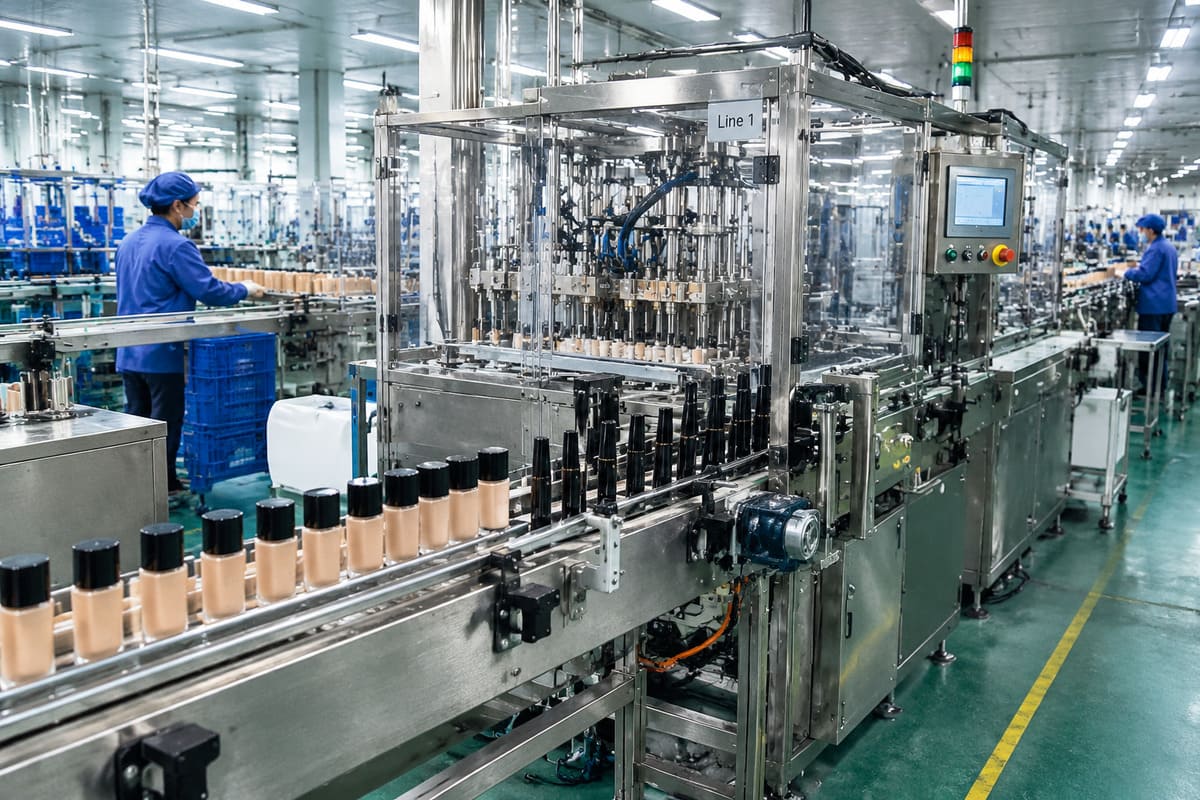
So if the biggest companies won't make your product, who will? The answer depends on understanding how US manufacturing is actually tiered, what "major" really hides, and where a 2,000-unit order fits. Keep reading, because the ranking you trust is sorted by the wrong metric.
What Does "Major Cosmetics Manufacturing" Really Mean for a Brand Founder?
You read "major cosmetics manufacturer" and picture a partner ready to make your eyeshadow palette. The lists reinforce this. But "major" measures revenue and headcount, not willingness to take your order. You send emails into a void, and the silence costs you weeks you cannot afford.
For a brand founder, "major cosmetics manufacturing" on most ranking sites means large revenue or employee count, not startup accessibility. A company can top the list with 5,000 employees and a 50,000-unit minimum while being the worst possible first supplier. "Major" describes company size, not whether the company will produce your small launch order.

The gap between "major" and "useful to you" is wide. Ranking platforms like Maker's Row or similar B2B directories sort by metrics that help an analyst, not a founder. I have watched this confusion cost real money.
What the word "major" actually measures
When a directory calls a company major, it usually weighs one or more of these:
- Annual revenue, which favors publicly traded brand owners.
- Employee count, which favors factories built for mass retail volume.
- Years in operation, which favors established players with long development cycles.
- Named retail clients, which favors suppliers to Sephora or Ulta scale brands.
None of these tell you the minimum order quantity. None tell you whether the company even accepts outside clients. A founder with a $10,000 budget reads this list the way a first-time car buyer reads a list of Formula 1 teams. Impressive, famous, and completely unable to sell you a daily driver.
The useful question is not "Who is the biggest?" The useful question is "Who matches my stage?" A manufacturer that fits a 2,000-unit validation run may never appear on a "major companies" list, because the list was never built to answer your real question. I tell every founder the same thing: read the list as a map of who you compete against and who serves enterprise brands, not as a shopping list.
The Ranking Trap: Why the Biggest Companies Won't Make Your Product?
You trust the ranking because it feels authoritative. Number one must be the best choice, right? So you email the top five and wait. The replies that matter never come, and the ones that do politely close the door. Your launch window shrinks while you refresh your inbox.
The biggest companies won't make your product because top rankings sort by company size, not startup friendliness. The number one result is often an in-house brand that makes only its own products, or a mega contract manufacturer whose 50,000-unit minimum and multi-month development cycle exclude every early-stage brand. Size ranks them first and disqualifies them for you simultaneously.
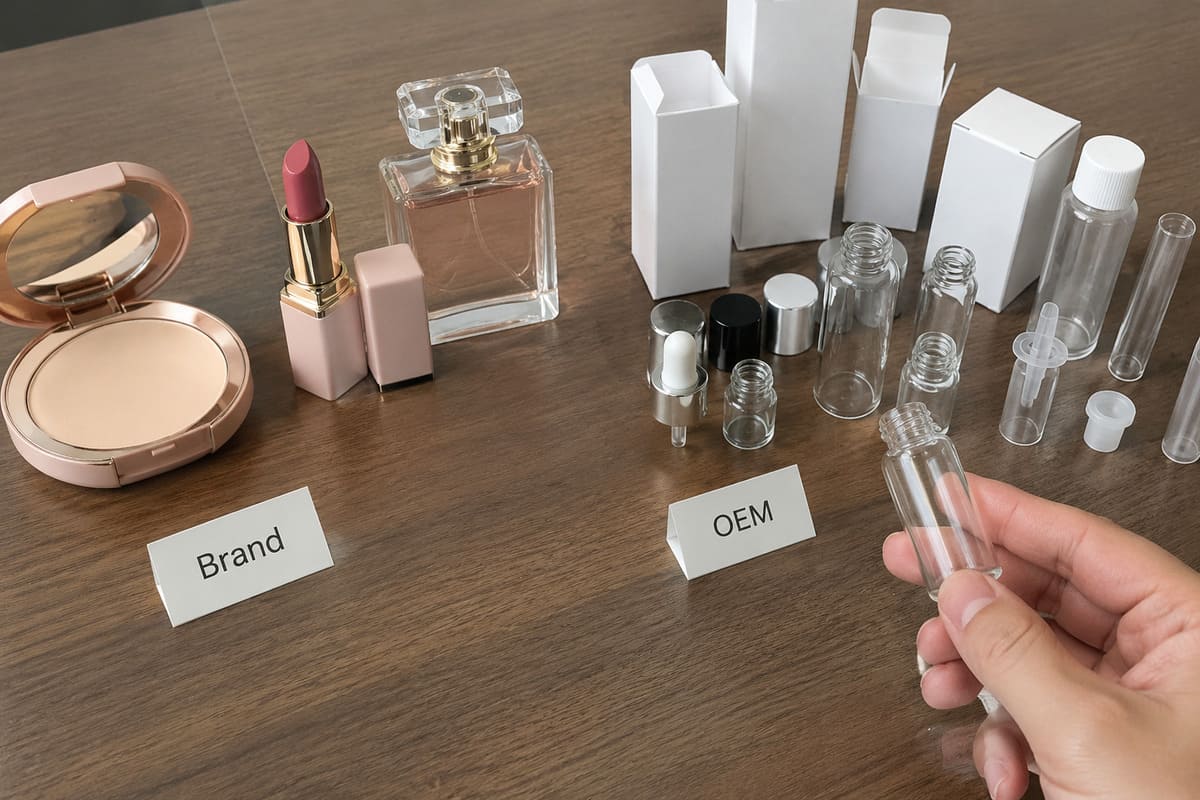
Here is a story I come back to often. A US founder sent inquiries to the top five companies on a popular "US manufacturers" list. Two were brand owners and never replied. Three were large CDMOs who politely explained their minimum was 50,000 units. He waited three weeks for answers that would never help him. By the time he understood that these giants would not touch a 2,000-unit order, his launch window had closed. He lost a full quarter of sales, not because his product was wrong, but because he chased the wrong tier of manufacturer.
I told him plainly: the list is ranked by company size, not by startup friendliness. We offered him a 2,000-unit standard eyeshadow palette trial. He launched in weeks instead of months and finally had product to sell without draining his savings.
The ranking is not lying to you. It is answering a different question than the one you have. Treat a high rank as a warning sign for a small order, not a green light.
In-House Brands vs. Contract Manufacturers: Know the Difference Before You Send an Inquiry?
You are about to email a famous name. Before you hit send, ask one thing: does this company even make products for other people? If it does not, your email joins thousands of ignored messages, and you learn nothing except that silence hurts.
In-house brands like Estée Lauder, e.l.f., and P&G own factories but produce only their own labels2, so they are your competitors, not your suppliers. Contract manufacturers and CDMOs like Mana Products or Kolmar accept outside orders3 but require large minimums. Before sending any inquiry, confirm which type you are contacting, because emailing a brand owner wastes weeks for zero reply.

The distinction decides whether your inquiry has any chance. Let me break the market into three tiers, because "contract manufacturer" alone is still too broad.
The three tiers of US cosmetics manufacturing
| Tier | Examples | Accepts outside orders? | Typical MOQ | Right for a startup? |
|---|---|---|---|---|
| Tier 1: In-house giants | Estée Lauder, P&G, e.l.f., Coty | No | N/A — own brands only | No. Do not email them. |
| Tier 2: Mega CDMOs | Mana Products, Kolmar | Yes | 50,000–100,000 units | No. Volume and cycle too large. |
| Tier 3: Agile true manufacturers | Factories with in-house R&D and tiered MOQs | Yes | 2,000–10,000 units | Yes. This is your tier. |
Tier 1 companies are the ones you recognize from store shelves. They own real factories, but those factories exist to make their own products. Emailing them for contract work is like asking Coca-Cola to bottle your soda. They are competitors you will face in the market, not partners.
Tier 2 companies are the real contract manufacturers behind many retail brands. They are excellent at scale. Their minimums, development timelines, and tooling costs assume a client with capital and distribution already in place. For a founder validating an idea, that structure is a mismatch, not a flaw.
Tier 3 is where early-stage brands belong. These are factories with genuine formulation capability that offer tiered minimums so you can start small and scale. The trade-off is simple: you accept a smaller name in exchange for an order size that fits your budget and a supplier that actually replies.
The Real MOQ of US Manufacturing: 50,000 Units vs. a Startup's Budget?
You budgeted $10,000 for your first run. You feel ready. Then the quote arrives: 50,000 units, six-figure total, four-month development. The number does not just exceed your budget. It tells you that you were never the customer this quote was written for.
The real minimum order quantity at large US cosmetics manufacturers typically starts at 50,000 units, often reaching 100,000 for custom formulas. At a realistic unit cost, that is a six-figure commitment before marketing. A startup with a $10,000 budget cannot meet that minimum, which is why matching MOQ to budget matters more than finding the biggest supplier.
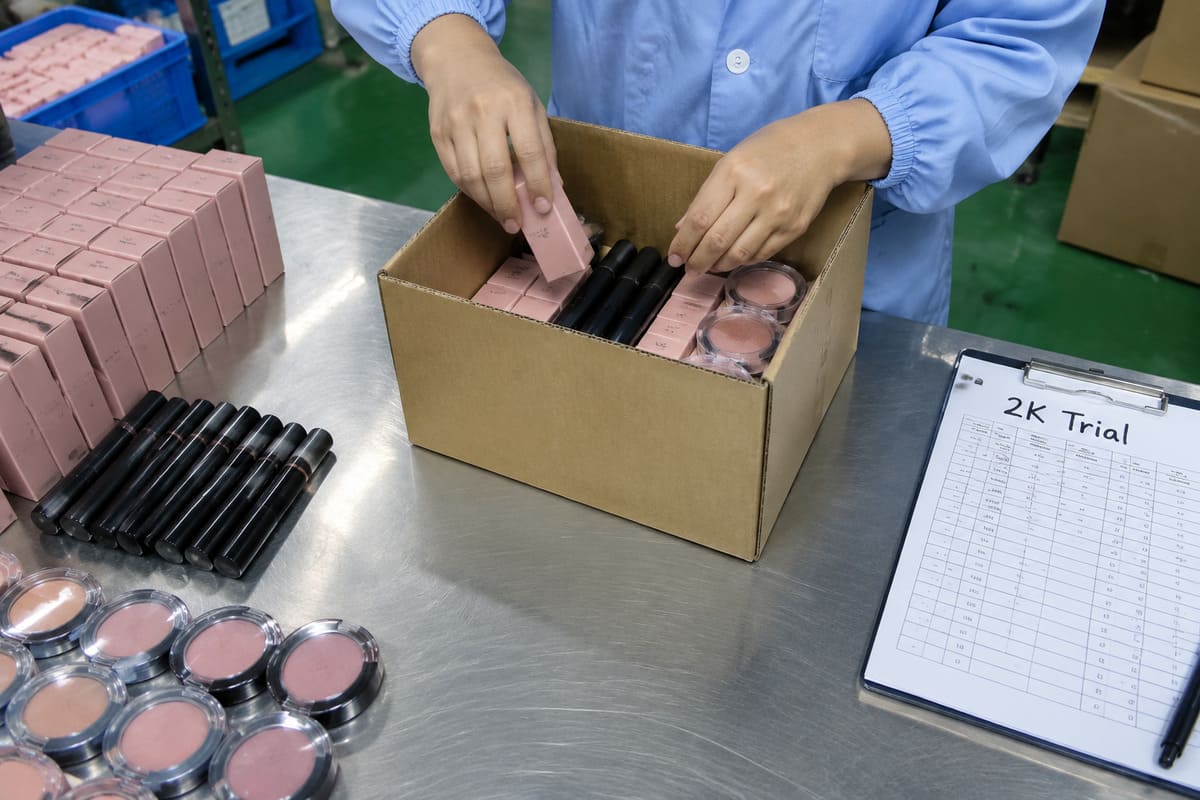
Let me put the mismatch in concrete numbers so the gap is undeniable.
| Scenario | Order size | Approximate capital needed | Development cycle | Fits a first-time founder? |
|---|---|---|---|---|
| Mega CDMO custom order | 50,000 units | $100,000+ | 3–6 months | No |
| Mega CDMO standard order | 50,000 units | High five figures | 2–4 months | Rarely |
| Agile standard palette trial | 2,000 units | Low four figures | Weeks | Yes |
| Agile custom formulation | 5,000–10,000 units | Mid four to five figures | Weeks to months | Yes, when ready to scale |
The 50,000-unit minimum is not greed. It reflects how large factories recover tooling, formulation, and line-changeover costs across a run.4 For a mega CDMO, a 2,000-unit order loses money before the first palette ships. That is why they say no, and they are right to.
Your job is not to convince a giant to shrink its minimum. Your job is to find a supplier whose economics already work at your scale. I will say the uncomfortable part out loud: US domestic manufacturing is expensive and built for high volume.5 If you have $100,000 and need 50,000 units for a retail launch, a US CDMO is a strong, legitimate choice. If you have $10,000 and need to learn whether anyone wants your product, that same CDMO is the wrong door.
The Smart Path: How to Validate Your Brand with a 2,000-Unit Trial?
You do not actually need 50,000 units. You need proof that customers will buy. Ordering 50,000 units of an unvalidated product is not ambition, it is risk you cannot reverse.6 Agonizing over a giant's quote keeps you from the one step that de-risks everything.
The smart path for a new brand is a small validation run, not a mass order. Start with roughly 2,000 units of a standard product to test demand, pricing, and customer response with limited capital. Once the product sells, scale to custom formulation at 5,000 to 10,000 units. Validate first, then commit to volume, in that order.
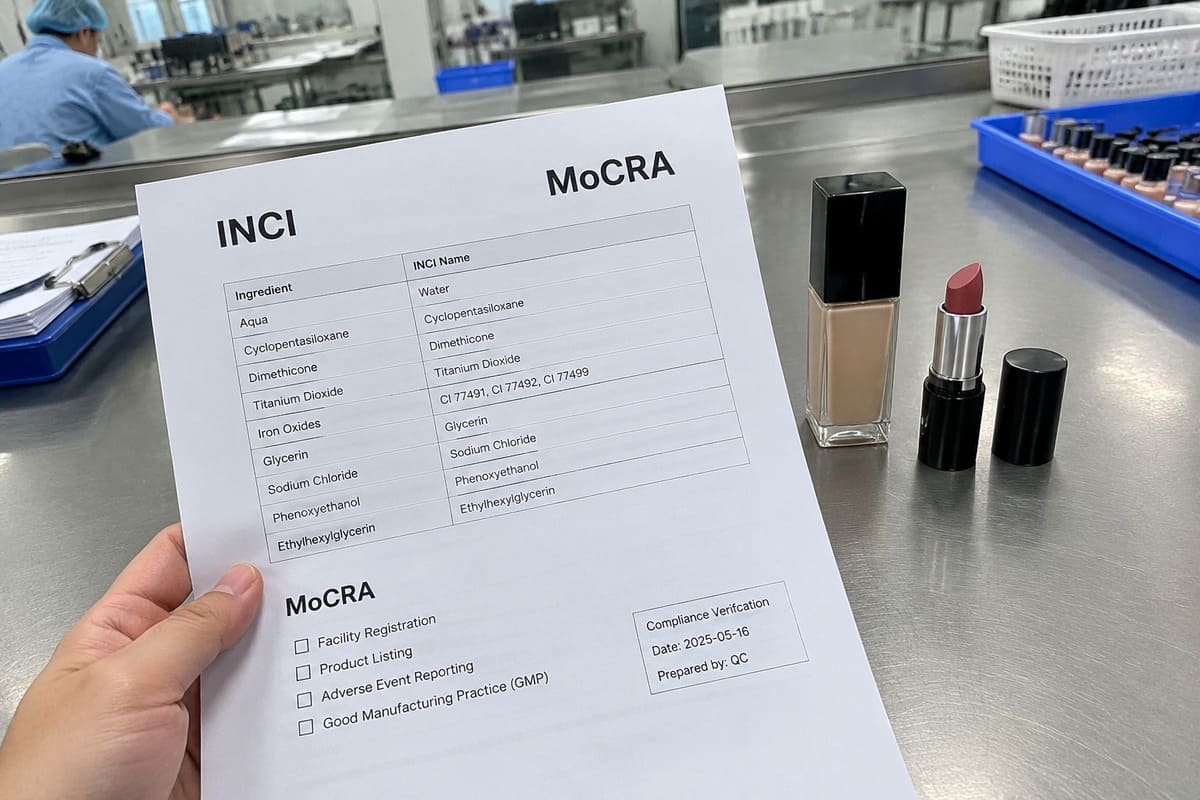
As a manufacturer in one of the core supply chain clusters in Guangdong, China7, I do not compete with US giants for 50,000-unit orders. We compete to be the low-risk launch partner for brands that need 2,000-unit validation first. Here is the staged approach I recommend to founders.
A validation-first launch sequence
- Start with a standard product. Selected standard eyeshadow palettes start at 2,000 units with us. Standard formats remove formulation time and tooling cost, so you test the market, not the chemistry.
- Measure real demand. Sell through your first run. Track sell-through rate, repeat purchase, and the shades customers actually choose. Data beats opinion.
- Move to custom at 5,000 units. Once demand is proven, true custom formulation begins at 5,000 units. Now you are investing in a product you know sells.
- Scale deliberately. At 10,000 units and beyond, you negotiate better unit economics with evidence of traction behind you.
This sequence protects your cash. A 2,000-unit trial that fails costs you thousands and a lesson. A 50,000-unit order that fails costs you the business. I have seen both outcomes, and the founders who validated first are the ones still trading two years later.
One honest boundary: a small validation run means working with an agile overseas supply chain partner, not a US domestic giant. That is a real trade-off involving lead time and shipping. For market testing on a tight budget, most founders find it the smarter risk.
What Documents and Compliance Standards to Look For?
You found a supplier who will take your order. You feel relieved and almost skip the paperwork. That is the mistake that triggers a recall or a customs hold. Compliance is not bureaucracy. It is the difference between a brand that lasts and one that gets pulled from shelves.
For selling cosmetics in the US, look for MoCRA registration and compliant labeling8, a complete INCI ingredient list, and supporting safety documentation. Treat every certificate as a document to verify independently, not a claim to accept on trust. Confirm which standards apply to your specific product and market with a qualified regulatory professional before you commit to production.
Compliance requirements depend on your market and product, so I will give you the core documents buyers should request and verify. I am describing what a careful buyer checks, not offering regulatory advice for your specific case.
Core documents a US-market buyer should request
| Document | What it covers | Why it matters | How to verify |
|---|---|---|---|
| MoCRA registration | US facility registration and product listing under the Modernization of Cosmetics Regulation Act9 | Required for cosmetics marketed in the US | Confirm facility registration status directly, not by claim |
| INCI ingredient list | Standardized international ingredient names10 | Needed for compliant labeling and allergen checks | Cross-check against your formula and label |
| Safety / substantiation data | Evidence supporting product safety | MoCRA expects safety substantiation on file11 | Request the underlying reports, not a summary |
| Batch and specification records | Formula, shade, and quality specs per batch | Enables consistency and traceability | Match samples against written specs |
A few principles I hold to. First, a certificate is a starting point, not proof. Ask for the issuing body, the scope, and the expiry, then verify independently. Second, requirements differ by destination. What satisfies a US retailer differs from EU or Gulf market rules12, so confirm the exact standards for where you will actually sell. Third, application-specific decisions deserve a qualified professional. For your formula, claims, and target market, a regulatory consultant or testing lab should review the specifics before you lock a production order.
Here is my own boundary as a supplier. We provide full compliance documentation including MoCRA and INCI support. We will not tell you that paperwork replaces your own due diligence, and we will not pretend that one certificate clears every market. Verify, then trust.
Frequently Asked Questions
Who are the biggest cosmetics manufacturing companies in the USA?
The most recognized names include Estée Lauder, P&G, Coty, and e.l.f. as in-house brand owners, plus Mana Products and Kolmar as large contract manufacturers. The brand owners make only their own products. The contract manufacturers accept outside orders but usually require 50,000 units or more.
Can a startup order from a major US cosmetics manufacturer?
Rarely. In-house brands do not accept outside orders at all. Large US contract manufacturers typically set minimums at 50,000 to 100,000 units, which exceeds most startup budgets. A first-time founder is better served by an agile manufacturer offering tiered minimums starting around 2,000 units for validation.
What is a realistic MOQ for a first cosmetics order?
For a genuine market test, around 2,000 units of a standard product is realistic and affordable. Custom formulation generally starts higher, near 5,000 units. Large US CDMOs begin near 50,000 units. Match the minimum to your budget and stage rather than to a supplier's reputation.
What compliance documents do I need to sell cosmetics in the US?
At minimum, confirm MoCRA facility registration and product listing, compliant labeling with a full INCI ingredient list, and safety substantiation on file. Requirements vary by product and market, so verify every certificate independently and consult a qualified regulatory professional for your specific formula and claims.
Is overseas manufacturing a safe choice for a new brand?
It can be, for low-volume validation on a limited budget. The trade-offs are lead time and shipping logistics. Choose a partner that provides verifiable compliance documentation, offers minimums matching your stage, and communicates clearly. Validate with a small run before committing to large volume anywhere.
Conclusion
The major cosmetics manufacturing companies in the USA are famous for a reason, but fame is not the metric that matters when you are launching. The top of the ranking is sorted by size, which makes the number one result either your competitor or a factory with a 50,000-unit minimum. Neither will make your 2,000-unit order. The smart move is to match your manufacturer to your stage: validate demand with a small standard run, scale to custom once it sells, and verify compliance documents at every step. If you are ready to test the market without a six-figure commitment, talk to me about a 2,000-unit eyeshadow palette trial and the compliance documentation to go with it.
"Makeup Manufacturer Australia: The Real Cost of “Local” vs ...", https://vertinabeauty.com/makeup-manufacturer-australia-the-real-cost-of-local-vs-true-customization/. Industry analyses of contract cosmetics manufacturing indicate that large-scale manufacturers typically impose high minimum order quantities, supporting the article's characterization of five- to six-figure unit minimums. Evidence role: statistic; source type: research. Supports: That large contract cosmetics manufacturers commonly set minimum order quantities in the tens of thousands of units.. Scope note: Reported minimums vary by product type, formulation complexity, and manufacturer, so the source provides contextual support rather than confirmation of the exact 50,000 to 100,000 unit figures. ↩
"Estée Lauder Companies", https://en.wikipedia.org/wiki/Est%C3%A9e_Lauder_Companies. Encyclopedic and corporate profiles of Estée Lauder, e.l.f. Beauty, and Procter & Gamble describe them as brand owners marketing their own product lines, supporting the article's in-house classification. Evidence role: general_support; source type: encyclopedia. Supports: That Estée Lauder, e.l.f., and P&G operate as brand owners focused on their own product portfolios.. Scope note: Public profiles confirm these firms' owned-brand focus but may not explicitly address whether they ever undertake third-party contract manufacturing, so the support is indirect on the exclusivity point. ↩
"Mana Products", https://www.linkedin.com/company/mana-products. Company and industry directory profiles describe Mana Products and Kolmar as contract manufacturers of cosmetics for third-party brands, supporting the article's tier classification. Evidence role: general_support; source type: institution. Supports: That Mana Products and Kolmar operate as contract cosmetics manufacturers serving external brand clients.. Scope note: The article directly discusses these entities, so directory or company sources are appropriate; however such profiles may not independently verify stated minimum order quantities. ↩
"Economic order quantity", https://en.wikipedia.org/wiki/Economic_order_quantity. Operations and production economics research supports the mechanism that fixed setup, tooling, and changeover costs drive minimum lot sizing decisions, consistent with the article's explanation of high MOQs. Evidence role: mechanism; source type: paper. Supports: That minimum order quantities arise from the need to spread fixed setup and changeover costs over larger production volumes.. Scope note: General production economics literature explains lot-sizing principles rather than cosmetics-specific cost structures, so the support is conceptual rather than industry-specific. ↩
"International Comparisons of Hourly Compensation Costs ...", https://www.bls.gov/fls/ichcc.htm. Comparative manufacturing cost studies indicate higher labor and input costs for US domestic production relative to many offshore locations, lending general support to the article's cost characterization. Evidence role: general_support; source type: research. Supports: That US domestic manufacturing generally entails higher production costs relative to major offshore manufacturing locations.. Scope note: Such studies address manufacturing broadly rather than cosmetics specifically, so the support is contextual and does not confirm the high-volume orientation claim for this sector. ↩
"The keys to the minimum viable product strategy - Mel", https://blogs.uoc.edu/mel/the-keys-to-the-minimum-viable-product-strategy/. Entrepreneurship and lean startup literature supports the practice of testing demand with limited commitment before scaling production, consistent with the article's validation-first recommendation. Evidence role: expert_consensus; source type: education. Supports: That validating customer demand before committing to large-scale production reduces the risk of unrecoverable losses for early-stage ventures.. Scope note: This literature describes a general product development principle rather than cosmetics-specific outcomes, so it supports the reasoning rather than the specific unit figures cited. ↩
"How to Find a Cosmetics Manufacturer: A Buyer's Guide to Verifying ...", https://vertinabeauty.com/how-to-find-a-cosmetics-manufacturer-a-buyers-guide-to-verifying-real-factories/. Economic and industry reports identify Guangdong as a major manufacturing cluster in China, supporting the article's reference to it as a core supply chain region for cosmetics. Evidence role: general_support; source type: research. Supports: That Guangdong is a concentrated manufacturing and supply chain region, with cosmetics among its industries.. Scope note: Sources may document Guangdong's broad manufacturing base more than its specific cosmetics concentration, so support for the cosmetics-cluster claim may be partial. ↩
"Modernization of Cosmetics Regulation Act of 2022 (MoCRA)", https://www.fda.gov/cosmetics/cosmetics-laws-regulations/modernization-cosmetics-regulation-act-2022-mocra. The U.S. Food and Drug Administration describes facility registration and product listing obligations introduced by the Modernization of Cosmetics Regulation Act of 2022, supporting the article's statement that such registration applies to cosmetics marketed in the US. Evidence role: definition; source type: government. Supports: That the Modernization of Cosmetics Regulation Act establishes mandatory facility registration and product listing for cosmetics marketed in the United States.. Scope note: Regulatory scope and enforcement timelines may vary by product category and are subject to FDA updates, so the citation supports the general requirement rather than any specific product's compliance. ↩
"Modernization of Cosmetics Regulation Act of 2022 (MoCRA)", https://www.fda.gov/cosmetics/cosmetics-laws-regulations/modernization-cosmetics-regulation-act-2022-mocra. Official FDA material on the Modernization of Cosmetics Regulation Act confirms the law's full name and its role in updating federal cosmetics regulation, supporting the article's reference. Evidence role: definition; source type: government. Supports: That the Modernization of Cosmetics Regulation Act is a 2022 US federal law reforming cosmetics oversight.. ↩
"International Nomenclature of Cosmetic Ingredients", https://en.wikipedia.org/wiki/International_Nomenclature_of_Cosmetic_Ingredients. Reference material on the International Nomenclature of Cosmetic Ingredients supports the description of INCI as a standardized naming system used for ingredient labeling. Evidence role: definition; source type: encyclopedia. Supports: That INCI is an internationally used standardized system for naming cosmetic ingredients on labels.. Scope note: Adoption and legal requirements for INCI labeling differ across jurisdictions, so the source supports the naming standard itself rather than its mandatory status in any single market. ↩
"Modernization of Cosmetics Regulation Act of 2022 (MoCRA)", https://www.fda.gov/cosmetics/cosmetics-laws-regulations/modernization-cosmetics-regulation-act-2022-mocra. FDA guidance on safety substantiation under the Modernization of Cosmetics Regulation Act supports the claim that responsible persons must keep records substantiating product safety. Evidence role: mechanism; source type: government. Supports: That the Modernization of Cosmetics Regulation Act imposes a duty to maintain records demonstrating adequate substantiation of cosmetic product safety.. Scope note: The precise content and format of substantiation records are determined by FDA rulemaking and may change, so the source supports the existence of the obligation rather than any defined document set. ↩
"EC Regulation 1223/2009 on cosmetics", https://en.wikipedia.org/wiki/EC_Regulation_1223/2009_on_cosmetics. Official EU and Gulf regulatory materials, alongside US FDA guidance, document distinct cosmetics requirements across these markets, supporting the article's claim that compliance standards vary by destination. Evidence role: general_support; source type: government. Supports: That the US, EU, and Gulf regions maintain separate and differing regulatory regimes for cosmetics.. Scope note: Confirming the frameworks exist supports the divergence claim generally, but the specific differences relevant to a given product require review against each region's current rules. ↩