Where Are Most Makeup Products Manufactured? (A Supply Chain Map for Brand Founders)
You typed "where are most makeup products manufactured" into Google, and you got a geography lesson. China leads volume, France leads luxury, Korea leads innovation. Useful trivia. But you have a $10,000 budget and a first order to place. That ranking tells you nothing about where your product should go. That is the real problem I want to solve here.
Most makeup products are manufactured in China, which produces the largest global volume of color cosmetics1, with France leading luxury fragrance and prestige skincare2, Italy specializing in high-end pressed powders3, and South Korea driving skincare innovation4. For a brand founder, the right origin depends on product category, budget, and launch stage—not on which country sounds most prestigious.
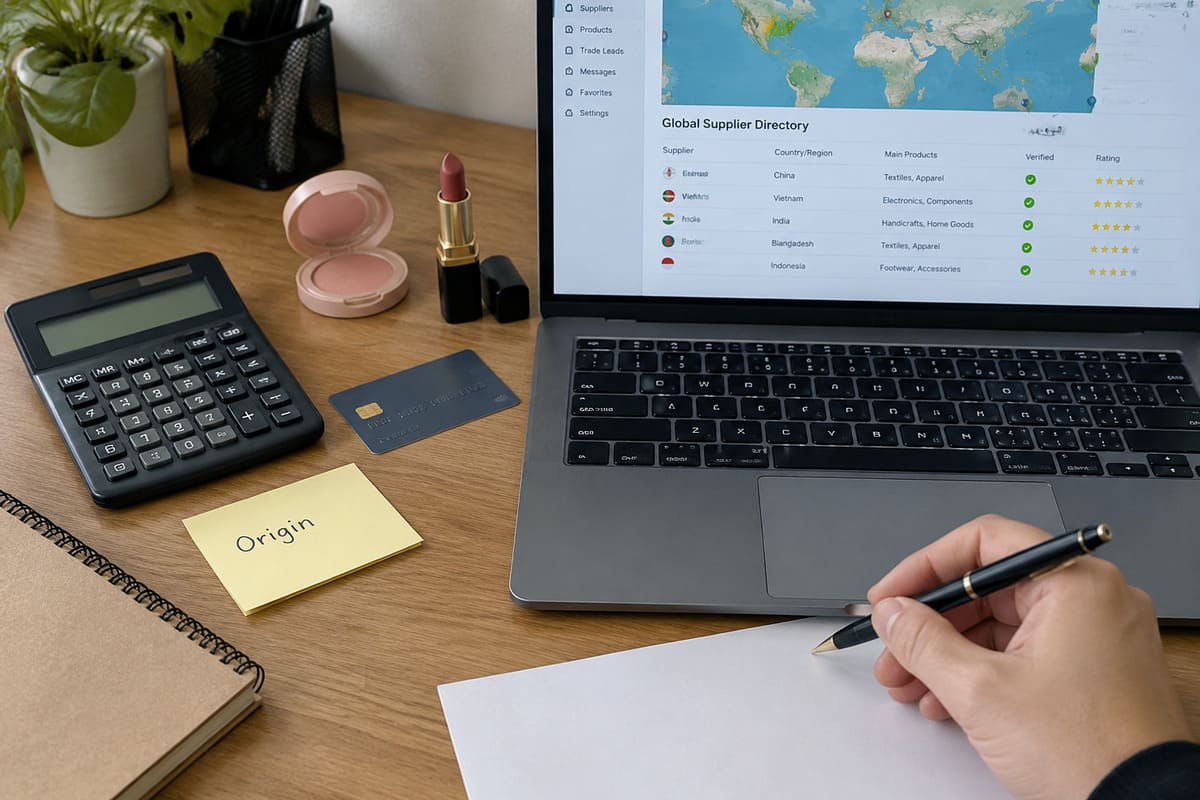
Here is the catch. Knowing the macro map is step one. Matching your eyeshadow palette, your blush, or your skincare line to the right link in that chain is where founders win or lose their first launch. Let me walk you through how I think about it.
What Does "Where Are Makeup Products Manufactured" Really Mean for Founders?
You are not writing a trade report. You are about to wire money to a factory you have never visited. The fear underneath your search is simple: what if I pick the wrong country and blow my entire budget on a minimum I can't afford?
When founders ask where makeup products are manufactured, they are really asking which country's supply chain fits their specific category, budget, and startup stage. The honest answer is category-dependent: powder color cosmetics, luxury fragrance, and advanced skincare each have a different ideal manufacturing origin.
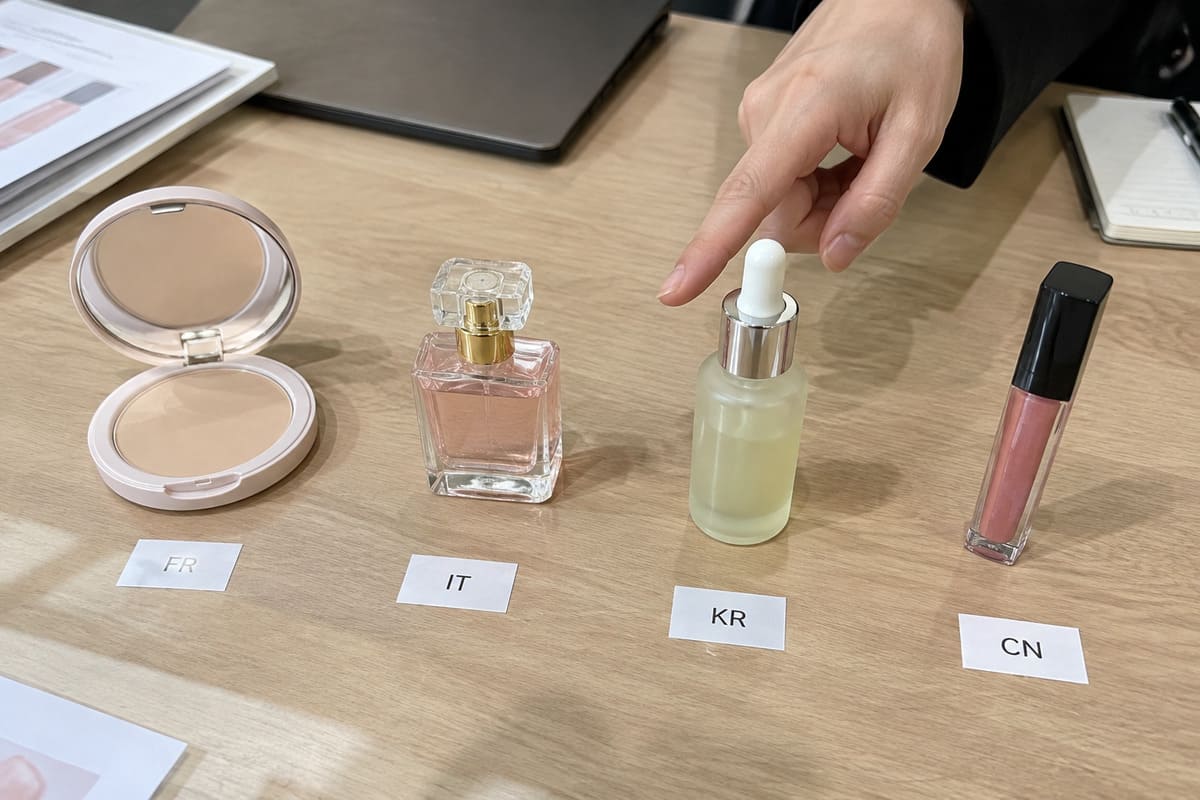
That reframe changes everything. So let me show you what that decision looks like in practice.
Why the Macro Ranking Misleads New Brands
The "China is biggest" headline hides the detail that matters to you. Biggest does not mean right. A country can lead global volume and still be the wrong fit for a 500-unit test order. What you actually need is a match between three variables:
- Your product category — powder, cream, liquid, skincare, or fragrance
- Your budget — can you absorb a €3,000 sample fee and a 50,000-unit MOQ?
- Your stage — are you validating a concept or scaling a proven hit?
I have watched founders ignore all three and chase a flag on the label. It rarely ends well. One founder came to me after exactly that mistake, and his story frames this entire article.
A Real Case That Shaped My Advice
A founder once told me he needed "European manufacturing" for his high-pigment eyeshadow palette. He assumed Europe equaled quality. He contacted a factory in Italy and hit a wall: a 50,000-unit MOQ, a €3,000 sample fee, and a six-month lead time5. For a first launch, that is not a supply chain. That is a trap.
I told him the truth. Italy is excellent for luxury pressed powders. But its supply chain is not built for startups. We ran his palette as a 2,000-unit trial in Guangdong instead. He got the pigment payoff he wanted, validated his market, and saved enough capital to fund his TikTok campaign. Today he is a 5,000-unit custom client of mine.
The Global Supply Chain Map: Who Excels at What?
You do not want five factories in five countries for one brand. You want one clear answer per category. The agitation here is real: pick the generalist narrative and you overpay, or you under-deliver.
The global makeup manufacturing map breaks down by specialty: China (Guangdong) leads color cosmetics volume and speed, France dominates luxury fragrance and prestige skincare, Italy owns high-end pressed powders, South Korea leads skincare innovation, and the United States offers domestic compliance and "Made in USA" positioning at higher cost.
Let me put the full picture in one place, because this is the table founders screenshot.
The Category-to-Country Breakdown
| Origin | Core Strength | Best For | MOQ Reality | Lead Time | Cost Profile |
|---|---|---|---|---|---|
| China (Guangdong) | Color cosmetics volume and speed | Eyeshadow, blush, pressed powder | Low (trials from ~2,000) | Weeks | Competitive |
| France | Luxury fragrance, prestige skincare | High-end scent, anti-aging | High | Long | Premium |
| Italy | Artisanal pressed powders | Luxury color cosmetics | Very high (often 50,000+) | ~6 months | Premium |
| South Korea | Skincare innovation, K-beauty textures | Skincare-infused makeup | Medium-high | Medium | Competitive but crowded |
| United States | Domestic compliance | "Made in USA" branding | Varies | Medium | Higher |
Here is my read on each, based on serving global B2B buyers every week.
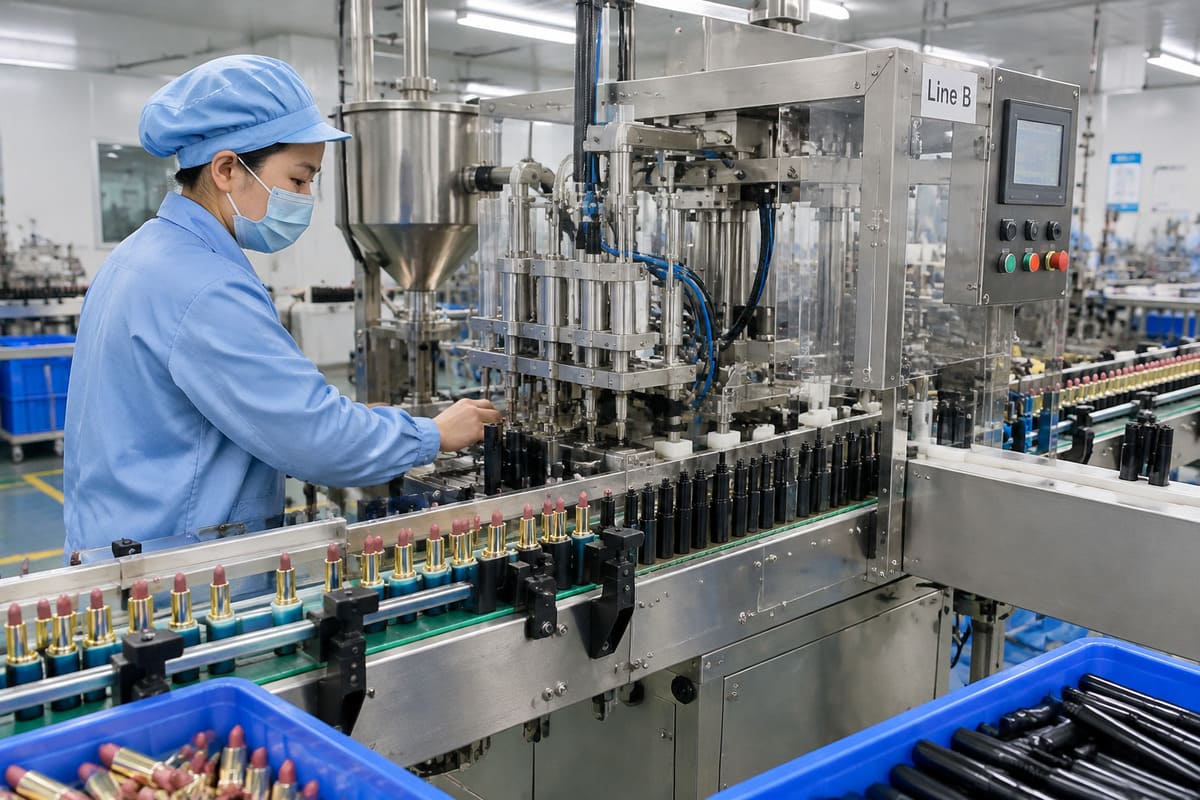
China (Guangdong cluster) is historically the global leader in color cosmetics volume and speed. It is the best fit for eyeshadow palettes, blush, and pressed powder. The cluster is now expanding into skincare and fragrance OEM/ODM, but its deepest, most mature strength remains powder-based color6.
France dominates luxury fragrance and prestige skincare. Expect high formula development costs and prestige pricing. You are paying for heritage and R&D depth.
Italy specializes in high-end pressed powders and artisanal color cosmetics. The quality is superb. The high MOQs and long lead times price out most startups.
South Korea leads skincare innovation and K-beauty textures. It is great for skincare-infused makeup. The market is competitive, so differentiation takes work.
United States is strong for domestic compliance and "Made in USA" positioning. Production costs run higher, which you pass to the shelf price.
Why China (and Specifically Guangdong) Dominates Color Cosmetics?
You keep hearing "China produces the most." Fine. But why does a new brand actually benefit from that? Volume alone does not help you. Ecosystem does.
China dominates color cosmetics manufacturing because Guangdong hosts a complete ecosystem of pigment suppliers, packaging factories, and pressing equipment in one cluster7. This density lets a new brand move from concept to shelf in weeks rather than months8, which is why global color cosmetics brands source here.

Based on our experience serving global buyers, industry data confirms China as the largest global producer of cosmetics9. As a manufacturer inside one of Guangdong's core clusters, I see the mechanics behind that statistic firsthand.
The Ecosystem Advantage, Broken Down
The magic is not one factory. It is proximity. When pigment, packaging, and pressing all sit within an hour of each other, iteration gets fast and cheap.
- Pigment suppliers next door mean I can test a new chameleon or sparkle effect in days.
- Packaging factories in the same region cut shipping delays between components.
- Pressing equipment built for powder means consistent payoff batch after batch.
This is why our deepest expertise is powder-based color cosmetics—eyeshadow, blush, and pressed powder. With our expanded engineering team, we can now also develop skincare and fragrance formulations. But I will be honest about where the category leaders sit. For powder color, Guangdong is the best choice. For advanced skincare, Korea or France may be stronger. For fine fragrance, France or Italy. I don't claim to be best at everything. I claim to be best at what I do best.
The Startup's Dilemma: Sourcing from Europe vs. China?
You feel the pull of prestige. "Made in Italy" looks beautiful on a compact. But prestige has a price tag, and for a first run that tag can end your brand before it starts.
For startups, Europe offers prestige and artisanal quality but demands high MOQs, large sample fees, and long lead times. China, specifically Guangdong, offers low trial MOQs, fast turnaround, and competitive cost. For a first launch on a limited budget, China's color cosmetics supply chain is almost always the practical choice.
Let me make the trade-off concrete with the numbers founders actually face.
Europe vs. China: The First-Order Math
| Factor | Italy (Europe) | Guangdong (China) |
|---|---|---|
| Typical MOQ | 50,000 units | 2,000-unit trial available |
| Sample fee | ~€3,000 | Low to modest |
| Lead time | ~6 months | Weeks |
| Capital at risk (first order) | Very high | Low, validation-sized |
| Best suited stage | Scaled, funded brands | Startups and validation |
The founder I mentioned earlier ran this exact math without knowing it. The Italian quote would have consumed his whole budget on a single unproven SKU. The Guangdong trial let him test, learn, and reinvest. Prestige did not pay his marketing bills. Validated demand did.
That said, I will never tell you Europe is "wrong." If you are funded, scaling a proven luxury line, and your brand story depends on a European origin, that path makes sense. The dilemma only bites when stage and origin mismatch.
How to Match Your Product Category to the Right Manufacturing Origin?
You might be building more than one product. A palette plus a serum. A blush plus a scent. So which goes where? Picking one country for everything is how founders overpay on some SKUs and underperform on others.
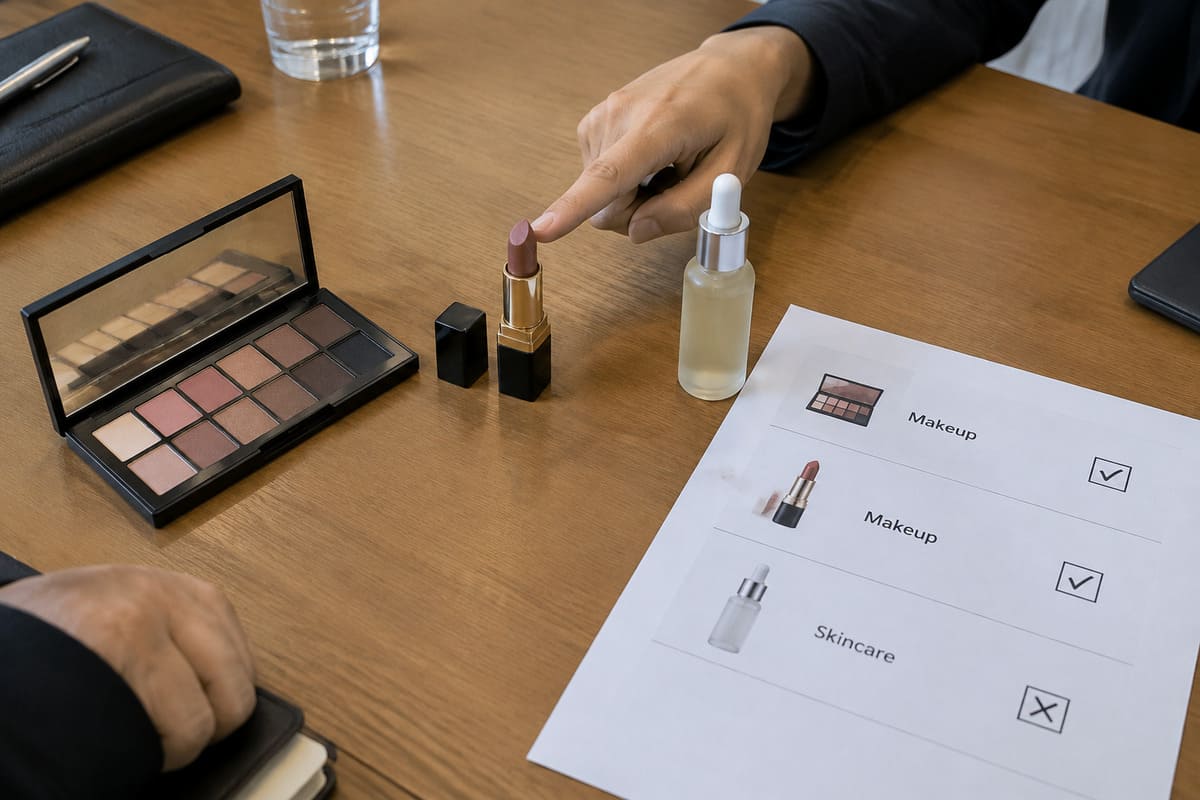
To match your product to the right manufacturing origin, map each category to its specialist: powder color cosmetics to China's Guangdong, advanced anti-aging skincare to Korea or France, fine fragrance to France or Italy, and compliance-driven domestic lines to the United States. Source each category where its supply chain is deepest.
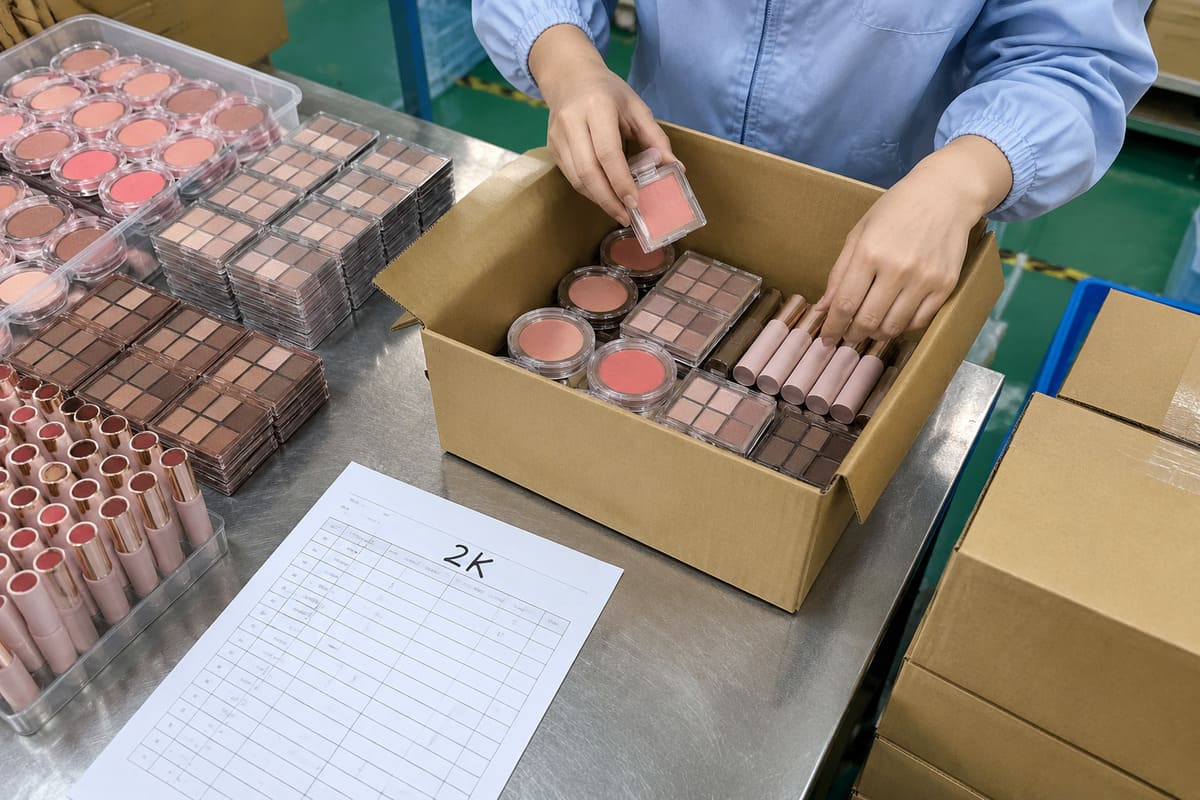
Here is the honest matching guide I give every founder who asks.
My Category Matching Guide
| Your Product | Strongest Origin | Why |
|---|---|---|
| Eyeshadow palette, blush, pressed powder | China (Guangdong) | Deepest color ecosystem, low trial MOQ, fast |
| Chameleon / sparkle color effects | China (Guangdong) | Specialist pigment access and pressing |
| Advanced anti-aging skincare | Korea or France | R&D depth and formula innovation |
| Fine fragrance | France or Italy | Heritage perfumery supply chain |
| "Made in USA" compliance brand | United States | Domestic rules and positioning |
I apply this to my own factory without flinching. A founder recently wanted a high-pigment palette and a companion skincare product for his brand. We ran the palette in Guangdong, where our core strength lives. We handled the skincare through our expanded engineering team—while being transparent that color cosmetics is where we are strongest. If his primary product were advanced anti-aging serum, I would have pointed him toward Korea or France. Matching beats loyalty. Every time.
A Smart Starting Point: Leveraging China's Color Cosmetics Cluster with a 2,000-Unit Trial?
You want to start, but committing 50,000 units to an untested idea feels reckless10. It is. The smart move is not a huge bet. It is a small, intelligent one that teaches you something.
The smartest starting point for a color cosmetics brand is a 2,000-unit trial in China's Guangdong cluster. This validates your product and market at low capital risk, then lets you scale to 5,000–10,000 units for customization and exclusivity once demand is proven.
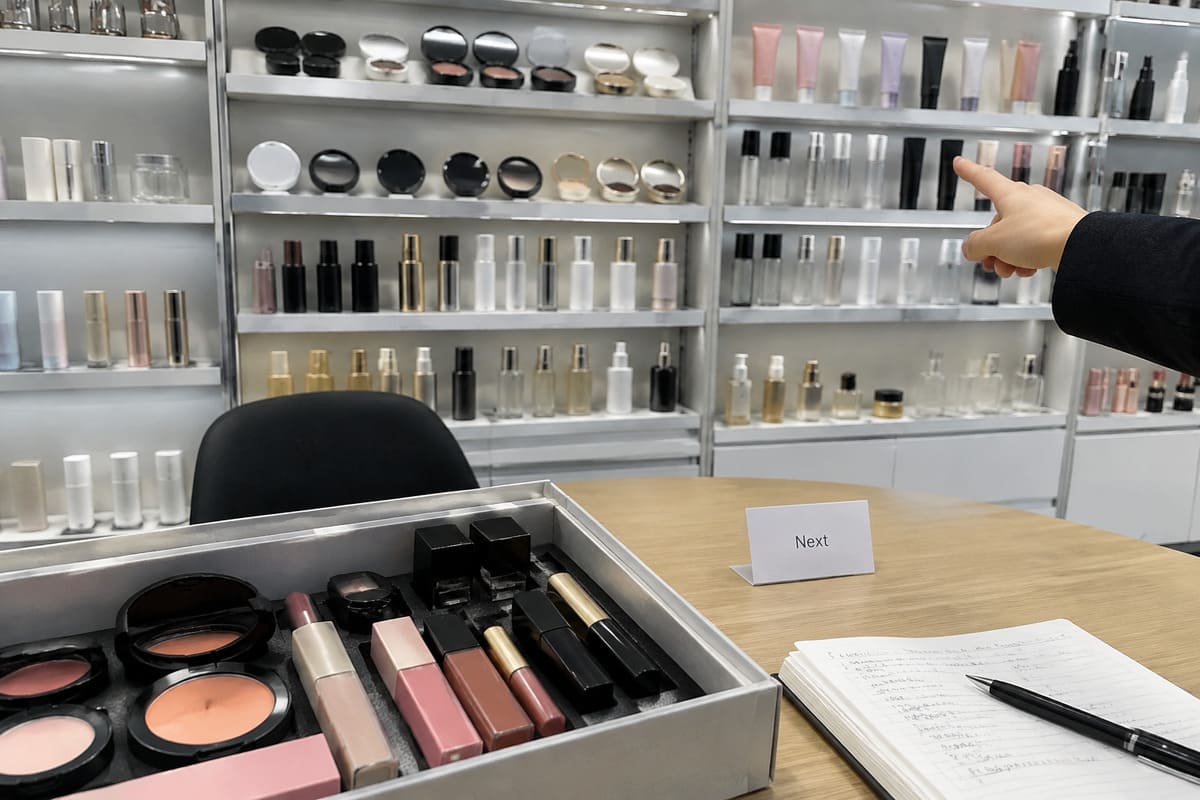
This is the exact ladder I recommend, and I want to be fully transparent about what sits on each rung.
The Validate-Then-Scale Ladder
- Validate at 2,000 units. Test your palette or blush in-market. Learn what sells. Keep capital free for marketing.
- Customize at 5,000–10,000 units. Once demand is proven, lock in custom colors, packaging, and exclusivity.
- Expand the line carefully. Add companion categories where it makes sense, with clear eyes on sourcing.
Let me be brutally honest about my own scope, because you deserve it:
What I do best: Powder-based color cosmetics—eyeshadow, blush, pressed powder—at 2,000-unit validation and 5,000–10,000-unit customization. This is my core.
What I can now also do: Skincare and fragrance formulations through my expanded engineering team. MOQs and timelines for these differ from my powder core.
What I don't do: Claim to be best at everything. If your primary product is advanced anti-aging skincare, I will tell you to consider Korea or France.
If your core product is color cosmetics, I will show you exactly why Guangdong is your supply chain partner. Start small, prove it, then scale.
Frequently Asked Questions
Where are most makeup products manufactured in the world?
Most makeup products are manufactured in China, the largest global producer of cosmetics by volume, with Guangdong province as the core color cosmetics cluster. France leads luxury fragrance and prestige skincare, Italy specializes in high-end pressed powders, and South Korea drives skincare innovation.
Is it cheaper to manufacture makeup in China or Europe?
For most startups, China is significantly more affordable for a first order. Europe, especially Italy, often requires MOQs around 50,000 units, sample fees near €3,000, and six-month lead times11. Guangdong offers trials from roughly 2,000 units with faster turnaround and competitive pricing.
What is the best country to manufacture an eyeshadow palette?
China's Guangdong cluster is the best origin for eyeshadow palettes. Its dense ecosystem of pigment suppliers, packaging factories, and pressing equipment delivers high pigment quality, low trial MOQs, and fast lead times—ideal for both new and scaling color cosmetics brands.
What is a realistic MOQ for a makeup startup?
A realistic startup MOQ for powder color cosmetics is around 2,000 units for a validation run. This keeps capital risk low while you test market demand. Once demand is proven, scaling to 5,000–10,000 units unlocks customization and exclusivity.
Should I manufacture my skincare and makeup in the same factory?
Not always. Match each category to its specialist. Powder color cosmetics fit Guangdong best, while advanced skincare may be stronger in Korea or France. Some factories, including mine, can support a cross-category line, but you should ask which categories they are genuinely strongest in.
Conclusion
When you ask where makeup products are manufactured, remember the answer is not a single flag. It is a map. China's Guangdong cluster leads color cosmetics with low trial MOQs and speed. France and Italy own luxury scent and pressed powder. Korea drives skincare innovation. The winning move is matching your category, budget, and stage to the right origin—not chasing prestige. If your core product is color cosmetics, start with a 2,000-unit trial, validate real demand, then scale to 5,000 units for exclusivity. Send me your product concept and target market, and I will map your best starting point honestly.
"Cosmetics industry - statistics & facts", https://www.statista.com/topics/3137/cosmetics-industry/?srsltid=AYCX9vI9XL6B9SuuJaM6TzCKCNACjNamqz5hnaJYY3vC5WhtUOW766Cy. Industry trade data on global cosmetics manufacturing output indicate that China accounts for a leading share of worldwide production volume. Evidence role: statistic; source type: institution. Supports: China ranks as the largest producer of cosmetics by manufacturing volume globally.. Scope note: Trade statistics often aggregate all cosmetics categories rather than isolating color cosmetics specifically, so category-level dominance may be inferred rather than directly measured. ↩
"France Fragrance Market Report 2026: Trends & Analysis", https://www.sourceready.com/report/detail/france-fragrance-market-report-2026. French trade and customs export data document France's leading position in the global export of perfumes and prestige cosmetic products. Evidence role: statistic; source type: government. Supports: France holds a leading position in global exports of perfume and prestige cosmetics.. Scope note: Export value leadership reflects trade volume and pricing rather than a direct measure of manufacturing or formulation superiority. ↩
"Italy - Cosmetics and Toiletries | Privacy Shield", https://www.privacyshield.gov/ps/article?id=Italy-Cosmetics-and-Toiletries. Italian cosmetics industry association reporting describes a concentrated sector of contract manufacturers producing a large share of color cosmetics for international brands. Evidence role: general_support; source type: institution. Supports: Italy hosts a significant cluster of contract manufacturers specializing in color cosmetics, including pressed powders.. Scope note: Association data cover color cosmetics broadly and may not isolate pressed powders as a distinct metric. ↩
"Bioactive ingredients in Korean cosmeceuticals", https://pubmed.ncbi.nlm.nih.gov/32100931/. Market research and trade reporting on the K-beauty phenomenon document South Korea's role in introducing novel skincare formulations and textures to global markets. Evidence role: general_support; source type: research. Supports: South Korea is recognized as a center of skincare innovation and growing cosmetics exports under the K-beauty trend.. Scope note: Innovation leadership is partly a qualitative and reputational assessment rather than a strictly quantified metric. ↩
"Top 10 Private Label Cosmetics Manufacturers in Italy", https://xirancosmetics.com/top-10-private-label-cosmetics-manufacturers-in-italy/. Industry sourcing guides report that European contract cosmetics manufacturers generally impose higher minimum order quantities and longer production timelines than many Asian counterparts. Evidence role: general_support; source type: other. Supports: European luxury cosmetics contract manufacturers commonly set high minimum order quantities and extended lead times relative to Asian suppliers.. Scope note: The specific figures cited (50,000 units, €3,000, six months) derive from a single case and may not represent an industry-wide average. ↩
"How to Find a Cosmetics Manufacturer: A Buyer's Guide to Verifying ...", https://vertinabeauty.com/how-to-find-a-cosmetics-manufacturer-a-buyers-guide-to-verifying-real-factories/. Sector analyses of the Guangdong cosmetics industry describe a manufacturing base historically oriented toward color cosmetics production. Evidence role: general_support; source type: research. Supports: Guangdong's cosmetics manufacturing base is historically concentrated in color cosmetics, including powder products.. Scope note: Available profiling may characterize color cosmetics broadly rather than confirming powder-based products as the single most mature subcategory. ↩
"Asian Cosmetics in Global Market: A Comparative Study of ...", https://dash.harvard.edu/bitstreams/a61452e7-2ccb-40a6-ba81-ba9a7ee77dab/download. Economic and industry studies of China's cosmetics sector document the concentration of manufacturers, ingredient suppliers, and packaging firms within Guangdong province. Evidence role: mechanism; source type: research. Supports: Guangdong province contains a dense, co-located cluster of cosmetics manufacturers, raw material suppliers, and packaging firms.. Scope note: Cluster studies describe agglomeration generally and may not confirm the specific proximity of pigment, packaging, and pressing operations described in the article. ↩
"Asian Cosmetics in Global Market: A Comparative Study of ...", https://dash.harvard.edu/bitstreams/a61452e7-2ccb-40a6-ba81-ba9a7ee77dab/download. Sourcing and trade references indicate that Chinese contract cosmetics manufacturers typically offer comparatively short development and production lead times. Evidence role: general_support; source type: other. Supports: Chinese OEM/ODM cosmetics manufacturers often advertise shorter production and development timelines than many European suppliers.. Scope note: Reported timelines vary widely by product complexity and order size, and a weeks-long concept-to-shelf figure may reflect best-case rather than typical conditions. ↩
"China Cosmetics Market", https://www.trade.gov/market-intelligence/china-cosmetics-market. Trade and market research sources on global cosmetics production report China as a leading manufacturer by output volume. Evidence role: statistic; source type: institution. Supports: China holds the position of largest global cosmetics producer by manufacturing volume.. Scope note: Rankings differ depending on whether they measure production volume, manufacturing value, or export value, and some sources rank other markets higher by value. ↩
"The keys to the minimum viable product strategy - Mel", https://blogs.uoc.edu/mel/the-keys-to-the-minimum-viable-product-strategy/. Business research on product launches and lean validation indicates that large initial inventory commitments for unproven products increase capital exposure and overstock risk for early-stage firms. Evidence role: general_support; source type: education. Supports: Large upfront inventory commitments for unvalidated products expose early-stage consumer brands to significant capital and overstock risk.. Scope note: General entrepreneurship research supports the principle of staged validation but does not address cosmetics MOQ thresholds specifically. ↩
"Eyeshadow Manufacturer: How Can Buyers Find a ... - Vertina Beauty", https://vertinabeauty.com/eyeshadow-manufacturer-how-can-buyers-find-a-reliable-factory/. Comparative sourcing references indicate that European contract manufacturers typically set higher minimum order quantities and longer lead times than their Chinese counterparts. Evidence role: general_support; source type: other. Supports: European contract cosmetics manufacturers generally require higher minimum order quantities and longer lead times than Chinese suppliers.. Scope note: The precise figures stated are extrapolated from one example and should not be read as a verified industry average across European manufacturers. ↩