Searching for a makeup manufacturer in Italy feels like the smart first move for a premium brand. You picture heritage color cosmetics, complex formulas, and that prestigious "Made in Italy" label. Then the quotes arrive: 2,500 units per shade, months of lead time. Suddenly your whole startup budget hangs on one color. There is a smarter way to start.
A makeup manufacturer in Italy offers genuine prestige and technical mastery, but the real commitment is steep: entry MOQs start around 2,500 units per shade1, packaging MOQs can reach 10,000 units2, and custom lead times run 12–20 weeks3. For powder-based products, validating your concept with a 2,000-unit run from an agile supply chain first is the lower-risk path before committing to the Italian premium.
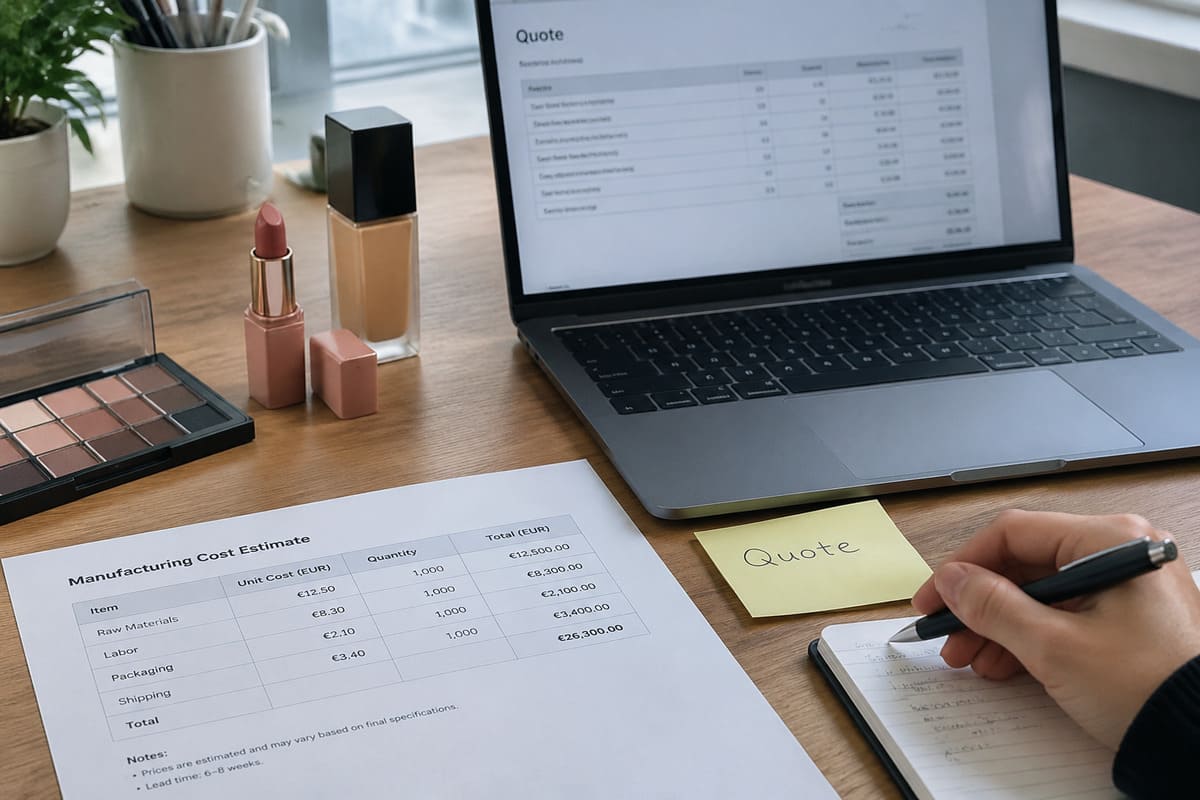
So the question is not really "Where can I find a factory in Italy?" The real question is about cash, timing, and sequence. Let me break down what the Italian promise actually costs, where it genuinely shines, and how to protect your launch before you bet everything on it.
What Does "Makeup Manufacturer in Italy" Really Mean for a Brand Founder?
You found a makeup manufacturer in Italy and the website looks perfect. But "perfect" hides a hard truth. Many founders mistake the marketing promise for the operational reality, and that gap can drain a startup budget before the first unit ever sells.
For a brand founder, a makeup manufacturer in Italy means access to prestige color cosmetics, advanced formulations, and the "Made in Italy" origin story. It also means real financial exposure: high minimum order quantities, significant upfront cash, and multi-month development cycles that delay market feedback.
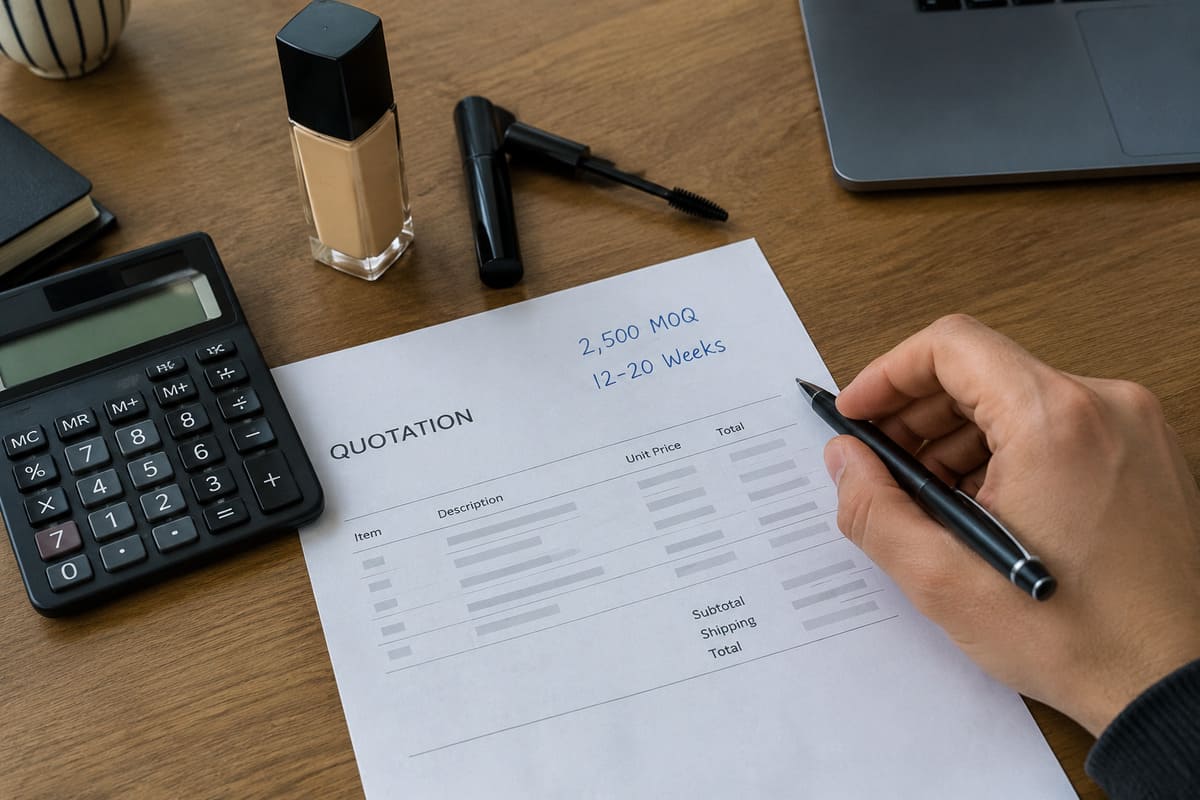
Bridging from that definition to the numbers matters here. The label is seductive, but the terms behind it decide whether your brand survives its first year. Let me explain what buyers actually encounter.
The Promise vs. The Paperwork
When founders search this term, they are chasing an emotional outcome: a brand that feels luxurious and credible. What they receive is a procurement document with numbers that reshape the entire launch plan.
- The promise: Italian heritage, complex textures, prestige positioning.
- The paperwork: MOQs per shade, packaging minimums, and lead times measured in months.
I once worked with a founder who assumed "Made in Italy" meant boutique flexibility. He imagined ordering a few hundred palettes to test the waters. The reality hit when the quote came back at 2,500 units per shade. His entire budget could cover two or three colors—and nothing else. No marketing spend. No inventory buffer. No room for error.
Why This Matters for Your Decision
The core insight is simple. The buyer is not asking where a factory is located. The buyer is asking what the true cash and time commitment is, and whether a powder-based product can be validated first without betting everything. That reframing changes how you should evaluate every Italian quote you receive.
Understanding this distinction early saves you from the most common founder mistake: treating a validation-stage decision like a scale-up decision. These are two different problems, and they deserve two different suppliers.
The Italian Reality: Even "Low MOQ" Means 2,500 Units per Shade and Months of Lead Time
Many founders feel relief when a makeup manufacturer in Italy advertises a "low MOQ." That relief fades fast. In the Italian context, "low" is relative—and for a new brand, it is still a heavy lift that ties up cash and stalls momentum.
A makeup manufacturer in Italy typically sets entry-level MOQs around 2,500 units per shade, with standard packaging MOQs reaching up to 10,000 units. Custom formulation lead times commonly run 12–20 weeks, and even faster projects take 6–12 weeks. This means concentrated cash exposure and months without sellable product.
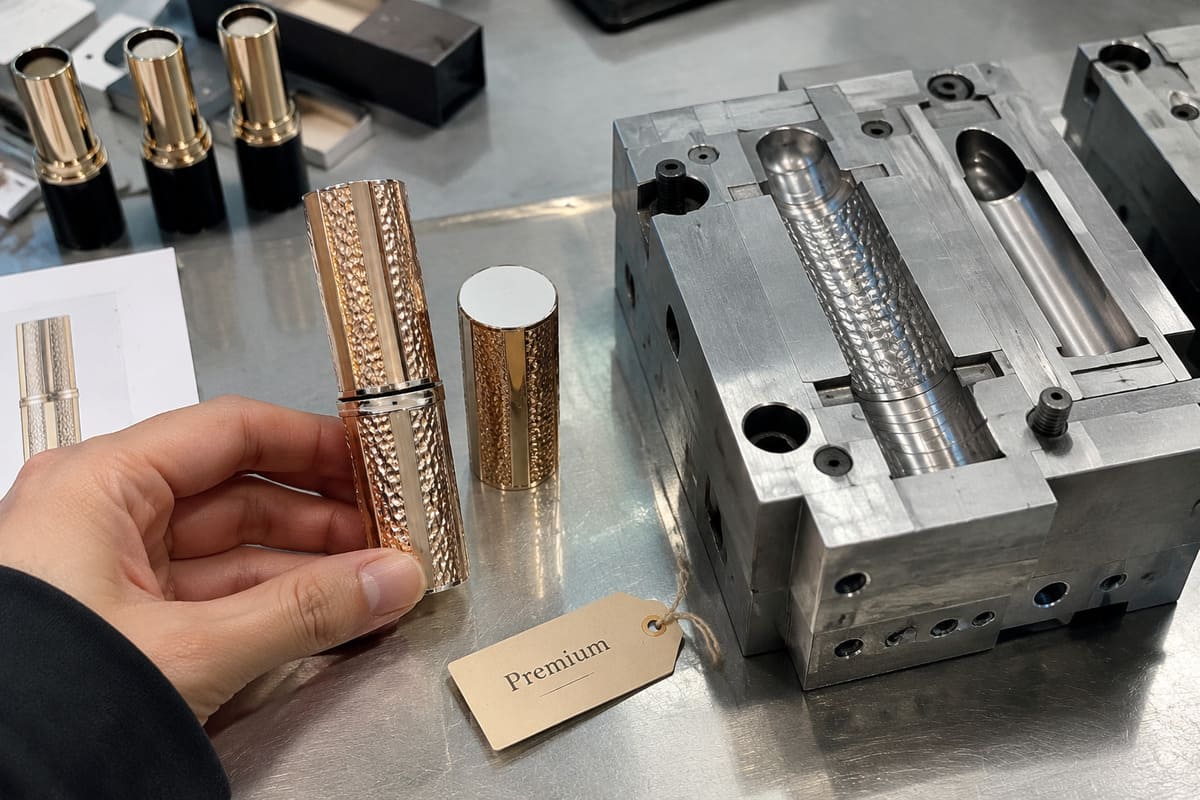
Numbers tell the clearest story here. Let me show you what the market actually quotes, factory by factory, so you can plan with real figures instead of marketing language.
The Published Numbers
These are documented, real-world terms from established Italian manufacturers. They form a useful baseline for any founder running the math.
| Manufacturer / Standard | MOQ | Lead Time |
|---|---|---|
| Italcosmetici4 | From 2,500 pieces per shade | Varies by project |
| Artcosmetics5 | 3,000–250,000 units | 6–12 weeks |
| Industry packaging standard | Up to 10,000 pieces | Varies |
| Italy/Europe custom formulation | — | 12–20 weeks |
What These Numbers Do to a Startup
Look closely at the per-shade figure. A 2,500-unit MOQ sounds accessible until you multiply it across a palette concept. A five-shade range becomes 12,500 units of commitment before a single customer has validated your colors.
Now layer in packaging. Standard packaging MOQs can reach 10,000 units, which often forces you to over-order components relative to your actual sales plan. The cash sits on a shelf as inventory risk.
Then add time. Custom formulation in Italy and Europe commonly runs 12–20 weeks. During those three to five months, you have:
- No product to sell
- No real market feedback
- No cash flow from the project
- A fixed launch window that may close before samples arrive
For a founder whose primary need is market feedback and cash flow, this is a genuinely heavy starting position. The factory is not doing anything wrong. These terms reflect the economics of European custom manufacturing. But the mismatch between those economics and a startup's reality is exactly where launches fail.
Why "Made in Italy" Commands a Premium—and What It Costs You Upfront
Here is the uncomfortable part. A makeup manufacturer in Italy is not overcharging you. The premium is real, and it reflects genuine value. The problem is not the price itself—it is whether you need to pay that price on day one, before you know if your market exists.
A makeup manufacturer in Italy commands a premium because of authentic heritage, advanced formulation capability, and the commercial trust the "Made in Italy" label carries6. The upfront cost is concentrated cash exposure on high MOQs and multi-month lead times, paid before any sales data confirms demand.
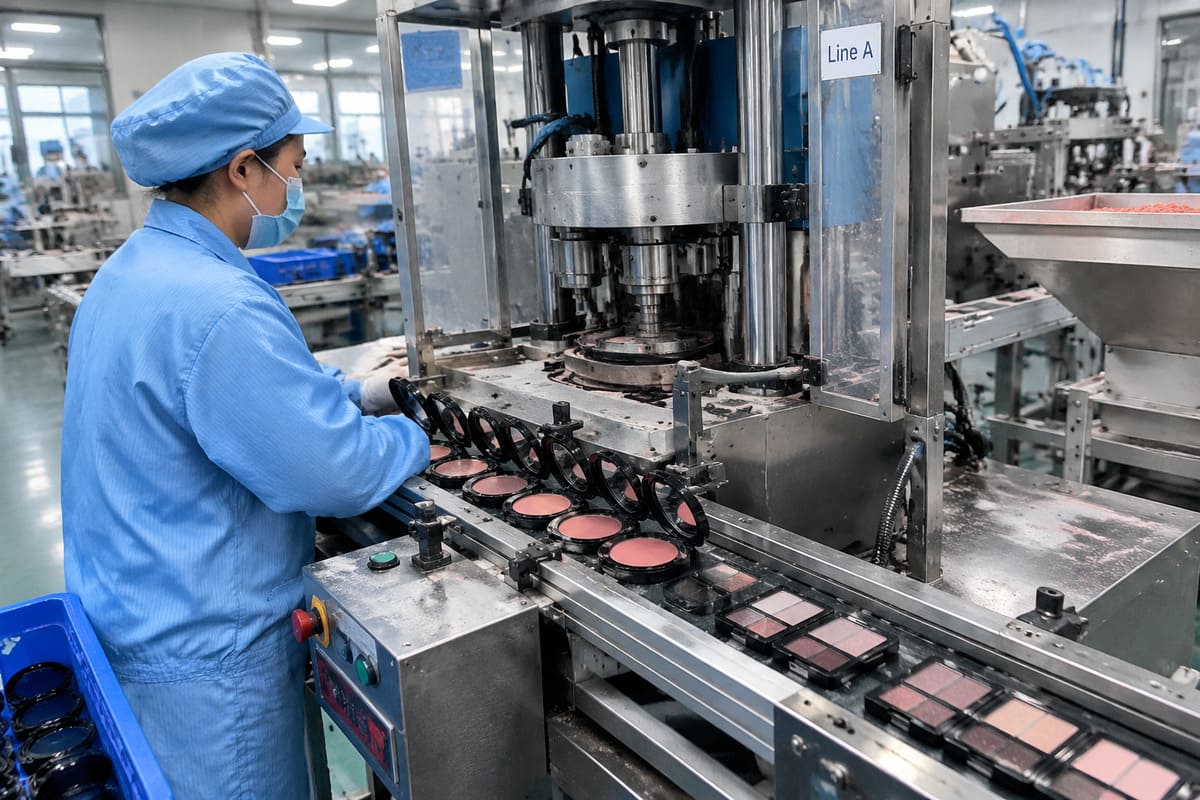
The premium makes sense in context. Understanding what you are actually paying for helps you decide whether the timing is right for your specific brand. Let me separate the real value from the risk.
What the Premium Buys You
The "Made in Italy" label is not just marketing. It carries measurable commercial weight, especially in prestige retail and in markets where European origin signals quality.
- Heritage credibility: Italian color cosmetics carry decades of reputation.
- Technical depth: Advanced formulation and complex texture capability.
- Retail trust: The origin label opens certain premium channels.
What the Premium Costs You in Risk
The cost is not only the per-unit price. It is the structure of the commitment. You pay in full, upfront, for a large quantity, long before the market has spoken.
Consider the exposure profile:
- Capital lock-up: Thousands of units funded before launch.
- Time lock-up: Months of waiting with no revenue.
- Concentration risk: Your budget bets on specific shades you haven't tested.
I think the honest framing is this: the Italian premium is justified when your brand's core value genuinely depends on Italian origin, or when your product needs the technical mastery only Italy delivers at scale. It is premature when your real priority is simply finding out whether customers want your colors. Paying prestige prices to answer a validation question is the wrong sequence. You are using a scale-up tool to solve a research problem.
The Powder Category: Where Italy Excels, and Where Agile Alternatives Make Sense
Not all cosmetics carry the same manufacturing logic. A makeup manufacturer in Italy earns its reputation on the hardest products—and powder is where that mastery is most visible. But "hardest" and "your product" are not always the same thing.
A makeup manufacturer in Italy excels at complex pressed powders—baked powders, dual-phase textures, and highly engineered formulas. For standard high-pigment eyeshadow palettes, blush, and pressed powder, China's Guangdong supply chain cluster offers a mature, lower-MOQ alternative7 without compromising commercial quality.
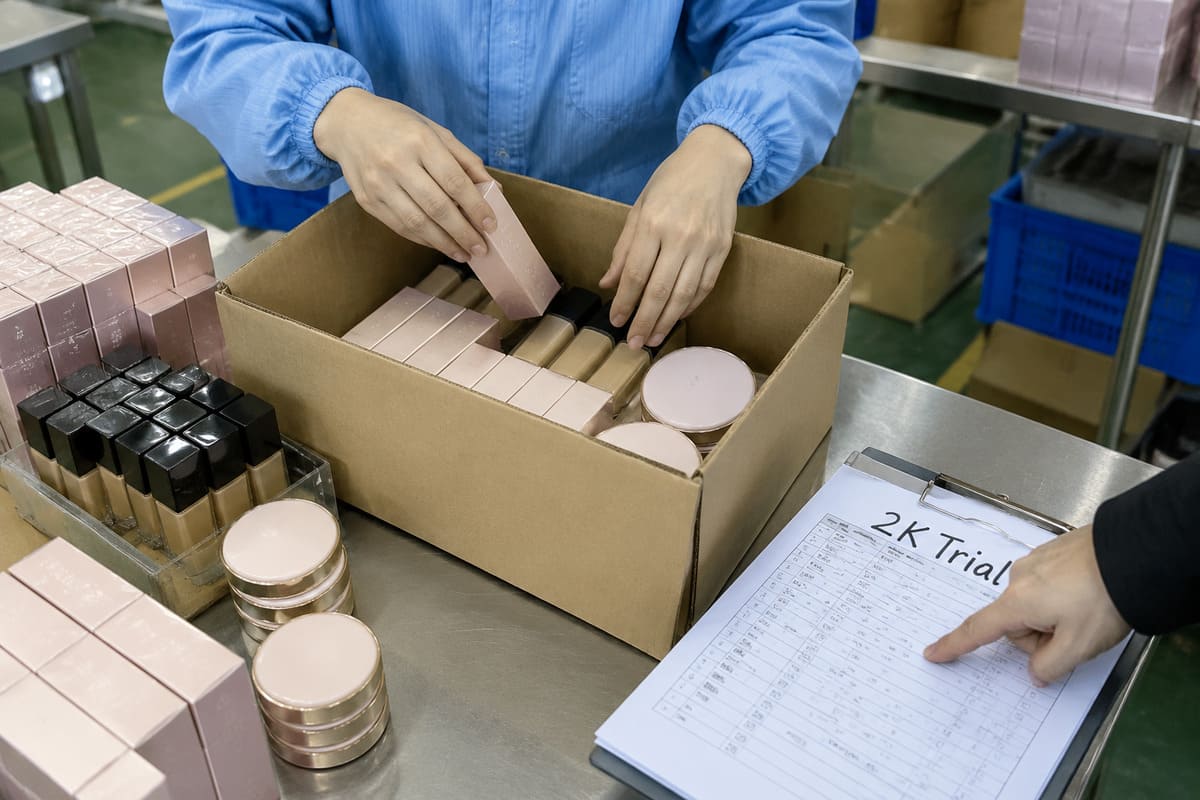
The distinction here is the whole decision. Knowing which powder you are building determines which supplier you should approach first. Let me draw the line clearly.
Italy's True Moat
Italy's advantage is not just the label. It is deep technical capability in the most demanding powder formats. If your concept depends on this innovation, the Italian MOQ and wait are worth it.
- Baked powders with their signature luminous finish
- Dual-phase textures that combine effects in one pan
- Highly engineered formulas that push performance boundaries
If your product lives here, go to Italy. Accept the 2,500-unit MOQ. Accept the lead time. You are paying for something genuinely difficult to replicate.
Where Agile Alternatives Make Sense
Now consider the far more common case: a standard, high-pigment eyeshadow palette, a pressed blush, a clean pressed powder. These are excellent products. They sell. But they do not require Italy's most specialized capability.
China's Guangdong cluster has mature, deep expertise in exactly these formats:
| Capability | Guangdong Powder Cluster |
|---|---|
| Powder pressing | Deep, mature expertise |
| Pigment formulation | High-pigment, strong payoff |
| Palette assembly | Established, scalable |
| Validation MOQ | 2,000 units, standard and realistic |
Here is the critical reframe. Choosing an agile powder supplier for a standard palette is not a compromise on quality. It is a risk-management decision. You match the supplier to the product's actual complexity and to your current stage. For a standard palette at launch, you do not need to pay the Italian premium just yet.
A Smarter Start: Validate Your Powder Concept with 2,000 Units Before Committing to Italy
Most founders fail not because their idea is bad, but because they sequence their decisions wrong8. They commit to a makeup manufacturer in Italy on day one, drain their capital, and have nothing left to respond with when the market gives feedback. There is a better order of operations.
The smarter start is to validate your powder concept with a 2,000-unit run from an agile supply chain first, gather real sales data, and only then decide whether the "Made in Italy" premium is justified. This protects cash, shortens lead time, and turns your launch into a test rather than an all-in bet.
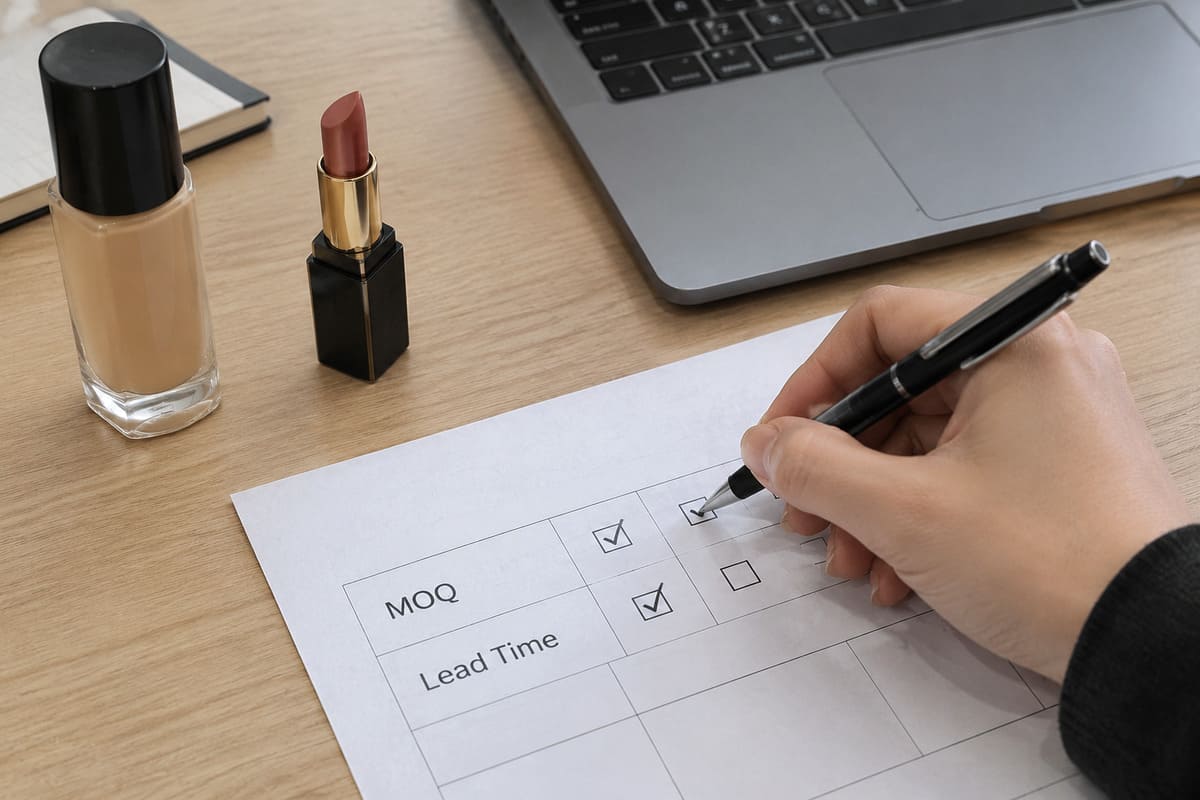
This sequence changed the outcome for a founder I worked with. Let me share what happened, because the contrast is instructive.
A Real Launch, Rescued by Sequence
A founder wanted a high-end powder eyeshadow palette. He approached an Italian factory first, the way most people do. The quote came back: 2,500 units per shade, 10–12 week lead time.
His budget could only cover two or three shades. And here is the part that stings—by the time samples were ready, his launch window had passed. The product was good. The timing was dead.
We explained that for powder products, Guangdong's supply chain could run a 2,000-unit validation trial with faster turnaround. So he changed the sequence:
- He tested his color concept with 2,000 units.
- He gathered real sales data from actual customers.
- He only then decided whether to invest in a larger, more complex Italian-made run for a specific prestige line.
He survived the launch because he did not overcommit to Italy on day one. The Italian option never disappeared. He simply earned the right to choose it with real data instead of hope.
The Three Realities to Internalize
This case reflects three realities every powder founder should hold in mind:
- "Low MOQ" is still a high commitment. Entry MOQs near 2,500 per shade mean concentrated cash on a single color.
- Lead times are measured in months. 12–20 weeks for custom work means a long stretch with no product and no feedback.
- Powder has a mature alternative. Guangdong's 2,000-unit validation runs are realistic and standard.
Validation first does not reject Italy. It positions you to use Italy wisely, later, for the lines that truly deserve the premium.
What to Verify Before You Choose an Italian Manufacturer
Due diligence protects you from expensive surprises. Before you sign with any makeup manufacturer in Italy, you need to verify the terms that actually drive your risk—not the ones highlighted in the brochure. A few targeted questions can save months and significant cash.
Before choosing a makeup manufacturer in Italy, verify the per-shade MOQ, the packaging MOQ, the full custom lead time, and any required certifications as documents you independently confirm. Match the supplier's complexity to your product, and confirm whether your format genuinely needs Italian mastery or fits an agile validation path.
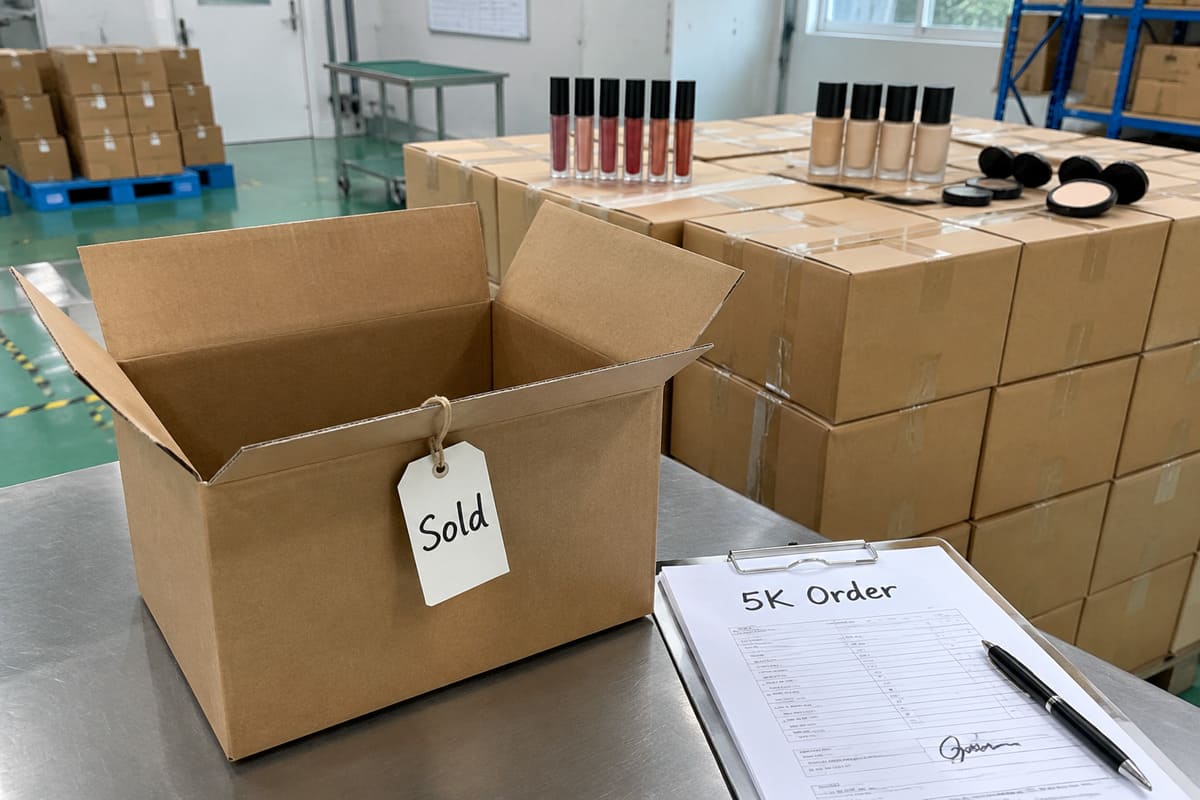
A structured checklist keeps emotion out of the decision. Let me lay out what to confirm and why each item matters.
Your Verification Checklist
Treat every number as something to confirm in writing, and treat every certification as a document to verify independently rather than a claim to accept.
| What to Verify | Why It Matters |
|---|---|
| MOQ per shade | Determines true cash exposure across a palette |
| Packaging MOQ | Can reach 10,000 units and force over-ordering |
| Full custom lead time | 12–20 weeks affects your launch window |
| [Certifications and compliance | Verify as documents for your target market](https://www.fda.gov/cosmetics/cosmetics-laws-regulations/modernization-cosmetics-regulation-act-2022-mocra)%%%FOOTNOTE_REF_9%%% |
| Format complexity fit | Decides if you need Italy or an agile path |
Setting Realistic Boundaries
Let me be direct about scope, because honesty here serves you better than optimism. The 2,000-unit validation path applies specifically to powder-based items—eyeshadows, blushes, pressed powders. These are where agile supply chains deliver real, low-risk validation.
Liquid formats are a different reality. If you want to launch liquid foundations or lipsticks, the economics of filling lines and packaging mean true custom MOQs start at 5,000–10,000 units, regardless of origin10. There is no 2,000-unit shortcut there, and anyone promising one is not being straight with you.
I also want to be clear about what an agile powder supplier does and does not offer. We do not provide a "Made in Italy" origin label. If your brand's core value depends strictly on Italian manufacturing, you should work with an Italian factory and accept the corresponding MOQ and lead time. That is the right call for that goal. For powder validation benchmarked to mainstream commercial standards with mature formulas, the agile path is simply the lower-risk way to begin.
Frequently Asked Questions
What is the typical MOQ for a makeup manufacturer in Italy?
A makeup manufacturer in Italy typically sets entry-level MOQs around 2,500 units per shade, with packaging MOQs reaching up to 10,000 units. Published examples include Italcosmetici from 2,500 pieces per shade and Artcosmetics from 3,000 units. Always confirm per-shade figures, since palettes multiply the commitment quickly.
How long are lead times with an Italian cosmetics factory?
Custom formulation in Italy and Europe commonly runs 12–20 weeks. Faster projects still take 6–12 weeks, as Artcosmetics quotes. During this period you have no sellable product and no market feedback, which is why founders with tight launch windows should plan these months carefully into their strategy.
Is a 2,000-unit powder run lower quality than Italian manufacturing?
No. A 2,000-unit validation run benchmarked to mainstream commercial standards with mature formulas is a risk-management decision, not a quality compromise. China's Guangdong cluster has deep expertise in powder pressing and pigment formulation. Italy's edge is in complex formats like baked and dual-phase powders, not standard high-pigment palettes.
Should I use an Italian manufacturer or validate first?
If your product needs Italy's specialized mastery—baked powders, dual-phase textures, engineered formulas—or if Italian origin is your core brand value, go to Italy. If you are launching a standard powder palette, validate with 2,000 units first, gather sales data, then decide whether the premium is justified.
Does the 2,000-unit validation apply to lipsticks or foundations?
No. The 2,000-unit validation applies to powder-based items like eyeshadows and blushes. For liquid foundations or lipsticks, filling lines and packaging economics push true custom MOQs to 5,000–10,000 units. Anyone promising a 2,000-unit custom liquid run is not being realistic about manufacturing constraints.
Conclusion
Choosing a makeup manufacturer in Italy is a real and valid path to a prestige brand—but the terms behind the label are heavy: 2,500 units per shade, packaging MOQs up to 10,000, and 12–20 week lead times. The premium is justified when your product needs Italian mastery or when origin is your core value. For a standard powder palette, though, the smarter sequence is to validate with 2,000 units first, gather real sales data, and then decide if Italy's premium earns its place. Launching powder-based color cosmetics and want to test your concept before committing to a large Italian run? Talk to us about a 2,000-unit validation trial and start with data, not guesswork.
"Top 10 Private Label Cosmetics Manufacturers in Italy", https://xirancosmetics.com/top-10-private-label-cosmetics-manufacturers-in-italy/. Industry procurement documentation and manufacturer specification sheets indicate that entry-level order minimums at Italian color cosmetics producers are frequently set on a per-shade basis in the low thousands of units. Evidence role: statistic; source type: institution. Supports: Entry-level MOQs at Italian color cosmetics manufacturers commonly begin near 2,500 units per shade.. Scope note: MOQ figures vary by manufacturer, product format, and negotiation, so a single cited source may not represent the full range of the Italian market. ↩
"Eyeshadow Manufacturer: How Can Buyers Find a ... - Vertina Beauty", https://vertinabeauty.com/eyeshadow-manufacturer-how-can-buyers-find-a-reliable-factory/. Packaging supplier specifications in the cosmetics sector commonly report component minimum order quantities in the thousands of units, consistent with the figure cited. Evidence role: statistic; source type: institution. Supports: Cosmetic packaging component orders often carry minimums in the thousands, reaching roughly 10,000 units for standard tooling runs.. Scope note: Packaging MOQ depends heavily on component type and tooling, so the cited figure is illustrative rather than a fixed universal standard. ↩
"Eyeshadow Manufacturer: How Can Buyers Find a ... - Vertina Beauty", https://vertinabeauty.com/eyeshadow-manufacturer-how-can-buyers-find-a-reliable-factory/. Documentation on cosmetic product development cycles indicates that custom formulation, stability testing, and production commonly require a multi-month timeline consistent with the stated range. Evidence role: statistic; source type: institution. Supports: Custom color cosmetic formulation and production cycles typically span several months, in the range of roughly 12 to 20 weeks.. Scope note: Lead times vary by formula complexity, regulatory testing, and supplier capacity, so the range is indicative rather than fixed. ↩
"Italcosmetici - Cosmetic contract manufactur", https://www.italcosmetici.com/. The manufacturer's own published specifications are the appropriate source to confirm that Italcosmetici lists per-shade minimums beginning near 2,500 pieces. Evidence role: case_reference; source type: other. Supports: Italcosmetici is an Italian contract cosmetics manufacturer whose published minimums begin around 2,500 pieces per shade.. Scope note: As the article directly names this manufacturer, confirmation relies on the company's current published terms, which may change over time. ↩
"Art Cosmetics", https://www.artcosmetics.it/. The manufacturer's published commercial documentation is the appropriate source to confirm the stated MOQ range and 6–12 week lead-time figures for Artcosmetics. Evidence role: case_reference; source type: other. Supports: Artcosmetics is an Italian cosmetics manufacturer whose published terms span a wide MOQ range with lead times of roughly 6 to 12 weeks.. Scope note: Because the article names this manufacturer directly, verification depends on the company's current published terms, which may be revised. ↩
"(PDF) The Brand Made in Italy: A Critical Analysis", https://www.academia.edu/22731097/The_Brand_Made_in_Italy_A_Critical_Analysis. Research on country-of-origin effects documents that "Made in Italy" labeling is associated with favorable consumer quality perceptions and premium positioning in several consumer-goods categories. Evidence role: expert_consensus; source type: paper. Supports: Country-of-origin effects, including the "Made in Italy" label, are associated with elevated consumer perceptions of quality and willingness to pay in certain product categories.. Scope note: Country-of-origin effects are category- and market-dependent, so findings may not transfer directly to color cosmetics specifically. ↩
"How to Find a Cosmetics Manufacturer: A Buyer's Guide to Verifying ...", https://vertinabeauty.com/how-to-find-a-cosmetics-manufacturer-a-buyers-guide-to-verifying-real-factories/. Industry and trade overviews describe Guangdong as a major concentration of cosmetics manufacturing in China, with a dense network of contract producers and component suppliers. Evidence role: general_support; source type: institution. Supports: Guangdong, China hosts a concentrated and established cosmetics manufacturing cluster with significant production capacity.. Scope note: General descriptions of the cluster do not independently verify specific MOQ terms offered to individual brands. ↩
"Small Business Failure Rates: Choice of Definition and the ...", https://digitalcommons.pepperdine.edu/cgi/viewcontent.cgi?article=1195&context=jef. Studies of startup and small-business failure commonly rank cash-flow depletion and premature scaling among the leading causes of failure, supporting the emphasis on sequencing and capital exposure. Evidence role: statistic; source type: research. Supports: Analyses of startup failure identify cash management and running out of capital among the leading causes, independent of product idea quality.. Scope note: Failure-cause data is drawn from general startup populations and may not isolate cosmetics brands or manufacturing-order decisions specifically. ↩
"Modernization of Cosmetics Regulation Act of 2022 (MoCRA)", https://www.fda.gov/cosmetics/cosmetics-laws-regulations/modernization-cosmetics-regulation-act-2022-mocra. Official cosmetic regulations, such as the EU Cosmetics Regulation, establish documented safety and compliance obligations that vary by market jurisdiction. Evidence role: general_support; source type: government. Supports: Cosmetic products are subject to jurisdiction-specific regulatory and safety-compliance requirements that manufacturers must document.. Scope note: Regulatory frameworks differ substantially across markets, so a single jurisdiction's regulation supports the general principle rather than every target market. ↩
"What Ingredients Should I Avoid in Eye Shadow? A Compliance ...", https://vertinabeauty.com/what-ingredients-should-i-avoid-in-eye-shadow-a-compliance-guide-for-buyers/. Manufacturing documentation for filled cosmetic formats indicates that filling-line setup and component tooling drive higher minimum order quantities for liquids than for pressed powders. Evidence role: statistic; source type: institution. Supports: Custom liquid and filled cosmetic products typically carry higher minimum order quantities than powders due to filling-line setup economics.. Scope note: The specific 5,000–10,000 unit range may vary by formula, fill volume, and manufacturer, so the cited figure is indicative. ↩