Searching for a reliable makeup OEM factory feels simple until you get burned. You find glossy photos, GMP badges1, and promises of "50-unit customization." Then you pay a deposit and receive a generic stock product with your logo slapped on. I have seen this happen too many times. The good news: you can learn to spot the difference.
A real makeup OEM factory owns an in-house R&D lab, a proven formula library, and physical production lines, not just product photos. True custom formulas and custom molds require line setups that realistically start at 5,000 units. Any supplier offering "50-unit OEM customization" is selling you white-label stock, not genuine original equipment manufacturing.
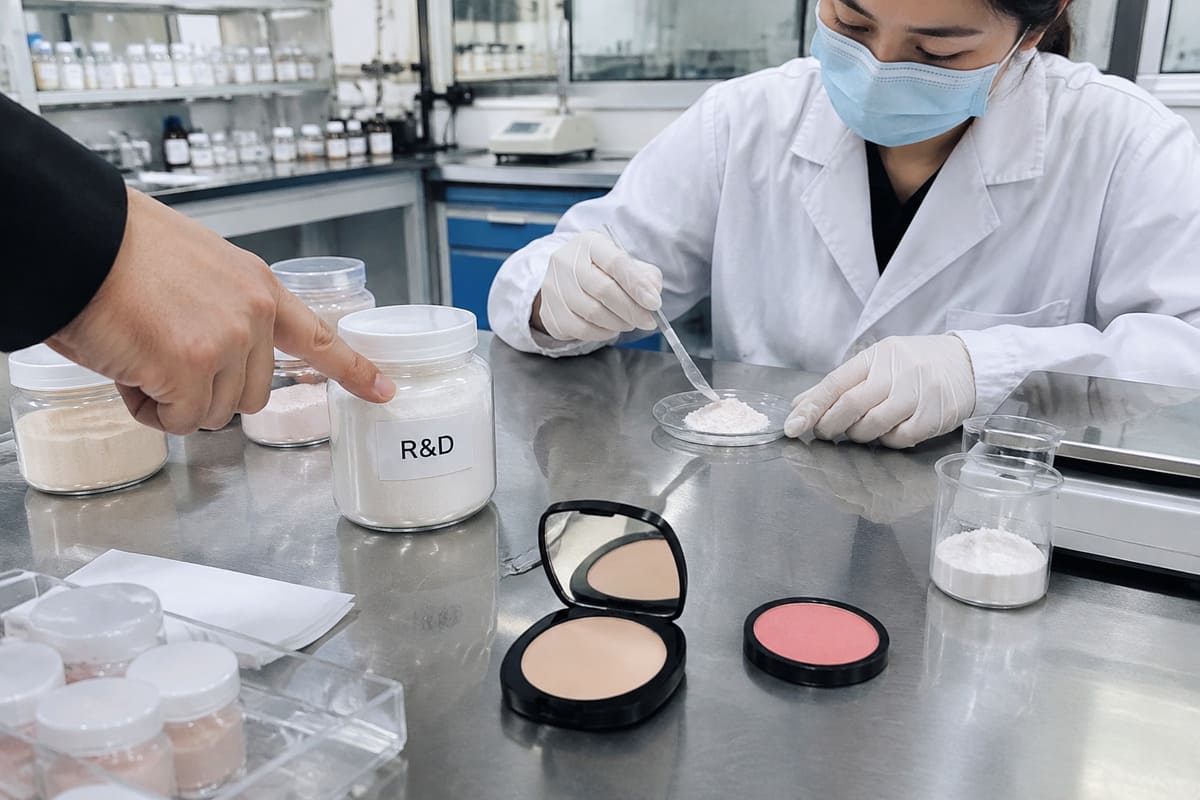
So how do you tell a real manufacturer from a middleman wearing an "OEM" costume? And once you find one, what is the smartest way to start without draining your cash? Let me walk you through what I have learned from the factory floor.
What Does "Makeup OEM Factory" Really Mean for Brand Founders?
You keep reading "OEM" everywhere, but nobody explains what it actually requires. The term has been stretched so thin that trading companies now use it freely. This confusion costs founders real money and real time.
A makeup OEM factory is a manufacturer that produces cosmetics based on your specifications, with genuine capability to develop or modify formulas, tool custom molds, and run dedicated production lines. OEM means Original Equipment Manufacturer2, so the factory must own the equipment and the technical team, not outsource both to someone else.
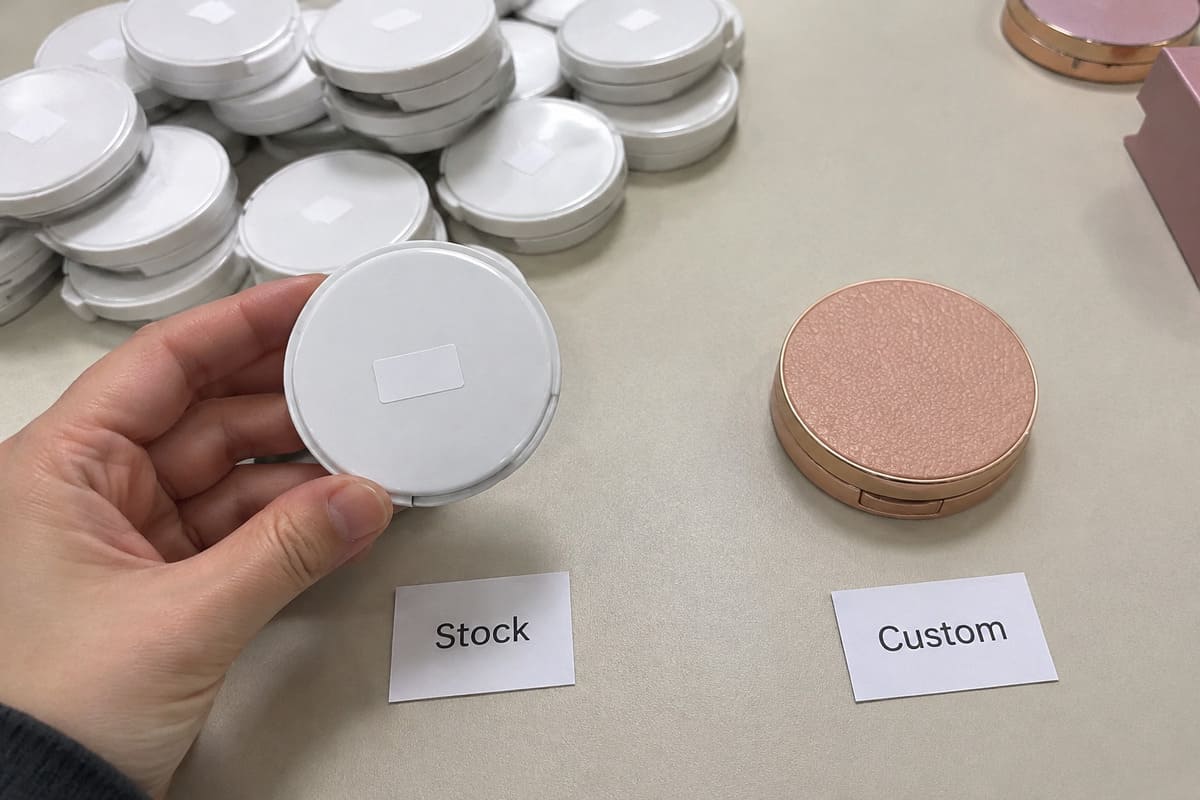
Here is where it gets tricky. Many buyers cannot see the gap between a factory and a reseller until it is too late.
What separates a real OEM factory from a reseller?
A true makeup OEM factory invests in people and machines. A reseller invests in marketing photos. The difference shows up fast once you ask technical questions.
| Capability | Real OEM Factory | "Fake OEM" Middleman |
|---|---|---|
| In-house R&D lab | Yes, with chemists | No, outsourced or none |
| Formula library | Hundreds of proven bases | Stock catalog only |
| Custom mold tooling | Yes, with real lead times | "Mold" = logo print plate |
| Production lines | Owned and operated | Rented or brokered |
| Realistic custom MOQ | 5,000–10,000 units | "50 units" marketing bait |
| Compliance docs | MoCRA, INCI, test reports | Vague or missing |
When founders come to me after a bad experience, the pattern is almost always the same. They paid for "customization" and got repackaging. The factory never had a lab in the first place. Understanding this distinction up front saves you from the trap I describe next. A genuine manufacturer will happily discuss formula chemistry, pigment loads, and pressing techniques. A middleman changes the subject to pricing because that is all they control.
The "Fake OEM" Trap: Why 50-Unit Customization Offers Are Misleading?
You see an ad: "Custom eyeshadow palette, OEM, only 50 units." It sounds perfect for a new brand. It is also, in my honest experience, almost always a trap that ends in disappointment.
"50-unit OEM customization" is misleading because real custom formulas and custom molds require dedicated production runs that start at thousands of units. At 50 units, a factory can only give you a stock white-label product with your logo printed on existing packaging. You are paying OEM prices for an off-the-shelf item.
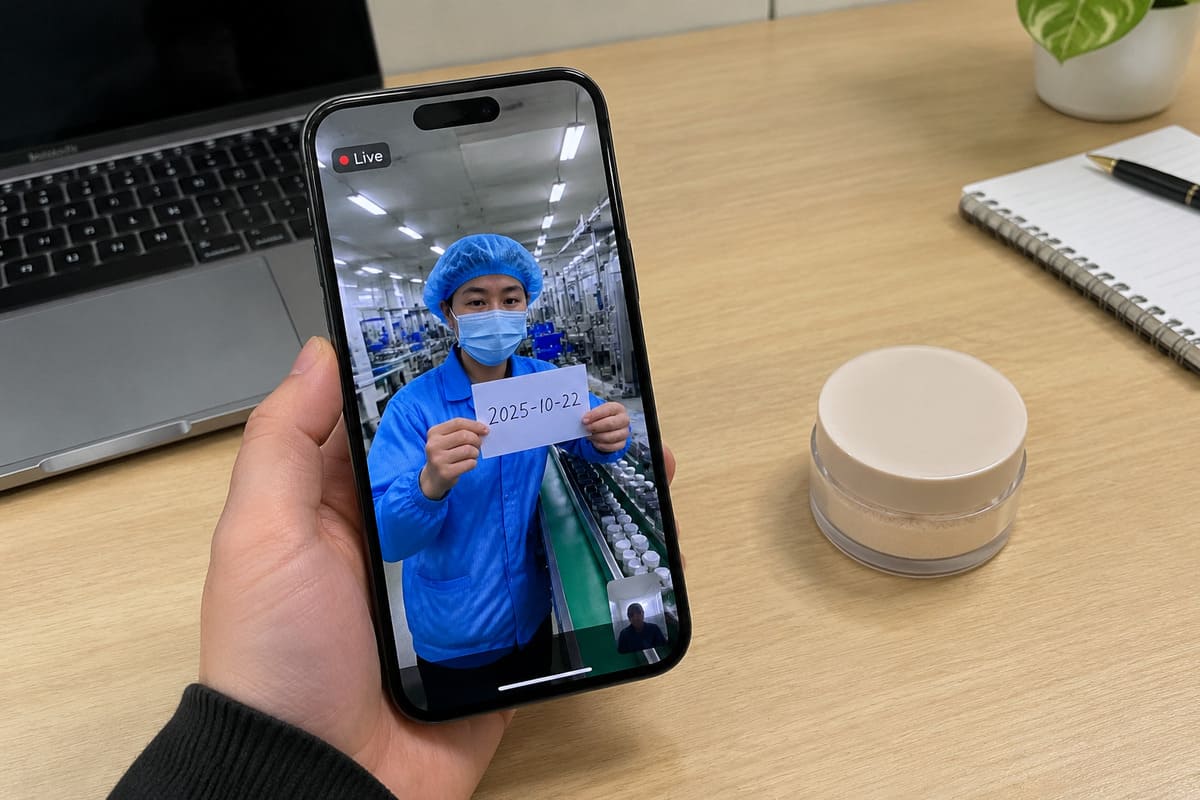
Let me tell you about a founder who learned this the hard way.
A real case: the $1,500 "custom mold" that was a printing plate
A founder wanted a custom velvet matte eyeshadow palette. He contacted a "factory" advertising 500-unit OEM. They quoted him $1,500 for "custom mold development." Three months later, he received the same stock palette every other buyer gets, just with his logo on the lid.
When he complained, they told him the "custom mold" was the printing plate for his logo. He lost $1,500 and three months of momentum. Then he came to us.
Here is why 50-unit and even 500-unit "custom" offers fall apart:
- Formula development needs lab time, raw material sourcing, and stability testing. No lab does this for 50 units.
- Custom molds for compacts or palettes cost real tooling money and take weeks. They only make economic sense across thousands of units.
- Pigment and texture work, like a true velvet matte, requires a dedicated pressing run, not a shared production batch.
The math simply does not work. A factory selling 50 "custom" units is either losing money, which no business does, or selling you stock. It is always the latter. This is the single most important thing I want new founders to understand before they wire a deposit.
How to Verify a Real OEM Factory (3 Questions You Must Ask)?
You do not need a chemistry degree to vet a factory. You need the right questions. Most founders ask about price first, which tells a middleman exactly how to sell them. Flip the script instead.
You can verify a real OEM factory with three checks: inspect their formula library and R&D lab, question any suspiciously low customization MOQ, and test their trial path. A genuine manufacturer will also reverse-interview you about your market and timeline. If a supplier only quotes prices and never asks questions, they are a middleman.
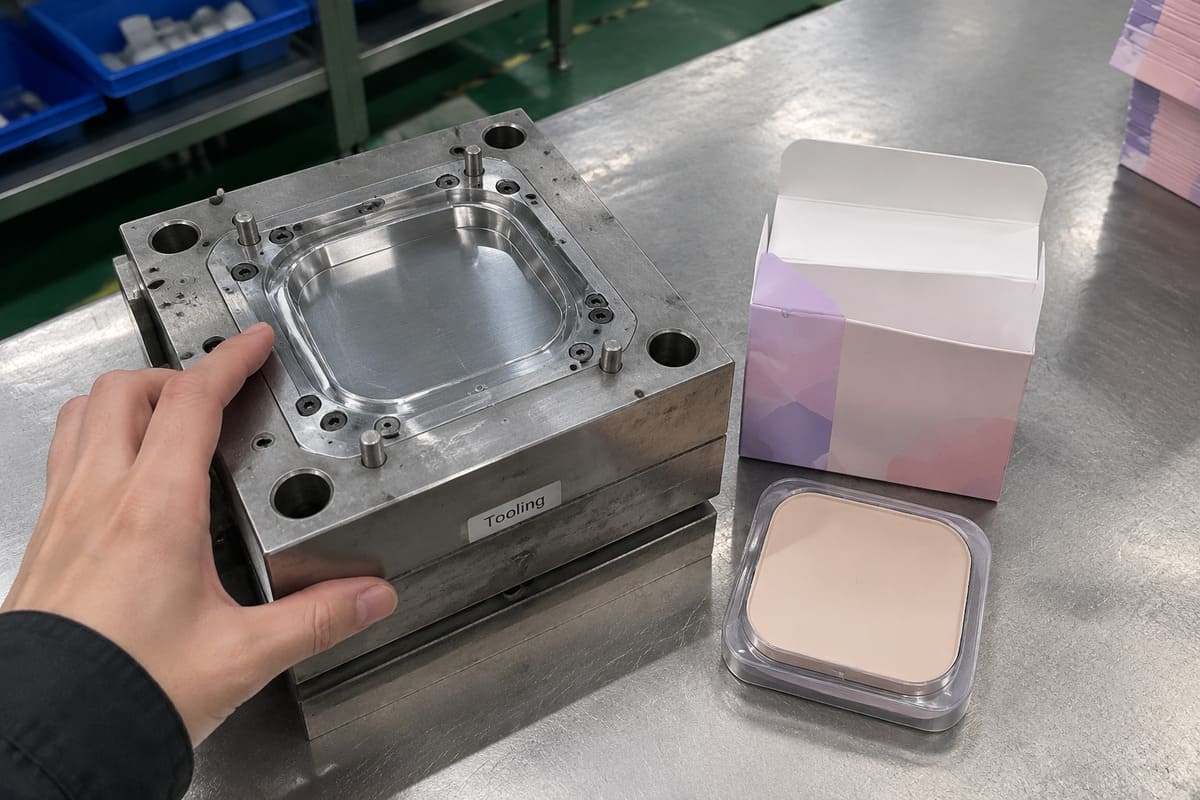
Here is the framework I give every founder who asks me how to avoid getting burned.
The 3-step verification framework
Check the formula library. A real makeup OEM factory has an in-house R&D lab and a library of proven, tested formulas. Ask to see formula documentation or request a sample based on a specific texture. A fake OEM has only product photos and a stock catalog.
Question the MOQ. A factory offering "50-unit customization" is not a real OEM. True custom formulas and custom molds require line setups that realistically start at 5,000–10,000 units. A low custom MOQ is a red flag, not a feature.
Test the trial path. A smart factory offers a middle step: a trial run on selected standard palettes before you commit to a full custom order. This protects your cash flow and proves the relationship works.
The reverse test: what a real factory asks you
This is my favorite shortcut. A genuine manufacturer wants to solve your problem, so they interview you first. A real OEM factory will ask:
- What is your target market and price band?
- Do you need a brand-new formula, or can we modify an existing one?
- What is your first order quantity and timeline?
If a supplier does not ask these questions, they are just quoting prices, not solving your problem. Walk away.
When we talk to a new brand founder, we cannot recommend anything useful until we know the market and the budget. A palette for the Middle East differs from one built for a Clean Beauty audience in the US. Any factory that skips this step is flying blind, and so are you.
The Reality of Customization: Why 5,000+ Units Is the True OEM Threshold?
You want your own formula, your own color story, your own mold. That dream is real and achievable. It is just not a 50-unit project, and I would rather tell you the truth than sell you a fantasy.
5,000 units is the true OEM customization threshold because custom formulas, dedicated pigment runs, and custom mold tooling only become economically and technically viable at that scale. Below 5,000 units, factories cannot justify the lab time, raw material minimums, and line setup required for genuine customization. This is an industry-wide reality, not a single factory's rule.3
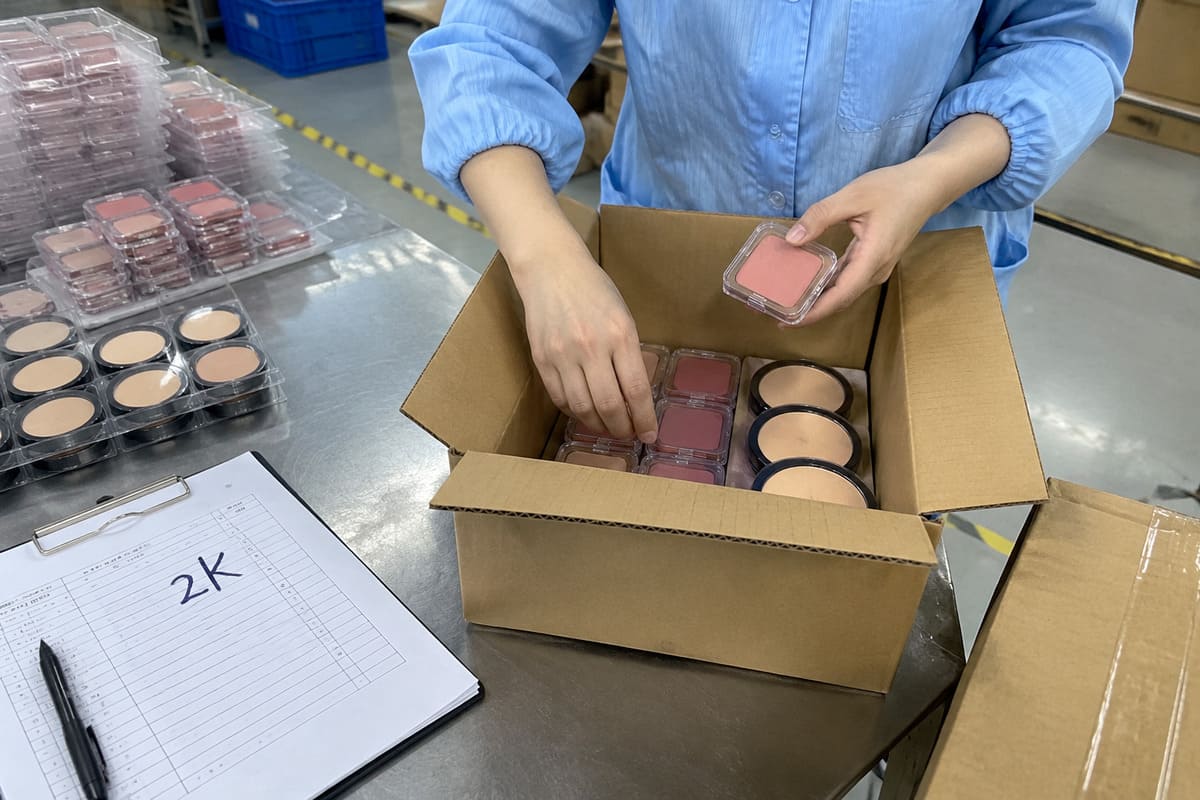
Let me show you why the numbers land where they do.
What drives the minimum order for true customization?
Several hard costs set the floor. None of them are negotiable magic:
- Raw material minimums. Pigment and specialty ingredient suppliers sell in fixed batch sizes4. A unique color often means buying more raw material than a tiny run can absorb.
- Lab and stability testing. A custom formula needs development and safety testing5. That fixed cost spreads across the order. Across 50 units, it is absurd. Across 5,000, it is reasonable.
- Mold tooling. A true custom compact or palette mold is a manufactured steel tool. It only pays off over volume.
- Line setup and cleaning. Switching a production line to your custom formula takes setup and cleaning time. Factories need volume to justify stopping standard production.
Here is how I explain the tiers to founders:
| Order Tier | What You Actually Get | Best For |
|---|---|---|
| 50–500 units | Stock product + your logo (white-label) | Quick logo test, not customization |
| 2,000 units | Selected standard palette, market validation | Testing demand with real buyers |
| 5,000–10,000 units | Custom formula, custom mold, custom packaging | True OEM brand building |
The jump from white-label to true OEM is a jump in commitment. I will not pretend otherwise. But there is a smart bridge between the two, which is exactly where most successful founders start.
How to Start with a Low-Risk Trial (The 2,000-Unit Standard Palette Strategy)?
You believe in your brand, but you cannot risk your entire budget on an unproven custom formula. That fear is healthy. The solution is to validate demand before you customize6.
The lowest-risk way to start with a makeup OEM factory is a 2,000-unit run of a selected standard palette. This validates your branding, packaging, and market demand with real sales data before you commit to a 5,000+ unit custom formula. It protects your cash flow and turns a guess into a decision backed by evidence.
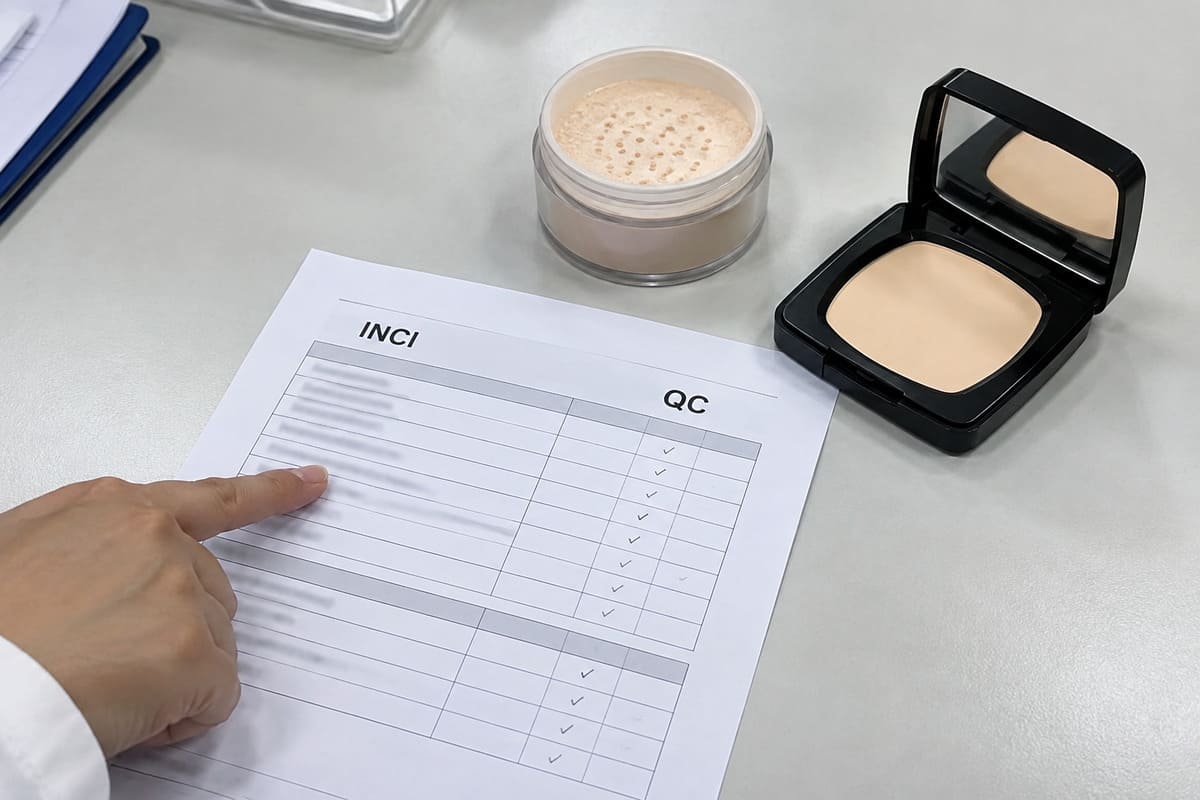
This is the path I recommended to the founder from the velvet matte story.
How the trial-to-custom path worked in practice
After he lost $1,500 to the fake "custom mold," we did not pitch him a dream. We explained the reality: a true velvet matte texture needs a dedicated production run that starts around 5,000 units. That was more than he could risk on day one.
So we offered a bridge. He started with our 2,000-unit standard palette to validate his brand. Good colors, solid quality, his branding on quality packaging. He took it to market. It sold out. With real sales data in hand, he confidently placed a 5,000-unit order to customize the formula and packaging. That is how a real OEM relationship works: validate first, customize second.
The logic is simple:
- Test cheaply with a proven standard palette at 2,000 units.
- Gather real sales data instead of guessing.
- Scale into custom at 5,000+ units once demand is proven.
This approach keeps your capital safe. You never bet your whole budget on an untested formula. You earn the right to customize by proving the market first. I have watched this sequence turn nervous first-timers into repeat brand owners.
You found a real factory and a smart starting volume. One piece remains, and it is the one that sinks brands at customs or in lawsuits. Compliance is not optional, and a serious makeup OEM factory treats it that way.
A real makeup OEM factory must provide full compliance documentation, including INCI ingredient lists7, safety and stability test reports, and market-specific support such as MoCRA facility registration for the US8. These documents are your legal foundation. You should always verify certifications independently and consult a qualified regulatory professional for your specific target market.
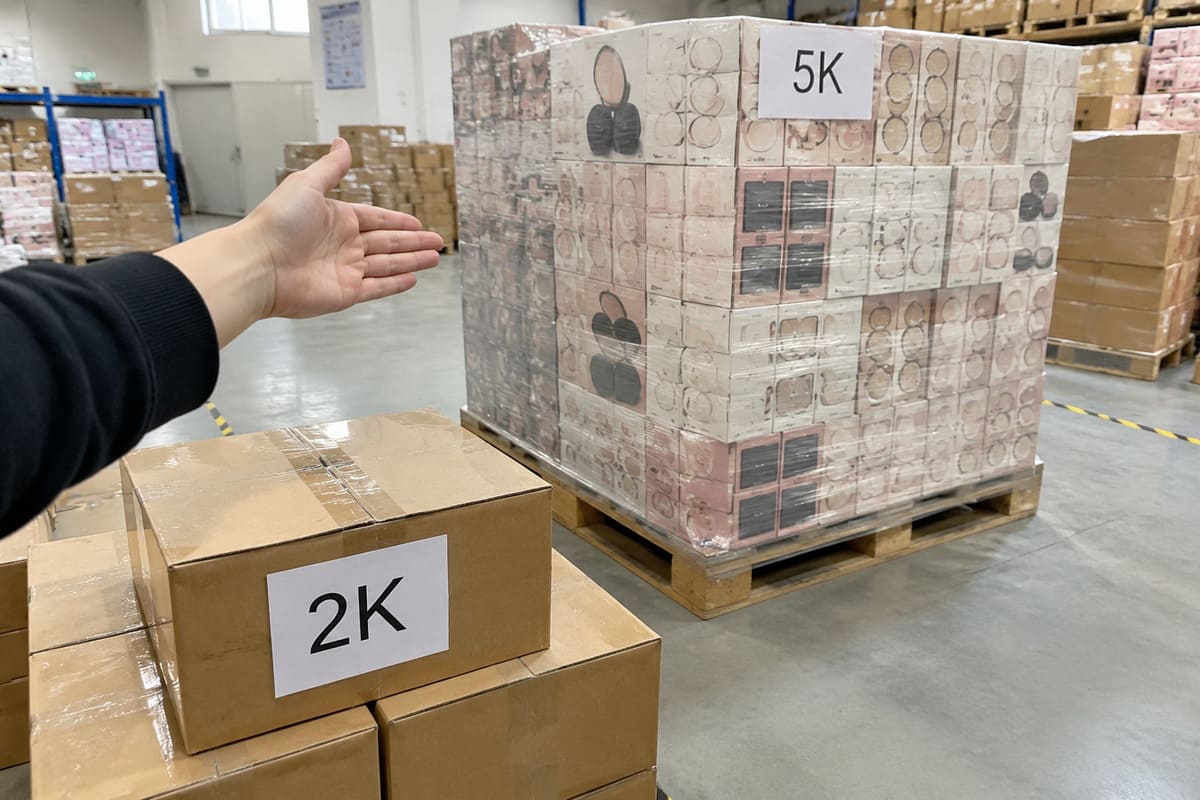
Let me be clear and serious here, because this part is non-negotiable.
What documents should you expect, and how do you verify them?
Compliance requirements shift by market. A factory that understands this will ask where you plan to sell before promising anything. Below is a general reference for common markets. Treat it as a starting checklist, not legal advice.
| Target Market | Common Requirements (Verify Independently) | Key Document |
|---|---|---|
| United States | MoCRA facility registration, product listing | INCI list, safety substantiation |
| European Union | CPNP notification, Responsible Person9 | PIF (Product Information File)10 |
| Southeast Asia | Country-specific notification (e.g., ASEAN)11 | Ingredient disclosure, test reports |
| Middle East | Market-specific registration | Safety reports, ingredient compliance |
A few principles I stand by:
- Treat certifications as documents to verify, not claims to trust. Ask for certificate numbers and confirm them with the issuing body yourself.
- Match compliance to your market. You do not need EU paperwork to sell in Southeast Asia, and vice versa. A good factory helps you scope this correctly.
- Consult a qualified regulatory professional. For application-specific or market-specific decisions, a compliance expert is worth the fee. I can provide documents, but your regulatory counsel confirms they fit your exact situation.
What I will not do is hand-wave compliance to close a sale. A real OEM factory provides the paperwork and encourages you to verify it. That transparency is itself a sign you are dealing with a genuine manufacturer.
Frequently Asked Questions
What is the real MOQ for a custom makeup formula?
True custom formulas and custom molds realistically start at 5,000–10,000 units. Below that, the lab time, raw material minimums, and mold tooling costs cannot be justified. Any factory offering 50-unit "customization" is selling you a stock white-label product, not a genuine custom formula.
How do I know if a makeup OEM factory is real or a trading company?
Ask to see their in-house R&D lab and formula library, question any suspiciously low customization MOQ, and notice whether they interview you about your market and timeline. A real factory solves your problem; a trading company only quotes prices and repackages stock.
Can I start a makeup brand with a small budget?
Yes, but start smart. Begin with a 2,000-unit run of a selected standard palette to validate demand and branding with real sales data. Once it sells, scale into a 5,000+ unit custom order. This protects your cash flow and avoids betting everything on an unproven formula.
What compliance documents do I need to sell cosmetics?
It depends on your market. The US requires MoCRA facility registration and INCI lists; the EU requires CPNP notification and a Product Information File. Always verify certifications with the issuing body and consult a qualified regulatory professional for your specific target market.
Why did a factory charge me a mold fee and still deliver a stock product?
Because the "custom mold" was likely just a printing plate for your logo, not a true formula or packaging mold. This is a common "fake OEM" tactic. Real mold tooling is a manufactured steel tool that only makes economic sense across thousands of units.
Conclusion
Finding a trustworthy makeup OEM factory comes down to seeing past the marketing. A real manufacturer owns a lab, a formula library, and production lines, and it will be honest with you about MOQs. Remember the core truths: "50-unit customization" means stock white-label, true custom work starts around 5,000 units, and a 2,000-unit standard palette is the smart, low-risk way to validate your brand first. Verify compliance documents independently and lean on a qualified professional for your target market. If you are ready to test the market before you customize, talk to us about starting with a standard palette trial.
"GMP Guidelines/Inspection Checklist for Cosmetics", https://www.fda.gov/cosmetics/cosmetics-guidance-documents/good-manufacturing-practice-gmp-guidelinesinspection-checklist-cosmetics. Good Manufacturing Practice for cosmetics is codified in the ISO 22716 standard published by the International Organization for Standardization, which specifies guidelines for production, control, storage, and shipment. Evidence role: definition; source type: institution. Supports: That Good Manufacturing Practice for cosmetics is formalized in recognized standards such as ISO 22716.. Scope note: A GMP certificate or badge alone does not confirm ongoing compliance, which depends on audit scope and currency of certification. ↩
"Original equipment manufacturer", https://en.wikipedia.org/wiki/Original_equipment_manufacturer. The abbreviation OEM denotes an Original Equipment Manufacturer, a firm that produces components or finished goods to another company's specifications, as defined in general reference sources on manufacturing terminology. Evidence role: definition; source type: encyclopedia. Supports: That OEM stands for Original Equipment Manufacturer and denotes production of goods to a buyer's specifications.. Scope note: General manufacturing references define OEM broadly and may not reflect how the term is used specifically within the cosmetics contract-manufacturing sector. ↩
"Makeup Manufacturer Australia: The Real Cost of “Local” vs ...", https://vertinabeauty.com/makeup-manufacturer-australia-the-real-cost-of-local-vs-true-customization/. Industry and trade analyses of cosmetic contract manufacturing report that custom formulation and dedicated tooling impose high minimum order quantities, consistent with the article's thousands-of-units threshold. Evidence role: statistic; source type: research. Supports: That genuine custom cosmetic manufacturing typically carries high minimum order quantities driven by fixed development and tooling costs.. Scope note: Reported minimums vary by product category and manufacturer; no single authoritative source fixes the exact 5,000-unit figure as a universal standard. ↩
"Raw Material Minimum Order Quantity Optimization", https://dspace.mit.edu/bitstream/handle/1721.1/121302/1240293813-MIT.pdf?sequence=1. Analyses of chemical and cosmetic supply chains note that raw material procurement often involves supplier minimum order quantities, which can raise per-unit cost for small production volumes. Evidence role: general_support; source type: research. Supports: That raw material and specialty ingredient procurement commonly involves minimum batch or order quantities that affect small production runs.. Scope note: General supply-chain literature establishes that minimums exist but does not confirm the specific pigment batch sizes or thresholds cited in the article. ↩
"Product Testing of Cosmetics", https://www.fda.gov/cosmetics/cosmetics-science-research/product-testing-cosmetics. Published cosmetic science and regulatory guidance describe stability testing and safety assessment as standard steps in cosmetic product development to ensure quality and consumer safety. Evidence role: mechanism; source type: research. Supports: That cosmetic formulations undergo stability and safety testing as part of standard development practice.. Scope note: Testing protocols vary by product type and jurisdiction, so the specific tests required for a given formula may differ from generalized industry guidance. ↩
"How Artificial Intelligence Supports Idea Validation and Market ...", https://innovate.unc.edu/how-artificial-intelligence-supports-idea-validation-and-market-strategy-unc-ai-community-series-continued/. Entrepreneurship and product-development research supports validating demand through limited early offerings before full-scale commitment as a means of reducing capital risk and product-market mismatch. Evidence role: general_support; source type: paper. Supports: That testing market demand before committing to large-scale production lowers the risk of new product and venture failure.. Scope note: This body of research addresses venture risk generally and does not specifically evaluate the 2,000-unit cosmetic palette strategy described in the article. ↩
"International Nomenclature of Cosmetic Ingredients", https://en.wikipedia.org/wiki/International_Nomenclature_of_Cosmetic_Ingredients. INCI stands for the International Nomenclature of Cosmetic Ingredients, a systematic naming convention used internationally to identify cosmetic ingredients on product labels. Evidence role: definition; source type: encyclopedia. Supports: That INCI refers to the International Nomenclature of Cosmetic Ingredients used for standardized ingredient labeling.. ↩
"Registration & Listing of Cosmetic Product Facilities and ...", https://www.fda.gov/cosmetics/registration-listing-cosmetic-product-facilities-and-products. The US Modernization of Cosmetics Regulation Act (MoCRA) establishes facility registration and product listing obligations administered by the Food and Drug Administration. Evidence role: definition; source type: government. Supports: That US law under MoCRA requires cosmetic manufacturing facilities to register with the FDA.. Scope note: Registration timelines and specific obligations have been subject to FDA enforcement-date adjustments, so the exact current requirements should be confirmed against the latest FDA guidance. ↩
"What Ingredients Should I Avoid in Eye Shadow? A Compliance ...", https://vertinabeauty.com/what-ingredients-should-i-avoid-in-eye-shadow-a-compliance-guide-for-buyers/. Under EU Regulation (EC) No 1223/2009, cosmetic products must be notified through the Cosmetic Product Notification Portal (CPNP) and have a designated Responsible Person established in the Union. Evidence role: mechanism; source type: government. Supports: That EU Regulation (EC) No 1223/2009 requires notification via the CPNP and the designation of a Responsible Person.. ↩
"How to create your cosmetic Product Information File?", https://www.ecomundo.eu/en/blog/essential-cosmetic-product-information-file. EU Regulation (EC) No 1223/2009 requires that a Product Information File, containing safety and composition data, be maintained and made accessible to competent authorities. Evidence role: definition; source type: government. Supports: That the EU Cosmetics Regulation requires a Product Information File to be kept for each product placed on the market.. ↩
"Liquid Eyeshadow vs Powder: Which Should a New Southeast ...", https://vertinabeauty.com/liquid-eyeshadow-vs-powder-which-should-a-new-southeast-asian-brand-start-with/. The ASEAN Cosmetic Directive establishes a harmonized regulatory scheme under which cosmetic products are notified to national authorities before being placed on member-state markets. Evidence role: mechanism; source type: government. Supports: That ASEAN member states operate a harmonized cosmetic notification scheme under the ASEAN Cosmetic Directive.. Scope note: Implementation and notification procedures differ among individual ASEAN member states, so country-level requirements should be confirmed separately. ↩